Rating: 4.2/5
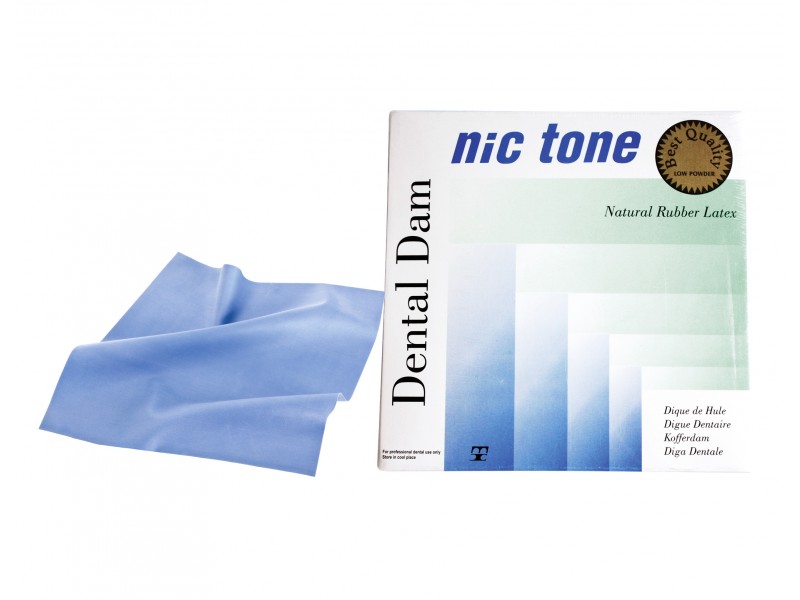
Nic Tone Rubber Dam Review: A Dentist Guide To MDC Dental Isolation
Isolation is one of the least glamorous parts of clinical dentistry and one of the most consequential. A rubber dam sheet costs a fraction of what a practice spends on almost any...
Reviewed by Agnes Markovic
Pros
- Outstanding elongation and tear resistance, including under split dam technique
- Punch hole margins that resist tearing, addressing the most common dam failure mode
- Excellent color contrast against oral tissues under loupes, microscope, and flash photography
- Black option in the range, which is genuinely superior for shade evaluation and esthetic documentation
- Low powder and low protein formulation, giving a cleaner field and a cleaner bonding substrate
- Three gauges across two sizes, enough granularity to match the sheet to the task
- Credible non-latex alternative within the same brand family, rated slightly higher than the latex line
- Manufactured under ISO 13485, which matters in a product category where inconsistency is the usual failure
- Strong value positioning, delivering premium behavior at mid-market pricing
- Mint scent that improves acceptance among anxious and pediatric patients
- Interleaved separator sheets that prevent ink transfer when stamping punch templates
Cons
- Main line is natural rubber latex, so the low protein formulation mitigates without removing the contraindication
- Low powder is not powder free, which matters for practices operating a strict powder free protocol
- Synthetic version comes in one gauge and one size only, leaving no thin option for tight contacts and no thick option for retraction
- Synthetic sheet is stiffer, requiring larger punch holes, punch lubrication, and pre-stretching
- Black is offered in 6 x 6 inches only, with no smaller sheet for pediatric esthetic cases
- Packaging has changed, so older literature and price comparisons referencing 52 sheet boxes can mislead
- Distribution is uneven outside North America and Europe, and grey market listings are common enough to warrant caution
- Reseller catalog descriptions are inconsistent about which listing corresponds to which gauge and color
- No pre-punched, pre-framed, or roll format for high throughput settings
- Latex degrades in prolonged sodium hypochlorite contact, an inherent material property rather than a brand flaw
Isolation is one of the least glamorous parts of clinical dentistry and one of the most consequential. A rubber dam sheet costs a fraction of what a practice spends on almost any other consumable, yet the quality of that sheet decides whether a setup takes ninety seconds or five minutes, and whether a bonded restoration is placed in a genuinely dry field.
Nic Tone, manufactured by MDC Dental, has become one of the most widely recommended dental dam brands among endodontists and restorative clinicians worldwide. This review examines the full range, covering both the natural latex line and the synthetic non-latex line, and assesses how the product performs against independent clinical evaluation data and against competing dam brands.
Dental professionals weighing a switch will find full specifications, thickness and color selection guidance, handling protocols, a dentist verdict, a list of pros and cons, and answers to the questions that come up most often during purchasing decisions.
What Is The Nic Tone Rubber Dam?
The Nic Tone rubber dam is a pre-cut square sheet used to isolate one tooth or an entire dental arch from the rest of the oral cavity. Clinicians who want a refresher on the fundamentals of the device, its history, and its clinical setup can review this explainer on what a dental dam is before evaluating individual brands.
The sheet is punched, stretched over the target teeth, anchored with a clamp, and tensioned on a frame. Everything that follows in the appointment depends on that seal holding. Nic Tone competes on three properties in particular, namely elongation before tearing, color contrast against oral tissues, and a low powder, low protein latex formulation.
Who Manufactures Nic Tone
Nic Tone is the dental dam brand of MDC Dental, formerly Manufacturas Dentales C.M.C., a manufacturer headquartered in Zapopan in the Guadalajara metropolitan area of Jalisco, Mexico, with additional operations in Mexico City and a United States base in Gardena, California.
MDC is not a dam specialist in the narrow sense. Its catalog spans denture teeth, alginates, dental stones, waxes, acrylics, hydrocolloids, and polishers, and the dam line sits alongside these as the company's most internationally recognized product. According to the MDC Dental product information, the range is manufactured under an ISO 13485 medical device quality management system.
That matters more than a certification logo suggests. Batch-to-batch consistency in sheet gauge is the single variable that separates a dependable dam from a frustrating one, and consistency traces directly back to controlled calendering and vulcanization. Practices that have fought with unbranded latex know the failure pattern well, where one sheet tears at the punch and the next behaves perfectly.
How Nic Tone Is Positioned In The Market
Nic Tone occupies the middle ground between premium European brands and unbranded latex sheeting. Pricing typically undercuts the established premium names while clinical performance sits alongside them, which is the core of the value argument.
Distribution runs through mainstream channels including Henry Schein, Benco, and Pearson Dental in the United States, alongside authorized regional distributors elsewhere. Practices comparing supply routes may find this breakdown of Henry Schein alternatives useful when sourcing, since dam pricing varies considerably between full-service distributors and online suppliers.
Nic Tone Rubber Dam Specifications At A Glance
The table below consolidates the specifications published by MDC Dental and confirmed across distributor listings. Configurations vary slightly by market, so confirm current packaging with a supplier before placing a first order.
Specification | Detail |
|---|---|
Manufacturer | MDC Dental, Zapopan, Jalisco, Mexico, with United States operations in Gardena, California |
Brand | Nic Tone, the company's dental dam line |
Materials | Natural rubber latex, plus a separate synthetic non-latex line |
Sheet sizes | 5 x 5 inches (12.7 x 12.7 cm) and 6 x 6 inches (15.24 x 15.24 cm) |
Latex thicknesses | Thin, medium, and thick in blue and green, medium and thick in black |
Synthetic thickness | Medium only, 6 x 6 inches |
Colors | Blue, green, black |
Box quantity | 36 sheets per box, with older 5 x 5 inch packaging supplied in boxes of 52 |
Claimed elongation | Up to 800 percent of original dimension before tearing, including split dam technique |
Powder and protein | Low powder, low protein natural latex |
Scent | Mint |
Quality system | ISO 13485 medical device quality management |
Independent rating | 86 percent for the latex dam and 87 percent for the synthetic dam |
Primary indications | Endodontics, adhesive restorative dentistry, prosthodontics, pediatric restorative work, clinical photography |
Why Isolation Quality Affects Clinical Outcomes
Treating rubber dam as an interchangeable commodity is understandable given its cost, and the clinical literature argues against it. Isolation quality touches safety, infection control, restoration longevity, and the practical question of whether the dam gets used at all on a busy day.
The Endodontic Standard Of Care
For root canal treatment, the position is settled. The American Association of Endodontists has long held that dam isolation is a standard of care requirement, and failure to place one appears repeatedly among the procedural shortfalls cited in endodontic litigation.
Three rationales carry that position. The dam prevents aspiration or ingestion of files and irrigants, it excludes salivary bacteria from a canal system being actively disinfected, and it shields soft tissue from sodium hypochlorite. Operator skill does not substitute for a physical barrier, whatever rotary file system or bioceramic sealer is being used to complete the case. The dam also forms part of a broader infection control framework, reducing aerosol contamination alongside high volume evacuation.
What The Restorative Evidence Shows
The restorative picture is less definitive and points in the same direction. The Cochrane Oral Health review on rubber dam isolation found that dam use may increase six-month survival of direct composite restorations in non-carious cervical lesions compared with cotton roll isolation.
A related randomized trial and evidence summary report that dam isolation was associated with lower two-year failure risk for proximal atraumatic restorative treatment in primary molars, with the reviewers rating that certainty as very low. All the included studies carried a high risk of bias, so the honest reading is that dam isolation probably supports restoration longevity rather than that it definitively proves it.
The survival assumptions built into any long-term dental treatment plan rest on the field being genuinely dry at the moment of bonding, which is where a dependable dam earns its cost many times over. The secondary benefits are less debatable, covering field visibility, soft tissue retraction, debris containment, and reduced operator fatigue.
One further point deserves attention. Surveys of dam usage worldwide consistently identify lack of training and perceived setup time as the dominant barriers, ahead of cost or patient objection. A sheet that handles well therefore raises usage rates, which makes handling quality a clinical variable rather than a comfort preference.
The Nic Tone Product Range
Two distinct product lines carry the Nic Tone name. Both share the headline elongation claim, and they differ in material, handling, and the range of configurations offered.
The Natural Latex Dental Dam
This is the core product and the one most clinicians mean when they refer to Nic Tone. It is a pre-cut natural rubber latex sheet with a matte, low-glare surface, formulated for reduced powder and reduced residual protein content.
Blue and green sheets are available in both 5 x 5 inch and 6 x 6 inch sizes, in thin, medium, and thick gauges
Black is offered in 6 x 6 inches only, in medium and thick
Current packaging holds 36 sheets per box, and older 5 x 5 inch stock may still appear in boxes of 52
Manufacturer reference numbers follow a 144 series convention, for example 144-0010, 144-0012, 144-0022, and 144-0032 across blue variants, and 144-0037 and 144-0038 for black
Sheets are interleaved with a thin separator, which has a practical use described later in this review
Ordering by manufacturer reference number is worth the extra step. Distributor catalog descriptions are inconsistent about which listing maps to which gauge and color, and reference numbers remove the ambiguity.
The Synthetic Non-Latex Dental Dam
MDC added a synthetic dam to address latex sensitivity in both patients and clinical staff. It differs from the latex product in several practical respects that affect technique.
Textured surface rather than the smooth matte finish of the latex sheet
Medium thickness only, supplied in 6 x 6 inches
Same headline elongation claim of up to 800 percent before tearing
Noticeably firmer feel than most non-latex dams on the market
That firmness is the interesting result. The usual complaint about non-latex dams is that they feel floppy, recover slowly, and tear at the punch margin. Independent evaluators found this version markedly more tear-resistant than typical synthetic alternatives while still adapting well to tooth contours, which explains why the synthetic version rated marginally higher than the latex line in clinical evaluation.
Material Performance And The 800 Percent Elongation Claim
The 800 percent figure appears on every piece of Nic Tone marketing and is easy to dismiss as a number chosen for effect. In clinical use, it maps onto three things a dentist can actually feel at the chair.
First, undersized punch holes seal better. A sheet that stretches without tearing allows conservative punching, and a smaller hole hugs the cervical margin more tightly. That means less crevicular seepage, less need for caulking with liquid dam or polytetrafluoroethylene tape, and a cleaner substrate for whichever universal adhesive the practice has standardized on.
Second, split dam technique becomes dependable. Cutting between two punch holes to pass the sheet over a bridge pontic or a heavily broken-down tooth places enormous stress on the cut edge. MDC states that the elongation figure holds for split dam applications, and in use the cut edges resist propagating into a full tear, which is the failure mode that costs a sheet and several minutes mid-procedure.
Third, passage through tight contacts becomes routine. Getting a dam through a tight interproximal contact requires the sheet to thin dramatically and locally without failing. Medium gauge Nic Tone strikes a workable balance here, holding enough substance to retract tissue while remaining compliant enough to floss through a tight posterior contact.
Beyond elongation, the low powder and low protein formulation carries real weight. Powder residue clouds the field, dulls photography, and contaminates the bonding surface when it migrates. Reduced protein content is a partial mitigation of latex sensitization risk for repeatedly exposed staff, though it does not substitute for a non-latex product where a true allergy exists.
Choosing The Right Color For The Procedure
Color selection deserves more thought than it usually receives. Each of the three Nic Tone colors suits a different clinical purpose, and the differences show up clearly under magnification and on camera.
Blue For General And Endodontic Use
Blue is the sensible default. It separates cleanly from gingiva, enamel, and dentin, and it proves least fatiguing during prolonged work. Under the coaxial illumination of a microscope, blue reflects less harshly than green, which reduces peripheral glare while working down a canal. Clinicians working with high magnification dental loupes report similar benefits.
Green For Contrast Against Tissue And Blood
Green offers slightly stronger contrast against blood and inflamed tissue and remains the traditional choice across much of the world. Practices doing significant surgical or crown lengthening adjacent work often prefer it, and the difference from blue is modest in most routine restorative situations.
Black For Photography And Shade Work
Black is the specialist choice and the place where Nic Tone quietly outperforms much of the market. For anterior composite work, veneer try-in, and clinical photography, a black dam eliminates reflected color cast onto the teeth and provides a true neutral background.
Enamel translucency, incisal halo, and internal characterization all read accurately against black, which matters when documenting cases built with shade-matching materials such as single-shade composites. Most practices are best served stocking blue or green medium as the everyday sheet and holding a single box of black medium for esthetic and documentation cases.
Choosing The Right Thickness
Gauge choice is where dam performance most often goes wrong. A useful heuristic is to choose the gauge according to what the sheet needs to do rather than which tooth is being treated. If it needs to pass through contacts, go thinner. If it needs to push tissue aside, go heavier.
Thin Gauge
Thin sheets suit situations where passage matters more than retraction, such as multiple tooth isolation across an anterior segment, tight interproximal contacts, and pediatric cases. The trade-off is reduced soft tissue retraction, a weaker cervical seal, and greater vulnerability to tearing under clamp wings.
Medium Gauge
Medium is the correct default for endodontics, single and multiple tooth restorative isolation, and crown preparation. Practices stocking only one gauge should stock medium, and it is the gauge most independent evaluators default to during testing.
Thick Gauge
Thick sheets do mechanical work, displacing an exuberant papilla and holding a subgingival margin open. They suit deep Class V lesions and margins at or below the gingival crest, often alongside a retraction technique such as astringent retraction paste. The trade-offs are difficult passage through tight contacts, possible clamp displacement, and reduced patient comfort over long appointments.
Choosing Between 5 x 5 And 6 x 6 Sheets
Size selection is straightforward once the trade-off is clear. The larger sheet buys working margin, and the smaller sheet buys patient comfort.
The 6 x 6 inch sheet is the international default and the size most frames are designed around. It provides ample margin for full arch isolation and generous coverage for frame attachment, which makes it the better choice for quadrant restorative work and full arch esthetic cases.
The 5 x 5 inch sheet has a specific advantage that is often overlooked. It requires less trimming and covers less of the patient's face, particularly around the nose. Independent evaluators specifically recommended the smaller size for that reason, and for an anxious patient or a long endodontic appointment, the difference in perceived comfort is meaningful. Practices doing high volumes of single tooth endodontics may find 5 x 5 inches the better everyday sheet, noting that black is currently offered only in 6 x 6 inches.
Clinical Handling And Placement Technique
Independent evaluators and experienced users converge on a consistent set of handling notes. Several apply to any dam brand, and each is specifically relevant to how Nic Tone material behaves.
Punch conservatively with the latex sheet, since its elongation allows a smaller hole to seal tightly at the cervical margin
Punch a size larger with the synthetic sheet, because the firmer material accommodates stretch less forgivingly
Lubricate the punch tip before punching, which produces cleaner hole margins and reduces the micro-nicks that seed tears
Pre-stretch the sheet between both hands before placement, which conditions the material and improves compliance during seating
Mount the clamp into the punched hole and place both as a single unit, a technique that is faster and considerably gentler on the sheet than seating the clamp first
Tension the sheet firmly over the frame nubs, since a slack dam collapses into the field while a tensioned one holds retraction on its own
Keep the interleaved separator sheets in place, as they prevent ink smudging onto the next sheet when a full arch punch template is stamped
Invert the cuff into the sulcus with a blunt instrument and a gentle air blast while the assistant maintains tension
Release excess tension with a controlled slit between punch holes when isolating individual teeth within a quadrant
None of these steps is unique to Nic Tone, and together they turn a competent sheet into a fast and predictable one. Practices building a standardized isolation protocol will find the sequence worth writing down and training the whole team on.
Performance Across Clinical Disciplines
Dam requirements shift considerably between specialties. The following notes describe how the Nic Tone range performs in each setting and which configuration suits it best.
Endodontics
This is the natural home of the range. Blue or green medium in either size, combined with a wingless clamp mounted into the punched hole, covers the majority of cases. Tear resistance matters most here because an endodontic dam remains in place for a long appointment, under retraction, in contact with sodium hypochlorite.
Hypochlorite degrades latex over time, and the heavier gauges hold up well across a typical single-visit appointment. Any dam in prolonged irrigant contact deserves periodic inspection for softening at the margin, regardless of brand.
Adhesive And Restorative Dentistry
Direct composite demands an absolutely dry, crevicular fluid-free field. A conservatively punched medium sheet, well inverted, delivers that reliably, and deep cervical margins call for thick gauge plus an appropriate retraction clamp.
The low powder formulation is a genuine advantage in this setting, since powder contamination of an etched and primed surface remains an underdiscussed cause of bond failure. Class II work benefits further from pairing the dam with a sectional matrix system, which restores contact quality once isolation is secure. Clinicians reviewing their wider material choices may also find this guide to choosing dental materials useful.
Prosthodontics
Dam isolation during crown and onlay bonding has become increasingly standard practice. Split dam reliability is the relevant property here, since bridge abutments and heavily broken-down preparations frequently cannot be clamped conventionally.
Pediatric Dentistry
Thin or medium gauge in the 5 x 5 inch size is the sensible combination. Reduced facial coverage matters more with children than with any other patient group, and the mint scent contributes modestly to acceptance. The same setup suits sealant placement and routine pediatric restorative work, and confirming latex allergy history before placement remains essential.
Clinical Photography And Esthetic Documentation
Black 6 x 6 inch medium is the answer here, and nothing else in the range comes close. Combined with a black contrast filter and controlled flash diffusion, it produces the neutral, high-contrast field that makes translucency and characterization legible in a photograph.
Practices that publish cases, present at study clubs, or market their restorative work online will see a larger improvement in output quality from a single box of black dam than from most equipment purchases at the same price.
Independent Clinical Evaluation Data
Nic Tone is unusually well documented for a consumable in this price bracket, which allows the marketing claims to be checked against consultant testing rather than accepted at face value.
The various evaluations of the natural rubber latex dam returned an 86 percent clinical rating, with consultants averaging 27 uses each during testing. Evaluators highlighted ease of use, tear resistance, adaptation to tooth contours, color contrast suitable for photography, and a pleasant mint scent. Panel tips included favoring the smaller sheet to reduce facial coverage and punching generously.
The evaluations of the synthetic non-latex dam returned an 87 percent clinical rating across 21 clinical evaluators and 195 total uses. Consultants praised its tear resistance relative to other non-latex dams, its adaptation once seated over the clamp, and the reassurance of a latex-free option.
Reseller side feedback runs broadly consistent. European distributor platforms report positive rating rates in the high nineties across hundreds of reviews, with recurring praise for the blue sheet in esthetic work and for the ratio of quality to price. The brand also appears routinely in biomimetic and Style Italiano teaching material, a form of professional endorsement worth weighing with the usual caveat that educator preferences sometimes carry commercial relationships.
Latex Allergy And Staff Safety Considerations
The latex line is described as low in protein and low in powder. Both claims are meaningful, and both are frequently over-interpreted in purchasing conversations.
Low protein content reduces the concentration of water-soluble natural rubber latex proteins responsible for Type I hypersensitivity, which lowers sensitization risk for repeatedly exposed staff. It does not make the product safe for a patient with diagnosed latex allergy.
Low powder content reduces the aerosolized cornstarch that carries latex protein into the air and onto mucosa, historically the main vector for occupational latex sensitization in healthcare settings. Again, this is a reduction rather than an elimination.
For any patient with documented latex allergy, a history of spina bifida or multiple surgical procedures, or significant occupational latex exposure, the correct answer is the synthetic Nic Tone dam. Practices should hold a box of the non-latex product as standard stock even when latex is the routine choice, since the cost of holding it is negligible against the cost of not having it when a medical history surfaces mid-appointment.
Allergy risk extends to the clinical team as well as the patient. When a nurse or hygienist develops contact dermatitis or rhinitis that correlates with clinical sessions, the dam is one of several latex sources worth eliminating during investigation.
How Nic Tone Compares To Other Dental Dam Brands
The comparison below sets Nic Tone against the alternatives most practices consider. Availability and pricing vary by region, so treat the positioning as directional rather than absolute.
Product | Material | Strengths | Limitations |
|---|---|---|---|
Nic Tone by MDC Dental | Natural latex plus a separate synthetic line | Very high elongation and tear resistance, excellent color contrast, black option for photography, strong independent ratings, mid-market pricing | Latex line unsuitable for allergic patients, synthetic offered in one gauge and size, distribution uneven in some regions |
Coltene Hygenic and Flexi Dam | Latex and non-latex lines | Very broad range of gauges, sizes, colors, and flavors, long track record, strong global distribution | Premium pricing, non-latex sheet reported as softer and more tear-prone than the Nic Tone synthetic |
Sanctuary, Cranberry, and similar | Latex and non-latex options | Competitive pricing, wide availability, powder-free options common | Fewer gauge options, tear resistance generally rated below premium brands |
Unbranded latex sheeting | Latex, variable formulation | Lowest unit cost | Inconsistent gauge, frequent punch margin tearing, poor color consistency, often no documented quality system |
Suction-based isolation systems | Not a dam, a mechanical alternative | Faster setup, combined isolation and evacuation, well suited to hygiene and sealant work | No true barrier against ingestion, less absolute moisture control for adhesive procedures |
Practices weighing a dam against a mechanical alternative should read the two as complementary rather than competing. A suction-based isolation system suits hygiene appointments, sealant placement, and quadrant dentistry on cooperative patients, while a dam remains the barrier of choice for endodontics and demanding adhesive work. Practices already invested in Coltene instrumentation such as the HyFlex EDM file system may prefer to consolidate suppliers, and the clinical case for doing so is weak given how closely the two dam brands perform.
Cost, Value, And Practice Economics
Rubber dam is one of the smallest per-case costs in dentistry, which is precisely why over-optimizing on unit price is a mistake. The economically relevant variables sit elsewhere.
At typical distributor pricing, a 36-sheet box puts the cost per sheet in the region of one to two US dollars, varying by market, gauge, color, and supply route. Measured against a restorative or endodontic procedure fee, that figure is a rounding error, and measured against the cost of a single remake caused by a contaminated bond, it disappears entirely.
Sheets wasted per case matter more than unit price, since a dam that tears during setup costs a sheet plus two to four minutes of chair time
Cases where the dam gets skipped represent the real cost of a frustrating sheet, and that is a clinical quality cost rather than a supply cost
Stocking complexity deserves control, and three or four references cover almost every scenario without cluttering the supply cabinet
A reasonable purchasing pattern for a general practice covers one box of blue or green medium 6 x 6 inches as the workhorse, one box of black medium 6 x 6 inches for esthetics and documentation, one box of the synthetic non-latex dam, and one box of thick gauge for practices doing significant subgingival restorative work. Practices reviewing wider consumable spend may find this overview of dental office supplies helpful for benchmarking.
Storage, Shelf Life, And Handling
Latex degrades, so dam boxes warrant slightly more care than most consumables. The following practices preserve elongation and prevent the frustrating mid-procedure failures that come from aged stock.
Store sheets in the original box, away from direct sunlight and other ultraviolet sources, including curing lights, left face up
Keep boxes at moderate room temperature and away from sterilizers, autoclave exhausts, and heating vents
Avoid contact with oils, solvents, and ozone-generating equipment
Observe the printed expiry date, since expired latex loses elongation and tears at the punch
Rotate stock properly, because a box that sits at the back of a cupboard for four years is a false economy
Discard any sheet that feels tacky, stiff, discolored, or brittle at the edge rather than troubleshooting it mid-procedure
Bottom Line
Nic Tone occupies a genuinely useful position in the isolation market, performing like a premium dam while pricing like a mid-market one. The elongation and tear resistance are real and clinically consequential, the color range is better considered than most competitors, and the independent evaluation record is both strong and consistent across nearly a decade.
The reservations are honest rather than disqualifying. This remains a latex product at its core, with a capable but narrowly configured synthetic sibling, and both distribution clarity and catalog accuracy could improve. No dam sheet compensates for a clamp that does not fit or a frame that is poorly tensioned.
For a general practice building or rebuilding an isolation protocol, a starter set covering blue or green medium 6 x 6 inches, black medium 6 x 6 inches, and one box of the synthetic non-latex dam addresses nearly every clinical scenario for less than the cost of a single mid-range hand instrument. For endodontists and restorative specialists already committed to routine dam use, Nic Tone is a credible replacement for more expensive incumbents.
Verdict
<p>Nic Tone is one of the few consumables that quietly earns its place in the operatory. Across endodontic, adhesive, and pediatric use, the impression reported by clinicians is consistent, namely that this dam gets out of the way.</p><p>The latex sheets stretch aggressively, and the manufacturer's claim of up to 800 percent elongation before tearing translates into something more useful than a specification number. A hole punched slightly undersized can be stretched over a molar with a tight contact and will seal rather than split. Interproximal passage with waxed floss runs smoothly, and inversion into the sulcus holds without constant re-tucking.</p><p>Color is the other genuine differentiator. Blue and green give clean tonal separation from gingiva and enamel, which matters enormously under magnification and on camera. The black 6 x 6 inch sheet is the sleeper product in the range, eliminating the color bounce that lighter dams introduce during shade evaluation and anterior composite documentation.</p><p>The reservations are real without being disqualifying. Latex remains latex, and the powder is reduced rather than absent. The synthetic version costs more and feels stiffer. Distribution is uneven outside North America and Europe, and the 52-sheet packaging has largely given way to boxes of 36.</p><p>The overall assessment is a genuinely excellent latex dam at a mid-market price. Practices whose current dam tears at the punch hole have a straightforward case for switching.</p>
Frequently Asked Questions
Is the Nic Tone rubber dam latex free?
The main Nic Tone line is natural rubber latex, formulated for low powder and low protein content. MDC Dental also produces a separate synthetic non-latex dam in medium thickness and 6 x 6 inch size, which is the appropriate choice for latex allergic patients and staff. Substituting the low protein latex sheet for a genuine non-latex product in an allergic patient is not acceptable practice.
What sizes and thicknesses does Nic Tone come in?
The latex line is available in 5 x 5 inches and 6 x 6 inches, in thin, medium, and thick gauges for blue and green. Black is offered in 6 x 6 inches only, in medium and thick. The synthetic version comes in medium thickness, 6 x 6 inches.
How many sheets are in a box of Nic Tone dental dam?
Current packaging holds 36 sheets per box across the range. Older 5 x 5 inch packaging contained 52 sheets, and that configuration still appears in some evaluation literature and older supplier listings.
Which thickness should be used for endodontics?
Medium is the correct default for the great majority of endodontic cases. Thick gauge suits situations requiring aggressive soft tissue retraction or work at or below the gingival crest, while thin gauge suits cases where passage through multiple tight contacts is the limiting factor.
Which color is best for clinical photography?
Black in the 6 x 6 inch medium configuration. It eliminates reflected color cast, provides a neutral background, and renders enamel translucency and internal characterization accurately. Blue and green photograph acceptably and offer good tissue contrast, though black remains the correct choice for shade documentation and anterior esthetic cases.
Does the 800 percent elongation claim mean anything clinically?
Yes, in three concrete ways. Smaller punch holes can be used for a tighter cervical seal without tearing, split dam technique becomes dependable rather than risky, and the sheet survives passage through tight interproximal contacts. The figure has a real clinical correlate rather than functioning as marketing alone.
How does Nic Tone compare with Coltene Hygenic?
The two are broadly comparable in clinical performance. Hygenic offers a wider catalog covering more colors, flavors, formats, and a longer established non-latex line, and it generally sits at a higher price point. Nic Tone matches it closely on tear resistance and color contrast at lower cost, and the black sheet is a strong differentiator for esthetic work.
Is the synthetic version as good as the latex version?
For its category, better than most alternatives. Independent evaluators rated it 87 percent against 86 percent for the latex line and noted that it is firmer and more tear resistant than typical non-latex dams while still adapting well to teeth. The trade-offs are a single gauge, a single size, and slightly modified technique.
Does switching to Nic Tone require a change in technique?
Not fundamentally, though two adjustments help. The latex sheet can be punched more conservatively than many clinicians are used to, because the material stretches to seal rather than tearing. The synthetic sheet requires the opposite adjustment, with a punch size larger, a lubricated punch, and pre-stretching before placement.
Is Nic Tone suitable for pediatric patients?
Yes. The 5 x 5 inch size in thin or medium gauge is the sensible combination, offering less facial coverage, better tolerance, and easier passage through the tight contacts common in the primary dentition. The mint scent aids acceptance modestly. Confirming latex allergy history before placement remains essential.
How should Nic Tone dental dam be stored?
Keep boxes closed, at moderate room temperature, out of direct sunlight, and away from heat sources, ozone generating equipment, and solvents. Observe the printed expiry date and rotate stock. Degraded latex tears at the punch and is not worth using.
Is Nic Tone a regulated medical device?
Dental dams are regulated medical devices in all major markets, and MDC Dental manufactures under ISO 13485, the international quality management standard for medical devices. Local registration status should be verified with a distributor, and purchasing through authorized channels ensures genuine, in-date, correctly stored product.
Where can Nic Tone dental dam be purchased?
Mainstream dental distributors including Henry Schein, Benco, and Pearson Dental carry the range in the United States, with authorized regional distributors elsewhere and a variety of online dental suppliers. Recognized dental supply channels are preferable to general marketplaces, and genuine boxes carry manufacturer reference numbers, lot codes, and expiry dates.
Does rubber dam isolation actually improve restoration outcomes?
The Cochrane review found that dam isolation may improve six month survival of direct composite restorations in non-carious cervical lesions and may reduce two year failure risk for proximal atraumatic restorative treatment in primary molars, with the certainty of that evidence rated low to very low. The stronger arguments concern safety, cross infection control, field visibility, and soft tissue management, and in endodontics dam use is a standard of care expectation rather than a preference.
Is switching worthwhile for a practice already using a premium dam?
For a practice using a premium brand that rarely tears a sheet, switching is a cost decision rather than a quality one. For a practice using unbranded latex that regularly loses sheets at the punch or the clamp, or one that has never stocked a black dam for photography, the case for switching is straightforward.