What Is A Dental Dam? Uses, Materials, And Clinical Setup Explained
Two distinct medical products share the name dental dam. The first is a clinical rubber sheet used by dentists to isolate teeth during procedures such as fillings, sealants, and...
Written by Agnes Markovic
Read time: 7 min read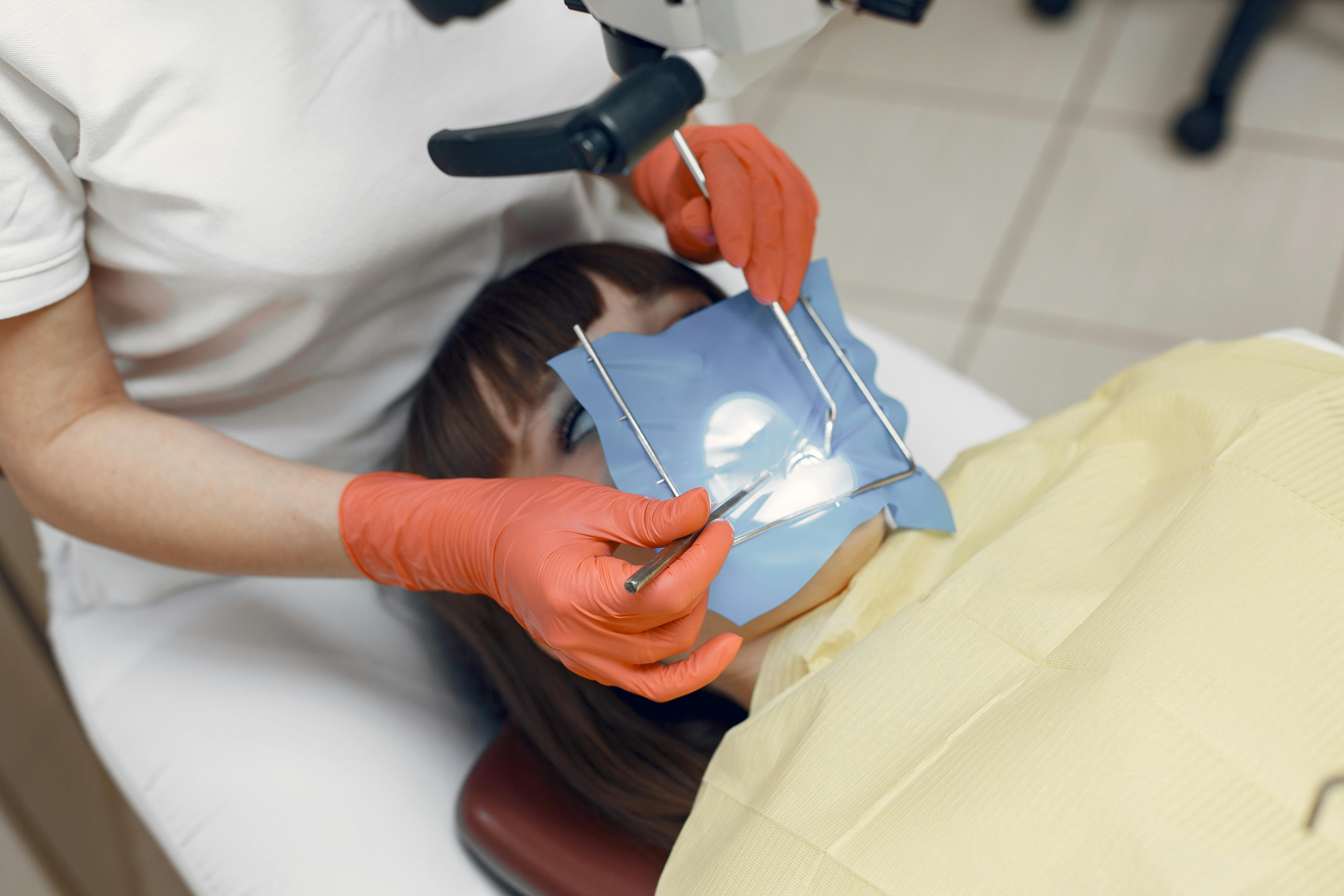
Two distinct medical products share the name dental dam. The first is a clinical rubber sheet used by dentists to isolate teeth during procedures such as fillings, sealants, and root canals. The second is a thin barrier placed during oral sex to reduce the transmission of sexually transmitted infections. Both products are real, both are recognized by major health authorities, and both deserve a clear explanation.
This article focuses primarily on the clinical rubber dam used in dentistry, with a focused section partway through that covers the safer-sex barrier accurately for readers who arrived at the page with that question. Most search traffic for the term comes from dental students, dentists, dental assistants, and patients who want to understand what their clinician will use during a procedure. Readers looking specifically for sexual-health information can jump directly to the dedicated section below.
The clinical rubber dam is one of the oldest devices still in routine use across modern dentistry. Sanford Christie Barnum, a New York dentist, introduced it in 1864 to keep saliva away from cavity preparations. The fundamental principle has not changed in more than 160 years, even as materials and clamp designs have evolved considerably.
What follows is a complete clinical reference covering materials, kit components, purpose and functions, advantages and limitations, step-by-step placement, clamp selection, inversion technique, indications, and the parallel sexual-health use, along with common misconceptions and a comprehensive FAQ. The goal is to leave readers from any background, students, clinicians, or patients, with a complete and accurate understanding of what a dental dam is and what it does.
What Is A Dental Dam?
A dental dam answers two related but distinct definitions, and clearly stating both upfront prevents confusion as the article develops.
A dental dam, also called a rubber dam, is a thin, flexible sheet placed over the teeth during dental procedures to isolate one or more teeth from saliva, blood, soft tissue, and the rest of the oral environment. The same term refers to a similar latex or polyurethane sheet placed across the vulva or anus during oral sex to reduce the risk of sexually transmitted infections.
The clinical product is square, typically 5 by 5 or 6 by 6 inches, color-tinted in green, blue, purple, or other contrasting hues, and held in place by a metal or plastic frame plus a tooth-anchored clamp. Standard thicknesses range from thin (around 0.15 millimeters) to extra-heavy (around 0.35 millimeters), with medium gauge serving most general dentistry workflows. Pediatric versions may carry mint, fruit, or bubblegum flavoring on one surface to improve patient cooperation.
The sexual-health version is a thinner, more flexible sheet sold without a frame or clamp system. It comes pre-flavored more often than not, in larger rectangular sizes (commonly 6 by 10 inches), and is packaged similarly to a condom for single use. Both products draw from the same material chemistry, but each is designed, sized, and packaged for its respective purpose, and they are not interchangeable.
The terms dental dam and rubber dam are used synonymously across dental literature, with rubber dam appearing more often in older clinical writing and dental dam appearing more frequently in patient-facing content and in sexual-health contexts.
The Two Meanings Of Dental Dam, A Short Disambiguation
A reader who searches for the term lands at one of two intents, clinical or sexual health, and a quick disambiguation lets each audience confirm they are in the right place.
The clinical rubber dam is the focus of most of this article. Dentists use it during fillings, root canals, sealants, pediatric procedures, and certain bleaching protocols. It is sold through dental supply distributors in latex or non-latex sheets, paired with a frame, clamp, punch, and napkin to form a complete kit.
The sexual-health dental dam is a barrier method placed over the vulva or anus during oral-genital contact to reduce the risk of transmitting infections such as herpes, HPV, gonorrhea, syphilis, chlamydia, and HIV. It is sold at pharmacies, sexual-health clinics, and online retailers, often in flavored varieties, and is positioned alongside condoms in the safer-sex product category.
A few searchers also arrive at the term looking for the phrase rubber dam in river, which describes an inflatable civil engineering structure used to manage water flow. That term is unrelated to either dental or sexual-health usage and is mentioned here only to clear the disambiguation.
For readers who want the dental clinical content, continue below. For readers focused on the safer-sex barrier, the dedicated section appears later in the article under The Dental Dam In A Sexual Health Context.
A Brief History Of The Dental Dam
The dental dam has a clinical lineage stretching back to mid-19th-century New York, and understanding its origins clarifies why the device remains central to modern dentistry.
Sanford Christie Barnum, a dentist practicing on the Lower East Side of Manhattan, devised the rubber dam in 1864. He used a piece of rubber sheeting punched with a hole, slipped over a tooth, and tied with a ligature to keep saliva away from the cavity preparation. The technique was published in Dental Cosmos that same year and adopted rapidly across the profession. The basic concept, mechanical isolation through a perforated rubber sheet, has changed remarkably little in the 160 years since.
What has changed is the supporting hardware. Vulcanized rubber gave way to modern latex and non-latex polymer formulations. Hand-tied ligatures gave way to spring-loaded retainers with refined jaw geometry. Heavy metal frames evolved into lighter and radiolucent plastic alternatives that allow intraoperative radiographs without dam removal. Color tinting became standard, improving contrast and reducing eye fatigue under modern operatory lighting.
The sexual-health application emerged much later, gaining wider clinical recognition during the HIV/AIDS public health response of the 1980s, when barrier methods for non-penetrative sexual contact attracted renewed scientific attention from public health authorities.
What Is A Dental Dam Made Of? Materials Explained
Material composition determines how a dental dam handles, how tightly it seals, and which patients can safely use it. Most clinical dams come from one of three material categories, each with specific use cases.
Latex Rubber Dams
Natural latex remains the most common material across general dentistry, and its handling characteristics set the benchmark against which alternatives are measured.
Latex rubber dams offer excellent stretch, tear resistance, and sealing capacity around the cervical line of the isolated tooth. Standard thickness gradations include thin (0.15 millimeters), medium (0.20 millimeters), heavy (0.25 millimeters), extra-heavy (0.30 millimeters), and special-heavy (0.35 millimeters). Medium-gauge dams handle most adhesive restorative work and provide a balance between ease of placement and durability. Heavier gauges are preferred for endodontic isolation, where prolonged retraction and chemical exposure favor a more robust sheet.
Non-Latex Dental Dams
Patients and clinicians with latex allergy or sensitivity require non-latex alternatives, and the manufacturing options have expanded considerably over the last two decades.
The most common non-latex materials include synthetic polyisoprene, nitrile rubber, and silicone-based polymers. Polyisoprene most closely mimics the elasticity of natural latex while eliminating the proteins responsible for Type I hypersensitivity reactions. Nitrile dams offer good chemical resistance and tear strength, but feel slightly less elastic during placement. Silicone dams provide the highest comfort but command the highest unit price.
Flavored And Colored Variations
Pediatric and general practice clinicians often select flavored or color-contrasted dams to improve patient experience, particularly with anxious patients or young children.
Flavored dams come in mint, bubblegum, vanilla, and fruit blends, with the flavor coating applied to one surface only and clearly identified on the packaging. Color tinting serves a clinical purpose beyond aesthetics, as dark green, dark blue, or purple sheeting provides high visual contrast against tooth enamel under operatory lighting and reduces visual fatigue during long procedures.
Material Differences Between Clinical And Sexual-Health Dams
The clinical and sexual-health products draw from related material chemistry, yet each is engineered for a different application.
Clinical rubber dams are firmer, sized for intraoral use, and packaged in bulk for clinical efficiency. Sexual-health dams are thinner, more flexible, sized larger (typically 6 by 10 inches), individually wrapped, and frequently flavored. Both categories include latex and non-latex options. The two products are not interchangeable, and using a clinical dam for sexual-health purposes or a sexual-health dam for clinical isolation is not recommended.
Components Of A Rubber Dam Kit
A complete rubber dam kit contains seven core elements, and understanding each component clarifies how the system works as a whole.
A complete rubber dam setup typically includes the dam sheet, a frame, a punch, one or more clamps, clamp forceps, dental floss, lubricant, and a dam napkin. Each element has a specific role in producing a stable, fluid-tight seal around the isolated teeth.
The Dam Sheet
The dam sheet provides the physical barrier that does the isolation work, and its dimensions and gauge are selected before placement begins.
Sheets come in 5 by 5-inch or 6 by 6-inch formats and are perforated by the dentist immediately before placement, using the rubber dam punch matched to the size of the tooth being isolated. Sheet thickness, color, and material are selected based on the procedure, the patient's allergy profile, and the clinician's preference.
The Rubber Dam Frame
The frame holds the perforated dam taut and clear of the working field, freeing the dentist's hands during the procedure.
The two most-cited designs include the Young's frame, made of metal in a U-shape, and the Nygaard-Ostby frame, made of plastic in an oval shape. Plastic frames are preferred when intraoperative radiographs are anticipated, as they remain radiolucent and do not obscure the diagnostic image.
The Rubber Dam Clamp
The clamp anchors the dam onto the most distal tooth in the isolation field and prevents the sheet from migrating during the procedure.
Hundreds of clamp designs exist across dental supply catalogs, classified by the tooth they fit (molar, premolar, anterior) and by whether they carry small projections called wings. A separate section below covers clamp selection in detail.
The Rubber Dam Punch
The punch creates the holes through which each isolated tooth passes when the dam is seated.
Punches are pliers-style instruments fitted with a rotating wheel containing five or six holes of graduated diameter. Smaller holes serve incisors and canines. Larger holes serve molars and clamped anchor teeth. Hole positioning on the dam is guided by an anatomic stamp or a measured template.
The Dam Napkin
The napkin sits between the patient's lips and the rubber sheet, improving comfort and absorbing moisture.
A soft absorbent fabric square, the napkin prevents direct contact between the latex or non-latex polymer and the patient's facial skin, which reduces minor irritation and helps maintain oral hygiene during long procedures.
Forceps And Floss
The forceps deliver the clamp into position, and the floss serves as a safety lanyard during placement.
Clamp forceps engage the small notches in the clamp's ears, allowing the clinician to spread, position, and release the clamp around the anchor tooth. Roughly 12 inches of waxed dental floss tied to the clamp's bow protects against accidental aspiration if the clamp dislodges before the dam is seated.
Lubricant
A water-soluble lubricant assists the dam through tight contact points without tearing.
Petroleum jelly or a commercial dam lubricant applied to the underside of the perforated dam helps the rubber slip past close interproximal contacts during placement. Lubrication is particularly helpful in patients with intact contacts or restorative overhangs.
What Does A Dental Dam Do? Purpose And Clinical Functions
The clinical rubber dam serves five primary purposes during dental procedures, each contributing meaningfully to procedural outcome and patient safety.
Tooth isolation in dentistry has multiple coexisting goals, and the rubber dam addresses all of them with a single device, which explains why it has remained the gold-standard isolation method for more than a century.
Moisture Control And Tooth Isolation
Saliva, blood, and gingival crevicular fluid contaminate adhesive bonding surfaces and compromise the longevity of restorations.
The dam creates a dry working field that allows resin composites, dental sealants, glass ionomers, and endodontic obturation materials to bond, set, and cure under optimal conditions. Studies of adhesive bond strength show meaningful reductions when salivary contamination occurs during the bonding window, and clinical follow-up data on sealant retention confirm a parallel benefit.
Patient And Operator Safety
The dam acts as a physical barrier between the working field and the airway, which prevents aspiration or ingestion of small instruments, debris, and chemicals.
Endodontic files, fragments of restorative material, irrigants such as sodium hypochlorite, and small hand instruments could cause significant harm if swallowed or aspirated. The American Association of Endodontists takes a clear position that rubber dam isolation is the standard of care for root canal therapy precisely because of this safety profile.
Soft-Tissue Retraction And Protection
The dam holds the lips, cheek, and tongue away from the operating field, both protecting the soft tissues and improving the operator's direct visualization.
Rotary instruments, ultrasonic tips, sharp endodontic files, and chemical agents pose meaningful risks to unprotected soft tissue. Dam retraction reduces those risks while simultaneously providing the dentist with an unobstructed view of the tooth.
Infection Control And Aerosol Reduction
Rubber dam use significantly reduces bacterial and viral aerosol generation during dental procedures, a function that received renewed attention during the COVID-19 pandemic.
Published studies in peer-reviewed dental journals have documented reductions in airborne microbial counts of more than 90 percent when high-speed handpiece work is performed under dam isolation compared to the non-isolated technique. The implications extend to infection control across the operatory, protecting clinical staff as well as the patient. Proper dental handpiece maintenance complements dam-based aerosol control by reducing the unintended release of contaminated lubricant during high-speed procedures.
Improved Procedural Efficiency
Clinicians working with isolation report faster bonding cycles, improved visibility, and reduced retakes.
Dam placement adds 3 to 8 minutes of upfront time, but total procedural time often decreases because the working field is dry, soft tissue stays out of the way, and the dentist communicates less with the patient mid-procedure. The efficiency gain is most evident in adhesive restorative work and endodontics, where moisture control is non-negotiable for predictable outcomes.
Advantages Of Using A Dental Dam
The principal advantages of dental dam isolation cluster around clinical quality, safety, and infection control, and the benefits compound across the full spectrum of restorative and endodontic procedures.
Rubber dam isolation produces a dry, clean, well-visualized working field that improves clinical outcomes across nearly every adhesive and endodontic procedure, while simultaneously protecting patients and operators from procedural risks.
The principal advantages include the following:
Improved adhesive bonding and restoration longevity through complete moisture control
Prevention of aspiration or ingestion of instruments, debris, and chemicals such as sodium hypochlorite
Reduced microbial contamination of the surgical field, particularly important during endodontic treatment
Significantly lower bacterial and viral aerosol generation during high-speed handpiece use
Better visualization through soft-tissue retraction and high-contrast color against tooth enamel
Protection of the patient's lips, tongue, and gingiva from rotary instruments and irrigants
Reduced patient communication mid-procedure, which improves operator focus and procedural efficiency
Regulatory and standard-of-care alignment with the American Association of Endodontists' position statement
Consistency across operators, allowing predictable outcomes regardless of which clinician completes the procedure
Compatibility with modern adhesive materials that are highly sensitive to moisture during the curing window
The advantages compound during longer procedures. Multi-surface composite restorations, full-coverage indirect restorations cemented with adhesive resin, root canal therapy, and pediatric pulpotomies all benefit measurably from dam use. The clinical literature is consistent on this point, and the major dental organizations, including the American Dental Association and the American Association of Endodontists, support dam isolation as a foundational component of restorative and endodontic practice.
For dental students and early-career clinicians, mastery of dam placement is one of the more impactful skill investments available. A dentist who has placed several hundred dams across early career experiences develops a fluency that translates into meaningfully better restorative outcomes, fewer retakes, and stronger long-term clinical results for the patient.
Disadvantages And Limitations
A complete picture requires equal attention to the limitations of dental dam isolation, and several practical drawbacks deserve direct discussion.
The dental dam, despite its strong evidence base and long clinical track record, is not a universally appropriate isolation method, and certain patients, procedures, and clinical settings present meaningful challenges.
The principal limitations include the following:
Placement adds 3 to 8 minutes of chair time, particularly for clinicians early in their isolation training
Patients with confirmed latex allergy require non-latex alternatives, which cost more per unit and may be handled differently
Some patients experience claustrophobia, gag reflex, or anxiety with the dam in place
Patients who breathe primarily through the mouth may need adjusted dam positioning to maintain airway comfort
Placement on partially erupted, severely broken-down, or mobile teeth is technically challenging
Single-use disposability adds to clinical waste, an environmental consideration some practices address with biodegradable non-latex options
Patients with TMJ pain or limited mouth opening may struggle to tolerate prolonged dental isolation
Pediatric patients may require behavioral preparation to accept the dam placement comfortably
Pre-procedural communication and a comfortable napkin position mitigate most patient-experience concerns. Adequate local anesthesia, gentle clamp seating, and a reassuring chairside manner help anxious patients accept the dam without distress. Adjusting the dam edge below the nose and confirming a clear airway addresses breathing comfort. For patients who cannot tolerate full dam placement, alternatives such as cotton roll isolation, suction-based isolation systems including dry-shield and isolite designs, and split-dam techniques are available, though none provides the complete isolation profile of a properly placed rubber dam.
How To Place A Dental Dam, Step-By-Step Setup
Rubber dam placement follows a standardized sequence designed to seat the clamp securely, position the dam atraumatically, and create a fluid-tight seal around the isolated teeth.
Mastery of the placement sequence requires repetition, but the underlying steps remain consistent across cases. New graduates typically need 20 to 30 placements before the workflow becomes efficient, and the technique continues to refine across a career.
Pre-Placement Setup
Setup begins before the dam ever reaches the patient's mouth, and a complete preparation phase saves time and prevents fumbling during the procedure.
Steps in the pre-placement phase include the following:
Selecting dam thickness, color, and material based on the procedure
Confirming the patient has no documented latex allergy
Assembling the kit, including sheet, frame, punch, clamp, forceps, floss, lubricant, and napkin
Anesthetizing the working field, if required
Explaining the procedure to the patient and addressing any anxiety upfront
The Eight-Step Placement Sequence
The placement itself follows a sequence that has been described and refined in dental textbooks for more than a century, and following the steps in order produces the most reliable result.
The placement sequence proceeds as follows:
Identify the teeth to be isolated, typically the tooth being treated plus one or two adjacent teeth
Mark and punch the dam sheet using the rubber dam stamp or a measured guide, then punch with the appropriate hole size
Select the clamp matched to the most distal tooth in the field
Secure floss to the clamp bow with about 12 inches of waxed floss serving as a safety lanyard
Try the clamp on the tooth without the dam to confirm a stable four-point contact and patient comfort
Stretch the dam through the clamp's bow and onto the tooth, or carry the clamp and dam together if using a winged clamp
Work the dam through the contacts using a flossing motion to ease the rubber past tight interproximal contacts, lubricating as needed
Invert the dam edges and seat the frame, tucking the rubber margin into the gingival sulcus to create the seal, then place the frame to hold tension
Final Verification
The final verification step confirms that the dam is providing the intended isolation and that the patient remains comfortable.
The verification phase includes the following checks:
Confirming the seal by spraying water briefly and observing whether the field stays dry
Confirming the patient is comfortable and breathing freely through the nose or through the dam opening
Verifying that no dam material is obstructing the airway
Checking that the clamp seats stably without rotational movement
Confirming the frame is positioned to keep the dam clear of the working field without irritating soft tissue
A correctly placed dam should remain undisturbed for the duration of a single procedure, often 30 to 90 minutes, without requiring repositioning. If the dam loosens, leaks, or causes discomfort, removing and replacing it is preferable to working around a compromised seal.
Rubber Dam Clamps, Selection By Tooth
Clamp selection is a decision point that meaningfully affects the success of the isolation, and matching the clamp to the anchor tooth is one of the higher-skill components of the dam workflow.
Dental dam clamps are classified by the tooth they fit, broadly grouped into molar, premolar, and anterior categories, and by their physical design as either winged or wingless.
Anatomy Of A Clamp
Understanding the parts of a clamp clarifies how each design serves different clinical situations.
A clamp has four jaws, sometimes called prongs, that contact the anchor tooth at four points around the cervical line. The bow connects the two jaws posteriorly and provides spring tension. Two notched ears, located buccal and lingual, accept the tips of the clamp forceps and allow the clinician to open and position the clamp without contacting the patient's tissue.
Winged Versus Wingless Clamps
The choice between winged and wingless designs affects both placement technique and intraoperative visibility.
Winged clamps carry small projections on the jaws that hold the dam material against the clamp during simultaneous placement of the dam and clamp together, a technique sometimes called the wing technique. Wingless clamps offer a clearer view of the tooth during the procedure and are often preferred when visibility is critical, such as during endodontic access preparation or precise cervical restorative work.
Common Molar Clamps
Molar clamps come in many designs to accommodate the size and contour of upper and lower molars across various stages of eruption.
Common molar clamp options include the following:
W8A and W14A as universal molar clamps for fully erupted molars
W26 for partially erupted molars, useful in pediatric mixed dentition
14 and 14A for large molars and partially erupted second molars
W56, also called the Ivory clamp, for terminal molars where additional buccal extension is needed
Common Premolar Clamps
Premolar clamps are smaller and less aggressive than molar clamps, matched to the smaller circumference of premolar crowns.
Common premolar clamp options include the following:
W2A and W2 for standard adult premolars
W0 for small premolars and primary molars in pediatric patients
Common Anterior Clamps
Anterior clamps are flatter and broader, designed to retain the dam without traumatizing the thin gingival tissue around incisors and canines.
Common anterior clamp options include the following:
9 and 212 for anterior teeth, used most often during composite veneering and anterior restorative work
The 212, also called the Ferrier clamp, sees frequent use for cervical Class V restorations where gingival displacement matters
Specialty Clamps
Specialty clamps address less common clinical situations, including bridge isolation, fixed prosthodontics, and severely compromised anchor teeth.
Specialty options include B4 anterior bridge clamps for retaining the dam around long-span fixed prostheses, and several modified or butterfly designs for atypical clinical scenarios. Clinical judgment guides the selection, with the general principle being to choose the smallest clamp that achieves stable four-point contact without traumatizing soft tissue.
Rubber Dam Inversion: A Critical Sealing Technique
Rubber dam inversion is one of the smaller technique elements that meaningfully affects the quality of the isolation, and it deserves its own discussion.
Rubber dam inversion is the technique of tucking the cut edge of the dam into the gingival sulcus around each isolated tooth, producing a fluid-tight seal between the dam and the tooth surface. Without inversion, saliva can seep under the dam edge and contaminate the working field even when every other component is correctly placed.
The technique is straightforward in description but requires practice to perform reliably. After the dam is placed and the frame is seated, the clinician uses a blunt instrument such as a plastic instrument or a T-ball burnisher to push the rubber edge gently below the free gingival margin around the perimeter of each isolated tooth. An air syringe blast directed at the dam edge can also assist by drying the adjacent enamel and helping the rubber adhere to the tooth surface.
Several conditions improve inversion success. Drying the field with the air syringe before attempting inversion eliminates surface moisture that prevents the rubber from settling against the tooth. Using a thicker dam in heavy or extra-heavy gauge provides more stable inversion than thinner sheets. Selecting an appropriately sized punch hole, neither too small to produce a strangulating fit nor too large to leave gaps, gives the rubber edge the right amount of material to invert cleanly.
A well-inverted dam holds its seal across procedures lasting an hour or longer, which is a meaningful workflow advantage during longer endodontic and restorative cases.
When Is A Dental Dam Required?
Indications for dental dam use vary by procedure, and clear guidance helps clinicians and patients understand when isolation is essential versus optional.
Dental dam isolation is the standard of care for endodontic treatment and is strongly recommended for adhesive restorations, pit-and-fissure sealants, and most pediatric procedures. For some other procedures, isolation is optional or unnecessary, and clinical judgment guides the decision.
The indications across major procedure categories include the following:
Endodontic therapy, where the AAE position statement establishes the use of a dam as the standard of care, and failure to use a dam during root canal treatment is widely considered below the standard of care
Adhesive restorative procedures, where moisture contamination significantly reduces bond strength, and where dam isolation is strongly recommended
Pit-and-fissure sealants, where retention rates improve markedly with dam isolation compared to cotton roll alternatives
Pediatric dentistry, where the dam supports behavior management, prevents aspiration, and improves workflow with cooperative young patients
In-office bleaching with high-concentration hydrogen peroxide, where dam isolation protects soft tissue from chemical burns
Post-and-core procedures and indirect restorative cementation with adhesive resin
Treatment for medically compromised patients where the aspiration risk is elevated
Procedures where dam use is generally not indicated include routine prophylaxis, periodontal scaling and root planing performed with a dental curette, dental radiographs, intraoral examinations, and most extractions, including those involving dental rongeurs for alveolar bone management. Some prosthetic and surgical steps similarly do not benefit from dam isolation.
The decision to use a dam should be documented in the patient's chart, and the clinical context should be reviewed during treatment planning. Clinicians building a written dental treatment plan for a patient often note dam isolation as part of the procedural protocol for adhesive and endodontic appointments, particularly when sequencing multiple visits across complex treatment that may also involve indirect restorations from a dental milling machine.
The Dental Dam In A Sexual Health Context
A dental dam in a sexual-health context is a barrier method used during oral-genital contact, and the section below provides accurate, medically grounded information for readers who arrived at the article with this specific question.
The sexual-health dental dam is a thin sheet of latex or polyurethane placed across the vulva or anus during oral sex to reduce the risk of transmitting sexually transmitted infections. The CDC recognizes the dental dam as a barrier method for oral-vaginal and oral-anal sexual activity.
Materials And Forms
The materials and dimensions of sexual-health dental dams differ from clinical dental dams, even though the underlying chemistry overlaps.
Most sexual-health dams are made of latex, with non-latex polyurethane and nitrile versions available for partners with latex allergy. Standard dimensions are approximately 6 by 10 inches, larger than clinical sheets, and the material is thinner and more flexible than the dental gauge. Many products are pre-flavored with mint, vanilla, chocolate, or fruit blends, with the flavor coating applied to one side only.
STI Prevention Efficacy
Evidence on STI prevention is documented in CDC guidance, and the dam's role is as a risk-reduction tool rather than a complete eliminator of transmission risk.
According to the CDC, dental dams reduce the risk of transmitting herpes simplex virus, HPV, gonorrhea, syphilis, chlamydia, hepatitis A, and HIV during oral sex. The dam does not eliminate transmission risk entirely, and combined approaches, including regular STI screening, vaccination where available for HPV and hepatitis A and B, and treatment of any active infection, provide the strongest protection.
How To Use One Safely
Proper use of a sexual-health dental dam requires several straightforward steps that maintain the integrity of the barrier.
Steps for safe use include the following:
Checking the expiration date and confirming intact packaging before opening
Placing the dam flat over the vulva or anus before any oral contact begins
Using water-based or silicone-based lubricant on the genital side for comfort
Using each dam only once and discarding it after use
Never reusing a dam, never flipping it over to use the other side, and never substituting other materials such as cellophane
Where They Are Sold
Sexual-health dental dams are available through several retail channels in the United States.
Pharmacies, sexual-health clinics, university health centers, family planning clinics, and online retailers all stock dental dams. Common brands include Trustex, Lixx, and historically Sheer Glyde. Pricing typically runs 1 to 3 USD per dam at retail, with bulk pricing available through online retailers and some sexual-health organizations distributing them at no cost.
For readers who arrived at this article looking specifically for sexual-health information, this section is the focused answer. The remainder of the article covers the clinical rubber dam used in dentistry.
Common Misconceptions About Dental Dams
Several common misconceptions surround the dental dam, surfaced through search engine query data, and addressing them directly helps readers leave the article with an accurate understanding.
The most frequent misconceptions include the following:
The dental dam serves as birth control, which is incorrect because the device functions as a barrier against fluid and skin contact during oral sex and does not prevent pregnancy
The dental dam is the same product as a female condom, which is incorrect because the female condom is designed for vaginal or anal insertion during penetrative intercourse and serves a different function
The clinical and sexual-health dams are interchangeable, which is incorrect because each is engineered, sized, and packaged for its specific use case
The phrase rubber dam in river relates to dentistry, which is incorrect because that term refers to inflatable civil engineering barriers used to manage water flow and is unrelated to either dental or sexual-health applications
The dental dam is a recent invention, which is incorrect because Sanford Christie Barnum introduced the clinical version in 1864
Household plastic wrap or cellophane provides equivalent protection, which is not supported by evidence and should not be substituted for purpose-made products in either clinical or sexual-health contexts
Clear, factual information replaces these misconceptions and helps readers make informed decisions, whether they encountered the term in a dental office or in a sexual-health context.
Bottom Line: Why The Dental Dam Still Matters
The dental dam remains one of the most consequential devices in modern dentistry, and the principles behind its use have stood up to 160 years of clinical scrutiny.
For clinicians, the dam is the foundation of moisture control, patient safety, and adhesive bonding. Its use is the standard of care for endodontic therapy and a strong recommendation for nearly every adhesive restorative procedure. For dental students, mastery of dam placement is a core competency that pays dividends across an entire career. For patients, seeing a dam placed during a filling or root canal is a sign that the dentist follows best-practice isolation protocols and is thinking carefully about the long-term outcome of the restoration.
For readers who arrived at this article with the safer-sex meaning in mind, the dental dam is a CDC-recognized barrier method that meaningfully reduces STI transmission risk during oral sex when used correctly and consistently.
Patients who want to understand how isolation fits into their own treatment can explore a personalized dental treatment plan that includes dam-related procedural notes alongside the broader sequence of care, helping clarify what to expect at each visit.
Frequently Asked Questions
What is a dental dam in simple terms?
A dental dam is a thin sheet of latex or non-latex material used either to isolate a tooth during dental procedures or to act as a barrier during oral sex to reduce STI transmission. Both applications share the name and the broad material concept.
What is the primary purpose of a dental dam in dentistry?
The primary purpose is tooth isolation. The dam keeps saliva, blood, and soft tissue out of the working field during fillings, root canals, sealants, and other procedures, which improves restoration quality and protects the airway from accidental aspiration of small instruments or chemicals.
What is a dental dam made of?
Most dental dams are made of natural latex. Non-latex versions are made of synthetic polyisoprene, nitrile rubber, polyurethane, or silicone-based polymers, designed for patients and partners with latex allergy or sensitivity.
What is a non-latex rubber dam made of?
Non-latex rubber dams are made of synthetic polyisoprene, nitrile rubber, or silicone-based polymers, depending on the manufacturer. Polyisoprene most closely mimics the elasticity of natural latex while eliminating the proteins responsible for Type I hypersensitivity reactions.
What size is dental dam material?
Clinical dental dam sheets are typically 5 by 5 or 6 by 6 inches, while sexual-health dental dams are commonly 6 by 10 inches. The clinical sheets come in thicknesses ranging from 0.15 to 0.35 millimeters, depending on the procedure.
What does a dental dam look like?
A dental dam looks like a square or rectangular flexible sheet, usually green, blue, or purple in clinical use, or beige, tan, or colored in sexual-health use. The clinical version is held by a metal or plastic frame and clamped to a tooth, while the sexual-health version is sold flat and pre-flavored.
What is a rubber dam clamp?
A rubber dam clamp is a spring-loaded metal retainer with four prongs that anchors the dam around the most distal tooth in the isolation field. The clamp's bow provides spring tension, and small notched ears engage with the clamp forceps during placement and removal.
What rubber dam clamp is used for molars?
Common molar clamps include W8A and W14A for fully erupted molars, W26 for partially erupted molars, 14 and 14A for large molars, and the W56 (also called the Ivory clamp) for terminal molars. Selection depends on tooth size, eruption status, and the procedure being performed.
What rubber dam clamp is used for premolars?
Common premolar clamps include W2A and W2 for standard adult premolars and W0 for small premolars and primary molars in pediatric patients. Premolar clamps are smaller than molar clamps and matched to the smaller circumference of premolar crowns.
Is a dental dam a contraceptive?
No. A dental dam is not a contraceptive. The device functions as a barrier against fluid and skin contact during oral-genital contact, and oral sex does not result in pregnancy, which means contraception is not relevant to its purpose.
What does a dental dam taste like?
Clinical dental dams are unflavored. Sexual-health dental dams are often flavored with mint, fruit, vanilla, or chocolate, with the flavor coating applied to one side and clearly identified on the packaging.
Is a dental dam uncomfortable?
Most patients tolerate clinical dam placement well. The sensation feels unfamiliar at first, but the dam should not cause pain. Patients who experience discomfort should communicate with the dentist, who can adjust the dam position, the napkin, or the clamp to improve comfort.
Is a dental dam necessary?
For root canal treatment, dam use is the standard of care according to the American Association of Endodontists. For adhesive restorative procedures and pit-and-fissure sealants, dam use is strongly recommended for bond strength and patient safety. For routine prophylaxis, radiographs, and most extractions, dam use is not indicated.