What Is A Dental Milling Machine? Types, Costs, And How To Choose
Modern restorative dentistry has shifted decisively toward digital workflows, and the dental milling machine sits at the heart of that transformation. A chairside clinician can...
Written by Mantas Petraitis
Read time: 9 min read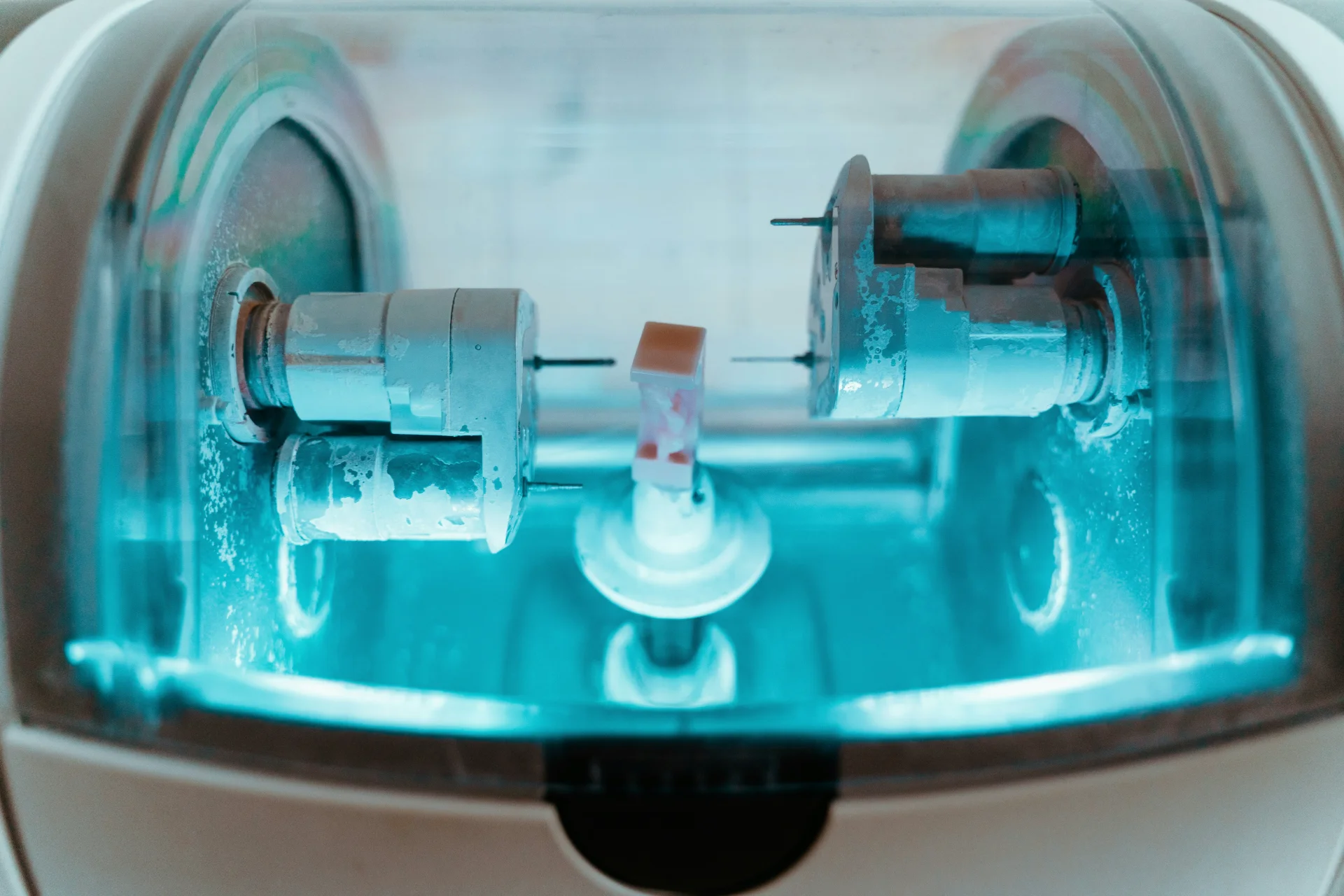
Modern restorative dentistry has shifted decisively toward digital workflows, and the dental milling machine sits at the heart of that transformation. A chairside clinician can now deliver a finished crown in under two hours, and a dental lab can produce hundreds of units a week, because computer-controlled mills carve each restoration from a solid block of material with micron-level precision.
This guide walks through everything a dental professional, lab technician, or student needs to understand about a dental milling machine, from how the hardware works to which materials it processes, which brands lead the market in 2025 and 2026, what a modern unit costs, and how to troubleshoot the most common errors in day-to-day operation. Whether the goal is bringing chairside CAD/CAM into a private practice or expanding a lab with a new five-axis system, the sections below provide the technical context and buying criteria needed to make an informed decision.
What Is A Dental Milling Machine?
A dental milling machine is a computer-controlled cutting device that fabricates dental restorations by removing material from a solid block or disc of ceramic, polymer, wax, or metal. It is the CAM half of the CAD/CAM workflow, taking a digital design file produced in CAD software and translating it into a physical prosthesis that can be cemented or bonded in the mouth.
Every dental milling unit shares the same core purpose – producing crowns, bridges, inlays, onlays, veneers, implant abutments, denture bases, and other restorations with a level of accuracy that hand-layering cannot reliably match. The machine reads a toolpath, spins one or more carbide or diamond-coated burs at high speed, and moves the bur across multiple axes to carve the geometry defined in the digital file.
The first commercial dental milling system, CEREC 1, was installed at the University of Zurich Dental School in September 1985 by Professor Werner Mörmann and engineer Marco Brandestini, as documented in the Journal of the American Dental Association. That unit milled a chairside ceramic inlay in a single appointment and proved that chairside CAD/CAM dentistry was clinically viable. Four decades on, what was once a niche curiosity has become standard equipment in thousands of dental labs and chairside operatories worldwide.
Today, a dental mill machine is routinely described as either a chairside unit, compact enough to sit in a dental operatory for same-visit restorations, or a laboratory unit, typically larger, more automated, and capable of handling metal alloys and full-arch zirconia. Both categories share the same operating principle, subtractive manufacturing driven by a CAD/CAM software pipeline.
For labs that previously outsourced crown and bridge work, a dental crown milling machine converts an intraoral or benchtop scan into a finished restoration in a single workflow, without waiting for a casting or a pressed ceramic. For chairside practices, an in-office mill compresses the traditional two-appointment crown protocol into a single visit, improving both case acceptance and the patient experience.
How Does A Dental Milling Machine Work?
Every dental CAD/CAM machine follows the same three-stage digital chain: scan, design, and mill. Understanding each stage clarifies why the hardware, software, and operator training must be considered as a single system rather than isolated components.
Stage one captures the geometry of the patient's teeth. A chairside clinician uses an intraoral scanner, while a lab receives a physical impression or model that is digitized on a benchtop scanner. The output is an STL or proprietary mesh file that feeds the next stage.
Stage two, computer-aided design, takes place in CAD software such as Exocad, 3Shape Dental System, or a manufacturer-native package like Dentsply Sirona's inLab. The operator designs the restoration on screen, adjusting margins, contacts, occlusion, and emergence profile until the case is ready to manufacture.
Stage three converts the finished design into toolpaths through CAM software, often referred to as the nesting or strategy module. The CAM software positions the restoration inside the chosen block or disc, selects the appropriate burs, and calculates the cutting strategy the mill will follow. This output is sent to the dental milling unit itself.
Inside the machine, a high-speed spindle grips a carbide or diamond-coated bur and traces those toolpaths through the material. The block is clamped in a holder while the spindle moves across three, four, five, or six axes, with the bur changing automatically when the strategy calls for a finer tip or a longer cutting edge. Dry mills extract dust through a vacuum system, while wet mills flush debris with coolant.
A typical single-unit zirconia crown cycle runs eight to twenty minutes, depending on the machine, bur condition, and strategy, after which the restoration is separated from the sprue, polished, and sintered if pre-sintered blanks were used. Lithium disilicate crowns milled from fully crystallized blocks skip the sintering step entirely. Modern mills also connect to the practice or lab network, enabling remote monitoring, automatic software updates, and queue management across multiple machines when production volume demands it.
Types Of Dental Milling Machines: A Comparison
Dental milling machines are classified along three main axes, literally and figuratively. Understanding the differences between axis count, wet versus dry operation, and chairside versus lab configuration helps match a machine to a clinical or production goal.
Axis Count: 3-Axis, 4-Axis, 5-Axis, And 6-Axis
Axis count is the single most important specification because it determines which restorations a mill can physically produce. Each additional axis unlocks new geometries that lower-axis machines cannot access.
A 3-axis dental milling machine moves the bur along X, Y, and Z, which is sufficient for inlays, onlays, simple copings, and basic crowns. Four-axis mills add a rotational A-axis that allows longer span bridges and more efficient nesting. Five-axis systems add a second rotation, enabling undercuts, angled screw-retained implant channels, and complex full-arch geometries. A 6-axis dental milling machine adds further articulation for the most demanding implant bar and telescopic denture work. Five-axis is the current professional standard for a dental lab milling machine, and most flagship models in 2025 and 2026 fall into this category.
Wet, Dry, And Combination Milling
The second defining attribute of a dental mill is how it manages heat and debris during the cut. Material compatibility tracks directly with this choice, so the decision should reflect the planned material library rather than the acquisition cost alone.
Wet milling uses a coolant, typically water or a water-glycol solution, to flush debris and control heat when cutting materials that crack or fracture under dry friction. Glass ceramics like lithium disilicate and most metals require wet milling. Dry milling relies on vacuum extraction to remove dust and is ideal for pre-sintered zirconia, PMMA, and wax. A wet and dry dental milling machine, sometimes called a combination unit, handles both processes in a single footprint, making it the most versatile option for a lab producing a mixed material caseload.
Chairside Versus Laboratory Mills
The physical environment where a mill lives shapes its design priorities, footprint, and software. Matching the machine to its intended location prevents both over- and under-specification.
A chairside dental milling machine is engineered for same-visit crown delivery inside the dental operatory. It prioritizes compact size, quiet operation, a simple user interface, and a short material library focused on single units. A dental lab milling machine for sale is typically a larger, faster, more automated system, often with a multi-block changer, larger disc capacity, and a more ambitious material portfolio that includes CoCr and titanium. The best chairside dental milling machine prioritizes speed and simplicity, while the best dental lab milling machine prioritizes throughput, material flexibility, and five-axis capability.
The table below summarizes how the most common dental milling machine types line up against typical use cases and relative acquisition cost.
Type | Typical axis | Materials | Best for | Relative price |
Chairside wet | 4 or 5 | Lithium disilicate, composite | Same-day crowns | $ |
Chairside dry | 4 or 5 | Pre-sintered zirconia, PMMA | Same-day zirconia | $$ |
Lab dry | 5 | Zirconia, PMMA, wax | High-volume crown and bridge | $$ |
Lab wet-and-dry | 5 or 6 | All of the above, plus glass, ceramic, and metal | Full-service lab | $$$ |
Metal-capable lab | 5 or 6 | Titanium, CoCr | Implant abutments, bars, frameworks | $$$$ |
What Materials Can A Dental Milling Machine Process?
The material library of a modern dental mill directly determines the clinical indications it can cover. A machine limited to zirconia and PMMA cannot produce an e.max crown or a titanium abutment, regardless of its axis count. When evaluating a dental milling machine, the first filter a buyer should apply is the list of materials it is certified to cut, because that defines the clinical scope.
The materials most commonly processed on a dental milling machine include:
Pre-sintered zirconia, the most widely milled dental material, used for copings, crowns, bridges, and full-arch restorations. A dental zirconia milling machine with dry operation and five axes covers almost any zirconia indication.
Fully sintered (pre-crystallized) zirconia, tougher on burs but skips the post-mill sintering oven cycle.
Lithium disilicate, including IPS e.max CAD, milled wet from pre-crystallized blocks that are fired to final strength after milling.
PMMA, used for temporaries, try-ins, and long-term provisional crowns and bridges.
Composite resin blocks and hybrid ceramics, including the Lava Ultimate and Cerasmart families, offering faster cycle times than full ceramic.
Wax, for lost-wax casting patterns, when a lab still runs a metal casting workflow.
Titanium, used for custom implant abutments and bars. A dental implant milling machine that cuts titanium typically requires a more rigid spindle and a wet coolant system.
Cobalt-chromium (CoCr), used for removable partial denture frameworks. Only higher-end five- or six-axis mills with the right spindle torque and tool library can reliably cut CoCr.
Acrylic and thermoplastic disc materials, used for denture bases and nightguards.
A small dental milling machine built for chairside operation typically covers zirconia, lithium disilicate, and PMMA, while a dental milling machine metal unit, designed for a production lab, extends that list to titanium and CoCr.
What Is A Dental Milling Machine Used For?
A dental milling machine is a general-purpose fabrication tool, and the list of restorations it can produce has expanded steadily as software, burs, and materials have improved. For most labs and chairside practices, a milling unit becomes the single most productive piece of equipment in the digital workflow once it is commissioned.
The most common applications of a dental milling machine include:
Single-unit crowns, the entry point for almost every chairside adoption and the largest single workload for a production lab.
Fixed bridges, from three-unit anterior cases to full-arch implant-retained prostheses on a five-axis or six-axis unit.
Inlays and onlays, often on a glass ceramic or hybrid material, delivered in a single chairside visit.
Veneers, typically from lithium disilicate or a leucite-reinforced ceramic, milled to thin margins that require careful strategy selection.
Implant abutments and custom bars, produced on a dental implant milling machine that can cut titanium and, increasingly, zirconia.
Surgical guides and splints, although most labs now prefer 3D printing for these categories due to faster throughput.
Removable partial denture frameworks in CoCr, milled on high-end units to replace traditional casting.
Full dentures and denture bases, milled from pre-polymerized PMMA pucks that outperform conventional cure in strength and predictability.
Orthodontic retainers and aligner models, typically used as part of a combined mill-and-print workflow.
For new lab owners or clinicians mapping a dental treatment plan around digital fabrication, the mill's indication list should match the anticipated case mix rather than the most optimistic brochure specification.
How To Choose A Dental Milling Machine: A Buyer's Checklist
Choosing a dental milling machine is a capital decision that shapes the next five to seven years of a lab's or practice's workflow. The checklist below groups the most important selection criteria into ten areas every buyer should work through before signing a purchase order.
Intended Use And Case Mix
The first question a buyer should answer is whether the machine will live in a chairside operatory, a small boutique lab, or a high-volume production facility. A chairside mill is optimized for a handful of same-day units per day, while a lab mill is built for continuous multi-block production. Aligning the machine to the case mix prevents both overspending and capacity shortfalls.
Axis Count And Motion Range
Axis count maps directly to restoration complexity. Three- and four-axis mills cover simple crowns and short bridges, five axes unlock implant-retained full-arch and complex angulations, and six axes serve the most advanced implant bar and telescope work. Reviewing the anticipated caseload against the axis count keeps the investment proportionate to the clinical scope.
Material Compatibility
Not every mill is certified for every material. A dental zirconia milling machine may not cut lithium disilicate, and few mid-range systems can produce titanium abutments. A buyer should confirm that each planned material is officially validated on the chosen model rather than assuming compatibility from axis count alone.
Wet, Dry, Or Combination Operation
Glass ceramics and metals need wet milling. Pre-sintered zirconia and PMMA run cleanest dry. A combination wet and dry dental milling machine eliminates the trade-off, at a higher sticker price. The decision should track the expected material mix over the machine's working life, not just its first year.
Spindle Power, Speed, And Torque
Spindle specifications determine which materials a mill can handle and how long each cycle runs. A lab evaluating titanium or CoCr work should look for higher torque and a rigid spindle mount, while a chairside practice focused on ceramics can prioritize top RPM and quiet operation.
Software Ecosystem
A closed CAD/CAM ecosystem, where the scanner, design software, and mill all come from the same vendor, simplifies support but limits future flexibility. An open system, where the mill accepts STL files from any source, gives the buyer more negotiating leverage and easier integration with third-party CAD packages like Exocad or 3Shape. Verifying software compatibility, including the list of validated CAM strategies, is non-negotiable before purchase.
Bur Change System
An automatic tool changer (ATC) with at least eight bur positions is standard on modern five-axis mills. Manual bur changes are acceptable on a chairside unit that produces a few cases per day, but they quickly become a bottleneck in a lab setting.
Facility Requirements
Every mill needs a clean compressed air supply, a vacuum extractor for dry work, vibration-stable seating, and the right electrical feed. A buyer should confirm that the specified compressor output, noise rating, and power requirements match the available facility before delivery.
Post-Sale Support
Spindle bearings wear, filters clog, and firmware needs updating. The quality of local service support, the availability of spare parts, and the response time of the service engineer often matter more over the life of the machine than the headline specification. A warranty that covers the spindle, the single most expensive wear part, should be a minimum requirement.
Total Cost Of Ownership
Sticker price is only the starting point. Burs, spare collets, consumable coolant, filters, software licenses, and scheduled maintenance add a meaningful recurring cost. A full TCO model, over at least five years, is the most reliable way to compare two machines with similar purchase prices but different consumable economics.
Top Dental Milling Machine Brands And Models In 2025 And 2026
The dental milling market has consolidated around a small group of established manufacturers plus a growing cohort of strong regional brands. The list below groups the most widely deployed systems by tier, with a brief note on each brand's strengths and typical use case. Product lines change regularly, so buyers should confirm current specifications and availability directly with an authorized distributor.
Premium And Established Brands
The following manufacturers set the benchmark for accuracy, reliability, and long-term support in professional dental milling.
Aman Girrbach (Austria), with the Ceramill Mikro 5x dental milling machine and the fully automated Ceramill Matik, is a reference five-axis platform for zirconia and hybrid ceramic production in labs worldwide.
VHF (Germany), known for the VHF S2 dental milling machine and the K- and E-series, manufactures both its own units and the hardware behind several OEM partners. The VHF S2 is especially popular in boutique labs that need metal capability.
Roland DGA (Japan), with the Roland DWX 30 dental milling machine, the DWX-52D, and the newer DWX-53DC, offers a strong balance of price, footprint, and open-architecture software support. The Roland DWX 52D dental milling machine is a common choice for mid-size labs milling dry zirconia and PMMA.
Planmeca (Finland), with the Planmeca Planmill 30S dental milling machine, is a leading chairside solution integrated with the Planmeca Romexis software suite.
Dentsply Sirona (Germany), through the CEREC Primemill, remains the most recognized chairside name thanks to the brand's forty-year CEREC heritage.
Specialized And Industrial Options
Some practices and research institutions use industrial-grade CNC platforms adapted for dental work. The Haas dental milling machine category, built on repurposed Haas CNC hardware, is uncommon but appears in university and prototyping environments. 3M historically marketed the Lava CAD/CAM line, and buyers searching for a 3M dental milling machine today should verify the current status of the product family with an authorized distributor, as 3M has restructured parts of its dental portfolio in recent years.
Mid-Market And Regional Leaders
Strong regional manufacturers now compete directly with the premium tier on price-to-performance and, increasingly, on specification. The Arum dental milling machine, produced in Korea with models such as the 5X-200, 5X-300, and 5X-500, has built a strong reputation in Asia and is expanding in North America and Europe. Other notable Korean options include the DOF dental milling machine Swing series. A value-oriented Chinese dental milling machine, such as the Aidite dental milling machine, covers entry-level lab zirconia work, while a dry 5-axis dental milling machine, YRC 5X, is popular as a first lab mill in emerging markets. The BSM dental milling machine line offers compact chairside-class units.
A Note On Country Of Origin
Buyers weighing a German dental milling machine, a Japanese dental milling machine, a Korean dental milling machine, or a Chinese dental milling machine should look past the country label to the specific model, the local distributor, and the service footprint. In the United States, a dental milling machine USA distributor usually imports premium European or Japanese hardware rather than manufacturing locally.
How Much Does A Dental Milling Machine Cost? A Buying Guide
Pricing for a dental milling machine varies widely based on axis count, material capability, automation, and country of purchase. The figures below are typical price bands in US dollars for new equipment in 2025 and 2026, and they should be treated as a starting point rather than a firm quotation.
Typical Price Bands
Acquisition cost for a dental cad cam machine scales with axis count, material capability, and automation. Buyers should cross-check the bands below with two or more authorized distributor quotes before finalizing a decision.
Entry-level chairside wet mills: approximately $25,000 to $45,000.
Mid-range chairside or compact lab five-axis dry mills: approximately $40,000 to $80,000.
Premium lab five-axis wet-and-dry mills: approximately $80,000 to $150,000.
Fully automated production-grade mills with disc changers and metal capability: $150,000 and above.
5-axis dental milling machine price for reputable mid-market brands typically lands between $40,000 and $90,000.
Regional pricing varies significantly. A dental milling machine price in Pakistan or India often falls below the US price band due to different distributor margins and import structures, though total landed cost depends on customs duty and service contract terms. The dental milling machine HSN code in both India and Pakistan commonly falls under heading 9018 for dental instruments, but the exact subheading should be confirmed with the current customs tariff before import.
Second-Hand And Refurbished Units
A second-hand dental milling machine can cut acquisition costs by forty to sixty percent. Before buying used, a prospective buyer should request the spindle-hours log, recent calibration records, and a short test mill performed on the buyer's preferred material. Spindle replacement is the single most expensive repair on a used unit, and a mill approaching end-of-life on its spindle can wipe out any acquisition savings.
Financing And Leasing
Most major distributors offer financing options for a dental milling machine, including capital leases, operating leases, and vendor-backed installment plans. Leasing options for dental milling machines typically range from thirty-six to sixty months and often bundle service and training into the monthly payment. For a practice adding a first mill, a five-year operating lease can smooth cash flow while the new workflow is being validated.
Where To Buy And What To Expect In Warranty
Reputable suppliers include authorized OEM distributors, established dental trade shows such as IDS and Lab Day Chicago, and direct vendor channels. Buyers researching a dental lab milling machine for sale on marketplaces like Alibaba should be cautious, verify the supplier's service footprint, and insist on a written warranty. A standard new-machine warranty covers one to three years on the spindle, electronics, and labor, and reputable vendors offer extended service contracts for an additional annual fee.
Dental Milling Vs. 3D Printing: Which Is Right For Your Workflow?
Dental milling and dental 3D printing solve different production problems, and most modern labs operate both technologies in parallel rather than replacing one with the other.
Milling is a subtractive process that removes material from a solid block. It delivers the surface finish, flexural strength, and long-term clinical track record required for definitive ceramic and metal restorations, including zirconia crowns, lithium disilicate veneers, titanium abutments, and CoCr frameworks. 3D printing is additive, building an object layer by layer from a photopolymer resin, thermoplastic filament, or metal powder. It excels at high-volume, low-margin, geometrically complex items such as surgical guides, study models, aligner molds, night guards, and temporary crowns.
For materials like zirconia, the evidence base still favors milling. A 2023 systematic review and meta-analysis published in Biomimetics concluded that milled zirconium crowns demonstrated higher clinical performance and satisfactory survival compared with 3D-printed alternatives. For surgical guides and dental models, however, printing is faster, cheaper per unit, and enables geometries that subtractive tools cannot easily reach.
A well-equipped lab in 2026 typically runs a dental milling machine CAD CAM workflow for definitive restorations alongside a resin 3D printer for models, guides, and temporaries, integrating both outputs into a single digital order system. The decision is rarely either-or, but rather a question of how much of each technology the case mix requires.
Installing And Integrating A Dental Milling Machine Into Your Digital Workflow
A dental milling machine produces value only when it sits inside a fully integrated digital workflow. Installation planning should cover hardware interoperability, utility requirements, software training, and ongoing case handoff between scanner, designer, and CAM operator.
The digital chain begins with the scanner. A chairside unit pairs with an intraoral scanner such as the Primescan 2, a TRIOS, or a Medit i700. A lab either receives a direct STL export from a referring practice or digitizes a physical impression on a benchtop scanner, such as the 3Shape E4 or the Medit T-Series. Whichever route the case takes, the scanner output must be compatible with the CAD software selected for the workflow.
CAD/CAM software is the second integration layer. Exocad, 3Shape Dental System, hyperDENT, and Millbox cover most of the professional market, and each CAM package is validated against a defined list of mills and material strategies. A buyer should confirm that the chosen mill is officially supported in the CAM software before purchase. Closed ecosystems like the CEREC and Planmeca FIT families lock the scanner, software, and mill together, trading flexibility for simplicity.
Utilities are the third integration layer. A compressor for a dental milling machine must deliver oil-free, dried, filtered air at the specified CFM and pressure. A vacuum cleaner for dental milling machine use, usually a HEPA-equipped extractor, is mandatory for dry zirconia work. A dental scanner and milling machine installation also requires vibration-stable seating, typically a dedicated dental milling machine table or a purpose-built stand, and network connectivity for firmware updates and remote service.
Operator training rounds out the integration. A CAM technician should complete the manufacturer's certification before production cases run, and practices adopting chairside milling benefit from a structured onboarding period where the first cases are non-urgent.
How To Maintain A Dental Milling Machine For Optimal Performance
Consistent maintenance is the single biggest factor in long-term mill accuracy. A well-maintained five-axis unit can run ten or more years with close to original-factory spindle accuracy, while a neglected machine drifts out of tolerance within months and produces restorations that fit poorly, chip on delivery, or fail prematurely.
Daily Checks
A technician should inspect every bur at the start of each shift, clean the milling chamber, verify coolant level for wet work, and confirm the extraction filter is clear for dry work. A simple logbook entry for each mill, each day, is the easiest way to catch trends before they become service calls.
Weekly Tasks
Weekly maintenance extends to components that do not need attention every shift, including cleaning the spindle collet, wiping down the linear guides, lubricating axes per the manufacturer's schedule, and inspecting the block holder for wear. A short test mill on a validated reference block once a week confirms the spindle is still cutting to specification.
Monthly And Quarterly Calibration
Most dental milling machine calibration procedures run monthly or quarterly and include axis zeroing, spindle run-out measurement, and bur-length calibration. The manufacturer supplies the reference tools, and the procedure typically takes thirty to sixty minutes. Skipping calibration is the most common root cause of silent accuracy drift.
Bur Management
Tracking the milling hours on every bur and replacing it before it exceeds its rated life is the single most effective way to prevent chipping and improve margin accuracy. A three-bur rotation for zirconia, covering roughing, finishing, and detail, is typical on a production lab mill.
Preventive Maintenance Contracts
An annual OEM service visit typically covers spindle inspection, firmware updates, and a full calibration, reducing unplanned downtime and extending the working life of the machine. Most premium brands offer service contracts that bundle labor and key consumables for a fixed annual fee.
Common Dental Milling Machine Errors And How To Fix Them
Even a well-maintained mill produces occasional errors. The most frequent problems cluster around worn burs, calibration drift, contaminated utilities, and software mismatches. The sections below summarize the most common failure modes a lab or chairside operator encounters, and the first-line fix for each.
Chipping On Restoration Margins
Margin chipping is usually traced to a worn detail bur, an overly aggressive finishing strategy, or a zirconia block that has been over-sintered. Replace the finishing bur, verify that the CAM strategy matches the block manufacturer's recommendation, and confirm the sintering profile before repeating the case.
Bur Breakage Mid-Cycle
Mid-cycle bur breakage usually indicates an overused bur, an incorrect feed rate for the material, or a block that was not fully seated in the holder. The first-line fix is replacing the bur, reseating the block, and verifying that the CAM file references the correct material.
Poor Fit Or Inaccurate Margins
Inaccurate margins most often point to calibration drift in the mill, worn spindle collets, or scanner inaccuracy at the capture stage. Run a calibration cycle, inspect the collet for damage, and if the issue persists, re-scan the case on a verified scanner before escalating to service.
Spindle Over-Current Or Spindle Error Messages
Spindle warnings typically indicate bearing wear, contamination in the collet, or excessive side load from an aggressive strategy. Clean the collet, verify the bur length setting, and if the error recurs, schedule a spindle inspection with the service engineer.
Axis Error Or Homing Failure
Axis errors usually indicate debris on a linear rail, a failed limit switch, or a cable fault. Clean the rails, inspect the limit switches, and reset the machine. Repeated failures after cleaning warrant an OEM service call.
Software Or CAM Disconnect
Communication errors between the CAM workstation and the mill often trace to a firmware mismatch after a scanner or software update. Reverting the update or installing the vendor's current patch usually resolves the issue.
Dust Or Coolant Problems
Excessive dust contamination in a dry mill typically reflects a clogged HEPA filter or a failing extractor, and coolant leaks or low flow in a wet mill point to a clogged line or a worn pump. Replacing consumables on schedule prevents both problems.
When To Call A Service Engineer
Unusual noise, a burnt electrical smell, repeated axis errors after cleaning, and persistent calibration failures are red flags that should trigger an OEM service visit rather than further in-house troubleshooting.
Bottom Line
A dental milling machine is the productive engine of modern CAD/CAM dentistry, translating a digital design into a precise physical restoration in minutes rather than days. The right machine for any given lab or practice depends on the case mix, the preferred material library, the available budget, and the level of after-sales support accessible in the local market.
For a chairside clinician aiming to deliver same-visit crowns, a compact four- or five-axis unit paired with an intraoral scanner is the logical starting point. For a production lab, a five-axis wet-and-dry mill with an automatic tool changer and proven metal capability provides the broadest clinical scope and the longest useful life. In both settings, disciplined maintenance and a realistic total cost of ownership model matter more than any single specification on the brochure.
Frequently Asked Questions
What is a dental milling machine used for?
A dental milling machine fabricates crowns, bridges, veneers, inlays, onlays, implant abutments, denture bases, and surgical guides from solid blocks or discs of zirconia, lithium disilicate, PMMA, wax, titanium, or cobalt-chromium, all driven by a CAD/CAM digital design file.
How much does a new dental milling unit typically cost?
Prices range widely. Entry-level chairside units start around $25,000, mid-range lab five-axis dry mills run between $40,000 and $80,000, premium wet-and-dry systems sit between $80,000 and $150,000, and fully automated production mills exceed $150,000, depending on configuration.
What is the difference between wet and dry dental milling machines?
Wet mills flush debris with coolant and handle glass, ceramics, and metals, including lithium disilicate and titanium. Dry mills use vacuum extraction and are ideal for pre-sintered zirconia, PMMA, and wax. Combination units cover both processes in one footprint.
What software is compatible with most dental milling systems?
Most professional mills work with Exocad, 3Shape Dental System, hyperDENT, and Millbox. Closed ecosystems like CEREC and Planmeca FIT use proprietary software. Buyers should always confirm validated compatibility between the CAM package and the selected mill before purchase.
Are 5-axis dental milling machines worth the extra cost?
For labs producing implant bars, full-arch bridges, angled screw channels, or anterior cases with complex undercuts, a five-axis mill is a practical requirement. For simple posterior crowns only, a four-axis unit remains viable but less future-proof.
How long does it take to mill a single crown?
Cycle times depend on material, axis count, and strategy. A single zirconia crown typically mills in eight to twenty minutes, while a lithium disilicate chairside crown runs ten to fifteen minutes. Post-mill sintering adds thirty to ninety minutes for pre-sintered zirconia.
Where can I find reputable suppliers for dental milling equipment?
Authorized OEM distributors, regional dental trade shows such as IDS and Lab Day Chicago, and direct manufacturer sales teams are the most reliable channels. Independent review sites and peer recommendations help verify service quality before signing a purchase agreement.
What is the HSN code for a dental milling machine?
In India and Pakistan, a dental milling machine generally falls under HSN heading 9018, covering instruments and appliances used in dental sciences. The specific eight-digit subheading varies by configuration, so importers should verify the current customs tariff at the time of purchase.
Is it safe to buy a second-hand dental milling machine?
A used mill can be an excellent investment if it is backed by a spindle-hours log, a recent calibration record, and a test mill on the buyer's preferred material. The spindle is the highest-cost wear part and should be the primary focus of any pre-purchase inspection.
What financing or leasing options are available for a dental mill?
Most OEM distributors offer capital leases, operating leases, and installment plans over thirty-six to sixty months. Many bundle services, consumables, and training into the monthly payment, which simplifies budgeting and reduces the upfront capital outlay.