What Is a Dental Curette: An A–Z Explainer for Dentist
Dental curettes are among the most frequently used hand instruments in periodontal therapy. Millions of Americans undergo scaling and root planing (SRP) each year, yet few outside...
Written by Marcus Hale
Read time: 9 min read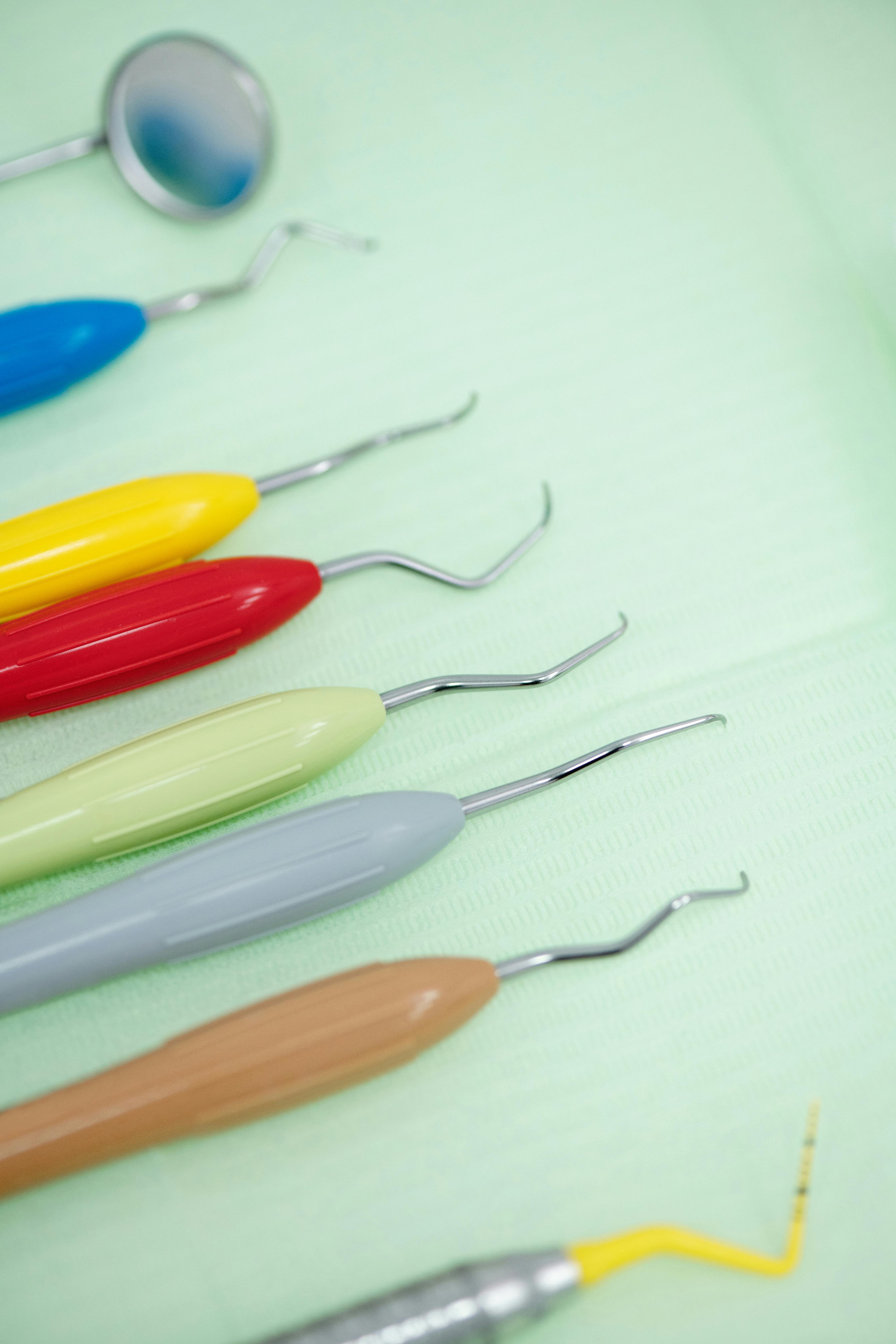
Dental curettes are among the most frequently used hand instruments in periodontal therapy. Millions of Americans undergo scaling and root planing (SRP) each year, yet few outside the dental profession know which instruments make the procedure possible.
Curettes for dental scaling are purpose-built hand tools with rounded, scoop-shaped blades and rounded toes. They are designed to remove calculus (tarite), bacterial plaque, and diseased tissue from tooth surfaces both above and below the gumline.
So what are dental curettes, and why do they matter? This article serves as a single, detailed resource for anyone who wants to understand how these instruments work, what makes one design different from another, and how dental professionals choose the right curette for a given case.
The information is written for two audiences: curious readers exploring dentistry, and dental students, hygienists, and periodontists building or refining their clinical knowledge. The sections that follow cover clinical uses, physical anatomy, the differences between universal and Gracey curettes, the complete Gracey numbering system, selection criteria, prominent brands, purchasing guidance, and instrument care.
For practitioners developing a comprehensive dental treatment plan for periodontal cases, understanding curette selection is an essential step.
What Is a Dental Curette Used For?
A dental curette is a hand instrument used in periodontal therapy to remove calculus deposits, bacterial plaque, and diseased cementum from tooth root surfaces. Curettes are the primary instruments used during scaling and root planing (SRP), the gold-standard non-surgical treatment for periodontal (gum) disease.
SRP is a deep-cleaning procedure that goes below the gumline to remove hardened deposits responsible for gum inflammation and bone loss. The procedure is one of the most common treatments in periodontal practice, and curettes are the instruments that make it possible.
Clinicians use curettes for several specific tasks:
Supragingival scaling, which removes deposits from visible tooth surfaces above the gumline
Subgingival scaling, which targets calculus and plaque below the gumline inside the periodontal pocket
Root planing, which smooths the root surface to promote reattachment of gum tissue to the tooth
Soft tissue curettage, which involves removing the diseased lining of the periodontal pocket (less commonly performed as a standalone procedure today)
Use during open-flap debridement, a surgical procedure that provides direct access to root surfaces for thorough cleaning
One important distinction separates curettes from sickle scalers. Sickle scalers have pointed tips and are designed for supragingival use only. Curettes have rounded toes that allow safe insertion below the gumline without lacerating the soft tissue wall of the pocket.
This distinction is especially relevant in the context of minimally invasive dentistry, where preserving healthy tissue during periodontal procedures is a core treatment philosophy.
What Does a Dental Curette Look Like?
Understanding what a dental curette looks like helps readers visualize how the instrument interacts with tooth and tissue surfaces. A curette consists of three main parts: the handle, the shank, and the working end (blade).
The handle is a cylindrical grip, typically textured with a knurled pattern for better control. Handles come in several diameters. Larger-diameter and hollow-core handles are increasingly popular because they reduce hand fatigue and improve tactile feedback during extended procedures.
The shank is the metal section that connects the handle to the working end. It is divided into the functional shank (the full length from handle to blade) and the terminal shank (from the last bend to the blade).
The number and angle of bends in the shank determine which tooth surfaces the instrument can reach. Posterior curettes have more complex shank bends than anterior designs to navigate around adjacent teeth.
The working end, or blade, is the business end of the instrument. It consists of the face (the flat upper surface), two lateral surfaces, a back (the rounded underside), a toe (the rounded tip), and one or two cutting edges formed where the face meets the lateral surfaces.
In cross-section, a curette blade has a semicircular profile. The rounded back and toe are the features that allow safe subgingival insertion without tearing gum tissue. This geometry is what separates curettes from sickle scalers, which have a triangular cross-section and a pointed back.
Most curettes are double-ended, meaning each instrument has two working ends connected by a single handle. The two working ends are typically mirror images of each other, designed so the clinician can work on both sides of a tooth by simply flipping the instrument. This double-ended design reduces the total number of instruments needed during a procedure and streamlines tray setup.
A labeled diagram or photo of a curette with anatomy callouts is recommended for the published version of this article to give readers a clear visual reference.
What Are the Main Differences Between Gracey and Universal Curettes?
Universal curettes and Gracey curettes are the two main categories of periodontal curettes. Understanding the differences between universal and area-specific dental curettes is one of the most important concepts in periodontal instrumentation.
Universal curettes are designed to work on all tooth surfaces with a single instrument. Gracey curettes are area-specific, with each numbered pair engineered for particular tooth surfaces in particular regions of the mouth. The key differences come down to five factors.
On a universal curette, the face of the blade sits at a 90-degree angle to the terminal shank. On a Gracey curette, the face is offset at approximately 60 to 70 degrees relative to the terminal shank. This offset is what makes the Gracey design area-specific.
Universal curettes have two usable cutting edges per working end, which means either side of the blade can engage the tooth surface. Gracey curettes have only one usable cutting edge per working end, always the lower (outer) edge.
A single universal curette can adapt to multiple tooth surfaces, while each Gracey pair targets specific surfaces and tooth regions. Universal curettes offer speed and flexibility for general scaling, and Gracey curettes provide more precise adaptation to complex root anatomy, particularly in deeper pockets.
In clinical practice, universal curettes are often preferred for initial scaling and supragingival work. Gracey curettes tend to be favored for definitive subgingival scaling and root planing.
Feature | Universal curette | Gracey curette |
Blade-to-shank angle | 90 degrees | 60–70 degrees (offset) |
Cutting edges per end | Two | One (lower/outer edge) |
Area specificity | Adapts to multiple surfaces | Each number targets specific surfaces |
Versatility | High – faster for general scaling | Lower – requires multiple instruments |
Precision in deep pockets | Moderate | High – superior root adaptation |
Typical clinical role | Initial scaling, prophylaxis | Definitive SRP, deeper pockets |
Universal Curettes: Design and Clinical Application
Universal curettes are double-ended instruments with paired, mirror-image working ends. Each end has two cutting edges, a 90-degree blade-to-shank angle, and a rounded toe. This symmetrical design gives clinicians maximum flexibility with fewer instruments.
The key clinical advantage is adaptability. A single universal curette can be used on anterior and posterior teeth, buccal and lingual surfaces, simply by switching the working end and adjusting the handle position.
Common universal designs include the Columbia 13/14 and 4R/4L (widely taught in dental hygiene programs), the Barnhart 1/2 and 5/6, and the Langer curettes. Langer curettes are hybrid instruments combining universal-style shanks with Gracey-style blade offsets.
Universal curettes are most appropriate for general prophylaxis scaling, moderate calculus removal, patients with shallow to moderate pockets, and clinical settings where efficiency and speed are priorities. They are also commonly used for initial debridement before switching to area-specific instruments for definitive root planing.
Gracey Curettes: Area-Specific Design and the Numbering System
Gracey curettes are the instruments that dental students and hygienists spend the most time mastering. Each numbered pair has a unique combination of shank bends and blade angles engineered for specific tooth surfaces and mouth regions. The complete numbering system runs from 1/2 through 17/18.
Gracey 1/2
Designed for anterior teeth, all surfaces. The relatively straight shank provides direct access to incisors and canines.
Gracey 3/4
Also designed for anterior teeth, all surfaces, but with an alternative shank angle that some clinicians prefer over the 1/2 for certain access situations.
Gracey 5/6
Targets anterior and premolar teeth. The slightly more complex shank offers deeper pocket access than the 1/2 while still working well on anterior surfaces.
Gracey 7/8
Designed for posterior teeth, buccal and lingual surfaces. The shank geometry allows the blade to adapt to the broader contours of molars and premolars from the cheek and tongue sides.
Gracey 9/10
An alternative to the 7/8 for posterior buccal and lingual surfaces. Some clinicians find its shank angle more comfortable for specific quadrants.
Gracey 11/12
Designed for posterior teeth, mesial surfaces. The shank configuration reaches the mesial (front-facing) surfaces of premolars and molars, an area that requires a specific approach angle for effective root planing.
Gracey 13/14
Designed for posterior teeth, distal surfaces. The distal (back-facing) surfaces of posterior teeth are among the most challenging to instrument, and the 13/14 shank is specifically angled for this access.
Gracey 15/16
An alternative to the 11/12 for posterior mesial surfaces. The 15/16 has a longer, more angled terminal shank that can provide improved access in deeper pockets.
Gracey 17/18
An alternative to the 13/14 for posterior distal surfaces. The extended shank makes it particularly useful for reaching the distal surface of the last molar in the arch.
Gracey number | Target teeth | Target surfaces |
1/2 | Anterior | All surfaces |
3/4 | Anterior | All surfaces (alternate shank) |
5/6 | Anterior and premolars | All surfaces |
7/8 | Posterior | Buccal and lingual |
9/10 | Posterior | Buccal and lingual (alternate) |
11/12 | Posterior | Mesial |
13/14 | Posterior | Distal |
15/16 | Posterior | Mesial (extended shank) |
17/18 | Posterior | Distal (extended shank) |
Beyond the standard numbering, several Gracey variations exist to address specific clinical scenarios. After Five curettes have a terminal shank that is 3 mm longer than standard, enabling them to reach pockets deeper than 5 mm. Mini Five curettes feature a blade that is half the length of the standard version, making them suited for narrow pockets, furcation areas, and root concavities.
Rigid curettes have a thicker, stiffer shank built for removing heavy, tenacious calculus. These modified versions follow the same numbering system as standard Gracey curettes. A clinician might use an After Five 11/12 for the mesial surface of a posterior tooth with a 7 mm pocket, or a Mini Five 13/14 for a distal furcation.
In daily practice, most periodontal clinicians do not carry the full set of nine Gracey pairs at all times. A common working set includes the 1/2 or 5/6 for anteriors, the 7/8 for posterior buccal and lingual surfaces, the 11/12 for posterior mesials, and the 13/14 for posterior distals. This four-pair core covers the majority of clinical scenarios, and additional instruments are pulled from storage as the case requires.
How to Choose the Right Dental Curette for Deep Cleaning
Choosing the right curette for a deep cleaning case depends on several clinical variables. A mismatch between the instrument and the clinical scenario can reduce treatment effectiveness, increase hand fatigue, and compromise patient outcomes.
Pocket depth is the first consideration. Shallow pockets (4 mm or less) respond well to standard Gracey curettes or universal designs. Moderate pockets (4 to 6 mm) typically call for standard Gracey curettes. Deep pockets (greater than 5 mm) benefit from After Five or Mini Five Gracey curettes with extended shanks.
Tooth location matters as well. Anterior teeth are accessible with Gracey 1/2, 3/4, or 5/6. Posterior teeth require the 7/8 through 17/18 range, depending on the target surface.
Root anatomy complexity also plays a role. Teeth with furcations, concavities, or deep root grooves demand Mini Five or area-specific Gracey curettes that can navigate complex root topography.
The type and amount of calculus present should guide instrument selection, too. Heavy, tenacious calculus is best addressed with a rigid curette or a universal design for initial debridement. Light residual deposits respond well to a standard or finishing Gracey curette.
Handle preference and shank flexibility round out the decision. Larger-diameter handles reduce grip strain during long procedures, and hollow-core handles improve tactile sensitivity. Flexible shanks suit light scaling and tactile exploration, while rigid shanks are necessary for removing heavy calculus where more lateral pressure is required.
Two common clinical scenarios illustrate the selection process:
In a patient with generalized moderate periodontitis and 5 to 7 mm pockets, the clinician might begin with a rigid universal curette for initial debridement across all quadrants. After the bulk removal phase, switching to After Five Gracey 11/12 and 13/14 allows definitive root planing of posterior mesial and distal surfaces.
In a patient with localized deep pockets around a single molar with furcation involvement, a Mini Five Gracey 11/12 would allow the clinician to navigate the narrow furcation entrance and concave root surfaces with control.
Best Dental Curettes for Periodontal Scaling and Root Planing
The question of which curettes are best for periodontal scaling and root planing does not have a single answer. The optimal choice depends on the clinical situation, the clinician’s preference, and the characteristics of the patient’s disease.
Certain instrument qualities consistently contribute to effective SRP. These include a sharp factory edge that reduces the need for immediate resharpening, consistent blade geometry across instruments in the same product line, durable stainless steel that resists corrosion through repeated autoclaving, an ergonomic handle that minimizes fatigue during hour-long appointments, and smooth spring-back tactile feedback that helps the clinician sense root irregularities.
Many clinicians use a combination of universal curettes for initial scaling and Gracey curettes for definitive root planing. This two-stage approach takes advantage of the speed and versatility of universal designs during the bulk removal phase, then leverages the precision of area-specific Gracey curettes for final root surface treatment.
Research has confirmed that blade quality varies across manufacturers. A study published in the Journal of the International Society of Preventive and Community Dentistry used scanning electron microscopy (SEM) to examine the working ends of Gracey curettes from multiple manufacturers.
The researchers found significant differences in blade smoothness, toe symmetry, and cutting edge quality. Curettes from some manufacturers exhibited rough blade surfaces and nonfunctional wire edges, while others consistently produced smooth blades with sharp, functional cutting edges. The study recommended that clinicians inspect curette’s cutting edges before use rather than relying solely on brand familiarity or price.
Top-Rated Dental Curette Brands Recommended by Dental Professionals
The curette market in the United States includes several established manufacturers that dental professionals consistently recognize for quality. The overview below provides an informational look at the brand landscape. Brand preference is highly personal among clinicians, and no single manufacturer is universally considered superior.
Hu-Friedy, now part of the Integra LifeSciences group, is the most widely recognized name in dental hand instruments globally. The company produces the original Gracey curette design and offers the broadest product line, including the After Five, Mini Five, and rigid variations. Their instruments are a standard reference point in dental hygiene education programs.
American Eagle Instruments is known for its XP Technology line, which features a proprietary metallurgy that the company claims extends edge retention and reduces the frequency of sharpening. American Eagle instruments are popular among hygienists who prioritize extended sharpness.
LM-Dental, based in Finland, is recognized for ergonomic silicone-coated handles and lightweight instrument design. LM-Dental curettes are frequently chosen by clinicians who deal with hand fatigue or repetitive strain concerns.
Deppeler, based in Switzerland, is known for diamond-coated Gracey curettes intended for root surface polishing. Deppeler instruments occupy a specialized niche for clinicians who want a finishing instrument that goes beyond standard scaling.
PDT (Paradise Dental Technologies) is a US-based manufacturer valued for the balance of quality and affordability in its hand instrument lines. PDT instruments are often recommended as a strong mid-range option.
Nordent Manufacturing is another US-based manufacturer with a reputation for consistent, hand-sharpened cutting edges and reliable instrument construction. For a broader look at surgical and diagnostic instruments used alongside curettes, Dental Reviewed’s dental equipment guide covers the full range of tools found in modern practices.
Where to Buy High-Quality Dental Curettes Near Me
Purchasing professional-grade periodontal instruments requires selecting a source that ensures authenticity, proper warranty coverage, and access to the full product range.
Major dental supply distributors such as Patterson Dental, Henry Schein, and Benco Dental serve as the primary purchasing channel for most US dental offices. These distributors carry instruments from multiple manufacturers and offer account-based pricing, delivery logistics, and customer support.
Manufacturer direct websites from companies like Hu-Friedy, American Eagle, and LM-Dental allow practitioners to purchase straight from the source. This channel ensures access to the latest models and full product lines.
Several reputable online retailers also specialize in dental instruments and serve as authorized dealers for major brands. The key consideration is verifying that any online seller is an authorized representative for the brand in question.
Professional-grade periodontal instruments should come from verified dental suppliers, not general retail marketplaces, to ensure product authenticity and warranty validity.
Dental trade shows and conferences, such as the ADA Annual Meeting, the CDA Presents conference, and the Greater New York Dental Meeting, offer the opportunity to handle instruments in person before purchasing. Many manufacturers offer show-specific pricing and product demonstrations at these events.
Where Can I Find Professional-Grade Periodontal Instruments Online?
Clinicians looking for professional-grade periodontal instruments online should start with the manufacturer’s official website or the e-commerce portals of major dental distributors. These sources guarantee that the instruments meet the manufacturer’s quality standards and come with full warranty protection.
Purchasing from unverified third-party sellers introduces the risk of receiving counterfeit, damaged, or expired inventory. For practitioners building a new practice from scratch, Dental Reviewed’s new dental practice checklist covers instrument procurement alongside other startup essentials, including where to source dental equipment and sterilization systems.
Curette Care: Sharpening, Sterilization, and Maintenance
Proper care of dental curettes directly affects clinical performance, patient outcomes, and instrument longevity. The three pillars of curette maintenance are sharpening, sterilization, and routine inspection.
Sharpening
A sharp curette is essential for effective scaling and root planing. A dull curette burnishes calculus onto the root surface instead of removing it, increases the force required per stroke, accelerates hand fatigue, and causes unnecessary tissue trauma.
The sharpening process involves using a flat or cone-shaped sharpening stone, maintaining the original blade angle, and applying consistent strokes along the cutting edge. Sharpness can be tested by drawing the blade lightly across a plastic testing stick or acrylic rod. A sharp edge catches the surface, while a dull one slides across it.
Some modern curettes, such as the American Eagle XP line, are manufactured with proprietary alloys that the company claims extend sharpness and reduce resharpening frequency. Regardless of the instrument brand, periodic sharpening is part of standard instrument care.
Accurate documentation of instrument maintenance can be incorporated into a practice’s broader dental charting and clinical record-keeping protocols.
Sterilization
Dental curettes are classified as critical instruments under the Spaulding Classification because they penetrate soft tissue and contact bone. The CDC mandates heat sterilization between every patient use.
Standard autoclave settings are 121°C (250°F) for 30 minutes in a gravity-displacement cycle, or 132°C (270°F) for 4 minutes in a prevacuum (Type B) cycle. The ADA reinforces these recommendations and urges all practicing dentists to follow the CDC’s guidelines for instrument reprocessing.
Before autoclaving, curettes should be cleaned using an ultrasonic cleaner or thorough manual scrubbing with enzymatic detergent, rinsed with purified water, inspected for remaining debris or damage, and packaged in sterilization pouches or cassettes labeled with the sterilizer used, cycle number, and date.
Chemical sterilants (cold sterilization) are not recommended for curettes. Chemical methods carry a higher risk of incomplete sterilization and may leave residues that could contact patient tissue during the next procedure.
Sterilization monitoring is equally important. The CDC recommends a combination of mechanical monitoring (checking time, temperature, and pressure readouts each cycle), chemical indicators (color-change strips in every package), and biological indicators (spore testing at least weekly).
Maintaining sterilization records is a regulatory requirement in most states and provides an auditable trail in the event of an inspection. Practices evaluating their infection control setup can find detailed guidance in Dental Reviewed’s guide on choosing dental sterilization equipment.
Maintenance and Retirement
Routine inspection after each sterilization cycle helps catch issues early. Clinicians should look for corrosion, handle cracks, blade wear, and loss of shank rigidity.
An instrument should be retired when it cannot be sharpened back to proper geometry, when the shank has lost its original stiffness, or when visible corrosion or structural damage is present.
Investing in consistent maintenance pays dividends in treatment quality and clinician comfort. In many practices, these reprocessing and inspection duties fall within the scope of dental assistant responsibilities, making staff training on proper instrument care essential.
Bottom Line
Dental curettes are foundational instruments in periodontal care, and understanding their types, design features, and proper maintenance is essential for every dental professional. From the adaptable universal curettes to the precision-engineered Gracey numbering system, each design serves a distinct clinical purpose that contributes directly to patient outcomes.
Choosing quality instruments from reputable manufacturers, maintaining them with consistent sharpening and sterilization protocols, and knowing how to match the right curettes to each clinical scenario all contribute to more effective periodontal therapy.
For dental students and hygienists, mastering curette selection is one of the most practical skills developed during clinical training. For experienced practitioners, periodically reassessing the curette collection against the clinical scenarios encountered in daily practice can reveal gaps worth filling.
Frequently Asked Questions
What is the difference between a curette and a scaler?
A curette has a rounded toe and a semicircular blade cross-section, which allows safe use below the gumline. A sickle scaler has a pointed tip and a triangular cross-section designed for supragingival calculus removal only. Inserting a sickle scaler subgingivally risks puncturing the soft tissue wall of the periodontal pocket.
How many Gracey curettes are there?
The standard Gracey set includes nine numbered pairs: 1/2, 3/4, 5/6, 7/8, 9/10, 11/12, 13/14, 15/16, and 17/18. When counting the modified versions (After Five, Mini Five, and rigid), the total number of available Gracey instruments is considerably larger. Most clinicians maintain a core set of four to six pairs and add specialized versions as needed.
Can dental curettes be used on implants?
Standard stainless steel curettes should not be used on implant surfaces because they can scratch the titanium, creating rough areas that harbor bacteria. Implant-specific curettes are made from softer materials such as titanium, plastic, or carbon fiber composites that clean the implant surface without damaging it.
How often should dental curettes be sharpened?
Curettes should be sharpened as soon as they lose their cutting edge. Many clinicians sharpen before every patient or at a minimum before every SRP appointment. Testing with a plastic stick or acrylic rod between patients is a quick way to determine if sharpening is needed.
Are dental curettes single-use or reusable?
The vast majority of dental curettes are reusable instruments designed to withstand hundreds of sterilization cycles. Single-use disposable curettes exist but are uncommon in standard periodontal practice due to cost and environmental considerations.
What is the correct angulation for a dental curette?
The blade face should be angled between 60 and 80 degrees relative to the tooth surface during scaling. An angle below 60 degrees tends to slide over calculus without engaging it, while an angle above 80 degrees risks cutting into the cementum or root surface.
Why do Gracey curettes have numbers?
Each number corresponds to a specific combination of shank bends and blade angle designed to reach particular tooth surfaces in particular regions of the mouth. The numbering system allows clinicians to quickly identify and select the correct instrument for the target area.
Do dental hygienists use curettes?
Curettes are among the most frequently used instruments in dental hygiene practice. Hygienists perform the majority of scaling and root planing procedures in clinical settings, and curette selection and technique are core components of dental hygiene education.