Dental Rongeurs: Types, Uses, Maintenance, and How to Choose the Right One
A tooth extraction might seem straightforward from the outside, but what happens after the tooth leaves its socket often determines how well the patient heals. Sharp, uneven...
Written by Mantas Petraitis
Read time: 11 min read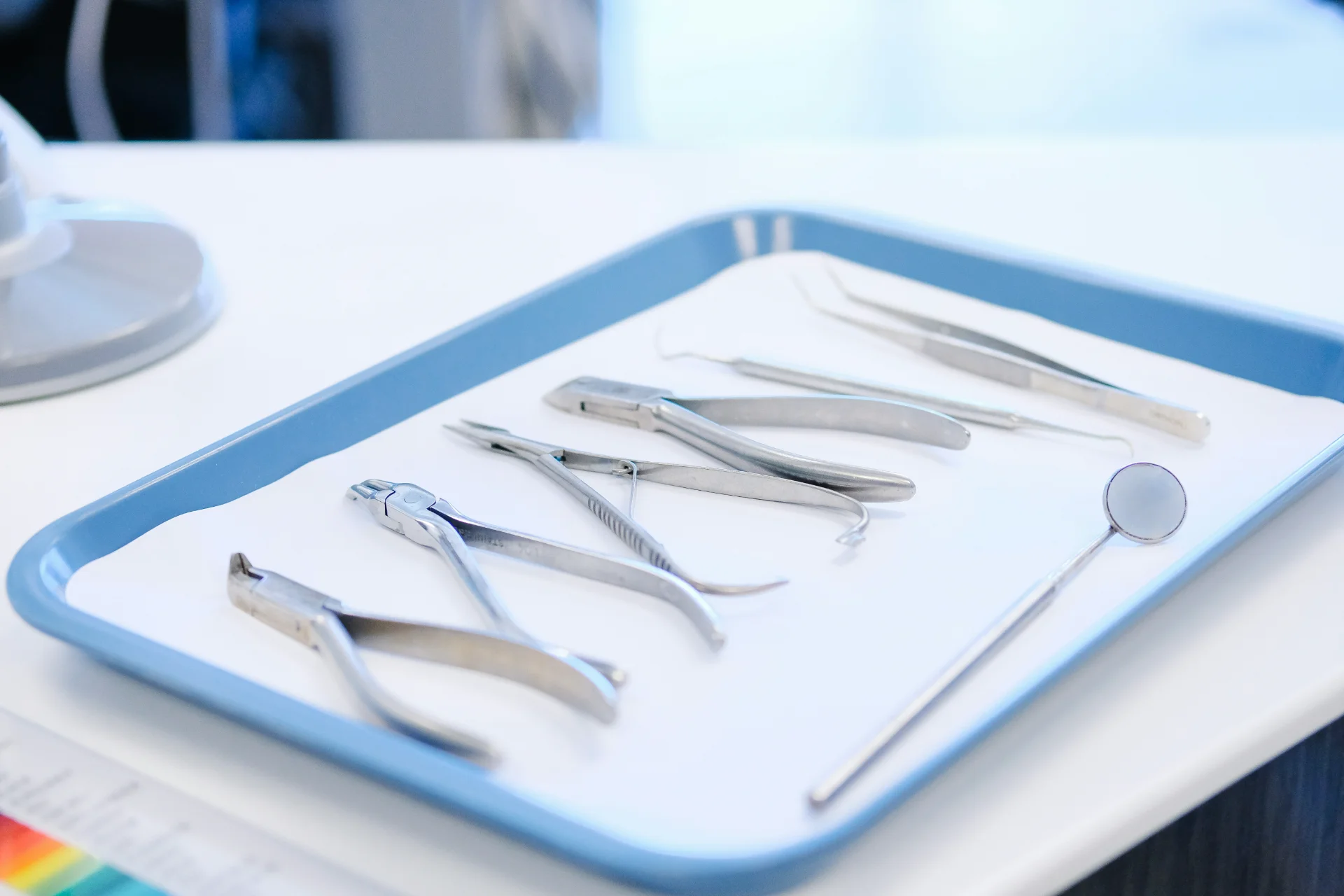
A tooth extraction might seem straightforward from the outside, but what happens after the tooth leaves its socket often determines how well the patient heals. Sharp, uneven ridges of alveolar bone left behind can cause pain, delay tissue recovery, and complicate future prosthetic work. That is where dental rongeurs become essential.
Dental rongeurs are heavy-duty, spring-loaded surgical instruments with sharp, scoop-shaped beaks designed to cut, trim, and contour bone and soft tissue in the oral cavity. Rongeurs dental instruments take their name from the French word rongeur, meaning “gnawer” or “rodent,” a fitting description of the way their beaks bite through bone in small, controlled increments.
Oral surgeons, general dentists, periodontists, and dental students all rely on rongeurs for procedures that range from simple post-extraction ridge smoothing to complex alveoloplasties and sinus floor modifications. As part of a broader category of dental equipment used in surgical settings, rongeurs deserve detailed attention. Despite their importance, comprehensive information about these instruments can be hard to find in one place.
This article covers everything dental professionals, students, and curious readers need to know about rongeurs in dental practice: their clinical uses, the major design types, how to choose the right instrument, where to buy one, how to sterilize and maintain it, and how to spot counterfeits. Whether someone is assembling a dental treatment plan for an upcoming surgical case or simply exploring how oral surgery instruments work, this resource offers the answers.
What Are Dental Rongeurs Used For?
Dental rongeurs are specialized oral surgery instruments used to remove, trim, and reshape bone and soft tissue. They are most commonly employed after tooth extraction to smooth sharp alveolar bone edges, during alveoloplasty procedures to recontour the ridge, and for removing bone fragments or bony growths such as osteomas.
The instrument works through a palm-grasp technique similar to holding a pair of pliers. The operator places the thumb on one handle and wraps the remaining fingers around the opposite handle. A built-in spring mechanism keeps the beaks open at rest, allowing the clinician to apply force only when closing the jaws around the target tissue. This design provides controlled, incremental cutting that minimizes the risk of removing too much bone in a single bite.
The clinical applications of dental rongeurs span a wide range of scenarios:
Post-extraction bone contouring. After a tooth is removed, the surrounding alveolar bone may have sharp or irregular edges. A rongeur dental tool allows the surgeon to trim these areas so the soft tissue can heal evenly over a smooth ridge.
Alveoloplasty. A planned surgical reshaping of the alveolar ridge, often performed before denture fabrication or implant placement, relies heavily on rongeurs for bone contouring.
Removal of bone fragments. During complex extractions, small bone fragments may become dislodged. Rongeurs are ideal for grasping and removing these pieces from the surgical site.
Sinus lift preparation. Certain rongeur designs, particularly the Kerrison type, are used to widen the lateral sinus window during sinus augmentation procedures.
Osteoma removal. Bony growths that develop on the jaw can be trimmed using the end-cutting or side-cutting action of a rongeur.
Soft tissue trimming. While primarily a bone instrument, some rongeur designs can also trim fibrous or granulation tissue in and around the extraction site.
There are two primary cutting actions that define how a dental bone rongeur engages the tissue. End-cutting rongeurs have beaks that close straight ahead, making them well-suited for trimming the crest of the alveolar ridge. Side-cutting rongeurs have laterally oriented cutting edges, allowing the surgeon to shape bone along the side of the ridge. Many practitioners keep both styles in their surgical trays to handle a variety of clinical situations. Accurate documentation of which instruments were used and what bone was removed is an important part of surgical record-keeping, a topic covered in more detail in a guide on dental charting.
The History and Etymology of Rongeurs
Understanding the background of an instrument can deepen appreciation for its design and purpose. Rongeurs have a long surgical history that predates their use in dentistry.
The term rongeur comes from the French verb ronger, meaning “to gnaw.” The name perfectly captures the instrument’s function: its sharp, scoop-shaped beaks gnaw away at bone in small, deliberate bites, much like a rodent nibbles through material. In surgical parlance, rongeurs are sometimes called “bone biters” or “bone nibblers” for the same reason.
Rongeurs evolved from early bone nippers used in European surgical practice during the 18th and 19th centuries. Their adoption expanded rapidly once surgeons recognized how valuable a controlled, incremental cutting tool could be for procedures involving the skull, spine, and extremities. One of the most influential design contributions came from Dr. Robert Kerrison, whose angled rongeur became a foundational instrument in neurosurgery and, later, in dental sinus procedures. The instrument is now used across neurosurgery, podiatric surgery, orthopedic surgery, and maxillofacial surgery.
In the modern dental operatory, rongeur designs have been refined specifically for the confined space and delicate anatomy of the oral cavity. Smaller beaks, ergonomic double-spring handles, and specialized beak angles (30°, 45°, 90°) make today’s rongeurs oral surgery instruments that are far more precise and comfortable to use than their historical predecessors.
Types of Rongeurs for Oral Surgery
Choosing the right rongeur for a procedure starts with understanding the available types. Each design has a distinct beak geometry, cutting action, and clinical purpose. The sections below cover the major categories of rongeurs, dental instruments used in oral and maxillofacial surgery today.
Friedman Rongeur
The Friedman rongeur is one of the most commonly used bone rongeurs in general dental practice. It features slightly curved jaws and a double-spring handle mechanism that provides smooth, fatigue-reducing operation during extended procedures.
Friedman rongeurs excel at removing small bone fragments and smoothing the alveolar ridge after routine extractions. The curved jaw geometry allows the clinician to approach the bone at a slight angle, which is helpful in areas where straight access is limited. Standard-size Friedman rongeurs are typically about 5.5 to 6 inches in overall length, making them manageable for most intraoral applications.
Micro Friedman Rongeur
The Micro Friedman is a scaled-down variant designed for sites where space is extremely tight, such as pediatric cases or narrow posterior extraction sockets. It offers the same double-spring handle and curved jaw design as the standard Friedman, but with a smaller beak, typically with a 90-degree angle. This rongeur dental tool is a practical addition to any surgical tray because it can reach areas that larger instruments cannot.
Blumenthal Rongeur
The Blumenthal rongeur is an end-cutting instrument built for more aggressive bone removal. It is available in two common beak angles: 30 degrees and 90 degrees. The 30-degree version is well-suited for anterior ridge work, while the 90-degree version provides better access to posterior regions.
Blumenthal rongeurs feature a cupping, nipping action that is effective for trimming dense cortical bone along the alveolar crest. When a case requires significant ridge reduction, such as preparing a jaw for a full-arch denture, the Blumenthal is often the instrument of choice.
Cleveland Rongeur
Cleveland rongeurs are available in several variants, including the #4, #4A, and #5 models. They are side-cutting instruments, which means the cutting edges are oriented laterally rather than at the tip of the beak. This makes them especially useful for shaping bone along the lateral aspect of the alveolar ridge, an area that is difficult to access with end-cutting designs.
The Cleveland #5 is a popular choice in US oral surgery settings for lateral bone contouring after multiple adjacent extractions.
Kerrison Rongeur
The Kerrison rongeur occupies a specialized role among rongeurs that oral surgery professionals depend on. Its defining feature is a sharp, 45-degree angled head that allows the clinician to reach up into the maxillary sinus cavity. Kerrison rongeurs are primarily used to widen the lateral sinus window during sinus augmentation (sinus lift) procedures, a common step before dental implant placement in the posterior maxilla. According to Dental Implant Technologies, the Kerrison design offers ergonomic advantages and spring-back handle action that help reduce fatigue and errors during sinus surgery.
Kerrison rongeurs are available in jaw sizes ranging from 2 mm to 6 mm, with 3 mm and 4 mm being the most common for dental applications. They tend to be more expensive than other rongeur types due to their specialized construction.
Lempert Rongeur
The Lempert rongeur is a delicate instrument originally developed for otologic (ear) surgery. It's fine, precise beaks make it useful in dental situations where minimal bone removal is required with maximum control, such as trimming thin bone near the mental foramen or other sensitive anatomical landmarks.
Luer Rongeur
The Luer rongeur is a stout, heavy-duty instrument designed for denser bone. While less common in routine dental extractions, Luer rongeurs are valuable in maxillofacial surgery and traumatology, where the bone being addressed is thicker or more calcified than typical alveolar bone.
Beyer Rongeur
The Beyer rongeur is a specialty design that appears in some comprehensive surgical kits. It shares the general rongeur construction of sharp beaks and spring handles but has a beak geometry suited to specific anatomical situations. While not as widely used as the Friedman or Blumenthal, the Beyer remains part of the broader family of dental instrument rongeur forceps-style cutting tools.
Rongeur type | Cutting action | Beak angle | Primary use case |
Friedman | End-cutting (curved) | Slight curve | General post-extraction bone smoothing |
Micro Friedman | End-cutting (curved) | 90° | Tight spaces, pediatric cases |
Blumenthal | End-cutting (cupping) | 30° or 90° | Aggressive ridge reduction |
Cleveland (#4, #5) | Side-cutting | Varies | Lateral alveolar contouring |
Kerrison | End-cutting (angled) | 45° | Sinus window enlargement |
Lempert | End-cutting (fine) | Slight curve | Delicate bone work near vital structures |
Luer | End-cutting (heavy) | Varies | Dense bone in maxillofacial surgery |
Beyer | End-cutting | Varies | Specialty anatomical access |
Dental Rongeurs vs. Forceps: Understanding the Difference
One of the most common points of confusion, especially among dental students and curious readers, is the relationship between rongeurs and extraction forceps. While both instruments are used during tooth extraction procedures, they serve fundamentally different purposes.
Extraction forceps are designed to grip, luxate, and remove the tooth itself from the socket. Their beaks are shaped to conform to the crown or root anatomy of specific teeth (maxillary incisors, mandibular molars, and so on). The clinician uses forceps to apply controlled rocking, rotational, or tractional forces to loosen and deliver the tooth.
Dental rongeurs, on the other hand, address the bone and tissue that remain after the tooth has been removed. Their sharp, scoop-shaped beaks are designed to cut and trim, not to grip teeth. A rongeur cannot luxate a tooth, and forceps cannot contour bone.
In practice, both instruments are frequently used in the same surgical procedure. The forceps deliver the tooth, and the rongeur follows to smooth the ridge. This is why some practitioners informally group them under the umbrella term “dental instrument rongeur forceps,” but understanding that they are functionally distinct tools is critical for proper clinical application.
A Note on Dental Chains to Pull Teeth Down
Searches for dental chains to pull teeth down sometimes appear alongside rongeur-related queries, so it is worth clarifying the distinction.
Orthodontic chains (also called power chains or elastic chains) are components of orthodontic brace systems. They are used to apply sustained traction to an impacted or unerupted tooth, most commonly an impacted canine, gradually guiding it into its proper position in the dental arch over a period of weeks or months. This is an orthodontic procedure, not a surgical one, and the “chain” is a small elastic or metal link attached to a bonded bracket on the tooth surface.
Dental chains and rongeurs are completely unrelated instruments. Readers who searched for a tool that trims or removes bone around teeth are looking for dental rongeurs, which are covered in detail throughout this article.
Instructions for Using Rongeurs in Alveoloplasty
Alveoloplasty is the surgical reshaping of the alveolar ridge, typically performed after one or more tooth extractions. The goal is to create a smooth, even ridge that supports comfortable healing, proper prosthetic fit (such as dentures or implant-supported restorations), and optimal long-term bone preservation. Rongeurs are the primary instruments used in this procedure.
A general step-by-step workflow for rongeur use in alveoloplasty includes:
Assess the ridge post-extraction. After delivering the tooth and debriding the socket, visually and digitally (with a gloved finger) assess the alveolar ridge for sharp edges, bony prominences, and irregularities. Identify areas that need recontouring.
Select the appropriate rongeur. Choose a rongeur type based on the location and amount of bone to be removed. A Friedman or Micro Friedman works well for minor smoothing. A Blumenthal 90° is better suited for more significant ridge reduction in posterior areas.
Position and stabilize. Use the palm grasp to hold the rongeur with the dominant hand. Stabilize the surgical site with the non-dominant hand. Ensure clear visualization of the target bone.
Contour in small, controlled bites. Close the rongeur beaks with steady pressure to remove a small amount of bone with each bite. Avoid large, aggressive bites that risk removing too much bone or fracturing the ridge.
Irrigate and remove debris. Periodically irrigate the surgical site with sterile saline to flush bone fragments and improve visibility. Remove any loose debris with a curette or suction.
Palpate through the tissue. After contouring, gently palpate the ridge through the overlying soft tissue flap (or directly, if a flap has been elevated) to check for any remaining sharp areas that could cause patient discomfort.
Final inspection and closure. Irrigate a final time, inspect the site, and proceed with soft tissue closure (suturing) if a flap was elevated.
A critical principle in alveoloplasty is to be conservative with bone removal. This aligns with the broader philosophy of minimally invasive dentistry, which prioritizes preserving as much natural tissue as possible. Over-aggressive contouring reduces ridge height and width, which can limit options for future implant placement. The surgeon’s goal with the dental bone rongeur is to remove only what is necessary for a smooth, functional ridge.
How to Choose Dental Rongeurs for Professional Use
Selecting the right rongeur for a clinical practice involves evaluating several factors that affect both surgical performance and long-term value. A well-chosen instrument reduces hand fatigue, improves precision, and lasts through thousands of sterilization cycles.
Beak angle and cutting action. Consider the types of procedures performed most frequently. A general dentist who primarily does simple extractions may need only a Friedman and a Blumenthal. An oral surgeon performing sinus lifts will also need a Kerrison. Side-cutting Cleveland rongeurs add versatility for lateral ridge contouring.
Material quality. The gold standard for surgical-grade rongeurs is German stainless steel (often labeled as “German surgical stainless” or meeting DIN 58298 standards). This material offers excellent corrosion resistance, edge retention, and durability through repeated autoclaving. According to the manufacturers, like Blumenthal, Friedman, Lempert, and Kerrison, rongeurs are manufactured in Germany from 100% stainless steel.
Handle ergonomics. Double-spring handles are preferred because they provide a smoother open-close action and reduce the grip strength needed per bite. Some newer designs, such as the FRINGS patented spring-driven system, eliminate the need to manually open the forceps entirely, further reducing hand strain.
Size and weight. Rongeurs that are too heavy cause fatigue over time. Instruments that are too light may feel flimsy and lack the “feedback” that surgeons rely on when cutting through bone. The ideal balance depends on personal preference, and most experienced clinicians recommend handling an instrument in person before purchasing when possible.
Warranty and service. Reputable manufacturers typically offer warranties ranging from one to five years. A warranty signals confidence in the instrument’s durability and provides recourse if a defect emerges.
For practitioners building or updating a surgical kit, maintaining at least two or three rongeur types is recommended: a Friedman or Micro Friedman for fine post-extraction work, a Blumenthal for more aggressive ridge reduction, and a Kerrison if the practice regularly performs sinus procedures. Those setting up a new office may find it helpful to consult a new dental practice checklist that covers instrument procurement alongside other startup essentials.
Compare Different Rongeur Designs for Exodontia
When planning a tooth extraction and anticipating the post-surgical bone work that follows, selecting the right rongeur comes down to matching the instrument to the clinical scenario. The table below provides a quick decision-making guide.
Clinical scenario | Recommended rongeur | Rationale |
Single extraction, minor ridge irregularity | Friedman | Curved jaws allow precise, small bites for gentle smoothing |
Multiple adjacent extractions, significant ridge reduction needed | Blumenthal 90° | End-cutting cupping action handles aggressive bone removal efficiently |
Lateral bone spur or buccal exostosis | Cleveland #5 (side-cutting) | Side-cutting edges access lateral surfaces that end-cutting beaks cannot easily reach |
Posterior extraction near the maxillary sinus | Kerrison (3–4 mm) | An angled head provides safe access to the bone adjacent to the sinus floor |
Tight surgical site (pediatric or narrow socket) | Micro Friedman | A smaller beak fits into confined areas without excessive tissue retraction |
Delicate contouring near the mental foramen | Lempert | Fine beaks offer maximum control near vital structures |
Having multiple rongeur types available allows the clinician to adapt intraoperatively. A case that begins as a simple extraction may reveal unexpected bony irregularities requiring a different instrument than originally planned.
Where to Buy High-Quality Dental Rongeurs Online
Purchasing dental instruments online has become the standard for many US dental practices, offering convenience, competitive pricing, and access to a broad selection. When shopping for rongeurs, several factors can help ensure a quality purchase.
Reputable distributors and manufacturers. Major US dental supply distributors such as Patterson Dental and Henry Schein carry rongeurs from established brands. Specialty manufacturers that sell directly to practitioners include Hu-Friedy (now part of the Integra LifeSciences family), A.Titan Instruments, GerDentUSA, DoWell Dental Products, and Dental Implant Technologies. Each of these companies has a documented track record in the US dental market.
Certifications and standards. Look for instruments manufactured under ISO 13485-certified quality management systems. While dental rongeurs do not always carry individual FDA 510(k) clearance (they are generally classified as Class I exempt manual surgical instruments), purchasing from a manufacturer that adheres to recognized quality standards adds an important layer of assurance.
Price range expectations. Dental rongeurs in the US market typically range from approximately $100 for basic models to $500 or more for premium German-manufactured or specialized Kerrison designs. Prices vary based on brand, material quality, and instrument complexity. A Micro Friedman from a mid-range manufacturer might cost around $110 to $150, while a Kerrison sinus rongeur from a premium supplier can run $250 to $500.
What to verify before purchasing. Confirm that the seller is an authorized dealer for the brand being purchased. Check warranty terms, return policies, and customer reviews. Be wary of instruments priced dramatically below the market average, as this may indicate counterfeit or substandard manufacturing.
How to Identify Genuine Dental Rongeurs From Counterfeit Products
Counterfeit surgical instruments are a documented concern in global medical supply chains. Substandard rongeurs made from inferior steel can corrode prematurely, lose their cutting edge after minimal use, or fail under force during a surgical procedure, posing direct safety risks to patients and clinicians.
The following indicators help distinguish genuine dental rongeurs from counterfeits:
Manufacturer identification. Genuine instruments have the manufacturer’s name or logo laser-etched (not ink-printed or stamped loosely) into the handle. This etching should be clean, legible, and consistent in depth.
Lot or serial number. Quality manufacturers engrave a lot of serial numbers on each instrument for traceability. If an instrument has no identifying number, that is a significant red flag.
Weight and balance. Surgical-grade stainless steel has a specific heft. Counterfeit instruments often feel unusually light or poorly balanced because they use lower-grade alloys.
Spring action. The spring mechanism on a genuine rongeur should feel smooth, consistent, and firmly attached. A spring that is loose, squeaky, or uneven in tension suggests inferior manufacturing.
Beak edge quality. Inspect the beak edges under magnification if possible. Genuine instruments have uniformly sharp, smooth cutting edges. Counterfeits often show rough spots, micro-burrs, or uneven grinding.
Documentation. Legitimate manufacturers typically include a certificate of conformity, material traceability documentation, or a warranty card with each instrument. Generic packaging with no documentation is a warning sign.
Price. If a rongeur is priced at a fraction of the established market rate for comparable instruments (for example, a “German steel” Kerrison listed at $40 when established brands charge $250+), the likelihood of it being counterfeit or made from substandard material is high.
The safest approach is to purchase rongeurs only from authorized distributors or directly from the manufacturer’s verified website. Avoid third-party marketplace listings from sellers who lack a verifiable business address or dental industry credentials.
How to Properly Sterilize Dental Rongeurs
Dental rongeurs are classified as critical instruments under the Spaulding Classification system because they penetrate bone and soft tissue. This classification mandates heat sterilization between every use. The CDC’s Guidelines for Infection Control in Dental Health-Care Settings provide the regulatory framework that dental practices in the United States must follow.
A step-by-step sterilization protocol for rongeurs includes:
Point-of-use pre-treatment. Immediately after use, wipe the rongeur with a damp sponge or spray it with an enzymatic pre-cleaning solution. This prevents blood and bioburden from drying on the instrument, which makes subsequent cleaning more difficult.
Cleaning. Transport the instrument to the processing area in a puncture-resistant container. Clean using an ultrasonic cleaner (preferred) or thorough manual scrubbing with a stiff nylon brush and enzymatic detergent. Pay particular attention to the hinge mechanism and beak interior, where debris tends to accumulate.
Rinsing and inspection. Rinse the instrument with distilled or purified water. Inspect visually for remaining debris, corrosion, or damage. Any instrument that fails visual inspection should be removed from service.
Lubrication (if applicable). Apply a thin coat of instrument-grade, autoclave-compatible lubricant to the hinge and spring mechanism. This protects the moving parts during sterilization and extends the instrument’s functional life.
Packaging. Place the rongeur in a sterilization pouch or wrap, or in an instrument cassette. Ensure the package is sealed properly and labeled with the sterilizer used, cycle number, date, and, if applicable, an expiration date.
Autoclaving. Sterilize using a steam autoclave. Standard settings are 121°C (250°F) for 30 minutes in a gravity-displacement cycle, or 132°C (270°F) for 4 minutes in a prevacuum (Type B) cycle. Follow the autoclave manufacturer’s instructions and your state dental board’s regulations.
Drying and storage. Allow the packaged instrument to dry completely before storing it in a clean, dry, covered cabinet. Inspect the packaging before use to ensure it has not been compromised during storage. In many practices, these reprocessing duties fall within the scope of dental assistant responsibilities, making staff training on proper sterilization protocols essential.
Chemical sterilants (cold sterilization) should be avoided for rongeurs unless a heat sterilizer is unavailable. Chemical methods carry a higher risk of incomplete sterilization and may leave residues that could contact patient tissue. For practices evaluating their infection control setup, a guide on how to choose dental sterilization equipment can help ensure the right autoclave is in place. The OSAP (Organization for Safety, Asepsis and Prevention) and the ADA both reinforce the CDC’s recommendation that heat sterilization is the standard of care for critical instruments.
Best Practices for Rongeur Maintenance
Proper maintenance extends the usable life of dental rongeurs and, more importantly, ensures they perform safely and effectively during surgery. A dull or damaged rongeur requires more force to cut, increasing the risk of bone fracture, soft tissue trauma, and clinician fatigue.
Key maintenance practices include:
Regular sharpening. Rongeur beaks dull over time through normal use and repeated autoclaving. Professional instrument sharpening services can restore the cutting edge without compromising beak geometry. Some larger practices invest in in-house sharpening equipment, but outsourcing to a specialist is common and generally recommended for precision instruments.
Hinge and spring lubrication. The spring mechanism is a moving part that requires periodic lubrication with an autoclave-safe instrument lubricant. This should be done before every autoclave cycle. Neglecting lubrication leads to stiff or uneven spring action over time.
Corrosion and pitting inspection. After each sterilization cycle, inspect the instrument for signs of corrosion, pitting, or discoloration. Stainless steel is corrosion-resistant, not corrosion-proof. Exposure to chloride-containing cleaners, prolonged moisture, or inferior cleaning practices can cause surface degradation.
Beak alignment check. Close the rongeur beaks and hold them up to a light source. The beaks should meet evenly along their full cutting edge. Misaligned beaks will not cut cleanly and can leave ragged bone edges.
Proper storage. Store rongeurs in instrument cassettes or padded trays, not loose in drawers where they can knock against other instruments. Impact damage to the beak edges can occur even while instruments are in storage.
Knowing when to retire an instrument. Even the highest-quality rongeur has a finite lifespan. Signs that an instrument should be retired include persistent dullness after professional sharpening, loose or broken spring action, visible corrosion that cannot be removed, chipped or cracked beak edges, and any structural deformity.
Investing time in maintenance pays dividends in surgical outcomes. A sharp, well-maintained rongeur cuts cleanly with minimal force, reducing procedure time and improving patient comfort during recovery.
Bottom Line
Dental rongeurs are foundational instruments in oral surgery, and understanding their types, uses, and proper care is essential for any dental professional. From the Friedman’s versatile curved jaws to the Kerrison’s specialized sinus access, each rongeur design serves a distinct clinical purpose that contributes to better patient outcomes.
Choosing quality instruments from reputable manufacturers, maintaining them with consistent sharpening and sterilization protocols, and knowing how to identify genuine products all contribute to a safer, more efficient surgical practice. For dental students and curious readers, the knowledge in this article provides a strong foundation for understanding how these instruments fit into the broader landscape of oral surgery.
Practitioners who want to elevate their surgical toolkit should assess their current rongeur collection against the clinical scenarios covered in this guide and determine whether any gaps exist. The right combination of rongeurs, paired with sound technique and diligent maintenance, makes a measurable difference in every extraction and alveoloplasty case.
This article is for educational and informational purposes only and is not a substitute for professional clinical judgment or hands-on training. Dental professionals should independently evaluate each clinical situation and follow their institution's protocols and the manufacturer's instructions.
Frequently Asked Questions
Are dental rongeurs reusable?
Yes, dental rongeurs are reusable surgical instruments. They are designed to withstand hundreds of sterilization cycles when properly cleaned, maintained, and autoclaved between uses. Single-use disposable rongeurs do exist, but they are uncommon in dental practice due to cost and environmental considerations.
What is the difference between a rongeur and a bone file?
A rongeur removes bone in discrete bites using a cutting action, while a bone file smooths bone surfaces through a back-and-forth filing motion. Rongeurs are used first for bulk bone removal, and bone files are sometimes used afterward to create an even finer surface finish on the ridge.
Can dental rongeurs be sharpened?
Dental rongeurs can and should be sharpened periodically. Professional instrument sharpening services are the most reliable option because they preserve the precise beak geometry that the manufacturer designed. Attempting to sharpen rongeurs without specialized equipment risks altering the cutting edge angle and reducing the instrument’s effectiveness.
What material are dental rongeurs made of?
Most high-quality dental rongeurs are made from surgical-grade stainless steel, often sourced from German manufacturers that meet DIN or ISO standards. Some premium models use titanium-coated surfaces for enhanced corrosion resistance. The spring mechanism is typically made from the same grade of stainless steel to ensure uniform durability across the instrument.
Do dental rongeurs need to be replaced regularly?
There is no fixed replacement schedule. A well-maintained rongeur from a quality manufacturer can last many years of regular clinical use. Replacement should happen when the instrument shows persistent dullness after professional sharpening, spring failure, corrosion that cannot be remedied, or any structural damage to the beaks. Routine inspection after each sterilization cycle is the best way to catch issues early.
Are rongeurs used only in dentistry?
Rongeurs are used across multiple surgical specialties, including neurosurgery, orthopedic surgery, podiatric surgery, and hand surgery. The dental versions are specifically designed with smaller beaks and ergonomic handles suited for the confined space of the oral cavity, but the fundamental concept of the instrument is shared across disciplines.
How much do dental rongeurs cost?
Prices in the US market typically range from around $100 for a basic Friedman or Blumenthal to $500 or more for a premium Kerrison sinus rongeur. German-manufactured instruments tend to command higher prices due to their material quality and manufacturing standards. Mid-range instruments from reputable US-based suppliers generally fall between $110 and $310.
What is the proper way to hold a dental rongeur?
Dental rongeurs are held using a palm grasp. The thumb is placed on one handle, and the remaining four fingers wrap around the opposite handle, similar to how one would hold a pair of pliers. The spring mechanism keeps the beaks open at rest, and the operator applies closing force to make each bite. This grip provides maximum control and leverage during bone contouring.