Rating: 4.5/5
DryShield Isolation System Review
Moisture control remains one of the most fundamental requirements in restorative, preventive, and adhesive dentistry. Whether a clinician is placing a composite restoration,...
Reviewed by Rachel Thompson
Pros
- All-in-one functionality that replaces high-suction evacuators, saliva ejectors, bite blocks, tongue shields, cotton rolls, and dry angles
- Documented 25–40% reduction in chair time, supported by peer-reviewed clinical studies and manufacturer data
- Fully autoclavable system and mouthpieces, with each mouthpiece rated for up to 50 sterilization cycles
- Enhanced patient comfort with soft, flexible silicone mouthpieces that clinical trials show patients prefer over rubber dams
- Hands-free, continuous suction that frees the dental assistant to multitask or allows solo operation
- Built-in cheek retraction, tongue shielding, and airway protection for improved visibility and patient safety
- Aerosol and splatter reduction through continuous high-volume evacuation
- Portable design with included kit for moving between operatories or office locations
- Instant installation with no plumbing or electrical modifications required
- Five-year warranty on the DryShield system and DS1 adapter
- Available through all major dental distributors and direct from the manufacturer
Cons
- Noticeable suction noise that is approximately 10–15% louder than competing systems
- Does not replace rubber dam for endodontic procedures where a hermetic seal is the standard of care
- Occasional gag reflex triggering in patients with heightened sensitivity or smaller oral cavities
- No built-in intraoral illumination, unlike competing Isolite models
- Brief learning curve for selecting the optimal mouthpiece and bite block combination for different patients
- Mild soft tissue pressure and occasional suction marks on buccal mucosa, typically transient
- Initial investment of approximately $500, though offset by lower ongoing supply costs and the available 30-day free trial
Moisture control remains one of the most fundamental requirements in restorative, preventive, and adhesive dentistry. Whether a clinician is placing a composite restoration, bonding a sealant, or cementing a crown, the quality of isolation directly affects the longevity and predictability of the final result. For decades, dental teams have relied on a patchwork of separate tools – cotton rolls, dry angles, rubber dams, high-volume evacuators (HVE), saliva ejectors, and bite blocks – to manage moisture during procedures. While each tool serves a purpose, coordinating all of them simultaneously adds complexity, chair time, and stress for both the practitioner and the patient.
The DryShield Isolation System was designed to solve this exact problem. Developed by a practicing dentist, DryShield consolidates the functions of a high-suction evacuator, saliva ejector, bite block, tongue shield, and oral pathway protector into a single, patented device. This review examines DryShield from every angle that matters to a dental professional: design, clinical performance, peer-reviewed evidence, advantages, limitations, cost, and comparisons to competing isolation methods. The goal is to provide the detailed, evidence-based information needed to determine whether DryShield belongs in a modern operatory.
What Is the DryShield Isolation System?
The DryShield Isolation System is an all-in-one dental isolation device that replaces the need for multiple separate tools during a dental procedure. Understanding how it fits into the broader landscape of dental equipment is useful context for evaluating its place in the operatory.
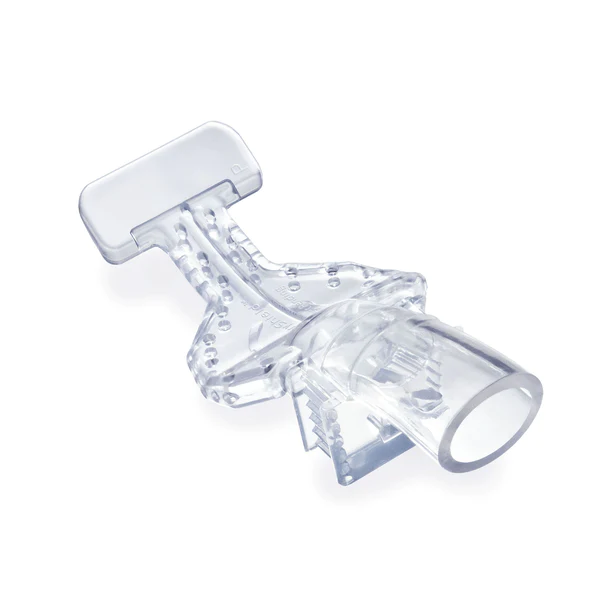
The system attaches directly to the existing high-volume evacuation (HVE) port on any dental unit. There is no need for dedicated plumbing, specialized hardware, or complicated installation. A clinician simply twists off the existing HVE tip and twists the DryShield DS1 connector onto the same hose. Once connected, the appropriately sized mouthpiece is lubricated, attached to the DS1, and placed in the patient’s mouth. The mouthpiece folds for easy insertion and then adapts to the contours of the oral cavity, simultaneously retracting the cheek and tongue, providing a firm bite block, shielding the oral pathway from debris, and delivering continuous high-volume suction.
Key Components
Each DryShield system ships with several core components that work together to deliver comprehensive isolation.
DS1 mouthpiece connector – the central adapter that connects the mouthpiece to the HVE hose, fully autoclavable and built for repeated sterilization cycles
Mouthpieces (autoclavable and single-use) – soft, flexible, transparent silicone mouthpieces incorporating suction channels, tongue shield, cheek retractor, and airway protector
Interchangeable bite blocks – each autoclavable mouthpiece includes a matched bite block, and clinicians can swap sizes across mouthpieces for a custom fit
Portable operatory kit – allows easy movement between treatment rooms or office locations
Y-connector kit – enables simultaneous use of DryShield alongside a traditional HVE tip on operatories with a single port
Available Mouthpiece Sizes
Autoclavable mouthpieces come in five sizes: X-Pedo, Pediatric, Small, Medium, and Large. Each is rated for up to 50 autoclave cycles (sterilization equipment guide). Single-use mouthpieces come in four sizes: Pediatric, Small, Medium, and Large, and feature a firmer, integrated bite block. The Small and Medium sizes suit most adult patients, while the Pediatric and X-Pedo sizes are designed for younger patients.
How the DryShield System Works in Practice
Understanding the clinical workflow of DryShield helps dental professionals evaluate whether it will integrate smoothly into their existing routines.
Installation and Setup
DryShield requires no plumbing modifications, electrical connections, or proprietary hardware. The DS1 connector attaches to the standard HVE hose already present on the dental unit. The portable operatory kit extends this flexibility further, allowing a single DryShield system to serve multiple treatment rooms or even multiple office locations.
Mouthpiece Selection
Choosing the correct mouthpiece is critical for both patient comfort and effective isolation. Because the autoclavable mouthpieces can be sterilized and reused, clinicians can try in several sizes on a patient before committing to one for the procedure. This reduces waste and ensures an optimal fit every time.
Patient Introduction and Placement
A brief explanation of DryShield’s purpose and benefits before insertion significantly improves patient acceptance. Patients should be guided to breathe through their nose during use. The mouthpiece is folded, inserted into the mouth, and adapted to the oral cavity. According to multiple clinical evaluators, the entire placement process takes only a few seconds.
Hands-Free Operation During the Procedure
Once the mouthpiece is in place, DryShield delivers continuous, hands-free high-volume suction. Saliva, water spray, and debris are evacuated through the mouthpiece’s internal channels without an assistant holding a suction tip. The tongue is retracted, the cheek is held back for improved visibility, and the bite block provides a comfortable resting point. This frees the dental assistant to chart, prepare materials, or handle other tasks. DryShield also supports two-quadrant dentistry, allowing clinicians to treat teeth on opposite sides of the same arch in a single session without repositioning.
Clinical Evidence and Research
The clinical claims behind DryShield are supported by several peer-reviewed studies and professional evaluations. The following is a summary of the most relevant findings.
DryShield vs. Rubber Dam: Randomized Clinical Trials
A randomized clinical trial published in the Saudi Dental Journal (2024) compared DryShield to rubber dam isolation in pediatric patients with varying airway patency levels. The study found no significant differences in vital signs between the two methods. However, rubber dam isolation required significantly longer chairside time than DryShield regardless of airway type (P < 0.001). DryShield also performed better on behavior and pain scores, though it was associated with more suction noise and occasional triggering of the gag reflex (PubMed).
Literature Reviews
A 2023 literature review in the Journal of Clinical Pediatric Dentistry analyzed five clinical trials comparing DryShield and Isolite to rubber dam and cotton roll isolation in children. Both modern isolation systems were associated with reduced chair time, greater patient comfort, less gagging than cotton rolls, and less discomfort than rubber dams. Pediatric patients preferred both systems for future dental treatment (PubMed).
Sealant Retention Studies
A 2025 randomized clinical trial assessed sealant retention, placement time, and patient acceptance using DryShield compared to cotton roll isolation in children aged 7 to 12. After 18 months, there was no significant difference in sealant retention between the two methods, with 66.6% of all sealants remaining completely retained. The study concluded that DryShield is an effective, comparable alternative to cotton roll isolation for sealant placement (JOCPD).
Professional Evaluations
An evaluation published on Dental Product Shopper involved 17 dental professionals who used DryShield in their practices for four weeks. The system received an overall score of 4.8 out of 5, with nearly all evaluators rating their satisfaction as excellent. A separate evaluation by Dental Advisor involved 20 consultants and 472 uses, praising the system’s retraction, suction, airway protection, and the ability to sterilize mouthpieces for try-in without waste.
Dental Procedures Compatible With DryShield
DryShield is designed for use across a broad range of clinical applications. The manufacturer states that virtually any procedure requiring isolation, visibility, and suction can benefit from the system.
Composite restorations – continuous suction eliminates frequent cotton roll changes and frees the assistant from holding the HVE tip
Pit and fissure sealants – clinical research confirms DryShield provides isolation comparable to cotton roll techniques for sealant application
Crown and bridge preparations – soft tissue retraction and continuous evacuation of water spray improve visibility during prep work
Scaling and root planing – particularly valuable for dental hygienists who work without a dedicated assistant
Implant restorative procedures – useful during impression-taking, abutment placement, and cementation phases
Extractions – continuous evacuation of blood, saliva, and irrigation fluids maintains a clear field
When incorporating DryShield into clinical workflows, documenting its use as part of the overall dental treatment plan helps maintain clear records and supports consistent case management across the practice.
DryShield vs. Rubber Dam vs. Cotton Rolls: Head-to-Head Comparison
The following table provides a side-by-side comparison of DryShield against the two most common traditional isolation methods used in general practice.
Feature | DryShield | Rubber Dam | Cotton Rolls + HVE |
Setup time | Seconds | 2–5 minutes | 1–2 minutes |
Moisture control | Excellent (continuous suction) | Excellent (sealed barrier) | Moderate (frequent replacement) |
Tongue/cheek retraction | Built-in | Partial | None (separate tools needed) |
Airway protection | Integrated | Yes (full barrier) | None |
Patient comfort | High (soft silicone) | Low to moderate | Moderate |
Assistant required | No (hands-free suction) | Minimal | Yes (for HVE) |
Chair time impact | 25–40% reduction | Longer setup | Standard |
Autoclavable | Yes (system + mouthpieces) | Clamp/frame only | N/A (disposable) |
Aerosol reduction | Yes (continuous HVE) | Partial | Partial |
DryShield occupies a practical middle ground: it delivers many of the moisture control and airway protection advantages of a rubber dam while being significantly faster to place and more comfortable for most patients. Compared to cotton rolls, DryShield provides superior isolation, hands-free suction, and built-in retraction. It is worth noting that DryShield does not completely replace the rubber dam for endodontic procedures, where a hermetic seal remains the standard of care.
DryShield vs. Isolite (IsoVac): Key Differences
DryShield’s most direct competitor is the Isolite system, now marketed as IsoVac. Both share a similar concept, but there are important differences that clinicians should evaluate.
Sterilization – DryShield offers fully autoclavable mouthpieces rated for up to 50 cycles, while IsoVac mouthpieces are single-use and disposable
First-year cost – DryShield has a higher upfront cost (~$500 vs. ~$300 for IsoVac) but a lower per-use cost (~$0.80 vs. ~$2.00–$2.50), resulting in significant annual savings for regular users
Mouthpiece sizing – IsoVac offers six sizes compared to DryShield’s five autoclavable sizes, giving IsoVac a slight advantage for very small pediatric patients
Illumination – some Isolite models include built-in intraoral illumination, a feature DryShield does not offer
Noise – DryShield produces approximately 10–15% more suction noise than IsoVac, though the difference narrows when the portable kit is used
Bite block design – DryShield uses a firmer, interchangeable bite block, while IsoVac’s is softer and integrated into the mouthpiece
Cost Analysis and Practice Economics
The financial impact of adopting DryShield extends well beyond the initial purchase price. A thorough cost evaluation should account for mouthpiece expenses, labor savings, chair time reductions, and the elimination of disposable supplies. For practices building out their dental equipment essentials, DryShield represents a relatively modest investment with measurable returns.
Upfront Investment
The DryShield system is priced at approximately $500, which includes the DS1 connector, portable operatory kit, Y-connector kit, and cleaning brush. Mouthpieces are sold separately. The manufacturer also offers a 30-day risk-free trial for $25 (shipping and handling), with the full charge applied only if the practice keeps the system.
Per-Use Cost Breakdown
Autoclavable mouthpieces cost approximately $25 each and are rated for up to 50 autoclave cycles, bringing the material cost to roughly $0.50 per use. Adding estimated assistant labor for cleaning and sterilization (approximately $0.30 per cycle based on average dental assistant wages), the total per-use cost comes to approximately $0.80. Compared to the ongoing cost of cotton rolls, dry angles, gauze, and saliva ejectors, DryShield offers meaningful long-term savings for practices with moderate to high procedure volumes.
Chair Time Savings
The manufacturer reports a 25–40% reduction in procedure time, a figure supported by clinical studies showing shorter chairside times compared to rubber dam isolation. For a practice performing 20 restorative procedures per day with an average chair time of 40 minutes, even a 25% reduction frees approximately 200 minutes daily. That additional capacity can translate to four or five extra procedures per day, generating substantial incremental revenue over the course of a year.
Aerosol Management and Infection Control
The role of aerosol management in dental practice has taken on heightened importance in recent years. High-speed handpieces, ultrasonic scalers, and air-water syringes all generate aerosol and splatter that can carry bacteria, viruses, and other contaminants into the treatment room environment. Effective aerosol control is now a core component of any infection prevention strategy.
DryShield contributes to aerosol reduction through its continuous high-volume suction, which evacuates water spray, saliva, blood, and debris at the source before they become airborne. Unlike a standard saliva ejector, which operates at low suction levels, DryShield connects to the dental unit’s HVE system and provides suction comparable to a full-size HVE tip, but without requiring an assistant to hold it in position. This continuous evacuation means aerosol and splatter are captured more consistently throughout the procedure, not just when an assistant happens to position the suction correctly.
For dental practices that are evaluating their infection control protocols alongside their isolation tools, the sterilization equipment guide on Dental Reviewed provides a complementary resource for building a comprehensive infection prevention workflow.
Sustainability and Environmental Considerations
Single-use dental supplies contribute significantly to the waste stream of a typical dental practice. Cotton rolls, dry angles, gauze, saliva ejectors, and disposable HVE tips are used in large quantities daily and discarded after each patient.
DryShield’s autoclavable mouthpieces offer a more environmentally sustainable alternative. Each mouthpiece is designed for up to 50 sterilization cycles, meaning a single mouthpiece replaces dozens of individual disposable items over its lifespan. The reduction in single-use plastics and cotton products adds up substantially for practices that see high patient volumes. The manufacturer positions DryShield as the first and only fully autoclavable all-in-one isolation system on the market, and this reusability is a meaningful differentiator for practices that prioritize sustainability in their supply chain decisions.
For practices that prefer the convenience of disposables, DryShield also offers single-use mouthpieces. This dual-option approach gives each practice the flexibility to choose the configuration that best fits its workflow, infection control preferences, and environmental goals.
Patient Comfort and Acceptance
Patient comfort during dental procedures has a direct impact on cooperation, treatment outcomes, and long-term retention. Isolation tools that cause discomfort or anxiety can make an otherwise routine procedure stressful for both the patient and the clinician.
DryShield’s mouthpieces are made of a soft, flexible silicone material that contours to the oral cavity. Unlike rubber dam clamps, which apply concentrated pressure to individual teeth and can cause discomfort (especially in patients with sensitive teeth or limited mouth opening), DryShield distributes contact across a broader surface area. Clinical trials involving pediatric patients have consistently found that children report less discomfort and greater comfort with DryShield compared to rubber dam isolation. A study published in the Journal of Research in Medical and Dental Sciences also found that pediatric patients preferred DryShield for future dental visits when given the choice between DryShield and rubber dam.
For adult patients, the experience is similarly favorable. The bite block gives patients a comfortable resting point that reduces jaw fatigue during longer procedures, and the continuous suction eliminates the unpleasant pooling of water and saliva in the back of the throat. Several clinical evaluators have noted that patients report feeling more secure and less anxious when DryShield is in use, primarily because the airway protection feature addresses the common fear of swallowing debris during dental work.
Patients with TMJ issues or limited mouth opening can also benefit from DryShield, as the system is designed to accommodate a range of mouth sizes. The interchangeable bite blocks allow clinicians to select a smaller block for patients who struggle with wider opening, reducing strain on the temporomandibular joint during treatment.
Who Should Consider DryShield?
DryShield is versatile enough to benefit a wide range of practitioners, but certain practice profiles stand to gain the most.
General practice dentists performing high volumes of restorative and preventive work who want to streamline isolation and reduce procedure times
Pediatric dentists looking for a more comfortable, less intimidating alternative to the rubber dam for younger patients
Dental hygienists who work without a dedicated chairside assistant and need hands-free isolation and suction for scaling, root planing, and sealant placement
Solo practitioners and dentists in multi-location practices who value portability and rapid installation
Practices focused on infection control and aerosol management that require continuous high-volume suction during procedures
Tips for Getting the Most Out of DryShield
The following practical recommendations, drawn from clinical evaluator feedback and manufacturer guidance, help dental professionals maximize their results with the system.
Invest time in mouthpiece sizing, as the autoclavable versions can be tried in without waste, and the right fit pays dividends in comfort and isolation quality
Lubricate the connector area with a spray of air and water before assembly to make the mouthpiece-to-DS1 connection smoother
Introduce the device to patients before placement, explaining the benefits of a shorter procedure, dry mouth, and airway protection
Guide patients to breathe through their nose, which significantly reduces the chance of triggering a gag reflex
Mix and match bite block and mouthpiece sizes for patients with unique anatomical needs, since DryShield’s interchangeable design allows this flexibility
Clean the DS1 connector regularly with the included brush to maintain consistent suction performance over time
Bottom Line
The DryShield Isolation System earns a strong recommendation for most general and pediatric dental practices. The system consolidates multiple isolation tools into a single device, reduces chair time by a clinically meaningful margin, and offers the only fully autoclavable mouthpieces in the modern isolation category. Peer-reviewed research consistently shows that DryShield performs comparably to rubber dam isolation for procedures like sealant placement while delivering better patient comfort scores and faster setup.
DryShield is especially well suited for solo operators, high-volume restorative practices, and any dental team looking to improve workflow efficiency without sacrificing isolation quality. The main limitations to keep in mind are its suction noise, its inability to provide a hermetic seal for endodontic procedures, and the occasional gag reflex in sensitive patients, all of which can be managed through proper patient introduction and mouthpiece selection.
Verdict
<p>The DryShield Isolation System represents a meaningful advancement in how dental professionals approach moisture control during everyday procedures. The combination of continuous suction, soft tissue retraction, airway protection, and a comfortable bite block in a single device addresses real pain points that clinicians deal with on a daily basis.</p><p>The strongest case for DryShield is its documented chair time savings (25–40%), its fully autoclavable design that lowers per-use costs, and its ability to let clinicians and hygienists work independently without a dedicated assistant holding suction. Clinical trials and professional evaluations consistently support these claims. The system scores particularly well in pediatric settings, where patient comfort and cooperation are critical to successful outcomes. For practices looking to explore more tools and insights across the <a target="_blank" rel="noopener noreferrer nofollow" class="text-primary underline hover:text-primary/80" href="https://dentalreviewed.com/categories/"><u>dental equipment categories</u></a>, DryShield is a strong addition to the restorative and preventive toolkit.</p><p>The limitations are manageable rather than deal-breaking. Suction noise is noticeable, the system does not replace rubber dam isolation for endodontic procedures, and some patients may need coaching to avoid a gag reflex. None of these drawbacks outweigh the efficiency, comfort, and cost benefits that DryShield delivers across the majority of clinical scenarios.</p>
Frequently Asked Questions
What is the DryShield isolation system?
DryShield is a patented, all-in-one dental isolation device that combines the functions of a high-suction evacuator, saliva ejector, bite block, tongue shield, and oral pathway protector. It attaches directly to the existing HVE port on any dental unit and is designed to simplify isolation, improve visibility, and reduce procedure time.
How does DryShield compare to a rubber dam?
A rubber dam provides a complete physical seal around individual teeth, while DryShield uses continuous high-volume suction with soft tissue retraction and airway protection. DryShield is faster to place, more comfortable for most patients, and supports multi-quadrant work. However, it does not provide a hermetic seal, so the rubber dam remains the standard of care for endodontic procedures.
Is the DryShield system autoclavable?
Yes. Both the DS1 connector and the autoclavable mouthpieces can be fully autoclaved. Each autoclavable mouthpiece is rated for up to 50 sterilization cycles. DryShield is the only modern all-in-one isolation system on the market with fully autoclavable mouthpieces.
What mouthpiece sizes are available?
Autoclavable mouthpieces come in five sizes: X-Pedo, Pediatric, Small, Medium, and Large. Single-use mouthpieces come in four sizes: Pediatric, Small, Medium, and Large. The Small and Medium sizes are appropriate for most adult patients.
How much does DryShield cost?
The system is priced at approximately $500, which includes the DS1 connector, portable kit, Y-connector, and cleaning brush. Mouthpieces are sold separately. Autoclavable mouthpieces cost approximately $25 each and last up to 50 uses, bringing the per-use cost to roughly $0.50–$0.80. A 30-day free trial is available for $25 shipping.
Can DryShield be used on pediatric patients?
Yes. DryShield is widely used in pediatric dentistry and has been studied in multiple clinical trials involving children. Research shows that pediatric patients report comparable or better comfort with DryShield than with rubber dam or cotton roll isolation.
Does DryShield work without a dental assistant?
Yes, and this is one of its most frequently cited advantages. The continuous, hands-free suction combined with built-in retraction and bite block functionality allows dentists and hygienists to perform procedures independently.
What procedures is DryShield compatible with?
DryShield is suitable for a broad range of procedures, including composite restorations, sealant placements, crown preparations, implant restorative work, scaling and root planing, and extractions. The manufacturer states that virtually any procedure requiring isolation, visibility, and suction can benefit from DryShield.
Does DryShield reduce aerosol exposure?
Yes. The system provides continuous high-volume suction that evacuates aerosol and splatter during procedures, contributing to a safer working environment for dental staff and patients.
Is DryShield latex-free?
Yes. DryShield mouthpieces are not made with natural rubber latex, making them suitable for patients and staff with latex sensitivities.
What warranty does DryShield come with?
The DryShield system and DS1 or DS Lite adapters carry a five-year warranty against defects in material and workmanship from the date of purchase.
Where can dental professionals purchase DryShield?
DryShield is available through all major dental distributors, including Henry Schein, Patterson Dental, Benco Dental, and directly from the manufacturer (Solmetex).