Rating: 4.7/5
Coltène HyFlex EDM: Professional Review And Clinical Guide For Dental Practitioners
The pursuit of safer and more efficient root canal instrumentation has driven remarkable advances in nickel-titanium file technology over the past decade. For dental professionals...
Reviewed by Mantas Petraitis
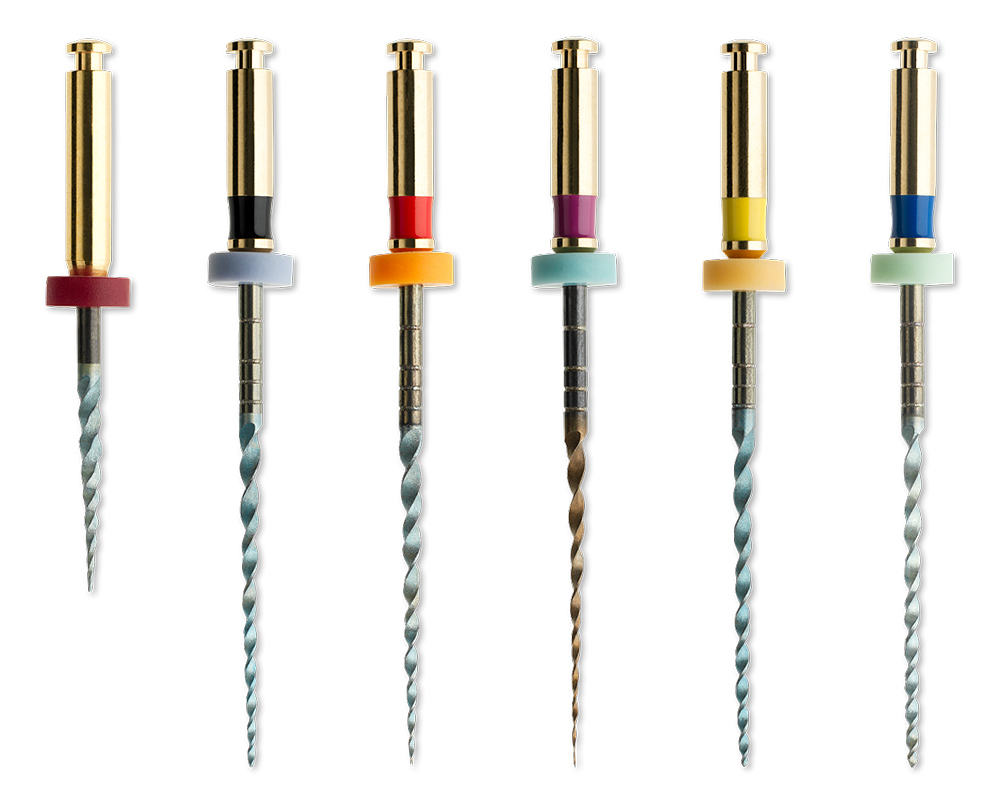
Pros
- Exceptional cyclic fatigue resistance documented at up to 700% greater than conventional NiTi
- Single-file preparation capability reduces procedure time and file inventory
- Superior flexibility maintained at clinically relevant body temperature
- Pre-bending capability enables negotiation of severely curved canals
- OGSF sequence provides standardized protocol with short learning curve
- Better surface topography preservation during clinical use compared to ground files
- Shape recovery after autoclaving enables safe reuse assessment
- Outperforms WaveOne Gold, Reciproc Blue, and ProTaper Gold in cyclic fatigue testing
- Compatible with most endodontic motors and existing irrigation techniques
- Pre-sterilized packaging facilitates both multi-use and single-use protocols
- Matched gutta-percha points available for obturation
- Modular system allows customization based on case requirements
Cons
- Higher per-file cost compared to conventional NiTi systems and HyFlex CM
- Surface roughness increases after just 5 autoclave cycles (earlier than HyFlex CM)
- Lower torsional resistance than reciprocating files like Reciproc and WaveOne
- More conservative reuse protocol required compared to HyFlex CM
- Volume and surface area decrease documented after just 2-3 clinical uses
- May not offer significant advantage over HyFlex CM for straightforward cases
- Learning curve for practitioners accustomed to reciprocating file systems
- Higher investment required for comprehensive OGSF sequence inventory
The pursuit of safer and more efficient root canal instrumentation has driven remarkable advances in nickel-titanium file technology over the past decade. For dental professionals managing complex endodontic cases, the persistent concern of unexpected file separation during curved canal preparation has motivated manufacturers to develop increasingly sophisticated solutions. Among these innovations, Electrical Discharge Machining (EDM) technology represents a genuine breakthrough in how endodontic instruments are fabricated.
Coltène HyFlex EDM emerged as a 5th-generation rotary file system that combines two advanced technologies: the EDM manufacturing process and Controlled Memory (CM) heat treatment. This dual approach produces instruments with up to 700% greater fracture resistance compared to conventional NiTi files, a claim that has been substantiated through multiple peer-reviewed studies. The system's design enables single-file or reduced-file preparation for the majority of clinical cases, addressing both safety concerns and workflow efficiency.
This comprehensive review examines HyFlex EDM from a practical clinical perspective, providing dental professionals with evidence-based guidance on technique, troubleshooting, and case selection. Whether you are evaluating HyFlex EDM for your practice or seeking to optimise your existing protocol, this guide delivers the essential knowledge for successful implementation.
The Science Behind HyFlex EDM
Understanding the manufacturing technology behind HyFlex EDM explains why these files perform differently from other NiTi rotary instruments. The EDM process represents a fundamental departure from conventional grinding methods used to fabricate most endodontic files.
The EDM Manufacturing Process
Electrical Discharge Machining, also known as spark machining or spark erosion, is a non-contact thermal erosion process that shapes metal using high-frequency electrical discharges. During manufacturing, a controlled electrical potential is generated between the workpiece and the tool electrode. The resulting sparks cause the surface material of the NiTi wire to melt and partially evaporate, creating the desired file geometry.
This process produces several unique characteristics that distinguish HyFlex EDM from conventionally manufactured files. The spark erosion creates a distinctive hardened surface texture that enhances both cutting efficiency and resistance to wear. Research published in the International Endodontic Journal has confirmed that this surface treatment contributes significantly to the exceptional mechanical properties observed in HyFlex EDM instruments.
The EDM surface differs visibly from ground NiTi files under scanning electron microscopy, showing a characteristic crater-like texture resulting from the spark erosion process. This unique topography provides superior abrasion resistance while maintaining the flexibility essential for navigating curved canal anatomy.
Dual Technology Approach
What sets HyFlex EDM apart from other EDM-manufactured instruments is the combination of spark machining with Controlled Memory heat treatment. After the EDM fabrication process, the files undergo proprietary thermal processing that modifies the crystalline structure of the NiTi alloy.
Research published in the Journal of the Formosan Medical Association has demonstrated that HyFlex EDM maintains a martensite/R-phase composition at body temperature. This phase composition is responsible for the exceptional flexibility observed clinically and enables the pre-bending capability that practitioners find valuable in curved canal cases.
The CM heat treatment also provides the regenerative property that allows files to return to their original shape after autoclaving. This built-in shape memory helps prevent stress accumulation during canal preparation, as the file spirals can change shape under load rather than transmitting excessive force to the canal walls.
Key Physical Properties
Laboratory testing has established the remarkable mechanical characteristics that result from this dual-technology manufacturing approach:
Cyclic fatigue resistance up to 700% greater than conventional NiTi files
Superior flexibility maintained at intracanal temperature (35-37°C)
Unique spark-machined surface with enhanced hardness
High abrasion resistance during clinical use
Better surface topography preservation compared to ground files
Shape recovery capability after heat sterilization
These properties address the primary concerns clinicians have expressed about rotary NiTi instrumentation, particularly regarding the unpredictable nature of file separation in challenging anatomy.
HyFlex EDM File System: Design Features, Specifications And Available Configurations
The HyFlex EDM system provides a modular approach to endodontic instrumentation, allowing clinicians to select appropriate files based on case complexity. Each component has been engineered to optimize specific aspects of root canal preparation.
Cross-Sectional Design
HyFlex EDM files feature a variable cross-section that changes along the working length of the instrument. This design optimises different mechanical properties at different levels of the file.
The apical portion features a rectangular cross-section that provides increased core mass and resistance to torsional failure at the tip where binding is most likely to occur. Moving coronally, the cross-section transitions to trapezoidal geometries that enhance flexibility while maintaining adequate cutting efficiency.
The OneFile instrument incorporates a variable taper design with 0.08 taper in the apical region that decreases to 0.04 toward the coronal portion. This configuration allows efficient apical preparation while reducing coronal stress and improving debris removal.
A unique combination of three and four fluted designs has been incorporated to provide optimal cutting performance and strength throughout the working length.
Available File Types
HyFlex EDM is provided as a pre-sterilized modular system with several file types designed for specific functions:
File Type | Size/Taper | Speed | Torque | Purpose |
|---|---|---|---|---|
Orifice Opener | 25/.12 | 400-500 rpm | 2.5 Ncm | Coronal flaring |
Glidepath File | 10/.05 | 300 rpm | 1.8 Ncm | Glide path creation |
Glidepath File | 15/.03 | 300 rpm | 1.8 Ncm | Glide path (OGSF) |
OneFile | 25/.~ (variable) | 400-500 rpm | 2.5 Ncm | Single-file shaping |
Shaping File | 25/.04 | 400-500 rpm | 2.5 Ncm | Full-length shaping |
Finishing Files | 40/.04, 50/.03, 60/.02 | 400-500 rpm | 2.5 Ncm | Apical finishing |
This modular approach allows practitioners to customize their file sequence based on canal anatomy and case requirements.
The OGSF Sequence Protocol
Coltène has introduced the OGSF sequence as a standardized protocol designed in cooperation with Prof. Eugenio Pedullà. This sequence provides a straightforward approach suitable for the majority of clinical cases.
OGSF Components:
O – Orifice Opener (25/.12): Creates coronal access and removes cervical interferences
G – Glidepath File (15/.03): Establishes smooth glide path to working length
S – Shaping File (25/.04): Completes canal preparation to full working length
F – Finishing (optional): Additional enlargement with 40/.04, 50/.03, or 60/.02 files
The defined treatment procedure simplifies decision-making and maintains a short learning curve. The optimized matching of tip sizes and tapers provides smooth transitions when moving from one file to the next, helping clinicians maintain control throughout the procedure.
The OGSF sequence comes in sterile blisters with all files designed for multiple use, offering both convenience and cost efficiency.
Why HyFlex EDM Leads In Fracture Resistance And Efficiency
The combination of EDM manufacturing and CM heat treatment produces measurable clinical advantages that have been documented extensively in peer-reviewed literature. Understanding these benefits helps clinicians identify cases where HyFlex EDM offers particular value.
Exceptional Cyclic Fatigue Resistance
The most significant advantage of HyFlex EDM is its remarkable resistance to cyclic fatigue, the primary mechanism responsible for NiTi file separation during clinical use. Multiple independent studies have confirmed the manufacturer's claim of up to 700% greater fracture resistance compared to conventional NiTi instruments.
A study published in PMC comparing HyFlex EDM, Twisted Files, and ProTaper Gold found that HyFlex EDM files demonstrated the highest cyclic fatigue resistance among all tested instruments. The mean number of cycles to failure was significantly greater for HyFlex EDM than for both comparison systems.
Research in the Journal of Endodontics comparing HyFlex EDM with OneShape, Reciproc Blue, and WaveOne Gold confirmed that HyFlex EDM files demonstrated statistically significantly higher fatigue resistance than all three alternatives. The HyFlex EDM group achieved a mean of 3456 cycles to failure compared to 2876 for Reciproc Blue, 1737 for WaveOne Gold, and 1222 for OneShape.
This exceptional fatigue resistance provides a substantial safety margin when instrumenting severely curved canals, S-shaped configurations, and other challenging anatomies where conventional files carry elevated fracture risk.
Single-File Preparation Capability
The OneFile instrument was specifically designed to enable preparation of most root canals using a single shaping file after glide path establishment. This capability streamlines clinical workflow while reducing both inventory costs and procedure time.
Clinical evaluations reported by Dental Advisor found that practitioners needed only OneFile for canal preparation in the majority of cases. The combination of variable taper, enhanced cutting efficiency, and exceptional fracture resistance allows confident single-file instrumentation across a wide range of canal anatomies.
For practices performing high volumes of endodontic treatment, the efficiency gains from single-file preparation translate to meaningful improvements in productivity without compromising treatment quality.
Superior Flexibility At Body Temperature
The mechanical properties of NiTi instruments change with temperature, and performance at body temperature (35-37°C) differs from room temperature laboratory testing. HyFlex EDM maintains its flexibility advantage under clinically relevant conditions.
Research published in the Journal of the Formosan Medical Association comparing WaveOne Gold, Reciproc Blue, and HyFlex EDM found that HyFlex EDM presented superior flexibility and cyclic fatigue resistance at body temperature. This finding confirms that the clinical performance of HyFlex EDM matches or exceeds laboratory expectations.
The maintained flexibility at intracanal temperature allows the file to follow canal anatomy closely, reducing the risk of ledging, transportation, and perforation even in severely curved roots.
Pre-Bending Capability
Unlike conventional superelastic NiTi files that immediately spring back to their original shape, HyFlex EDM instruments can be pre-curved before insertion. This capability, inherited from the CM heat treatment, provides a crucial advantage in curved root canals.
Pre-bending the file to approximate the anticipated canal curvature facilitates initial negotiation and reduces the likelihood of creating steps in challenging anatomy. This technique proves particularly valuable in:
Abrupt apical curvatures difficult to negotiate with straight instruments
Cases with limited mouth opening that restrict insertion angles
Severely curved mesial canals of mandibular molars
S-shaped canal configurations
Surface Topography Maintenance
Research using optical profilometry has demonstrated that HyFlex EDM files maintain their surface characteristics better than conventionally ground instruments during clinical use.
A study published in PMC comparing surface deformation of HyFlex CM and HyFlex EDM after instrumentation and sterilization found that HyFlex EDM showed no statistically significant change in surface roughness after clinical use. This finding suggests that the EDM surface treatment provides durable protection against the wear mechanisms that degrade conventionally manufactured files.
Troubleshooting Guide: Solving Common HyFlex EDM Challenges
Even well-designed instruments present occasional challenges in clinical use. This section addresses the most frequent problems practitioners encounter with HyFlex EDM and provides practical solutions based on evidence and clinical experience.
Problem: File Does Not Reach Working Length
Difficulty advancing the file to the established working length can result from several factors, each requiring a specific approach.
Causes and solutions:
Inadequate glide path: The most common cause of difficulty advancing rotary files is insufficient manual or mechanical preparation of the initial pathway. Use the HyFlex EDM Glidepath file (10/.05 or 15/.03) or establish a manual glide path to at least size 15 K-file before introducing the shaping file.
Canal blockage: Debris accumulation can create iatrogenic obstacles that prevent file advancement. Increase irrigation frequency using sodium hypochlorite and ensure thorough recapitulation with a patency file between rotary instrumentation passes.
Excessive debris in flutes: Accumulated dentine chips reduce cutting efficiency and increase friction. Clean file flutes after each insertion using a sponge or gauze.
Technique error: Excessive apical pressure causes binding rather than cutting. Use light touch with a pecking motion, allowing the instrument to advance at its own pace.
Recommended protocol for difficult cases:
Confirm canal patency with a size 10 K-file
Establish glide path using HyFlex EDM Glidepath file at 300 rpm, 1.8 Ncm
Irrigate copiously with sodium hypochlorite
Advance shaping file with gentle pecking motion
Withdraw immediately when resistance is encountered
Clean flutes, irrigate, and recapitulate before re-entry
Problem: Surface Roughness Changes After Multiple Autoclave Cycles
Research has revealed an important consideration for HyFlex EDM reuse protocols that differs from guidance for HyFlex CM files.
Research findings:
A study published in Clinical Oral Investigations using atomic force microscopy found that HyFlex EDM files show significant surface roughness increase after 5 autoclave cycles. This occurs earlier than with HyFlex CM files, which maintain stable surface properties until approximately 10 autoclave cycles.
The initial surface roughness of HyFlex EDM files is actually lower than HyFlex CM, but the EDM surface changes more rapidly with repeated sterilization.
Solutions:
Implement a tracking system for sterilization cycles
Consider a maximum of 5 autoclave cycles for HyFlex EDM files
More conservative reuse protocol than HyFlex CM
For complex cases with severely curved canals, single-use may be appropriate
Factor both clinical uses AND sterilization cycles into discard decisions
Problem: Volume And Surface Area Reduction After Multiple Uses
Recent research has provided new insights into the structural changes that occur in HyFlex EDM files during clinical use.
Evidence from 2025 research:
A micro-CT study published in PMC evaluated HyFlex EDM files before and after multiple uses in mandibular molar root canal preparation. The findings showed significant decreases in both volume and surface area as the number of uses increased, regardless of file size.
These structural changes were observable after instrumentation of just two to three canals, emphasizing the importance of understanding how repeated use affects instrument integrity.
Solutions:
Implement use-tracking protocols in your practice
Limit the number of canals prepared per file
Assess file condition after each use under magnification
Consider more frequent replacement than previously assumed
Factor canal complexity into reuse decisions
Problem: Lower Torsional Resistance Compared To Reciprocating Files
Laboratory testing has shown that HyFlex EDM has different mechanical characteristics than some popular reciprocating file systems.
Evidence:
Research published in the Journal of Endodontics found that HyFlex EDM showed lower maximum torque load than Reciproc R25 and WaveOne Primary. However, HyFlex EDM demonstrated significantly higher angular rotation to fracture, meaning the file can flex more before failure occurs.
Clinical implications and solutions:
Establish adequate glide path before using OneFile or shaping files
Never force files against resistance
Allow the file to work at its own pace using gentle pecking motion
Use recommended torque settings (2.5 Ncm maximum)
If resistance occurs, withdraw, irrigate, recapitulate, and re-approach
The exceptional cyclic fatigue resistance compensates for lower torsional values in most clinical situations
Problem: Concerns About File Separation
Despite the exceptional fracture resistance of HyFlex EDM, implementing proper prevention strategies remains important.
Prevention strategies:
Inspect files carefully before and after each use under magnification
Establish proper glide path using HyFlex EDM Glidepath file
Use torque-controlled motor at recommended settings
Watch for spiral shape changes as a warning sign of fatigue
Limit total uses based on combined factors (clinical uses plus sterilization cycles)
Discard any file that does not return to original shape after autoclaving
Important context:
Studies examining HyFlex EDM prototypes found no fractures during laboratory instrumentation of severely curved root canals. The exceptional cyclic fatigue resistance provides a substantial safety margin that reduces separation risk despite the lower torsional values.
Problem: Selecting The Right File Sequence
Choosing between OneFile protocol and the full OGSF sequence depends on case complexity.
Guidance for case selection:
Simple and straight canals:
Glidepath file + OneFile (2-file sequence)
OneFile alone may be sufficient after thorough manual glide path
Standard curved canals (20-30° curvature):
OGSF sequence provides consistent results
Pre-bend files for curvatures approaching 30°
Complex and severely curved canals (>30° curvature):
Full OGSF sequence recommended
Consider adding Finishing files (40/.04, 50/.03, or 60/.02)
May combine with HyFlex CM files for specific situations
Pre-bending essential for initial negotiation
Problem: Choosing Between HyFlex EDM And HyFlex CM
Both systems offer controlled memory properties but differ in important ways.
Decision framework:
Clinical Scenario | Recommended choice |
|---|---|
Maximum fracture resistance required | HyFlex EDM |
Complex anatomy, single-file preferred | HyFlex EDM |
Multi-use protocol, cost-conscious practice | HyFlex CM |
Need maximum sterilization cycles | HyFlex CM |
Severely curved canals | Either (both excellent) |
S-shaped canal configurations | HyFlex EDM |
High-volume practice seeking efficiency | HyFlex EDM |
Many practices maintain both systems, using HyFlex EDM for complex cases requiring maximum fracture resistance and HyFlex CM for routine cases where multi-use economics are prioritized.
Problem: Managing Temperature Effects On Performance
The mechanical properties of NiTi files change with temperature, affecting clinical performance.
Evidence:
Research in PMC found that cyclic fatigue resistance decreases at body temperature (35-37°C) compared to room temperature for all tested NiTi systems. However, HyFlex EDM maintained the highest fatigue resistance at body temperature among all instruments tested, including Reciproc Blue, WaveOne Gold, and Twisted File Adaptive.
Solutions:
Recognize that clinical performance differs from room temperature laboratory testing
Use adequate irrigation to help maintain lower intracanal temperature
Trust that HyFlex EDM still outperforms alternatives under clinical conditions
The margin of safety remains substantial even with temperature-related reduction
HyFlex EDM Sterilization Guidelines: Balancing Reuse And Safety
The regenerative properties of HyFlex EDM that allow shape recovery during heat treatment are central to safe reuse protocols. However, recent research indicates that HyFlex EDM requires more conservative reuse guidelines than HyFlex CM.
Pre-Sterilization Cleaning
Immediately after clinical use, remove visible debris from file flutes using a sponge or brush. Ultrasonic cleaning in an enzymatic solution effectively removes organic material that may have been compacted into the flute spaces during instrumentation.
Inspect each file under magnification for visible defects including:
Unwinding or permanent deformation of spirals
Damage to cutting edges
Corrosion or discolouration
Any visible cracks or surface abnormalities
Files showing any of these conditions should be discarded regardless of the number of previous uses or sterilization cycles.
Autoclave Parameters
Standard steam autoclave sterilization effectively regenerates HyFlex EDM shape while achieving instrument sterility:
Temperature: 121°C (250°F)
Pressure: 15 psi
Duration: 15 minutes minimum
The heat treatment during autoclaving activates the shape memory recovery mechanism, returning deformed files to their original configuration. This is why proper autoclaving is essential for the discard assessment system to function correctly.
Critical Consideration: Surface Changes With Sterilization
Unlike HyFlex CM files, which maintain stable surface properties for approximately 10 autoclave cycles, HyFlex EDM shows significant surface roughness changes after just 5 cycles.
Research using atomic force microscopy has demonstrated that while HyFlex EDM files have lower initial surface roughness than HyFlex CM, the EDM surface degrades more rapidly with repeated sterilization. This finding necessitates a more conservative reuse protocol for HyFlex EDM compared to HyFlex CM.
Recommended Limits For HyFlex EDM
Based on current evidence, the following guidelines are recommended:
Track both clinical uses AND sterilization cycles for each file
Consider maximum of 3-5 clinical uses
Consider maximum of 5 autoclave cycles
Discard any file not returning to original shape after autoclaving
For complex cases with severely curved canals, single-use may be appropriate
Implement more conservative protocols than for HyFlex CM
Single-Use Consideration
The pre-sterilized packaging of HyFlex EDM facilitates single-use protocols for practices that prefer this approach. Single-use eliminates concerns about cumulative fatigue and surface degradation while ensuring maximum performance for each case.
For complex cases involving severely curved canals, calcified anatomy, or retreatment situations, single-use provides an additional margin of safety that many practitioners find worthwhile.
How Does HyFlex EDM Compare? Evidence-Based Comparison With Popular Alternatives
Selecting the optimal file system requires understanding how different instruments perform across various parameters. This comparison draws on published research to provide objective guidance for clinical decision-making.
HyFlex EDM Versus HyFlex CM
Both systems utilize Controlled Memory technology but differ significantly in manufacturing and resulting properties.
Parameter | HyFlex EDM | HyFlex CM |
|---|---|---|
Manufacturing process | EDM + CM heat treatment | Thermomechanical only |
Cyclic fatigue resistance | Up to 700% vs conventional | Up to 300-339% vs conventional |
Surface after clinical use | Better preservation | More roughness increase |
Surface after autoclave | Changes at 5 cycles | Changes at 10 cycles |
Cutting efficiency | Enhanced | Good |
Torsional resistance | Lower | Higher |
Cost per file | Higher | Lower |
Recommended reuse | More conservative | More liberal |
Single-file capability | Yes (OneFile) | No (multi-file system) |
Clinical selection guidance:
Choose HyFlex EDM when maximum fracture resistance is essential, single-file preparation is preferred, or complex anatomy requires the highest safety margin.
Choose HyFlex CM when multi-use economics are prioritized, maximum sterilization cycle tolerance is needed, or a traditional multi-file approach is preferred.
HyFlex EDM Versus Reciproc Blue
Reciproc Blue represents the latest generation of the popular Reciproc reciprocating system with improved metallurgy.
Parameter | HyFlex EDM | Reciproc Blue |
|---|---|---|
Motion type | Continuous rotation | Reciprocating |
Cyclic fatigue resistance | Higher | High |
Torsional resistance | Lower | Higher |
Angular rotation to fracture | Higher | Lower |
Single-file system | Yes | Yes |
Manufacturer | Coltène | VDW |
Research published in the Journal of Endodontics found that HyFlex EDM demonstrated statistically higher cyclic fatigue resistance than Reciproc Blue across multiple testing conditions. However, Reciproc Blue showed higher torsional resistance.
Both systems are excellent choices for single-file endodontics, with HyFlex EDM offering advantages in cyclic fatigue and Reciproc Blue providing benefits in torsional strength.
HyFlex EDM Versus WaveOne Gold
WaveOne Gold utilizes proprietary Gold-Wire technology and reciprocating motion.
Parameter | HyFlex EDM | WaveOne Gold |
|---|---|---|
Motion type | Continuous rotation | Reciprocating |
Cyclic fatigue resistance | Superior | Good |
Flexibility at body temperature | Superior | Good |
Metallurgy | EDM + CM | Gold-Wire |
Single-file system | Yes | Yes |
Manufacturer | Coltène | Dentsply Sirona |
Multiple studies have demonstrated that HyFlex EDM outperforms WaveOne Gold in cyclic fatigue testing at both room and body temperature. The flexibility advantage of HyFlex EDM becomes more pronounced at clinically relevant temperatures.
HyFlex EDM Versus ProTaper Gold
ProTaper Gold represents an evolution of the popular ProTaper system with improved metallurgy.
Parameter | HyFlex EDM | ProTaper Gold |
|---|---|---|
System type | Single-file capable | Multi-file progressive |
Cyclic fatigue resistance | Significantly higher | Lower |
Cutting efficiency | High | High |
Learning curve | Shorter | Moderate |
File count per case | 1-3 typically | 4-6 typically |
Research in PMC demonstrated that HyFlex EDM files showed the highest cyclic fatigue resistance when compared to ProTaper Gold, with statistically significant differences in the number of cycles to failure.
Step-By-Step: HyFlex EDM Clinical Technique For Optimal Results
Consistent technique produces consistent results. This section provides detailed protocols for both the OneFile approach and the comprehensive OGSF sequence.
Pre-Operative Assessment
Thorough case evaluation provides the foundation for successful instrumentation:
Obtain diagnostic radiographs from at least two angles
Assess canal curvature using Schneider's method
Identify potential challenges including calcification, previous treatment, or unusual anatomy
Consider CBCT imaging for complex cases
Select appropriate protocol (OneFile vs OGSF) based on anticipated anatomy
Verify files are sterile and undamaged before use
Access And Initial Negotiation
Proper access preparation enables safe and efficient instrumentation:
Create straight-line access to all canal orifices
Remove coronal interferences that would deflect instruments
Locate canal orifices using DG16 explorer and magnification
Negotiate each canal with size 08 or 10 K-file to confirm patency
Determine working length using electronic apex locator
Confirm working length radiographically
Glide Path Creation
Establishing a smooth glide path before rotary instrumentation is essential for safety.
Option A – HyFlex EDM Glidepath File:
Select appropriate Glidepath file (10/.05 or 15/.03)
Set motor to 300 rpm, 1.8 Ncm torque
Insert file with gentle pecking motion
Advance to working length with light apical pressure
Irrigate thoroughly after glide path completion
Option B – Manual Glide Path:
Advance K-files sequentially to at least size 15
Use watch-winding motion with light apical pressure
Irrigate frequently with sodium hypochlorite
Confirm smooth, unobstructed pathway before rotary instrumentation
OneFile Protocol (Majority Of Cases)
For straightforward cases with moderate anatomy:
Set motor to 400-500 rpm, 2.5 Ncm torque
Pre-bend file if canal curvature exceeds 30°
Insert OneFile with gentle pecking motion
Withdraw immediately when resistance is felt
Clean flutes with sponge or gauze
Irrigate canal with sodium hypochlorite
Repeat insertion, advancing progressively to working length
Final shaping passes with brushing motion against canal walls
Verify working length with apex locator
OGSF Sequence Protocol (Complex Cases)
For challenging anatomy requiring comprehensive preparation:
Step O – Orifice Opener (25/.12):
Set motor to 400-500 rpm, 2.5 Ncm
Use only in straight coronal portion of canal
Light brushing motion against canal walls
Creates space for subsequent files and irrigation
Step G – Glidepath File (15/.03):
Set motor to 300 rpm, 1.8 Ncm
Advance to full working length
Gentle pecking motion
Establishes smooth pathway for shaping file
Step S – Shaping File (25/.04):
Set motor to 400-500 rpm, 2.5 Ncm
Advance to full working length
Multiple passes with pecking motion
Final passes with brushing motion
Step F – Finishing (If Needed):
Select appropriate size (40/.04, 50/.03, or 60/.02)
Use only if additional apical enlargement required
Same technique as shaping file
Irrigation Protocol
Effective irrigation is essential throughout the procedure:
Use 5.25% sodium hypochlorite as primary irrigant
Deliver minimum 2ml per canal between each file
Consider warmed irrigant for enhanced tissue dissolution
Perform final rinse with 17% EDTA for 60 seconds
Follow with sodium hypochlorite rinse after EDTA
Ensure irrigation needle reaches within 2mm of working length
Verification And Completion
Before proceeding to obturation:
Perform final apical gauging to confirm preparation size
Take master cone radiograph with fitted gutta-percha
Verify three-dimensional seal potential
Dry canals with paper points
Proceed to obturation using matched HyFlex EDM gutta-percha points
Economic Considerations: Is HyFlex EDM Worth The Investment?
Evaluating any instrument system requires balancing clinical performance against practice economics. HyFlex EDM offers several financial considerations that contribute to its value proposition.
Single-File Efficiency
The ability to prepare most canals with a single shaping file after glide path establishment offers significant workflow advantages. Fewer files per case translates to:
Reduced per-procedure instrument cost
Simplified inventory management
Decreased chair time for file changes
Streamlined sterilization workflow
For practices performing regular endodontic treatment, these efficiency gains accumulate to meaningful productivity improvements.
Reuse Considerations
While HyFlex EDM files are designed for multiple use, the more conservative reuse protocol compared to HyFlex CM affects cost calculations. The higher per-file cost is partially offset by the reduced number of files needed per case.
Practices should factor in:
Maximum 5 autoclave cycles per file
More conservative use limits than HyFlex CM
Single-use consideration for complex cases
Overall case mix and complexity distribution
Reduced Complication Costs
The exceptional fracture resistance of HyFlex EDM reduces the risk of file separation and associated complications. Each avoided separation eliminates:
Time required for retrieval attempts
Potential referral costs for specialty management
Difficult conversations with patients
Possible retreatment or surgical intervention costs
Integration With Existing Systems
HyFlex EDM integrates smoothly with existing endodontic workflows:
Compatible with most torque-controlled endodontic motors
Can be combined with HyFlex CM files for comprehensive system
Matched gutta-percha points available for obturation
OGSF sequence compatible with CanalPro Jeni endomotor
Bottom Line
HyFlex EDM represents a genuine advancement in endodontic file technology, delivering on its promise of exceptional fracture resistance through the innovative combination of Electrical Discharge Machining and Controlled Memory heat treatment. The documented 700% improvement in cyclic fatigue resistance compared to conventional NiTi files provides a substantial safety margin that gives clinicians confidence when treating challenging curved canal anatomy.
The single-file capability of the OneFile instrument streamlines clinical workflow while the comprehensive OGSF sequence offers a standardized approach for more complex cases. The maintained flexibility at body temperature and pre-bending capability further enhance the clinical utility of this system.
Practitioners should be aware that HyFlex EDM requires more conservative reuse protocols than HyFlex CM, with surface changes documented after just 5 autoclave cycles. This finding necessitates careful tracking of both clinical uses and sterilization cycles, and may favour single-use protocols for complex cases.
For clinicians prioritizing maximum fracture resistance, single-file efficiency, and the ability to confidently treat complex curved canal anatomy, HyFlex EDM represents an excellent investment in practice capability and patient safety.
Verdict
<p>HyFlex EDM earns a strong recommendation for dental professionals seeking the highest available fracture resistance in a rotary file system. The combination of EDM manufacturing and CM heat treatment produces an instrument that genuinely outperforms alternatives in cyclic fatigue testing, and this laboratory advantage translates to clinical confidence when treating challenging cases.</p><p>The system is particularly well-suited for:</p><ul class="list-disc pl-4 space-y-1"><li><p>Endodontists managing complex referral cases daily</p></li><li><p>General practitioners seeking maximum safety margin for curved canals</p></li><li><p>Clinicians who value single-file efficiency and simplified workflows</p></li><li><p>Practices willing to invest in premium instrumentation for optimal outcomes</p></li></ul><p>The main considerations are the higher per-file cost compared to conventional systems and the more conservative reuse protocol compared to HyFlex CM. For practices performing regular endodontic treatment with emphasis on complex anatomy, these factors are easily justified by the clinical advantages.</p>
Frequently Asked Questions
What is HyFlex EDM made of?
HyFlex EDM is manufactured from nickel-titanium alloy using a dual-technology approach combining Electrical Discharge Machining (EDM) with Controlled Memory (CM) heat treatment. The EDM process uses spark erosion to create a unique hardened surface texture, while the CM treatment produces a martensite/R-phase composition at body temperature that provides exceptional flexibility and pre-bending capability.
How many times can you use HyFlex EDM files?
HyFlex EDM files are designed for multiple use, but research shows surface roughness increases significantly after 5 autoclave cycles. A conservative protocol of 3-5 clinical uses with maximum 5 sterilization cycles is recommended. For complex cases with severely curved canals, single-use may be appropriate. Both clinical uses and autoclave cycles should be tracked when making discard decisions.
What speed and torque should HyFlex EDM be used at?
The manufacturer recommends 400-500 rpm with 2.5 Ncm torque for OneFile, Orifice Opener, Shaping files, and Finishing files. The Glidepath file should be used at 300 rpm with 1.8 Ncm torque. All HyFlex EDM files use continuous rotation motion rather than reciprocation.
Is HyFlex EDM better than HyFlex CM?
HyFlex EDM offers up to 700% greater cyclic fatigue resistance and better surface preservation during clinical use, making it superior for maximum fracture resistance and single-file preparation. However, HyFlex CM tolerates more autoclave cycles (10 vs 5), costs less per file, and may be more economical for multi-use protocols. Many practices use both systems for different clinical situations.
What is the OGSF sequence?
OGSF stands for Orifice opener, Glidepath file, Shaping file, and Finishing file. This is a standardized HyFlex EDM protocol designed in cooperation with Prof. Eugenio Pedullà that provides a simple, reproducible approach suitable for daily cases. The optimized tip sizes and tapers provide smooth transitions between files for consistent results.
How does HyFlex EDM compare to Reciproc and WaveOne?
HyFlex EDM demonstrates higher cyclic fatigue resistance than both Reciproc Blue and WaveOne Gold in multiple studies. HyFlex EDM has lower torsional resistance but higher angular rotation to fracture. HyFlex EDM uses continuous rotation while Reciproc and WaveOne use reciprocating motion. All three are excellent single-file systems with different strengths suited to different clinical preferences.
Can HyFlex EDM files be pre-bent?
Yes, HyFlex EDM files can be pre-bent similar to stainless steel files due to their Controlled Memory properties. This is a crucial advantage in curved root canals, helping avoid the creation of steps and improving initial negotiation of challenging anatomy. The file will return to its original shape after autoclaving.
Why does HyFlex EDM have 700% greater fracture resistance?
The exceptional fracture resistance results from the combination of EDM manufacturing and CM heat treatment. The spark erosion process creates a unique hardened surface texture with enhanced mechanical properties, while the heat treatment produces a predominantly martensitic microstructure at body temperature. This dual-technology approach provides outstanding resistance to cyclic fatigue, the primary mechanism responsible for NiTi file separation during clinical use.