Rating: 4.5/5
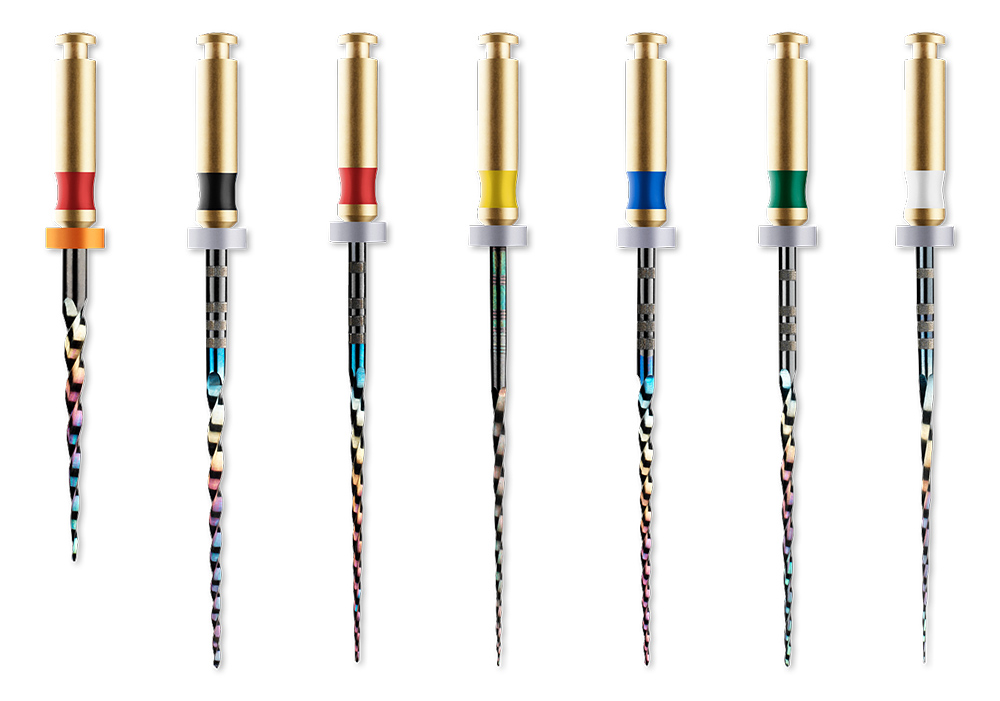
Coltène HyFlex CM: A Comprehensive Clinical Review For Dentists
Modern endodontic practice demands instruments that can navigate complex root canal anatomy while minimising the risk of procedural complications. For dental professionals working...
Reviewed by Mantas Petraitis
Pros
- Exceptional cyclic fatigue resistance documented in multiple peer-reviewed studies
- Visual deformation warning provides unique safety indicator before separation
- Pre-bending capability improves negotiation of abrupt curvatures
- Multi-use design reduces cost per procedure when properly maintained
- Lower debris extrusion compared to ProTaper systems
- Fewer dentinal defects than conventional NiTi instruments
- Autoclave sterilisation actually increases fatigue resistance
- Compatible with crown-down, step-back and single-length techniques
- Comprehensive file selection covers most clinical situations
- Matched gutta-percha points available for obturation
Cons
- Cutting efficiency lower than more aggressive file designs
- Requires careful post-sterilisation inspection to utilise discard indicator
- May need supplementation with HyFlex EDM for very complex cases
- Higher initial cost than some conventional NiTi systems
- Surface properties degrade after multiple autoclave cycles
- Shape recovery assessment adds step to reprocessing workflow
- Not suitable for practitioners who prefer single-use protocols
Modern endodontic practice demands instruments that can navigate complex root canal anatomy while minimising the risk of procedural complications. For dental professionals working with curved canals, fine anatomy and challenging cases, the fear of unexpected file separation remains a persistent concern. The introduction of Controlled Memory (CM) technology represented a fundamental shift in how nickel-titanium rotary instruments behave during root canal preparation.
Coltène HyFlex CM emerged in 2011 as the first commercially available controlled memory NiTi file system, developed through a proprietary thermomechanical processing technique that fundamentally altered the behaviour of NiTi alloy. Unlike conventional nickel-titanium instruments that exhibit strong shape memory and elastic rebound, HyFlex CM files remain extremely flexible without springing back to their original form. This characteristic allows them to follow canal anatomy more closely while providing visual warning signs before potential fracture occurs.
This comprehensive review examines the HyFlex CM system from a practical clinical perspective, addressing the real-world problems dentists encounter and providing evidence-based solutions. Whether you are considering adding HyFlex CM to your armamentarium or seeking to optimise your existing technique, this guide covers the essential knowledge needed for successful implementation.
What Makes HyFlex CM Different?
Understanding the metallurgical foundation of HyFlex CM helps explain its unique clinical behaviour and why it performs differently from other NiTi rotary systems. The controlled memory concept represents a departure from the superelastic properties that defined earlier generations of nickel-titanium endodontic instruments.
Controlled Memory Versus Shape Memory
Traditional nickel-titanium endodontic files exist predominantly in the austenite phase at body temperature. When these instruments are bent or stressed during canal preparation, they undergo a stress-induced transformation to the martensite phase but immediately revert to austenite once the stress is removed. This creates the characteristic "spring-back" effect that can cause canal transportation, ledging and perforation in curved anatomy.
HyFlex CM wire undergoes proprietary thermomechanical processing that shifts the austenite-martensite transition temperature. The result is an alloy that maintains a stable martensite microstructure at clinical operating temperatures. According to research published in the Journal of Endodontics, this phase composition eliminates the elastic rebound associated with conventional NiTi while preserving the flexibility that makes nickel-titanium superior to stainless steel.
The clinical significance becomes apparent when instrumenting curved canals. Without the restoring force pushing the file toward the outer canal wall, HyFlex CM instruments can follow the original canal trajectory more faithfully. Studies evaluating canal transportation have consistently demonstrated that controlled memory files produce less deviation from the original canal path compared to conventional superelastic NiTi systems.
Manufacturing Process And Alloy Composition
Coltène manufactures HyFlex CM from a nickel-titanium wire containing approximately 52% nickel by weight, which is lower than the 54.5% to 57% nickel content found in most commercially available NiTi rotary instruments. This composition, combined with specific heating and cooling treatments, creates the controlled memory behaviour that defines the system.
The thermomechanical processing involves precise temperature cycling that modifies the crystalline structure of the alloy. Research from the International Endodontic Journal confirms that this treatment produces files with a predominantly martensitic microstructure that exhibits different mechanical properties than austenitic NiTi at the same temperature.
Key Physical Properties
Laboratory testing has established several distinctive characteristics of HyFlex CM files that translate directly to clinical performance:
Cyclic fatigue resistance up to 300% to 339% higher than conventional NiTi files
Ability to be pre-bent like stainless steel instruments before insertion
Visual deformation under excessive stress, providing warning before separation
Shape recovery after autoclave sterilisation, enabling safe reuse assessment
Lower elastic modulus resulting in reduced stress transmission to canal walls
These properties address the primary concerns clinicians have expressed about rotary NiTi instrumentation, particularly the unpredictable nature of file separation in curved canals.
HyFlex CM File System: Design Features And Technical Specifications
The physical design of HyFlex CM files complements the unique properties of the CM wire alloy. Each element of the file geometry has been developed to optimise cutting efficiency while maintaining the flexibility and safety characteristics that define the system.
Cross-Sectional Design And Cutting Geometry
HyFlex CM files feature a symmetrical double-fluted cross-section resembling a Hedström-style design. This configuration provides two cutting blades with a negative rake angle that produces a scraping rather than aggressive cutting action. The non-active tip design prevents ledge creation during initial canal negotiation.
The variable pitch along the working length serves multiple functions. It reduces the tendency for the file to screw into the canal, decreases the accumulation of debris between flutes and improves the efficiency of coronal debris transport. This design consideration becomes particularly important during instrumentation of longer canals where debris management affects both cutting efficiency and the risk of blockage.
Available Configurations
The HyFlex CM system offers flexibility in file selection to accommodate various clinical situations:
Taper options:
0.04 taper for apical preparation and severely curved canals
0.06 taper for standard preparation sequences
0.08 taper for coronal flaring and orifice opening
Length options:
19mm for mandibular incisors and shorter roots
21mm for standard cases
25mm for longer canals
31mm for exceptionally long teeth
Size range:
ISO sizes from 15 to 40 with corresponding colour coding
Orifice opener (25/.08) for coronal preparation
Recommended Operating Parameters
Coltène specifies the following settings for optimal HyFlex CM performance:
Parameter | Recommended setting |
|---|---|
Rotation speed | 500 rpm |
Torque limit | 2.5 Ncm (25 mNm) |
Motion type | Continuous rotation |
These parameters have been validated through both laboratory testing and clinical experience. The relatively high rotation speed combined with controlled torque allows the file to cut efficiently while the motor's auto-reverse function provides additional protection against torsional overload.
Why Dentists Choose HyFlex CM For Challenging Cases
The combination of controlled memory properties and thoughtful file design produces measurable clinical advantages that have been documented in peer-reviewed literature. Understanding these benefits helps clinicians identify cases where HyFlex CM may offer particular advantages.
Superior Canal Tracking And Anatomy Preservation
The absence of elastic rebound means HyFlex CM files do not exert the straightening force that conventional NiTi instruments apply to curved canals. Research published in Dental Materials Journal comparing canal transportation between file systems has consistently shown that controlled memory instruments produce preparations that more closely follow the original canal path.
This characteristic proves especially valuable in canals with curvatures exceeding 27 degrees, where conventional NiTi files are more likely to cause transportation toward the outer aspect of the curve. The clinical implications include reduced risk of strip perforation in the danger zone of mesial roots and better preservation of the apical foramen position.
Exceptional Resistance To Cyclic Fatigue
Cyclic fatigue occurs when a rotating file repeatedly flexes as it passes through a curved segment of the canal. This repetitive bending eventually initiates microcracks that propagate until the instrument fractures. The martensitic microstructure of HyFlex CM demonstrates substantially greater resistance to this failure mechanism.
A comparative study published in PMC evaluating ProTaper Next, HyFlex CM, 2Shape and TF-Adaptive systems found that HyFlex CM demonstrated the highest cyclic fatigue resistance among all tested instruments. The number of cycles to failure was recorded from highest to lowest as HyFlex CM, TF-Adaptive, ProTaper Next and 2Shape.
This enhanced fatigue resistance provides a larger safety margin when instrumenting narrow, curved or S-shaped canals where the file experiences continuous flexural stress.
Pre-Bending Capability
Unlike conventional NiTi files that immediately spring back to their manufactured shape, HyFlex CM instruments can be pre-curved before insertion. This unique characteristic allows clinicians to approximate the anticipated canal curvature, facilitating initial negotiation and reducing the likelihood of creating ledges in challenging anatomy.
The ability to pre-bend proves particularly useful in three clinical scenarios:
Abrupt apical curvatures that are difficult to negotiate with straight instruments
Limited mouth opening that restricts the insertion angle
Severely curved canals where pre-shaping improves initial tracking
Visual Safety Warning System
One of the most valuable features of controlled memory technology is the visible deformation that occurs under excessive stress. When HyFlex CM files experience loads approaching their fatigue limit, the spirals begin to straighten rather than the file separating without warning as occurs with conventional NiTi.
This visual indicator provides clinicians with an opportunity to assess file condition and make informed decisions about continued use. Files that show persistent straightening after autoclaving have reached their fatigue limit and should be discarded. This built-in safety mechanism represents a significant advancement over conventional NiTi systems that offer no warning before unexpected separation.
Reduced Debris Extrusion
Apical extrusion of debris during canal preparation can trigger post-operative pain and inter-appointment flare-ups. Research comparing debris extrusion between file systems has demonstrated that HyFlex CM produces significantly less apically extruded material than ProTaper Next.
A study in the International Endodontic Journal found that the HyFlex group had significantly less debris extrusion than the ProTaper Next group in curved root canals. The flexible design and efficient flute geometry appear to favour coronal debris transport rather than apical compaction.
Lower Incidence Of Dentinal Defects
Root canal instrumentation can create microcracks in dentinal walls that may predispose teeth to vertical root fracture over time. Studies evaluating dentinal defects after preparation with various file systems have consistently shown that HyFlex CM produces fewer cracks than more aggressive cutting designs.
Research published in PMC comparing ProTaper Universal, ProTaper Next and HyFlex CM found that ProTaper Universal rotary files caused more dentinal cracks than both ProTaper Next and HyFlex CM. The gentler cutting action and reduced stress transmission of controlled memory files appear to preserve dentinal integrity more effectively.
Troubleshooting Guide: Solving Common HyFlex CM Challenges
Even well-designed instruments can present challenges in clinical use. This section addresses the most frequent problems dentists encounter with HyFlex CM and provides practical solutions based on the evidence and clinical experience.
Problem: File Does Not Regain Shape After Autoclaving
This situation indicates that the file has accumulated sufficient fatigue to reach its functional limit. The controlled memory alloy is designed to recover its original shape during heat sterilisation, and failure to do so represents the built-in discard indicator.
Solution:
The file should be discarded immediately without attempting manual reshaping. This response is not a defect but rather the safety feature functioning as intended. Document this occurrence and use it to refine your assessment of how many uses can be expected based on the types of canals being treated in your practice.
Files used in severely curved canals or calcified anatomy will accumulate fatigue more rapidly than those used in straightforward cases. Developing case-specific usage guidelines helps optimise the balance between safety and cost-effectiveness.
Problem: Difficulty Reaching Working Length
Failure to achieve the established working length can result from several factors, each requiring a different approach.
Causes and solutions:
Inadequate glide path: The most common cause of difficulty advancing rotary files is insufficient manual preparation. Establish a smooth glide path to at least a size 15 K-file before introducing HyFlex CM instruments. Consider using the HyFlex EDM Glidepath file (10/.05) for more efficient mechanical glide path creation.
Canal blockage: Debris accumulation can create iatrogenic obstacles. Increase irrigation frequency using sodium hypochlorite and ensure thorough recapitulation with a patency file between each rotary instrument.
Technique error: Excessive apical pressure causes the file to bind rather than cut. Use a light touch with a pecking motion, allowing the instrument to work passively to the desired depth.
Recommended protocol for difficult cases:
Confirm patency with a size 10 K-file
Establish a manual glide path to size 15 minimum
Use copious irrigation with 5.25% sodium hypochlorite
Advance HyFlex CM files with a gentle pecking motion
Withdraw when resistance is encountered
Recapitulate and irrigate before attempting further advancement
Problem: Loss Of Working Length During Instrumentation
Gradual shortening of the measured working length indicates either debris accumulation creating a blockage or ledge formation that prevents the file from following the original canal path.
Solutions:
Increase the frequency of irrigation and recapitulation, cleaning file flutes after each insertion. For canals with abrupt curvatures, pre-bend the files to follow the anticipated canal shape before insertion. Use smaller taper files (0.04) in severely curved apical thirds where larger tapers are more likely to cause straightening.
Verify working length with an apex locator at each file change rather than assuming it remains constant throughout the procedure. Early detection of working length loss allows corrective action before a significant ledge develops.
Problem: File Binding Or Screwing-In Sensation
A feeling of the file grabbing or pulling into the canal indicates either excessive apical pressure, insufficient lubrication, or debris packing in the flutes.
Solutions:
Adopt a lighter touch using the tactile-controlled activation (TCA) technique: advance the file passively until resistance is felt, then immediately withdraw and repeat. This approach allows the file to cut at its own pace rather than being forced apically.
Increase irrigation volume to ensure adequate lubrication. Clean debris from the flutes more frequently, as accumulated dentine chips reduce cutting efficiency and increase friction. Verify that motor settings match the manufacturer's recommendations of 500 rpm and 2.5 Ncm.
Problem: Concerns About File Separation
Although HyFlex CM has demonstrated significantly lower separation rates than conventional NiTi systems, understanding prevention strategies helps minimise risk further.
Prevention strategies:
Inspect files carefully before and after each use under magnification
Establish a proper glide path before any rotary instrumentation
Use a torque-controlled motor at recommended settings
Never force files against resistance
Watch for spiral straightening as a pre-fracture warning
Limit the number of uses based on canal complexity rather than arbitrary counts
If separation occurs:
Document the event radiographically and assess the fragment location. Management options include retrieval with specialised instruments, bypass of the fragment if space permits, or incorporation into the obturation if the fragment is apical and the canal is adequately prepared. The good news is that HyFlex CM separation occurs less frequently than with conventional NiTi, and the warning signs often allow preventive discard before separation happens.
Problem: Managing Severely Curved Canals
Canals with curvatures exceeding 27 degrees or S-shaped configurations present challenges for all rotary systems. HyFlex CM offers advantages in these cases when used with appropriate technique modifications.
Protocol for challenging anatomy:
Obtain pre-operative CBCT for three-dimensional assessment of complex cases
Create a thorough manual glide path, taking additional time for initial negotiation
Pre-bend HyFlex CM files to approximate the anticipated curvature
Select 0.04 taper files rather than 0.06 or 0.08 for the apical third
Employ the TCA technique with a very light touch
Use warmed sodium hypochlorite to enhance tissue dissolution
Take shorter pecking strokes in areas of maximum curvature
Accept smaller apical preparations in very curved canals rather than risking complications
Problem: Reduced Cutting Efficiency Over Multiple Uses
Laboratory studies have shown that HyFlex CM maintains cutting efficiency through one to two uses and flexibility through at least two uses. However, individual file performance varies based on the cases in which they are used.
Guidance for assessment:
Evaluate each file based on the combined stress it has experienced rather than simply counting uses. Factors to consider include:
Curvature and complexity of canals prepared
Number of canals per tooth
Presence of calcification or sclerosis
Visual condition of cutting edges
Any observed deformation during use
Files used in a single straightforward case will retain more capacity than files used in multiple curved, calcified canals. Develop practice-specific protocols based on your typical case mix.
Problem: Surface Roughness Concerns With Multiple Sterilisations
Research using atomic force microscopy has shown that the surface roughness of NiTi files increases with repeated autoclave cycles. For HyFlex CM, significant surface changes become apparent after approximately 10 sterilisation cycles.
Recommendations:
Track both clinical uses and sterilisation cycles for each file. Consider the cumulative effect of both factors when deciding on discard. While HyFlex CM demonstrates better surface preservation after multiple autoclave cycles than HyFlex EDM, limiting total reprocessing cycles provides an additional safety margin.
HyFlex CM Sterilisation Guidelines
The regenerative property of HyFlex CM that allows shape recovery during heat treatment is central to the safe reuse protocol. Following consistent sterilisation procedures ensures that this safety feature functions reliably.
Pre-Sterilisation Cleaning
Immediately after clinical use, remove visible debris from file flutes using a sponge or brush. Ultrasonic cleaning in an enzymatic solution effectively removes organic material that may have been compacted into the flute spaces.
Inspect each file under magnification for visible defects including:
Unwinding or permanent deformation of spirals
Damage to cutting edges
Corrosion or discolouration
Any visible cracks or abnormalities
Files showing any of these conditions should be discarded regardless of the number of previous uses.
Autoclave Parameters
Standard steam autoclave sterilisation effectively regenerates HyFlex CM shape while achieving instrument sterility. Recommended parameters include:
Temperature: 121°C (250°F) or equivalent
Pressure: 15 psi
Duration: 15 minutes minimum
Alternative: Glass bead sterilisation also triggers shape recovery
The heat treatment during autoclaving serves the dual purpose of sterilisation and activating the shape memory recovery mechanism. This is why proper autoclaving is essential for the discard assessment system to function correctly.
Post-Sterilisation Assessment
After autoclaving, examine each file to confirm complete shape recovery. The critical checkpoint is verifying that the file has returned to its original, manufactured configuration.
Discard criteria:
The file remains straightened or deformed after autoclaving
Spirals appear distorted compared to the original shape
Any visible defects noted during pre-sterilisation inspection
The file has reached your practice's maximum use or cycle limit
Research has demonstrated that autoclave sterilisation actually increases the cyclic fatigue resistance of HyFlex CM files. A study in PubMed found that autoclaving significantly increased the mean cycles to failure for HyFlex CM both before and after the files had been cycled. This finding supports the safety of the multi-use protocol when combined with appropriate inspection.
Sterilisation Protocol Checklist
Use the following checklist to standardise your reprocessing workflow:
Clean debris from flutes immediately after use
Ultrasonically clean in an enzymatic solution
Rinse thoroughly with distilled water
Inspect under magnification for defects
Discard any file showing damage or deformation
Package for autoclave sterilisation
Process at 121°C for a minimum of 15 minutes
After cooling, verify complete shape recovery
Discard any file not return to its original shape
Document sterilisation cycle count for each file
Store properly until next use
How Does HyFlex CM Compare?
Selecting the appropriate file system requires understanding how different instruments perform across various parameters. This comparison draws on published research to provide objective guidance.
HyFlex CM Versus ProTaper Next
ProTaper Next represents the M-wire generation of thermally treated NiTi, offering enhanced flexibility compared to conventional superelastic alloys but retaining some shape memory behaviour.
Parameter | HyFlex CM | ProTaper Next |
|---|---|---|
Alloy type | CM-wire (controlled memory) | M-wire |
Cyclic fatigue resistance | Superior | Lower |
Apical debris extrusion | Less | More |
Canal transportation | Minimal | Low |
Pre-bending capability | Yes | No |
Dentinal crack incidence | Lower | Higher |
Shape memory | None | Present |
Cross-section | Symmetrical double-flute | Off-centred rectangular |
Research consistently demonstrates that HyFlex CM outperforms ProTaper Next in cyclic fatigue testing while producing less apical debris extrusion and fewer dentinal defects. ProTaper Next offers advantages in cutting efficiency for straightforward cases where its more aggressive design can work effectively.
HyFlex CM Versus ProTaper Universal
ProTaper Universal utilises conventional superelastic NiTi without thermal treatment, representing an earlier generation of rotary instrumentation technology.
Comparative studies have shown that ProTaper Universal causes significantly more dentinal cracks than HyFlex CM. The aggressive cutting action and shape memory effect of ProTaper Universal produce greater stress on canal walls, particularly in curved anatomy.
For practices transitioning from ProTaper Universal, HyFlex CM offers a substantial improvement in safety margin for curved canal cases, while the familiar crown-down technique remains applicable.
HyFlex CM Versus HyFlex EDM
Both systems utilise controlled memory technology but differ in their manufacturing process and resulting properties.
Parameter | HyFlex CM | HyFlex EDM |
|---|---|---|
Manufacturing | Thermomechanical treatment | Electrical discharge machining |
Cyclic fatigue resistance | High | Higher (up to 700% vs conventional) |
Surface characteristics | Ground surface | Spark-eroded textured surface |
Cutting efficiency | Good | Enhanced |
Surface after autoclave | Better preservation | Changes after 5 cycles |
File sequence | Multiple files | Reduced file sequence possible |
Cost per file | Lower | Higher |
Research in PMC comparing surface deformation and cyclic fatigue resistance after instrumentation and sterilisation found that HyFlex EDM files maintain their surface topography better during use but show changes after fewer autoclave cycles than HyFlex CM.
Clinical selection guidance:
Choose HyFlex CM when:
Multi-use protocol is preferred for cost management
Standard to moderately curved canals are typical
Maximum sterilisation cycle tolerance is desired
Choose HyFlex EDM when:
Maximum cyclic fatigue resistance is needed
Complex anatomy requires a minimal file sequence
A single-use or limited reuse protocol is acceptable
Many practices maintain both systems, using HyFlex CM for routine cases and reserving HyFlex EDM for particularly challenging anatomy.
Step-By-Step: HyFlex CM Clinical Technique For Optimal Results
Consistent technique produces consistent results. This protocol incorporates manufacturer recommendations and evidence-based refinements for reliable outcomes.
Pre-Operative Assessment
Before beginning instrumentation, gather the information needed for case planning:
Obtain diagnostic radiographs from at least two angles
Assess canal curvature using Schneider's method
Identify potential challenges including calcification, previous treatment or unusual anatomy
Consider CBCT imaging for complex cases
Select the appropriate file sequence based on anticipated anatomy
Access And Initial Negotiation
Proper access preparation provides the foundation for successful instrumentation:
Create straight-line access to canal orifices
Remove all coronal interferences that would deflect files
Locate canal orifices using the DG16 explorer and magnification
Negotiate each canal with a size 08 or 10 K-file to confirm patency
Determine working length using an electronic apex locator
Confirm working length radiographically
Glide Path Establishment
Never introduce rotary files without first establishing a smooth glide path:
Advance K-files sequentially to at least size 15
Use watch-winding motion with light apical pressure
Irrigate frequently with sodium hypochlorite
Confirm a smooth, unobstructed path before rotary instrumentation
Consider mechanical glide path creation with the HyFlex EDM Glidepath file for efficiency
Coronal Flaring
Open the coronal third to improve subsequent file access and irrigation:
Use 25/.08 Orifice Opener in 19mm length
Limit use to the straight coronal portion only
Apply a light brushing motion against the canal walls
Irrigate thoroughly after coronal flaring
Recapitulate with the patency file to confirm no debris blockage
Shaping Sequence
The single-length technique simplifies the protocol while achieving thorough preparation:
Set motor to 500 rpm and 2.5 Ncm
Begin with 15/.04 file to full working length
Use a gentle pecking motion with light apical pressure
Withdraw when any resistance is encountered
Clean flutes and irrigate between insertions
Advance to 20/.04, then 25/.04 to working length
Continue to 30/.04 or 35/.04 based on canal diameter
Recapitulate with a size 10 K-file between each rotary instrument
Verify working length periodically with the apex locator
Irrigation Protocol
Effective irrigation is essential throughout the procedure:
Use 5.25% sodium hypochlorite as the primary irrigant
Deliver a minimum of 2ml per canal between each file
Consider warmed irrigant for enhanced tissue dissolution
Perform final rinse with 17% EDTA for 60 seconds
Follow with a sodium hypochlorite rinse after EDTA
Ensure the irrigation needle reaches within 2mm of the working length
Verification And Completion
Before proceeding to obturation:
Perform final apical gauging to confirm preparation size
Take a master cone radiograph with fitted gutta-percha
Verify three-dimensional seal potential
Dry canals with paper points
Proceed to obturation using matched GP points
Economic Considerations: Is HyFlex CM Worth The Investment?
Evaluating any instrument system requires balancing clinical performance against practice economics. HyFlex CM offers several financial advantages that contribute to its value proposition.
Multi-Use Cost Efficiency
Unlike single-use systems, where each file represents a fixed cost per procedure, HyFlex CM's regenerative properties enable multiple uses from each instrument. When combined with proper sterilisation protocols, the cost per canal preparation decreases substantially compared to the initial purchase price.
Practices instrumenting high volumes of endodontic cases benefit most from this multi-use capability. The key is implementing consistent inspection and discard protocols that maintain safety while maximising value.
Reduced Complication Costs
The lower incidence of file separation with HyFlex CM translates to fewer complications requiring management. Each avoided separation eliminates the time and potential referral cost associated with retrieval attempts or case explanation to patients.
Similarly, the reduced incidence of transportation and perforation in curved canals decreases the likelihood of compromised outcomes requiring retreatment or surgical intervention.
Inventory Simplification
The versatility of HyFlex CM across various clinical situations reduces the need to maintain multiple file systems for different case types. A well-selected HyFlex CM inventory can address the majority of endodontic cases, simplifying ordering and storage while reducing the risk of expired or obsolete stock.
Training Investment
Clinicians experienced with rotary endodontics will find the HyFlex CM technique intuitive to adopt. The familiar crown-down approach and standard motor settings minimise the learning curve. Coltène provides training resources and support to facilitate implementation.
Bottom Line
HyFlex CM represents a mature, well-validated controlled memory file system backed by extensive research demonstrating superior cyclic fatigue resistance, reduced debris extrusion, and fewer dentinal defects compared to conventional NiTi alternatives. The unique combination of extreme flexibility, pre-bending capability, and visual deformation warning provides safety advantages that directly address the concerns clinicians have expressed about rotary endodontics.
The system excels in curved canal preparation where its controlled memory properties prevent the transportation and ledging that can occur with shape memory instruments. The multi-use protocol, enabled by shape recovery during autoclaving, offers economic advantages for practices performing regular endodontic treatment.
Clinical success with HyFlex CM depends on proper technique, including thorough glide path preparation, appropriate motor settings, and consistent inspection protocols. When these fundamentals are observed, the system delivers reliable performance across a wide range of clinical situations.
Verdict
<p>HyFlex CM earns a strong recommendation for general dentists and endodontists seeking a reliable, evidence-based rotary file system. The controlled memory technology delivers on its promise of enhanced safety in curved canals, and the visual deformation indicator provides peace of mind that conventional NiTi systems cannot match.</p><p>The system is particularly well-suited for:</p><ul class="list-disc pl-4 space-y-1"><li><p>Practitioners who encounter moderate to severely curved canals regularly</p></li><li><p>Clinicians transitioning from hand instrumentation who want a forgiving rotary system</p></li><li><p>Practices seeking cost-effective multi-use instruments without compromising safety</p></li><li><p>Dentists who value the ability to pre-bend files for challenging access situations</p></li></ul><p>The main consideration is that maximum cutting efficiency may require pairing HyFlex CM with HyFlex EDM for cases where single-file preparation or enhanced cutting is desired. For most general practice endodontics, however, HyFlex CM provides an excellent balance of safety, versatility, and value.</p>
Frequently Asked Questions
What is HyFlex CM made of?
HyFlex CM is manufactured from nickel-titanium alloy containing approximately 52% nickel by weight that has undergone proprietary thermomechanical processing called CM-wire treatment. This creates a controlled memory effect with a stable martensite microstructure, providing extreme flexibility without the shape memory rebound of conventional NiTi instruments.
How many times can you use HyFlex CM files?
HyFlex CM files are designed for multiple uses with the number depending on canal complexity and visual inspection findings. Files should be discarded if they do not regain their original shape after autoclaving. Many practices limit reuse to three to five cases with careful inspection between uses, though some straightforward cases may allow additional uses while complex curved canals may warrant single use.
What speed and torque should HyFlex CM be used at?
The manufacturer recommends 500 rpm rotation speed with a torque setting of 2.5 Ncm (25 mNm) for HyFlex CM files. These settings have been validated through laboratory testing and clinical experience to optimise cutting efficiency while maintaining safety margins.
Can HyFlex CM files be pre-bent?
Yes, HyFlex CM files can be pre-bent similar to stainless steel files due to their controlled memory properties. This capability is unique among NiTi systems and proves particularly advantageous in root canals with abrupt curvatures or when access is limited.
How do I know when to discard HyFlex CM files?
The primary discard criterion is when the file does not regain its original shape after autoclaving. Additionally, discard files showing visible defects such as damaged cutting edges, corrosion or any cracks. Files used in highly complex or calcified canals may warrant discard after single use regardless of visual appearance.
Is HyFlex CM better than ProTaper?
Research consistently demonstrates that HyFlex CM offers superior cyclic fatigue resistance, produces less apical debris extrusion and causes fewer dentinal defects compared to both ProTaper Next and ProTaper Universal. HyFlex CM is particularly advantageous for curved canals. ProTaper systems may offer faster cutting in straightforward cases due to their more aggressive design.
Can HyFlex CM be used in reciprocating motion?
While HyFlex CM is designed primarily for continuous rotation, it can be used in reciprocal motion depending on clinical circumstances. The manufacturer recommends continuous rotation at 500 rpm as the standard protocol, but the controlled memory properties function regardless of motion type.
How does HyFlex CM compare to HyFlex EDM?
Both systems use controlled memory technology but differ in manufacturing. HyFlex EDM offers up to 700% higher cyclic fatigue resistance than conventional NiTi due to electrical discharge machining, while HyFlex CM provides better surface preservation after multiple autoclave cycles. HyFlex CM is more cost-effective for multi-use protocols, while HyFlex EDM excels in maximum fatigue resistance for complex cases.