Rating: 4.7/5
Reciproc Blue Review
The Reciproc Blue endodontic file system from VDW (now part of Dentsply Sirona) has reshaped how clinicians approach root canal preparation. Launched in 2016 as the successor to...
Reviewed by Mantas Petraitis
Pros
- Single-file simplicity reduces procedural steps, chair time, and the potential for sequencing errors
- Blue heat treatment provides approximately 40% greater flexibility and up to twice the cyclic fatigue resistance compared to the original Reciproc
- No glide path required in the majority of clinical cases, saving additional time and instrument costs
- Pre-bendable controlled memory alloy facilitates access to difficult canals in posterior teeth
- Dual-purpose functionality for both primary root canal preparation and retreatment procedures
- Pre-sterilized single-use delivery eliminates cross-contamination risk and reprocessing overhead
- Short 11 mm shaft improves access to molars compared to file systems with longer shafts
- Easy to learn, with published evidence confirming safe adoption by undergraduate dental students
- Extensive evidence base of over 400 peer-reviewed publications and 22 million files sold globally
- Coordinated product ecosystem including size-matched paper points, gutta-percha cones, and compatible motors
Cons
- Single-use design results in higher per-procedure file cost compared to reusable multi-file rotary systems
- Requires a compatible VDW or Dentsply Sirona motor with the RECIPROC ALL program setting
- Only three file sizes (R25, R40, R50) offer less granularity in apical preparation compared to multi-file systems
- Glide path preparation is still necessary in a subset of cases involving severe curvatures, calcification, or blockages
- Published research shows that NaOCl exposure and autoclave sterilization cycles degrade the file’s mechanical properties, reinforcing the single-use requirement
- Some endodontists prefer the granular control offered by multi-file rotary sequences for complex cases
- Files may appear slightly curved out of the blister due to the manufacturing process, which can be initially unfamiliar for new users
The Reciproc Blue endodontic file system from VDW (now part of Dentsply Sirona) has reshaped how clinicians approach root canal preparation. Launched in 2016 as the successor to the original M-Wire Reciproc, the system introduced a proprietary blue heat treatment that delivers measurably greater flexibility and fatigue resistance. With more than 22 million files sold and over 400 peer-reviewed publications supporting the Reciproc family, the instrument has earned a strong reputation among general practitioners and endodontists worldwide.
This review examines the design, metallurgy, clinical protocol, scientific evidence, and real-world performance of Reciproc Blue. It also compares the system against its main competitors and provides a balanced assessment of its strengths and limitations, so that dental professionals can make an informed purchasing and clinical decision.
What Is Reciproc Blue?
Reciproc Blue is a single-file reciprocating NiTi endodontic instrument designed for complete root canal preparation and retreatment. It is the evolution of the original Reciproc system that VDW released in 2011, which popularized the concept of shaping a canal with just one engine-driven file in reciprocating motion. The idea was pioneered by Dr. Ghassan Yared, who demonstrated that a single NiTi instrument in reciprocation could safely and efficiently prepare the vast majority of root canals without a traditional multi-file rotary sequence.
The core innovation of Reciproc Blue is a thermomechanical treatment applied to the NiTi alloy after manufacturing. This process heats the wire to approximately 550°C, then cools it to around 120°C under controlled conditions. The result is a visible blue titanium oxide layer on the file surface, a shift in the alloy’s crystallographic phase toward stable martensite, and clinically meaningful improvements in both flexibility and cyclic fatigue resistance. According to research published in the Journal of Endodontics, the blue-treated NiTi demonstrated improved all-around performance compared to conventional M-Wire, including enhanced flexibility, increased fatigue resistance, and reduced microhardness while maintaining similar surface characteristics.
Key Features and Specifications
Understanding the technical design of the Reciproc Blue system is essential for selecting the right file for each clinical scenario and for using it safely within the manufacturer’s parameters.
Specification | Details |
Manufacturer | VDW GmbH / Dentsply Sirona |
NiTi alloy | Blue heat-treated nickel-titanium |
Cross-section | S-shaped with two cutting edges |
Tip design | Non-cutting tip |
File sizes | R25 (0.25 mm, .08 taper), R40 (0.40 mm, .06 taper), R50 (0.50 mm, .05 taper) |
Working lengths | 21 mm, 25 mm, 31 mm |
Shaft length | 11 mm (short shaft for molar access) |
Kinematics | Reciprocating motion (~150° CCW cutting, ~30° CW release) |
Sterility | Pre-sterilized, single-use blisters |
Compatible motors | VDW.SILVER, 2, X-Smart Pro+ (RECIPROC ALL mode) |
Indications | Primary root canal preparation and retreatment |
S-Shaped Cross-Section and Non-Cutting Tip
The S-shaped cross-section provides two cutting edges that engage dentin efficiently without generating excessive lateral pressure on the canal walls. The non-cutting tip is a deliberate safety feature that allows the file to follow the existing canal path rather than carving new trajectories, which reduces the risk of ledging, perforation, and transportation. This design also supports the manufacturer’s claim that the file can navigate curved canals while maintaining centering ability.
Short Shaft for Posterior Access
With an 11 mm shaft, Reciproc Blue files are noticeably shorter than many competing instruments that use 13 mm or longer shafts. This seemingly minor difference has real clinical impact in posterior teeth, especially mandibular molars where limited interocclusal space and restricted mouth opening can make instrumentation challenging.
Pre-Sterilized Single-Use Design
Each file arrives in a sterile blister and is intended for a single patient. The non-autoclavable handle is an intentional design choice that prevents reuse. This approach addresses cross-contamination risk, prion transmission concerns, and the well-documented loss of mechanical properties that NiTi files experience with repeated sterilization cycles. For practices focused on robust infection control protocols, the single-use model eliminates the overhead of tracking file usage cycles and managing reprocessing workflows.
Variable Taper Design
Each of the three Reciproc Blue file sizes features a different taper configuration. The R25, designed for narrow canals, has a .08 taper over the first apical millimeters, providing sufficient apical enlargement for effective irrigation. The R40, intended for medium canals, features a .06 taper, while the R50 for wide canals uses a .05 taper. This progressive reduction in taper across larger file sizes reflects a conservative shaping philosophy that preserves pericervical dentin while still achieving adequate apical preparation. Preserving dentin in the cervical and coronal third of the root is increasingly recognized as a priority in modern endodontics because this structural tooth tissue plays a critical role in long-term fracture resistance of the treated tooth.
Radiopaque Depth Markings
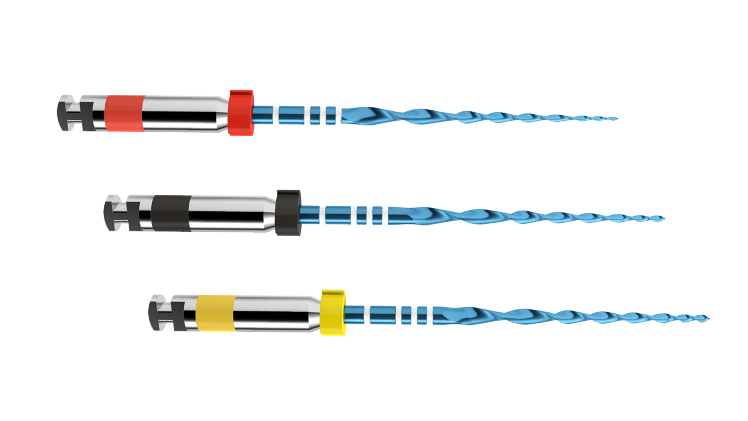
Reciproc Blue files feature radiopaque calibration rings at predetermined distances from the tip, including markings at 18, 19, and 20 mm on 21 mm files, with additional markings at 22 mm and 24 mm on longer files. These markings are visible on periapical radiographs, allowing clinicians to verify file depth during the procedure without relying solely on the rubber stopper position. The color-coded silicone stopper matches the ISO color of the file’s tip size (red for R25, black for R40, yellow for R50), supporting quick identification when the file is inserted in the contra-angle handpiece.
Blue Heat Treatment: The Science Behind the Color
The blue heat treatment is more than a cosmetic distinction. It represents a genuine metallurgical advancement that alters the behavior of the NiTi alloy at the molecular level, with direct implications for clinical safety and performance.
Conventional NiTi endodontic files, including the original M-Wire Reciproc, exist primarily in an austenitic phase at room temperature. This phase is superelastic, meaning the file springs back to its original shape after deformation. The blue heat treatment shifts the alloy toward a stable martensitic phase, a softer crystallographic structure that can undergo greater deformation under lower stress. De-Deus et al. (2017) confirmed that Reciproc Blue files exhibit significantly longer cyclic fatigue life and significantly lower bending resistance compared to the original Reciproc, making them approximately twice as resistant to cyclic fatigue and roughly 40% more flexible.
The controlled memory properties of the blue-treated alloy also allow clinicians to pre-bend the file to facilitate access to canals with challenging entry angles. Unlike superelastic files that immediately return to their original shape, a pre-bent Reciproc Blue file retains its adapted curvature, which is particularly useful in cases involving severely angled molars or limited access.
Impact on Cyclic Fatigue Resistance
Cyclic fatigue failure is one of the primary mechanisms of endodontic file fracture. It occurs when a file undergoes repeated tension and compression cycles at the point of maximum flexure within a curved root canal. The accumulated metal fatigue eventually exceeds the alloy’s capacity, resulting in fracture without warning. This type of failure is distinct from torsional fracture, which occurs when the file tip locks in the canal while the shaft continues to rotate.
The blue heat treatment directly addresses cyclic fatigue risk. The martensitic phase is inherently more resistant to fatigue-related failure because its softer, more ductile crystallographic structure can absorb repeated deformation cycles without accumulating the same level of micro-damage that occurs in austenitic alloys. Multiple studies have confirmed this advantage across different testing methodologies, including static and dynamic fatigue testing in simulated canals at both room temperature and body temperature (37°C). The clinical implication is clear: the file can spend more time working in a curved canal before reaching its fatigue limit, giving practitioners a wider margin of safety during instrumentation.
How Reciproc Blue Works: Reciprocating Motion Explained
Reciproc Blue operates on a reciprocating kinematic that is fundamentally different from continuous rotation. Understanding this motion is important for using the file safely and for appreciating its safety advantages over rotary systems.
The instrument alternates between a larger counter-clockwise (cutting) rotation of approximately 150° and a smaller clockwise (release) rotation of approximately 30°. A full 360° rotation is completed over several reciprocating cycles. Because the cutting arc is larger than the release arc, the file progressively advances toward the apex. The release motion allows the instrument to disengage from the dentin walls before torsional stress exceeds the alloy’s elastic limit, which is the key mechanism that reduces the risk of file fracture compared to continuous rotation. According to a finite element analysis by Rubio et al., Reciproc Blue was 42.31% more flexible than the original Reciproc under standardized bending conditions.
The specific reciprocating angles used in Reciproc Blue are not arbitrary. They were developed and tested to ensure that the load on the instrument never exceeds its elastic limit during normal clinical use. VDW calibrated these angles to match the geometry and metallurgy of the Reciproc file design, which is why using a generic reciprocation program on a non-compatible motor is not recommended. The controlled acceleration and deceleration built into the RECIPROC ALL motor program further reduces stress peaks during direction changes, contributing to the system’s overall safety profile.
From a practical standpoint, the reciprocating movement closely resembles the back-and-forth motion that dentists are already familiar with from manual hand filing. This kinematic similarity is one reason why reciprocating systems tend to have a shorter learning curve than continuous rotation systems, which require a different approach to instrument control and tactile feedback.
Clinical Protocol: Step-by-Step Usage
One of the strongest selling points of Reciproc Blue is its straightforward clinical workflow. The following protocol is based on the manufacturer’s instructions for use and supported by published clinical evidence. When integrated into a structured dental treatment plan, the system can meaningfully reduce chair time per endodontic procedure.
Diagnosis and File Selection
Review periapical radiographs from multiple horizontal angles to assess root canal anatomy, curvature, and width. In most cases, R25 is the appropriate file. Select R40 for medium-diameter canals or R50 for wide canals.
Access and Scouting
After preparing a standard access cavity, scout the canal with a small hand file (ISO size 08 or 10, such as a C-PILOT). Confirm patency and determine the exact working length using an electronic apex locator combined with radiographic verification.
Glide Path Decision
If the scouting file reaches working length without needing to be pre-bent, the Reciproc Blue can proceed directly, as the system is designed to initiate shaping without prior glide path preparation in most cases. According to a retrospective clinical study, Reciproc instruments successfully reached full working length without glide path preparation in approximately 85.6% of cases. If the scouting file must be pre-bent or cannot reach working length, a glide path should be established to ISO size 15.
Shaping With Reciproc Blue
Set the motor to RECIPROC ALL mode and advance the file apically using a slow, gentle pecking motion in sets of three short strokes. After every three pecks, withdraw the file completely to clean debris from the flutes and irrigate with sodium hypochlorite. If the file does not progress, stop and reassess. Clean the flutes, irrigate, recapitulate with a small hand file, and then re-enter with the Reciproc Blue. Forcing the file forward against resistance is the most common operator error and the primary preventable cause of instrument fracture.
Verification and Obturation
Once the file reaches working length and feels snug, preparation is complete. Proceed with final irrigation, drying with size-matched Reciproc Blue paper points, and obturation using the preferred technique (cold lateral condensation, warm vertical condensation with BeeFill 2in1, or carrier-based obturation with GuttaFusion).
Retreatment Capability
Reciproc Blue is approved and widely used for retreatment procedures, which is an area where the system delivers a particularly strong clinical advantage.
The R25 file effectively removes gutta-percha filling material and carrier-based obturators using a brushing motion against the lateral canal walls. Many clinicians report that the retreatment workflow is more efficient than with multi-file rotary sequences because the same single-file system handles both material removal and canal reshaping. There is no need to switch between separate retreatment-specific instruments and shaping instruments mid-procedure. For practitioners who frequently encounter failed root canal cases requiring re-intervention, this dual-purpose capability can save meaningful chair time across a full day of appointments.
Dr. Kara Damas, a board-certified endodontist and Diplomate of the American Board of Endodontics, has described the retreatment benefit in a published clinical perspective in Dental Product Shopper: patients often leave the office remarking that the retreatment procedure took less time than the original root canal. The efficiency gain comes from eliminating the need to alternate between file systems for material removal and canal reshaping, which reduces both procedural complexity and assistant frustration.
Reciproc Blue vs. the Original Reciproc
For practitioners who have used the original M-Wire Reciproc, understanding the specific improvements in the Blue version helps clarify whether upgrading is worthwhile.
Feature | Original Reciproc | Reciproc Blue |
NiTi alloy | M-Wire | Blue heat-treated |
Flexibility | Standard | ~40% more flexible |
Cyclic fatigue resistance | Good | Approximately 2x higher |
Pre-bendability | Limited (superelastic) | Yes (controlled memory) |
Cross-section | S-shaped | S-shaped (identical) |
Motor settings | RECIPROC ALL | RECIPROC ALL (same) |
The transition from the original to Reciproc Blue is seamless because both systems use the same motor settings, file sizes, and clinical protocol. The metallurgical upgrade delivers measurably improved safety margins without requiring any changes to technique or equipment.
Reciproc Blue vs. WaveOne Gold
WaveOne Gold (Dentsply Maillefer) is the closest competitor to Reciproc Blue, as both are single-file reciprocating systems within the broader Dentsply Sirona portfolio. WaveOne Gold uses a gold heat-treated NiTi alloy with a parallelogram-shaped cross-section and a semi-active tip, compared to the S-shaped cross-section and non-cutting tip of Reciproc Blue.
Comparative fatigue testing has generally favored Reciproc Blue. A dynamic cyclic fatigue study found that Reciproc Blue files demonstrated significantly higher numbers of cycles to fracture compared to WaveOne Gold primary files under standardized testing conditions. However, the finite element analysis by Rubio et al. noted that WaveOne Gold showed a greater percentage improvement in flexibility over its predecessor (86% vs. WaveOne) compared to Reciproc Blue’s improvement over the original Reciproc (42%). Both systems deliver excellent clinical performance, and the choice often comes down to practitioner familiarity with the specific file feel and the motor ecosystem already present in the practice.
Reciproc Blue vs. ProTaper Systems
ProTaper Gold and ProTaper Ultimate represent a fundamentally different clinical philosophy, using a multi-file rotary sequence rather than a single-file reciprocating approach.
Multi-file rotary systems require several instruments used in a specific order, progressing from smaller shaping files to larger finishing files. While ProTaper systems are respected as a benchmark in rotary endodontics, they involve a more complex workflow, a longer instrument sequence, and a steeper learning curve. Reciproc Blue’s advantage lies in its simplicity: one file, one motor setting, one treatment. This streamlined approach is especially appealing for general practitioners who perform endodontic procedures less frequently and benefit from a predictable, repeatable protocol.
Scientific Evidence and Clinical Validation
The strength of any dental instrument ultimately rests on the quality of its evidence base. The Reciproc family is supported by more than 400 scientific publications across in vitro mechanical testing, ex vivo shaping studies, clinical outcome trials, and undergraduate training evaluations.
Cyclic Fatigue Research
The landmark study by De-Deus et al. (2017) in the Journal of Endodontics established that the blue heat treatment significantly improved cyclic fatigue life while maintaining similar surface roughness characteristics. Subsequent studies have confirmed these findings under body temperature conditions (37°C) and in S-shaped canal models that replicate anatomically complex clinical scenarios.
Clinical Fracture Rate
A large-scale clinical analysis evaluating over 1,300 canals treated with R25 files reported a fracture rate of only 0.3%, according to findings published in a recent PMC study. This exceptionally low fracture incidence provides reassurance about the system’s safety, even in complex molar anatomy.
Novice User Acceptance
A study evaluating 42 undergraduate dental students with no prior reciprocating file experience found that confidence in the system’s mechanical properties and operational safety increased significantly after theoretical and practical training. The authors concluded that Reciproc Blue is a safe and well-accepted system even for less-experienced users.
Who Should Use Reciproc Blue?
Reciproc Blue is designed for use by qualified dental professionals, including general practitioners and endodontic specialists. The system’s straightforward protocol makes it well-suited for several practitioner profiles.
General dentists expanding into endodontics will find the system offers a low-learning-curve entry point into mechanical root canal preparation. The reciprocating motion is intuitive, and the single-file approach removes the complexity of managing multi-file sequences and remembering the correct order of instruments. For endodontic specialists running high-volume practices, the time savings from single-file preparation translate to meaningful gains in daily patient throughput. The ability to handle both primary and retreatment cases with the same instrument system further increases scheduling efficiency.
Dental students and residents also benefit from the Reciproc Blue system. Published training studies confirm that novice users achieve competency quickly, and the built-in safety features of reciprocating motion reduce the anxiety that often accompanies early experiences with engine-driven endodontic instruments. Residency programs across Europe have integrated Reciproc Blue into their curricula, and the system’s adoption in U.S. training programs has increased steadily since its domestic launch.
Bottom Line
Reciproc Blue is a mature, well-engineered reciprocating endodontic file system that has earned its position as one of the most trusted instruments in modern endodontics. The blue heat treatment is a genuine metallurgical advancement, and the single-file reciprocating concept has been validated by an exceptional volume of research and clinical experience. For practitioners evaluating their dental equipment options, Reciproc Blue offers a compelling combination of simplicity, efficiency, and safety that works for clinicians at all experience levels.
As with any clinical instrument, Reciproc Blue is most effective within the context of sound endodontic principles: thorough diagnosis, proper access, adequate irrigation, and appropriate case selection. No file system replaces clinical judgment, and practitioners should always adapt their approach based on the unique challenges of each case.
Verdict
<p>Reciproc Blue delivers on its core promise of simplifying endodontic treatment without compromising clinical outcomes. The single-file reciprocating approach genuinely reduces chair time and streamlines the workflow, which benefits both practitioners and patients. The blue heat treatment represents a tangible improvement over the original Reciproc, offering noticeably greater flexibility and a more forgiving feel when navigating curved and complex canal anatomies.</p><p>The ability to prepare most canals without a dedicated glide path is a significant time-saver, though proper scouting and case assessment remain non-negotiable. The low fracture rate documented across the literature aligns with published clinical experience: when used according to the manufacturer’s guidelines with appropriate technique and adequate irrigation, instrument separation is rare. The retreatment capability is a standout feature. Using the same file system for both primary treatment and retreatment eliminates the inefficiency of juggling multiple instrument sets during the same procedure.</p><p>For general practitioners looking to bring more endodontic procedures in-house, Reciproc Blue offers an accessible, evidence-backed entry point with a low learning curve. For endodontists seeking a reliable workhorse system that handles the majority of cases efficiently, it represents a well-engineered choice that balances simplicity with clinical effectiveness. The single-use, pre-sterilized delivery strengthens the infection control argument. While the per-unit cost is higher than reusable multi-file systems, the time savings and reduced procedural complexity often offset this investment in a busy practice.</p>
Frequently Asked Questions
What is Reciproc Blue and how does it differ from the original Reciproc?
Reciproc Blue is the next-generation version of VDW’s original Reciproc single-file reciprocating endodontic system, now distributed through Dentsply Sirona. The primary difference is the blue heat treatment applied to the NiTi alloy, which modifies its molecular structure to provide approximately 40% greater flexibility and up to twice the cyclic fatigue resistance compared to the M-Wire NiTi used in the original Reciproc. Both systems share the same S-shaped cross-section, file sizes, and motor settings.
Is a glide path necessary before using Reciproc Blue?
In the majority of clinical cases, Reciproc Blue can be used without prior glide path preparation. The manufacturer recommends scouting the canal with an ISO size 10 hand file to confirm patency and working length. If the scouting file reaches working length without needing to be pre-bent, the Reciproc Blue can proceed directly. If the scouting file must be pre-bent or cannot reach working length, a glide path to ISO size 15 should be established before using the reciprocating file.
Can Reciproc Blue be reused on multiple patients?
No. Reciproc Blue files are designed and intended for single use only. They arrive in pre-sterilized blisters and should be discarded after treating one patient. The non-autoclavable handle is a deliberate safety feature to prevent reuse. Single-use instrumentation ensures consistent cutting efficiency and reduces the risks associated with metal fatigue, cross-contamination, and prion transmission.
Which motor settings are required for Reciproc Blue?
Reciproc Blue must be used with a compatible endodontic motor set to the RECIPROC ALL program mode. Compatible motors include the VDW.SILVER, VDW.GOLD, and X-Smart Pro+. The reciprocating angles and speed have been calibrated specifically for Reciproc instruments and should not be substituted with generic reciprocation settings on other motors.
How do dentists choose between R25, R40, and R50?
File size should be selected based on the initial canal diameter as assessed through radiographic evaluation and tactile feedback during scouting. R25 (tip 0.25 mm, .08 taper) is appropriate for narrow canals and is the most commonly used size. R40 (tip 0.40 mm, .06 taper) suits medium canals. R50 (tip 0.50 mm, .05 taper) is for wide canals. If R25 reaches working length but feels loose, the canal should be prepared with R40 or R50 instead.
Can Reciproc Blue be used for retreatment?
Yes. Reciproc Blue is approved and effective for retreatment procedures. The R25 file can remove gutta-percha filling material and carrier-based obturators using a brushing motion against the lateral canal walls. Many clinicians consider the retreatment capability one of the system’s most valuable features.
Is Reciproc Blue safe in severely curved canals?
The blue heat treatment gives Reciproc Blue enhanced flexibility and cyclic fatigue resistance specifically designed for curved canal anatomies. The controlled memory alloy allows the file to be pre-bent to follow the canal path. For extremely curved canals, the manufacturer recommends using the file for a single canal only (rather than multiple canals on the same tooth) to reduce cumulative fatigue risk.
What obturation techniques work with Reciproc Blue preparations?
Root canals prepared with Reciproc Blue are shaped to accommodate all standard obturation techniques, including cold lateral condensation, warm vertical condensation (e.g., with BeeFill 2in1), and carrier-based obturation (e.g., GuttaFusion). VDW offers size-matched gutta-percha cones and paper points for the R25, R40, and R50 preparation sizes.
How does Reciproc Blue compare to WaveOne Gold?
Both are single-file reciprocating systems within the Dentsply Sirona portfolio. Reciproc Blue uses blue heat-treated NiTi with an S-shaped cross-section, while WaveOne Gold uses gold heat-treated NiTi with a parallelogram cross-section. Comparative studies have generally shown Reciproc Blue to have superior cyclic fatigue resistance. Both deliver strong clinical performance, and the choice typically reflects practitioner preference and existing motor compatibility.
Are replica or generic alternatives equivalent to Reciproc Blue?
Several third-party manufacturers offer replica-like reciprocating files at lower price points. Independent studies evaluating these alternatives remain limited, and available research has raised questions about the consistency of their mechanical properties, particularly after sterilization. Dental professionals should carefully evaluate the evidence and regulatory approvals of any alternative before clinical use. For broader guidance on evaluating dental equipment quality, published comparison criteria can help inform the decision.