Rating: 4/5
DEXIS Imprevo Review
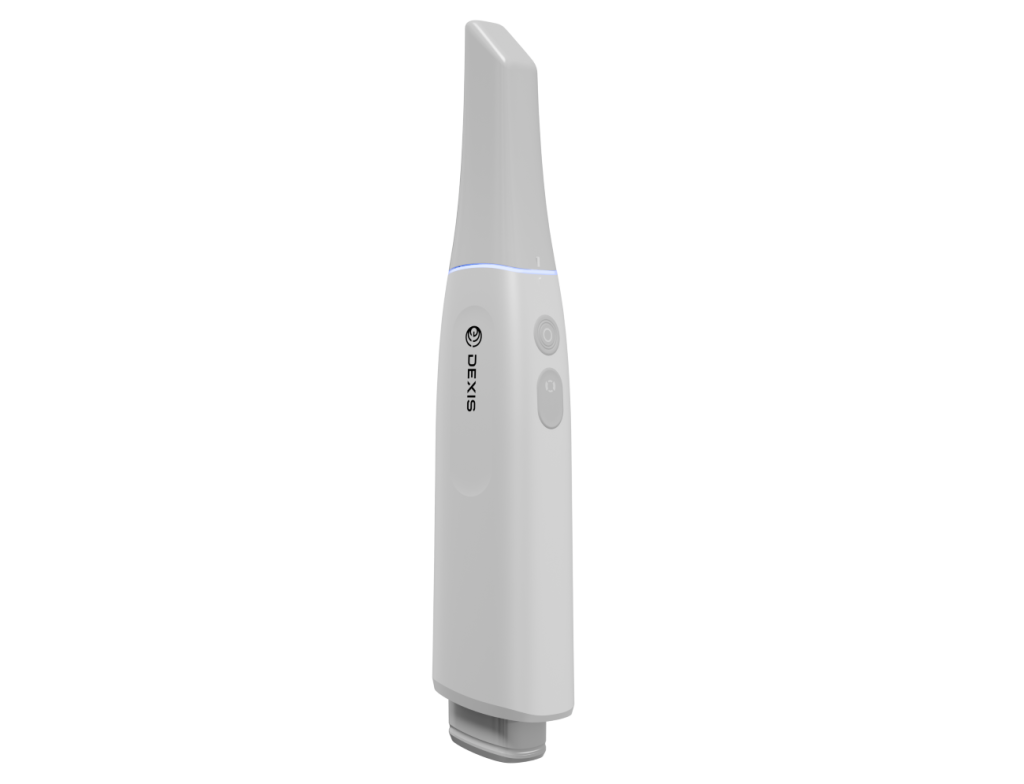
The DEXIS Imprevo scanner is the wireless flagship of the DEXIS intraoral line, released in September 2025 with IS ScanFlow 2.0 software. This review covers its optics, software,...
Reviewed by Marcus Hale
Pros
- Fast 40 FPS capture with fewer tracking losses than earlier DEXIS scanners
- A 25 mm depth of field that reaches deep boxes, proximal margins and scan bodies
- Dual-sensor color that sharpens margin contrast
- Highly configurable IS ScanFlow 2.0 workflows with AI clean-up tools
- SEAT Protocol and Scanbody AI Assist for multi-unit implant cases
- Open export in STL, PLY and OBJ plus native exocad and 3Shape formats
- Direct integration with DTX Studio Clinic and CBCT data
- Slimmer body and slim tip option for patient comfort
- Pricing below most premium wireless scanners
Cons
- Heavier than the IS 3800W at 297 g with battery
- Wireless only, with no backup power cable
- Weaker than TRIOS in bleeding fields, according to iDD
- Requires a Windows 11 PC with a recent 12 GB NVIDIA GPU
- Field of view unchanged at 16 x 14 mm
- Many software options to learn for first-time scanner owners
- Ecosystem benefits depend on owning DEXIS imaging hardware
The DEXIS Imprevo scanner is the wireless flagship of the DEXIS intraoral line, released in September 2025 with IS ScanFlow 2.0 software. This review covers its optics, software, clinical workflows, lab integration, price, and limitations, with a verdict written for dentists weighing a scanner purchase in 2026.
TL;DR
Imprevo captures at 40 frames per second with a 25 mm depth of field, so it reaches deep preparations and implant scan bodies with fewer passes than earlier DEXIS scanners.
IS ScanFlow 2.0 lets clinicians build their own workflows and exports open STL, PLY, and OBJ files to any lab.
The wand weighs 297 g and runs on Wi-Fi only, which tires the hand sooner in full-arch work than the 240 g IS 3800W.
DEXIS advertised Imprevo from $13,000 in late 2025, below most premium wireless scanners.
DEXIS Imprevo At A Glance
Imprevo replaced the IS 3800W as the top DEXIS scanner and keeps its predecessor's 16 x 14 mm field of view while changing almost everything else. The table below lists the published specifications from the DEXIS Imprevo product page.
Specification | DEXIS Imprevo |
|---|---|
Field of view | 16 x 14 mm |
Depth of field | 25 mm (-2 to +23 mm) |
Capture frame rate | 40 FPS |
Image sensor | Dual sensor |
Illumination | 447 nm laser diode plus white LED |
Weight | 297 g including battery |
Dimensions without cable | 257 x 36 x 45 mm |
Connectivity | 5 GHz Wi-Fi 802.11ax, wireless only |
Charging and battery | Inductive charging, magnetic battery |
Tips | Autoclavable standard and slim tips |
Tip lifespan (standard) | Up to 160 cycles at 134 °C for 4 min, or 100 cycles at 134 °C for 18 min |
Anti-fogging | Fan warms the tip and cools the handpiece |
Export formats | STL, PLY, OBJ, xOrder for DWOS, Dentalproject for exocad |
Software | IS ScanFlow 2.0 |
What The DEXIS Imprevo Is And Where It Came From
Imprevo is the first scanner DEXIS designed after taking over the Carestream Dental scanning line, the family that produced the CS 3600, CS 3700 and CS 3800. Those scanners were known for flexible software more than standout optics, and Imprevo was built to fix the optics without losing the software.
DEXIS showed an early version at IDS in Cologne in March 2025, describing a sleek design, rebuilt hardware, and an AI-powered algorithm. The commercial launch followed in September 2025. On March 31, 2026, DEXIS reported more than 1,000 activated units and over 6,000 cases sent to labs through IS Connect in its press release on the IDD award.
The Institute of Digital Dentistry named Imprevo its Most Improved Intraoral Scanner of 2025, and the scanner also took first place in the iDD People's Choice awards. Dr. Ahmad Al-Hassiny, who directs iDD and runs a 43-operatory group practice in Wellington, New Zealand, used the scanner before launch and wrote that it was clearly better than earlier DEXIS models in his launch commentary. Months later, when a reader asked whether to buy Imprevo or a TRIOS 3, he answered that Imprevo is weaker with blood, stronger on software, and cheaper. That exchange is a more useful buying signal than most marketing copy.
DEXIS belongs to Envista, which also owns Nobel Biocare. For practices that already run DEXIS sensors, the NOMAD Pro 3 handheld X-ray or a DEXIS cone beam unit, Imprevo is the scanning piece of a single-vendor imaging stack.
Design And Ergonomics
The Imprevo body is 20% slimmer than the IS 3800 series, a change patients notice before the operator does. The narrower head turns more easily behind second molars and suits patients with limited opening.
Weight moved in the other direction. Imprevo weighs 297 g with its battery, against 240 g for the IS 3800W. In a single-crown scan, the extra 57 g barely registers. Across a full-mouth rehabilitation record, with upper, lower, and bite scans plus refinements, the wrist feels it. Clinicians who already struggle with forearm fatigue should hold the wand for ten minutes at a demo before signing anything, and the principles in this guide to dental ergonomics apply directly to how the scanner is held.
Tips And Infection Control
Imprevo uses two autoclavable universal tips, a standard tip and a slim tip, and drops the separate side tip used on older DEXIS scanners.
The slim tip can be swapped in mid-scan when the operator moves from anterior teeth into a tight posterior segment, and the software continues without restarting the case. DEXIS rates the standard tip for up to 160 short autoclave cycles or 100 extended cycles. A practice running eight scans a day will replace standard tips several times a year, which belongs in the running-cost estimate. Sterilization of tips should follow the same validated protocols described in this infection control guide.
Wireless Operation And Battery
Imprevo connects over 5 GHz Wi-Fi 6 only, with a magnetically attached battery and inductive charging in the cradle.
Dropping the cable helps with operatory movement and keeps a cord off the patient's chest. It also removes the fallback. The IS 3800W ships with a backup power cable, while Imprevo has no wired mode, so a flat battery or a congested wireless channel stops scanning until it is fixed. Practices should keep a charged spare battery in the cradle and ask their IT provider to check the 5 GHz environment before installation day.
Gesture Control And Status Ring
Two small features reduce how often gloved hands touch the keyboard.
Gesture-based control rotates the model on screen when the wand is moved, even from across the room, and the dynamic LED ring shows scanner status without the operator looking up at the monitor. Neither feature is new to DEXIS, but both are refined on Imprevo, and the anti-fog fan kept the window clear in every scan during the evaluation described below.
Imaging Technology And Scan Quality
The optical upgrades are the reason Imprevo earned the "most improved" label. Frame rate doubled, and depth of field grew by about 39%, while color capture moved to a dual-sensor design.
40 FPS And Parallel Processing
Imprevo captures at up to 40 frames per second, twice the rate of previous DEXIS scanners. Data runs through GPU-based parallel processing, which DEXIS says produces faster rendering and a denser final mesh.
Higher frame rate matters most when the operator sweeps quickly, or the patient moves. More frames per millimeter of travel means the stitching algorithm has more overlap to work with, and lost tracking becomes rarer. Al-Hassiny described the scanning as noticeably smoother than on any earlier DEXIS model.
25 mm Depth of Field
The depth of field runs from -2 to +23 mm, a total of 25 mm, compared with -2 to +16 mm on the IS 3800W.
This is the change with the most clinical weight. A deep mesial box on an onlay preparation sits near the lower limit of a shallower scanner, and so does a scan body seated at depth in a posterior implant site. Extra depth lets the scanner resolve those surfaces from a comfortable working distance instead of forcing the tip into tissue. Retraction still decides whether a subgingival margin is captured, and products such as 3M Astringent Retraction Paste remain part of the workflow.
Dual Sensor Color
Imprevo pairs a 447 nm blue laser for geometry with white LED illumination for color, read by two sensors.
The practical result is better contrast between enamel, dentin and gingiva at the margin. Swiss clinician Dr. Beat R. Kurt, quoted on the DEXIS site, singled out how quickly the tooth-to-gingiva margin scans. French technician Thibaut Thomas, CDT, described tighter integration between mesh and texture, which shows up as cleaner margin lines in the lab's design software.
Where Imprevo Is Weaker
Bleeding fields remain the main weakness. Al-Hassiny placed Imprevo behind TRIOS when blood is present, and no amount of depth of field compensates for a wet, red sulcus.
The field of view also stays at 16 x 14 mm, a moderate window by 2026 standards. Speed gains come from frame rate rather than a larger capture area, so very wide edentulous spans still need careful, overlapping passes.
IS ScanFlow 2.0 Software And AI Tools
IS ScanFlow is the reason many clinicians stay with DEXIS, and version 2.0 widens that lead. iDD described DEXIS scanning software as one of the most feature-rich platforms available.
Flexible Workflows
Most scanning programs push the operator through a fixed sequence. IS ScanFlow treats the sequence as optional.
Scan and Go starts capture the moment the software opens, and the clinician can assign the workflow afterward. A case can switch between restorative and implant modes mid-scan and reuse data already captured. Custom workflows can be saved for recurring case types, and the CaseFlow Manager handles lab prescriptions before or after the scan, according to the IS ScanFlow page.
AI-Assisted Scanning
DEXIS lists four AI tools in IS ScanFlow that automate clean-up and matching.
Soft Tissue Removal strips tongue and cheek data from the mesh.
AI Matching aligns scan segments automatically.
Smart-Shade Matching suggests a shade from the color data.
Scanbody AI Assist recognizes single and multiple scan bodies, including in edentulous arches.
Scanbody AI Assist needs a graphics card with at least 6 GB of memory, and DEXIS advises against combining it with Fast Scan or Anti-Reflective mode. Readers who want broader context on where these tools fit can read this overview of AI in dentistry.
Real-Time Quality Checks
Two features catch missing data before the patient leaves the chair.
Mesh Quality Indication highlights low-quality regions while scanning continues, and scan warnings flag areas that need another pass. Hybrid scanning improves capture of subgingival margins in restorative and implant-borne cases.
Patient Communication Tools
Oral Compare overlays scans from different visits to show erosion, wear, and recession over time. The Smile Visualizer, introduced with IS ScanFlow 2.0, previews a possible outcome.
These tools change the conversation chairside. A patient who sees two years of wear superimposed in color understands the need for a night guard faster than one shown a radiograph. Clinicians who want to turn that moment into a written, phased dental treatment plan can move straight from the scan review into documentation.
Chairside Evaluation
The evaluation covered two weeks of routine restorative and implant cases in a four-operatory general practice that had used an IS 3800W for three years. The same assistant prepared every case, and the lab was the practice's usual partner, unaware of which scanner produced each file.
The first case was a 52-year-old man needing an onlay on a lower left first molar, with a deep mesial box close to the bone crest. On the IS 3800W, that box usually took two or three extra passes and a manual trim. Imprevo resolved the floor of the box on the first sweep. The full-arch scan, opposing arch, and bite took a little over four minutes, roughly a minute faster than the practice's previous average for similar cases.
The patient commented that the tip felt smaller, which matches the 20% slimmer body. He also asked to see the color model rotate on the monitor, and the assistant used gesture control to turn it without touching the mouse.
An implant case followed: a two-unit posterior bridge on horizontal scan bodies. SEAT Protocol with Anti-Reflective Mode isolated the scan bodies cleanly. A small amount of bleeding from the tissue around one scan body caused the only rescan of the session, and it needed a gauze press and a second pass before the mesh quality indicator cleared.
At the end of a long afternoon of full-arch records, the operator reported forearm fatigue that had not been noticeable with the lighter IS 3800W. The lab returned both restorations with no margin queries, and the technician noted that the margins on the Imprevo files were easier to trace.
Clinical Workflows Case By Case
Imprevo covers restorative, implant, orthodontic, denture, and sleep workflows from one scan. Its gains are largest in deep preparations and implant cases.
Restorative Dentistry
Single crowns, onlays, veneers and short-span bridges benefit most from the deeper field and cleaner color. Margins are easier to mark chairside and easier for the lab to read.
Accuracy for this indication is well supported in the literature. A 2017 review in BMC Oral Health that analyzed 132 studies found intraoral scanners accurate enough for inlays, onlays, single crowns, and short fixed partial dentures, while the evidence did not yet support long-span restorations.
Implant Dentistry
The SEAT Protocol is DEXIS's answer to full-arch and multi-unit implant scanning. It isolates horizontal scan bodies while filtering reflective metal and soft tissue, then locks scan body position through export.
Cross-arch accuracy remains the hardest task for any scanner. A 2020 review in the Journal of Prosthodontic Research concluded that cross-arch fixed prostheses are still difficult with intraoral scanners. Many surgeons pair the scan with photogrammetry or a verification jig for full-arch cases. Combined with CBCT data, Imprevo scans also feed guided implantology workflows for surgical guide design.
Orthodontics And Clear Aligners
Full-arch orthodontic records benefit directly from the 40 FPS speed. Files export as STL to aligner providers that accept open scans, and DEXIS IS Ortho adds model analysis.
Proprietary aligner systems handle third-party scanners differently, so practices should confirm compatibility before buying. This guide to intraoral scanners and Invisalign compatibility explains which systems connect directly.
Dentures, Sleep Appliances And Monitoring
The denture workflow supports edentulous arches, with Soft Tissue Removal cleaning up mobile tissue. Functional border capture is still technique-sensitive, and many clinicians combine the scan with a border-molded tray for complete dentures.
A sleep workflow records arches and bite for mandibular advancement devices. Repeat scans with Oral Compare turn the scanner into a monitoring tool for wear and recession.
Lab Collaboration And Open Architecture
Imprevo is an open scanner. Any lab or CAD platform that accepts STL files can work with its data, so the practice keeps its current lab relationships.
Beyond STL, PLY, and OBJ, Imprevo exports native formats for 3Shape Dental System and exocad, the two dominant lab CAD platforms. Cases can travel through IS Connect, which shows live case status, or through IS Connect Cloud, where partners view scans in a web browser. The software also sends files directly to SprintRay and Formlabs printers, which suits practices weighing a 3D printer for the dental practice.
A sensible step before purchase is a blind lab test. Send the same preparation scanned on Imprevo and on the current scanner, and ask the technician which file is easier to design on.
DTX Studio Clinic Integration And Case Presentation
Direct integration with DTX Studio Clinic is the strongest reason to choose Imprevo over a similarly priced rival. It links the scan to radiographs and 3D imaging in one patient record.
With DTX Studio Clinic 3 or later, IS ScanFlow creates patients automatically and avoids double entry. The intraoral scan can be fused with a CBCT scan, and AI sets up the case in seconds for implant planning and surgical guide design chairside. Practices running a DEXIS cone beam unit such as the OP 3D LX gain the most.
Dr. John Zalesky of Aurora Hills Dentistry in Colorado credits Imprevo and IS ScanFlow 2.0 with freeing chair time and raising case acceptance in a DEXIS case study. That is one practice's account, not a trial, but it reflects a pattern documented in this analysis of why patients decline dental treatment: patients accept more readily when they can see the problem.
Computer Requirements And Setup
Imprevo's speed depends on the graphics card, so the computer is part of the purchase. DEXIS recommends the following configuration.
Component | DEXIS recommendation |
|---|---|
CPU | Intel Core i7, 13th generation |
RAM | 32 GB |
Operating system | Windows 11 Professional or Enterprise |
Laptop GPU | NVIDIA GeForce RTX 4080 12 GB, RTX 4000 Ada 12 GB, or GeForce RTX 5080 12 GB |
Desktop GPU | NVIDIA GeForce RTX 4070 12 GB or GeForce RTX 5070 12 GB |
There is no macOS version. A gaming-class laptop is typical, and the computer should sit close to the chair because the scanner relies on Wi-Fi.
DEXIS Imprevo Price, Warranty And Running Costs
DEXIS does not publish a fixed list price. Its late 2025 promotion advertised Imprevo starting at $13,000 for orders placed between September and December 2025.
That figure places Imprevo well below premium wireless rivals such as the TRIOS 6, which launched at $27,900. Dealer quotes vary with bundles, so buyers should confirm what is included: the computer, training hours, tip packs, and any annual fees for cloud or software features.
DEXIS Complete protection plans come in Core, Essential, and Premier tiers for intraoral scanners. Core covers remote assistance with a replacement deductible, Essential adds no-charge replacement, and Premier adds expedited replacement and a premium IS Cloud subscription.
Payback depends on case volume. Savings come from impression material, shipping, remakes, and chair time, and new revenue usually comes from aligners and guided surgery. A practice scanning several crowns a week recovers the cost much faster than one scanning occasionally.
DEXIS Imprevo Vs IS 3800W And Competing Scanners
Imprevo beats its predecessor on speed and depth of field and loses on weight. Against other brands, it competes on software and price more than on raw hardware leadership.
Imprevo Vs IS 3800W
The table compares the two wireless DEXIS scanners using manufacturer specifications.
Feature | Imprevo | IS 3800W |
|---|---|---|
Depth of field | -2 to +23 mm | -2 to +16 mm |
Frame rate | 40 FPS | About half of Imprevo |
Weight with battery | 297 g | 240 g |
Wi-Fi | 5 GHz 802.11ax | 5 GHz 802.11ac |
Backup power cable | No | Yes |
Tips | Standard and slim, up to 160 cycles | Three styles, up to 110 cycles |
Illumination | Laser plus white LED | Amber, blue and green LED |
Owners of an IS 3800W who mostly scan single crowns will see a modest gain. Practices doing deep preparations, implant scan bodies, or frequent full-arch records will feel the upgrade every day.
Imprevo Vs Other Brands
The scanners below are the ones most often cross-shopped against Imprevo. A side-by-side view of published specifications is available in the intraoral scanner comparison.
The 3Shape TRIOS 6 Wireless remains the benchmark in bleeding fields and adds hyperspectral imaging, at roughly double the price. The Medit i900 is a lighter open-system rival with no recurring fees. The Aoralscan Elf won iDD's best mid-range award for 2025 and undercuts Imprevo on price.
Closed ecosystems change the calculation. The iTero Lumina suits practices built around Invisalign, and the Primescan 2 suits CEREC milling workflows. Budget-focused buyers can also review the cheapest intraoral scanners worth buying before committing.
Who Should Buy The DEXIS Imprevo
Imprevo fits practices that value flexible software and integrated imaging more than the lightest wand or the best performance in blood.
It is a strong choice for practices already using DEXIS sensors, DEXIS or i-CAT cone beam units, or DTX Studio Clinic. Implant-focused clinics benefit from SEAT Protocol and CBCT fusion. General practices buying a first intraoral scanner get open lab export at a mid-range price, provided they budget for training and the right computer.
Practices that scan often in bleeding surgical fields, or clinicians with wrist or forearm problems, should demo Imprevo next to lighter or blood-tolerant alternatives before deciding.
Bottom Line
The DEXIS Imprevo scanner is the first scanner to come out of the former Carestream line with optics that match its software. Doubling the frame rate to 40 FPS and stretching the depth of field to 25 mm addressed the two complaints clinicians raised most about the IS 3800W. Deep onlay boxes and implant scan bodies now resolve in fewer passes, and the dual-sensor color gives the lab cleaner margins to trace.
IS ScanFlow 2.0 remains the reason to choose DEXIS. Clinicians can start scanning before picking a workflow, switch between restorative and implant modes mid-case, and save their own protocols for recurring work. Open STL, PLY, and OBJ export keeps every lab relationship intact. For practices that already run a DEXIS cone beam unit or DTX Studio Clinic, the scan drops straight into implant planning and case presentation without a second login.
The compromises are physical. At 297 g, the wand is 57 g heavier than the IS 3800W, and long full-arch sessions show it in the forearm. There is no backup cable, so a flat battery or a crowded 5 GHz channel stops the appointment. Dr. Ahmad Al-Hassiny of the Institute of Digital Dentistry also places it behind TRIOS when blood is in the field, which matters for surgeons who scan at the time of placement.
At around $13,000 in DEXIS's late 2025 promotion, Imprevo costs roughly half the launch price of a TRIOS 6 Wireless. General and implant practices, especially those already invested in DEXIS imaging, get premium-class usability for a mid-range outlay. Clinicians with wrist problems or a heavy surgical scanning load should book a side-by-side demo before signing.
Verdict
<p>DEXIS needed Imprevo to prove that the former Carestream line had a future, and the scanner makes that case on the optics. The jump to 40 frames per second removes the stop-start feel of older DEXIS wands. The 25 mm depth of field is the upgrade with clinical weight, because deep onlay boxes and implant scan bodies resolve on the first pass more often.</p><p>Software is the deciding factor. IS ScanFlow 2.0 lets a clinician scan in any order, change workflows mid-case, and save protocols for recurring work. SEAT Protocol makes multi-unit implant scanning less fiddly, and the link to DTX Studio Clinic turns the scanner into a planning tool for practices with a DEXIS cone beam unit.</p><p>The weaknesses are real and specific. At 297 g, Imprevo is heavier than the IS 3800W and has no wired fallback. Independent testing also places it behind TRIOS when blood is present. A clinician doing frequent full-arch surgical scans should weigh those points carefully.</p><p>For general and implant practices, especially those already invested in DEXIS imaging, Imprevo delivers premium-class usability at a mid-range price.</p>
Frequently Asked Questions
How much does the DEXIS Imprevo cost?
DEXIS sells through dealers and quotes individually. A late 2025 DEXIS promotion advertised Imprevo starting at $13,000 in the US, and final pricing depends on the computer, training and service plan included.
Is the DEXIS Imprevo wireless only?
Yes. Imprevo connects over 5 GHz Wi-Fi 6 and has no wired mode or backup power cable, so a spare charged battery is worth keeping in the cradle.
How much does the DEXIS Imprevo weigh?
It weighs 297 g including the battery, which is 57 g heavier than the IS 3800W even though the body is 20% slimmer.
What is the depth of field on the Imprevo?
The depth of field is 25 mm, running from -2 to +23 mm, with a 16 x 14 mm field of view and a 40 FPS capture rate.
Can I keep using my current dental lab?
Almost certainly. Imprevo exports open STL, PLY and OBJ files and native formats for exocad and 3Shape Dental System, so any lab that accepts STL files can work with it.
Does the Imprevo work for full-arch implant cases?
Yes. SEAT Protocol supports horizontal scan bodies in full-arch and multi-unit cases, and Scanbody AI Assist reduces manual matching. Cross-arch accuracy should still be verified with the clinician's preferred protocol.
Does the Imprevo run on a Mac?
No. IS ScanFlow requires Windows 11 Professional or Enterprise and a recent NVIDIA graphics card with 12 GB of memory.
Should IS 3800W owners upgrade to the Imprevo?
Owners who scan many deep preparations, implant cases or full arches will notice the deeper field and faster capture. Practices scanning mostly single crowns on a reliable IS 3800W gain less.
What awards has the Imprevo won?
The Institute of Digital Dentistry named it the Most Improved Intraoral Scanner of 2025, and it took first place in iDD's 2025 People's Choice awards.
What warranty options are available?
DEXIS Complete offers Core, Essential and Premier protection plans for intraoral scanners. Buyers should ask their dealer for the standard warranty term in their state and the cost of each tier.