Rating: 4.3/5
iTero Lumina Review: Photorealistic Scanner
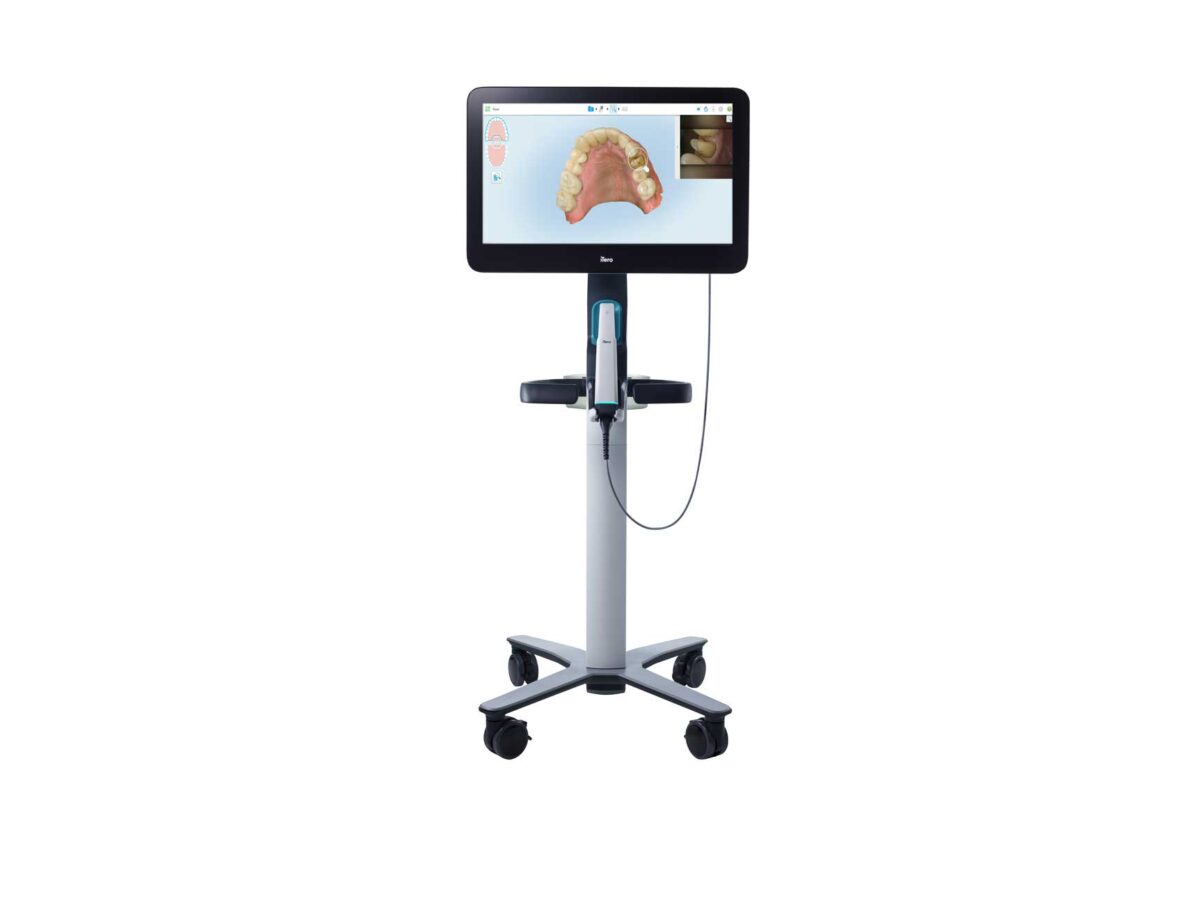
The iTero Lumina isn’t just another scanner refresh. It’s Align Technology’s most serious attempt yet to move iTero beyond “Invisalign-only” territory and into true restorative and full-arch workflows. After extensive clinical use, it’s clear that Lumina delivers some of the best scan visuals on the market – but it comes with premium pricing and ongoing costs that need careful consideration.
Reviewed by Marcus Hale
Pros
- Market-leading scan textures and realism.
- Large field of view improves full-arch workflows.
- Cloud-based Exocad integration is excellent.
- Strong patient communication tools.
- Seamless Invisalign integration.
Cons
- High purchase price and subscription costs.
- Larger scanner head in tight posterior areas.
- Single-use sleeves add ongoing expense.
- Limited flexibility in some advanced workflows.
The iTero journey – why Lumina matters
To understand why Lumina is such a big deal, you need a bit of context. For years, iTero scanners were built mainly around Invisalign workflows, not full digital dentistry.
Align Technology changed orthodontics with Invisalign, then acquired iTero to secure its digital scanning pipeline. While earlier iTero scanners worked fine for ortho, they struggled to compete with newer systems when it came to restorative speed, ergonomics, and flexibility.
Lumina marks the first real reset. It’s Align saying clearly: we’re not competing on price – we’re competing on performance, visuals, and ecosystem. And after the 2025 restorative software update, that strategy finally makes sense.
Scan speed and capture style
Before talking speed numbers, let’s be honest: most modern scanners are fast enough. What really matters now is how easy they make scanning – and how clean the data is once you’re done.
The iTero Lumina feels fast in daily use, largely because it captures far more data per pass than most scanners. Its massive field of view means fewer sweeps and less backtracking, especially on full arches.
The reason is what Align calls Multi-Direct Capture. Instead of relying on mirrors, Lumina places sensors directly in the scanner tip. That allows a field of view of roughly 34 × 27 mm, which is two to three times larger than many competitors.
How the scan looks while you’re working
One thing that throws people off at first is how the scan looks mid-process. Instead of neat stitched images, you see a fuzzy-looking mesh cloud filling in. Don’t panic – that’s normal.
Once post-processing finishes, the final scan is incredibly sharp. There’s also a fast Preview mode that shows a near-final model within seconds, which is useful for checking margins without waiting for full processing.
AI soft tissue management
Big field of view scanners usually struggle with soft tissue. That’s not the case here –and this is one of Lumina’s quiet strengths.
Despite capturing a wide area, Lumina does an excellent job filtering out cheeks, lips, and tongue. In practice, it rarely grabs things you don’t want.
What’s refreshing is how simple this feels. There are no endless sliders or sensitivity settings. The AI just runs in the background and works. If you really need to disable it – for example, when scanning appliances outside the mouth – you can do so via a hidden menu, but most clinicians won’t touch it.
At this point in the scanner market, this kind of “invisible AI” is exactly what we want.
Design and build quality
Hardware still matters, especially when you’re scanning all day. Lumina doesn’t rewrite the rulebook here, but it’s a clear improvement over older iTero designs.
The Lumina is significantly smaller and lighter than the Element 5D. At around 260 g, it’s not the lightest scanner available, but it’s comfortable and well balanced.
Everything about it feels premium – from the materials to the LED lighting. It finally looks and feels like a modern high-end scanner.
The scanner head trade-off
The one downside is the scanner head width. It’s still larger than many competitors, and distal molars can be tricky at first. With some technique adjustments, you can scan everything reliably, but tight mouths take more effort.
The scanner is wired and comes as either a cart or mobile tablet. The tablet version works particularly well for multi-room practices and patient communication.
Single-use scanner sleeves
Infection control is another area where iTero does things differently – and not everyone loves it.
Lumina uses single-use sleeves, not autoclavable tips. The upside is perfect optics every time: no scratches, no water spots, no wear.
The downside is cost and waste. Sleeves run roughly $3 per scan, which adds up quickly in busy practices. While some competitors are starting to experiment with disposables, many clinicians still prefer reusable tips for long-term costs.
Accuracy in daily practice
Accuracy is where Lumina really earns respect. In everyday restorative work, it performs extremely well – and in some areas, it genuinely stands out.
Lumina delivers consistently accurate scans across crowns, bridges, ortho records, and implants. The large field of view means fewer stitched images, which logically reduces stitching errors.
Although the live scan view looks rough, the final processed models are clean, sharp, and reliable. Double images and distortions are rare, even on longer scans.
Clinical studies and hands-on testing both suggest that Lumina’s accuracy rivals – and in some cases exceeds – other top-tier scanners. That doesn’t mean others are “bad,” but Lumina clearly sits at the high end.
Full-arch and All-on-X performance
Full-arch implant scanning is usually where intraoral scanners struggle. This is where Lumina becomes genuinely interesting.
In clinical testing, Lumina delivered clinically acceptable full-arch implant scans without photogrammetry or horizontal scan bodies – something that would have been unthinkable a few years ago.
The explanation again comes back to field of view. Capturing larger areas per frame reduces cumulative distortion across the arch. While more research is needed, early results suggest Lumina may reduce the need for extra hardware in many All-on-X cases.
This doesn’t eliminate photogrammetry overnight – but it does challenge the old belief that IOS alone can’t handle full-arch implants.
Beyond accuracy, there’s another reason Lumina stands out – and patients notice it immediately.
Scan textures and visual quality
Simply put, Lumina produces the best-looking scans on the market right now.
Textures are highly detailed, colors are natural, and surfaces look almost photographic. Gingiva, enamel, restorations – everything pops. For patient communication, this is gold. People understand what they’re seeing, which helps with case acceptance.
Even small details, like ligatures or surface texture, are clearly visible. From a documentation and presentation standpoint, this is where Lumina really shines.
Software and ecosystem
Hardware alone doesn’t make a great scanner anymore. Software can make or break the experience – and Lumina’s software story has improved dramatically.
The 2025 software update transformed Lumina. Workflows are smoother, menus are simpler, and the whole experience feels more intentional.
The interface is clean and minimal. You won’t find endless toggles, but you also won’t feel limited for everyday work. It’s designed to stay out of your way, and for many clinicians, that’s a good thing.
That said, some complex workflows – like dentures or advanced All-on-X planning –still need refinement.
iTero Design Suite – cloud Exocad done right
This is where Align really surprised a lot of people.
The integration of Exocad in the cloud through iTero Design Suite is one of Lumina’s biggest wins.
Scan, open Design Suite, start designing – no file exports, no dongles, no local hardware drama. Performance has improved massively since early versions, and it now feels fast and stable.
For clinicians doing in-house design, printing, or milling, this is a huge step forward. It turns Lumina into more than a scanner – it becomes a design hub.
Export, labs, and Invisalign compatibility
Of course, everything in the Align ecosystem ties back to Invisalign – for better or worse.
Lumina exports STL and PLY files and connects easily with labs via MyiTero. Invisalign integration remains exclusive, making Lumina the obvious choice for Invisalign-heavy practices.
That exclusivity is powerful – but it also means committing to Align’s ecosystem long-term.
Pricing and ongoing costs
Price matters, and this is where many clinicians pause.
Lumina sits firmly at the premium end of the market. Beyond the initial purchase, there’s a monthly service subscription that’s realistically required for software updates, cloud access, and design tools.
Add single-use sleeves to the equation, and total ownership cost is significant. Promotions and trade-ins help, but this is not a budget scanner.
Bottom line
The iTero Lumina changes how we think about iTero scanners. It delivers stunning visuals, strong accuracy, and one of the most seamless cloud-based CAD workflows available today.
It’s expensive, and it’s not the most compact scanner. But for practices invested in Invisalign, patient communication, and in-house digital workflows, Lumina offers real value – not just marketing promises.
Considering an open-system alternative to iTero Lumina? Read our Medit i900 scanner review to compare image quality, software ecosystem, and pricing for an open-architecture wireless scanner.
Verdict
The iTero Lumina is the most impressive scanner Align has ever released. It finally feels like a true digital dentistry platform, not just an Invisalign gateway. If your practice values scan quality, patient communication, and cloud-based design – and you’re comfortable with premium pricing – Lumina is easy to recommend. It won’t be for everyone, but for the right clinic, it’s a powerful and future-focused investment.