What Are Interdental Brushes? Dentist Answers
An interdental brush is a small, cone-shaped brush sized to fit the gap between two teeth. It gets into the curved space below the contact point, an area a toothbrush glides right...
Written by Maren Solvik
Read time: 6 min read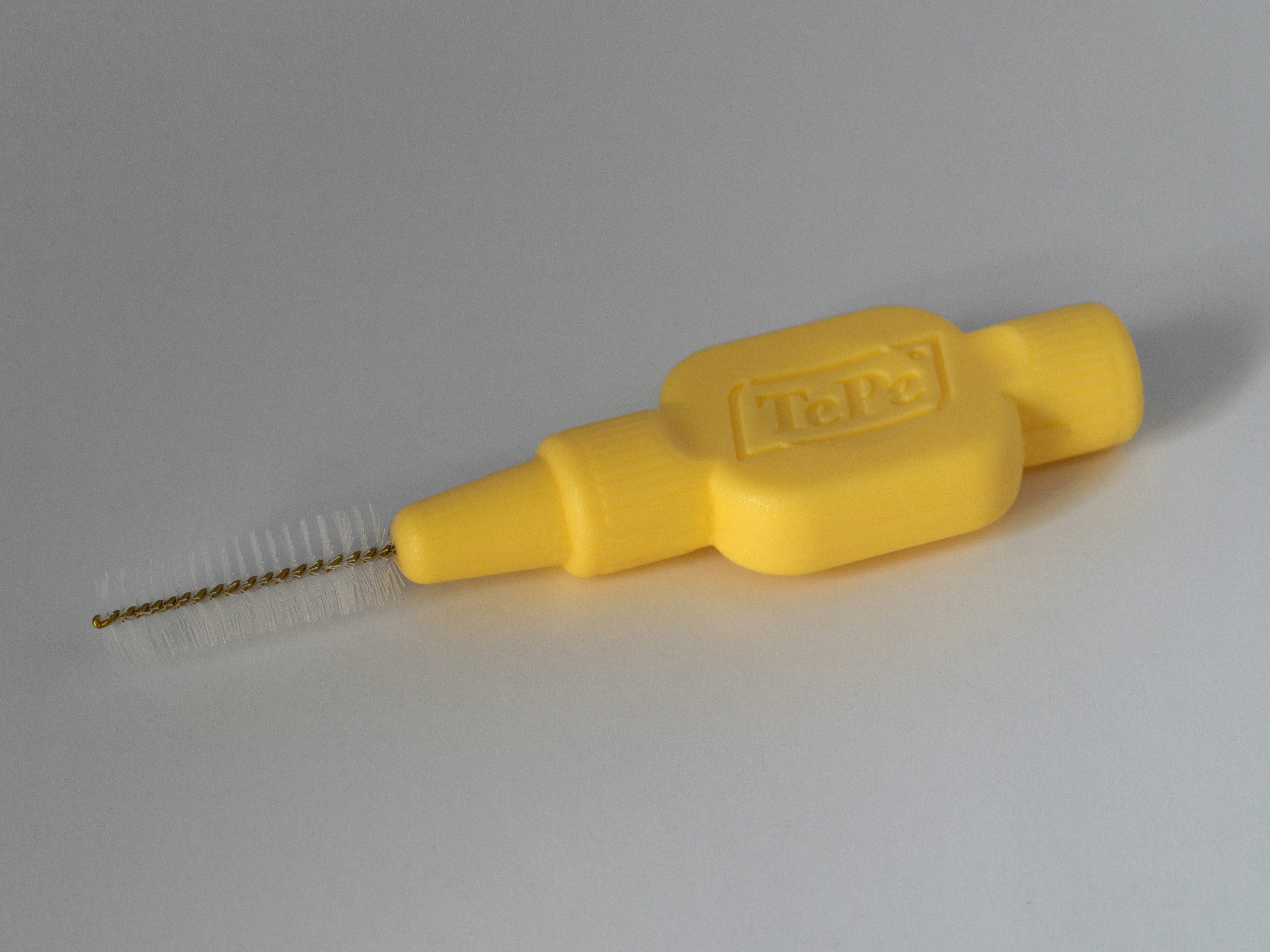
An interdental brush is a small, cone-shaped brush sized to fit the gap between two teeth. It gets into the curved space below the contact point, an area a toothbrush glides right past and floss only partly reaches.
TL;DR
Interdental brushes clean the curved gap below the contact point between teeth, an area a toothbrush cannot reach.
Floss scrapes two flat surfaces. A sized brush fills the whole gap in one pass.
Dentists recommend them for gum recession, braces, bridges, implants, and gaps that have opened up naturally.
Most bleeding and irritation trace back to the wrong size, not the brush itself.
What are Interdental Brushes
An interdental brush is built around a thin wire or rubber core, wrapped in soft bristles, with a short handle at one end. The bristle head is shaped to match the gap it's going into, so it fills that space instead of just brushing past it.
Interdental is the space between two teeth. Dentists call it interproximal. Right below the point where two teeth touch, the gum curves inward and forms a small pocket, and that's where plaque and bits of food end up sitting. A flat toothbrush bristle never really gets down into that curve.
The bristles on an interdental brush compress as it goes in, then spring back out once they're past the tightest point, so they end up touching both curved surfaces at the same time. One pass does what would otherwise take two strokes of floss, or nothing at all with a toothbrush.
The TePe Interdental Brush Original has been on the market since the 1960s, and most other brushes sold in the US still follow roughly the same layout it set. What changes between brands is the core material, how dense the bristles are, and the shape of the handle. A dentist can talk through which style makes sense for a particular mouth as part of a broader daily oral hygiene routine.
What are Interdental Brushes for
The job is simple: get plaque and trapped food out from between teeth, every day, before it hardens into tartar. Once it hardens, a toothbrush or floss won't touch it. Only a dental professional can remove tartar during a cleaning.
A few groups of patients come up again and again in these recommendations. Anyone with gum recession tends to develop wider gaps, since the receding tissue exposes more of the root and reshapes the space next to it. People wearing braces deal with wires and brackets that catch food and are close to impossible to floss around properly. A dental bridge or an implant leaves a tight space underneath that a floss strand usually can't get into.
Some people just have wider natural gaps between certain teeth, no orthodontic history involved, and a brush fills that space more completely than floss ever will. A hygienist usually spots this during a routine visit, and it often gets written into a patient's ongoing dental treatment plan from there.
Skip this step long enough, and the plaque buildup shows up as gum swelling or gingivitis. Cleaning between teeth daily, alongside regular brushing, is what keeps that from building up in the first place.
How Interdental Brushes Work
The bristles do the work by filling space, not by scrubbing. Floss slides flat against two surfaces and calls it done. A brush's bristles expand into the actual volume of the gap, which is the whole difference between the two tools.
As it passes through, the bristles reach just under the gumline, into the biofilm that forms on tooth surfaces within about a day of the last cleaning. Disturb that layer daily, and it never gets the chance to harden into tartar.
A standard toothbrush was never built to do this. Its bristles sweep flat across the visible face of a tooth and miss the concave dip just below where two teeth meet. Dentists treat interdental cleaning and regular brushing as two separate habits for this reason, not as one covering for the other.
Interdental Brushes Vs Floss
Floss and interdental brushes are aimed at the same spot, but they get there differently, and which one works better depends on the size of the gap.
How Each Tool Cleans Differently
Floss is a thin strand pulled tight between two teeth, scraping two flat surfaces in one motion. A brush's bristles do something floss can't: they expand outward to fill the whole gap, not just touch two points inside it.
In a wide gap, floss has nothing in the middle to press against. A brush, because it fills that middle space, makes contact across the full width in one motion.
When a Brush Cleans Better Than Floss
Wider gaps favor a brush, and so does gum recession, orthodontic hardware, and the space under a bridge or implant. The American Dental Association points to a 2019 Cochrane review of home interdental cleaning devices, which found that brushes may outperform floss for a lot of patients. One clinical study put this to a direct test in patients with moderate to severe gum disease, cleaning one side of the mouth with floss and the other with a brush. After six weeks, the brush side had a bigger drop in plaque and a bigger reduction in probing depth.
When Floss Is Still Necessary
Some contacts between front teeth are tight and healthy enough that no brush size will go in without forcing it, and forcing it is how gum tissue gets hurt. Floss still handles those spots better, since a thin strand can slide through without any real pressure. A water flosser is worth trying too, especially alongside whichever tool ends up being the primary one.
Are Interdental Brushes Better Than Floss
It depends where in the mouth you're asking about. A sized brush usually wins in wider gaps, around recession, braces, bridges, or implants. Tight, healthy gaps near the front teeth still need floss. Most dentists have patients doing both.
How to Use Interdental Brushes
Technique is what separates a brush that cleans well from one that irritates the gums. The steps don't really change from one brand or size to the next.
Choose a size for each gap that slides in with light resistance, not one that requires force
Insert the brush at a slight angle, right at the gum line, not straight across the tooth
Move it back and forth with a gentle motion, or give it a light quarter turn
Avoid scrubbing or pressing hard against the gum tissue
Withdraw the brush slowly and rinse it under water if debris remains
Move to the next gap and repeat, working around the full mouth
Once a day is enough for most people, and a lot of dentists suggest doing it in the evening, right before the last brushing of the day, so plaque isn't sitting there all night. Some people clean between teeth first and brush after. Others do it the other way around. It doesn't matter much which order, as long as it happens daily.
The most common mistake by far is forcing a brush that's too big into a gap that's too small, which injures gum tissue instead of cleaning it. A close second is skipping the back molars, since they're harder to reach and easy to forget about. A bent wire or frayed bristles will still technically go in, but it won't clean well, and it can scratch soft tissue on the way.
Interdental Brush Sizes Explained
Sizing runs off the diameter of the bristle head, not vague labels like small or large. Most brands use a color-coded system loosely tied to ISO standards, running from 00 or 0 up through 8, where the lower the number, the narrower the brush.
Almost nobody gets away with owning just one size. Front teeth sit close together and want something narrow. Back molars usually have more room and need something wider. Two or three sizes on hand cover most mouths.
The fastest way to figure out sizing is a dental visit, where a dentist or hygienist can measure each gap and hand over exact numbers for different parts of the mouth. At home, the right size slides in with a bit of resistance, not zero and not a fight. A size that's too small skips plaque along the sides of the gap, while one that's too large can bruise the gum tissue going in.
Some lines sell an extra soft version, which comes from denser, finer bristles rather than a thinner wire. These work well for anyone with sensitive or healing gums, including someone recovering from a deep cleaning or working through early-stage gum recession treatment. Near the front teeth, where contacts run tightest, even the smallest brush on the shelf sometimes won't fit without force. That's exactly where floss still earns its keep.
Are Interdental Brushes Reusable
Most can be reused for a few days. How long depends on what the brush is made of.
Wire core brushes make up most of what's sold in pharmacies and online, and these generally last three to seven days with a rinse after each use. A few brands add an antibacterial coating that stretches that out closer to ten days. Wire-free rubber picks are a different story. Most of them are meant for one use, since the material doesn't hold its shape once it's been bent through a few gaps.
A bent wire, frayed bristles, or a brush that no longer holds its original size all mean it's done. Rinsing under warm water after each use and storing it with the cap on stretches out how long a reusable brush lasts. Sharing one between people in the same household isn't a great idea, since it passes bacteria along with it.
Common Issues with Interdental Brushes
Used correctly, interdental brushes are safe for most people. A handful of problems come up often enough to walk through directly.
Bleeding Gums When Starting Out
Bleeding in the first week or two of daily use is common, and it usually means existing gum inflammation is finally getting disturbed, not that the brush is causing damage. Keep going with correct technique, and the bleeding tends to taper off as the tissue gets healthier. If it's still happening after two or three weeks, or if there's pain or swelling alongside it, that's worth a call to a dentist.
Root and Enamel Wear
Combining an interdental brush with abrasive toothpaste has shown up in some research as a risk to root and dentin surfaces, particularly on teeth where recession has already exposed more of the root. Dentists generally recommend skipping the toothpaste dip altogether and rinsing the brush well before it goes back in its case.
Wrong Size Selection
A brush that's too small slides through without ever touching the sides, leaving plaque right where it started. One that's too large forces its way in and can bruise gum tissue, causing bleeding that has nothing to do with existing gum disease. Checking sizes with a dentist every so often catches this, since the shape of a gap can shift over the years.
Reach and Comfort Around Back Molars
A straight-handled brush is genuinely harder to use on back teeth, and new users bring this up constantly. Angled heads and longer handles fix most of that by cutting down how far the wrist has to twist to reach the far side of the mouth. Anyone with limited hand dexterity, or a strong gag reflex, tends to notice the difference right away. This matters just as much for braces care, where the back molars are easy to skip and hard to see.
Not a Full Replacement for Brushing
An interdental brush cleans between teeth. It does nothing for the flat surfaces of the teeth themselves, which is still the toothbrush's job, done twice a day, alongside regular dental visits.
Nearly every issue on this list comes back to the same two things: wrong size, or too much force. Fix either one and most of the problems go away on their own.
Do Interdental Brushes Cause Gaps Between Teeth?
A correctly sized brush doesn't create new gaps or push teeth apart. Plaque had been sitting in that small space, making it feel tighter than it actually was, and once the plaque is gone, the gap just looks more obvious than it did before. Forcing an oversized brush into a tight space is a real risk and can injure gum tissue, and enough of that over time can contribute to recession. Even so, that comes down to sizing and technique, not something built into the tool.
Who Should Talk to a Dentist First?
A few situations call for personalized guidance before starting or changing an interdental routine on your own: diagnosed gum disease, a recent periodontal procedure, active orthodontic treatment, or bleeding that hasn't improved after a few weeks. A dentist can measure the actual gaps, check for recession or bone loss, and confirm a brush is safe to use around any bridges or implants already in the mouth.
Bottom Line
An interdental brush cleans the curved space below the contact point, the one spot a toothbrush and floss both tend to miss on their own. Getting the size and the technique right matters more than which brand ends up in the drawer. Most people land on two or three sizes, and pairing that with the right toothbrush for receding gums covers the rest of the routine.
Floss and interdental brushes work better together than as competitors, since each one is suited to a different kind of gap. Add interdental cleaning to a daily routine, keep up with brushing and dental visits, and it goes a long way toward helping prevent cavities and keeping gums healthy over the years. For a closer look at specific products, our breakdown of the best interdental brushes ranks what's currently available.
Frequently Asked Questions
What are interdental brushes used for?
They clean the space between two teeth, removing plaque and food debris a toothbrush can't reach. Dentists recommend them often for people with braces, bridges, implants, gum recession, or wider natural gaps.
Are interdental brushes better than floss?
In wider gaps, with recession, braces, or implants, a brush usually cleans better. In tight, healthy gaps between front teeth, floss still tends to win, since a brush may not even fit. Most dentists have patients use both.
How do I know what size interdental brush to use?
A dentist can measure each gap and give an exact size during a routine visit. At home, the right size slides in with light resistance, nothing forced. Most people end up needing two or three sizes.
Are interdental brushes reusable?
Wire core brushes hold up for three to ten days with rinsing after each use, depending on the brand. Wire-free rubber picks are generally single-use. Once the bristles fray or the wire loses its shape, replace it.
Can interdental brushes cause gaps between teeth?
A correctly sized brush doesn't create gaps or push teeth apart. Removing plaque that was filling a small space just makes an existing gap easier to see, which gets mistaken for a new one. Forcing an oversized brush can hurt gum tissue over time, but that's a technique problem, not a brush problem.
Are interdental brushes safe for braces and implants?
Yes. Coated wire or rubber bristles won't scratch metal brackets, wires, or implant surfaces. Plenty of brands make sizes built specifically for orthodontic and implant care.