Best Oral Irrigator in 2026: Our Top 10 Picks
Finding the best oral irrigator means matching a water flosser to your teeth, gums, and budget. These devices shoot a pulsing water stream between teeth and under the gumline,...
Written by Maren Solvik
Read time: 8 min read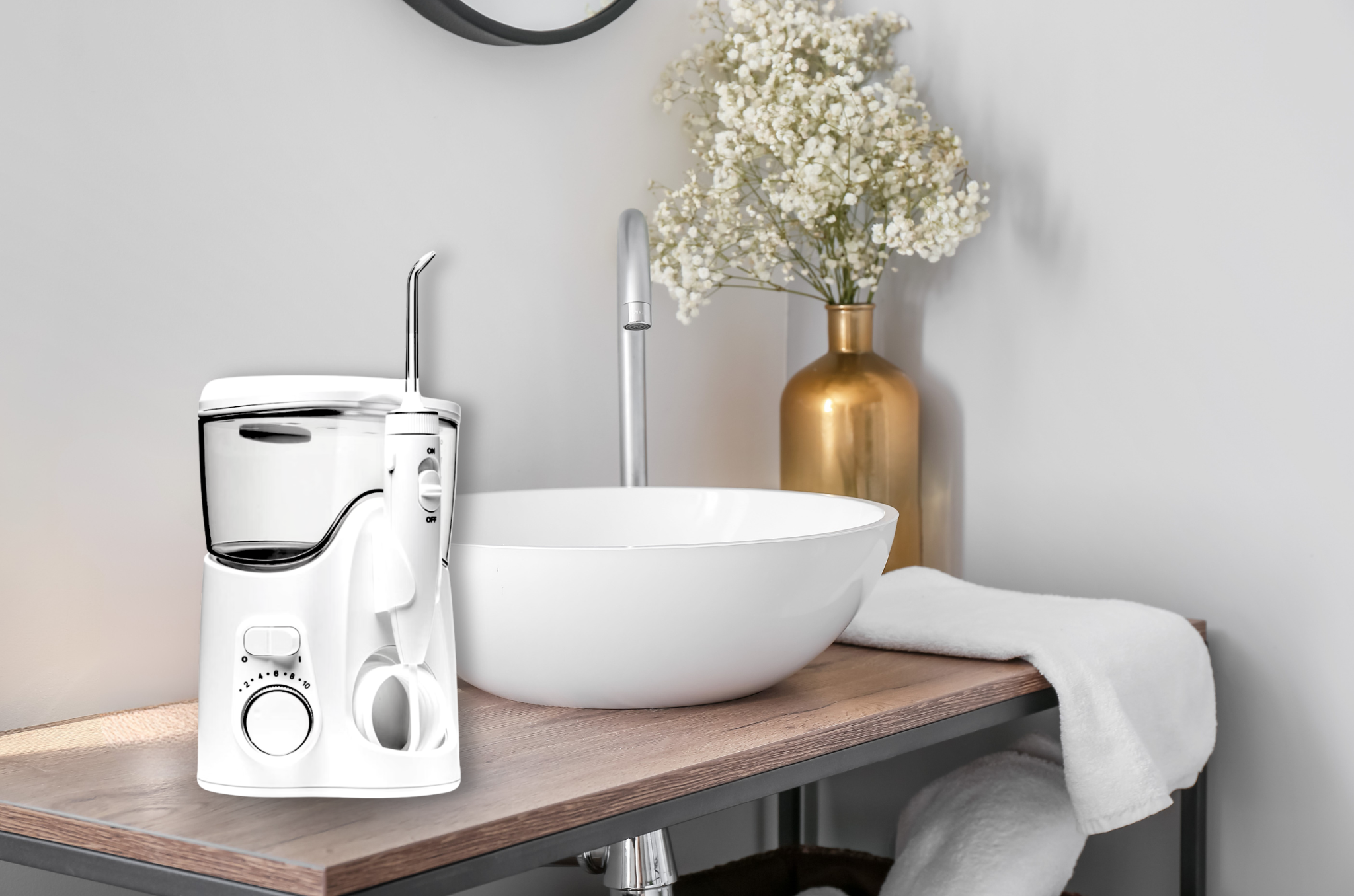
Finding the best oral irrigator means matching a water flosser to your teeth, gums, and budget. These devices shoot a pulsing water stream between teeth and under the gumline, clearing plaque and debris that brushing and string floss leave behind. This guide compares the top 10 picks for braces, sensitive gums, travel, and daily cleaning.
TL;DR
Water flossers clear up to 74% of plaque in one use and beat string floss by 29%, which makes them worth it for braces, implants, and sensitive or receding gums.
Match the form factor to your life: countertops like the Waterpik Aquarius hit hardest, cordless models travel well, and budget picks under $30 cover first-timers.
Prioritize adjustable pressure (10 to 100+ PSI), reservoir size, and the right nozzle tips over brand name when you compare models.
Use it daily alongside brushing, swap nozzle tips every three to six months, and treat it as a complement to flossing, not a full replacement.
What Is an Oral Irrigator and How Does It Work?
An oral irrigator is a handheld dental device that directs a steady, pulsating stream of pressurized water through a specialized tip and into the mouth. The force of the water dislodges and washes away plaque, bacteria, and food particles from between teeth and beneath the gumline. Every oral irrigator has three core components: a water reservoir (or tank), an electric motor that powers the internal pump, and a removable nozzle tip that directs the water stream.
If you have ever wondered whether an oral irrigator is the same as a water flosser, the answer is yes. The terms "oral irrigator," "water flosser," "dental irrigator," and "water pik" all describe the same category of device. The oral irrigation purpose is simple: to supplement brushing with a thorough interdental and subgingival cleaning that traditional floss may not achieve as effectively.
So why use an oral irrigator? Research published in The Journal of Clinical Dentistry found that water flossers were 29% more effective than string floss for overall plaque removal. A 2025 meta-analysis of 18 randomized controlled trials further confirmed that oral irrigators outperform traditional floss in reducing bleeding and inflammation after just four to six weeks of daily use. The American Dental Association (ADA) recognizes water flossers as an effective alternative for people who have dental work, like braces, bridges, crowns, implants, or other restorative dentistry options.
Oral irrigators are especially beneficial for people with limited manual dexterity (including older adults and children), those with periodontal pockets, and anyone who finds string floss difficult or painful to use.
How to Use an Oral Irrigator: Step-by-Step
Using an oral irrigator correctly maximizes its cleaning power and minimizes mess. Whether you have just purchased your first device or are upgrading to a new model, the following steps will help you get the most out of every session.
Fill the reservoir with lukewarm water (some models also allow diluted mouthwash)
Select and attach the appropriate nozzle tip
Start on the lowest pressure setting, especially if you are a first-time user or have sensitive gums
Lean over the sink, place the tip in your mouth, and close your lips slightly to prevent splashing
Turn the device on and aim the water stream along the gumline, pausing briefly at each tooth
Work systematically through all teeth, covering both the outer and inner surfaces
Turn the device off before removing the tip from your mouth, then empty and rinse the reservoir
Most dental professionals recommend using an oral irrigator once daily, either before or after brushing with an electric toothbrush. The entire process takes about 60 seconds. As your gums adapt, gradually increase the pressure setting to achieve a more thorough clean. Some users prefer adding a small amount of antimicrobial mouthwash to the reservoir for additional antibacterial benefits, though plain water is perfectly effective on its own.
A common mistake for beginners is using too much pressure on the first try, which can cause gum discomfort or excess splashing. Starting at the lowest setting and working up over a week or two allows your gums to acclimate. It is also important to clean the reservoir after each use to prevent mineral buildup and bacterial growth inside the tank.
Types of Oral Irrigators: Countertop, Cordless, Portable, and Smart
Oral irrigators come in several form factors, each designed for different lifestyles and needs. Understanding the differences will help you narrow down the best dental irrigator for your situation.
Countertop Oral Irrigators
Countertop models are the most powerful option, offering large water reservoirs (typically 600 ml or more), 10 or more pressure settings, and multiple nozzle tips for the whole family. They plug into a wall outlet and sit on the bathroom counter. These are ideal for households where multiple people share the device, and for anyone who wants maximum cleaning power. The trade-off is that they take up counter space and are not portable.
Cordless Oral Irrigators
A cordless oral irrigator runs on a rechargeable battery, making it more flexible than a countertop unit. Most cordless models offer 300 to 400 ml reservoirs and three to five pressure settings. They are compact enough for travel while still delivering strong performance for daily use. Battery life typically ranges from one to four weeks per charge.
Portable Oral Irrigators
A portable oral irrigator is the most compact option, often featuring collapsible or telescoping water tanks. Some run on AA batteries rather than rechargeable cells. These are perfect for travel, office use, or small bathrooms, though they generally offer fewer pressure settings and smaller tank capacities.
Smart Oral Irrigators
A smart oral irrigator connects to a companion smartphone app to track your flossing habits, guide your cleaning routine, and monitor pressure levels. Some models adjust water pressure automatically based on the zone of your mouth. These are a good fit for tech-savvy users who want data-driven feedback on their oral hygiene routine.
Key Features to Look for in an Oral Irrigator
Not all oral irrigators are created equal. When comparing models, there are several features that separate a good device from a great one. Paying attention to these specifications will help you avoid buyer's remorse and find a dental irrigator that fits seamlessly into your daily routine.
Water Pressure Settings
Adjustable pressure is one of the most important features in any oral irrigator. Models with a wide range of settings, typically from 10 PSI up to 100 PSI or higher, let you customize the intensity to match your comfort level and dental needs. Low-pressure modes are essential for users with sensitive gums, recent dental work, or children just learning to floss. Higher settings deliver a more powerful clean for removing stubborn plaque and debris around braces, bridges, and implants. A minimum of three settings is recommended, though premium models with 10 settings offer the most flexibility.
Reservoir Capacity
Tank size determines how long you can floss before needing to refill. Countertop irrigators typically hold 600 ml or more, which is enough for a full 90-second session and sometimes enough for two users. Cordless models usually range from 150 ml to 400 ml, meaning you may need to refill once during a thorough session. If convenience matters to you, look for a model with at least 300 ml of capacity.
Nozzle Tips and Accessories
The variety of included tips can significantly expand what your irrigator can do. Standard jet tips handle everyday cleaning, while orthodontic tips are designed for brackets and wires. Plaque seeker tips target crowns, implants, and bridgework. Periodontal (pik pocket) tips deliver water below the gumline for deeper cleaning. Tongue cleaning tips freshen breath at the source. Most mid-range and premium models include at least four to seven tip types, and many come with color-coded duplicates for households where multiple family members share the device.
Battery Life and Charging
For cordless and portable models, battery life is a practical concern. Most rechargeable oral irrigators offer between one and four weeks of use per charge, depending on frequency and pressure settings. USB-C charging is becoming standard in 2026, which is convenient for travelers who already carry a universal charger. Some budget models still rely on AA batteries, which eliminate charging entirely but increase long-term operating costs.
Build Quality and Waterproofing
An IPX7 waterproof rating means the device can withstand being submerged in up to one meter of water for 30 minutes. This rating is essential if you plan to use your irrigator in the shower. Durable materials and a solid seal around the reservoir also matter for longevity, as leaking is one of the most common complaints in lower-quality models.
How Much Does an Oral Irrigator Cost?
The cost of an oral irrigator varies widely based on the type of device, its features, and the brand. Here is a general breakdown of what to expect at each price tier in 2026.
Budget ($25 to $50): Basic cordless and portable models from brands like COSLUS, Nicwell, and Bitvae. These typically include three to five pressure settings and a single nozzle type. A solid starting point for first-time users.
Mid-range ($50 to $100): Most popular cordless models and some countertop units, including the Waterpik Cordless Advanced and MySmile. Expect multiple tips, stronger motors, and longer battery life.
Premium ($100 to $150+): Flagship countertop irrigators like the Waterpik Aquarius, the Waterpik ION Professional, and custom systems like the Proclaim Custom-Jet. These offer 10+ pressure settings, large reservoirs, and specialized tips for periodontal pockets, orthodontics, and tongue cleaning.
Replacement nozzle tips cost roughly $5 to $10 each and should be swapped every three to six months. Compared to the cost of professional dental irrigation during an in-office visit, a home oral irrigator pays for itself quickly. For a comparison of budget-friendly options, see our best water flosser under $50 roundup.
The 10 Best Oral Irrigators in 2026
After evaluating dozens of models based on cleaning performance, build quality, ease of use, available tips, tank capacity, and value for money, these are the top 10 oral irrigators worth considering in 2026.
#1 Waterpik Aquarius Professional Water Flosser (WP-660)
The Waterpik Aquarius remains the gold standard for countertop oral irrigators. It runs 10 pressure settings from 10 to 100 PSI, holds a 22-ounce reservoir, and ships with seven interchangeable tips, including a plaque seeker, an orthodontic tip, and a Pik Pocket tip for periodontal care.
The 360-degree tip rotation reaches every angle, and three color-coded jet tips let family members use the device without sharing nozzles. It holds an ADA Seal of Acceptance and a three-year warranty, and it is one of the most clinically studied water flossers on the market. The dual-voltage design suits North American outlets, so international travelers should check compatibility.
Pricing: approximately $70 to $100.
Best for: families and anyone wanting maximum cleaning power and tip variety.
Pros:
Ten pressure settings and seven specialized tips cover every need.
ADA accepted with a three-year warranty.
Three color-coded tips let a household share one unit hygienically.
Cons:
Requires an outlet and counter space, so it does not travel.
Built for North American voltage, limiting overseas use.
#2 Waterpik ION Professional Cordless Water Flosser
The Waterpik ION Professional bridges countertop power and cordless convenience. It delivers 10 pressure settings, a magnetic charging base, and seven tips in a sleek rechargeable unit, with a 20-ounce reservoir that rivals many countertop models.
The lithium-ion battery lasts up to four weeks per charge, which suits users who do not want to recharge often. It is ADA accepted, and the large tank means fewer refills than most cordless models. This is the pick for anyone who wants countertop-level performance without giving up bathroom counter space.
Pricing: approximately $80 to $120.
Best for: users wanting countertop performance in a cordless body.
Pros:
Ten settings and a 20-ounce tank, unusual for a cordless unit.
Battery lasts up to four weeks per charge.
ADA accepted and ideal for limited counter space.
Cons:
Costs more than most cordless competitors.
Larger than a true travel model, so it is less pocketable.
#3 Philips Sonicare Power Flosser 3000
Philips engineered the Power Flosser 3000 with Quad Stream technology that delivers four water streams at once for broader coverage. It offers 10 intensity settings and three modes: clean, deep clean, and massage, which makes it a strong choice for sensitive gums or early gum disease.
Testers praise it for strong yet gentle pressure that cleans without irritating the gumline. A nozzle guide light directs the stream precisely, and a pause button stops the flow to spit or reposition without switching the unit off. Anyone whose gum sensitivity has blocked water flossing before should look here first.
Pricing: approximately $80 to $110.
Best for: people with sensitive gums or early-stage gum disease.
Pros:
Quad Stream coverage with gentle, effective pressure.
Ten settings plus a dedicated massage mode.
Nozzle guide light and pause button improve control.
Cons:
Priced above many cordless rivals.
Quad Stream feel takes some getting used to.
#4 Bitvae Smart Oral Irrigator
The Bitvae Smart stands out with app connectivity that tracks flossing sessions, gives pressure feedback, and guides cleaning routines. It carries three pressure settings, a detachable 300 ml reservoir for easy cleaning, and a slimmer, lighter profile than most competitors.
It ships with five standard nozzles and a tongue-scraping nozzle, which covers most daily needs. The app feedback adds accountability for users who struggle with consistency. For anyone who wants data on their dental habits without paying a premium, this is a compelling and affordable smart option.
Pricing: approximately $40 to $60.
Best for: tech-minded users wanting app feedback on flossing habits.
Pros:
App tracking and guided routines aid consistency.
Detachable tank and six nozzles, including a tongue scraper.
Affordable for a connected device.
Cons:
Only three pressure settings.
App reliance will not appeal to everyone.
#5 MySmile Cordless Oral Irrigator
The MySmile packs strong features into a budget-friendly package. It includes eight replacement tips, a storage bag, and a USB charging card, with five pressure modes and IPX7 waterproof construction for shower or sink use.
The 300 ml tank holds enough water for a thorough session, and the waterproof build adds flexibility. Some users note the nozzle can detach when pressing the power button, a minor quirk. At this price, the value is hard to beat for users who want plenty of tips and a solid pressure range.
Pricing: approximately $30 to $45.
Best for: value seekers wanting many tips and waterproof flexibility.
Pros:
Eight tips and five pressure modes at a low price.
IPX7 waterproof for shower use.
USB charging card adds travel convenience.
Cons:
The nozzle can detach when pressing the power button.
The build feels less premium than flagship models.
#6 COSLUS C20 Portable Water Flosser
The COSLUS C20 proves that effective oral irrigation does not require a big investment. This portable unit features a 300 ml rechargeable tank, IPX7 waterproofing, and three cleaning modes, all in a compact body that charges via USB.
It is small enough to drop in a bag for travel, and the waterproof rating means shower use is fine. It lacks the power and tip range of premium models, which is the cost of the low price. For reliable daily cleaning on a tight budget, the C20 is one of the most accessible options available.
Pricing: approximately $20 to $30.
Best for: budget buyers and travelers wanting reliable daily cleaning.
Pros:
Among the most affordable units that still perform well.
Compact, USB-charged, and IPX7 waterproof.
Three cleaning modes cover everyday needs.
Cons:
Less power than premium models.
Limited tip variety.
#7 Waterpik Cordless Advanced 2.0 (WP-580)
The Waterpik Cordless Advanced 2.0 is Waterpik's most travel-friendly model. It is waterproof for shower use, rechargeable, and comes with a travel bag and four tips, with a reservoir sized for a full 90-second session.
Three pressure settings cover most users, and the travel bag makes packing simple. It is ADA accepted and backed by Waterpik's three-year warranty, which is rare at this size. For frequent travelers who do not want to compromise on oral care, this is the top pick.
Pricing: approximately $70 to $90.
Best for: frequent travelers wanting trusted performance on the go.
Pros:
Waterproof, rechargeable, and travel-bag ready.
ADA accepted with a three-year warranty.
Full-session reservoir despite the compact size.
Cons:
Only three pressure settings.
Pricier than other portable units.
#8 Turewell Water Flossing Oral Irrigator
The Turewell delivers countertop performance at an entry-level price. It features a 600 ml tank, 10 pressure settings up to 125 PSI, and eight tips, including a tongue cleaner and plaque-removal heads.
It is also compatible with Waterpik nozzle tips, which widens the accessory options considerably. Some users report occasional motor issues over time, a fair caveat at this price. For the money, the Turewell offers specs and a feature set that rival models costing twice as much.
Pricing: approximately $30 to $40.
Best for: budget buyers wanting countertop power and a big tank.
Pros:
Large 600 ml tank and 10 settings up to 125 PSI.
Eight tips, plus compatibility with Waterpik nozzles.
Countertop specs at an entry-level price.
Cons:
Some users report motor issues over time.
Takes up counter space and needs an outlet.
#9 Waterpik Cordless Freedom
The Waterpik Cordless Freedom runs on three AA batteries, which removes charging cables and outlets from the equation. It is waterproof, comes with three tips, and offers two pressure settings in a simple, no-fuss design.
The AA power makes it a reliable backup for travel or for bathrooms without convenient outlets. Pressure control is limited, and the reservoir is smaller than rechargeable models, which is the trade-off for that convenience. For specific situations where charging is a hassle, the battery design has clear appeal.
Pricing: approximately $35 to $50.
Best for: users wanting battery power without charging cables.
Pros:
AA batteries remove the need to recharge.
Waterproof and simple to operate.
Reliable backup for travel or outlet-free bathrooms.
Cons:
Only two pressure settings.
Smaller reservoir and ongoing battery cost.
#10 Proclaim Custom-Jet Oral Health System
The Proclaim Custom-Jet system takes oral irrigation to a different level. It uses a custom-fit mouthpiece made from a scan at your dentist's office, so the water jets are angled precisely for your dental anatomy, which delivers the most targeted cleaning available.
The personalization is unmatched, and the targeted jets clean efficiently in a fraction of the usual time. It costs far more than traditional irrigators and requires a dental visit to start. For anyone serious about maximizing at-home gum care, the Proclaim offers a level of customization no other device matches.
Pricing: approximately $200 to $300+, including the mouthpiece.
Best for: users wanting the most personalized, premium gum care.
Pros:
Custom-fit mouthpiece angles jets for your anatomy.
Fast, highly targeted cleaning.
Unmatched personalization for at-home care.
Cons:
Far more expensive than standard irrigators.
Requires a dental visit and a scan to begin.
Are Oral Irrigators Really Worth It?
Given the investment, many people ask whether oral irrigators are actually good, and the clinical evidence is clear. Multiple peer-reviewed studies confirm that oral irrigators effectively reduce plaque, decrease gum bleeding, and improve overall gum health when used consistently alongside brushing.
Can an oral irrigator remove plaque? Yes. Research shows that water flossers remove significantly more plaque than string floss, particularly in hard-to-reach interproximal areas and around dental work. A study published in The Journal of Clinical Dentistry found that a single-use session with a water flosser removed up to 74.4% of plaque from treated sites. People with braces, implants, bridges, crowns, or periodontal pockets stand to benefit the most, as do those with reduced manual dexterity.
From a cost perspective, oral irrigators are also a sound investment. Even a mid-range model in the $50 to $80 range can last several years with proper care, and the ongoing expense of replacement tips is minimal compared to the potential cost of treating cavities or gum disease that could result from inadequate flossing.
Does an oral irrigator replace flossing entirely? Most dental professionals recommend using an oral irrigator as a complement to string floss rather than a full replacement. However, for patients who would otherwise skip flossing altogether, a water flosser provides substantially better interdental cleaning than nothing at all. The best approach is to discuss your specific situation with your dentist, who can advise whether an oral irrigator alone meets your oral care needs.
Bottom Line: How to Choose the Best Oral Irrigator for You
Selecting the right oral irrigator comes down to a few key factors: your dental needs, your budget, and how you plan to use the device. Countertop models like the Waterpik Aquarius offer the most power, the largest reservoirs, and the widest selection of tips, making them ideal for families or anyone who wants maximum versatility. Cordless models like the Waterpik ION Professional provide nearly the same performance in a more compact, rechargeable form factor that works well for individuals and couples. Portable and budget units from brands like COSLUS and Bitvae are excellent entry points for first-time users or frequent travelers.
Smart irrigators are a growing category worth watching. If you tend to struggle with consistency or want data-driven feedback on your flossing habits, a Bluetooth-enabled model can add meaningful accountability to your routine.
Regardless of which model you choose, the most important thing is consistency. An oral irrigator only works if you use it daily. Pair it with twice-daily brushing, regular dental checkups, and a quality mouthwash to build a comprehensive oral care routine that protects your teeth and gums for years to come.
Frequently Asked Questions
Are oral irrigators safe?
Yes, oral irrigators are safe for the vast majority of users when operated according to the manufacturer's instructions. Start on the lowest pressure setting and increase gradually. People with specific dental conditions should consult their dentist before starting, but water flossers are generally considered a low-risk addition to any oral hygiene routine.
Can an oral irrigator remove tonsil stones?
Many users report success using an oral irrigator on a low-pressure setting to gently dislodge tonsil stones. The pulsating water stream can help flush out debris from tonsil crypts. However, this should not be considered a medical treatment. If you experience persistent or painful tonsil stones, consult a healthcare provider for proper evaluation and care.
Does an oral irrigator remove tartar?
No. Tartar, also called calculus, is hardened plaque that bonds to tooth enamel and can only be removed through professional dental scaling. An oral irrigator helps prevent tartar formation by removing soft plaque before it has a chance to harden, which is why consistent daily use is so important.
Can an oral irrigator be shared between family members?
The device itself can absolutely be shared, but each family member should use their own personal nozzle tip. Most oral irrigators ship with multiple color-coded tips for exactly this reason. Sharing nozzle tips is not recommended due to hygiene concerns.
Can kids use an oral irrigator?
Children can generally begin using an oral irrigator around age six with parental supervision. Always start on the lowest pressure setting and choose a model with a smaller, child-friendly tip if available. Teaching children to use a water flosser early can help establish lifelong interdental cleaning habits. For more on kids' dental care, see our dedicated guide.
What is an irrigation syringe, and when should you use one?
An irrigation syringe is a manual, curved-tip syringe that dentists prescribe after oral surgery, most commonly after wisdom tooth extraction. It is used to gently flush food debris from surgical sites (like extraction sockets) during the healing period. An irrigation syringe is different from an oral irrigator and should only be used on the specific advice of a dental professional.
Is an oral irrigator the same as a water flosser?
Yes. "Oral irrigator," "water flosser," "dental irrigator," and "water pik" are all terms for the same type of device. They all use a pressurized water stream to clean between teeth and along the gumline.
What is an oral irrigator used for?
An oral irrigator is used to remove food particles, plaque, and bacteria from between teeth and below the gumline. It is especially useful for people with braces, dental implants, bridges, crowns, periodontal disease, or limited hand dexterity. Regular use supports healthier gums, fresher breath, and better overall oral hygiene.
How much is a portable oral irrigator?
Portable oral irrigators range from about $20 for basic models from brands like COSLUS and Nicwell, up to $90 for premium travel-ready options like the Waterpik Cordless Advanced 2.0. Most users will find a reliable portable model in the $30 to $60 range that includes multiple tips, rechargeable batteries, and at least three pressure settings.
Why do dentists recommend oral irrigators?
Dentists recommend oral irrigators because they effectively clean areas that brushing alone misses. The pulsating water stream reaches below the gumline and between tightly spaced teeth, reducing the bacterial load that contributes to gingivitis and periodontal disease. For patients with orthodontic appliances, dental restorations, or dexterity challenges, an oral irrigator can make the difference between adequate and thorough daily cleaning. The ADA recognizes water flossers as an acceptable interdental cleaning option, and multiple ADA-accepted models are available on the market today.