Invisalign Chewies: What They Do And The Five Best Options
Invisalign chewies are small silicone cylinders that help seat clear aligner trays fully against the teeth. They close the air gaps that show up when a new tray feels tight or...
Written by Marcus Hale
Read time: 5 min read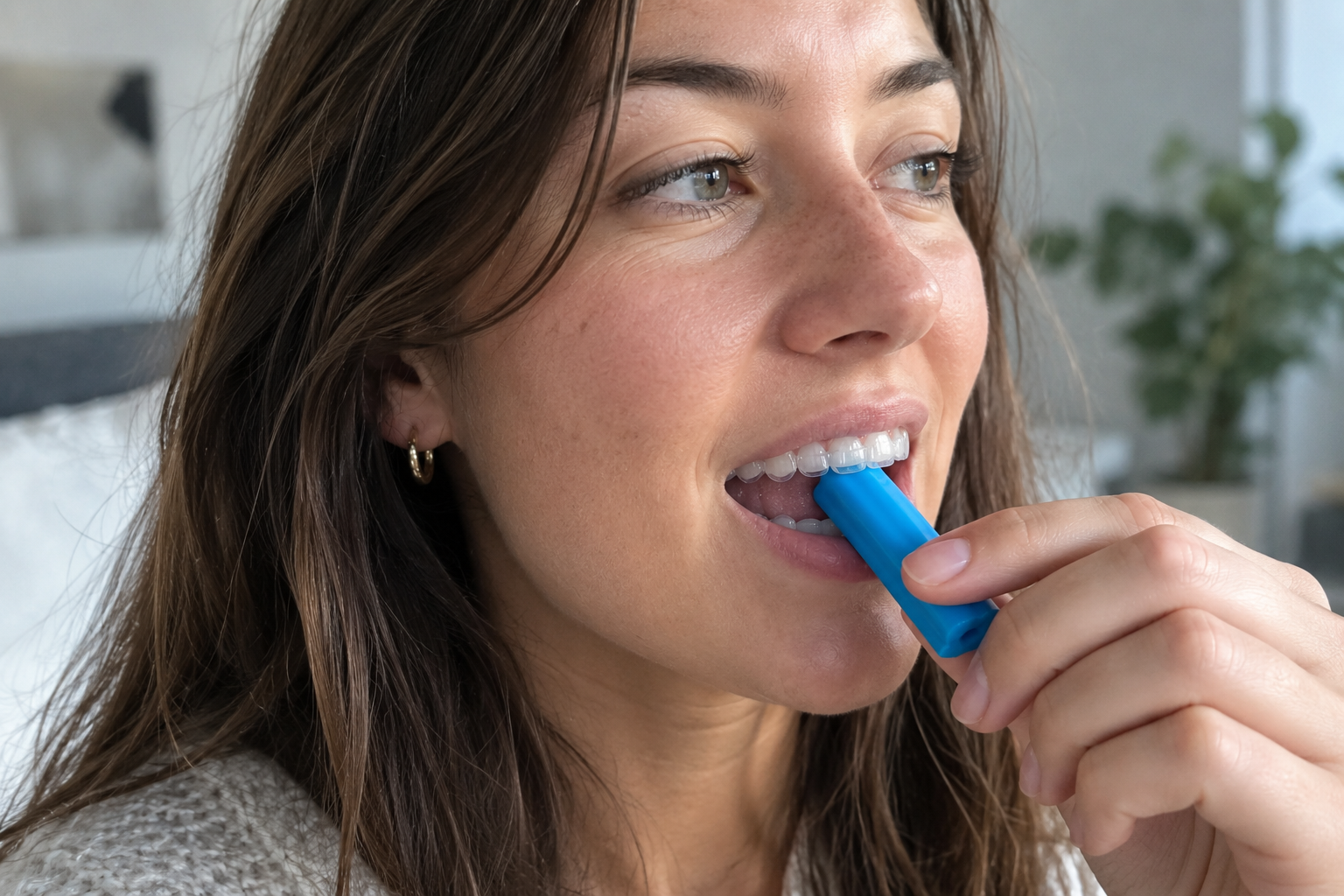
Invisalign chewies are small silicone cylinders that help seat clear aligner trays fully against the teeth. They close the air gaps that show up when a new tray feels tight or uneven. This guide covers what they do and how to use them. It also ranks the five best options sold in the US.
TL;DR
Chewies close air gaps between a tray and the teeth
Chewies are not gum, candy, or edible in any form
No published trial proves chewies change treatment outcomes
Five real, currently sold options are ranked below with pricing
Quick Dentist-Recommended Choices
Best Overall

PISSION 12-Pack Medical Grade Silicone Aligner Tray Seaters
The most reviewed plain chewie on the market, made from medical-grade silicone with a mint scent, is about $6 for a 12-pack.
Best for Back Molars
IXO Aligner Chewies With Seater Handles
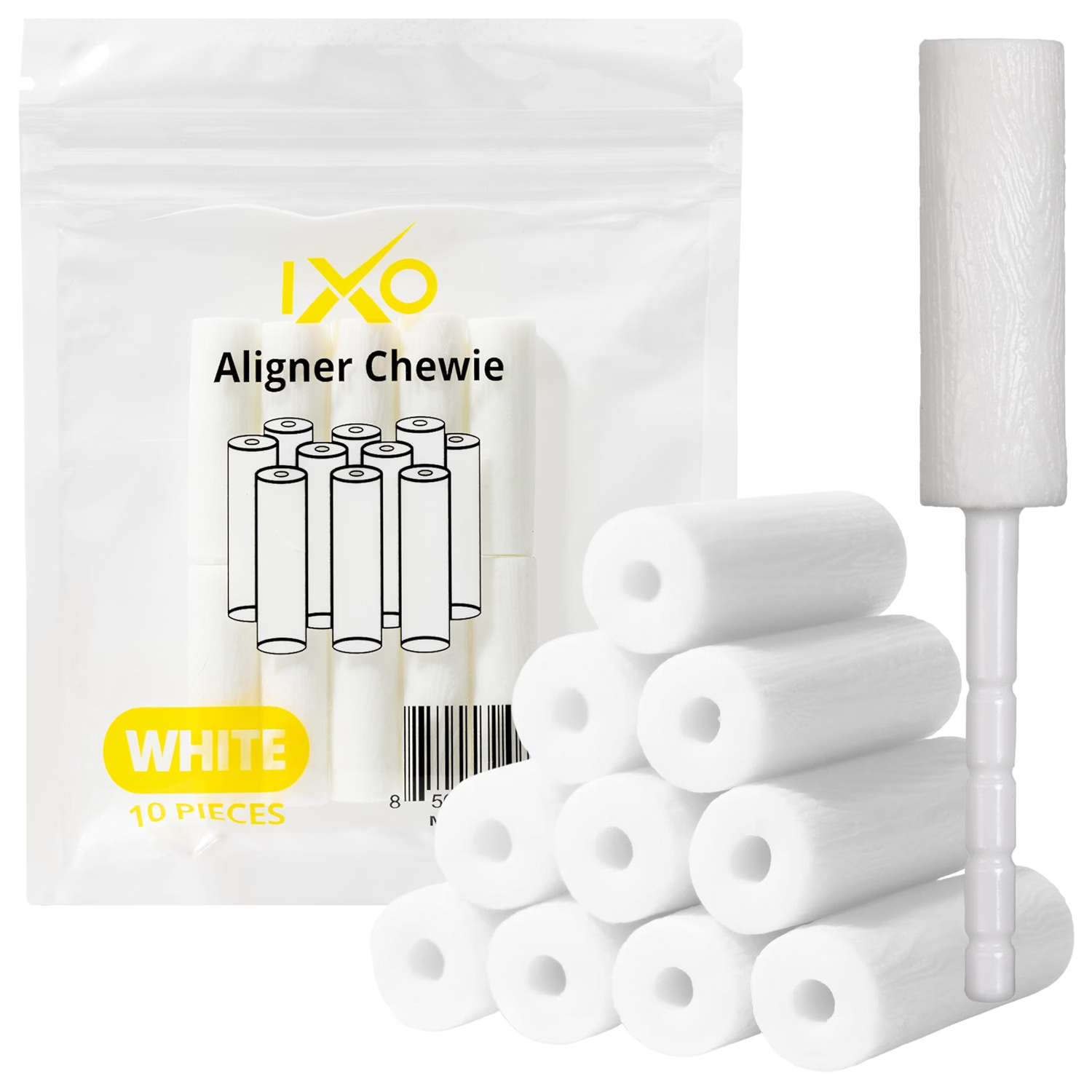
Pairs ten silicone chewies with five reusable handles for easier reach on back teeth, at about $9 for the set.
Best Firmness Sampler
Invisalign Aligner Seaters, Blue and Orange
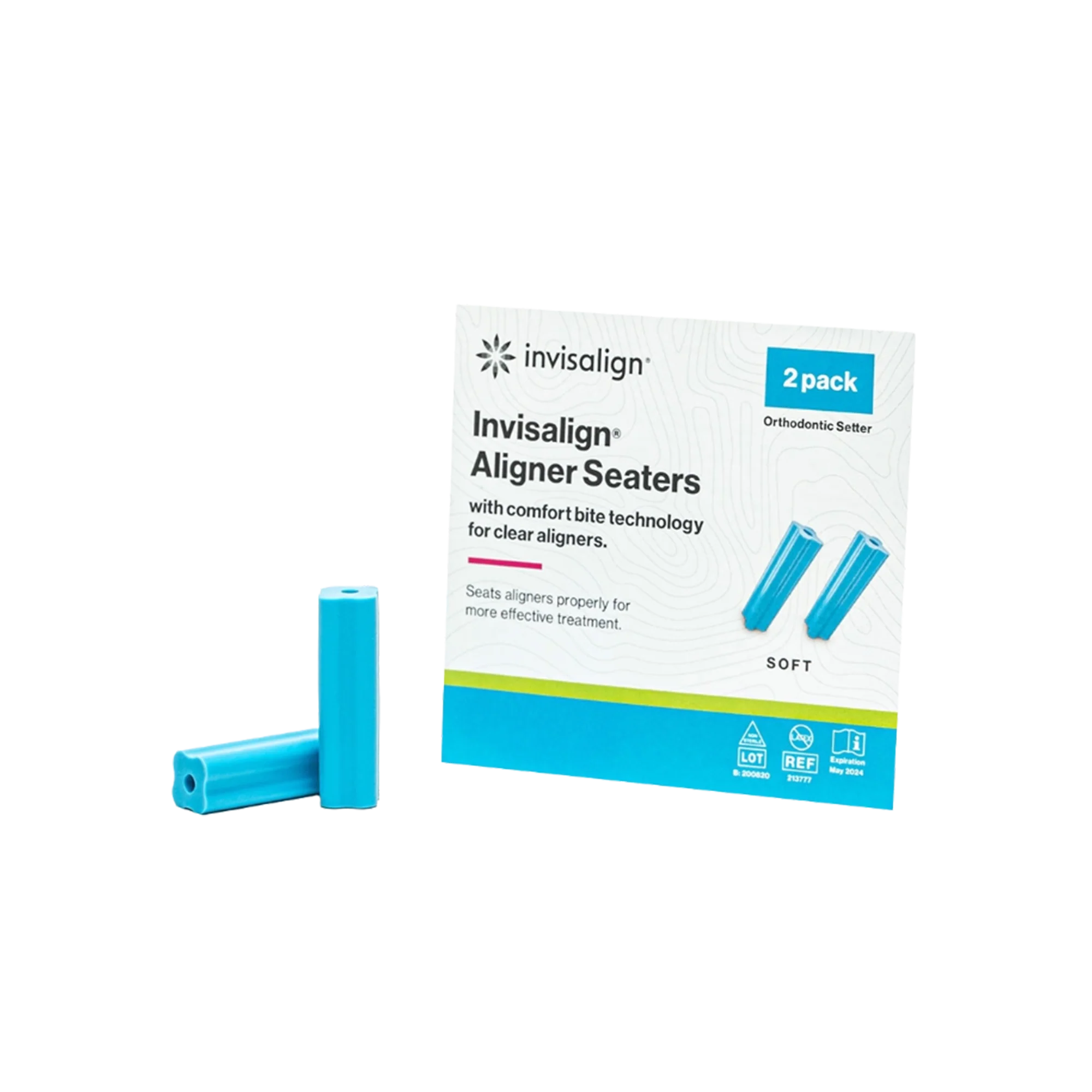
Align Technology's own soft and medium pair, made to help find the right firmness before buying in bulk, is about $10 for two pieces.
We may earn a commission on purchases made through these links.
What Are Invisalign Chewies For?
Clear aligners work by fitting closely around each tooth and applying steady pressure to move it. A tray that sits away from a tooth cannot deliver that pressure. Chewies close that gap so the tray does its job.
Orthodontists often mention chewie use as part of a full dental treatment plan. This applies especially to patients with attachments or a tighter-fitting case.
Patients typically reach for a chewie in a few common situations. Each one comes down to the same underlying problem. A tray has not fully seated against the teeth.
Right after switching to a new set of aligners
After eating or drinking, once the tray goes back in
When one spot near an attachment feels loose
Before bed, so the tray sits well overnight
Chewie use is one part of daily care with aligners. This braces care guide covers other daily habits worth building.
What Is The Difference Between Chewies, Seaters, Munchies, And Movemints?
These four names get used interchangeably, and that causes real confusion when shopping. They are not the same product. The table below breaks down how they differ.
Term | What it is | Material | Reusable | Typical price |
|---|---|---|---|---|
Chewies | Generic soft cylinder | Silicone | Yes, until worn | About $0.50 per piece |
Aligner tray seaters | Align's own branded version | Medical-grade silicone | Yes, until worn | About $5 per piece |
Munchies (EPS) | Ridged, three-armed seater | Medical-grade silicone | Yes, until worn | About $11 per piece |
Movemints | Edible mint | Xylitol | No, single-use | About $6 per pack |
Chewies is the generic term most shoppers search for. Third-party sellers describe theirs as made for Invisalign, not as an Invisalign brand product. Invisalign is a trademark of Align Technology.
Some people search for these under the name of Invisalign chew sticks. Others search for Invisalign chew gum instead. Neither name is accurate. The product is not gum, and it should never be chewed like candy or swallowed.
Aligner tray seaters is Align Technology's own name for its version of the product. Align sells these directly through its own store in soft and medium firmness.
EPS stands for Enhanced Posterior Seating, a name Align uses on its own product page. The shape targets back molars specifically.
Movemints are the product most often confused with chewies by name. People search for something to chew that also freshens breath. They are meant to dissolve, not be reused.
Do Invisalign Chewies Actually Work?
The mechanism behind a chewie is straightforward. Aligners move teeth by fitting closely against them. They apply gentle, continuous pressure, according to the American Association of Orthodontists. A tray with a visible gap is not applying that pressure evenly.
What is less settled is the clinical evidence. No published trial has directly tested whether chewies improve tray seating, tracking, or total treatment time. That gap in evidence does not make chewies useless. The benefit rests on mechanics that make sense, even without a trial to confirm it. A chewie costs a few dollars and carries little risk when used correctly.
How Do You Use Invisalign Chewies?
Using a chewie correctly takes less than a minute per tray. The technique matters more than the brand.
Seat the tray by hand first, pressing along each tooth.
Hold one end of the chewie between your fingers.
Bite down gently on the other end for a few seconds.
Move along the arch, spending extra time on any loose spot.
Rinse the chewie with water and let it air dry.
Never put the entire chewie in your mouth and chew it like gum. That approach does not seat the tray reliably. It also raises the risk of gagging or swallowing. Providers vary on how long to chew each day. Follow your orthodontist's specific instructions over any general guidance here.
Daily brushing still matters during treatment. A toothbrush suited for orthodontic wear helps keep trays clean between chewie sessions. This guide to the best toothbrush for braces covers good options.
What Are The 5 Best Invisalign Chewies?
The following five products are currently sold in the US through Amazon or Align's own store. Pricing and pack sizes reflect typical listings at the time of writing and may shift.
#1 PISSION 12-Pack Medical Grade Silicone Aligner Tray Seaters
The PISSION 12-Pack is the most reviewed plain chewie in its category. It has a large base of ratings on Amazon. Each piece runs close to fifty cents, making frequent replacement an easy habit, not a cost decision.
Price: About $6 for a 12-pack, roughly fifty cents per piece
Where to buy: Amazon
Material: Medical-grade silicone, BPA-free
Pack size: Twelve pieces, mint-scented, one size
Best for: Buyers who want a low-cost pack they can replace often
Pros:
Large pack size at a low per-piece cost
Mint scent and a storage case included
Strong review history on Amazon
Cons:
Firmness is not stated as a precise specification
No handle, so back teeth take more effort to reach
#2 HEMILAB 12 Pcs Silicone Aligner Seaters
The HEMILAB 12-Pack uses a textured surface designed to stay in place during biting. It is priced close to the PISSION pack. It works well for anyone who replaces a chewie often instead of reusing one for weeks.
Price: About $6 for a 12-pack
Where to buy: Amazon
Material: Silicone with a textured, non-slip surface
Pack size: Twelve pieces, multicolor, one size
Best for: Buyers who want a textured, non-slip grip
Pros:
Textured grip resists slipping during use
Compatible with Invisalign and other clear aligner brands
Priced similarly to other bulk generic packs
Cons:
Smaller review base than some competing brands
No handle option in this specific pack
#3 IXO Aligner Chewies With Seater Handles
The IXO 10-Pack With Handles includes five reusable handles, solving two common complaints at once. A handle keeps fingers away from the back of the mouth. It also gives a firmer grip than a bare cylinder.
Price: About $9 for a 10-pack with 5 handles
Where to buy: Amazon
Material: Silicone chewies with reusable plastic handles
Pack size: Ten chewies plus five handles, unscented or mint
Best for: Back molars or a strong gag reflex
Pros:
Handle improves reach for back molars
Useful for anyone with a strong gag reflex
Unscented option available for sensitive users
Cons:
Costs close to double the price per piece of plain packs
Handles add a step most people do not need
#4 Invisalign Aligner Seaters, Blue and Orange
The Invisalign Aligner Seaters pack is Align Technology's own product, sold directly through the official Invisalign store. It includes one soft blue piece and one medium orange piece. That lets a patient compare two firmness levels before buying in bulk.
Price: About $10 for a 2-pack
Where to buy: Align's official online store
Material: Medical-grade silicone
Pack size: Two pieces, one soft and one medium firmness
Best for: Testing firmness before buying generics in bulk
Pros:
Made by the company that manufactures Invisalign aligners
Useful for testing firmness before committing to a dozen
Simple two-piece format for quick comparison
Cons:
Costs far more per piece than generic packs
Only two pieces per order, so restocking comes quickly
#5 Invisalign Munchies EPS
The Invisalign Munchies EPS uses a ridged, three-armed design that targets posterior teeth specifically. Align states the material as medical-grade silicone. It describes the shape as built for enhanced posterior seating.
Price: About $22 for a 2-pack, roughly $11 per piece
Where to buy: Align's official online store
Material: Medical-grade silicone
Pack size: Two pieces, ridged three-armed design
Best for: Stubborn back molars that need extra grip
Pros:
Shape targets back molars more directly than a plain cylinder
Multiple biting surfaces instead of one smooth side
Sold directly by Align Technology
Cons:
Highest price per piece of any option on this list
Some users report shorter durability than the price suggests
Where Can You Buy Invisalign Chewies In Store Or Online?
Orthodontist offices remain the most common in-person source. Many hand out a starter supply for free or for a small fee. This often happens when fitting a new set of trays.
General pharmacies do not reliably stock chewies. They rarely carry chewies the way they carry floss or interdental brushes. A specific store visit often ends without success. Amazon and Align's own online store are the most consistent options. They work well if a local office runs out or does not supply chewies at all.
Are Invisalign Chewies Reusable?
Most chewies are reusable for as long as they hold their shape. A chewie that has flattened, split, or lost its bounce should be replaced. A worn chewie should not stay in rotation. Rinsing with water and letting the piece air dry after each use extends its working life. Sharing a chewie with another person is never a good idea, regardless of the brand.
Plaque left on a tray or a chewie can harden over time. This guide on what tartar actually is explains why regular rinsing and replacement matter.
A water flosser also helps clean around trays between uses. This review of the best oral irrigators covers strong picks.
When Should You Not Use A Chewie?
Some patients should check with their provider before starting. Existing jaw joint problems or an open bite are reasons to ask first. A specific instruction from an orthodontist is another reason to check first. Jaw soreness after extended chewing is a sign to shorten the routine. It should not be pushed through. A tooth that still will not track after consistent chewie use needs a call to the provider. It does not need a longer chewing session.
An interdental brush is a gentler option for cleaning around attachments. This comparison of the best interdental brushes covers several good picks.
Bottom Line
Invisalign chewies solve one narrow problem – a tray that has not fully seated. Correct technique matters more than which brand sits in the pack. Generic silicone cylinders work well for most people. Handled or ridged designs solve specific problems, like back molar access or grip. Check with an orthodontist before starting, and use short sessions rather than extended chewing.
Cavity prevention matters just as much during aligner treatment. This guide to preventing cavities outlines good daily habits.
Frequently Asked Questions
What are Invisalign chewies made of?
Chewies are made from medical-grade silicone. Align uses the same material in its own branded seaters.
How long should you chew Invisalign chewies?
There is no single standard, since instructions vary by provider. Short sessions of a few seconds per spot are common. An orthodontist's specific guidance should always take priority.
Can you reuse Invisalign chewies?
Yes, most chewies can be reused until they flatten, split, or lose their shape. Rinse and air-dry a chewie after each use to extend its life.
Do Invisalign chewies speed up treatment?
There is no published evidence that chewies shorten treatment time. Claims to the contrary are marketing rather than clinical findings.
Is it dangerous to swallow a chewie?
Chewies are made from silicone, not anything toxic. A small object is still a choking risk for some users. A handled format lowers that risk for anyone concerned about it.