Align Technology Reveals New Invisalign Digital Tools
Align Technology presented a suite of upcoming Invisalign innovations at its 2026 EMEA Ortho Summit in Barcelona, Spain. The event gathered around 400 orthodontists and dental...
Written by Mantas Petraitis
Read time: 7 min read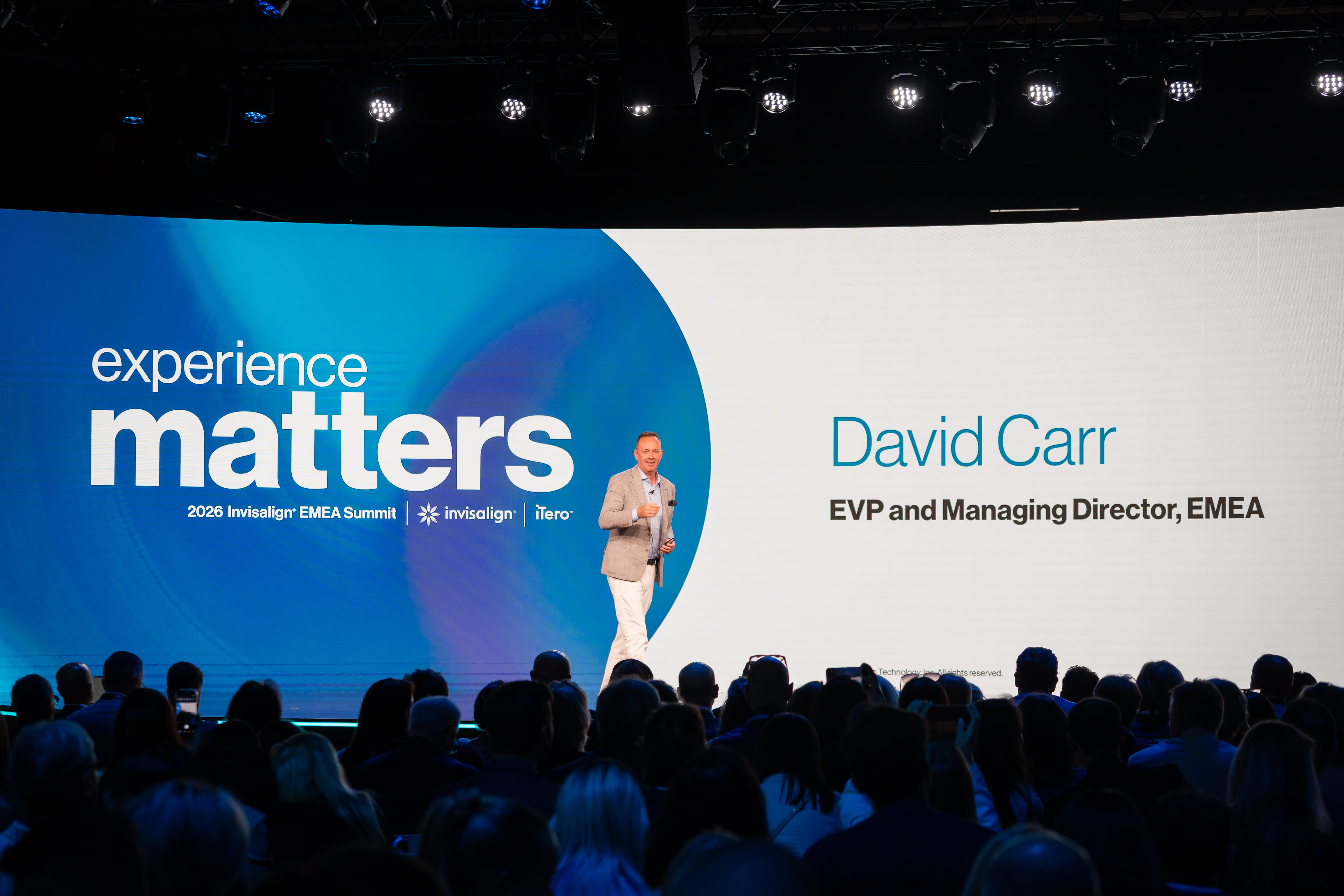
Align Technology presented a suite of upcoming Invisalign innovations at its 2026 EMEA Ortho Summit in Barcelona, Spain. The event gathered around 400 orthodontists and dental professionals from across Europe, the Middle East, and Africa to preview digital tools designed for complex clinical cases and improved practice efficiency.
TL;DR
Align previewed the Invisalign Specifix Attachment System, a 3D-printed solution that standardizes attachment size, placement, and bonding
Invisalign integrated buttons move button planning into ClinCheck software, replacing manual chairside selection
The Invisalign Palatal Expander now includes integrated elastic hooks and is backed by an independent clinical study from the University of Insubria
Align announced a $200 million manufacturing facility in Hyderabad, India, its fourth global site, expected to open in 2027
Invisalign Specifix Attachment System: 3D-Printed Precision for Attachment Workflows
One of the most anticipated previews at the summit was the Invisalign Specifix Attachment System. Orthodontic attachments are small tooth-colored shapes bonded to the teeth that help aligners apply the right force to move teeth effectively. Traditionally, placing these attachments has been a manual process with room for variability in both size and positioning.
The Specifix system takes a different approach. Each attachment is 3D printed to match the exact shape and size specified in the doctor’s dental treatment plan. A purpose-built bonding accessory then guides placement, reducing the inconsistencies that come with manual positioning. According to Align’s AAO 2026 press release, bench testing conducted in August 2025 confirmed the system’s attachment volume precision.
Several practical advantages stand out for clinical teams:
Attachment removal does not require a high-speed handpiece, which simplifies the process and improves patient comfort
The material is translucent, making attachments less visible on the teeth
Digitally guided placement allows dental assistants and hygienists to handle more of the workflow with confidence
For practices that already use intraoral scanners compatible with Invisalign, the Specifix system fits into the existing digital workflow. The scanner captures the initial impression, the doctor plans treatment in ClinCheck, and the attachments arrive 3D printed to specification.
Invisalign Integrated Buttons: Digital Planning for Bite Correction
Buttons are small, bonded accessories used to anchor elastics during orthodontic treatment. They play a critical role in bite correction, particularly for complex Class III malocclusion cases. Until now, selecting the button type and determining its position has been a manual, chairside decision.
Invisalign integrated buttons change that process. Button planning is now incorporated directly into the ClinCheck treatment planning software. The system determines button type and position digitally during the planning phase, so the clinical team can see exactly where each button goes before the patient sits in the chair.
This shift matters for two reasons. First, it reduces guesswork. The software can account for the full biomechanics of the case when placing buttons, something that is harder to replicate with manual selection. Second, it improves consistency across appointments and team members. Practices using scanners like the iTero Lumina or other Invisalign-compatible scanners can capture the data needed for this digital workflow without adding extra steps.
Invisalign Palatal Expander: New Hook Features and Clinical Validation
The Invisalign Palatal Expander, Align’s first direct 3D-printed orthodontic appliance, received two significant updates at the summit. The first is a hardware enhancement, and the second is independent clinical evidence supporting the device’s effectiveness.
Integrated Elastic Hooks
The updated palatal expander now includes forward- and backward-facing hooks that are compatible with elastics. This addition expands the range of cases the device can treat, including skeletal Class III malocclusions that require protraction facemask therapy.
The hooks are designed to be discreet and comfortable while remaining robust enough to handle orthopedic elastic forces. For orthodontists treating growing patients with narrow upper jaws, this update means fewer cases need to be routed to traditional metal Hyrax expanders. Combined with Invisalign First aligners, the system now offers a more complete early intervention solution for Phase 1 treatment.
University of Insubria Clinical Study
Align highlighted an independent study conducted by researchers at the University of Insubria in Varese, Italy. Published in Frontiers in Dental Medicine in February 2026, the study compared the Invisalign Palatal Expander (IPE) with a traditional tooth-borne Hyrax rapid palatal expander (RPE) in 33 growing patients.
The researchers found that the IPE effectively widens the upper jaw by opening the midpalatal suture, which is the natural growth seam in the palate. Skeletal and occlusal effects were comparable to the Hyrax, with the IPE delivering more controlled and predictable outcomes. For orthodontists weighing digital orthodontic technology against conventional metal appliances, this independent validation adds a meaningful data point.
Custom Trimline and 3D Soft Tissue Animation
Two additional features rounded out the innovation showcase at the Barcelona event.
Custom Trimline Option
Align introduced a custom trimline option for Invisalign clear aligners, giving doctors greater control over how the aligner edge sits relative to the gum line. The feature is integrated directly into the ClinCheck planning workflow and allows an extended scalloped trimline in scenarios such as:
Short clinical crowns where standard trim does not provide enough retention
Erupting dentition cases in younger patients
Gingival recession where additional tooth coverage is needed
Cases where the doctor prefers fewer attachments and wants the aligner itself to provide more grip
This kind of granular control over aligner design reflects a broader trend toward personalization in dental equipment and treatment planning software.
3D Soft Tissue Animation
EMEA Summit attendees received early access to Align’s 3D Soft Tissue Animation technology, making them the first Invisalign customers in the EMEA region to use it. The feature adds a soft tissue visualization layer to the ClinCheck treatment plan, allowing doctors to see how the gums and surrounding tissues are expected to respond as teeth move through each stage.
For case presentations, this means patients can see a more realistic preview of their results, including how the gum line will look at the end of treatment. Practices that already invest in dental social media marketing and patient-facing visuals will find the soft tissue animation particularly useful for consultations and converting new patients.
How These Innovations Fit Into ClinCheck Live Plan
The features previewed in Barcelona build on a foundation Align laid in late 2025 with ClinCheck Live Plan. That tool automates the generation of initial Invisalign treatment plans in roughly 15 minutes, down from what previously took several days. Its global rollout began in Q1 2026.
Together, these developments signal a clear direction for Align: digitize every step from initial scan to chairside execution. Practices equipped with a modern intraoral scanner and ClinCheck access can now plan attachments, buttons, trimlines, and soft tissue animation within a single software environment. The manual, step-by-step chairside approach is steadily being replaced by digitally guided precision. For practices evaluating the iTero versus Primescan decision, ClinCheck integration remains a significant differentiator in Align’s ecosystem.
Hyderabad Manufacturing Facility: $200 Million Expansion Into India
On the same day the summit recap was published, Align Technology announced plans for a new manufacturing facility in Hyderabad, India. The company signed a Memorandum of Understanding with Telangana Life Sciences, committing approximately $200 million (Rs 1,800 crore) in capital and operational investment over the coming years.
Key details of the expansion:
The Hyderabad site will be Align’s fourth manufacturing facility globally, joining existing plants in Juarez (Mexico), Ziyang (China), and Wroclaw (Poland)
It is the company’s first manufacturing presence in India
The facility is expected to open in 2027 and create over 300 direct jobs
Align already operates a Global Capability Center and Innovation Center in Hyderabad
The strategic rationale is straightforward. India represents a high-growth market for clear aligners, and local manufacturing shortens the distance between production and delivery. For Invisalign-trained doctors across the Asia-Pacific region, the new facility should translate into faster turnaround times and more localized support. Practices looking to build around the Invisalign ecosystem, particularly those following a new dental practice checklist, can factor improved regional supply chain reliability into their planning.
Bottom Line
The 2026 EMEA Ortho Summit confirmed that Align Technology is focused on removing manual variability from orthodontic workflows. The Specifix Attachment System, integrated buttons, custom trimlines, and palatal expander updates all follow the same logic: plan it digitally, execute it consistently.
For orthodontic practices, the practical impact is tangible. Fewer manual steps mean less chairside guesswork, more predictable clinical outcomes, and a smoother patient experience. The Hyderabad manufacturing expansion adds supply chain depth in a region where demand for clear aligners is growing rapidly.
Practices that are still evaluating their digital workflow, from choosing the right scanner to learning how to get more dental patients through modern treatment offerings, will find that these innovations make the Invisalign ecosystem harder to overlook.
Frequently Asked Questions
What is the Invisalign Specifix Attachment System?
The Specifix Attachment System is a 3D-printed solution where attachments are manufactured to match the exact shape and size in the doctor’s treatment plan. A bonding accessory guides precise placement, reducing size and positioning variability compared to manual methods. The material is translucent, and removal does not require a high-speed handpiece.
When will these Invisalign innovations be available?
Align Technology expects the previewed features, including Specifix, integrated buttons, and the updated palatal expander, to become available by mid-2026. Availability may vary by market and is subject to regulatory approvals. 3D Soft Tissue Animation was already made available to EMEA Summit attendees.
What did the University of Insubria study find about the Invisalign Palatal Expander?
The study, published in Frontiers in Dental Medicine in February 2026, compared the Invisalign Palatal Expander with a traditional Hyrax expander in 33 growing patients. It found that the IPE effectively widens the upper jaw by opening the midpalatal suture, with skeletal and occlusal effects comparable to the Hyrax and more controlled, predictable outcomes.
Where is Align Technology building its new manufacturing facility?
The new facility is planned for Hyderabad, India. Align signed a Memorandum of Understanding with Telangana Life Sciences, committing approximately $200 million in investment. The site is expected to open in 2027, create over 300 jobs, and serve as Align’s fourth global manufacturing location.
What scanners work with the Invisalign system and ClinCheck?
Align Technology accepts scans from a limited number of intraoral scanners, with the iTero Lumina being the most tightly integrated option. Other compatible scanners include models from 3Shape, Medit, and Dentsply Sirona. For a full comparison, refer to a dedicated intraoral scanner compatibility guide.