Invisalign Cost In 2026: Prices By Age, State, And Insurance
Invisalign cost depends on case complexity, age, insurance, and where a patient lives. Full treatment typically runs $5,000 to $8,000, while minor cases start around $1,800. This...
Written by Mantas Petraitis
Read time: 5 min read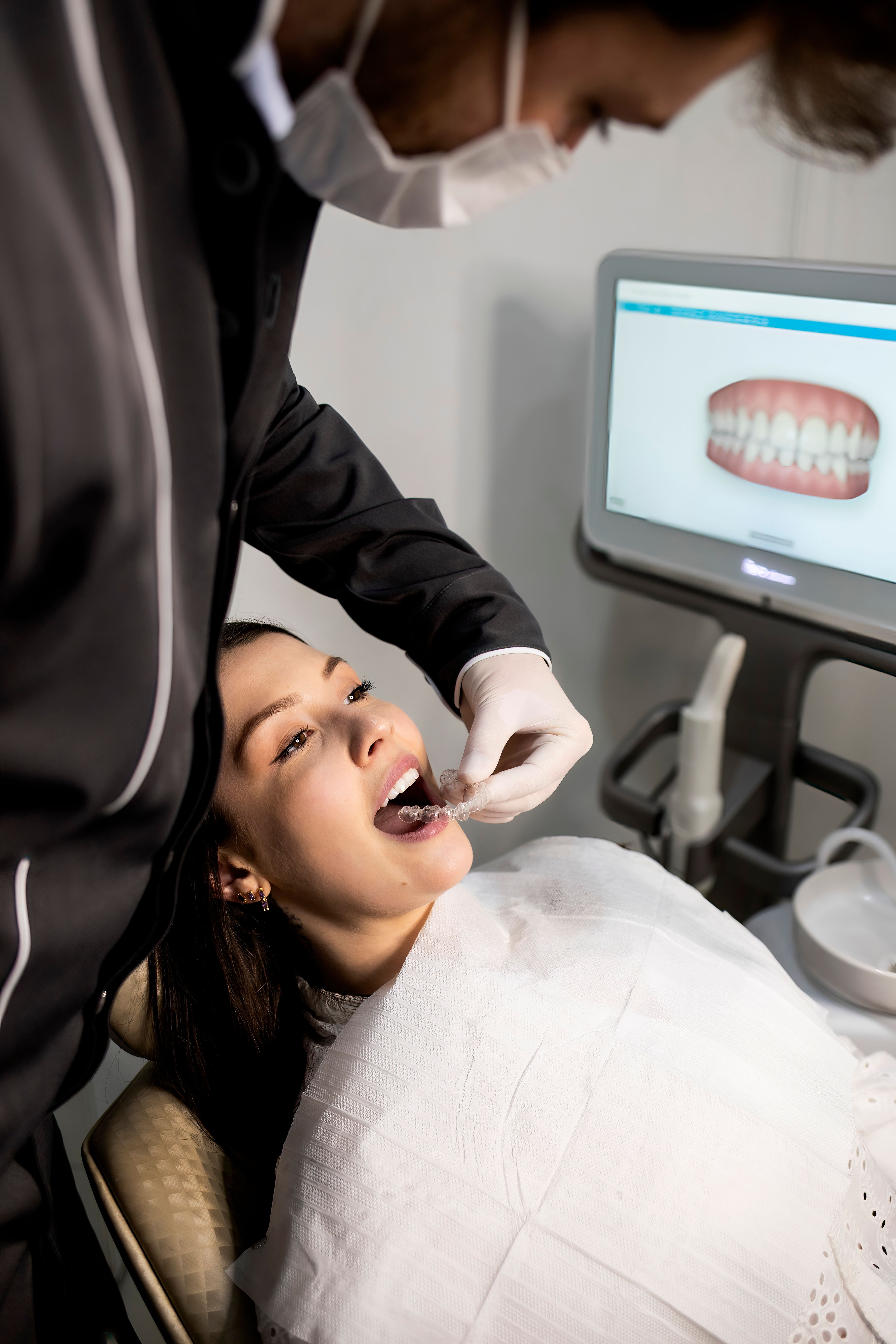
Invisalign cost depends on case complexity, age, insurance, and where a patient lives. Full treatment typically runs $5,000 to $8,000, while minor cases start around $1,800. This guide covers 2026 pricing by treatment type, age, and monthly payment plans. It also breaks down Delta Dental coverage and estimated ranges for all 50 states.
TL;DR
Full Invisalign treatment costs $5,000 to $8,000, and minor cases start near $1,800.
Insurance often cuts more off the price for teens and kids than for adults.
Delta Dental covers Invisalign only when a plan includes orthodontic benefits.
Coastal and Northeast states typically cost $1,000 to $3,000 more than the Midwest and South.
How Much Does Invisalign Cost In 2026
National pricing for Invisalign spans a wide range in 2026. The number a patient pays depends heavily on which treatment tier fits their case.
Across the United States, Invisalign costs range from $1,800 to $9,500, based on national pricing data. Full comprehensive treatment most often falls between $5,000 and $8,000.
Treatment type | Typical price range | Typical duration |
|---|---|---|
Invisalign Comprehensive | $5,000 to $8,000 | 12 to 18 months |
Invisalign Express or Lite | $1,800 to $3,000 | A few months |
Invisalign Express 5 (Invisalign 5) | $1,500 to $2,800 | About 2.5 months |
Invisalign Teen | $3,000 to $5,000 | Similar to adult comprehensive |
Invisalign Cost By Treatment Type
Invisalign is sold in several treatment tiers, not one flat product. Each tier is built for a different level of crowding, spacing, or bite correction.
Invisalign Comprehensive handles moderate to severe misalignment with an unlimited number of aligners. Treatment usually runs 12 to 18 months and costs $5,000 to $8,000.
Invisalign Express, sometimes called Lite, treats mild spacing or crowding in a few months. It typically costs $1,800 to $3,000.
Orthodontists often map out each phase in dental treatment plan software. The software sequences aligner stages and attaches pricing before treatment starts.
Consultations increasingly rely on digital scanning technology instead of traditional putty impressions.
Invisalign Cost For A Minor Adjustment (Invisalign 5 And Invisalign Express 5)
Invisalign 5, also marketed as Invisalign Express 5, targets very minor adjustments. It uses five or fewer aligners over roughly two and a half months.
Patients typically pay $1,500 to $2,800 for this package, depending on the provider and local market. Align originally set the provider lab fee at $549, plus an optional $125 refinement fee.
Feature | Invisalign Express 5 | Invisalign Comprehensive |
|---|---|---|
Aligners | Up to 5 | Unlimited |
Price range | $1,500 to $2,800 | $5,000 to $8,000 |
Typical timeline | About 2.5 months | 12 to 18 months |
Invisalign Cost By Age: Adults, Teens, And Kids
Invisalign pricing does not change much by age at the sticker price level. Insurance and treatment timing are what actually shift the final bill.
Invisalign cost for adults typically ranges from $3,000 to $9,500. The average sits near $5,700. The cost for teenagers usually falls between $3,000 and $5,000, close to standard adult comprehensive pricing.
Invisalign cost for kids in early or interceptive treatment generally runs $3,000 to $5,000 as well. Insurance coverage for minors tends to be more generous. Families often pay less out of pocket than adults do.
Braces for kids typically cost $3,000 to $7,000, close to Invisalign, per this braces pricing breakdown.
Age group | Without insurance | With typical orthodontic insurance |
|---|---|---|
Kids (early or interceptive) | $3,000 to $5,000 | Often reduced the most |
Teenagers | $3,000 to $5,000 | Reduced by about $1,000 to $3,000 |
Adults | $3,000 to $9,500 (avg. ~$5,700) | Reduced by about $1,000 to $3,000 |
Invisalign Cost Per Month: Financing Options
Most patients do not pay for Invisalign in one lump sum. Financing spreads the total cost into fixed monthly payments.
On a $5,700 case with no added interest, a 12-month plan runs about $475 a month. A 24-month plan lowers that to about $238 a month. A 36-month plan brings it down to roughly $158 a month.
Some clinics advertise financed payments as low as $58 a month for select minor cases. The exact rate depends on credit approval and plan length.
Paying through an FSA or HSA can lower the cost too. Contributions come from pre-tax income.
Financing term | Estimated monthly payment (on a $5,700 case) |
|---|---|
12 months | About $475 a month |
24 months | About $238 a month |
36 months | About $158 a month |
Invisalign Cost With Insurance: Delta Dental Example
Dental insurance can lower Invisalign cost by a real amount, though coverage depends on plan design. Delta Dental is a useful example, since its plans vary widely by type.
Various Invisalign's own coverage data put the average orthodontic benefit at $1,772. Most patients qualify for $2,000 to $3,000 in coverage.
Delta Dental's own FAQ treats Invisalign the same way it treats standard orthodontic treatment. Coverage requires a plan that already includes an orthodontic benefit.
Delta Dental PPO plans commonly cover orthodontics at 50% coinsurance. Coverage often begins after a waiting period, commonly six months. The lifetime maximum on many plans falls between $1,000 and $2,500.
One PPO example shows a lifetime maximum near $1,500 per person.
DeltaCare USA works differently, since it often uses a fixed copay instead of a percentage split. One stated example plan sets that copay at $2,800 for adult orthodontic treatment.
Not every Delta Dental plan includes orthodontic coverage. Patients should confirm adult orthodontic benefits, waiting periods, and lifetime maximums before assuming Invisalign is covered.
Patients can compare dental insurance plans beyond Delta Dental to check for stronger orthodontic benefits.
Plan type | Typical coverage | Typical lifetime maximum | Notes |
|---|---|---|---|
Delta Dental PPO with adult ortho | About 50% coinsurance after a waiting period | Often $1,000 to $2,500 | Waiting periods are common |
Delta Dental Basic PPO | Often excludes orthodontics | Not applicable | Confirm before assuming coverage |
DeltaCare USA | Fixed copay model | Plan specific | Requires an in-network dentist or referral |
No orthodontic benefit | $0 | Not applicable | FSA, HSA, and financing become the main options |
Invisalign Cost By State
Invisalign cost also shifts by geography, since overhead, competition, and local demand vary by region. No official state-by-state price list exists, so the ranges below are modeled estimates.
These are planning estimates, not confirmed clinic prices. A local consultation gives the exact number for a specific case.
Tier | Estimated price range | States |
|---|---|---|
Tier 1: Highest cost of living | $6,000 to $9,000 or more | Alaska, California, Connecticut, District of Columbia, Hawaii, Maryland, Massachusetts, New Jersey, New York, Oregon, Rhode Island, Vermont, Washington |
Tier 2: Above average | $5,000 to $7,500 | Arizona, Colorado, Delaware, Florida, Illinois, Maine, Minnesota, Nevada, New Hampshire, Pennsylvania, Utah, Virginia |
Tier 3: Near or slightly below average | $4,000 to $6,500 | Georgia, Idaho, Michigan, Montana, Nebraska, New Mexico, North Carolina, Ohio, South Carolina, South Dakota, Texas, Wisconsin, Wyoming |
Tier 4: Lowest cost of living | $3,000 to $5,500 | Alabama, Arkansas, Indiana, Iowa, Kansas, Kentucky, Louisiana, Mississippi, Missouri, North Dakota, Oklahoma, Tennessee, West Virginia |
What Affects Invisalign Cost
Several factors move the final price up or down within these ranges. Understanding them helps a patient judge whether a quote is fair.
Case complexity, since more crowding or bite correction means more aligners
Number of aligner trays and refinements needed to finish the case
Provider experience and tier, since higher-volume providers sometimes charge more
Practice location, given differences in rent, staffing, and local demand
Retainers and follow-up visits after the active aligner phase ends
Add-on treatments like teeth whitening once the aligners come off
How To Lower Invisalign Cost
Several practical steps can reduce out-of-pocket Invisalign cost. Most combine insurance, tax-advantaged accounts, and comparison shopping.
Confirm orthodontic benefits and lifetime maximums before starting treatment
Use FSA or HSA funds to pay with pre-tax income
Ask for an itemized quote and compare it against at least one other provider
Choose an in-network orthodontist to reduce out-of-pocket coinsurance
Review dental financing options if a plan does not cover the full case
Bottom Line
Invisalign cost in 2026 spans a wide range. Minor adjustments start around $1,800, and complex adult cases can reach $9,500 or more. Age changes the picture less than insurance and location do. A close read of a Delta Dental plan, or any other carrier, reveals the real number. Getting that number before treatment starts prevents surprises.
Frequently Asked Questions
How much does Invisalign cost without insurance?
Without insurance, Invisalign typically costs $1,800 to $9,500, depending on case complexity. Full comprehensive treatment most often lands between $5,000 and $8,000.
How much does Invisalign cost a month with financing?
Monthly payments usually range from about $150 to $475. The exact amount depends on the loan term and total case cost. Some clinics advertise rates as low as $58 a month for minor cases.
Does Delta Dental cover Invisalign?
Delta Dental covers Invisalign only when the plan includes an orthodontic benefit. Many PPO plans pay 50% coinsurance up to a lifetime maximum, often between $1,000 and $2,500.
How much is Invisalign for a minor adjustment?
A minor adjustment through Invisalign Express 5, also called Invisalign 5, typically costs $1,500 to $2,800. The package covers up to five aligners over about two and a half months.
Is Invisalign more expensive than braces?
Invisalign and braces fall in similar price ranges for most cases. Metal braces for kids often run $3,000 to $7,000. That is close to typical Invisalign pricing for the same age group.