White Spots On Gums: Causes, Appearance, And When To Worry
White spots on gums usually get noticed by accident, mid-brush, or in the bathroom mirror. A tiny white dot, a pimple-like bump near a tooth, or a flat pale patch can all look...
Written by Maren Solvik
Read time: 6 min read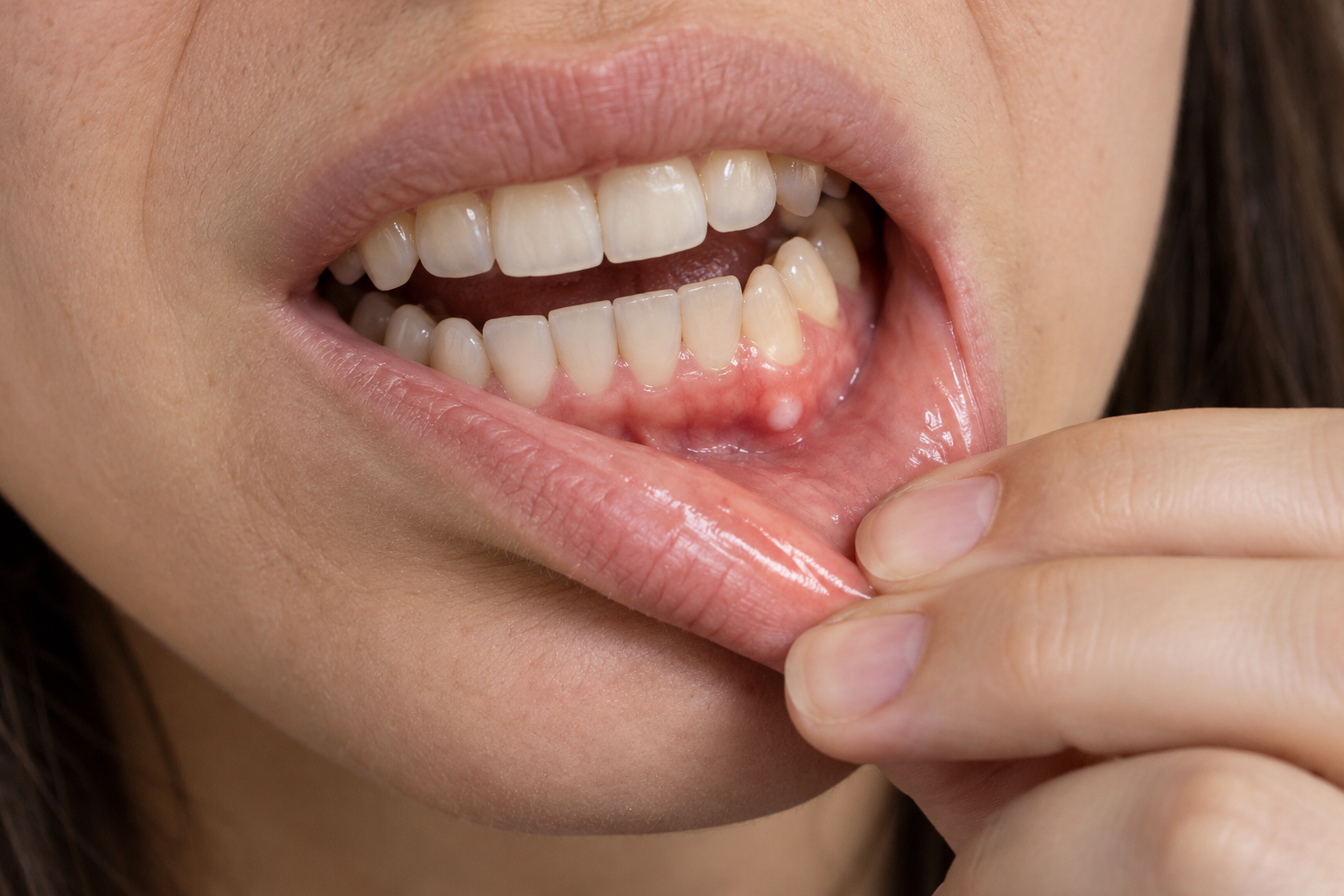
White spots on gums usually get noticed by accident, mid-brush, or in the bathroom mirror. A tiny white dot, a pimple-like bump near a tooth, or a flat pale patch can all look alarming. Most turn out to be minor irritation that heals within days. Color alone can't tell the difference, though, and a few changes deserve a dentist's eye.
TL;DR
Canker sores, gum abscesses, thrush, and irritation cause most white spots on gums.
Patches that wipe off, bumps that drain pus, and lacy lines point to very different causes.
Painless spots can still be serious, especially thick patches or mixed red and white areas.
Any white spot that hasn't healed within about two weeks needs a dental exam.
What Do White Spots On Gums Look Like?
White changes on the gums come in more varieties than most people expect. Some are flat and smooth, some are raised, some are shallow sores with a pale center, and some are a soft coating that wipes off with gauze. Shape, texture, and behavior often say more than the color itself.
The table below groups the most common appearances with their usual explanations. Treat it as a set of clues, not a diagnosis. The same white patch can have more than one cause, and only an exam, sometimes with a biopsy, can confirm what it is.
What it looks like | Possible explanation | Key clue |
|---|---|---|
Small white sore with a red rim | Canker sore or traumatic ulcer | Usually painful |
Raised white or yellow bump near a tooth | Draining dental abscess | May release pus or a bad taste |
Creamy white patches | Oral thrush (candidiasis) | Many wipe away, leaving red tissue |
Thick white patch that stays put | Leukoplakia or another keratotic lesion | Usually cannot be wiped away |
Fine white lace-like lines | Oral lichen planus or a lichenoid reaction | Often appears on both sides of the mouth |
Rough white area at a rubbing point | Frictional keratosis | Matches a denture edge, sharp tooth, or brushing habit |
Peeling white film after a product or hot food | Chemical or thermal burn | Appears suddenly after exposure |
How To Tell Common White Spots Apart
When dentists look at a white spot, they mentally run through a short checklist. The same questions help make sense of what's showing up in the mirror.
Does it wipe off with gentle pressure from clean gauze, or stay firmly in place?
Is it a sore with a dip in the middle, a raised bump, or a flat patch?
Does it hurt, or is it painless?
Is it next to one tooth, under a denture edge, or spread across the mouth?
How long has it been there, and is it getting bigger, smaller, or staying the same?
A painful sore with a red border that appeared after biting the gum is a very different story from a painless, thick patch that has been there for a month. Neither answer is certain from appearance alone, which is why persistence matters so much.
What Causes White Spots On Gums? 9 Possible Explanations
Most white spots on the gums trace back to a handful of everyday causes, with a few less common conditions that are important not to miss. Here's how each one typically looks, what tends to go with it, and how a dentist confirms it.
#1. Canker Sores (Aphthous Ulcers)
Canker sores are round or oval ulcers with a white or yellowish center and a bright red rim. The pale center is fibrin, a natural protein layer that forms over the sore while it heals. They sting, especially with salty or acidic foods, and most minor ones heal on their own within one to two weeks.
Here's a detail that surprises many patients. Canker sores favor the soft, movable lining of the mouth, such as the inner lips and cheeks. The firm gum attached around the teeth is a less typical spot, so a sore there may turn out to be a traumatic ulcer from a toothbrush, a crunchy chip, or a slip of dental floss. Stress, minor injuries, and certain foods are common triggers. This guide on how canker sores differ from cold sores covers the comparison in detail.
#2. Oral Thrush (Candidiasis)
Oral thrush is a fungal infection caused by an overgrowth of Candida. It often shows up as creamy white patches on the gums, cheeks, tongue, or palate. According to the NHS, wiping the patches away can leave red spots that may bleed, and the mouth can feel sore or taste unpleasant.
Candida usually lives quietly in the mouth. It takes over when something tips the balance, such as:
A recent course of antibiotics
Inhaled corticosteroids for asthma, especially without rinsing afterward
Diabetes, particularly when blood sugar is poorly controlled
Dentures worn overnight or not cleaned thoroughly
A weakened immune system or immunosuppressant medication
Not every form of thrush looks the same. Some versions show up as red, sore areas under a denture with little white coating at all. Thrush is often first spotted as a white tongue, with the gums affected along the way.
#3. Gum Abscess Or Dental Fistula
A small white or yellow bump that looks like a pimple, sitting on the gum near a tooth, is one of the most common reasons patients call the office. It often comes and goes, sometimes releasing pus or a salty taste before flattening out again.
This bump is usually the opening of a sinus tract, a tiny drainage channel that lets pus escape from an infection at the tooth root or in the surrounding gum. The drainage relieves pressure, which is why many people feel little or no pain. Lack of pain doesn't mean the problem has gone away. The infection underneath still needs treatment, and this guide to treating a tooth abscess explains the options.
#4. Leukoplakia
Leukoplakia is a white or gray patch that can't be wiped off and can't be explained by another cause. It's a diagnosis of exclusion, which means a dentist first rules out things like thrush, cheek biting, or friction before using the term. The NHS notes that these patches are usually painless and may be slightly raised.
Tobacco use, including chewing tobacco, is the best-known risk factor. Most leukoplakias stay harmless, but a small share develop abnormal cells, called dysplasia, which can progress to cancer over time. Patches with red areas mixed in deserve particular attention. A biopsy is the only way to know what the cells look like, so persistent patches are usually sampled or referred to a specialist.
#5. Oral Lichen Planus
Oral lichen planus is a chronic immune-mediated condition that produces fine, lacy white lines, known as Wickham striae. The pattern often shows up on both sides of the mouth, on the cheeks as well as the gums.
The reticular form is usually painless and found by chance. The erosive form is more uncomfortable, with red, raw areas between the white lines. On the gums, it can cause desquamative gingivitis, where the gum looks red and peels or stings with brushing. Some lichen-like patches are reactions to a medication or a nearby dental filling, so dentists look closely at what sits next to the lesion. These lichenoid reactions can improve once the trigger is removed.
#6. Frictional Keratosis And Gum Irritation
Gum tissue that gets rubbed over and over protects itself by thickening, much like a callus on the hand. The result is a rough white or pale area right where the irritation happens. Common culprits include a denture edge, a sharp or broken tooth, a rough filling, or overly aggressive brushing.
The giveaway is location, since the patch lines up with the source of friction. Once that source is fixed, the patch should fade. If it doesn't fade within a couple of weeks after correcting the cause, it needs a second look, because a lesion blamed on irritation is only confirmed once it actually heals.
#7. Chemical Or Thermal Burns
Some white patches appear almost overnight after contact with something harsh. Whitening gels that spill onto the gums, aspirin tablets held against a sore tooth, strong mouthwashes, and home remedies like hydrogen peroxide or baking soda pastes can all burn the tissue. Hot pizza and coffee do the same thing on a smaller scale.
Burned tissue often turns white and may peel away in a thin film, leaving a raw, sore area underneath. The sudden onset and clear trigger set it apart from a persistent thick white plaque. Most burns heal within a week or two once the irritant is avoided.
#8. White Spots On A Baby's Gums
Newborns often have tiny white or yellowish bumps along the gums. These are usually harmless gingival cysts. Bohn's nodules form along the sides of the gum ridge, while dental lamina cysts sit on its crest. They're small, firm, painless, and typically disappear on their own within a few weeks to months.
These cysts are easy to confuse with two other things. Thrush in babies looks more like a creamy coating that may spread to the tongue and cheeks and can make feeding uncomfortable. An erupting tooth, usually months later, shows as a hard white edge pushing through a swollen gum. A pediatrician or pediatric dentist can tell them apart quickly.
#9. Oral Potentially Malignant Disorders Or Oral Cancer
Most white spots on the gums are not cancer. Still, a small number of persistent patches fall into a group called oral potentially malignant disorders, which can develop into cancer over time. Early oral cancer often doesn't hurt, which is why painless lesions deserve as much attention as painful ones.
Warning signs that call for a prompt exam include:
A white or red patch that doesn't wipe off and doesn't heal
Mixed red and white areas
An ulcer with no clear cause that won't heal
A firm, thickened, or fixed area when touched
Unexplained bleeding, numbness, or a tooth that loosens for no reason
The American Dental Association lists tobacco and alcohol use as major risk factors and calls biopsy the reference standard for diagnosis. Its latest guidance on oral cancer screening puts a careful clinical exam at the center of early detection.
Why Is There A White Spot On My Gum Near One Tooth?
When a white spot sits right next to a single tooth, location becomes the biggest clue. A dentist will want to know exactly where it is and what's been happening with that tooth.
A raised bump above the root of a tooth, often a few millimeters up from the gumline, is the classic sign of a draining infection. That tooth may have a deep filling, a crown, an old injury, or a root canal in its history. A white spot on the gum with no pain fits this picture surprisingly often, because the drainage keeps pressure from building. A dental X-ray usually shows what's going on at the root.
Other possibilities depend on the exact spot:
Right at the gumline: Gum inflammation, a pocket of trapped food, or a traumatic sore from brushing
Near a new crown or filling: Irritation from a rough edge or excess material
At a recent extraction site: Normal healing tissue, which often looks white or yellowish for a week or so
Next to a sharp or broken tooth: Frictional irritation that should fade once the edge is smoothed
It also helps to separate a bump from a patch. A pimple-like swelling that drains points toward infection. A flat white area points toward a surface change of the gum lining, such as friction, a burn, or one of the conditions above. White marks on the tooth surface itself are a different issue entirely, covered in this guide to white spots on teeth.
Are White Spots On Gums Serious?
Most aren't, but color alone can't sort the harmless ones from the important ones. A painful canker sore is usually trivial, while a painless patch can need investigation. What really matters is how the spot behaves over time and what comes with it.
The American Dental Association advises that any white or red patch that doesn't resolve within two weeks should be reevaluated and considered for biopsy. That two-week window gives everyday sores and irritation time to heal. It isn't a reason to wait, though, when a lesion already looks or feels concerning.
Situation | What to do |
|---|---|
Mild spot after obvious irritation, improving quickly | Remove the irritant and keep an eye on it |
Pus-filled bump or suspected dental abscess | Book a dental visit promptly |
White patch still present after two weeks | Schedule a dental or oral medicine exam |
Mixed red and white patch, firm lump, or a spot that keeps changing | Get it checked soon, without waiting two weeks |
Rapid facial swelling, fever with spreading infection, or trouble swallowing or breathing | Seek emergency care |
Can White Spots On Gums Go Away On Their Own?
Some do, and some never will without help. It all comes down to the cause.
Traumatic sores, minor burns, and most canker sores heal within one to two weeks without any treatment. Bohn's nodules and other gum cysts in babies usually disappear within weeks to months. Patches caused by friction often fade once the rough denture edge or sharp tooth is fixed.
Other causes need active treatment. Thrush may need an antifungal. A draining abscess keeps coming back until the infection at the root is treated. Lichen planus tends to come and go over years and needs long-term monitoring. Leukoplakia and other persistent patches may need a biopsy before anyone can say what they are.
That's why extra brushing or a new mouth rinse isn't a universal fix. Good hygiene helps many gum problems, but it won't clear a fungal infection, drain an abscess, or answer the question of whether a patch is dysplastic.
How Are White Spots On Gums Diagnosed?
Diagnosis starts with a conversation, not a test. The dentist will want the backstory: when the spot appeared, whether it hurts, whether it has changed, and what's new in daily life, such as medications, inhalers, a new denture, a whitening kit, or tobacco use.
The exam itself covers a lot of ground in a few minutes. The dentist looks at the spot under good light, tries to wipe it gently with gauze, feels it for firmness, and checks the nearby teeth, fillings, and denture edges for anything that might be rubbing. The rest of the mouth, tongue, and neck get checked too, since some conditions show up in more than one place.
From there, further steps depend on what the exam suggests:
Dental X-rays when an infection from a tooth root is suspected
A fungal swab or a trial of antifungal treatment when thrush is likely
A short follow-up visit, often within two weeks, after removing a possible irritant
A biopsy or referral to an oral surgeon or oral medicine specialist for patches that persist or look suspicious
Keeping track of these findings matters, because a lesion that seems minor today needs a confirmed outcome. Dentists often document the size, location, and photos of a spot, along with the planned recheck, in a dental treatment plan so nothing slips through until the next routine visit.
How Are White Spots On Gums Treated?
There's no single treatment for white spots on gums, because the right approach depends entirely on the cause. Treating the wrong thing, such as using an antifungal on a frictional patch, wastes time and can delay a diagnosis that matters.
The most common approaches include:
Removing the source of irritation, such as smoothing a sharp tooth, adjusting a denture, or changing brushing technique
Soothing gels or rinses to ease pain while a canker sore or burn heals
Antifungal treatment for thrush, directed by a dentist, doctor, or pharmacist
Draining the infection and treating the tooth for an abscess, often with a root canal or extraction
Monitoring, and sometimes prescription medication, for lichen planus
Biopsy, followed by removal or close follow-up, for leukoplakia or any patch with suspicious features
A few things are best avoided at home. Scraping a white patch, popping a gum bump, or starting leftover antibiotics can all make things worse or hide important signs. Gum bumps that drain pus point to an infection that needs proper dental care.
How Can White Spots On Gums Be Prevented?
Not every white spot can be prevented, but many of the common causes can be kept in check with a few everyday habits.
Brush gently with a soft brush and clean between teeth daily
Keep dentures clean, take them out at night, and have them adjusted when they rub
Rinse with water after using a steroid inhaler
Follow the instructions on whitening products and keep gels off the gums
Avoid home remedies that involve holding aspirin, peroxide, or harsh pastes against the gums
Quit tobacco and limit alcohol, the two biggest lifestyle risk factors for oral cancer
Keep up with regular dental exams, which include a check of the gums and soft tissues
Some white spots have nothing to do with habits. Lichen planus is driven by the immune system, and gum cysts in newborns form during development. For these, early recognition matters more than prevention. The effects of smoking and vaping on oral tissues are another good reason to quit for good.
Bottom Line
A white spot on the gums is a sign, not a diagnosis. Whether it wipes off, whether it's a sore, a bump, or a flat patch, where it sits, and how long it lasts reveal far more than its color. Most spots are minor and heal within days. Any patch that hasn't cleared in about two weeks, or that looks red and white, feels firm, or keeps changing, deserves a dental exam, even when it doesn't hurt.
Frequently Asked Questions
What does a white spot on my gum mean?
A white spot on the gum can mean many things, from a canker sore or minor burn to thrush, a draining abscess, or a thickened patch from friction. Less often, it may be a potentially malignant condition such as leukoplakia. Its shape, texture, location, and how long it lasts help narrow the cause, but a dental exam confirms it.
Why do I have a painless white spot on my gum?
Painless white spots are common. A draining abscess often stops hurting once pus escapes, and frictional patches, lichen planus, and leukoplakia are usually painless too. Lack of pain doesn't mean a spot is harmless, though. Any painless white patch that is still present after about two weeks should be checked by a dentist.
Is a white spot on my gum a sign of infection?
Sometimes. A raised white or yellow bump near one tooth that drains pus or leaves a salty taste usually points to an infection at the root, which needs dental treatment. Creamy patches that wipe off may be thrush, a fungal infection. Flat patches that stay put are more often linked to irritation or other surface changes.
Can stress cause white spots on gums?
Stress is a well-known trigger for canker sores, which can appear as small white ulcers with a red border. Stress may also play a role in flare-ups of oral lichen planus. It doesn't cause abscesses or leukoplakia directly. A spot that appears during a stressful week and heals within two weeks is most likely a canker sore.
What does oral cancer look like on the gums?
Oral cancer on the gums may appear as a white or red patch, a mixed red and white area, a sore that won't heal, or a firm lump. Early lesions are often painless. Most white spots are not cancer, but persistent or changing ones need an exam. The latest oral cancer screening guidance explains how dentists check for it.