White Tongue: What It Means And How To Treat It
A white tongue is common. The cause is rarely serious. Most cases come from dehydration, mouth breathing, or trapped bacteria. This guide covers the causes, what different...
Written by Rachel Thompson
Read time: 4 min read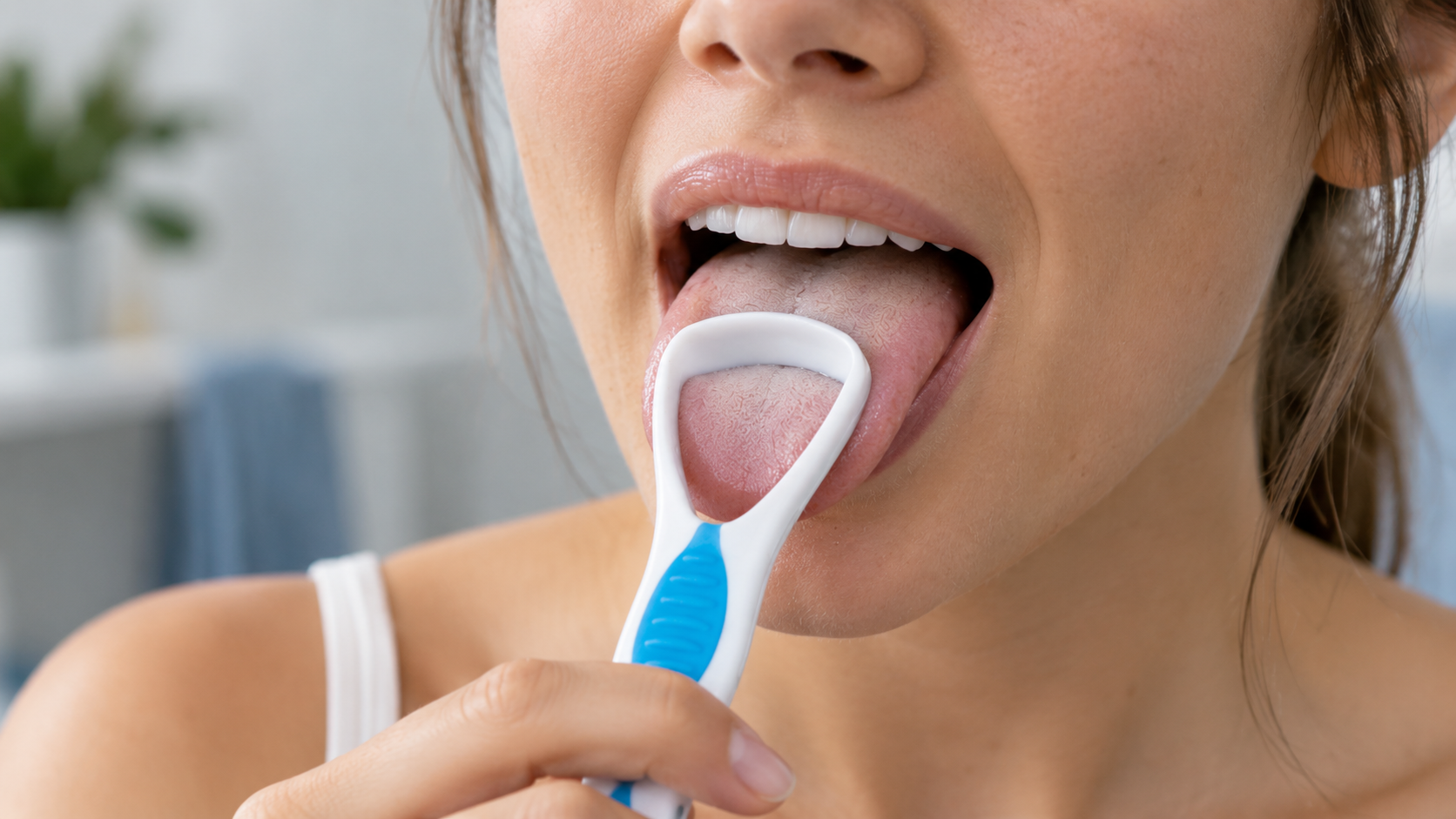
A white tongue is common. The cause is rarely serious. Most cases come from dehydration, mouth breathing, or trapped bacteria. This guide covers the causes, what different patterns mean, and which signs call for a dentist.
TL;DR
A white tongue usually means trapped bacteria, dead skin cells, or a dry mouth.
Dehydration, mouth breathing, and skipped tongue brushing cause most everyday cases.
A tongue scraper, more water, and a soft brush clear mild buildup within days.
Thick patches, pain, or a coating lasting past two weeks need a dentist's exam.
What Does A White Tongue Mean?
A white tongue means something is trapped on the papillae. These are the tiny bumps covering the tongue's surface. Saliva normally washes away food, bacteria, and dead cells caught between them. When that cleaning slows, debris builds up. The tongue then looks white or gray instead of pink.
A thin coating that comes and goes is rarely a problem. Most cases trace back to dehydration, poor hygiene, or tobacco use. A coating that will not scrape off is the version worth a closer look. This matters more if it lasts for weeks.
What Causes A White Tongue?
Several everyday habits can turn a tongue white. A few medical conditions can too. Most clear up once the trigger is addressed.
White Tongue From Dehydration
Saliva depends on fluid intake. Less saliva means less rinsing action on the tongue. A white tongue from dehydration often shows up after poor sleep. A day of coffee with little water has the same effect. Drinking more fluids usually clears it within a day or two.
Poor Oral Hygiene And Mouth Breathing
Skipping tongue cleaning lets bacteria collect in the papillae. Breathing through the mouth overnight dries out the tissue further. Both habits produce the same flat, filmy coating. It shows up most often first thing in the morning.
Is It Oral Thrush?
Thrush is a yeast infection from an overgrowth of Candida. This fungus normally lives in the mouth in small amounts. Antibiotics, a weak immune system, diabetes, and inhaled steroids can trigger that overgrowth. The result is a thick, cottage cheese-like coating. Scraping it can leave the tissue underneath red. Adult cases usually clear within a few weeks of antifungal treatment.
Could It Be Leukoplakia?
Leukoplakia causes thick white patches that will not rub off. Heavy tobacco or alcohol use is the most common trigger. Most patches stay harmless. A small share can turn precancerous over time. The National Institute of Dental and Craniofacial Research lists a white patch as a warning sign. Any patch lasting past two weeks deserves an exam.
Geographic Tongue
This harmless condition creates shifting, map-like patches. They have a white border and a reddish center. The pattern changes shape over days or weeks. Some people notice sensitivity to spicy or acidic foods, though most cases cause no pain.
Smoking And Tobacco Use
Tobacco irritates the papillae and dries out the mouth. Both effects make a white coating more likely. Heavy, long-term use also raises the risk of leukoplakia.
White Tongue With Spots, Bumps, Or Patches
The exact look of a coating often points toward its cause. Location, texture, and whether it wipes away all matter.
A white tongue with spots that are small and scattered often points to early thrush. White tongue patches that are thick and fixed in place lean more toward leukoplakia. An established thrush infection can look this way too, especially when it resists scraping.
White Tongue Bumps On The Side
White tongue bumps on the side areas often come from minor trauma. A bitten tongue, a sharp tooth edge, or a rubbing denture can trigger this. The irritation typically settles within a few days once the cause is removed.
White Tongue On The Back Of The Tongue
The back of the tongue has deeper grooves. A toothbrush rarely reaches them well. A white tongue back of tongue coating is one of the most common patterns. It is also usually the least concerning of the group. A tongue scraper reaches this area more effectively than brushing alone.
White Tongue Pimple Or Blister
A single raised white tongue pimple or white tongue blister is often an irritated papilla. Sometimes it is a small canker sore instead. These usually resolve within a week once the area stays clean.
Does A White Tongue Come With Other Symptoms?
A white tongue rarely shows up alone. What comes with it often narrows down the cause.
A white tongue when you caught a cold, flu, or fever is a common complaint. Reduced fluids, congestion-driven mouth breathing, and fever all dry out the mouth. A white tongue with sore throat points more toward a throat infection. Strep throat and tonsillitis both fit this pattern, especially with fever or pain swallowing. A white tongue and throat pain that sharpens or lingers is worth a same-week appointment. This is especially true after a couple of days.
A white tongue hurts less often than it looks alarming. A white tongue that hurts, or feels tender to the touch, differs from a painless film. A white tongue sore usually signals thrush, an injury, or inflammation. Routine buildup usually causes no pain at all.
Why Do Infants Get A White Tongue?
New parents often notice a white tongue on an infant right after feeding. In babies, most white coatings are milk residue, sometimes called milk tongue. Infants produce little saliva and drink an all-liquid diet.
A gentle wipe with a damp cloth tells the difference. A coating that sits only on the tongue is not thrush. This holds if it also wipes away easily. A thick, cottage cheese-like coating on the cheeks, gums, or palate points to thrush instead. A pediatrician treats it with an antifungal medication.
White Yellowish Tongue
A white yellowish tongue is often the same buildup with a slightly different tint. Food, drinks, or surface bacteria can cause the tint. A yellowish shade can also come from postnasal drip or mild dehydration. A bad taste alongside the color usually responds well to a more thorough cleaning routine. Other shifts, like a brown tongue, follow a similar pattern of buildup and staining.
How Do You Get Rid Of A White Tongue?
Most cases tied to dehydration or mild buildup respond to a few daily changes. A white tongue remedy rarely requires more than consistency.
Drink more water throughout the day to restore saliva flow.
Use a white tongue scraper daily, working from back to front.
Brush the tongue with a soft brush if a scraper is not on hand.
Rinse with a white tongue mouthwash that has mild antibacterial ingredients.
Cut back on tobacco and alcohol, since both dry out the tissue.
Treat the root cause, since an antifungal is the real white tongue cure for thrush.
When Should You See A Dentist?
Most white tongue cases clear within one to two weeks. This happens once the trigger is addressed. A visit is worth scheduling if the coating persists longer, hurts, or will not wipe off. The same goes for a coating paired with a fever that is not improving.
A dentist can usually tell buildup, thrush, and leukoplakia apart with a quick exam. Any finding that needs monitoring gets logged in the patient's dental treatment plan. This keeps follow-up visits on track. Anyone still choosing a provider can check this guide on how to choose a dentist.
Bottom Line
A white tongue is a symptom, not a diagnosis on its own. Dehydration, dry mouth, and skipped tongue cleaning explain most cases. All three respond well to simple fixes at home. Thrush, leukoplakia, and geographic tongue explain most of the rest. Each one has its own pattern and treatment path. A coating that lasts beyond two weeks, hurts, or will not scrape off is a signal. It means it's time to book a dental exam. Other tongue changes, like cracks on the tongue, deserve that same level of attention.
This article is for informational purposes only and does not constitute medical advice. Always consult with qualified healthcare professionals for diagnosis and treatment recommendations specific to your situation.
Frequently Asked Questions
Is a white tongue always a sign of something serious?
No. Most cases trace back to dehydration, mild buildup, or dry mouth. They clear within one to two weeks with better hydration and tongue cleaning.
Can stress cause a white tongue?
Stress does not coat the tongue directly. It can cause dry mouth, mouth breathing, or skipped hygiene. Any of those can lead to a white tongue.
How long does it take for a white tongue to go away?
Simple cases tied to dehydration or buildup often improve within a few days. Thrush and leukoplakia can take longer and usually need specific treatment.
Should I worry about a white tongue with no other symptoms?
Usually not, especially if it comes and goes without pain. A painless coating lasting for weeks is still worth a mention at a checkup.