White Spots On Teeth: Causes, Treatment Options, And Prevention
White spots on teeth are chalky patches that look brighter than the surrounding enamel. They can appear after braces, show up on a child's new tooth, or stay for decades. The...
Written by Agnes Markovic
Read time: 10 min read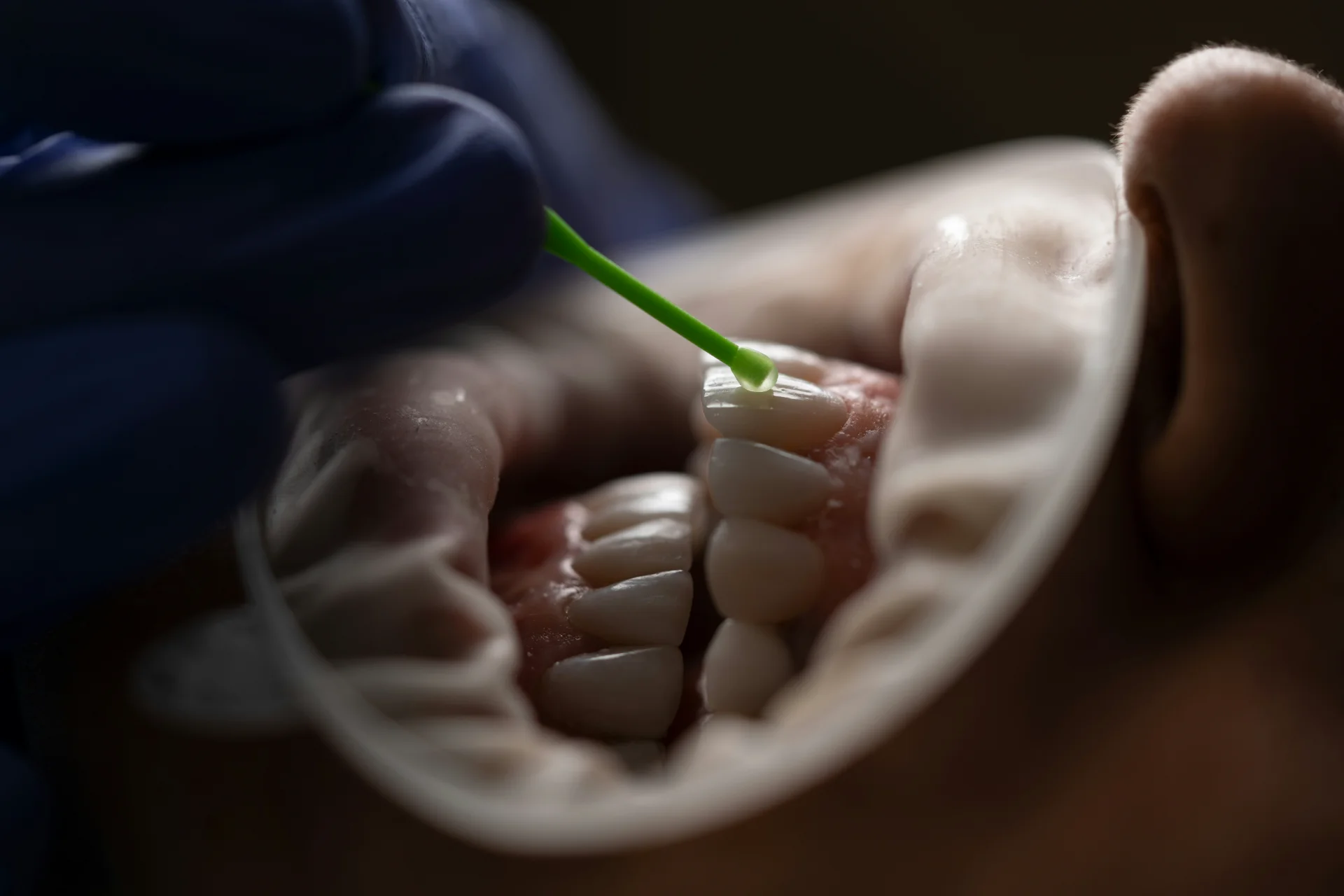
White spots on teeth are chalky patches that look brighter than the surrounding enamel. They can appear after braces, show up on a child's new tooth, or stay for decades. The cause decides the treatment. This article sorts white spots by cause and matches each one to treatments that work.
TL;DR
Early decay, fluorosis, MIH, and enamel hypoplasia cause most white spots.
Fluoride and CPP-ACP can re-harden early decay spots within weeks to months.
Resin infiltration hides most post-braces spots in one visit without drilling.
Bonding or veneers cover deep spots that lighter treatments cannot reach.
What Are White Spots On Teeth?
White spots are areas where enamel has lost its normal translucency. Healthy enamel lets light pass through to the yellower dentin underneath. Porous enamel traps water or air in tiny spaces between its crystals. Light scatters off those pores, and the eye reads the scatter as white.
Sound enamel has a refractive index of about 1.62. Water sits near 1.33, and air sits at 1.0. The larger the mismatch, the whiter the spot looks. This explains why white spots look worse first thing in the morning. A dry tooth swaps water for air in the pores, and the spot brightens.
A white spot is a sign, so the first job is finding its cause. Some spots are active decay that needs care now. Others formed before the tooth erupted and will stay stable for life.
What Causes White Spots On Teeth?
Five causes account for nearly all white spots on teeth. They differ in when they form, where they sit, and whether they can heal. The table sorts them by the clues a dentist checks first.
Cause | When it forms | Typical look and location | Can it reverse? | First-line treatment |
|---|---|---|---|---|
Early decay (demineralization) | After the tooth erupts | Chalky band near the gumline or around old brackets | Yes, while the surface is intact | Fluoride, CPP-ACP, plaque control |
Dental fluorosis | While the tooth forms | Matching white streaks or flecks on both sides of the mouth | No | Often none, or whitening, microabrasion, infiltration |
Molar-incisor hypomineralization (MIH) | While the tooth forms | Sharp-edged white, cream, or yellow patches on first molars and incisors | No | Sealants, fluoride, infiltration, restorations |
Enamel hypoplasia | While the tooth forms | Pits, grooves, or thin areas, sometimes with white edges | No | Monitoring, bonding, crowns |
Dehydration | Within hours | Overall chalky look after sleep, mouth breathing, or whitening | Yes, within hours to days | None needed |
Demineralization And Early Tooth Decay
Demineralization is the earliest visible stage of tooth decay. Plaque bacteria ferment sugars into acid. That acid pulls calcium and phosphate out of the enamel just below the surface.
The outer layer often stays intact while the zone beneath it turns porous. That intact surface is what makes early lesions reversible. Saliva and fluoride can push mineral back through the surface into the weakened zone.
Active and inactive spots look different under a dental light. An active spot looks dull and chalky and feels slightly rough. An arrested spot looks shiny and smooth, and it may never change again.
Dentists check these spots with a ball-ended probe and light pressure. A sharp explorer pushed into a soft spot can break the intact surface. That turns a reversible lesion into a cavity. New spots in an adult who never had them also deserve a question. They often follow a recent change. Common triggers include drying medications, sipped sports drinks, and reflux. Spots that keep growing move into the later stages of tooth decay. At that point, a filling becomes necessary.
White Spots After Braces
Brackets create ledges where plaque can sit for hours. Brushing around wires takes more time, and many patients snack more during treatment.
In a meta-analysis, 45.8% of patients developed new spots during braces or other orthodontic treatments. The upper lateral incisors and canines are frequent targets. The spots often trace the outline of the bracket. The enamel that sat under the bracket stays clean, which leaves a telltale square frame.
Timing matters after the brackets come off. Saliva remineralizes many fresh lesions over the first few months. Dentists often wait about three months before choosing a cosmetic treatment. Photos taken at debonding give a baseline for that check, under the same light and angle. Lesions older than a year or two harden on the surface and respond more slowly.
Some clinicians avoid very high-strength fluoride on fresh spots in the smile zone. Rapid surface hardening can seal the white appearance in before the deeper zone repairs. Regular-strength toothpaste and good plaque control often give a better cosmetic result at this stage. The guide to caring for teeth with braces covers prevention during treatment.
Dental Fluorosis
Dental fluorosis forms when a child swallows too much fluoride while permanent teeth develop. The risk window for front teeth runs from birth to about age 6.
Excess fluoride disrupts the cells that mature enamel. The result is porous enamel with a recognizable pattern. Mild cases show fine white lines or frosty flecks on matching teeth. Severe cases can add brown stain and pitting.
A few details point strongly toward fluorosis. The white lines follow the tooth's horizontal growth lines and fade softly into normal enamel. The cusp tips of premolars often look frosted, a sign dentists call snow-capping. Families often recall fluoride supplements, swallowed toothpaste, or private well water during early childhood.
Fluorosis is common in the United States. According to various studies, about 41% of adolescents aged 12 to 15 have fluorosis. Most of those cases were very mild. These spots are stable and do not progress. The glossary entry on dental fluorosis covers grading and management in more detail.
Molar-Incisor Hypomineralization (MIH)
MIH is a developmental defect of the first permanent molars, often with the front teeth involved. One meta-analysis estimated its global prevalence at 13.5%.
MIH patches have sharp, well-defined borders. Their color ranges from white and cream to yellow and brown. Affected enamel is soft and prone to breakdown, cavities, and sensitivity. Darker patches tend to be softer and more likely to crumble under chewing.
On front teeth, MIH spots often sit deep in the enamel. That depth limits what surface treatments can reach. Many patients also report sensitivity to cold air and brushing, even on teeth that look intact.
A cream or yellow patch on an incisor calls for a careful look at the molars. Those molars may already be breaking down under plaque or an old sealant. Children with sensitive MIH molars often avoid brushing them, which speeds decay. Affected molars are also harder to numb. Dentists may plan longer visits or extra anesthesia.
Enamel Hypoplasia
Enamel hypoplasia is a developmental defect in which a tooth forms with too little enamel. It appears as pits, grooves, or thin areas present from the day the tooth erupts. The guide to enamel hypoplasia covers its causes, diagnosis, and treatment.
Temporary White Spots From Dehydration
Some white spots fade on their own within hours. Enamel loses water during sleep, mouth breathing, or a long dental visit.
Dentists account for this at the chair. Shade checks and photos happen early in a visit, before the teeth dry out. A rubber dam dries teeth within minutes, and every white spot then looks worse.
Whitening gels also dry the enamel. Existing spots can look brighter for a day or two after bleaching. They fade once saliva rehydrates the tooth. A spot that lasts more than a few days after teeth whitening has another cause.
How Dentists Tell White Spots Apart
Color alone rarely identifies the cause. Dentists combine the look of the spot with its location, texture, and history. These are the clues that carry the most weight.
When the spot first appeared, at eruption or later
Whether matching teeth on both sides show the same pattern
Whether the border is blurred or sharp
Whether the surface feels smooth, rough, or soft
Where the spot sits relative to the gumline and old bracket positions
Childhood fluoride sources, such as supplements or well water
Drying the tooth for a few seconds is a simple depth test. A spot that disappears when wet and returns when dry is usually shallow. A spot visible on a wet tooth usually runs deeper. Transillumination with a bright light shows depth more precisely. It also helps predict how well infiltration will work.
Symmetry is another strong clue. Fluorosis almost always shows on matching teeth on both sides of the mouth. MIH and injury-related defects often affect one tooth while its partner looks normal.
Professional Treatment Options For White Spots On Teeth
Treatment depends on the cause, the depth of the spot, and whether decay is active. Most dentists start with the least invasive option and step up only when needed. The table compares the main options.
Treatment | Best for | Enamel removed | Typical visits | Main limit |
|---|---|---|---|---|
Fluoride varnish and CPP-ACP | Active early decay | None | Several over 3 to 6 months | Slow, may leave a faint mark |
Resin infiltration | Post-braces spots, mild fluorosis, white MIH | About 40 µm per etch cycle | One | Less predictable on deep or yellow-brown spots |
Microabrasion | Shallow fluorosis and surface stains | A thin surface layer | One | Cannot reach deep spots |
Whitening | Blending mild spots with surrounding enamel | None | One to several | Spots may look brighter for a few days |
Composite bonding | Deep spots and hypoplasia | Little to none | One | Can stain and chip over time |
Porcelain veneers | Severe or widespread defects | A thin facial layer | Two | Enamel removal is permanent |
Patients with several affected teeth often need a staged dental treatment plan. Remineralization comes first, and cosmetic steps follow only if spots remain. This order avoids removing enamel from spots that would have faded on their own.
Fluoride And Remineralization Therapy
Remineralization is the first step for active early decay. Professional fluoride varnish delivers a high dose straight to the spot, usually every three months.
Fluoride helps saliva rebuild crystals that resist acid better than the original enamel. CPP-ACP pastes add extra calcium and phosphate for the rebuild. The MI Paste review explains when this product adds value over fluoride alone.
Remineralization stops active decay, though the mark can stay visible. Fluoride hardens the outer surface first. That hard surface can seal porosity underneath, leaving a stable white spot. Infiltration can then hide what remains.
Resin Infiltration (Icon)
Resin infiltration fills the pores of a white spot with a thin, light-cured resin. The resin bends light much as enamel does, so the spot blends in.
The dentist etches away the outer layer, dries the lesion, and lets the resin soak in. No drilling or anesthesia is needed. Various studies found that infiltration hid spots better than fluoride varnish alone.
A helpful step comes before the resin goes on. The dentist wets the etched spot with ethanol, which previews the final result. A spot that disappears under ethanol will usually stay hidden after curing. A spot that lingers needs another etch cycle first.
The true result shows a day or more later, once the teeth rehydrate. The resin does not show on X-rays. A clear chart note prevents later confusion with decay.
Results depend on the cause. Recent post-braces spots respond best. Fluorosis often needs extra etch cycles. MIH spots usually improve only partly, since the defect sits deeper than the resin can reach. The Icon resin infiltration review explains case selection and the chairside protocol.
Enamel Microabrasion
Microabrasion removes a very thin layer of stained or opaque enamel. The dentist rubs a mild acid and abrasive paste over the spot in short cycles.
It works best on marks confined to the outer enamel, such as mild fluorosis. Front teeth carry only about 1 millimeter of facial enamel. Dentists limit the number of cycles for that reason. A spot that persists after several cycles usually runs too deep for this method. Infiltration or bonding then becomes the better choice.
Professional Teeth Whitening
Whitening lightens the surrounding enamel so white spots stand out less. The spot itself stays in place.
Bleaching dehydrates enamel, so spots look brighter for a day or two afterward. Dentists often whiten first and infiltrate or bond about two weeks later. That pause lets the final shade settle. Bond strength to freshly bleached enamel also drops for a short period after whitening. The KoR teeth whitening review covers one in-office system in detail.
Dental Bonding
Dental bonding covers a white spot with tooth-colored composite resin. It suits spots too deep for infiltration and defects with missing enamel.
For decay-related spots, the dentist removes the weak enamel first. This step lets the resin bond to sound tooth. Fluorosis and hypoplasia spots can often be bonded with little or no preparation. Composite lasts about five to ten years and picks up stain from coffee and tea.
A bright white spot can show through a thin layer of tooth-colored resin. Dentists often place a thin opaque layer over the spot first. A more translucent enamel shade then goes on top to match the neighboring teeth.
Porcelain Veneers
Veneers cover the entire front surface of a tooth with thin ceramic. They suit severe fluorosis or widespread defects that conservative care cannot hide.
Placement usually removes a thin layer of enamel, so the choice is permanent. Very bright spots can show through thin ceramic. The lab may use a more opaque ceramic, or the dentist may reduce the spot slightly. Porcelain resists stain better than composite and often lasts 15 years or more. The guide to veneers cost breaks down prices by material and state.
White Spots On Children's Teeth
White spots on a child's teeth need a closer look than on an adult's. Baby teeth have thinner enamel, so early decay moves faster.
A white band along the gumline of upper baby teeth signals early decay. It often links to bedtime bottles or frequent sipping. A spot present on a new permanent tooth from day one points to a developmental cause. MIH, fluorosis, and hypoplasia are the usual suspects.
Children under 3 need only a smear of fluoride toothpaste the size of a rice grain. Children aged 3 to 6 need a pea-sized amount. Supervised brushing keeps fluoride working while limiting what a child swallows.
Parents can run a simple monthly check called lift the lip. Gently raising the upper lip shows the gumline of the front teeth. A new chalky line there is worth a dental visit within a few weeks. The guide to cavities in baby teeth shows the early warning signs.
Home Remedies To Avoid
Several popular home fixes do more harm than good on white spots. Most of them attack enamel that is already weak.
Lemon juice and apple cider vinegar dissolve enamel and can create new spots
Baking soda scrubs wear the surface without reaching the porous layer
Charcoal powders are abrasive and can roughen enamel
Oil pulling has no evidence for removing white spots
Whitening strips can make spots look brighter in the short term
A fluoride toothpaste and steady habits do more than any scrub. The article on whitening teeth naturally at home reviews which home methods hold up.
How To Prevent White Spots On Teeth
Prevention targets the one cause that stays under daily control, which is decay. Developmental spots cannot be prevented once a tooth has formed.
Brush twice a day with toothpaste containing 1,000 to 1,450 ppm fluoride
Spit after brushing and skip the water rinse
Keep sugary drinks and snacks to mealtimes
Clean around brackets after every meal during braces
Ask about fluoride varnish during orthodontic treatment
Supervise toothpaste amounts for children under 6
Patients with braces benefit from a brush designed for brackets. The guide to the best toothbrush for braces compares options. A fluoride toothpaste with 1,450 ppm suits most adults and older children.
When To See A Dentist About White Spots
A stable white spot is rarely urgent. Some changes point to active decay and need a prompt exam.
A spot grows, softens, or turns yellow or brown
The spot feels rough or sticky
Cold or sweet foods cause sensitivity near the spot
New spots appear after braces come off
A child's new tooth erupts with patches or pits
Early exams keep treatment simple. A spot caught while its surface is intact can often heal with fluoride alone.
Bottom Line
White spots on teeth come from early decay, fluorosis, MIH, enamel hypoplasia, or dehydration. The cause decides the treatment. Fluoride can heal active early decay. Resin infiltration hides many stable spots without drilling. Deeper defects need bonding or veneers. An exam that checks timing, location, and texture is the fastest route to the right fix.
Frequently Asked Questions
Are white spots on teeth a sign of cavities?
Sometimes. A chalky spot near the gumline or around old brackets is often early decay. A spot present since the tooth erupted is usually developmental. A dentist checks texture and location to tell them apart. The guide to tooth decay stages shows how an early spot progresses.
Can white spots on teeth go away on their own?
Some can. Spots from dehydration fade within hours. Fresh spots after braces often shrink over the first few months as saliva remineralizes them. Spots from fluorosis, MIH, or enamel hypoplasia form during development and stay unless treated.
How do dentists remove white spots after braces?
Most dentists wait about three months after debonding and use fluoride in the meantime. Spots that remain can be hidden with resin infiltration in a single visit. Deep or long-standing spots may need microabrasion or bonding.
Does whitening get rid of white spots on teeth?
Whitening blends mild spots by lightening the enamel around them. Spots often look brighter for a day or two after bleaching, then settle. Whitening before infiltration gives the most even final shade. The guide to safe teeth whitening covers the options.
Are white spots on teeth caused by calcium deficiency?
Rarely. Most white spots come from local acid attacks or from defects that formed in childhood. Severe nutritional deficiency in early life can contribute to developmental defects. A calcium supplement will not remove an existing spot. Fluoride and MI Paste help with early decay spots.
Can toothpaste fix white spots on teeth?
Fluoride toothpaste can harden early decay spots and stop them from growing. It cannot change spots caused by fluorosis or other developmental causes. Some patients add a nano-hydroxyapatite toothpaste for extra surface support.
Why do white spots look worse in the morning?
Enamel loses water overnight, especially with mouth breathing. Air replaces water in the pores of a white spot, and air scatters more light. The spot looks brighter until saliva rehydrates the tooth, usually within an hour or two.