Tooth Abscess: Signs, Causes, And Treatment
A tooth abscess is a pocket of pus that forms when bacteria infect a tooth. It sits at the tip of a root or in the gum beside the tooth. Left alone, it will not heal, and the...
Written by Rachel Thompson
Read time: 5 min read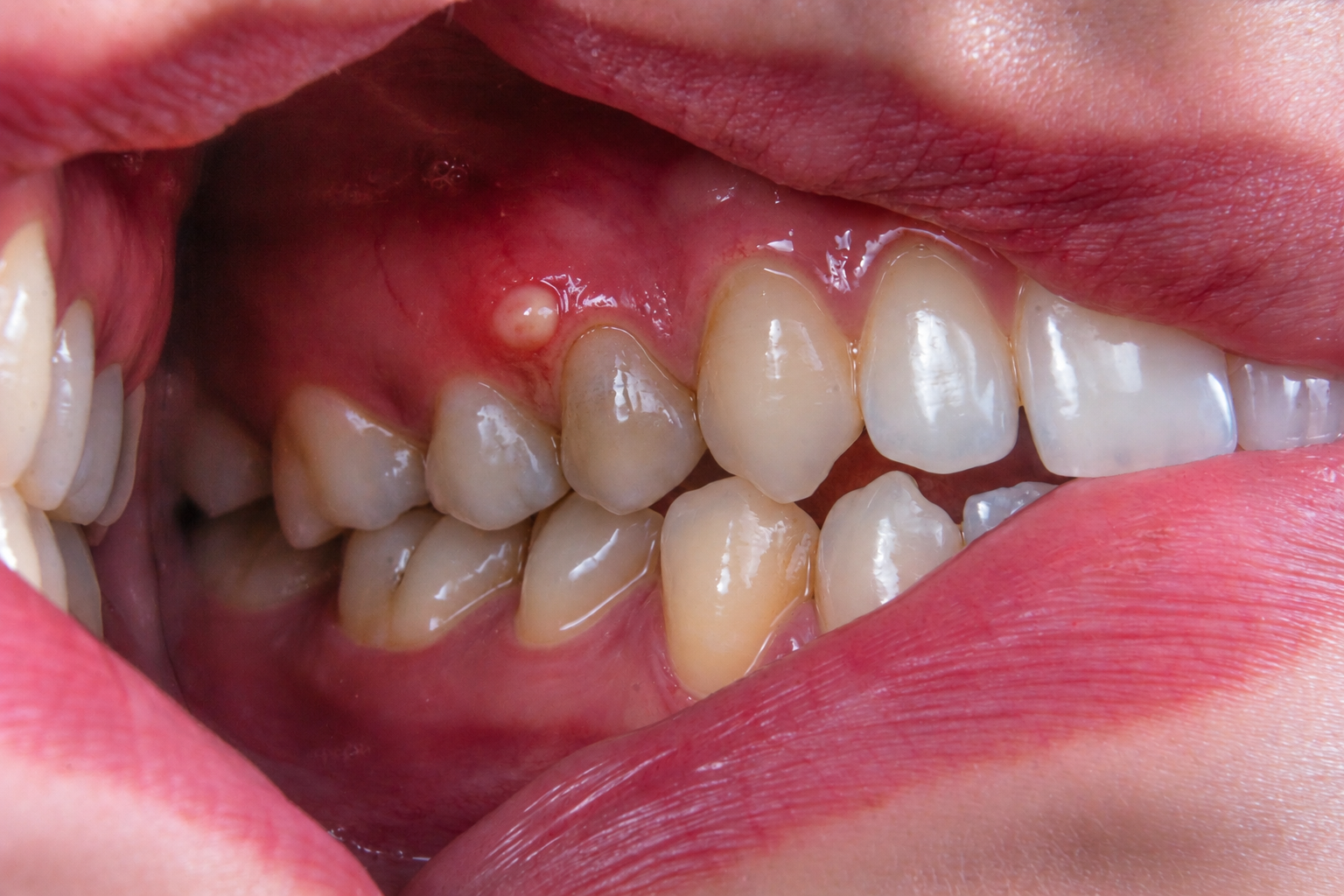
A tooth abscess is a pocket of pus that forms when bacteria infect a tooth. It sits at the tip of a root or in the gum beside the tooth. Left alone, it will not heal, and the infection can spread into the jaw and face. Below, you will see how it forms, what it looks like, and how dentists treat it.
TL;DR
Bacteria cause a tooth abscess once they reach the tooth pulp or a deep gum pocket.
A dentist cures it with drainage plus a root canal or an extraction.
Salt water, cold packs, and pain relievers ease symptoms for a day or two.
Facial swelling with fever or trouble breathing needs emergency care right away.
What Is A Tooth Abscess?
A tooth abscess is a sealed pocket of pus that forms next to a tooth. The pus is a mix of bacteria, dead white blood cells, and broken-down tissue. Dentists also call the condition a dental abscess or an abscessed tooth.
Because the pocket has nowhere to drain, it presses hard on bone and nerve endings. That trapped pressure creates the deep, throbbing pain patients describe. Any dentist will tell you that a dental abscess does not go away on its own.
When A Tooth Abscess Becomes An Emergency?
Call 911 or go to an ER if a tooth abscess brings any of these signs:
Swelling spreading toward the eye, down the neck, or under the tongue.
Trouble breathing, swallowing, or opening your mouth.
A fever with facial swelling.
Confusion, a racing heart, or feeling very unwell.
These signs point to a spreading infection that can close the airway.
What Are The Three Types Of Dental Abscess?
Dentists name an abscess after where it starts, and that location also shapes treatment.
Periapical abscess forms at the tip of the root after bacteria kill the pulp
Periodontal abscess forms in the gum and bone beside the root, usually from gum disease
Gingival abscess stays in the surface gum, often from a trapped seed or popcorn hull
Periapical abscesses are the most common of the three types. A periodontal abscess often sits beside a living, healthy nerve. In that case, a gum cleaning may solve the problem without a root canal.
How Does A Tooth Abscess Form?
A periapical abscess develops over weeks, months, or even years, with warning signs at each stage.
Decay breaks through the enamel, usually without pain.
Decay reaches the softer dentin, and cold or sweet foods start to sting.
Bacteria enter the pulp, and the nerve swells and throbs, often at night.
The pulp dies, and the pain may fade for a while.
Infection leaves the root tip, and pus collects in the jawbone.
Pus tunnels outward, forming a gum boil or a swollen cheek.
The pulp sits inside rigid walls of dentin, so swollen tissue has no room to expand. Pressure builds quickly in that sealed space and often causes severe pain, as StatPearls explains.
Stage six often brings a surprising sense of relief, because the drainage channel vents the pressure. Dentists call this channel a sinus tract. It lets a chronic abscess sit quietly for months while it erodes the surrounding bone.
Why Did I Get A Tooth Abscess?
An abscess starts when bacteria reach tissue that is normally sealed off. Most cases trace back to a handful of causes and risk factors.
What Are The Most Common Causes?
Any break in the tooth or gum seal can let bacteria in. These are the most frequent entry points.
Deep cavities that reach the pulp
Cracked or chipped teeth, including hairline cracks from grinding
A hard blow to a tooth, even without a visible break
Gum disease with deep pockets around the roots
Leaking or broken fillings and crowns
A partly erupted wisdom tooth that traps food under the gum
A tooth hit years ago can slowly lose its blood supply, which surprises many patients. The pulp dies without symptoms, and the abscess appears long after the injury is forgotten. A front tooth that gradually turns gray is often the first clue. An impacted wisdom tooth can also trap bacteria under its gum flap and start an infection.
Who Is More Likely To Get A Tooth Abscess?
Some habits and health conditions raise the odds of infection, and they often appear together.
Brushing less than twice a day or skipping cleaning between teeth
Frequent sugary snacks and drinks
Dry mouth from medications, stress, or conditions such as Sjögren syndrome
Smoking or vaping
Diabetes or a weakened immune system
Missed dental checkups
Saliva neutralizes acid and rinses bacteria off the teeth throughout the day. People with chronic dry mouth lose much of that protection and develop decay faster. Together with poor hygiene and a sugary diet, it ranks among the main risk factors.
What Are The Symptoms Of A Tooth Abscess?
Pain is the most common sign, and its pattern shifts as the infection spreads.
Constant, throbbing toothache that may spread to the jaw, ear, or neck
Sharp pain when biting or tapping on the tooth
Lingering sensitivity to hot or cold
A bad taste or foul breath that returns after brushing
Red, swollen gums or a pimple-like bump near one tooth
Swelling in the cheek, jaw, or under the chin
A tooth that feels loose or feels "high" when biting
Fever, fatigue, and tender lymph nodes under the jaw
Pain from hot drinks that eases with cold water is a classic sign of a dying pulp. A tooth feels high because pus under the root lifts it slightly out of its socket. When an abscess ruptures, a sudden salty, foul-tasting rush fills the mouth.
Why Can The Pain Suddenly Stop?
Pain that vanishes overnight feels like good news. It usually means one of two things.
The nerve inside the tooth may have died and stopped sending pain signals. The abscess may also have burst and drained, which releases the pressure. In both cases, the bacteria remain, and the infection keeps spreading after the pain stops.
What Does An Abscessed Tooth Look Like?
An abscessed tooth looks different at each stage, and early ones may show no visible sign.
The classic sign is a small bump on the gum near one tooth's root. It may look red or carry a white or yellow head like a pimple or boil. Pressing it can release pus and leave a salty taste in the mouth.
Look for these visible signs in a mirror under good light:
A pimple-like bump on the gum, often called a gum boil
Red, shiny, swollen gum tissue around one tooth
A tooth that looks darker or grayer than its neighbors
Swelling of the cheek, lip, or jaw on one side
Pus seeping at the gumline, common with a periodontal abscess
An early periapical abscess may show nothing in the mouth. On an X-ray, it appears as a dark shadow at the root tip. That shadow marks bone that the infection has already dissolved.
What Else Can Look Like An Abscess?
Several harmless spots look similar at first, and only an exam and X-ray tell them apart.
A canker sore is flat and white with a red border, and it never drains pus. A mucocele is a soft, bluish bubble, usually on the inner lip. Food wedged under the gum can also cause a brief, tender swelling. Gingivitis causes gum swelling across several teeth, while an abscess usually centers on one.
What Is The Treatment For Dental Abscesses?
Every treatment for dental abscesses has two jobs: draining the pus and removing the source of infection. The visit starts with an exam, a tap test, a cold test, and an X-ray. Together, these tests show which tooth is the source and whether its nerve is still alive.
How Does Incision And Drainage Work?
Drainage gives the fastest relief from pressure and pain. The visit follows a short, predictable sequence.
The dentist numbs the swollen area with a local anesthetic.
A small cut opens the abscess, and the pus flows out.
The pocket is flushed with sterile saline.
A small rubber drain may stay in place for a day or two.
You return for a root canal or an extraction to remove the source.
Drainage alone will not stop the abscess from coming back, so the tooth still needs treatment.
How Does A Root Canal Save The Tooth?
A root canal clears the infection while keeping the natural tooth. The dentist opens the crown, removes the infected pulp, and shapes each canal with fine files. Pus often drains through the tooth during this step, which brings quick relief. After disinfection, the canals are sealed with a rubber-like material called gutta-percha. Most back teeth then need a crown to prevent fractures. Our root canal cost guide breaks down prices by tooth type and state.
Mild soreness for a few days is normal, and our article on managing discomfort from root canal treatment explains what to expect. If an abscess returns after a root canal, retreatment or an apicoectomy can often save the tooth.
When Is Tooth Extraction Needed?
Extraction removes the source when a tooth cannot be saved, usually for one of these reasons:
A split or vertically fractured root
Severe bone loss around the tooth
Too little tooth structure left to restore
A failed root canal that retreatment cannot fix
The socket drains once the tooth is out, and pressure drops quickly. Healing then follows the usual tooth extraction healing stages. A missing back tooth lets its neighbors drift and tilt over time. A bridge or an implant prevents that, and our guide explains how much dental implants cost.
Do You Need Antibiotics For A Tooth Abscess?
Antibiotics help in specific situations. They cannot reach bacteria sealed inside a dead tooth.
Most dental professionals follow the American Dental Association guideline on this point. It advises against antibiotics for healthy adults who can get dental treatment. Dentists add them when infection spreads, a fever develops, or immunity is weak. Amoxicillin or penicillin V are the usual first choices. Take antibiotics exactly as your dentist directs, and never use leftover pills from an old prescription.
How Is A Periodontal Abscess Treated?
A gum abscess starts in a deep pocket between a tooth and gum, and treatment follows this order.
The dentist numbs the area and drains the pocket.
The root surface below the gumline is scraped clean.
The root is smoothed so the gum can reattach.
Severe cases may need gum surgery to reduce the pocket depth.
Steps two and three form a deep cleaning called scaling and root planing. A root canal is usually unnecessary when the nerve tests healthy.
How Much Does Tooth Abscess Treatment Cost?
The table lists typical US prices without insurance, which vary by tooth and provider.
Treatment | Typical cost without insurance | Details |
|---|---|---|
Emergency exam or after-hours fee | $100–$250 | Often covered under diagnostic benefits |
Dental X-ray | $25–$250 | Periapical or panoramic image |
Root canal, front tooth | $600–$1,100 | One canal, simplest case |
Root canal, premolar | $700–$1,300 | One or two canals |
Root canal, molar | $1,000–$1,800 | Three or four canals |
Dental crown | $900–$2,500 | Needed after most back-tooth root canals |
Simple extraction | $75–$400 | Visible tooth, no incision |
Surgical extraction | $180–$800 | Broken or buried tooth |
ER visit for a dental problem | $1,200 or more | Usually ends with a referral to a dentist |
Insurance usually covers 50–80% of a root canal after the deductible. Dental school clinics and community health centers often charge 30–60% less than private offices. Our guides to tooth extraction cost and dental crown cost break prices down by state. Early care saves money, since a root canal costs less than an extraction plus an implant.
How Do You Get Rid Of A Tooth Abscess?
Only professional care gets rid of a tooth abscess, ideally at a same-day or next-day visit.
Call a dentist and describe the pain, swelling, and any fever.
Expect an exam, simple nerve tests, and an X-ray of the area.
The dentist drains the abscess or opens the tooth to release pus.
Return to finish the root canal, crown, or extraction.
Keep the follow-up visit, even if the pain has faded.
If you have no regular dentist, urgent clinics and dental schools often see patients in pain. Community health centers offer the same care on a sliding fee scale. Parents can also review the signs a child needs emergency dental care. For ongoing care afterward, our guide on how to choose a dentist can help.
Can You Drain A Tooth Abscess At Home?
You should not try to drain a tooth abscess at home, even when pain peaks at night. Guides on how to drain a tooth abscess at home skip one fact: the source stays untouched. Every home method also carries a real risk of spreading the infection.
Why Might Home Drainage Be Dangerous?
Popping the bump treats the surface, while the source stays inside the tooth or gum pocket.
The pocket refills within days because the infected pulp keeps feeding it
Needles, pins, and blades push bacteria deeper into the tissue
Squeezing can force infection into the bloodstream or nearby spaces
A cut can hit blood vessels or nerves close to the roots
Short relief hides a spreading infection and delays real treatment
The tooth's location adds a second layer of danger. Upper teeth sit close to the sinuses and to veins that drain around the eye. Lower molar infections can track into the floor of the mouth and the neck. StatPearls describes spread into these deep neck spaces as a serious risk.
What Should You Do If It Bursts On Its Own?
A rupture brings a salty rush and quick relief, and warm rinses keep the site draining. Rinse several times a day gently without squeezing or pressing on the area. Book a dental visit within a day or two, since the root remains infected.
How Can You Relieve Tooth Abscess Pain At Home?
These steps ease pain and swelling until the appointment. None of them removes the infection.
Which Home Remedies Are Safe?
These simple measures cut swelling and help you sleep for a day or two.
Rinse with warm salt water, half a teaspoon of salt in 8 ounces of water
Hold a cold pack on the cheek for 10 to 20 minutes at a time
Take ibuprofen or acetaminophen exactly as the label directs
Eat soft food and chew on the opposite side
Sleep with your head raised on an extra pillow
Brush gently with a soft brush and skip flossing around the sore tooth
Dentists often recommend a thin cloth between the cold pack and your skin. Check with a pharmacist before combining pain relievers or taking them with blood thinners. The same applies if you have kidney or stomach problems.
What Should You Avoid?
Some popular remedies make things worse, so skip these while you wait for care.
Aspirin placed directly on the gum, which burns the tissue
Heat packs on the face, which can draw swelling outward
Leftover or borrowed antibiotics
Alcohol or undiluted essential oils on raw tissue
Numbing gels used as a reason to delay the visit
Benzocaine numbing gels calm the gum surface briefly but never reach infection at the root tip.
Should You See A Dentist Or Go To The ER?
See a dentist within 24 hours for any suspected abscess, unless emergency signs appear first.
When Is A Dental Visit Enough?
Most abscesses can be handled in a dental chair, so book the first available appointment for these signs:
Throbbing pain or pain when biting
A gum boil or small swelling near one tooth
A bad taste that keeps coming back
Pain that stopped after days of throbbing
When Should You Go To The Emergency Room?
Call 911 or go to an ER when infection spreads past the tooth, shown by these signs:
Swelling that spreads to the eye, neck, or floor of the mouth
Trouble swallowing, breathing, or speaking
Fever above 100.4°F with facial swelling
A jaw so stiff the mouth will not open
Confusion, a fast heartbeat, or severe weakness
Fever and facial swelling call for an ER visit when a dentist is unreachable. The ER secures the airway and treats the spreading infection, but rarely the tooth itself. Plan a dental visit right after discharge to remove the source.
What Happens If A Tooth Abscess Goes Untreated?
An untreated abscess rarely stays small, since infection follows the easiest path through bone and tissue.
Bone loss around the root and loosening of nearby teeth
Loss of the infected tooth
Sinus infection from upper back teeth
Cellulitis, a spreading infection of the face or neck tissue
Ludwig's angina, a swelling under the tongue that can block the airway
Sepsis, a body-wide reaction to infection
These outcomes are uncommon with prompt care, yet each week of delay raises the risk. Published reports put mortality near 40% once infection descends into the chest cavity.
How Can You Prevent A Tooth Abscess?
Most abscesses start with decay, cracks, or gum disease, and good habits catch all three early.
Brush twice a day with fluoride toothpaste
Clean between teeth once a day with floss or interdental brushes
Limit sugary drinks and snacks between meals
Wear a mouthguard for contact sports
Treat cracks, cavities, and failing fillings early
Keep checkups and X-rays on schedule
Nighttime grinding cracks teeth over years, and a night guard for teeth grinding absorbs that force. Our guide on how to prevent cavities and protect your teeth covers each daily habit in detail.
Bottom Line
A tooth abscess needs a dentist, and home care only buys you time. Drainage brings fast relief, while a root canal or an extraction removes the source for good. Salt water rinses, cold packs, and pain relievers can ease symptoms for a day or two. Draining it yourself adds risk and delays real care. Facial swelling with fever, or any trouble breathing, needs an emergency room right away.
This article is for informational purposes only and does not constitute medical advice. Always consult with qualified healthcare professionals for diagnosis and treatment recommendations specific to your situation.
Frequently Asked Questions
Can a tooth abscess go away on its own?
A tooth abscess will not go away on its own. Swelling may shrink after a rupture, but bacteria stay behind until a dentist removes the source.
Will antibiotics get rid of a tooth abscess?
Antibiotics alone will not get rid of it. They slow a spreading infection but cannot clean out a dead pulp or deep gum pocket. Drainage, a root canal, or an extraction is still required.
How long can a tooth abscess go untreated?
There is no safe waiting period. Some abscesses stay quiet for months, and others spread within days. See a dentist within 24 hours of symptoms. It's always best to visit a dental professional and understand the root cause of the tooth abscess.
What happens if a tooth abscess bursts?
Expect a salty, foul taste followed by quick pain relief. Rinse with warm salt water and see a dentist soon, since the source of the infection remains, and schedule a dentist visit.
Is a tooth abscess contagious?
An abscess does not spread from person to person. Decay-causing bacteria can pass through shared spoons or kissing, often from parent to baby.
How long does a tooth abscess take to heal after treatment?
Pain usually drops within a day or two of drainage. Swelling fades over several days. Bone around the root can take six months to a year to fill in.