Angular Cheilitis: Why It Happens and How A Dentist Treats It
Angular cheilitis is cracking and soreness at the corners of the mouth. It usually comes from more than one cause at once. This guide covers what causes it and how it differs from...
Written by Agnes Markovic
Read time: 5 min read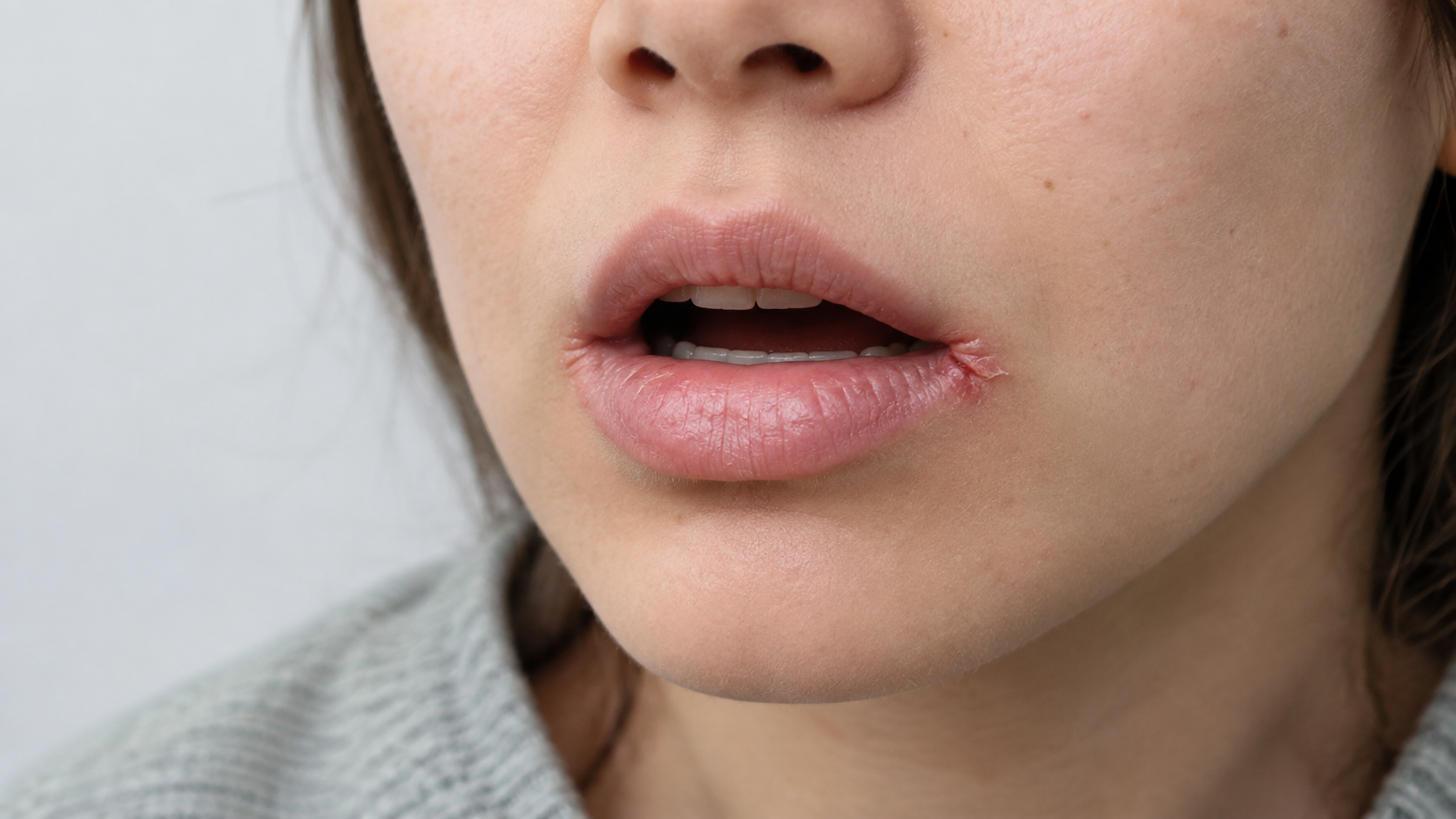
Angular cheilitis is cracking and soreness at the corners of the mouth. It usually comes from more than one cause at once. This guide covers what causes it and how it differs from a cold sore. It also covers whether it spreads to others and which treatments actually work.
TL;DR
Angular cheilitis is cracking and irritation at the corners of the mouth, often from more than one cause
Ill-fitting dentures, vitamin deficiency, and constant moisture are the most common triggers
It is not itself contagious, though an underlying cold sore or bacterial infection can spread
Treatment usually combines an antifungal or antibacterial cream with a barrier ointment
What Is Angular Cheilitis?
Angular cheilitis is inflammation and cracking at the corners of the mouth, where the moist inner lip meets the drier skin of the face. Dentists also call it perleche, angular stomatitis, or cheilosis, all names for the same condition.
The corners of the mouth take constant mechanical stress from talking, chewing, and smiling. That stress, plus trapped saliva, breaks down skin faster than most other facial areas.
What Does Angular Cheilitis Look Like?
The visible signs stay fairly consistent from patient to patient, even though the underlying cause varies widely. Recognizing the pattern early makes treatment faster.
Painful cracks or fissures that worsen when opening the mouth wide
Redness in lighter skin, or a paler, sometimes darker-rimmed patch in deeper skin tones
Blistering, oozing, or crusting right at the corners
Usually appears on both sides at once, though one side alone is possible
Bleeding when the crack stretches during talking or eating
Most cases stay limited to the corners themselves. Spreading beyond that area, or symptoms that do not improve within two weeks, are signs worth the closer look covered later in this guide.
What Causes Angular Cheilitis?
Most patients assume a single cause, usually chapped lips. In practice, angular cheilitis almost always comes from mechanical, microbial, and nutritional factors working together.
Ill-Fitting Or Worn Dentures
Denture wearers make up a large share of the cases seen in a dental chair. The mechanism is mechanical, not just a hygiene issue.
Worn or old dentures lose height over years of grinding down. That lost height lets the jaw close further than it should at rest, a well-documented risk factor called reduced vertical dimension.
That over-closure deepens the folds at the corners of the mouth. Saliva pools in those deeper folds instead of draining away, and the skin stays damp all day.
A denture reline, or a full replacement, often clears the cracking within weeks, faster than any cream alone. The guide to flexible dentures covers when a reline makes sense versus a new set entirely.
A properly fitted denture paired with the right adhesive also cuts down on slipping that worsens those folds. The guide to the best denture adhesive covers options for a more secure, stable fit.
Braces, Retainers, And Clear Aligners
Orthodontic patients develop angular cheilitis more often than most people expect. The mechanism differs from the denture cases above.
Appliances change how saliva flows and pools in the mouth. That shift lets Candida, the yeast behind most cases, colonize the corners of the mouth more easily than usual.
This pattern shows up often enough in practice to become predictable. A patient returns within days of a new appliance, retainer, or aligner tray, reporting sore, cracked corners that were not there before.
Switching to a gentler brush during treatment reduces irritation elsewhere in the mouth while the corners heal. The guide to the best toothbrush for braces covers softer options worth using during this stretch.
Retainer wearers see the same pattern. The Essix retainer guide covers how a poorly fitting retainer changes saliva flow the same way an active appliance does.
Vitamin And Nutritional Deficiency
A handful of specific deficiencies show up again and again in patients with recurring angular cheilitis. General poor nutrition is rarely the real story.
Vitamin B2, B3, B6, and B12, along with iron, are worth checking first. Low levels of any of these weaken the skin's ability to repair itself at the corners of the mouth.
Patients who cut back on meat, dairy, or a broad diet for any reason are worth asking about directly. A diet history often reveals the cause faster than a swab or a cream trial.
Older adults on restricted diets and anyone recovering from bariatric surgery deserve a closer look here too. Both groups run a higher risk of the specific deficiencies tied to recurring cases.
Excess Moisture And Lip Licking
Saliva is the common thread running through nearly every cause above. The corners of the mouth were not built to stay wet all day.
Licking the lips to relieve dryness adds more moisture, then more dryness once it evaporates. That cycle keeps the area cracked longer than it would stay on its own.
Children who suck their thumbs show the same pattern for the same reason. Breaking either habit, even partially, speeds up healing more than most people expect.
Underlying Infection
Candida albicans drives most cases, present in a large majority of patients tested.
Staphylococcus aureus often joins in as a second organism. Less often, the herpes simplex virus is involved instead, which is exactly why the cold sore question below matters.
Testing is not always necessary. A dentist can often identify the likely organism from the appearance and pattern alone, saving a swab for cases that do not respond to a first round of treatment.
Angular Cheilitis Vs. Cold Sore: How Can You Tell The Difference?
Patients confuse the two more often than almost any other mix-up in this part of the mouth. The two conditions look similar at a glance and need different treatment.
Feature | Angular cheilitis | Cold sore |
|---|---|---|
Location | Corners of the mouth only | Anywhere on or around the lips |
Cause | Fungal, bacterial, or mechanical | Herpes simplex virus specifically |
Appearance | Cracking, fissures, redness | Fluid-filled blisters that crust over |
Contagious | Not directly, unless HSV is involved | Yes, highly contagious |
Typical trigger | Dentures, appliances, deficiency | Stress, illness, sun exposure |
A crack confined strictly to the corners points toward angular cheilitis. Blisters anywhere else on the lip point toward a cold sore instead. When the picture looks mixed, a same-day dental visit settles it faster than guessing at home.
Is Angular Cheilitis Contagious?
This is the question that brings most people to search for answers at midnight. The honest answer needs some nuance, not a flat yes or no.
Angular cheilitis itself is not contagious the way a cold or the flu is. Kissing, sharing a cup, or sitting near someone with cracked mouth corners will not pass the condition to another person.
The nuance comes from what is actually driving it. If the active cause is herpes simplex virus, that specific virus can spread through direct contact, even though the angular cheilitis label itself does not spread.
A bacterial component behaves the same way. Staphylococcus can pass between people in close contact, independent of whether the skin changes get called angular cheilitis or something else.
How Is Angular Cheilitis Treated?
Treatment works best when it targets the actual driver, not just the crack itself. A cream alone rarely holds if the underlying cause stays in place.
A topical antifungal cream, such as clotrimazole or miconazole, when Candida is the driver
A topical antibacterial ointment when Staphylococcus is the primary organism
A plain, unflavored barrier ointment applied between treatments to keep saliva off healing skin
A denture reline, appliance adjustment, or vitamin correction to address the actual cause
Lip balm alone rarely resolves true angular cheilitis, even though it feels like the obvious first move. Balm moisturizes dry skin, but it does nothing against the yeast or bacteria actually driving most cases.
In practice, patients who use only a barrier balm see slower improvement than those who add a targeted antifungal or antibacterial cream from day one. Most cases improve within one to two weeks once the right combination starts.
When Should You See A Dentist Instead Of Waiting It Out?
A short trial of over-the-counter care is reasonable at first, generally three to five days. A few specific signs mean it is time to stop waiting and get it looked at directly.
Symptoms lasting beyond two weeks despite consistent care
Cracking that spreads beyond the corners of the mouth
Repeated flare-ups every few months
Any denture wearer with new or worsening symptoms
A dentist can spot a denture-fit or vitamin-related cause that a general checkup often misses entirely. Logging the pattern in a dental treatment plan helps track what has already been tried and what comes next.
How Can You Prevent Angular Cheilitis From Coming Back?
Recurrence is common, especially when the underlying cause never gets addressed. A few habits lower the odds meaningfully.
Keep a plain barrier balm on hand rather than a flavored lip product
Break the lip licking habit, even though it feels like relief in the moment
Get dentures checked yearly and relined once they start feeling loose
Eat a diet with enough iron and B vitamins, or supplement if levels run low
Keep up general oral hygiene during orthodontic treatment
Good oral hygiene supports healing skin as much as it supports gum health. The best mouthwash for gingivitis guide covers rinses gentle enough to use during a flare-up.
Bottom Line
Angular cheilitis is a mechanical and nutritional problem as much as an infectious one. The corners of the mouth crack because they stay wet, and treating the crack alone rarely holds. Lasting relief comes from fixing what keeps the area wet – a denture, an appliance, or a deficiency. A cream clears the surface. Fixing the cause is what keeps it from coming back.
Frequently Asked Questions
Is angular cheilitis contagious?
Not directly, though an underlying cold sore virus or bacterial infection can spread through close contact.
What is the fastest way to treat angular cheilitis?
A targeted antifungal or antibacterial cream paired with a barrier ointment should be started as early as possible.
What vitamin deficiency causes angular cheilitis?
Low B2, B3, B6, or B12, along with iron deficiency, is the one most often linked to it.
Can dentures cause angular cheilitis?
Yes. Worn or ill-fitting dentures can cause the jaw to overclose, which deepens the corners of the mouth and traps saliva there.