Flexible Dentures: Types, Materials, Pros And Cons
Flexible dentures replace missing teeth with a soft, gum-colored thermoplastic that bends to fit the mouth. Patients choose them for comfort, a clasp-free look, and metal-free...
Written by Mantas Petraitis
Read time: 9 min read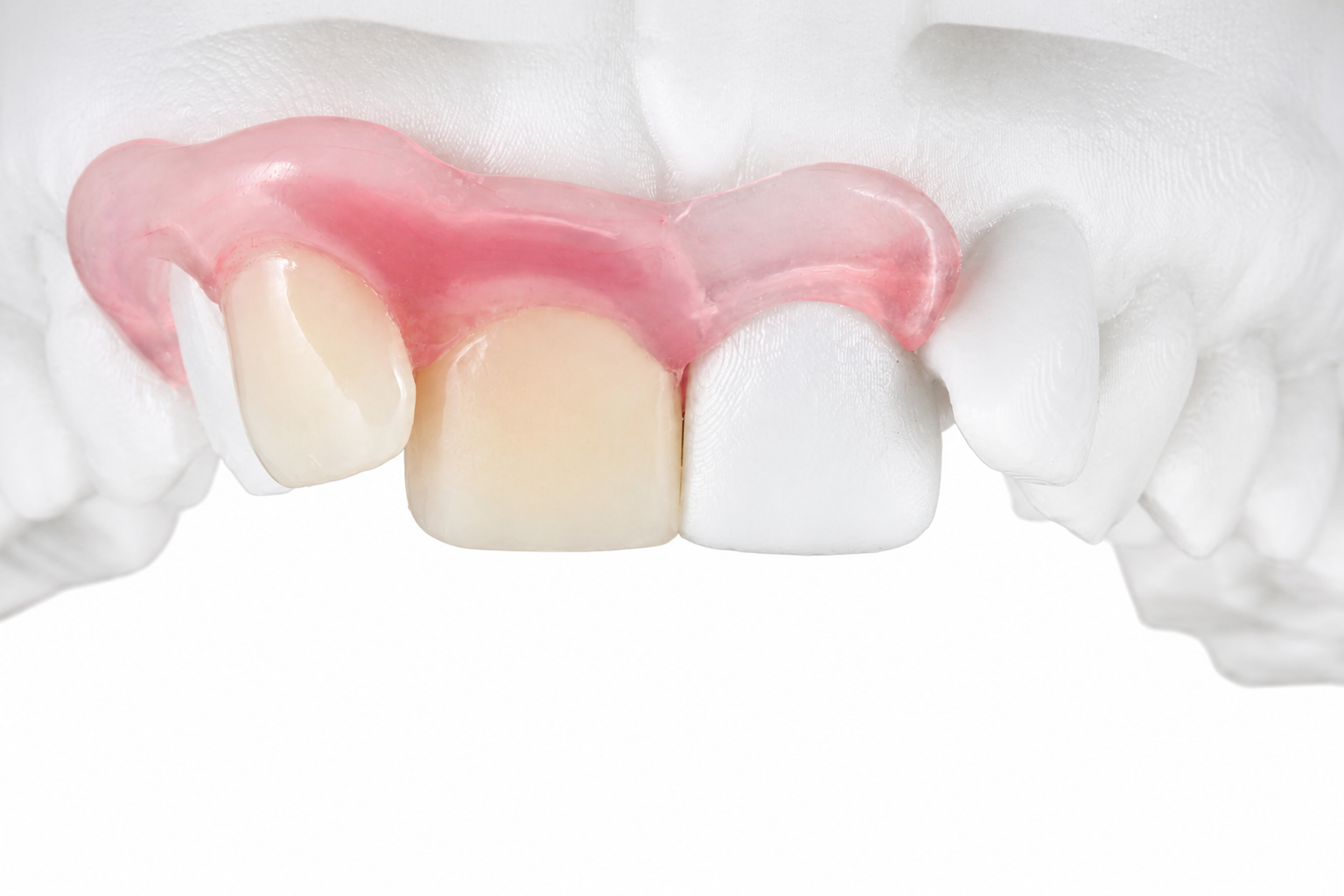
Flexible dentures replace missing teeth with a soft, gum-colored thermoplastic that bends to fit the mouth. Patients choose them for comfort, a clasp-free look, and metal-free biocompatibility. This guide covers the types, materials, pros and cons, and care, how flexible dentures compare with acrylic, metal, and implant options, plus a quick look at 2026 pricing.
TL;DR
Flexible dentures use a bendable nylon or thermoplastic base that grips gums without metal clasps.
Valplast suits metal allergies, TCS and Duraflex cost less, and full arches rarely work well.
US prices run roughly $700 to $3,000 per arch, with a full breakdown in a dedicated cost guide.
The base cannot be relined, so a poor fit usually means a full remake.
Which Flexible Denture Fits You Best?
Three quick picks answer the most common flexible denture questions before the full comparison below, each matched to a specific patient need rather than a general recommendation.
Best for metal allergies: Valplast, biocompatible nylon with no acrylic monomer
Best budget flexible partial: TCS or Duraflex, lower material cost than Valplast
Best for a single missing tooth: any flexible brand, since a one-tooth denture starts near $300 in the US
These three scenarios cover most of the questions a new patient brings to a first consultation, and the sections below walk through the reasoning behind each pick in more depth.
What Are Flexible Dentures?
A flexible denture is a removable appliance built from a soft, bendable thermoplastic resin instead of rigid acrylic or a metal framework, and the base flexes with the natural movement of the mouth instead of staying stiff.
Grips without clasps: locks into the natural undercuts around the gums and remaining teeth, so most designs need no metal clasps
Blends with the gums: the base sits slightly translucent, so gum tone shows through for a natural look
Spreads pressure evenly: adapts to the ridges and curves of the mouth, which cuts down on the sore spots a rigid acrylic plate or cast metal framework can cause
Usually a partial, not a full arch: partial dentures replace a few teeth while the remaining natural teeth carry part of the load, and full flexible dentures stay uncommon for reasons covered later in this guide
Flexible dentures sit within the wider category of restorative dentistry solutions for missing teeth, alongside bridges, implants, and traditional dentures, and where they fit best depends on how many teeth are gone, gum health, and budget.
How Are Flexible Dentures Made?
A flexible denture is custom-built in a dental lab from a consultation and an impression of the mouth, moving through a defined sequence where accuracy at the start determines comfort at the end.
Exam and diagnosis: The dentist checks the gums, the remaining teeth, and the shape of the gap, then confirms a flexible partial suits the case
Impressions or a digital scan: Captures the gums and remaining teeth with precision, since flexible materials cannot be relined or ground down much afterward
Material selection: The dentist and patient choose between Valplast, TCS, Duraflex, or another brand, based on allergies, the gap location, and the look the patient wants
Model pouring: The lab pours a stone model, or builds a digital model from the scan, that becomes the exact mold the denture is shaped around
Lab fabrication by injection molding: The lab heats thermoplastic granules until soft, then injects them under pressure into the mold of the arch
Setting the replacement teeth: A technician positions the artificial teeth into the softened base so they align with the bite before the material cools
Finishing and polishing: The lab trims the edges, smooths the tissue side, and polishes the visible surface
Try-in and fitting: The dentist seats the finished piece, checks the bite and fit, and makes any minor chairside adjustments
Delivery and instructions: The patient leaves with the finished denture and a short walkthrough of the cleaning routine
The thermoplastic arrives already polymerized, so molding only changes its shape, with no chemical curing step. That is why these dentures are monomer-free, a trait that often suits patients with acrylic sensitivity. A skilled dental technician controls the temperature and pressure that shape the finished piece, since each material softens and injects at its own settings.
The mold comes from a stone or digital replica of the arch, so the first impression matters more with a flexible base than with acrylic. Digital scans now sit alongside putty impressions in many clinics. Turnaround usually runs one to three weeks from the first impression to delivery.
The whole sequence belongs to a structured dental treatment plan, which records the diagnosis, the chosen material, and the steps from impression to delivery, and keeps the patient, the dentist, and the lab aligned on outcome and cost.
What Types Of Flexible Dentures Are Available?
Flexible dentures form a category, not a single product, and the material chosen defines the price, the feel, and whether the piece can be repaired.
Brand | Material | Key trait | Best for |
|---|---|---|---|
Valplast | Nylon thermoplastic | Original brand, over 50 years, cannot be relined | Metal allergies |
TCS | Reformulated nylon | Easier to remold and adjust | Comfort plus adjustability |
Duraflex | Ethylene-propylene | Impact-resistant, BPA-free | Durability |
AcryFlex | Flexible acrylic | Can be repaired and relined | Future adjustability |
Sunflex / Flexite | Alternative thermoplastics | Stain-resistant blends | Lab-specific cases |
What Is Valplast (Nylon Thermoplastic)?
Valplast is the original flexible partial, in clinical use for more than 50 years, and it set the standard that other brands followed. The material is a biocompatible nylon resin that is slightly translucent, so gum tone shows through for a natural look, and the thin base is light and strong enough to grip the natural undercuts without clasps.
Metal-free and resistant to fracture
Cannot be relined, so a poor fit or gum change means a full remake rather than a chairside adjustment
Color can shift slightly after years of wear
Patients with metal allergies often choose Valplast for these reasons, and the no-reline trade-off is the main point a dentist should walk through before treatment starts.
What Is TCS?
TCS is also nylon-based, but reformulated with more resin, which makes it easier to heat, remold, and adjust to the tissue. The higher resin content lets a technician fine-tune the fit to match the patient's exact ridge shape, something Valplast cannot do once it has set.
Resists stains and odors, and stays hypoallergenic
Absorbs less moisture than acrylic, so it holds fewer odors over time
TCS engages the undercuts in the mouth for retention in the same way other flexible bases do, and it has become a common pick for patients who want the comfort of nylon paired with more adjustability than the original Valplast formula offers.
What Is Duraflex?
Duraflex uses an ethylene-propylene material that pairs flexibility with strength, and it adapts well to the contours of the mouth, which reduces sore spots compared with a rigid base.
Stain-resistant, odorless, lightweight, and free of BPA
Biocompatible, so it suits patients who react to metal or acrylic
Patients value Duraflex for its thin, natural-looking design and its resistance to impact. The choice between it and the nylon options above often comes down to a lab's preference and the specifics of the case rather than a clear clinical winner.
What Other Flexible Denture Materials Exist?
A handful of other brands round out the flexible denture market, each with its own trade-off worth knowing before a dentist recommends one over Valplast, TCS, or Duraflex.
Acetal resin, slightly more rigid than nylon, adds strength and wear resistance
AcryFlex, acrylic-based with some flexibility, can be repaired and relined unlike most flexible bases
Sunflex and Flexite, alternative thermoplastic blends a dentist may offer based on lab relationships
None of these alternatives has displaced the three main brands above, but a dentist may reach for one when a case calls for a specific trait, such as AcryFlex's repairability for a patient expecting more tooth loss.
What Are The Pros And Cons Of Flexible Dentures?
Flexible dentures solve real problems for many patients and carry clear limits, and weighing both sides sets the right expectations before treatment.
Pros | Cons |
|---|---|
Comfort, since the base adapts to the gums and causes fewer sore spots | Most cannot be relined, so a remake is often needed as the gums change |
Natural appearance, with no visible metal clasps and a gum-matching tone | Higher cost than basic acrylic partials |
Metal-free and monomer-free, which helps patients with metal or acrylic allergies | Can irritate the gums with repeated wear if the fit slips, sometimes called a gum stripper effect |
Lightweight and easy to wear throughout the day | More prone to bacterial buildup than acrylic if cleaning is inconsistent |
No adhesives needed, since the material grips undercuts naturally | Not suited to full-arch replacement, because they lack rigidity |
Fracture-resistant, so a drop is less likely to snap the denture | Not every dentist or lab offers them |
The gum irritation effect deserves attention rather than dismissal as a rare complaint, and it usually traces back to a base that no longer seats precisely, to gum changes over time, or to skipping the daily cleaning routine the material needs.
The deciding factor usually comes down to priorities. Patients who rank comfort and a natural look highest tend to accept the higher price and the remake-instead-of-reline limitation, while patients who want the lowest cost or the easiest future repairs may lean toward acrylic.
How Much Do Flexible Dentures Cost?
Cost is the question most patients ask first, and it depends on the material, the number of teeth, and the lab.
As of 2026, flexible partial dentures cost about $700 to $3,000 per arch in the United States. Full pricing by material, tooth count, insurance, and state now lives in a dedicated guide to flexible partial dentures cost, which goes into far more depth than the summary below.
State-level pricing varies enough to matter, with coastal metro areas typically running higher than the South, Midwest, and Mountain West. A full state-by-state table, along with a breakdown of what makes two similar quotes differ, from lab choice to dentist experience, is available in the flexible partial dentures cost guide.
Does Insurance Cover Flexible Dentures?
Most dental plans classify a partial denture as a major restorative procedure, similar to a crown or bridge, and typically cover around half of the cost after deductibles and annual limits. Original Medicare does not cover dentures, though some Medicare Advantage plans do. The insurance section of the flexible partial dentures cost guide walks through a worked example, including how an alternative benefit clause can shift what a plan actually pays toward an acrylic rate instead of the flexible material chosen.
A written dental treatment plan lays out each step and its phased cost, which makes it easier to budget and compare quotes from more than one provider.
How Do Flexible Dentures Compare To Acrylic Dentures?
Traditional acrylic partials sit at the budget end of the market and remain the most common alternative to a flexible base.
Attribute | Flexible denture | Acrylic denture |
|---|---|---|
Cost per arch (US) | $700 to $3,000 | $650 to $2,000 |
Comfort | High, adapts to the gums | Medium, rigid plate |
Repairable or relinable | No, usually remade | Yes |
Visible clasps | No | Often, metal or wire |
Best for | Comfort and a natural look | Budget and easy repairs |
Flexible dentures trade repairability for comfort and a clasp-free look. Patients on a tight budget or expecting more gum change sometimes start with acrylic, then move to a flexible piece later.
How Do Flexible Dentures Compare To Metal (Cast) Partials?
A cast metal, or chrome, partial uses a thin metal framework instead of a thermoplastic or acrylic base.
Attribute | Flexible denture | Cast metal partial |
|---|---|---|
Cost per arch (US) | $700 to $3,000 | $900 to $2,500 |
Stability | Moderate | Highest |
Visible hardware | No | Yes, clasps often show |
Weight and feel | Lightest, softest against gums | Thin but rigid |
Best for | Comfort, hidden hardware | Heavy chewing, larger gaps |
A flexible base feels softer and hides the hardware, at the cost of lower rigidity and no relining. Patients who need maximum stability for a large gap usually do better with metal.
How Do Flexible Dentures Compare To Implants?
Implant-supported dentures anchor into the jaw for the firmest hold and the longest life, with no slipping and no adhesive, but they cost far more and require surgery.
Attribute | Flexible denture | Implant-supported denture |
|---|---|---|
Cost per arch (US) | $700 to $3,000 | $3,000 to $7,300 or more |
Surgery required | No | Yes |
Typical longevity | 5 to 10 years | 15 years or more |
How it sits | Rests on the gums | Anchored to the bone |
Best for | Non-surgical, budget-friendly | Long-term stability |
Flexible dentures need no surgery and cost a fraction as much, though they rest on the gums rather than the bone. A review of how much dental implants cost helps set a realistic budget before comparing the two paths with a dentist.
What Is The Difference Between Soft Dentures And Flexible Dentures?
Soft dentures and flexible dentures often get confused, but they solve different problems with different materials.
Attribute | Soft denture (liner) | Flexible denture |
|---|---|---|
Base material | Rigid acrylic with a soft liner | Thermoplastic, nylon, no rigid base |
Can be relined | Yes | No |
Typical use | Short-term comfort, healing | Permanent partial replacement |
Best for | Sore ridges, post-extraction | Allergy-friendly, clasp-free look |
A soft denture usually means a conventional acrylic denture fitted with a soft liner, a cushioned layer of silicone or plasticized acrylic bonded to the tissue side of a rigid base. Soft liners relieve sore tissue on thin or bony ridges, often used short- to medium-term. A flexible denture has no rigid base at all, and the entire piece is molded from a nylon or thermoplastic resin such as Valplast, TCS, or Duraflex.
Soft liners can be replaced or relined as the gums change. Flexible dentures skip the reline option entirely, since the thermoplastic body resists rebonding to new material. Patients who need short-term relief after surgery usually do better with a soft liner, while patients who want a permanent, clasp-free, allergy-friendly partial tend to choose a true flexible denture instead.
Can You Get Full Flexible Dentures?
The short answer is that flexible dentures work best as partials. Full flexible dentures exist, but few labs make them, and most dentists steer away from them for a straightforward reason. A full arch needs rigidity to seat and stay put, and the flexibility that makes a partial comfortable works against retention once it spans the whole arch.
Patients missing a full arch usually do better with a traditional full denture or an implant-supported denture
A few labs produce semi-flexible full dentures using firmer thermoplastics, with results that depend heavily on ridge shape and lab skill
A dentist who has handled these edge cases can say whether a particular patient's anatomy would support a semi-flexible full denture, but for most people missing a full arch, a rigid or implant-backed option remains the safer bet.
Can You Eat With Flexible Partial Dentures?
Yes, and many patients find eating easier with a flexible partial than with a rigid one, since the snug grip holds the denture steady for a wide range of foods. The American Dental Association advises new partial wearers to start with softer foods during the first weeks, then add firmer items as the mouth adjusts.
Cut tough foods into smaller pieces and chew on both sides to spread the load
Expect a short adjustment period, since speech and chewing settle within a few weeks
Use caution with very hard or sticky foods, which can dislodge a partial or stress the base
A short adjustment period is normal with any denture, flexible or otherwise. If a sore spot lingers past that window, the dentist should check the fit rather than letting the irritation continue, since a flexible base that no longer seats correctly will not resolve on its own.
How Do You Care For Flexible Dentures?
Good daily care keeps a flexible denture comfortable, extends its life, and lowers the risk of the gum irritation and bacterial buildup covered earlier.
Rinse after meals to clear food debris
Brush gently with a soft brush and a non-abrasive cleaner
Soak in a solution made for flexible or nylon dentures
Avoid hot water, which can warp the thermoplastic
Skip harsh abrasive pastes that scratch the surface
With steady care, flexible dentures last about five to ten years. Regular checkups matter too, since the denture cannot be relined. A routine professional cleaning also protects the remaining natural teeth that support the partial.
Handle the denture over a folded towel or a basin of water, since a drop onto a hard floor can still cause damage. Remove it at night unless the dentist advises otherwise, and store it in water or a denture solution so it does not dry out, in line with ADA denture care guidance.
Are Flexible Dentures Right For You?
Flexible dentures fit some patients well and others less so. A quick checklist clarifies where they land for a given case.
They tend to suit patients who:
Replace one or a few teeth rather than a full arch
React to metal or acrylic and need a hypoallergenic base
Want comfort and a clasp-free, natural look
Prefer a non-surgical option
Can commit to a consistent daily cleaning routine
Another option may fit better for patients who:
Need a full upper or lower arch replaced
Want the cheapest possible appliance
Want the longest-lasting, most stable result, which points to implants
Have a history of poor denture hygiene or gum disease
A consultation settles the question. The dentist reviews the gums, the remaining teeth, and the budget, then maps the choice into a dental treatment plan to follow. Looking at a range of common dental procedures for tooth replacement gives useful context before the visit.
How Do You Find Flexible Dentures Near You?
Searching for flexible dentures nearby returns plenty of clinics, so a few smart questions help narrow the list.
Ask which flexible materials the clinic offers, such as Valplast, TCS, or Duraflex
Ask which dental lab makes the denture and what warranty it carries
Ask for a total estimate that includes impressions, fittings, and any extractions
Check whether the clinic accepts your insurance and offers financing
Get more than one quote before committing
Guides on how to choose a dentist and choosing a local dentist walk through what to look for in a nearby provider.
Bottom Line
Flexible dentures give a comfortable, natural-looking, metal-free way to replace a few missing teeth without surgery. They cost more than basic acrylic and less than implants, and they work best as partials rather than a full arch. Full 2026 pricing by material, tooth count, state, and insurance is covered in the flexible partial dentures cost guide. Daily cleaning matters more than with acrylic, since a neglected base can irritate the gums over time, and the fact that the material cannot be relined makes the initial fit and material choice worth getting right. A dentist can confirm whether they match a patient's mouth and budget, then build a clear dental treatment plan around the choice.
This article is for informational purposes only and does not constitute medical advice. Always consult with qualified healthcare professionals for diagnosis and treatment recommendations specific to your situation.
Frequently Asked Questions
What are flexible dentures?
Flexible dentures are removable appliances built on a soft, bendable thermoplastic base, usually nylon. The material grips the gums and natural undercuts, so most need no metal clasps and blend with the gum tissue.
What is a flexible denture made of?
A flexible denture uses a thermoplastic resin such as nylon, with Valplast, TCS, and Duraflex among the common brands. The resin is monomer-free, which helps patients who react to acrylic.
How much do flexible dentures cost in 2026?
Flexible partial dentures cost about $700 to $3,000 per arch in the US. The flexible partial dentures cost guide breaks this down further by material, tooth count, state, and insurance coverage.
How much is a flexible denture for one tooth?
A single-tooth flexible denture sits at the low end, often $300 to $700 in the US. The cost guide has a dedicated section on single-tooth pricing, including why some practices set a case minimum fee.
What is the difference between soft dentures and flexible dentures?
A soft denture is usually a rigid acrylic base with a cushioned liner added for comfort, and the liner can be replaced. A flexible denture has no rigid base at all, and the whole piece is molded from thermoplastic.
Can you eat with flexible partial dentures?
Yes. The snug fit holds the denture steady for a wide range of foods. Start with softer items during the first weeks, then add firmer foods as the mouth adjusts.