Torus Palatinus: Causes, Symptoms, And When Removal Is Needed
A hard bump in the middle of the palate often seems to appear overnight. Usually, it is torus palatinus, a harmless bony growth present for years. Most need no treatment. The...
Written by Mantas Petraitis
Read time: 5 min read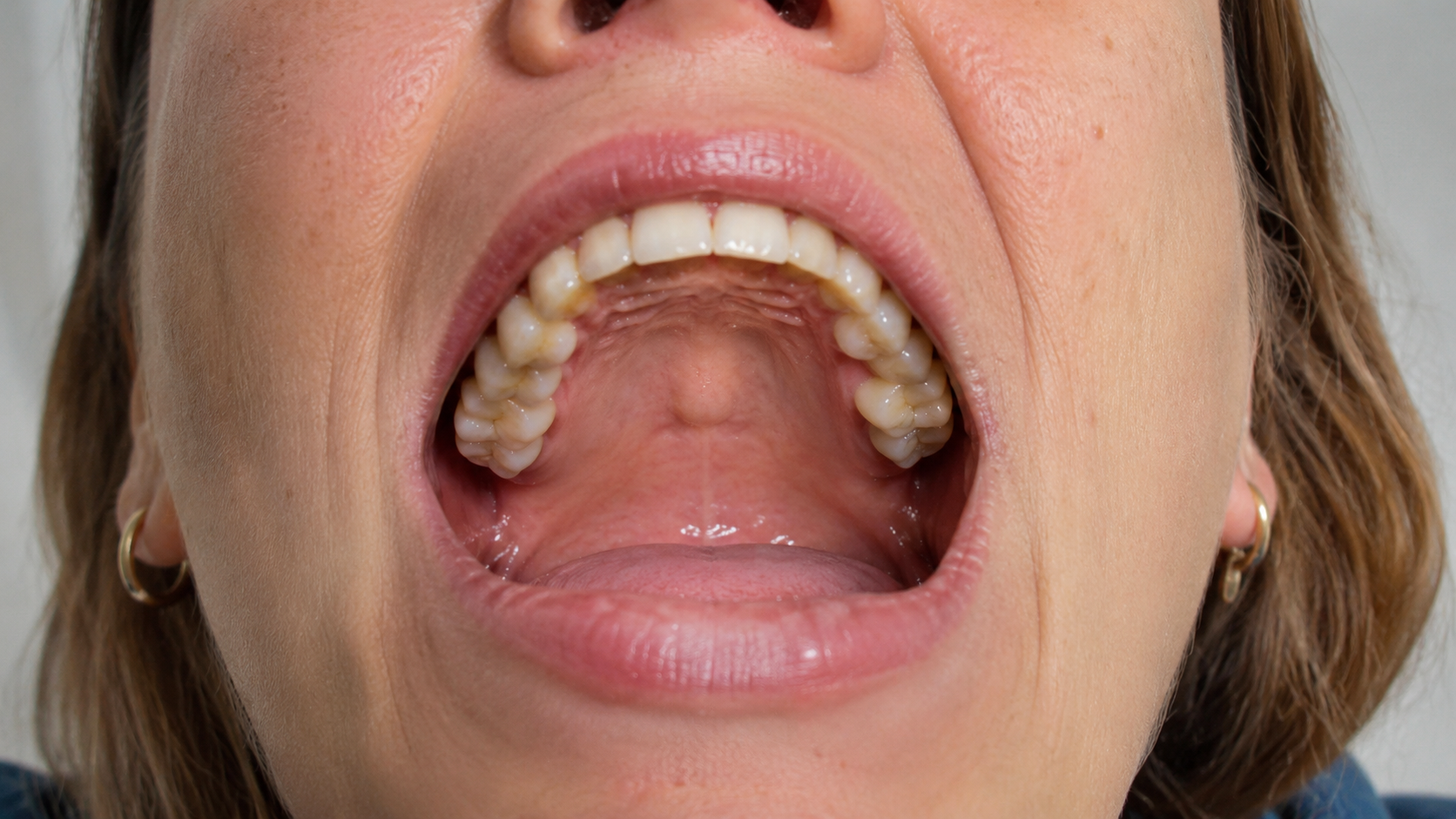
A hard bump in the middle of the palate often seems to appear overnight. Usually, it is torus palatinus, a harmless bony growth present for years. Most need no treatment. The decision to remove one depends far more on dentures and medications than on size.
TL;DR
Torus palatinus is a benign bony bump on the midline of the hard palate.
Genes drive most cases, and grinding has weak evidence behind it.
Off-center or rubbery palate lumps are a different problem and need an exam.
Remove a torus for denture seal problems, repeated sores, or before IV bone drugs.
What Is Torus Palatinus?
Torus palatinus is a benign overgrowth of normal bone along the midline of the hard palate. It feels rock hard and grows slowly over decades. It is not a cyst, tumor, or infection. The plural is palatal tori.
The "overnight" discovery is almost never new. A tongue probing a burned palate finds a bump present since early adulthood. Old orthodontic models or dental photos often prove it. A torus seen on records from ten years ago settles most worry in seconds.
A related growth, torus mandibularis, forms inside the lower jaw near the premolars. The two can appear together, but they behave differently.
How Common Is Torus Palatinus?
Prevalence varies widely by sex, ancestry, and study method. A US cohort of 1,102 adults found tori in 23.3 percent of women. Only 6 percent of men had one. A Saudi study of 847 people without teeth found it in 7.8 percent. Small, flat tori often go unrecorded, so true numbers are likely higher.
Dentists should name a torus at the first exam, even when it needs nothing. A patient told early never spends a night searching "hard lump on roof of mouth."
What Does Torus Palatinus Feel Like?
It feels like a smooth, bone-hard ridge or knob in the exact center of the palate. Shapes range from a flat plateau to a cluster of knobs. Typical features include:
A firm, bone-hard lump that does not move or dent
A position on the midline, often symmetrical on both sides
A flat, spindle, nodular, or lobulated shape
Pale or normal pink tissue over the bone
No pain unless the thin covering tissue is injured
Two rules carry most of the diagnostic weight. A torus grows from the seam where the palate halves fused, so it respects the midline. It is also bone, so it never feels rubbery. A lump that breaks either rule is not a torus until proven otherwise. Touch still cannot confirm the diagnosis alone.
What Causes Torus Palatinus?
No single cause explains torus palatinus. Genes carry the most weight. Mechanical stress gets more credit than the evidence supports.
Genetic Predisposition
Tori run in families, and rates differ sharply between populations. Several genes likely interact. A rare mutation in the LRP5 bone gene shows the link clearly. It raises bone density throughout the body and often produces a large torus palatinus.
Teeth Grinding And Mechanical Stress
Grinding is the most repeated explanation online, and the weakest for the palate. A systematic review linked abnormal tooth wear mainly to lower jaw tori. A study of 345 patients found palatal torus size had no link to bite force. Lower jaw tori did grow with bite force.
That difference makes mechanical sense. Chewing forces bend the lower jaw, while the palate takes little direct load. A night guard for teeth grinding protects teeth and jaw joints. It will not shrink a palatal torus.
Age, Anatomy, And Other Factors
Tori usually become noticeable in the twenties or thirties and may enlarge slowly with age. Diet and vitamin theories lack solid support.
What Are The Symptoms Of Torus Palatinus?
Most palatal tori cause no symptoms. Problems come from the thin covering tissue or from appliances that sit on the palate. Possible issues include:
Scrapes from crusty bread, chips, or hard candy
Slow-healing sores on the highest point of the bump
A rocking or loose upper denture
Trouble seating a retainer or other palatal appliance
Speech changes with very large growths
Palatal tissue over a torus is thin and has a poor blood supply. A scrape that heals in days elsewhere can take two weeks here. Now and then, a sliver of bone becomes exposed after an injury. It often flakes off and heals on its own. Picking at it slows healing.
Appliance problems depend on design. A Hawley retainer has a plate resting on the palate, so it may need trimming. Clear aligners and most night guards stay on the teeth and ignore the torus. Patients sometimes delay aligner treatment for no reason.
Can Torus Palatinus Cause Pain?
An uninjured torus does not hurt. Pain comes from a sore in the covering tissue, usually after a food injury. That sore should heal within about two weeks. A sore that lingers or bleeds needs an exam.
Is Torus Palatinus Dangerous Or Cancerous?
A true torus palatinus is benign and has no known potential to become cancer. The real risk is assuming every palate lump is a torus. The palate is one of the most common sites for minor salivary gland tumors. These typically sit off to one side, near the molars, and feel firm but rubbery.
Warning signs that something else is going on include:
A lump off the midline or on one side only
Soft, spongy, or rubbery texture
Growth noticeable over weeks or months
An ulcer that will not heal or bleeds easily
Red, white, or purple discoloration
These signs call for evaluation, often with a biopsy. The workup follows oral cancer screening principles. Self-checks cannot rule out a tumor.
How Is Torus Palatinus Diagnosed?
A dentist diagnoses most palatal tori during a regular exam. Midline position, symmetry, bone-hard texture, normal surface tissue, and a quiet history usually settle it.
Does Torus Palatinus Require An X-Ray Or Biopsy?
A classic torus needs no special test. Imaging or a biopsy helps when the growth looks atypical, changes quickly, or needs surgery. Before surgery, cone beam CT shows how close the torus sits to the nasal floor. Routine CT for a typical torus adds radiation with no benefit.
Clinicians should record size, shape, and surface condition at the first visit. Noting these in the dental treatment plan gives a baseline for later comparison. It also documents why observation or referral was chosen.
Torus Palatinus Vs. Other Lumps On The Roof Of The Mouth
Location and texture separate most palate lumps early. The table shows typical patterns.
Condition | Typical distinction |
|---|---|
Torus palatinus | Bone-hard, midline, symmetrical, slow-growing |
Mouth ulcer | Painful break in the surface, not a raised bony mass |
Dental abscess | Soft, tender swelling to one side, near an infected tooth |
Irritation fibroma | Firm soft-tissue bump from rubbing, not bone-hard |
Minor salivary gland tumor | Firm, rubbery, usually off-center near the molars |
A painful break in the surface points to mouth ulcers. Soft swelling beside an upper molar usually means a tooth abscess. Anything outside the classic torus pattern needs an exam.
When Does Torus Palatinus Need To Be Removed?
Torus palatinus usually does not need removal. Surgery makes sense for repeated injury, denture problems, trouble eating or speaking, or certain medication plans. A dentist or oral surgeon can judge whether leaving it alone is safe.
Situation | Typical management |
|---|---|
Small, painless torus | Usually observation |
Stable torus without functional problems | No treatment generally needed |
Repeated trauma or ulceration | Dental evaluation, possible removal |
Poor denture fit caused by a torus | Compare denture redesign with surgical removal |
Difficulty speaking, chewing, or swallowing | Clinical assessment, removal if the torus is the cause |
Rapid change, bleeding, or unclear diagnosis | Investigate before assuming a torus |
When A Torus Prevents Proper Denture Fit
Size matters less than position. A full upper denture stays in place mainly through a seal along its back edge. That seal sits where the hard palate meets the soft palate. A torus that reaches this line breaks the seal, and no denture adjustment can restore it. That is the clearest case for surgery.
A torus farther forward is different. The lab can hollow out the denture over it, which usually works well. A denture reline may help when the fit drifts later. Implant-retained snap-in dentures can skip palate coverage entirely. For patients planning implants anyway, the torus can often stay.
Repeated Injury Or Ulceration
Some tori stick out far enough to take constant hits from food. When sores return every few weeks, removal is often the best fix.
Speech, Chewing, Or Swallowing Problems
Very large tori can crowd the tongue and change certain sounds. These cases are uncommon. Speech complaints with a modest torus usually have another cause worth finding first.
Other Clinical Reasons For Removal
Drugs that slow bone turnover can cause exposed dead bone in the jaw. Tori are a known weak spot. One 2024 study of tori in these patients cites earlier data on cancer patients. In it, 41.7 percent of patients with tori developed dead bone at the torus.
The type of drug changes the advice. IV bisphosphonates and denosumab for cancer carry real risk, and removal before treatment deserves discussion. Oral osteoporosis pills are a different story. A Kaiser study of oral bisphosphonate users found the condition in 1 of 952 respondents. Removing a healthy torus before starting a weekly osteoporosis pill is usually overtreatment.
Cosmetic removal of a symptom-free torus is rarely worth palatal surgery.
How Is Torus Palatinus Removed?
An oral and maxillofacial surgeon or experienced dentist removes the torus as an outpatient procedure. Most cases use local anesthesia, with sedation as an option.
Torus Palatinus Surgery
The surgeon cuts along the midline, often adding short side cuts shaped like a Y. They lift the thin tissue off the bone. A bur divides the torus into sections, which come off with a chisel. The bone is smoothed level with the palate, never hollowed below it. The tissue is then stitched back.
Many surgeons fit a clear splint made from a model with the torus digitally removed. It holds the tissue against the bone and shields the wound during meals. For denture patients, a relined denture can do the same job. The removed bone can sometimes serve as dental bone graft material for later implants.
The procedure has its own dental code, D7472. Insurance coverage usually depends on documented need, such as a denture that cannot seal. Negotiated insurance rates average about $584 nationally, though they vary widely by state.
Risks And Complications
Palatal surgery is routine, but not risk-free. The covering tissue is thin and tears easily. Possible complications include:
Bleeding or a blood collection under the tissue
Swelling and temporary pain
Infection or delayed healing
Tissue breakdown that exposes bone
Rarely, an opening into the nasal floor
Bone thickness between the torus and the nose varies. A pre-surgery scan shows that margin and guides how much bone comes off.
Torus Palatinus Removal Recovery
The palate tissue usually closes within two to three weeks. The bone underneath keeps remodeling for months. Most patients eat soft food and wear the splint for the first week or two.
Expect soreness for several days. The Tylenol vs. ibuprofen guide compares pain relief options. Gentle saltwater mouth rinses keep the area clean once the surgeon approves.
Denture patients usually wait several weeks before final impressions. Taking them too early is a common reason a new denture loosens within months.
Can Torus Palatinus Grow Back Or Go Away On Its Own?
A torus is bone, so it does not shrink or disappear. A stable, symptom-free torus needs no treatment. Regrowth after removal is uncommon and mostly follows partial reduction.
When Should You See A Dentist?
Any new or unexplained palate lump deserves one exam to confirm what it is. After that, a stable torus only needs routine checkups. Return sooner for:
Growth noticeable over weeks or months
Sores on the torus that last longer than two weeks
Bleeding, discoloration, or a change in texture
A denture or appliance that starts rocking or rubbing
Plans to start IV bone-strengthening drugs for cancer
Seek urgent care for rapid swelling, severe pain, or trouble breathing or swallowing.
Bottom Line
Torus palatinus is a common, benign bony growth on the palate midline. Genes drive most cases, and grinding has weaker evidence than many assume. Most tori need nothing beyond routine checks. Removal makes sense for a broken denture seal, repeated sores, or upcoming IV bone drugs. An off-center or rubbery lump is not a torus until a dentist confirms it.
Frequently Asked Questions
Is torus palatinus normal?
Yes, a torus palatinus is a common variation of normal anatomy, especially in women. It is healthy bone and needs no treatment unless it causes problems. A dentist should confirm the diagnosis, ideally by comparing it with old dental records.
Does torus palatinus keep growing?
It may enlarge slowly over many years, but many stay the same size for decades. Growth noticeable over weeks or months is not typical. That pattern needs an exam to rule out a different growth.
Can torus palatinus become cancerous?
No, a true torus does not turn into cancer. The concern is mistaking a different growth for a torus. Off-center, soft, or ulcerated palate lumps need assessment in line with oral cancer screening guidance.
Can torus palatinus go away without surgery?
No, a torus is solid bone and does not dissolve. Rinses, supplements, and night guards will not shrink it. Most people never need it removed.
Is torus palatinus removal painful?
The procedure itself is not painful because local anesthesia numbs the palate. Soreness afterward lasts several days and usually responds to over-the-counter pain relief. A protective splint makes eating easier during healing.
How long does torus palatinus surgery take to heal?
The palate tissue usually closes within two to three weeks. The bone keeps remodeling for months. Denture wearers often wait several weeks before final impressions. A denture reline can fine-tune the fit later.