Black Tongue: Causes, Treatments, and When to See a Dentist
A black tongue looks alarming, but it is rarely dangerous. The dark discoloration usually comes from overgrown papillae trapping bacteria, food debris, or medication residue on...
Written by Maren Solvik
Read time: 5 min read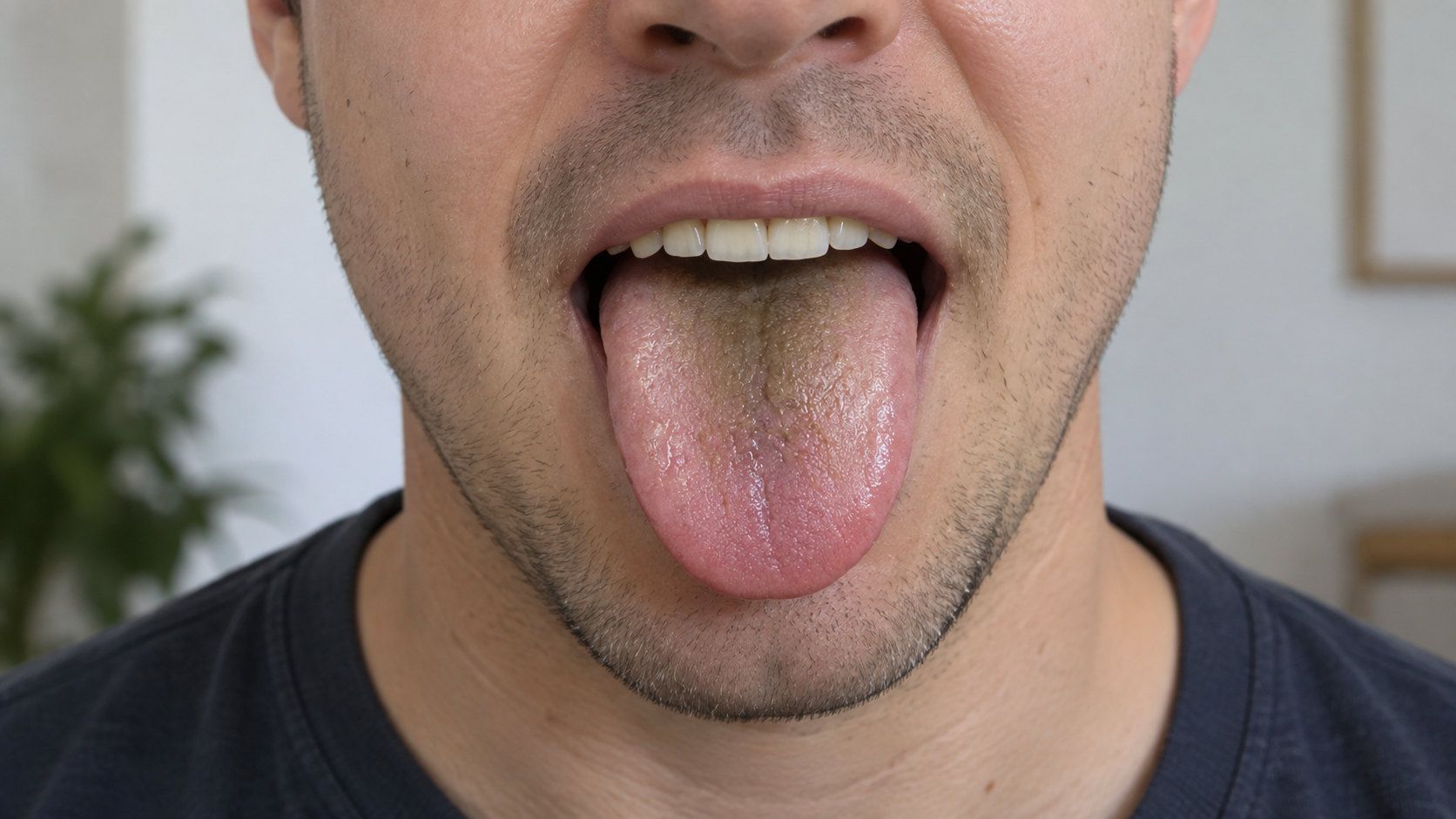
A black tongue looks alarming, but it is rarely dangerous. The dark discoloration usually comes from overgrown papillae trapping bacteria, food debris, or medication residue on the tongue's surface. Dentists see this condition regularly and resolve it in a few steps. This article covers what causes a black tongue, how to treat it, and when professional care is needed.
TL;DR
Black tongue is a benign condition caused by elongated papillae trapping bacteria, stains, or medication residue
Common triggers include poor oral hygiene, antibiotics, smoking, and Pepto-Bismol (bismuth subsalicylate)
Treatment starts with brushing the tongue twice daily and using a dedicated tongue scraper
See a dentist if the discoloration lasts more than two weeks or comes with pain, swelling, or difficulty swallowing
What Is Black Tongue?
Understanding what a black tongue means starts with basic tongue anatomy. The tongue's surface is covered in thousands of tiny projections called filiform papillae. Under normal conditions, these papillae shed dead cells continuously and stay short. When that shedding process stalls, the papillae grow longer than usual, sometimes reaching 15 to 18 millimeters.
These elongated papillae act like a net. They trap bacteria, food particles, dead skin cells, and pigments from beverages or tobacco. The trapped material stains the papillae dark, producing the condition clinically known as lingua villosa nigra, or black hairy tongue. The "hairy" label refers to the fur-like texture the overgrown papillae create.
The color is not always black. Depending on the staining source, the tongue can appear brown, yellow, green, or even bluish. Patients also experiencing a brown tongue or a white tongue should know these fall on the same spectrum of papillae overgrowth and staining.
Accompanying symptoms can include bad breath (halitosis), a metallic or altered taste, dry mouth, a fuzzy or tickling sensation, and occasional gagging. Some patients report no symptoms at all beyond the visual change.
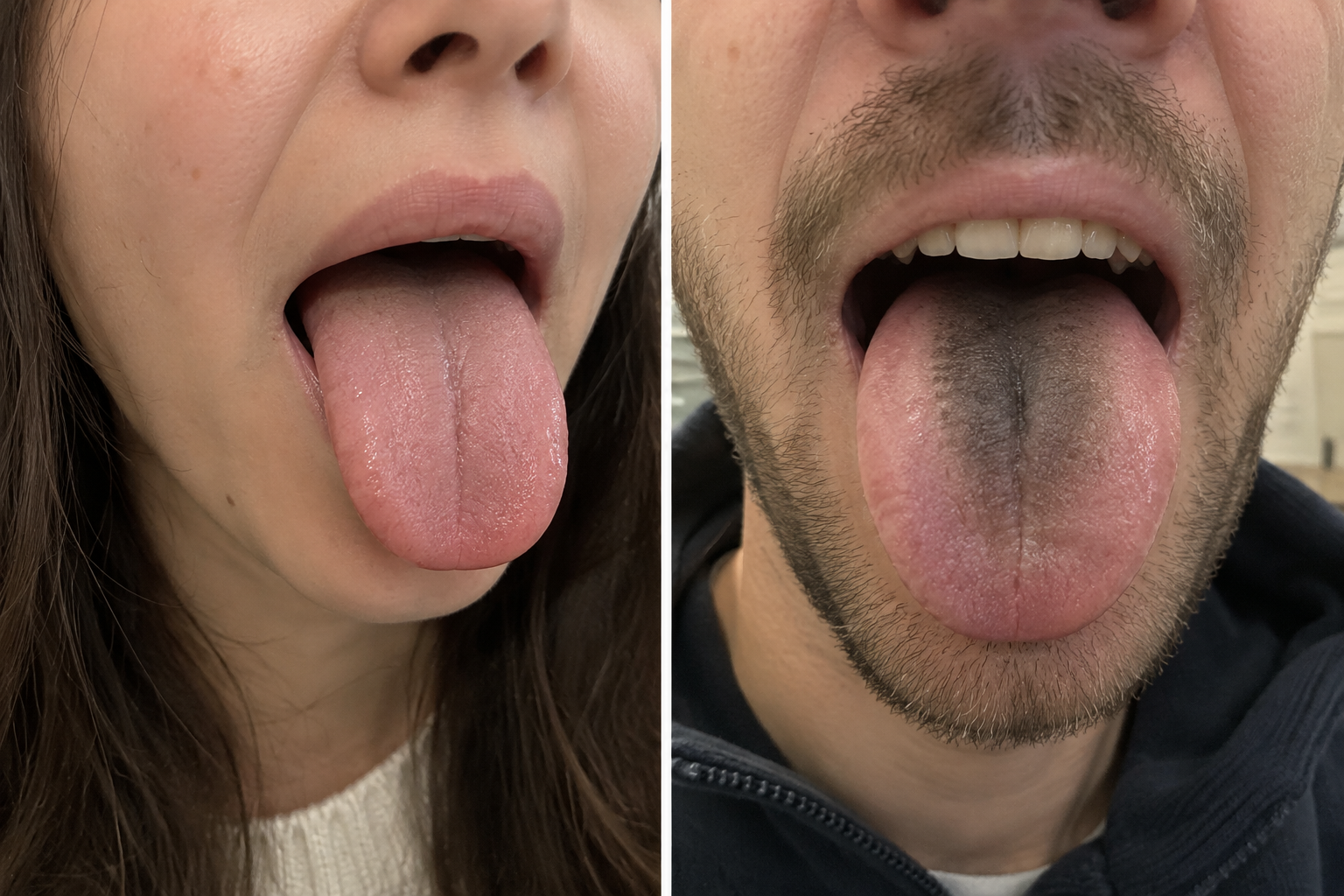
Person with a healthy tongue and person with a black tongue.
Person with a healthy tongue and person with a black tongue.
What Causes a Black Tongue?
The cause of a black tongue nearly always traces back to a disruption in the tongue's normal cell turnover, combined with an external staining agent. Research in the American Journal of Clinical Dermatology estimates the condition affects 1% to 11% of the population. Males are affected at roughly three times the rate of females, likely driven by higher rates of smoking and inconsistent oral hygiene.
Can Poor Oral Hygiene Cause Black Tongue?
Skipping daily tongue cleaning is the single most common contributor. When bacteria and dead cells accumulate day after day without mechanical removal, the papillae darken steadily. A tongue scraper removes more buildup in one pass than a toothbrush alone. Dehydration compounds the problem because saliva rinses the tongue's surface throughout the day. Reduced fluid intake concentrates bacteria and accelerates staining.
Which Medications Cause Black Tongue?
Antibiotics are the most frequent pharmaceutical trigger. Tetracycline, amoxicillin, and linezolid disrupt the mouth's bacterial balance. When beneficial bacteria die off, pigment-producing organisms take over and darken the tongue. Psychiatric medications that reduce saliva output also speed up the process. Chemotherapy drugs suppress immune function and dry the mouth at the same time.
Mouthwashes containing chlorhexidine gluconate or peroxide are documented triggers. Chlorhexidine, while effective against gingivitis, binds to proteins on the tongue and teeth, leaving a brownish-black residue over weeks of use.
Why Does Pepto-Bismol Turn Your Tongue Black?
Many patients develop a black tongue after taking Pepto-Bismol, and it catches them off guard. The active ingredient, bismuth subsalicylate, reacts with trace amounts of sulfur in saliva. This chemical reaction produces bismuth sulfide, a harmless black compound that coats the tongue and can also darken stool.
Dentists classify this as pseudo-black tongue because no papillae overgrowth is involved. It is a surface stain. The discoloration typically fades within 24 to 72 hours after stopping the medication. Brushing the tongue and drinking water speeds up the clearing process. Roughly 1% to 10% of Pepto-Bismol users experience this side effect, depending on how much sulfur is present in their saliva.
Does Smoking Cause Black Tongue?
Tobacco deposits tar and nicotine directly onto papillae, whether smoked or chewed. Heavy coffee, black tea, and red wine consumption add additional pigment layers. Alcohol dries the mouth and lowers saliva flow, creating conditions where bacteria thrive. Patients interested in how smoking and vaping affect oral health will find that tobacco also slows tissue healing throughout the mouth.
What Medical Conditions Lead to Black Tongue?
Immunocompromised patients face higher risk. HIV/AIDS, advanced cancer, graft-versus-host disease, and post-radiation therapy to the head and neck all suppress the immune system and alter the oral microbiome. Chronic xerostomia (dry mouth) from Sjögren's syndrome or diabetes also accelerates papillae buildup.
COVID-19 has been linked to oral changes, including black hairy tongue, in published case reports. Patients with persistent dry mouth from any cause should discuss the symptom with their dentist, as reduced saliva creates the ideal environment for tongue discoloration.
Why Is My Tongue Black in the Morning?
Waking up with a black tongue in the morning panics a lot of patients. During sleep, saliva production drops significantly. The mouth becomes warm, dry, and still, which is an ideal environment for bacterial growth. Mouth breathers lose even more moisture overnight.
Reduced saliva, hours without eating or drinking, and no mechanical cleaning allow bacteria to multiply on the tongue's surface. The discoloration often looks worst first thing in the morning and fades after brushing, eating, and hydrating. Patients who notice this pattern can resolve it with better oral hygiene before bed and a glass of water on waking.
What Are Black Tongue Spots?
Some patients notice scattered black spots on the tongue rather than a full dark coating. Black tongue spots can result from the same papillae overgrowth and staining described above, but they can also point to a separate issue.
Isolated dark spots may come from benign pigmentation (more common in patients with darker skin tones), minor trauma or blood blisters from accidental biting, or fungal infections like oral thrush. Melanotic macules, which are harmless flat dark spots, can also appear on the tongue.
The key distinction: black hairy tongue produces a diffuse, furry-looking coating across the dorsal surface. Isolated spots that are raised, irregularly shaped, firm to the touch, or growing should be evaluated by a dentist to rule out other conditions, including oral melanoma.
Can Newborns Get Black Tongue?
Parents who spot a dark patch on their newborn's tongue understandably panic. A black tongue in newborns is rare, but it does happen. Case reports in pediatric dermatology journals describe it in infants as young as six weeks.
In most cases, the discoloration comes from dried milk residue that oxidizes and darkens, benign pigmentation (melanin deposits on the tongue tissue), oral thrush (a Candida yeast infection that can appear white or dark), or minor irritation from suckling or pacifier use.
Antibiotic use in infants can also trigger temporary tongue discoloration by disrupting the developing oral microbiome. Treatment is simple: gently wipe the tongue with a soft, damp cloth after each feeding.
A pediatric dentist or pediatrician should evaluate a newborn's tongue discoloration if it persists beyond two weeks, if the baby refuses to feed or shows pain, if there are accompanying symptoms like fever, mouth sores, or irritability, or if the spots are raised or growing.
How Do You Treat Black Tongue?
Treating a black tongue requires identifying and removing the trigger, then restoring the tongue's normal cell turnover through mechanical cleaning. Most cases clear up within days to two weeks.
What Home Remedies Work for Black Tongue?
Home care handles the majority of cases without a dental visit.
Brush the tongue twice daily with a soft-bristled toothbrush, working from back to front
Use a dedicated tongue scraper once daily for more effective debris removal
Drink at least eight glasses of water per day to keep saliva flowing
Cut back on coffee, black tea, red wine, and tobacco
Switch away from chlorhexidine or peroxide mouthwash if it is the suspected cause
Stop taking Pepto-Bismol if it triggered the discoloration, as the stain will clear on its own
Pairing a good mouthwash for bad breath with daily tongue scraping tackles both the discoloration and the halitosis that often comes with it.
When Is Professional Treatment Needed?
When home care does not resolve the condition within two weeks, a dentist can step in with targeted interventions.
Professional debridement and cleaning of the tongue surface
Medication review with the prescribing doctor to swap or discontinue drugs causing the problem
Antifungal therapy if a Candida infection is confirmed
Retinoid therapy (topical tretinoin) in stubborn cases to promote cell turnover
Laser ablation of overgrown papillae in rare, persistent cases
Probiotic therapy to rebalance the oral microbiome
Dentists often incorporate tongue assessment into a broader dental treatment plan when the condition signals underlying issues like chronic dry mouth, medication side effects, or poor oral hygiene habits.
When Should You See a Dentist About Black Tongue?
Most black tongue cases resolve at home. The following situations call for a dental appointment.
The discoloration persists for more than two weeks despite consistent tongue cleaning
Pain, swelling, or bleeding accompanies the dark coating
Difficulty swallowing or breathing develops
Black spots appear raised, firm, or irregularly shaped
Fever or unexplained weight loss occurs alongside the tongue change
The patient is immunocompromised from HIV, cancer treatment, or organ transplant medications
A dentist will examine the tongue, review the patient's medication list, and check for oral infections. In rare cases, a biopsy of an unusual spot may be needed to rule out oral melanoma or another condition.
Bottom Line
A black tongue almost always looks worse than it is. The condition stems from overgrown papillae trapping stains from bacteria, food, tobacco, or medications like Pepto-Bismol. Parents who notice it on a newborn can resolve it with gentle cleaning. Adults who wake up with a black tongue in the morning need to improve nighttime oral hygiene and hydration.
Treatment starts at home: brush the tongue, scrape it daily, stay hydrated, and remove the trigger. If it does not clear up within two weeks, or if there is pain, swelling, or an unusual spot, book an appointment with a dentist.
This article is for informational purposes only and does not constitute medical advice. Always consult with qualified healthcare professionals for diagnosis and treatment recommendations specific to your situation.
Frequently Asked Questions
Is a black tongue dangerous?
Almost never. Black hairy tongue is classified as a benign, reversible condition. The discoloration does not damage the tongue tissue and carries no long-term health risks when the underlying trigger is addressed.
Can a black tongue be a sign of cancer?
A black, hairy tongue itself is not cancerous. A diffuse, furry, dark coating is almost always harmless. Isolated dark spots that are raised, firm, growing, or irregularly shaped should be examined by a dentist or oral surgeon to rule out oral melanoma.
How long does black tongue last?
Most cases clear within a few days to two weeks once the patient starts brushing the tongue, scraping it, and removing the cause (medication, tobacco, poor hygiene). Pepto-Bismol staining fades within 24 to 72 hours on its own.
Does Pepto-Bismol always turn your tongue black?
No. It occurs in roughly 1% to 10% of users. The reaction depends on how much sulfur is present in the individual's saliva. Patients who experience it can expect the stain to disappear within a few days after their last dose.
Should I worry if my baby has a black tongue?
In most cases, no. Gently wipe the tongue with a soft, damp cloth after feedings and monitor for changes. If the discoloration persists beyond two weeks, if the baby has feeding difficulties, or if fever or mouth sores develop, contact a pediatric dentist or pediatrician.