Tongue Scraper Picks Dentists Recommend For 2026
A tongue scraper removes the bacteria and coating that a toothbrush leaves behind. This guide ranks ten tongue scrapers sold in the United States for 2026, covering copper and...
Written by Mantas Petraitis
Read time: 6 min read
A tongue scraper removes the bacteria and coating that a toothbrush leaves behind. This guide ranks ten tongue scrapers sold in the United States for 2026, covering copper and stainless steel options, real tongue scraping benefits, and how to use one correctly.
TL;DR
A tongue scraper removes bacteria and coating that brushing alone leaves behind.
Stainless steel lasts years, copper offers mild antimicrobial action but tarnishes faster.
One 10- to 20-second pass each morning covers most of the benefit.
Dr. Tung's and MasterMedi lead the US market on price and availability.
Quick Dentist-Recommended Choices
Best Overall
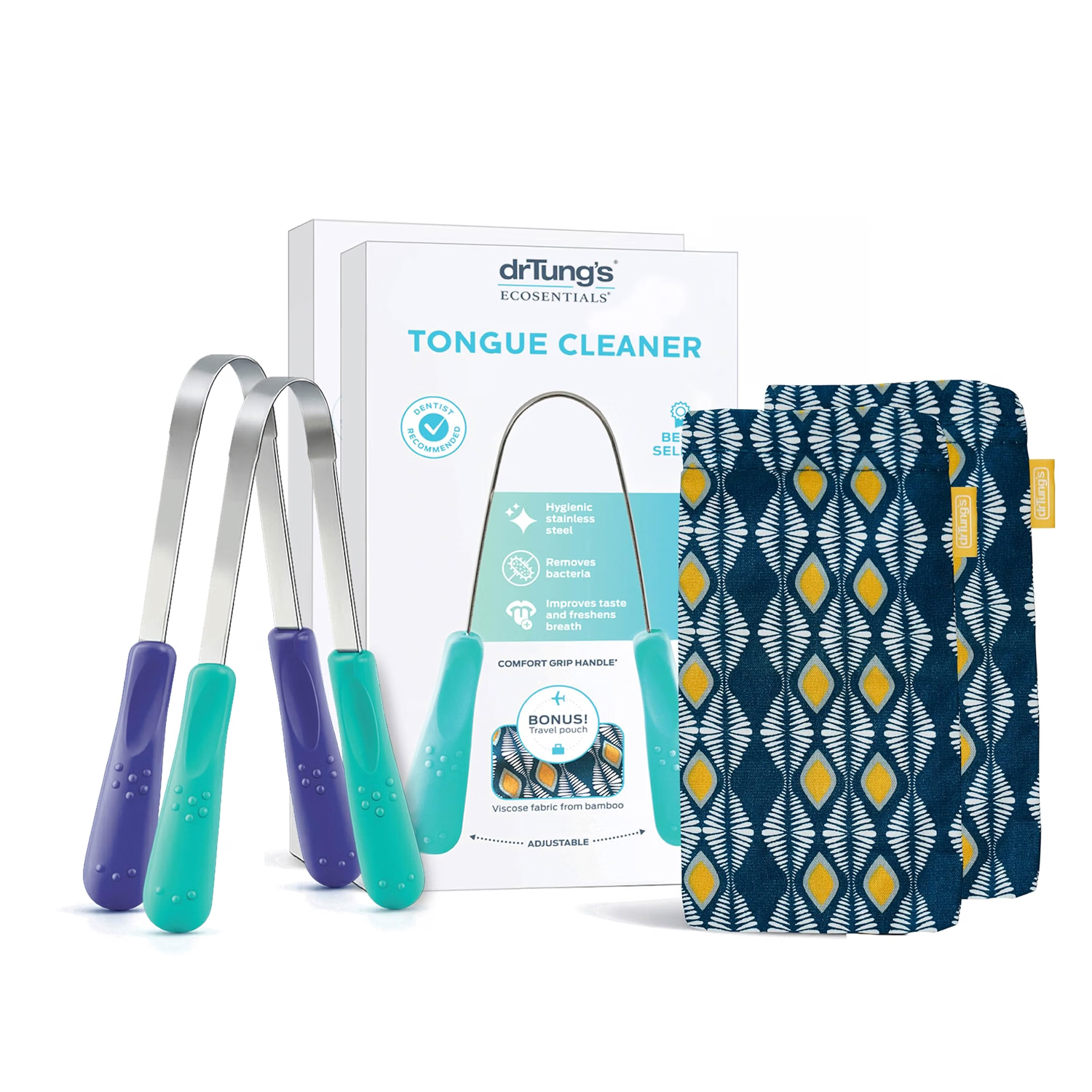
Dr. Tung's Stainless Steel Tongue Cleaner
The category benchmark for over 25 years, medical-grade stainless steel with a narrow, gag-friendly bend, about $6 to $11.
Best Copper Pick
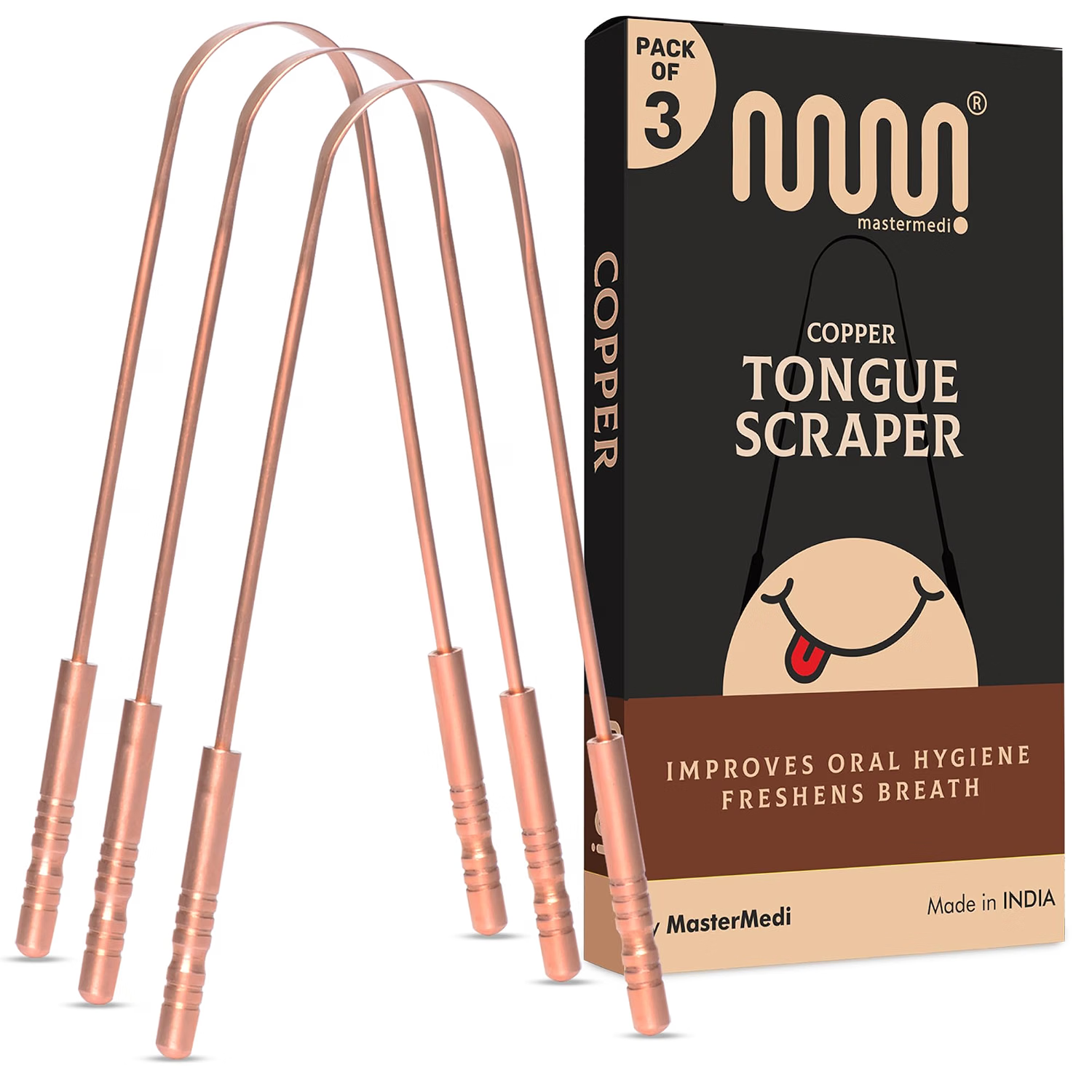
MasterMedi 100% Pure Copper Tongue Scraper
A two-handle copper design with even pressure control and a travel case included, about $7 to $10.
Best for Sensitive Gag Reflex
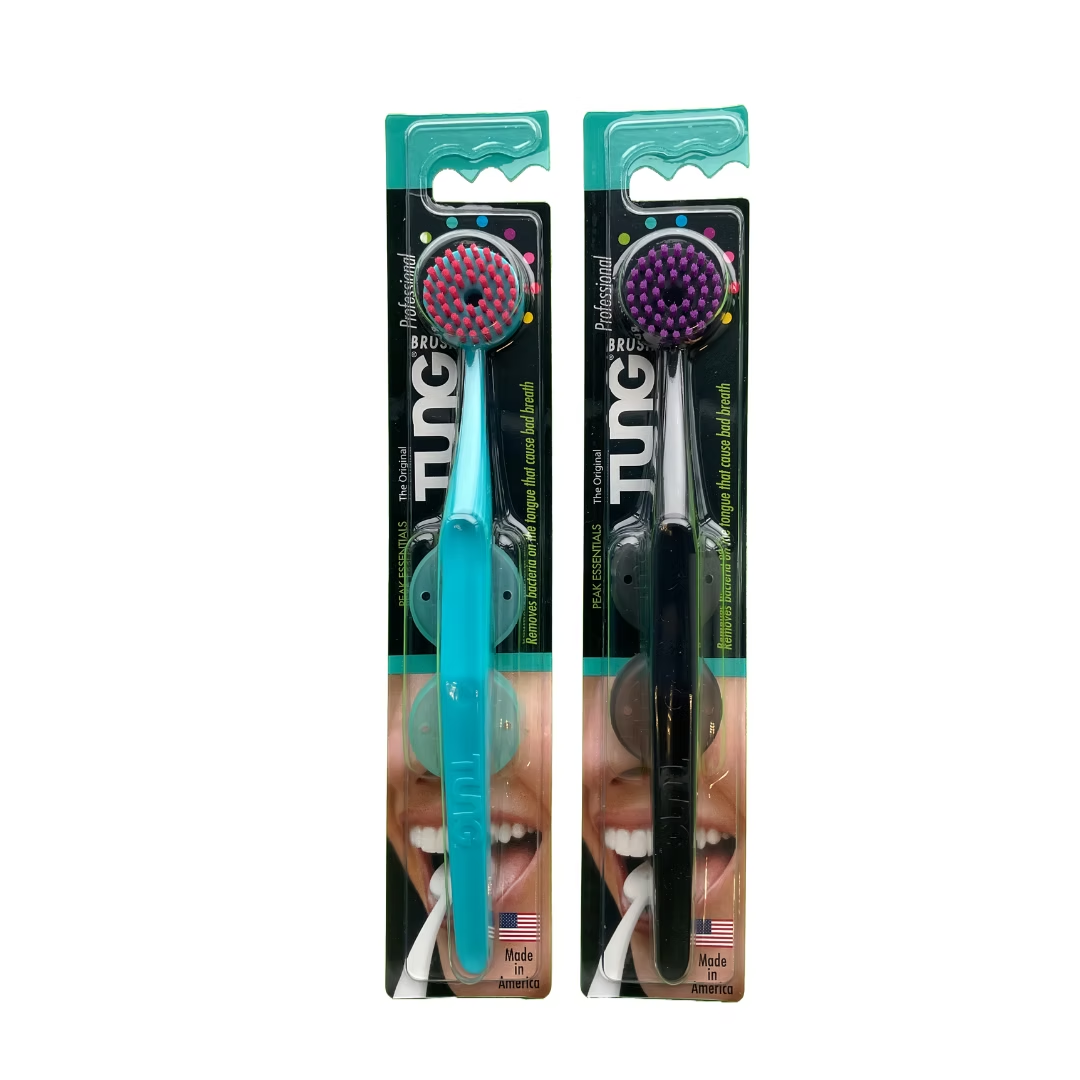
Peak Essentials The Original TUNG Brush
A dentist-designed brush head that swaps the metal edge for softer bristles, about $8 to $12.
We may earn a commission on purchases made through these links.
What Is A Tongue Scraper?
A tongue scraper is a small, curved tool built to lift bacteria, food debris, and dead cells off the tongue's surface in one motion. Most designs use a thin metal or plastic edge bent into a U-shape or spoon shape, held by one or two handles.
The tongue's surface is covered in tiny bumps called papillae, and debris settles into the grooves between them. A toothbrush pushes some of that debris around, while a scraper's edge lifts it off the tissue instead.
What Are The Benefits Of Tongue Scraping?
Tongue scraping benefits go beyond fresher breath, though breath is where most people notice a difference first.
A Cochrane systematic review found that tongue scraping reduced volatile sulfur compounds, the gases behind most morning breath, significantly more than a toothbrush alone.
A separate systematic review of mechanical tongue cleaning confirmed the same pattern across multiple trials, reducing both breath odor and visible tongue coating.
A randomized controlled trial in gingivitis patients also linked tongue scraping to a measurable drop in oral bacteria alongside standard cleaning, suggesting the benefit extends to gum health and not just breath.
Fresher breath within days of starting a daily routine
Less bacterial buildup transferred from the tongue to teeth and gums
Sharper taste perception once the coating lifts
A gentler option than brushing for people prone to gagging, when the right material is chosen
Is A Tongue Scraper Better Than A Toothbrush?
A toothbrush and a tongue scraper solve the same problem in different ways, and the table below lines up the difference directly.
Tongue scraper | Toothbrush | |
|---|---|---|
Action | Lifts debris off in one motion | Pushes debris around the papillae |
VSC reduction | Higher, per clinical studies | Lower than a dedicated scraper |
Reach | Curved shape built for the back of the tongue | Bristles built for teeth, awkward angle on the tongue |
Gag reflex | Narrow designs reduce triggering | Flat brush head triggers it more easily for some |
Recommended use | Daily, in addition to brushing | Daily, for teeth and gums |
Most dentists recommend scraping in addition to brushing, not instead of it, as part of a complete daily oral hygiene routine.
Copper, Stainless Steel, Or Plastic: Which Tongue Scraper Material Is Best?
Material is the first real decision to make, and it shapes both the price and how long the tool lasts. The table below compares the three options side by side.
Material | Antimicrobial property | Typical lifespan | Feel | Price |
|---|---|---|---|---|
Copper | Mild natural antimicrobial action | 1 to 2 years | Firm edge, traditional Ayurvedic tool | Similar to steel |
Stainless steel | None, but resists bacteria on the surface | 3 to 5+ years | Firm edge, smooth glide | Similar to copper |
Plastic or silicone | None | 1 to 3 months | Flexible, gentler on a sensitive gag reflex | Lowest cost per unit |
Copper tongue scrapers carry a mild natural antimicrobial property and a long history in Ayurvedic practice, though the surface tarnishes within a year or two of daily use. Stainless steel resists corrosion and holds its shape for years. Plastic and silicone scrapers flex more, which some people find gentler on a sensitive gag reflex, though they wear out faster than metal.
Material, copper for tradition and mild antimicrobial action, steel for durability
Head width, wider heads cover more surface per pass
Handle style, one-handle spoon shape or two-handle U-shape
Travel case, useful for anyone scraping outside the bathroom sink
Reusability, metal lasts years with rinsing, plastic wears out sooner
The 10 Best Tongue Scrapers
The list below ranks ten tongue scrapers sold across major US retailers and brand sites. Pricing reflects typical US retail cost at the time of writing and may shift.
#1. Dr. Tung's Stainless Steel Tongue Cleaner
The Dr. Tung's stainless steel tongue cleaner introduced tongue scraping to the US market and remains the best-selling option in health stores nationwide. A narrow U-shaped bend reaches the back of the tongue without triggering a strong gag reflex.
Price: About 6 to 11 dollars for one cleaner
Where to buy: Amazon, Walmart, health food stores, and the Dr. Tung's site
Material: Medical-grade stainless steel with a soft rubber handle
Format: Single U-shaped tool, one size
Best for: First-time buyers who want the most established brand
Pros:
Holds its shape for years with normal use
Narrow bend reduces gag reflex during first use
Comes with a fabric travel pouch
Cons:
Only one size and shape available
#2. Dr. Tung's Copper Tongue Cleaner
The Dr. Tung's copper tongue cleaner uses the same U-shaped design as the brand's stainless steel version, swapping the metal for solid copper. Copper's natural antimicrobial property is the main draw for anyone following Ayurvedic oral care traditions.
Price: About 9 to 13 dollars for one cleaner
Where to buy: Amazon and the Dr. Tung's site
Material: Solid copper with a soft rubber handle
Format: Single U-shaped tool, one size
Best for: Anyone who prefers copper over steel for daily use
Pros:
Mild natural antimicrobial surface
Same proven U-shape as the brand's steel version
Cons:
Tarnishes within a year or two of daily use
#3. MasterMedi 100% Pure Copper Tongue Scraper
The MasterMedi 100% pure copper tongue scraper uses a two-handle design that lets both hands control pressure evenly across the tongue. MasterMedi ships the tool in a travel case, which keeps the surface clean between uses.
Price: About 7 to 10 dollars for one scraper with a case
Where to buy: Amazon and the MasterMedi site
Material: 100% solid copper
Format: Two-handle U-shaped tool, one size
Best for: Anyone who wants more control over scraping pressure
Pros:
Two-handle grip evens out pressure across a full pass
Travel case included at this price point
Cons:
Copper surface changes color with regular use, which is normal oxidation
#4. MasterMedi 100% Stainless Steel Tongue Scraper
The MasterMedi 100% stainless steel tongue scraper uses the same two-handle shape as its copper counterpart, swapping in surgical-grade steel for anyone who wants a longer-lasting tool.
Price: About 7 to 10 dollars for one scraper with a case
Where to buy: Amazon and the MasterMedi site
Material: Surgical-grade stainless steel
Format: Two-handle U-shaped tool, one size
Best for: Buyers who want the MasterMedi shape without copper's upkeep
Pros:
Same ergonomic two-handle design as the copper version
Will not tarnish or change color over time
Cons:
The two-handle grip takes a try or two to get used to
#5. GUM Dual-Action Tongue Cleaner
The GUM Dual-Action tongue cleaner puts a soft-bristled brush on one side and a scraper on the other, so a single tool loosens debris and then lifts it away. Sunstar, the company behind GUM, shapes the handle to reach the back of the tongue where most odor-causing bacteria collect.
Price: About 5 to 8 dollars for one cleaner
Where to buy: CVS, Walgreens, Walmart, Amazon, and the GUM site
Material: Soft nylon bristles and a plastic scraper edge
Format: Single dual-sided tool, one size
Best for: People who want brushing and scraping combined in one step
Pros:
Combines a brush and a scraper in one tool
Widely stocked in US drugstores
Cons:
Plastic scraper edge wears out faster than metal
#6. Peak Essentials The Original TUNG Brush
The Original TUNG brush swaps the traditional scraper edge for a low-profile brush head built specifically for the tongue rather than the teeth. A dentist originally designed the shape to reach the back of the tongue with less gagging than a standard scraper.
Price: About 8 to 12 dollars for one brush
Where to buy: Amazon and the TUNG Brush site
Material: BPA-free plastic bristles
Format: Single-handled brush, one size
Best for: Anyone who finds a metal scraper edge too harsh
Pros:
Bristle design reaches tongue grooves a flat scraper can miss
Gentler first experience for a sensitive gag reflex
Cons:
Bristles wear down faster than a metal edge and need replacing
#7. Wonder Care 100% Copper Tongue Scraper, 3-Pack
The Wonder Care 100% copper tongue scraper ships in a three-pack, which makes it one of the cheapest ways to try copper scraping or keep one at home, one at work, and one for travel.
Price: About 8 to 12 dollars for a three-pack
Where to buy: Amazon
Material: 100% copper
Format: Round-head U-shaped tool, one size, sold in multiples
Best for: Trying copper scraping without committing to one tool
Pros:
Lowest cost per scraper among the copper picks on this list
Three tools cover home, travel, and a spare
Cons:
Rounder head covers less surface per pass than a wider blade
#8. Mouthology Tongue Scraper, 3-Pack
The Mouthology tongue scraper ships three stainless steel scrapers in a single pack, backed by a lifetime replacement warranty. Two head shapes are included, which gives a household more than one option to find a comfortable fit.
Price: About 8 to 12 dollars for a three-pack
Where to buy: Amazon
Material: Stainless steel
Format: Two head shapes, single handle, sold in multiples
Best for: Sharing across a household without buying multiple brands
Pros:
Lifetime replacement warranty from the brand
Two head shapes included in one pack
Cons:
Travel cases are basic compared with premium brands
#9. DenTek Orabrush Tongue Scraper
The DenTek Orabrush tongue scraper pairs soft bristles with a built-in scraper edge, aiming to loosen buildup before lifting it away. It is one of the more recognized brush-style names in the category, sold nationwide through DenTek.
Price: About 5 to 8 dollars for a two-count pack
Where to buy: Amazon, Walmart, and major US pharmacies
Material: BPA-free plastic with soft bristles
Format: Single dual-action tool, one size
Best for: A gentler dual-action option from a widely stocked brand
Pros:
Bristles loosen buildup before the scraper edge lifts it
Sold at most major US pharmacies
Cons:
Needs replacing every few months like a toothbrush
#10. Basic Concepts Tongue Scraper, 2-Pack
The Basic Concepts tongue scraper keeps the design simple, a wide-head, single-piece stainless steel scraper with a travel case included for each of the two pieces in the pack.
Price: About 5 to 10 dollars for a two-pack
Where to buy: Amazon and Walmart
Material: Stainless steel
Format: Wide-head unibody design, one size, sold in pairs
Best for: Simple, budget everyday use
Pros:
Wide head covers more surface per pass
Two scrapers with cases at a low combined price
Cons:
Edges can feel sharp until light pressure becomes a habit
Quick Comparison Of The 10 Best Tongue Scrapers
This table lines up all ten picks side by side. Use it to compare material, format, and price at a glance.
Product | Material | Format | Price range | Best for |
|---|---|---|---|---|
Dr. Tung's Stainless | Stainless steel | Single U-shape | $6-$11 | First-time buyers |
Dr. Tung's Copper | Copper | Single U-shape | $9-$13 | Ayurvedic preference |
MasterMedi Copper | Copper | Two-handle U-shape | $7-$10 | Pressure control |
MasterMedi Stainless | Stainless steel | Two-handle U-shape | $7-$10 | Long-term durability |
GUM Dual-Action | Nylon plastic | Brush and scraper combo | $5-$8 | Combined brushing and scraping |
TUNG Brush | Plastic bristle | Single brush head | $8-$12 | Sensitive gag reflex |
Wonder Care Copper 3-Pack | Copper | Single U-shape | $8-$12 (3-pack) | Trying copper affordably |
Mouthology Stainless 3-Pack | Stainless steel | Two-shape variety pack | $8-$12 (3-pack) | Sharing across a household |
DenTek Orabrush | Nylon bristle and plastic scraper | Brush and scraper combo | $5-$8 (2-pack) | A gentler dual-action option |
Basic Concepts Stainless | Stainless steel | Wide-head unibody | $5-$10 (2-pack) | Simple, budget everyday use |
How Do You Use A Tongue Scraper?
Using a tongue scraper correctly takes under a minute and works the same way across nearly every brand on this list.
Stick the tongue out as far as comfortable
Place the scraper as far back as it will comfortably reach
Pull forward with light, even pressure, never pushing back
Rinse the scraper under water between each pass
Repeat three to five times, moving side to side across the surface
Rinse the mouth after the final pass
Morning use, before brushing, clears away the bacteria that built up overnight. Pairing a daily scrape with an antibacterial mouthwash targets the same bacteria from two angles.
Are Tongue Scrapers Reusable, And How Do You Care For One?
Most tongue scrapers on this list are reusable for years, with a few exceptions.
Stainless steel scrapers from Dr. Tung's and MasterMedi typically last three to five years or longer with a rinse after each use. Copper scrapers last one to two years before the surface wears thin from daily oxidation and cleaning. Bristled options like the TUNG Brush and GUM's dual-action cleaner wear out faster, generally needing replacement every one to three months once the bristles flatten.
A few simple habits keep any scraper working well for as long as its material allows.
Rinse under warm water immediately after each use
Dry the scraper fully before storing it in a closed case
Wash weekly with mild soap, or soak copper in a lemon and salt solution
Avoid sharing a scraper between household members
Store in a ventilated case rather than a sealed bag to prevent moisture buildup
Replace it once an edge feels rough, a bristle head stops springing back, or copper wears visibly thin
Bottom Line
A tongue scraper is a small addition to a daily oral care routine, and the research backs up that small addition. Copper and stainless steel both work well, with copper trading a shorter lifespan for a natural antimicrobial edge, and steel trading that antimicrobial property for years of use from one tool.
Dr. Tung's remains the most established name in the US market. MasterMedi offers strong value across both metals, and GUM, Orabrush, or the TUNG Brush suit anyone who prefers bristles to a bare metal edge. Add scraping to a morning brushing and flossing routine, and mention any tongue coating that will not clear at a regular exam, which a dentist can log in a dental treatment plan.
Frequently Asked Questions
What is a tongue scraper used for?
A tongue scraper removes bacteria, food debris, and dead cells from the tongue's surface in a single motion. Regular use targets the bacteria most responsible for morning breath and a coated tongue.
Is a copper tongue scraper better than stainless steel?
Both work well for most people. Copper offers a mild, natural antimicrobial surface but tarnishes within a year or two, while stainless steel lasts longer and needs no special care beyond rinsing.
How often should you use a tongue scraper?
Once a day, in the morning before brushing, covers most of the benefits. Some people also scrape in the evening if they notice buildup during the day.
Can a tongue scraper damage your tongue?
Yes, if used too aggressively or with a sharp, damaged edge. Light, even pressure and a properly designed tongue scraper avoid this risk entirely.
Do tongue scrapers help with bad breath?
Yes, a Cochrane systematic review found that tongue scraping reduces the volatile sulfur compounds behind bad breath significantly more than brushing alone.