Xylitol Gum: How It Protects Teeth And 10 Best Picks
Xylitol gum is sugar-free gum sweetened with xylitol. Cavity-causing bacteria cannot use this sugar alcohol for fuel. The gum works best at 5–10 grams a day. This guide covers how...
Written by Agnes Markovic
Read time: 6 min read
Xylitol gum is sugar-free gum sweetened with xylitol. Cavity-causing bacteria cannot use this sugar alcohol for fuel. The gum works best at 5–10 grams a day. This guide covers how xylitol works, who gains most, and what a daily dose costs. It ranks the 10 best US picks.
TL;DR
Chew within minutes of eating, when plaque acid peaks.
Reach 5–10 grams a day, which only 100% xylitol gums make practical.
Parents with frequent fillings, braces wearers, and dry-mouth patients gain the most.
Heart patients should ask a physician first, and dog owners must store gum carefully.
Quick Dentist-Recommended Choices
Best Overall
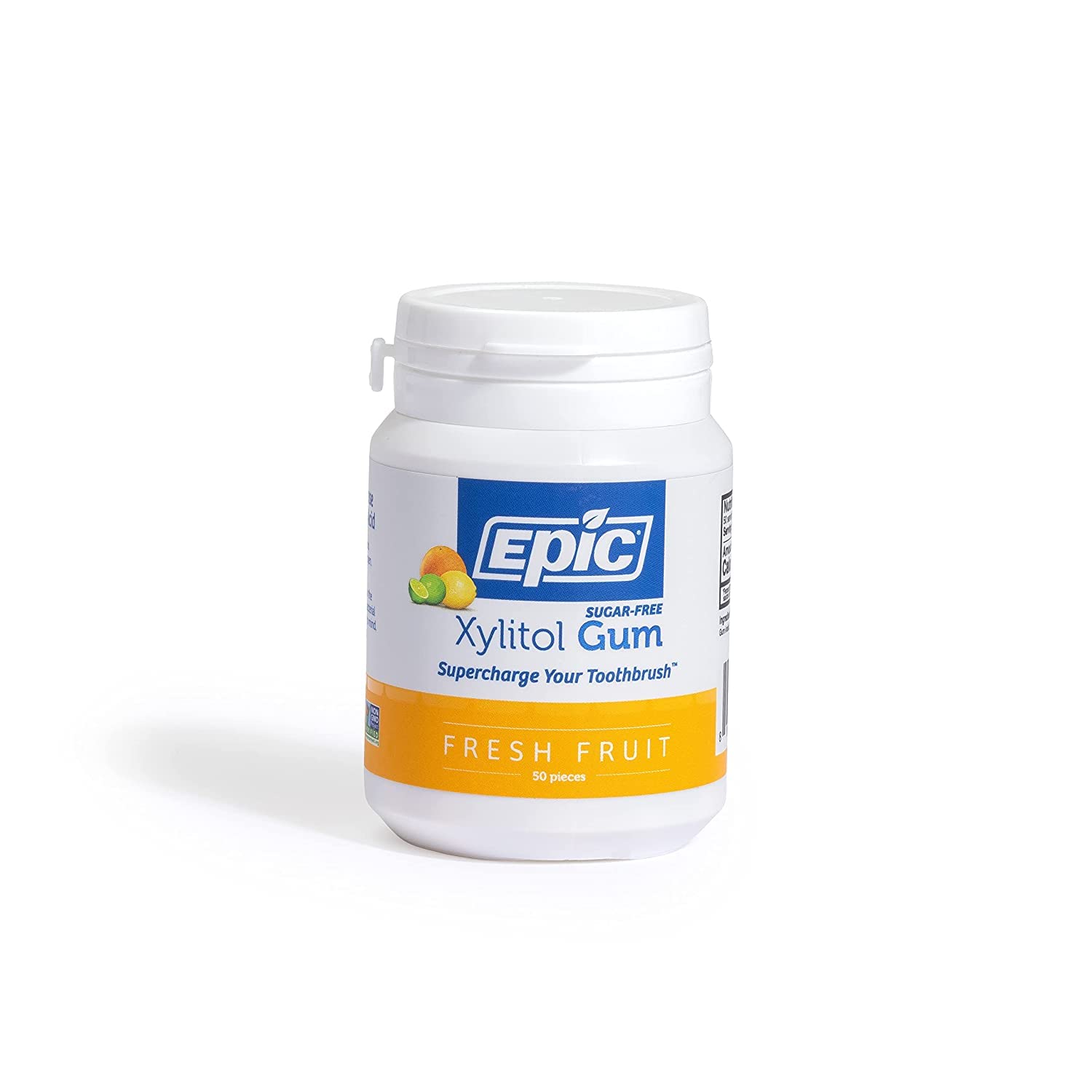
Epic Dental 100% Xylitol Gum
The highest listed dose is 1.06 grams per piece, sweetened only with xylitol, about $24 for 144 pieces.
Best Value
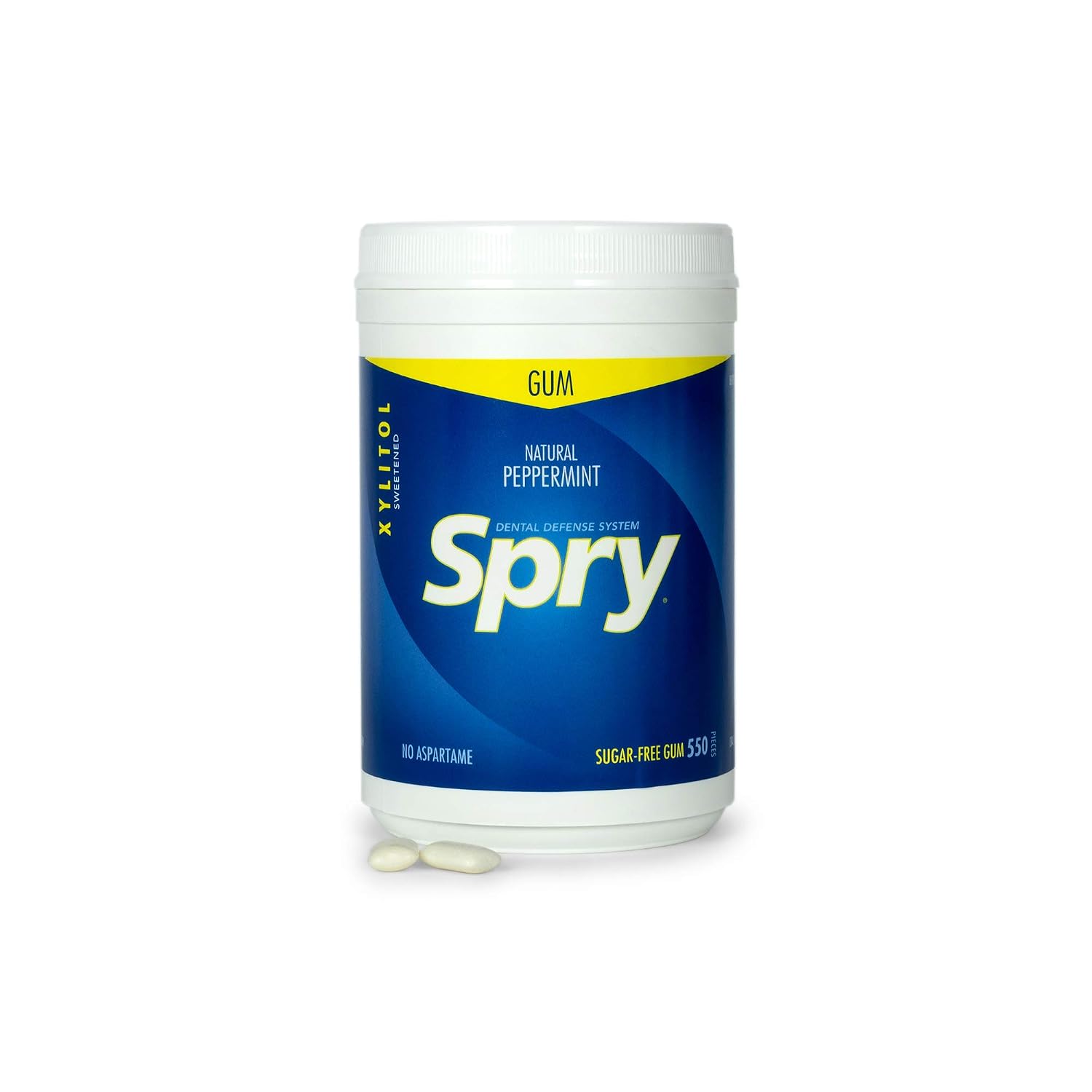
Spry Xylitol Gum
About 0.9 grams per piece at roughly 10 cents a piece, with an easy-open 100-count jar.
Best In Everyday Stores
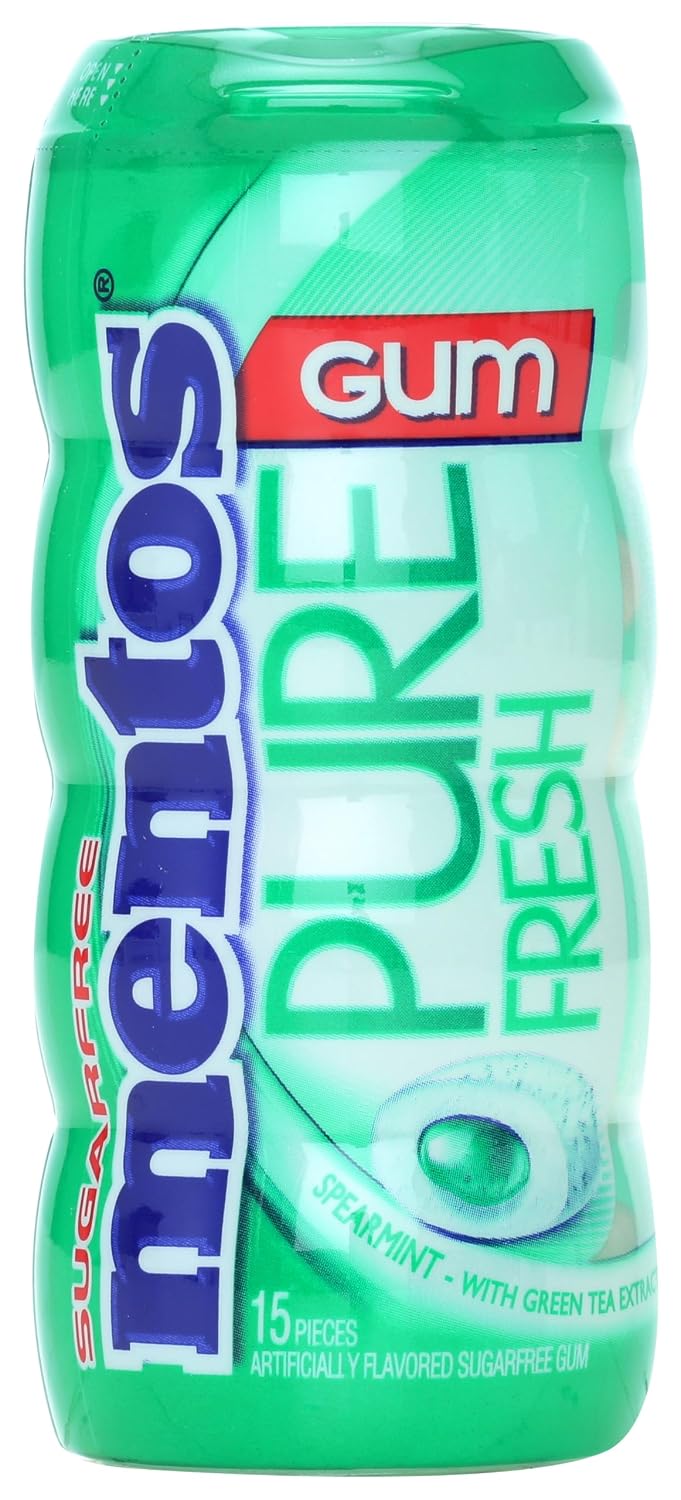
Mentos Pure Fresh
Xylitol is the first ingredient, and it sits on nearly every US drugstore shelf, about $6 to $8 per 100.
We may earn a commission on purchases made through these links.
What Is Xylitol?
Xylitol is a sugar alcohol that tastes like sugar. The real difference shows up inside dental plaque.
Chemically, xylitol is a five-carbon polyol. Most dietary sugars have six carbons. It tastes about as sweet as sucrose and carries about 2.4 calories per gram. That is roughly 40% fewer calories than sugar.
How Does Xylitol Stop Cavity Bacteria?
Xylitol protects teeth by starving Streptococcus mutans, the main cavity bacterium. The bacterium absorbs xylitol but cannot turn it into energy or acid.
The bacterium pulls xylitol in through the same channel it uses for fructose. Inside the cell, xylitol becomes a phosphate compound the bacterium cannot break down. The cell then spends energy pushing it back out. Several exposures a day leave the bacteria growing and producing acid more slowly.
Sorbitol, the lead sweetener in most regular gum, behaves differently. Some plaque bacteria can ferment it slowly. Xylitol gives them essentially no fuel. That is why clinical trials test xylitol gum against sorbitol gum.
Xylitol reduces plaque formation and bacterial adherence. In practice, that can mean plaque that clears more easily with a toothbrush.
How Is Xylitol Gum Made?
The sweetener comes from plant fiber, and the gum is built around it. The process also explains why xylitol gum tastes and behaves differently from regular gum.
Industrial xylitol begins with xylan, a fiber in hardwood and corncobs. Producers break xylan into xylose, then hydrogenate xylose into xylitol and purify it, per chemical reference data. Birch was the original source. PUR uses birch and beech from Europe, and Xylichew uses US birch. Spry uses non-GMO corn fiber. The purified molecule is identical in every case.
Gum makers blend xylitol with gum base, flavor, and softeners, then roll, cut, and often coat the pieces. A Zellie's piece weighs 1.3 grams, and 1 gram of that is xylitol. The sweetener makes up most of the piece.
Why Does 100% Xylitol Gum Lose Flavor So Fast?
Buyers often notice that xylitol gum goes flat within minutes. The reason lies in how quickly xylitol dissolves.
Xylitol dissolves quickly in saliva, so most of it leaves the piece early. Mainstream gums blend in intense sweeteners like aspartame that release slowly. With a 100% xylitol gum, the dental dose lands in the first several minutes. Chewing past that point mainly adds saliva flow.
How Can You Tell How Much Xylitol Is In Gum?
Most labels do not print grams of xylitol per piece. The Nutrition Facts panel still offers a shortcut.
A piece cannot hold more xylitol than its total carbohydrate line. Spry lists 0.9 grams of carbohydrate and 0.9 grams of xylitol, so xylitol is the only sweetener. A Mentos Pure Fresh piece lists 1.5 grams of carbohydrate. Xylitol shares that 1.5 grams with sorbitol, mannitol, and maltitol. Ingredient order then shows which polyol dominates.
Why Does Timing Matter More Than Brand?
Every meal or sugary drink starts an acid attack on enamel. Gum works best when it lands inside that window.
Plaque bacteria turn sugar into acid within minutes of eating. Enamel starts losing minerals once plaque turns acidic enough. Saliva then needs time, often half an hour or more, to restore a safe pH. Dentists call this pattern the Stephan curve.
Chewing right after eating shortens the acid phase. Saliva flow rises, and its bicarbonate buffers the acid. A piece chewed an hour later misses most of that window. People who sip sweet coffee or soda restart the curve all day. They gain the most from a piece after each drink.
What Are The Xylitol Gum Benefits For Teeth?
The xylitol gum benefits come from two separate effects. Chewing increases saliva, and xylitol suppresses cavity-causing bacteria.
Any sugar-free gum helps through saliva. Most studies report fewer cavities in people who chew sugar-free gum for 20 minutes after meals. Saliva rinses food away, buffers acid, and returns minerals to enamel.
Xylitol adds a second layer. A 2025 systematic review compared xylitol gum with sorbitol gum. Xylitol gum lowered mutans streptococci in 12 of 14 studies. It reduced plaque in 6 of 10 studies and cavities in 3 of 5 trials.
Effect | What the evidence shows | Strength |
|---|---|---|
Saliva flow | Any sugar-free gum raises it after meals | Consistent |
Cavity bacteria | Xylitol gum beat sorbitol gum in 12 of 14 studies | Moderate |
Plaque | Lower plaque in 6 of 10 studies | Mixed |
New cavities | Fewer cavities in 3 of 5 trials | Limited, mostly children |
The cavity data has real limits. Most trials ran in children, and many are decades old. The AAPD rates the results as mixed and values xylitol mainly as a sugar substitute. The bacterial effect is well supported. The cavity effect is plausible and less proven.
Xylitol benefits beyond cavity control are modest. It sweetens with fewer calories than sugar, which helps people cutting back on sugar. Chewing also keeps saliva moving for people with dry mouth.
Can A Parent's Xylitol Habit Protect A Child?
One of the more interesting findings involves families. Cavity bacteria usually pass from parents to young children through saliva.
Finnish trials had mothers chew xylitol gum while their children were toddlers. Those children picked up fewer mutans bacteria. Various care guidelines now recommend xylitol for parents with a cavity history. For a parent with frequent fillings, the habit may also help protect a young child's teeth.
How Much Xylitol Do You Need Per Day?
Dose decides whether xylitol gum does more than freshen breath. Most studies used far more xylitol than one casual piece.
Research points to an effective range of 5–10 grams a day, split after meals. Finnish care guidelines from 2023 recommend 5–6 grams daily. Earlier AAPD guidance found no effect below three exposures a day. Frequency matters as much as total grams.
At about 1 gram per piece, that means 5–10 pieces a day. Two pieces after each meal and one snack covers it. A gum with xylitol under 2% cannot reach that range at any sensible chew count.
Who Benefits Most From Xylitol Gum?
Cavity risk decides how much xylitol gum adds. The table ranks common patient types by likely benefit.
Patient | Why xylitol helps | Priority |
|---|---|---|
Parents with frequent fillings | Fewer bacteria passed to young children | High |
Braces wearers | Brackets trap plaque that brushing misses | High |
Dry mouth from medication | Less saliva means longer acid attacks | High |
Adults with exposed roots | Root surfaces decay faster than enamel | High |
Frequent snackers and sippers | Acid attacks repeat all day | Medium |
Low-risk adults with fluoride habits | Small added benefit | Low |
Many common drugs dry the mouth, including antihistamines, antidepressants, and blood pressure medicines. Those patients often develop new cavities along the gumline. Exposed root surfaces soften at a milder acid level than enamel. That makes older adults with gum recession a strong fit.
A low-risk adult who brushes with fluoride and rarely snacks gains little extra. For that person, any sugar-free gum after meals does most of the work.
Is Xylitol Bad For You?
Most people tolerate xylitol well at gum-level doses. Heart patients, people with sensitive stomachs, and dog owners need more care.
In 2024, a Cleveland Clinic-led study linked high fasting blood xylitol to heart attack and stroke. It followed more than 3,000 patients in the US and Europe for three years. A xylitol drink also raised clotting activity in volunteers, per the Cleveland Clinic summary.
The study has clear limits. It measured blood levels, not diet, and most patients already had high heart risk. It did not test chewing gum. Gum spreads the dose into small portions of about 1–2 grams. Anyone with heart disease or a clotting history should still ask a physician before daily use.
Large amounts also pull water into the gut. In one trial, 35–50 grams in a drink caused watery stools. Gum doses sit far below that. Gum, mints, and xylitol-sweetened foods still add up across a day.
Two label details matter for specific patients. Mainstream xylitol gums contain aspartame, which people with phenylketonuria must avoid. Cinnamon flavoring can irritate the mouth lining in sensitive people. Anyone with recurring mouth sores should start with a mint flavor.
Chewing itself can be the problem for some people. Repeated chewing strains the jaw joint, so anyone with a jaw joint disorder should skip gum entirely.
How Does Xylitol Gum Compare With Regular Gum Like Orbit?
Most regular sugar-free gum contains some xylitol. The ingredient order shows how much.
Labels list ingredients by weight. Orbit Spearmint lists sorbitol first, and xylitol falls under 2%. That makes it a sorbitol gum with trace xylitol. Its ADA Seal rests on saliva flow from chewing after meals. The seal does not reflect a xylitol dose.
Gum | First sweetener | Where xylitol sits | Aspartame |
|---|---|---|---|
Orbit Spearmint | Sorbitol | Under 2% | Yes |
Trident Original | Sorbitol | Third ingredient | Yes |
Orbit White Spearmint | Xylitol | First ingredient | Yes |
Mentos Pure Fresh | Xylitol | First ingredient | Yes |
Ice Breakers Ice Cubes | Xylitol | First ingredient | Yes |
Epic, Spry, Zellie's, PUR | Xylitol | Only sweetener | No |
A xylitol sugar-free gum from the candy aisle works for saliva and breath. A 100% xylitol gum adds the bacterial effect at a realistic chew count. A gum labeled 100% xylitol, sometimes sold as xylitol 100 gum, contains no second sweetener.
What Are The 10 Best Xylitol Gums?
The ranking weighs grams of xylitol per piece, sweetener purity, ingredient list, price per piece, and US availability. Pricing reflects typical retail cost at the time of writing and may shift.
The first six picks are 100% xylitol gums. The last four are mainstream gums that contain xylitol alongside other sweeteners.
#1. Epic Dental 100% Xylitol Gum
Epic Dental Xylitol Gum lists 1.06 grams of xylitol per piece, the highest figure here. Six pieces reach a 6-gram day, at roughly 94 cents. Xylitol is the only sweetener, and the formula is vegan and aspartame-free. Bubblegum and fresh fruit flavors help with children who refuse mint. The 12-piece packs fit in a pocket, which matters when the dose depends on every meal.
Price: About 24 dollars for 144 pieces
Where to buy: Amazon, Walmart, and natural grocers
Xylitol per piece: 1.06 grams
Best for: Reaching 6–10 grams a day with the fewest pieces
Pros:
Highest listed xylitol dose per piece
Sweetened only with xylitol, no aspartame
Wide flavor range, including kid-friendly options
Cons:
Flavor fades faster than mainstream gum, a common trait of 100% xylitol gum
#2. Zellie's Xylitol Gum
Zellie's Xylitol Gum was created by a dentist and oral health educator. Each 1.3-gram piece holds 1 gram of xylitol, so the gum is mostly sweetener. The brand leaves out glycerin, BHT, and soy lecithin. That short label suits patients who react to additives. A 6-gram day costs about 90 cents.
Price: About 15 dollars for a 100-piece jar
Where to buy: Amazon, Walmart, and the brand's site
Xylitol per piece: 1 gram
Best for: The shortest, cleanest ingredient list
Pros:
1 gram of xylitol per piece
No glycerin, artificial colors, or preservatives
Made in the US and Canada
Cons:
Higher cost per piece than Spry or XyloBurst
#3. Spry Xylitol Gum
Spry Xylitol Gum from Xlear lists 0.9 grams of carbohydrate and 0.9 grams of xylitol per piece. Every gram of sweetener is xylitol. The brand's "Spry for 5" routine matches the research on daily frequency. A 6-gram day costs about 70 cents. That is the lowest among brands stocked in regular grocery stores.
Price: About 10 to 11 dollars for 100 pieces
Where to buy: Amazon, Walmart, H-E-B, and natural grocers
Xylitol per piece: 0.9 grams
Best for: Daily use on a budget
Pros:
100% xylitol at a low price per piece
Five flavors, including green tea and cinnamon
Easy to find in regular grocery stores
Cons:
Slightly less xylitol per piece than Epic or Zellie's
#4. XyloBurst Xylitol Gum
XyloBurst Xylitol Gum puts more than 1 gram of xylitol in each piece. Its 500-piece bags bring a 6-gram day to about 60 cents or less. That suits households where two adults chew daily. Flavors include peppermint, spearmint, cinnamon, fresh fruit, bubble gum, and green tea.
Price: About 10 dollars for 100 pieces
Where to buy: Amazon, Walmart, and iHerb
Xylitol per piece: Over 1 gram
Best for: Bulk buyers and households with several chewers
Pros:
More than 1 gram of xylitol per piece
500-piece bags cut the cost per gram
Six flavor options
Cons:
Less shelf presence in physical stores than Spry
#5. PUR Gum
PUR Gum is made in Switzerland and sweetened only with xylitol from European birch and beech. It is free of soy, gluten, nuts, and aspartame. That makes it a practical pick for allergy-prone families. PUR does not print xylitol per piece on its product pages. Buyers tracking dose should check the Nutrition Facts panel on the bag.
Price: About 5 dollars for a 55-piece bag
Where to buy: Whole Foods, Walmart, and Amazon
Xylitol per piece: Not listed per piece, check the label
Best for: Allergy-conscious buyers
Pros:
100% xylitol from birch and beech
Free of the major allergens
Widely stocked in grocery chains
Cons:
Per-piece xylitol dose is harder to confirm than other brands
#6. Xylichew Gum
Xylichew Gum is made in the US with birch xylitol from US forests. It contains no corn, soy, or titanium dioxide. The softer chew suits people who find hard pellet gums tiring. Black licorice and ice mint cover tastes most brands skip. At about $1.25 for a 6-gram day, it costs the most here.
Price: About 10 to 13 dollars for 50–60 pieces
Where to buy: Natural grocers, co-ops, and Amazon
Xylitol per piece: About 1 gram
Best for: Buyers who want US-made birch xylitol
Pros:
US-sourced birch xylitol
Soft texture that suits longer chewing
Non-GMO Project verified
Cons:
Higher price per piece than most 100% xylitol brands
#7. Mentos Pure Fresh
Mentos Pure Fresh lists xylitol first, followed by sorbitol. Each 2-gram piece lists 1.5 grams of carbohydrate, shared across several polyols. Its xylitol per piece therefore sits below 1.5 grams. It makes a reasonable stop-gap when a 100% xylitol gum is out of reach. The aspartame rules it out for people with phenylketonuria.
Price: About 6 to 8 dollars for 100 pieces
Where to buy: Kroger, Walmart, and most grocery stores
Xylitol per piece: Not listed, xylitol is the first ingredient
Best for: A better grab-and-go option at any store
Pros:
Xylitol listed first on the label
Low price per piece
Available in nearly every US store
Cons:
Contains aspartame and several other sweeteners
#8. Ice Breakers Ice Cubes
Ice Breakers Ice Cubes list xylitol first, followed by gum base and maltitol syrup. Each piece carries 2 grams of carbohydrate across all its sweeteners. The range leans on fruit flavors, which suits people who dislike mint. The gum contains gelatin, so it does not suit vegans.
Price: About 4.50 to 5 dollars for a 40-piece bottle
Where to buy: Walmart and most grocery and convenience stores
Xylitol per piece: Not listed, xylitol is the first ingredient
Best for: Fruit-flavor fans who want some xylitol
Pros:
Xylitol is the lead sweetener
Wide range of fruit and mint flavors
Easy to find
Cons:
Contains aspartame, artificial colors, and gelatin
#9. Orbit White Spearmint
Orbit White Spearmint differs sharply from regular Orbit. Xylitol is its first ingredient, and sodium bicarbonate targets surface stains. Orbit cites a 12-week trial of five pieces a day for stain reduction. Regular Orbit Spearmint keeps xylitol under 2%.
Price: About 4.60 to 5.50 dollars for a 40-piece bottle
Where to buy: Walmart, H-E-B, and most grocery and drugstores
Xylitol per piece: Not listed, xylitol is the first ingredient
Best for: Orbit fans who want more xylitol
Pros:
Xylitol listed first
Baking soda for surface stains
Familiar brand and flavor
Cons:
Contains aspartame and blue dye
#10. Trident Original
Trident Original is the classic sugar-free gum with the ADA Seal. Sorbitol comes first, and xylitol ranks third. The seal rests on saliva flow from chewing after meals. It works as a baseline when nothing else is available. The xylitol dose sits well below what studies used.
Price: About 19 dollars for 210 pieces
Where to buy: Nearly any US store
Xylitol per piece: Not listed, xylitol is the third ingredient
Best for: A basic after-meal chew when nothing else is available
Pros:
ADA Seal of Acceptance
Sold almost everywhere
Cons:
Too little xylitol to reach 5–10 grams a day
How Do The 10 Best Xylitol Gums Compare?
This table lines up all ten picks side by side. Use it to compare dose, sweeteners, and price at a glance.
Product | 100% xylitol | Xylitol per piece | Price range | Best for |
|---|---|---|---|---|
Epic Dental | Yes | 1.06 g | ~$24 per 144 | Highest dose |
Zellie's | Yes | 1 g | ~$15 per 100 | Cleanest label |
Spry | Yes | 0.9 g | $10–$11 per 100 | Budget daily use |
XyloBurst | Yes | Over 1 g | ~$10 per 100 | Bulk buyers |
PUR | Yes | Not listed | ~$5 per 55 | Allergy-conscious buyers |
Xylichew | Yes | About 1 g | $10–$13 per 50–60 | US-made birch xylitol |
Mentos Pure Fresh | No | Not listed | $6–$8 per 100 | Grab-and-go |
Ice Breakers Ice Cubes | No | Not listed | ~$4.50–$5 per 40 | Fruit flavors |
Orbit White | No | Not listed | ~$4.60–$5.50 per 40 | Orbit fans |
Trident Original | No | Not listed | ~$19 per 210 | Basic after-meal chew |
What Does A Daily Xylitol Dose Cost?
A useful dose is a daily habit, so cost adds up. The table prices a 6-gram day for each brand that lists its dose.
Gum | Xylitol per piece | Pieces for 6 g | Cost per day | Cost per month |
|---|---|---|---|---|
XyloBurst, 500-piece bag | Over 1 g | 6 | ~$0.60 or less | ~$18 or less |
Spry, 100 count | 0.9 g | 7 | ~$0.70 | ~$21 |
Zellie's, 100-count jar | 1 g | 6 | ~$0.90 | ~$27 |
Epic Dental, 144 pieces | 1.06 g | 6 | ~$0.94 | ~$28 |
Xylichew, 50–60 pieces | About 1 g | 6 | ~$1.25 | ~$38 |
The spread is wider than shelf prices suggest. XyloBurst in bulk costs less than half of Xylichew per gram. Buying the largest size a household will finish saves the most.
How Do You Use Xylitol Gum For The Best Results?
Timing and frequency matter more than brand. A few simple habits decide whether the gum reaches a useful dose.
Chew one or two pieces right after each meal and snack.
Aim for 5–10 grams of xylitol a day, spread over 3–5 sessions.
Chew for at least 5 minutes, and up to 20 minutes for the saliva effect.
Spit the gum out, and keep used gum and packs away from dogs.
Start with a few pieces a day if the stomach is sensitive, then build up.
Gum works on top of brushing and cleaning between teeth. Twice-daily brushing with a fluoride toothpaste remains the base. An electric toothbrush removes more plaque along the gumline. An oral irrigator or floss clears food between teeth that gum cannot reach.
Gum also freshens breath only briefly. A tongue scraper or a mouthwash for bad breath targets the tongue bacteria behind most odor. Bleeding gums call for a dental visit, and a mouthwash for gingivitis can help between visits.
Bottom Line
Xylitol gum is worth using when the dose and timing are right. Aim for 5–10 grams a day, chewed within minutes of eating. That target is realistic only with a 100% xylitol gum at about 1 gram a piece. Epic Dental leads on dose, and XyloBurst and Spry lead on cost per gram. Parents with frequent fillings, braces wearers, and dry-mouth patients gain the most. Low-risk adults get most of the benefit from any sugar-free gum after meals.
Heart patients should check with a physician first, and dog owners should store gum carefully. Patients at high cavity risk can ask to add xylitol to their dental treatment plan at the next checkup.
This article is for informational purposes only and does not constitute medical advice. Always consult with qualified healthcare professionals for diagnosis and treatment recommendations specific to your situation.
Frequently Asked Questions
Is xylitol bad for you?
For most people, it is safe at gum-level doses. A 2024 study linked high blood xylitol levels to heart events, so heart patients should ask a physician first. Large amounts can also cause loose stools.
How many pieces of xylitol gum should you chew a day?
About 5–10 pieces of a 1-gram gum, spread over 3–5 sessions after meals and snacks.
Is xylitol gum better than regular sugar-free gum?
For cavity bacteria, yes. A 2025 review found that xylitol gum lowered those bacteria more than sorbitol gum in 12 of 14 studies.
Does Orbit gum have xylitol?
Regular Orbit Spearmint lists xylitol at less than 2%, behind sorbitol. Orbit White lists xylitol as its first ingredient.
Can kids chew xylitol gum?
Children who can chew gum and spit it out reliably can use it. The AAPD supports xylitol as a sugar substitute for children. Gum is a choking hazard for young children.