Primescan 2 Cart Wins the 2026 iF Design Award: What It Signals for Digital Dentistry
Dentsply Sirona announced that the Primescan 2 Cart has been awarded the 2026 iF Design Award in the category Product Design – Medicine / Health. The recognition highlights the...
Written by Marcus Hale
Read time: 8 min read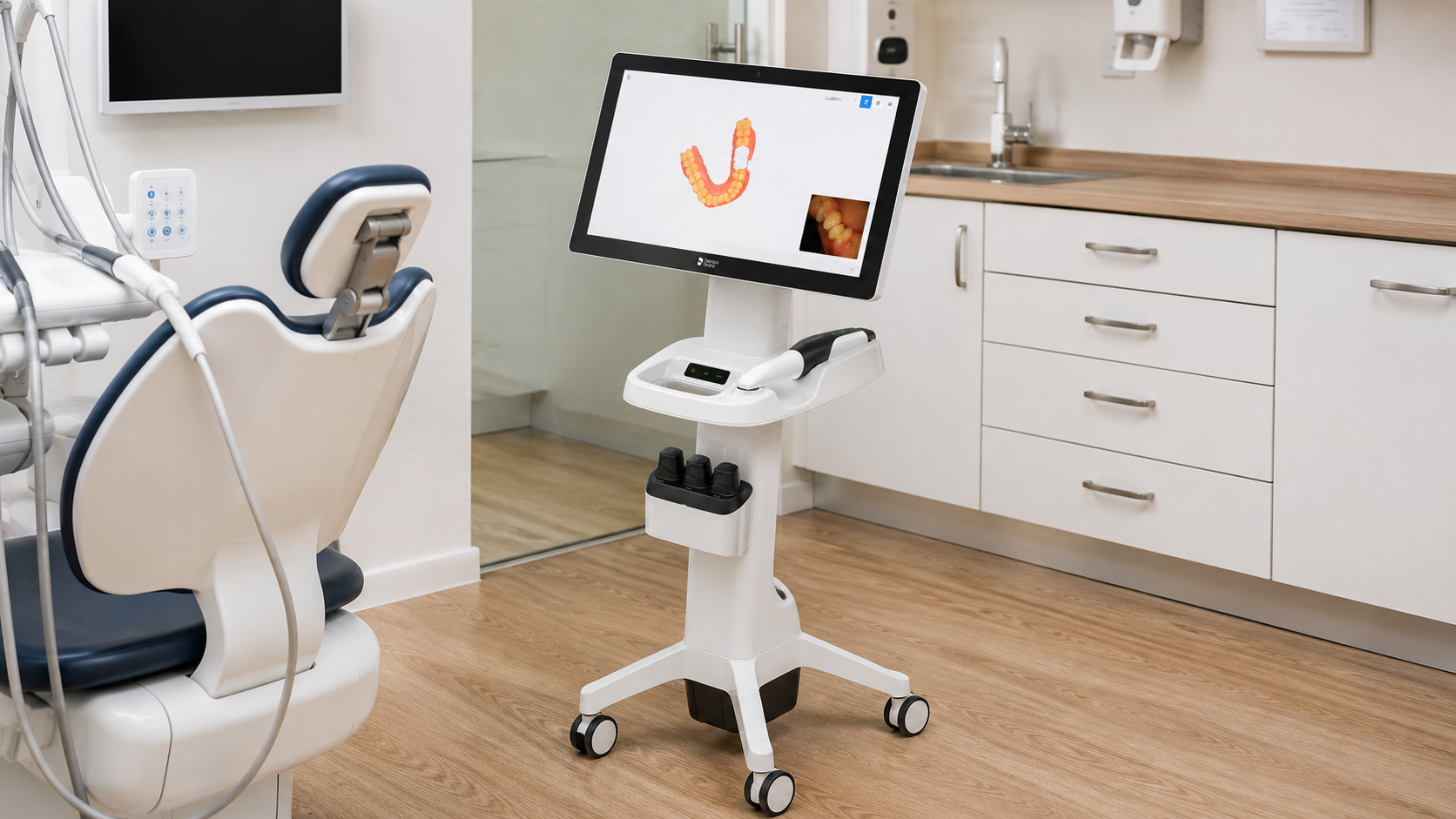
Dentsply Sirona announced that the Primescan 2 Cart has been awarded the 2026 iF Design Award in the category Product Design – Medicine / Health. The recognition highlights the Cart's ergonomic design, intuitive usability, and integration into cloud-based dental workflows, drawing attention to how hardware design is becoming inseparable from clinical performance in modern digital dentistry.
What Is the iF Design Award?
The iF Design Award is one of the world's most respected design competitions, with roots going back to 1954. It draws nearly 11,000 entries annually from companies and designers across every major industry. Winning an iF Design Award is a widely recognized signal that a product meets a high standard of design quality, not just visually but in terms of user experience, functionality, and innovation.
The 2026 edition of the competition featured 129 jurors from 21 countries, evaluating submissions across a two-stage process. In the first stage, an international panel conducts an online preselection, advancing the top 50 percent of entries. Those projects then undergo a second round of evaluation by the Final Jury, which scores entries based on five criteria covering design quality, degree of innovation, functionality, formal aesthetic quality, and self-explanatory quality of use. The jury session is not public, and all entries are treated confidentially until results are announced.
The Medicine / Health subcategory within Product Design is among the more competitive categories in the competition, as it encompasses a wide range of clinical devices, equipment, and tools used in healthcare settings worldwide. Recognition in this category reflects not only the product's physical design but also its performance in demanding clinical environments.
What Is the Primescan 2 Cart?
The Primescan 2 Cart is a mobile accessory designed for use with the Primescan 2 intraoral scanner, Dentsply Sirona's cloud-native scanning solution launched in September 2024. Introduced at the International Dental Show (IDS) in Cologne in March 2025, the Cart was developed to address workflow and ergonomic needs that arise when integrating a wireless scanner into busy clinical settings.
The Cart combines several functional elements into one unit. Its design centers on three core principles: mobility, readiness, and communication. According to Dentsply Sirona, it features a slim, ergonomic profile for smooth movement within the operatory, a wireless connection, a dedicated cart battery, and a built-in charger for the scanner's batteries, ensuring it is always scan-ready throughout the clinical day.
A smart display is integrated into the Cart to support patient communication. This display allows dental professionals to share scan data and clinical information with patients chairside, supporting more transparent treatment conversations. The Cart is designed to adapt to a range of practice configurations, giving clinicians the flexibility to position and adjust it according to individual workflow needs.
For a thorough breakdown of how the Primescan 2 scanner itself performs in practice – including accuracy, cloud connectivity, and workflow considerations – the Primescan 2 review on Dental Reviewed covers the full picture in detail.
Why the Design Merited Recognition
The iF Design Award jury recognized the Primescan 2 Cart specifically for its high-quality industrial design and thoughtful handling in daily clinical practice. In the context of dental device design, these attributes are not cosmetic considerations – they carry direct consequences for workflow efficiency, clinician fatigue, and the patient experience.
Ergonomics as a Clinical Priority
Intraoral scanning already places considerable demands on dental professionals in terms of posture, hand position, and sustained concentration during longer procedures. An accessory that is poorly positioned, cumbersome to move, or difficult to manage can compound those physical demands. The Primescan 2 Cart was developed with a slim form factor specifically to allow smooth mobility within a typical operatory layout, which can be limited in space. Its low-profile design minimizes obstruction and allows repositioning without disrupting the clinical setup.
Ergonomics in dental technology extends beyond the handheld scanner itself. As covered in the intraoral scanner guide on Dental Reviewed, ease of use and integration into existing clinical space are critical factors when evaluating scanning systems. A well-designed cart that supports the scanner, keeps batteries charged, and positions the display for the patient contributes directly to the usability of the overall system.
Always Scan-Ready
One of the practical challenges with wireless intraoral scanners is battery management. The Primescan 2 scanner is powered by rechargeable batteries, and busy practices can cycle through multiple batteries throughout the day. The Cart addresses this by incorporating a built-in charging station for the scanner's batteries alongside a separate cart battery, so the unit itself maintains power independently from wall access. This design reduces the interruptions associated with managing battery logistics during a clinical session.
Patient Communication Through the Smart Display
The integrated smart display adds a layer of clinical value that goes beyond ergonomics. The ability to show patients their scan data in real time, at the chairside, supports informed consent and treatment explanation in a way that verbal description alone cannot. Patients seeing their own dentition in a three-dimensional scan tend to engage more actively with the treatment planning conversation, and this kind of technology-assisted communication is increasingly valued in modern dental practice.
Intraoral Scanner Adoption Is Accelerating
The timing of this recognition reflects a broader shift happening across dentistry. According to Dentsply Sirona, citing third-party market research and customer studies conducted between 2021 and 2025, global adoption of intraoral scanning now sits at an estimated 25 to 30 percent of dental practices worldwide, with 40,000 to 60,000 clinics having added an intraoral scanning system by 2024 to 2025. That growth trajectory means more practices are encountering the practical realities of integrating scanning hardware into clinical environments – and ergonomic accessory design becomes more relevant as adoption increases.
For practices investing in scanning technology for the first time, the choice of accessories and supporting hardware is part of the broader purchasing decision. A cart that is well-designed, that keeps equipment organized and ready, and that supports patient interaction can make a meaningful difference in whether digital scanning becomes a smooth part of the daily routine or a persistent logistical challenge.
For teams planning a digital dentistry setup from the ground up, the new dental practice checklist on Dental Reviewed outlines the equipment and infrastructure considerations involved, including scanning systems, cloud platforms, and the network requirements that support them.
DS Core and the Connected Workflow
The Primescan 2 Cart does not operate in isolation – it is part of Dentsply Sirona's broader connected dentistry ecosystem, centered on DS Core, the company's cloud platform. Primescan 2 is a cloud-native scanner, meaning scan data is processed and stored through DS Core rather than on a local computer. The Cart supports this workflow by keeping the scanner charged and accessible, ensuring that the physical setup of the equipment does not become a bottleneck in a workflow that depends on continuous cloud connectivity.
DS Core enables a range of clinical functions beyond scan storage, including lab ordering, CEREC chairside integration, SureSmile aligner simulation, and diagnostic imaging through the Canvas tool. For dental labs using DS Core as their primary case management platform, the guide to connecting with dentists on DS Core outlines how the collaboration side of the ecosystem functions. As more practices adopt cloud-native scanning, the lab-side infrastructure for managing these cases is also evolving.
The award-recognized design of the Primescan 2 Cart contributes to this connected workflow by reducing the friction associated with the physical setup. A cart that reliably keeps the scanner ready, positions it conveniently, and allows for fluid movement between patients helps ensure that the cloud-native workflow can function as intended, without the hardware becoming an obstacle.
Where the Primescan 2 Cart Fits in the Broader Scanner Market
The Primescan 2 scanner itself launched at a base price of $24,995, positioning it at the upper range of the intraoral scanner market alongside competitors such as the 3Shape TRIOS 5 and the iTero Lumina. The cart is sold separately and is one of several accessories introduced alongside scanner updates at IDS 2025, together with the Multi-Use Steel Sleeve, which offers an alternative to single-use scanning sleeves for practices prioritizing durability and sustainability.
For practices evaluating multiple scanning platforms, the Medit i700 review on Dental Reviewed provides useful comparative context on a scanner at a lower price point. The Medit i700 is a wireless scanner without cloud-native architecture, illustrating the range of options available at different stages of digital adoption. The Primescan 2 and its Cart represent one end of the spectrum, designed for practices that are fully committed to cloud-based workflows and the Dentsply Sirona ecosystem.
The iF Design Award recognition adds an external validation that goes beyond clinical performance benchmarks. When design awards are given to dental equipment, they tend to draw broader attention from practitioners who might not otherwise have followed the product category closely, and they signal to the industry that aesthetic and ergonomic considerations are taken seriously in this segment of the market.
What Other Updates Came with IDS 2025
The Primescan 2 Cart was introduced as part of a larger set of updates Dentsply Sirona revealed at IDS 2025, just six months after the scanner's original September 2024 launch. As reported by Inside Dental Hygiene, the updates reflected Dentsply Sirona's approach to continuous improvement through cloud-delivered feature releases, a model that benefits from the cloud-native architecture of the scanner.
The IDS 2025 updates to the Primescan 2 platform included:
Integrated caries detection using near-infrared and fluorescence-based technologies, designed to supplement conventional diagnostic methods and support patient education through DS Core
Optimized smart compression, reducing bandwidth requirements by up to 50 percent, making the scanner more accessible without requiring significant network infrastructure upgrades
Faster SureSmile simulations, with automatic tooth segmentation and smile simulations, reducing calculation times by up to 90 percent
Regulatory clearance for Canvas as a diagnostic viewer, enabling imaging customers to use DS Core for diagnostic purposes
Enhanced media library functionality in DS Core, improving intuitive file storage and sharing across dental teams
Max Milz, Group Vice President of Connected Technology Solutions at Dentsply Sirona, described the direction of these updates in remarks to Inside Dental Hygiene: DS Core as its foundation enables Primescan 2 to integrate with X-ray and CBCT systems, CEREC, 3D printing, and dental labs, giving clinicians access to all key workflows, including restorative, aligner, and implantology workflows, from one centralized platform. The Cart's design award recognition complements this technical evolution by ensuring the physical hardware setup matches the ambition of the software ecosystem.
Bottom Line
The Primescan 2 Cart's 2026 iF Design Award win is a noteworthy development, not because design awards alone define clinical value, but because of what it signals about the direction of dental technology hardware. As intraoral scanning adoption continues to grow globally and cloud-native workflows become more common, the physical design of the systems supporting those workflows becomes a meaningful differentiator.
The Cart's recognition for ergonomics, usability, and workflow integration reflects an approach to dental equipment design that treats the clinician's physical experience and the patient interaction as part of the clinical outcome. For practices evaluating the Primescan 2 system, the Cart represents a thoughtfully engineered accessory that can contribute to more consistent, efficient scanning sessions and a smoother patient experience at chairside.
For practices researching the Primescan 2 scanner before committing to a purchase, the full Primescan 2 review on Dental Reviewed covers scan quality, cloud performance, pricing, and real-world trade-offs in depth. More information on the iF Design Award project can be found on the official iF Design Award website.
Frequently Asked Questions
What is the iF Design Award?
The iF Design Award is one of the world's most prestigious design competitions, founded in 1954. It receives nearly 11,000 entries each year and evaluates products across disciplines, including product design, communication design, and architecture. Winning an iF Design Award is recognized globally as a mark of design excellence.
What category did the Primescan 2 Cart win?
The Primescan 2 Cart won in the category Product Design – Medicine / Health at the 2026 iF Design Award. The jury recognized the Cart for its high-quality industrial design, ergonomic usability, and seamless integration into digital dental workflows.
What does the Primescan 2 Cart do?
The Primescan 2 Cart is a mobile workstation designed to support the Primescan 2 intraoral scanner in clinical settings. It features a slim, ergonomic design for operatory mobility, a built-in battery charger for the scanner's batteries, a dedicated cart battery, a wireless connection, and an integrated smart display for patient communication at chairside.
When was the Primescan 2 Cart introduced?
The Primescan 2 Cart was introduced at the International Dental Show (IDS) in Cologne, Germany, in March 2025, approximately six months after the launch of the Primescan 2 scanner itself in September 2024.
Does the Primescan 2 Cart require a separate purchase?
Yes, the Primescan 2 Cart is sold separately from the scanner. Specific pricing for the Cart should be confirmed directly with Dentsply Sirona or an authorized dealer, as accessory pricing may vary by region.
What is the iF Design Award judging process?
The judging process involves two stages. In the first, an international jury conducts an online preselection and advances the top 50 percent of entries. Those projects then move to a Final Jury session where entries are evaluated in person based on five criteria covering design quality, innovation, functionality, formal aesthetics, and ease of use. The 2026 jury included 129 jurors from 21 countries. More details are available on the iF Design Award website.
How does the Primescan 2 Cart support cloud-based workflows?
The Cart keeps the scanner charged and ready throughout the clinical day by charging scanner batteries directly through the built-in charger, while the cart's own battery provides power independently. This setup ensures that battery management does not interrupt the cloud-based scanning workflow that Primescan 2 relies on through the DS Core platform.
How fast is intraoral scanner adoption growing globally?
According to Dentsply Sirona, citing third-party market research and customer studies conducted between 2021 and 2025, approximately 25 to 30 percent of dental practices worldwide have adopted intraoral scanning, with an estimated 40,000 to 60,000 clinics having added intraoral scanning systems by 2024 to 2025.