Rating: 4.4/5
3Shape TRIOS 5 Wireless Review: Complete Guide & Troubleshooting For Dental Professionals
The 3Shape TRIOS 5 Wireless represents the pinnacle of intraoral scanning technology, introducing revolutionary calibration-free operation and AI-enhanced scanning capabilities...
Reviewed by Marcus Hale
Pros
- Revolutionary calibration-free technology eliminates weekly maintenance saving 2-4 hours monthly
- AI-powered ScanAssist engine provides intelligent real-time scanning guidance reducing stitching errors
- Exceptional scanning accuracy maintaining TRIOS reputation with 10-15 micron trueness
- Smallest and lightest TRIOS scanner at 299 grams, 30% smaller and 20% lighter than TRIOS 4
- Advanced wireless technology with improved 5 GHz connectivity and reliable performance
- Extended battery life up to 66 minutes per battery with intelligent sleep mode functionality
- Premium full-color capture providing enhanced shade matching and tissue visualization
- Comprehensive AI-powered software ecosystem including patient engagement tools at no additional cost
- Extensive laboratory network integration with TRIOS Unite platform and thousands of compatible labs
- Reduced learning curve through AI assistance accelerating staff competency development
- Significant time savings from eliminating calibration translating to improved practice productivity
- Future-proof technology platform with regular software updates and feature enhancements
- Superior ergonomics reducing operator fatigue during extended scanning sessions
- Strong resale value as premium flagship product maintaining market position
- TRIOS Share technology enabling one scanner to serve multiple operatories wirelessly
- Haptic feedback and LED ring providing intuitive status communication
Cons
- Premium pricing of $25,900 significantly higher than capable mid-range alternatives
- TRIOS Care subscription is optional after the first year; staying on the full-service plan adds about $2,299 annually, though the free TRIOS Only plan keeps the scanner fully functional
- Battery replacement costs over time as batteries reach end of service life after 12-18 months
- Wireless range limitations of approximately 15 meters may challenge large facility layouts
- Premium features may exceed clinical needs and utilization of moderate-volume practices
- TRIOS 6 is now available with hyperspectral imaging and AI diagnostics, creating potential buyer hesitation
- Initial wireless pairing can sometimes be problematic requiring troubleshooting
- No wired backup option available if wireless connectivity issues arise
- Battery charging requires workflow planning and rotation protocols for continuous operation
- Higher total cost of ownership compared to budget alternatives over equipment lifetime
The 3Shape TRIOS 5 Wireless represents the pinnacle of intraoral scanning technology, introducing revolutionary calibration-free operation and AI-enhanced scanning capabilities that fundamentally transform the digital impression experience. As the fifth generation of 3Shape's flagship scanner line, the TRIOS 5 Wireless delivers unprecedented ergonomics through its compact, lightweight design while eliminating the weekly calibration burden that has characterized previous scanner generations. This comprehensive review examines the scanner's groundbreaking features, addresses common technical challenges with practical solutions, and evaluates whether the premium pricing delivers commensurate value in 2026's competitive marketplace. Whether you're a practice considering upgrading from older TRIOS models, evaluating premium scanner options for the first time, or a current TRIOS 5 user seeking to optimize performance, this guide provides the detailed insights necessary for maximizing your investment in cutting-edge dental technology.
Understanding The 3Shape TRIOS 5 Wireless System
The intraoral scanner market has witnessed dramatic evolution over the past decade, with manufacturers continuously refining technology to address clinical pain points and enhance user experience. The 3Shape TRIOS 5 Wireless, launched in 2022, represents a quantum leap forward in scanner design, addressing longstanding challenges through innovative engineering solutions that redefine what dental professionals should expect from premium scanning equipment.
3Shape CEO Jakob Just-Bomholt described the TRIOS 5 as "by far the best intraoral scanner on the market, a league of its own," statements that reflect the company's confidence in the technological advances this scanner brings to market. The TRIOS 5 Wireless introduces more than 50 improvements over its predecessors, with three primary focus areas defining the development philosophy: ergonomics, effortless operation, and hygienic design.
The most transformative innovation distinguishing the TRIOS 5 from all previous TRIOS generations involves calibration-free technology. 3Shape completely redesigned the scanner architecture, moving the mirror from the scanner tip into the sealed scanner body. This fundamental change means that changing tips no longer affects calibration, eliminating the weekly calibration requirement that characterized TRIOS 3 and TRIOS 4 ownership. The scanner remains perpetually ready for use, removing a significant workflow interruption and maintenance burden.
The second major advancement involves the ScanAssist engine, representing a complete redesign of 3Shape's scanning software architecture. This AI-powered technology provides intelligent alignment capabilities that automatically detect and correct stitching errors during the scanning process. ScanAssist's intelligent alignment technology for building up a 3D model results in precision scans, effortlessly and efficiently, allowing practitioners to scan in any direction and develop their own scanning paths rather than following rigid protocols.
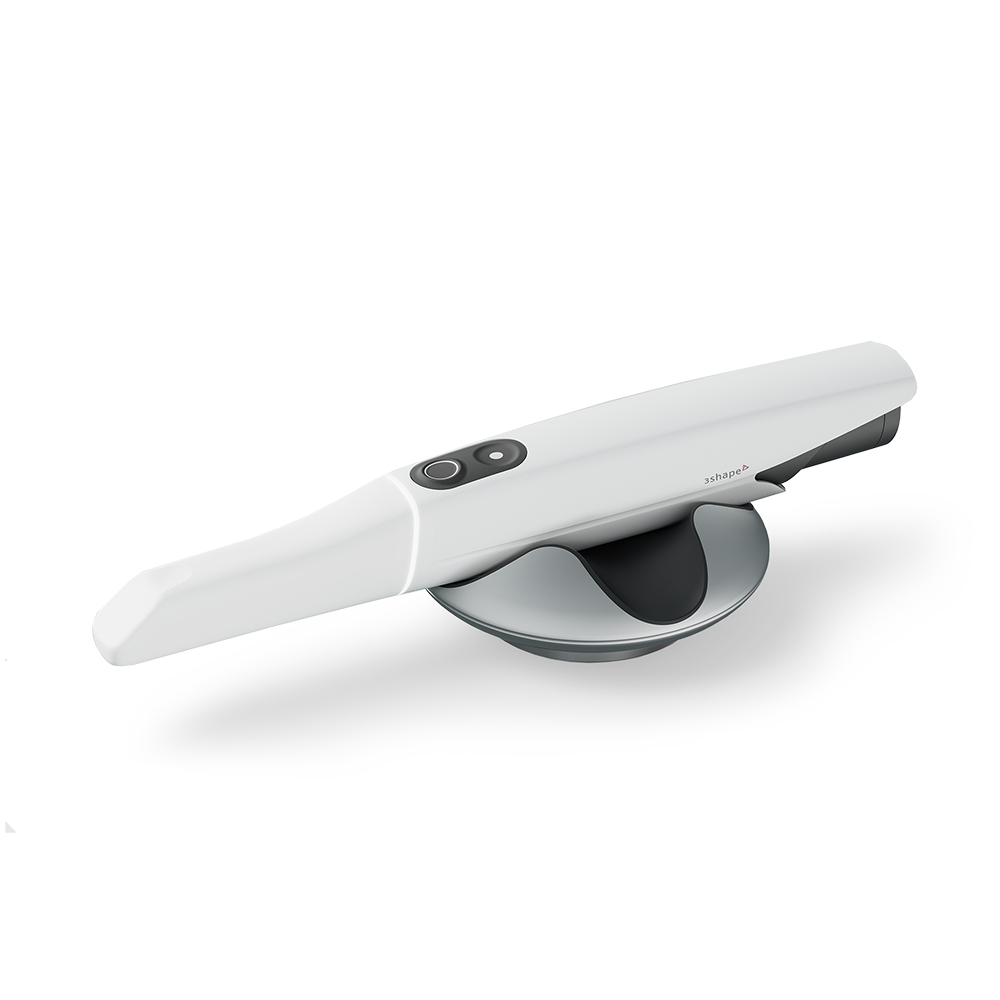
Physical ergonomics received extensive attention during TRIOS 5 development. TRIOS 5 is 30% smaller and 20% lighter compared to TRIOS 4, with the scanner weighing just 299 grams including battery. For comparison, the TRIOS 4 weighed 375 grams with battery, making the TRIOS 5 the lightest scanner in the TRIOS lineup and among the lightest premium intraoral scanners available in 2026.
The wireless implementation received comprehensive refinement, addressing battery life concerns that plagued the TRIOS 4. The TRIOS 5 features improved battery technology providing up to 66 minutes of active scanning time per battery, with most practices finding that a single battery change suffices for an entire day of clinical activity. The scanner automatically enters sleep mode when not in use, extending battery life and ensuring the scanner remains ready even after sitting unused for a week.
According to 3Shape's 2026 pricing, the TRIOS 5 Wireless starts from $25,900 excluding tax and shipping, with monthly payment options available from $531. Through promotions running until June 30, 2026, a TRIOS 5 plus laptop bundle starts around $22,700 after rebate in North America, and trade-in offers can save up to $10,000. The complete system includes the scanner wand, pod, three batteries with a charger, wireless connectivity components, and first-year TRIOS Care benefits covering onboarding, training, support, warranty, and express replacement services.
TL;DR
3Shape prices the TRIOS 5 Wireless from $25,900, though 2026 bundle promos drop it to about $22,700, and trade-ins cut up to $10,000 off.
The sealed-mirror design makes the scanner calibration-free, eliminating weekly maintenance and saving roughly 2-4 hours of staff time each month.
The ScanAssist AI engine corrects stitching errors in real time, and the 299 g body, the lightest TRIOS, cuts operator fatigue during long sessions.
TRIOS 6 now layers hyperspectral imaging and AI diagnostics onto the same hardware, so buyers wanting NIRI caries detection should weigh that newer model.
Revolutionary Features And Technology Innovations
The technological foundations distinguishing the TRIOS 5 Wireless from competing scanners and previous TRIOS generations merit detailed examination, as these innovations directly impact clinical workflows, practice efficiency, and long-term ownership experience.
Calibration-Free Scanning Technology
The elimination of calibration requirements represents perhaps the most significant practical advancement the TRIOS 5 brings to clinical practice. Understanding how this technology works illuminates why it delivers such meaningful value. The mirror, which is normally housed in a scanner tip, is instead enclosed in the scanner. That means when you change tips you are not affecting calibration, fundamentally solving the calibration drift issue that required weekly recalibration in previous models.
Traditional intraoral scanners require periodic calibration because the mirror component in the scanner tip experiences slight positional changes with each autoclaving cycle. These microscopic variations accumulate over multiple sterilization cycles, eventually causing the scanner's optical system to deviate from factory specifications. The TRIOS 3 required calibration every 7 days, consuming 5-10 minutes of staff time while rendering the scanner unavailable for clinical use.
The TRIOS 5's sealed mirror design isolates this critical optical component from the sterilization process entirely. The sapphire glass window in the scanner tip protects the mirror while allowing optical transmission, and the closed tip design prevents dust, debris, or moisture from affecting optical performance. This engineering solution delivers immediate practical benefits: practices save approximately 2-4 hours monthly in calibration time, eliminate calibration-related workflow interruptions, and avoid the frustration of discovering calibration expiration when attempting to scan a patient.
The time savings translate directly to increased productivity and revenue generation. A practice performing 50 scans monthly saves approximately 30 hours annually in calibration time, hours that can be devoted to patient care or other productive activities. The elimination of calibration also removes a potential source of scanning errors, as scans performed on systems nearing calibration expiration may exhibit subtle accuracy degradation.
AI Scan And Intelligent Scanning Assistance
The ScanAssist engine represents 3Shape's investment in artificial intelligence and machine learning applied to intraoral scanning challenges. ScanAssist is a brand new feature that is said to help significantly reduce stitching errors, especially in the anterior region, addressing one of the most common sources of scanning difficulties even among experienced operators.
Traditional scanning engines assemble three-dimensional models by stitching together individual image frames captured during scanner movement. When the scanner moves too quickly, loses proper angulation, or encounters anatomical challenges, stitching errors can occur, creating distortions or gaps in the final model. These errors typically require re-scanning affected areas, extending chair time and frustrating both practitioners and patients.
ScanAssist analyzes captured data in real-time, detecting potential misalignments or distortions as they occur and automatically implementing corrective algorithms to maintain model integrity. This intelligent assistance operates transparently, requiring no conscious input from the operator while continuously optimizing scan quality. The practical result allows practitioners to develop personalized scanning patterns rather than adhering to prescribed sequences, accommodating individual preferences and clinical situations.
The LED ring and haptic feedback features complement the ScanAssist engine, providing guidance through visual and tactile cues. The LED ring displays color-coded status information visible at a glance, indicating connection status, battery level, and scanning readiness without requiring operators to shift focus to the computer screen. The haptic feedback delivers subtle vibrations providing real-time scanning guidance, allowing operators to maintain visual focus on the intraoral environment while receiving scanner feedback through tactile sensation.
Advanced Wireless Performance And Battery Management
Wireless scanning technology has matured significantly since its introduction, with the TRIOS 5 representing the current state-of-the-art in wireless intraoral scanner design. The wireless implementation utilizes a 5 GHz frequency band with a TP-Link USB adapter, providing approximately 15 meters of operational range and minimizing interference from 2.4 GHz devices like older WiFi routers, Bluetooth equipment, and microwave ovens.
3Shape has increased the battery life (up to 66 minutes per battery). They have also sped up the charging time and the batteries have LED indicators on them that tell you the battery's charge level. The battery design incorporates shake-to-check functionality, where shaking the battery activates LED indicators displaying remaining charge without requiring insertion into the scanner or charger.
The three-battery system includes a dual-slot charger, with the third battery remaining in the scanner during operation. The scanner can sit for a week in sleep mode. You just pick it up a week later and start scanning with no need to change out the battery, demonstrating the effectiveness of the automatic sleep mode functionality.
Battery management represents one area where the TRIOS 5 dramatically improves upon the TRIOS 4 experience. According to Institute of Digital Dentistry analysis, "battery life was and still is a point of contention with the TRIOS 4, often requiring multiple daily battery changes." The TRIOS 5's extended battery life and intelligent power management eliminate this frustration, with most practices finding one battery change sufficient for full-day operation.
Next-Generation Ergonomics And Handling
Physical ergonomics directly impact operator comfort during extended scanning sessions and influence the learning curve for staff members new to digital impressions. The TRIOS 5's compact dimensions measuring just 26.6 cm in length with scanner height and width of 3.85 x 3.74 cm create a balanced pen-grip profile that accommodates diverse hand sizes.
The 30% size reduction and 20% weight decrease compared to TRIOS 4 translate to tangible comfort improvements during clinical use. Operators report reduced hand and wrist fatigue during full-arch scanning sessions, particularly valuable for practices performing high volumes of orthodontic impressions or full-mouth reconstructions requiring extensive scanning.
The two-button design enables scanner-based software navigation, with operators using the scanner as a remote control to select workflow steps, rotate 3D models, and control software functions. This touchless interface reduces the need to contact the mouse or keyboard during patient procedures, supporting infection control protocols while maintaining workflow efficiency.
Technical Capabilities And Scanning Performance
The technical specifications underlying any intraoral scanner determine its clinical utility and define the range of applications where it excels. The TRIOS 5 Wireless builds upon 3Shape's established reputation for accuracy while introducing performance enhancements that expand clinical capabilities.
Scanning Accuracy And Clinical Validation
Accuracy specifications encompass two distinct parameters: trueness, measuring how closely a scan matches the actual object dimensions, and precision, measuring the consistency of repeated scans of the same object. Both parameters prove critical for clinical success, with trueness determining prosthetic fit and precision indicating scanner reliability.
TRIOS 5 has been built with the same technical principles as the TRIOS 3 and 4, leveraging the Ultrafast Optical Sectioning technology that has undergone continuous refinement through five scanner generations. This optical foundation delivers trueness values in the range of 10-15 microns for single-unit preparations and full-arch scans, placing the TRIOS 5 among the most accurate scanners available in 2026.
Clinical validation studies for the TRIOS 5 remain ongoing as of 2026, with independent research expected to confirm the accuracy levels achieved in clinical practice. Anecdotal reports from early adopters and beta testers indicate excellent performance across diverse clinical applications, though some users have reported occasional challenges with full-arch edentulous scanning requiring refinement of technique.
Scanning speed, while less of a differentiating factor among premium scanners in 2026, remains impressive. According to Institute of Digital Dentistry's clinical testing, "I routinely complete full arch scans within 35 seconds, with my fastest scans taking as little as 18 seconds." These acquisition times place the TRIOS 5 among the fastest scanners available while maintaining high accuracy standards.
Image Quality And Color Reproduction
Full-color scanning capability extends beyond aesthetic appeal, providing clinically relevant information for shade matching, tissue health assessment, and laboratory communication. The TRIOS 5 delivers realistic color reproduction that assists with anterior esthetic cases while documenting tissue characteristics relevant to periodontal and implant applications.
The color accuracy, while substantially improved over earlier TRIOS generations, still serves best as a supplementary tool rather than complete replacement for traditional shade-taking methods in highly critical esthetic cases. The color capture excels at documenting the general shade range and tissue health, providing laboratories with contextual information that improves restoration design quality.
The sealed mirror design contributes to consistent image quality by protecting optical components from contamination. The scratch-resistant sapphire glass window maintains optical clarity through hundreds of sterilization cycles, ensuring image quality remains consistent throughout the scanner's operational lifetime.
Software Ecosystem And Integration
The TRIOS 5 operates through the 3Shape Unite platform, serving as the workflow engine connecting scanning, treatment planning, laboratory communication, and practice management. Unite provides access to thousands of applications through the Unite Store, enabling practices to select best-in-class solutions for specific clinical needs.
Three patient engagement applications come included at no additional cost: TRIOS Patient Monitoring for tracking changes over time, Treatment Simulator for visualizing proposed esthetic outcomes, and Smile Design for collaborative treatment planning. These applications transform the scanner from a data capture device into a comprehensive patient communication platform supporting case acceptance and patient education.
TRIOS Share technology enables the wireless scanner to connect to any PC in the practice using WiFi, allowing a single scanner to serve multiple operatories. This capability proves particularly valuable for multi-doctor practices or practices with satellite locations, maximizing scanner utilization while providing flexibility for varying workflow demands.
Clinical Applications And Advanced Workflows
The versatility of the TRIOS 5 Wireless determines how comprehensively it supports various clinical disciplines. The scanner demonstrates broad applicability across restorative dentistry, orthodontics, implant applications, and specialized procedures.
Premium Restorative Applications
For crown and bridge procedures, the TRIOS 5 captures detailed preparation margins, proximal contacts, and occlusal anatomy with accuracy sufficient for predictable prosthetic outcomes. The color capture assists laboratories with shade selection while the ScanAssist technology ensures consistent results even in challenging posterior access situations.
Full-arch impressions for complete-arch reconstructions demonstrate the scanner's capability to maintain accuracy across large data volumes. The ability to scan complete dentitions in under a minute eliminates the materials cost, patient discomfort, and dimensional instability associated with conventional impressions while enabling same-day treatment planning and laboratory communication.
Veneer preparations benefit particularly from the TRIOS 5's combination of accuracy and color capture. The digital workflow supports conservative preparation designs while the color information guides laboratory technicians in achieving optimal esthetic outcomes. The real-time visualization enables clinicians to evaluate preparation adequacy before dismissing patients, reducing callback appointments for preparation refinement.
Advanced Orthodontic Capabilities
Digital impressions have become the standard of care for orthodontic treatment, with clear aligner therapy and indirect bonding workflows dependent upon accurate digital models. The TRIOS 5 excels in orthodontic applications through rapid full-arch acquisition, accurate interarch relationship capture, and seamless integration with orthodontic treatment planning software.
The Treatment Monitoring functionality enables practices to document orthodontic progress through serial digital impressions, creating visual timelines demonstrating tooth movement to patients and referring doctors. This capability supports treatment evaluation while providing compelling evidence of treatment effectiveness for marketing and patient communication purposes.
Integration with clear aligner manufacturers streamlines the referral and treatment planning process. Practices capture digital impressions and transmit them electronically to aligner companies, eliminating shipping delays and reducing the turnaround time between initial consultation and treatment initiation.
Comprehensive Implant Solutions
Implant scanning capabilities prove essential for modern restorative practices, with digital workflows replacing conventional impression techniques for implant prosthetics. The TRIOS 5 works with comprehensive scan body libraries from major implant manufacturers, capturing three-dimensional implant positions for custom abutment and crown fabrication.
The digital implant workflow eliminates impression copings, pick-up techniques, and the potential for impression material distortion around healing abutments. Patients appreciate avoiding bulky impression materials while practitioners benefit from improved accuracy and streamlined laboratory communication.
Integration with implant planning software enables practices to combine CBCT data with intraoral scans for comprehensive surgical and prosthetic planning. This digital approach supports predictable implant placement through guided surgery while facilitating communication between surgical and restorative team members.
Specialized Clinical Applications
The TRIOS 5's versatility extends to specialized applications, including TMJ assessment, sleep apnea appliance fabrication, and pediatric dentistry. The compact scanner head and rapid acquisition prove particularly valuable in pediatric applications where patient cooperation windows may be brief.
The fluorescence scanning capability inherited from TRIOS 4 assists with caries detection, utilizing specific wavelengths to identify demineralized enamel and dentin. While not replacing comprehensive caries detection protocols, this feature provides supplementary diagnostic information during routine examinations.
Common Problems And Solutions: Comprehensive Troubleshooting Guide
Even premium technology occasionally encounters operational challenges. Understanding common problems and their solutions helps practices maintain optimal scanner performance while minimizing disruptions to clinical workflows.
Scanning Quality Issues
Problem #1: Incomplete scan coverage despite AI guidance
The ScanAssist technology significantly reduces stitching errors, but incomplete scan coverage can still occur when scanning technique, tissue interference, or patient factors create challenging conditions.
Causes: inadequate overlap between scan passes, excessive saliva contamination, patient movement during acquisition, or scanning too rapidly through complex anatomical areas.
Solutions:
Use systematic scanning patterns, ensuring 30-40% overlap between adjacent passes
Employ adequate isolation using cotton rolls, suction, or a dental dam when appropriate
Position patients comfortably with head support to minimize involuntary movement
Reduce scanning speed in anatomically complex areas, allowing ScanAssist adequate processing time
Rescan problem areas from multiple angles if initial coverage proves incomplete
Prevention:
Develop and practice standardized scanning sequences for different clinical situations
Communicate clearly with patients about remaining still during scanning
Schedule longer appointments during the learning phase to avoid time pressure
Review completed scans before dismissing patients to identify gaps requiring additional capture
Problem #2: Color accuracy variations between scans
Color reproduction can vary based on environmental factors, scanner settings, and tissue conditions, potentially compromising shade matching utility.
Causes: inconsistent operatory lighting, tissue blanching from anesthetic injection, inflamed or dehydrated tissues, scanner sleeve interference with optical path.
Solutions:
Ensure operatory lighting provides consistent, neutral illumination without excessive shadows
Capture color scans before administering a local anesthetic when possible
Allow tissues to rehydrate if excessive air drying has occurred
Verify scanner sleeves are properly positioned and free from wrinkles affecting optical quality
Document lighting conditions and tissue state when color accuracy proves critical
Prevention:
Establish and maintain a consistent operatory lighting configuration
Schedule color-critical cases during optimal tissue health periods
Consider traditional shade guides for highly critical anterior esthetic cases
Document best practices for color capture and train all staff consistently
Problem #3: Difficulty with reflective surfaces
Highly reflective surfaces, including wet enamel, polished metal restorations, and saliva pooling, can challenge the scanner's ability to capture clean data.
Causes: water film on tooth surfaces, metal restorations reflecting light directly back to the scanner, and saliva accumulation in sulcular areas.
Solutions:
Use gentle air drying to remove water films without desiccating tissues
Employ scanning powder on highly reflective metal restorations when necessary
Use cotton roll isolation and continuous suction to control saliva
Angle the scanner to minimize specular reflections from metal surfaces
Consider multiple scan passes from different angles for problematic areas
Prevention:
Develop isolation protocols appropriate for different clinical situations
Train staff on recognizing conditions that benefit from powder application
Maintain adequate suction and cotton roll supplies chairside
Wireless And Battery Issues
Problem #4: Battery drains faster than expected
While the TRIOS 5's battery performance represents substantial improvement over TRIOS 4, some users experience shorter battery life than the specified 66 minutes of scanning time.
Causes: battery age and charge cycle degradation, leaving the scanner powered on between patients rather than allowing sleep mode activation, environmental temperature extremes, and individual usage patterns, including frequent starts and stops.
Solutions:
Verify the scanner enters sleep mode automatically when idle for 2-3 minutes
Replace batteries showing significant capacity degradation (typically after 12-18 months)
Store spare batteries at room temperature, avoiding temperature extremes
Monitor battery LED indicators to identify batteries requiring replacement
Contact 3Shape support if battery life degradation appears premature
Prevention:
Establish battery rotation protocols, ensuring all three batteries receive regular use
Allow the scanner to enter sleep mode rather than manually powering off between short breaks
Maintain battery charge levels above 20% when possible to maximize lifespan
Document battery performance to identify degradation trends
Problem #5: Wireless connection interruptions
According to Institute of Digital Dentistry's extensive testing, "while connection is extremely reliable once established, I never experienced disconnections during scanning, initially pairing the scanner with the computer can sometimes be problematic."
Causes: TP-Link wireless adapter positioning too close to or too far from the scanner, 5 GHz frequency interference from other wireless devices, Windows wireless service configuration issues, and multiple scanners attempting to connect to the same computer.
Solutions:
Position the TP-Link USB adapter in a port providing a clear line-of-sight to the scanner
Verify the wireless channel is set to the recommended channel 40
Open Windows services and verify the 3Shape Wireless Service is running with automatic startup
Remove scanner battery, power off scanner, unplug dongle, then reassemble in sequence
Contact IT support to identify and resolve 5 GHz frequency interference sources
Prevention:
Dedicate specific USB ports to scanner connectivity, avoiding switching ports frequently
Maintain a clear workspace around the wireless adapter, avoiding metal objects that could interfere
Document successful connection procedures for staff reference
Consider wired backup options for critical situations requiring guaranteed connectivity
Problem #6: Charging issues or battery not recognized
Battery charging problems prevent practices from maintaining an adequately charged battery inventory for full-day operation.
Causes: dirty battery contacts, charger malfunction, battery reaching the end of its service life, improper battery insertion.
Solutions:
Clean battery contacts and charger slots using isopropyl alcohol and a soft cloth
Verify proper battery orientation during insertion into the charger
Test suspect batteries in different charger slots to isolate charger vs battery issues
Replace batteries showing no LED response after several hours of charging
Contact 3Shape support for charger replacement if multiple batteries fail to charge
Prevention:
Establish weekly battery contact cleaning protocols
Rotate batteries regularly to identify failing units promptly
Maintain backup batteries to ensure continuous operation during battery issues
Document battery age and performance for replacement planning
Software And AI Feature Problems
Problem #7: AI scan not providing expected guidance
The ScanAssist engine should provide intuitive scanning guidance, but some users find the AI assistance less helpful than anticipated.
Causes: software settings configured inappropriately for user skill level or clinical situation, scanning technique incompatible with AI optimization algorithms, unrealistic expectations about AI capabilities.
Solutions:
Review ScanAssist settings in software preferences, adjusting sensitivity parameters
Practice systematic scanning patterns, allowing AI adequate data for intelligent assistance
Recognize that AI enhances but doesn't replace the fundamental scanning technique
Consult 3Shape training resources for optimal ScanAssist utilization
Contact technical support for personalized guidance on maximizing AI features
Prevention:
Complete comprehensive initial training covering AI features and optimal usage
Schedule periodic refresher training as software updates introduce new capabilities
Share successful scanning techniques among staff members
Maintain realistic expectations, recognizing AI as an enhancement, not a replacement for skill
Problem #8: Software Performance Lag Or Crashes
Software stability issues disrupt workflows and can result in lost scan data requiring patient recall.
Causes: computer specifications below recommended requirements, insufficient RAM or storage space, background applications consuming system resources, corrupted software installation.
Solutions:
Verify computer meets minimum requirements (Windows 11, 16GB RAM recommended)
Close unnecessary background applications before initiating scanning sessions
Perform disk cleanup and defragmentation to optimize storage performance
Update to the latest TRIOS software version addressing known stability issues
Reinstall TRIOS software if crashes persist despite other troubleshooting
Prevention:
Dedicate the TRIOS computer exclusively to scanning activities
Implement regular system maintenance, including Windows updates
Monitor system resource utilization, identifying applications consuming excessive resources
Schedule software updates during non-clinical hours to avoid workflow disruptions
Problem #9: Cloud sync and data transfer issues
Successfully transmitting scans to laboratories or cloud storage requires reliable network connectivity and proper software configuration.
Causes: internet connection instability, Unite Cloud account configuration errors, file size limitations, and firewall blocking data transfer ports.
Solutions:
Verify an active internet connection with adequate bandwidth for large file transfers
Confirm Unite Cloud account credentials and storage quota availability
Export scans in appropriate file formats (STL, PLY) meeting laboratory requirements
Configure firewall exceptions for 3Shape software and Unite Cloud services
Use alternative transfer methods (USB drive, direct file sharing) if network transfer fails consistently
Prevention:
Maintain robust internet connectivity with backup options for critical transfers
Establish clear communication protocols with laboratories regarding file format preferences
Test transfer methods with laboratories before production cases
Document successful transfer procedures for staff reference
Advanced Clinical Challenges
Problem #10: Full-arch scan stitching errors
Complete arch scans present the greatest technical challenge due to data volume and anatomical complexity.
Causes: inadequate anatomical landmarks for software registration, patient movement during extended scanning, excessive saliva accumulation, and insufficient scan overlap in critical registration areas.
Solutions:
Establish clear landmarks early in the scan sequence, providing registration references
Complete scans expeditiously while maintaining adequate overlap to minimize patient movement opportunity
Use aggressive isolation and continuous suction for saliva control
Consider a segmented scanning approach for patients with difficulty maintaining position
Leverage ScanAssist's improved stitching algorithms for automatic error correction
Prevention:
Develop systematic full-arch scanning protocols practiced on models
Schedule additional time for patients known to have cooperation challenges
Maintain patient comfort throughout the scanning process
Review preliminary scan quality before dismissing patients
Problem #11: Implant scan body recognition failures
Accurate implant scanning requires reliable scan body recognition and precise positional capture.
Causes: scan body library outdated, missing newer components, scan body instability on the implant platform, and inadequate scanning of the scan body geometry from multiple angles.
Solutions:
Update the scan body library through software updates, incorporating new components
Verify scan body seating and stability before initiating scan
Scan implant areas from multiple angles, ensuring complete geometric capture
Clean scan body surfaces, removing saliva or debris that potentially interferes with recognition
Manually verify scan body identification in the software before finalizing scan
Prevention:
Maintain the current scan body inventory compatible with the TRIOS 5 library
Document successful scan body types for commonly used implant systems
Establish verification protocols confirming scan body recognition
Train staff on proper scan body handling and insertion techniques
Problem #12: Difficult posterior access in a limited opening
Anatomical constraints challenge even compact scanners in patients with restricted mouth opening.
Causes: limited vertical and lateral mouth opening, strong gag reflex, and patient anatomy creating access barriers.
Solutions:
Position the patient with the head tilted back and turned toward the operator
Use gentle retraction techniques without overstressing tissues
Consider scanning in short segments, allowing rest periods
Leverage TRIOS 5's compact size for improved posterior access compared to larger scanners
Communicate clearly with patients about cooperation requirements
Prevention:
Assess patient anatomy and cooperation during consultation
Schedule adequate time for challenging access situations
Develop alternative scanning approaches for difficult cases
Consider sedation or alternative impression methods for severely restricted cases
Comparative Analysis: TRIOS 5 Wireless Vs Competitors
Understanding how the TRIOS 5 Wireless compares to alternative premium scanners helps practices make informed purchasing decisions aligned with specific needs and priorities.
The iTero Lumina represents Align Technology's latest flagship scanner, offering integrated NIRI technology for enhanced caries detection and seamless Invisalign integration. The iTero ecosystem provides tighter vertical integration for practices heavily focused on clear aligner therapy, while the TRIOS 5 offers more open laboratory connectivity and arguably superior ergonomics through its lighter, more compact design.
Medit i900 provides premium scanning capabilities at a lower price point. Following Medit’s 2025 price reduction, the i900 now starts around $18,999 for the scanner alone, sharpening its value advantage. The Medit platform appeals to practices prioritizing value and open connectivity, though the TRIOS 5 counters with calibration-free operation and more mature AI-enhanced features.
Dentsply Sirona Primescan 2 offers exceptional accuracy and seamless integration with CEREC in-office fabrication workflows. Practices committed to same-day dentistry through CEREC may find Primescan's integrated ecosystem compelling, while practices preferring laboratory partnerships benefit from TRIOS 5's broader connectivity options.
Compared to older TRIOS models, the TRIOS 5 Wireless delivers substantial advantages over TRIOS 3 and TRIOS 4. According to the comprehensive TRIOS model comparison, "TRIOS 5 is the only wireless TRIOS scanner you should consider," citing the dramatically improved battery life, calibration-free operation, and enhanced ergonomics that justify the price premium over TRIOS 4's approximately $22,000 cost.
The TRIOS 6 adds complexity to purchase decisions. Its hardware is essentially a TRIOS 5, but it layers on hyperspectral imaging, combining white light, fluorescence, and near-infrared in a single scan, plus the AI-driven TRIOS Dx Plus diagnostic software and the DentalHealth patient app, with up to 110% higher scan resolution. It typically retails around $28,800 (bundle promos from roughly $28,300). Practices wanting built-in caries detection and AI diagnostics may prefer TRIOS 6, while practices prioritizing proven technology at lower cost find that TRIOS 5 remains highly competitive in 2026.
Investment Analysis And Total Cost Of Ownership
Financial viability represents a critical consideration for any major practice technology investment. The TRIOS 5 Wireless requires honest analysis of purchase costs, ongoing expenses, and revenue potential.
The purchase price of $25,900, excluding tax and shipping, positions the TRIOS 5 firmly in the premium scanner segment. Current 2026 promotions reduce the effective cost substantially: a TRIOS 5 plus Dell Precision laptop bundle starts around $22,700 after a $1,000 rebate in North America (valid through June 30, 2026), and trade-in programs can deliver up to $10,000 in savings. The laptop configuration typically adds approximately $2,000 to the package price for a pre-configured Dell Precision system.
Additional costs include:
Scanner tips: Approximately $300 for a three-pack of autoclavable tips, with each tip rated for 100 autoclave cycles
TRIOS Ready Tips: Single-use disposable tips offering maximum infection control at an additional per-patient cost
TRIOS Care: about $2,299 annually after the first complimentary year, providing support, extended warranty, and express replacement, or the free TRIOS Only plan, which keeps the scanner fully functional at no recurring cost
Replacement batteries: Approximately $200 per battery when reaching the end of service life after 12-18 months
The calibration-free technology delivers quantifiable cost savings compared to TRIOS 3 and similar scanners requiring regular calibration. The 2-4 hours monthly saved in calibration time translates to approximately $2,000-4,000 annually in staff time at typical dental assistant wage rates, partially offsetting the premium purchase price.
Revenue generation opportunities from intraoral scanning include:
Direct scan fees: $75-200 per scan, depending on market and case complexity
Expanded service offerings: In-house clear aligners, same-day dentistry integration, comprehensive implant planning
Improved case acceptance: Enhanced patient communication through treatment simulation tools
Laboratory cost optimization: Reduced impression material expenses, elimination of remake costs from impression errors
According to the Institute of Digital Dentistry analysis, "at $25,900 USD for the scanner alone, the TRIOS 5 positions itself firmly in the premium scanner segment. While expensive, this actually represents 3Shape's most competitive pricing for a flagship scanner at launch, reflecting increasing market competition."
For practices performing 30-40 crown and bridge procedures monthly combined with regular orthodontic scanning, the TRIOS 5 typically achieves positive cash flow within 18-24 months. Higher-volume practices or those expanding into orthodontic services may achieve faster payback periods. The calibration-free technology accelerates ROI through time savings that purely purchase-price comparisons don't capture.
Maximizing TRIOS 5 Wireless Performance
Optimizing scanner performance requires consistent maintenance, proper technique, and thoughtful workflow design, though the TRIOS 5's calibration-free design dramatically simplifies ongoing maintenance compared to previous generations.
Daily maintenance routines
Clean scanner tips thoroughly between patients using approved cleaning solutions
Inspect the sapphire glass window for debris or damage
Verify battery charge levels and rotate batteries through the charger
Check the LED ring functionality and scanner responsiveness
Weekly performance checks
Thoroughly clean all three batteries and charger contacts with isopropyl alcohol
Verify wireless connectivity remains stable across typical operatory distances
Review scan completion rates, identifying patterns requiring technique refinement
Update software if new versions become available
Monthly optimization activities
Assess average scan times compared to baseline metrics
Evaluate battery performance, identifying units requiring replacement
Review scanner tip usage and plan replacement purchases
Schedule staff refresher training on new features or techniques
Staff training best practices
Provide structured initial training covering scanner operation and AI features
Schedule quarterly refresher sessions reviewing best practices
Share successful scanning techniques among team members
Leverage 3Shape's extensive online training resources and webinars
Patient communication strategies
Explain the digital impression advantages before beginning
Show patients real-time scan development on the monitor
Use Treatment Simulator to enhance treatment presentations
Collect patient feedback about comfort and experience
Workflow efficiency maximization
Develop standardized scanning protocols for common procedures
Prepare patients and materials before initiating scanning software
Leverage TRIOS Share to efficiently utilize one scanner across multiple operatories
Monitor efficiency metrics, identifying improvement opportunities
Is The Premium Price Justified In 2026?
The central question facing practices evaluating the TRIOS 5 Wireless involves whether the premium pricing delivers commensurate value compared to more affordable alternatives.
The calibration-free technology alone justifies a significant price premium for high-volume practices. The 2-4 hours monthly saved in calibration translates to approximately 30-50 hours annually, representing $2,000-4,000 in staff time savings at typical wage rates. Over a five-year ownership period, this totals $10,000-20,000 in recovered productivity.
The AI-enhanced scanning assistance delivers value through reduced learning curves for new users and improved scan quality consistency across operators with varying skill levels. Practices report that new staff members achieve competency faster with TRIOS 5 compared to scanners lacking intelligent assistance, reducing training costs and accelerating productivity.
The superior ergonomics matter most for high-volume scanning practices where operator comfort directly impacts productivity and job satisfaction. The 20% weight reduction and 30% size decrease compared to TRIOS 4 reduce hand and wrist fatigue during extended scanning sessions, potentially preventing repetitive stress injuries over the years of use.
For practices with moderate scanning volumes (15-25 scans monthly), budget-conscious alternatives such as the Medit i900 (from about $18,999) or a wired TRIOS 3 deliver adequate performance at a lower investment. These practices may struggle to justify the price premium for features they'll underutilize.
For premium practices prioritizing patient experience, workflow efficiency, and cutting-edge technology, the TRIOS 5 Wireless delivers value aligned with its premium positioning. The combination of calibration-free operation, AI assistance, and superior ergonomics creates genuine advantages that justify the price differential over mid-range alternatives.
Bottom Line
The 3Shape TRIOS 5 Wireless stands among the top intraoral scanners of 2026, combining calibration-free operation, AI-enhanced ScanAssist scanning, and the lightest body in the TRIOS line. The sealed-mirror design eliminates weekly calibration, saving staff time and keeping the scanner always ready, while improved battery life ends the frequent swaps that frustrated TRIOS 4 users.
At a $25,900 starting price (less with current 2026 bundle and trade-in promotions), the TRIOS 5 sits in the premium tier. The newer TRIOS 6 adds hyperspectral imaging and AI diagnostics for practices that want built-in caries detection, but the TRIOS 5 remains highly competitive for those who mainly need fast, accurate impressions. High-volume and multi-operator practices will see the strongest return; moderate-volume or budget-conscious practices should weigh capable mid-range alternatives against features they may underuse.
If you are comparing the TRIOS 5 to newer wireless rivals, our Medit i900 scanner review breaks down how Medit's latest model compares on speed, full-arch accuracy, and total cost of ownership.
Verdict
<p>The TRIOS 5 Wireless delivers revolutionary calibration-free operation and AI-enhanced scanning that transforms the digital impression experience in 2026. At a $25,900 starting price, it represents the pinnacle of 3Shape's scanner technology with over 50 improvements over previous generations.</p><p><strong>Best for:</strong> High-volume practices performing 30+ scans monthly where calibration-free convenience saves 2-4 hours of staff time monthly, multi-operator practices where AI-assisted scanning helps less experienced users achieve consistent results, and practices prioritizing premium patient experience and cutting-edge workflow efficiency. The wireless configuration with 66-minute battery life particularly suits practices valuing mobility and ergonomic benefits from the 20% lighter, 30% smaller design.</p><p><strong>Not ideal for:</strong> Budget-conscious practices with moderate scanning volumes under 20 cases monthly should evaluate mid-range alternatives like the Medit i700 at $19,500 or the TRIOS 3 Wired at $17,400. Practices requiring advanced caries detection capabilities should consider the newer TRIOS 6 with hyperspectral imaging. Those uncomfortable with wireless technology or battery management may prefer wired configurations.</p><p><strong>Clinical performance:</strong> The scanning accuracy places the TRIOS 5 among the most precise scanners available, with trueness values of 10-15 microns for single-unit and full-arch scans. The ScanAssist AI engine significantly reduces stitching errors, particularly in the anterior region, while enabling personalized scanning patterns. Full-arch scans routinely complete within 35 seconds. Color capture assists with shade matching for routine restorative work, though traditional shade guides remain advisable for highly critical anterior esthetic cases.</p>
Frequently Asked Questions
What makes TRIOS 5 wireless calibration-free?
The TRIOS 5 wireless eliminates calibration requirements through a fundamental redesign moving the mirror from the scanner tip into the sealed scanner body. The mirror, which normally requires periodic calibration due to positional changes during autoclaving, remains isolated from the sterilization process. This innovation means changing tips no longer affects calibration, eliminating the weekly calibration requirement that characterized TRIOS 3 and TRIOS 4.
How much does the 3Shape TRIOS 5 wireless cost?
The 3Shape TRIOS 5 Wireless starts from $25,900 excluding tax and shipping according to 3Shape's official 2026 pricing, with monthly payment options available from $531. The complete system includes the scanner wand, pod, three batteries with charger, wireless connectivity components, and first-year TRIOS Care benefits. Promotional pricing occasionally reduces the effective cost to around $24,900 after rebates.
Is TRIOS 5 wireless worth the premium price?
The 3Shape TRIOS 5 Wireless starts from $25,900 excluding tax and shipping according to 3Shape's official 2026 pricing, with monthly payment options available from $531. The complete system includes the scanner wand, pod, three batteries with a charger, wireless connectivity components, and first-year TRIOS Care benefits. Through 2026 promotions (valid until June 30, 2026), a TRIOS 5 plus laptop bundle starts around $22,700 after a $1,000 rebate in North America, and trade-in offers can save up to $10,000.
How long does TRIOS 5 wireless battery last?
The TRIOS 5 wireless battery provides up to 66 minutes of active scanning time per battery, with most practices finding one battery change sufficient for full-day operation. The scanner includes three batteries with a dual-slot charger, and the intelligent sleep mode allows the scanner to sit for a week in standby while maintaining charge. Battery LED indicators display remaining charge level, and shake-to-check functionality provides charge status without insertion.
What is AI Scan and how does it help?
AI Scan, powered by the ScanAssist engine, provides intelligent real-time scanning assistance that automatically detects and corrects stitching errors during the scanning process. The AI analyzes captured data continuously, implementing corrective algorithms to maintain model integrity without requiring conscious operator input. This technology reduces stitching errors, particularly in the anterior region, and enables practitioners to develop personalized scanning patterns rather than following rigid protocols.
Can TRIOS 5 wireless work with any laboratory?
The TRIOS 5 wireless works with thousands of dental laboratories worldwide through multiple file format options including STL, PLY, and DCM. The 3Shape Unite platform facilitates direct digital communication with laboratories in the 3Shape network, while scans can be exported in standard formats compatible with most CAD/CAM systems for laboratories outside this network. Practices should verify file format compatibility with their preferred laboratories before production cases.
What are the computer requirements for TRIOS 5 wireless?
The TRIOS 5 wireless requires Windows 11 operating system with 16GB RAM recommended for optimal performance, though 8GB minimum is supported. The computer needs available USB ports for the wireless adapter and scanner pod, adequate storage for scan files, and sufficient processing power for real-time 3D reconstruction. 3Shape offers pre-configured Dell Precision systems as part of the scanner package ensuring compatibility and performance.
How does TRIOS 5 wireless compare to TRIOS 3?
The TRIOS 5 wireless offers substantial advantages over TRIOS 3 including calibration-free operation eliminating weekly maintenance, AI-enhanced ScanAssist technology providing intelligent scanning guidance, 30% smaller and 20% lighter design improving ergonomics, and significantly improved battery performance extending operational time. The TRIOS 5 costs approximately $8,500 more than TRIOS 3 Wired but delivers meaningful workflow improvements justifying the premium for high-volume practices.
What is the difference between TRIOS 5 wireless and wired?
3Shape does not offer a wired version of the TRIOS 5, as the wireless configuration represents the only available option. The wireless implementation uses 5 GHz frequency with TP-Link adapter providing approximately 15 meters range, eliminating cable management while requiring battery rotation. Earlier TRIOS models offered both wired and wireless configurations, but the TRIOS 5 wireless performance improvements made wired versions unnecessary.
Does TRIOS 5 wireless have better accuracy than TRIOS 3?
The TRIOS 5 wireless maintains similar accuracy specifications to TRIOS 3, with both leveraging the same fundamental Ultrafast Optical Sectioning technology delivering trueness values in the 10-15 micron range for single-unit preparations. The primary TRIOS 5 advantages involve workflow efficiency through calibration-free operation, AI-enhanced scanning assistance improving consistency, and superior ergonomics rather than fundamental accuracy improvements over the proven TRIOS 3 platform.
What is the difference between the TRIOS 5 and the TRIOS 6?
The TRIOS 6 shares essentially the same hardware body as the TRIOS 5 but adds hyperspectral imaging, combining white, fluorescent, and near-infrared light in a single scan, along with the AI-driven TRIOS Dx Plus diagnostic software and the DentalHealth patient app, plus up to 110% higher scan resolution. The TRIOS 5 remains a pure high-quality scanning solution, while the TRIOS 6 shifts toward AI-assisted diagnostics. If you need built-in caries and soft-tissue detection, consider the TRIOS 6; if you mainly need fast, accurate impressions, the TRIOS 5 delivers at a lower price.
Is TRIOS Care required, and what does it cost?
No. TRIOS Care is optional after the complimentary first year. The full-service plan runs about $2,299 per year and covers unlimited support, extended warranty, and express replacement. Alternatively, you can switch to the free TRIOS Only plan, which keeps the scanner and core software fully functional at no recurring cost, so the TRIOS 5 does not lock you into a mandatory subscription.
Are there current promotions on the TRIOS 5 wireless in 2026?
Yes. Through promotions valid until June 30, 2026, in North America, a TRIOS 5 plus Dell Precision laptop bundle starts around $22,700 after a $1,000 rebate (a roughly $6,500 discount plus rebate off the standard package). Trade-in programs let you save up to $10,000 by trading in an existing intraoral scanner. Pricing varies by dealer and country, so request a current quote from an authorized 3Shape distributor.
Does the TRIOS 5 detect cavities like the iTero or TRIOS 6?
The TRIOS 5 includes fluorescence-based scanning that can highlight areas of demineralization as a supplementary aid, but it does not offer the near-infrared (NIRI) or hyperspectral caries-detection imaging found in the iTero NIRI-equipped scanners or the newer TRIOS 6. Practices that want integrated proximal-caries visualization should look at the TRIOS 6 or an iTero model with NIRI.