Rating: 4.3/5
All You Need to Know About iTero Element 5D Intraoral Scanner
The iTero Element 5D has earned a reputation as one of the most feature-rich intraoral scanners available to dental professionals today. Manufactured by Align Technology, this...
Reviewed by Marcus Hale
Pros
- Pioneering NIRI technology provides radiation-free caries detection aid for interproximal lesions above the gingiva
- Simultaneous 3D, colour, and NIRI capture in a single scan pass eliminates the need for multiple devices
- Seamless Invisalign integration with direct case submission, Outcome Simulator, and Progress Assessment
- TimeLapse technology enables longitudinal monitoring and powerful patient communication visuals
- Full arch scan in approximately 60 seconds, competitive with leading scanners
- Open STL export supports third-party labs, CAD/CAM systems, and alternative aligner brands
- MyiTero web platform enables remote scan review, cloud-based case management, and prescription setup
- Universal 17.6 mm single-use tip simplifies inventory and reduces cross-contamination risk
- Multiple configurations (cart, laptop, mobile) provide flexibility for different practice layouts
- Certified Pre-Owned programme offers a cost-effective entry point with warranty included
Cons
- Wand weighs approximately 470 g, one of the heaviest on the market, which can cause fatigue during extended use
- Bulky wand design makes posterior access more challenging compared to slimmer competitors
- Software uses unique iTero-specific terminology that creates a learning curve for teams switching brands
- Recurring monthly fee of ~$360 adds approximately $4,320 per year to total cost of ownership
- Scan editing during active scanning is limited to an eraser tool, with precise tools only available after processing
- NIRI only detects interproximal caries above the gingiva, not a replacement for bitewing radiographs
- Restorative cases require an additional mandatory high-definition scan segment not found in some competing systems
- Less suited for edentulous scanning compared to alternatives like the 3Shape TRIOS line
- Premium pricing may be hard to justify for practices where Invisalign integration is not a priority
The iTero Element 5D has earned a reputation as one of the most feature-rich intraoral scanners available to dental professionals today. Manufactured by Align Technology, this hybrid dental imaging system combines 3D digital impressions, intraoral color photography, and Near-Infrared Imaging (NIRI) into a single scanning workflow, something no other device offered when it first launched in 2019.
This review covers everything dental professionals need to evaluate before purchasing, from clinical capabilities and technical specifications to real-world pricing and known limitations. Whether the practice focuses on clear aligner orthodontics, restorative dentistry, or comprehensive preventive care, this guide provides the data-driven perspective required for a confident equipment decision.
What Is the iTero Element 5D?
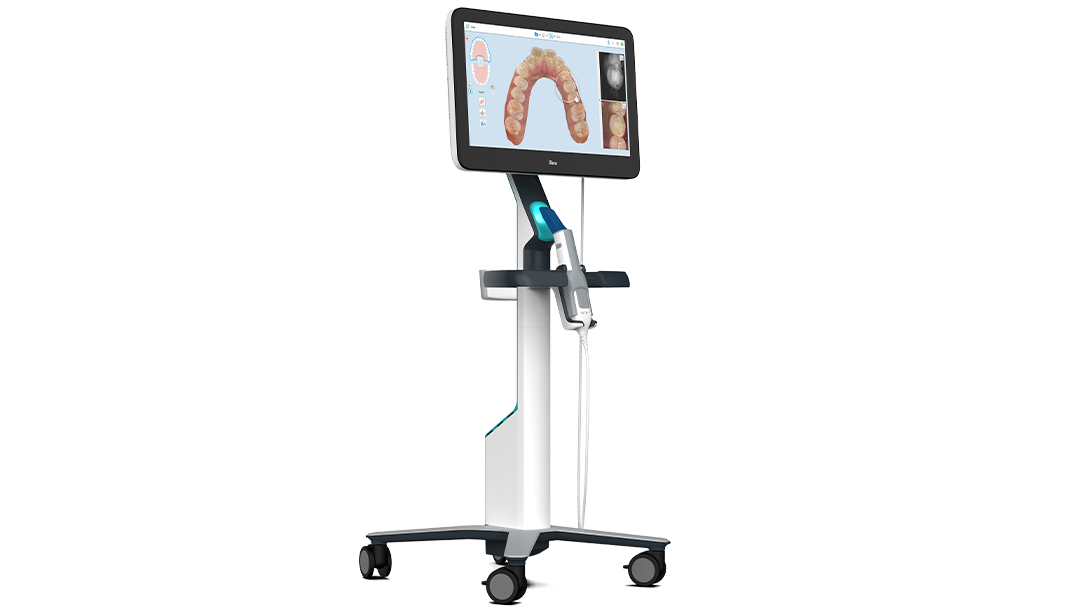
The iTero Element 5D is a hybrid dental imaging system developed by Align Technology, the company behind Invisalign clear aligners and the entire iTero intraoral scanner lineup. The device captures three distinct types of clinical data simultaneously: high-resolution 3D surface geometry for digital impressions, full-color 2D intraoral photographs, and NIRI images that reveal the internal structure of teeth.
This triple-imaging approach positions the iTero Element 5D as more than a standard digital impression tool. The integrated NIRI technology aids in detecting and monitoring interproximal caries lesions above the gingiva without ionizing radiation, turning a routine scanning appointment into a diagnostic opportunity. The device also functions as an intraoral camera, supports chairside milling integration, and connects directly to the Invisalign case submission workflow.
iTero has been manufacturing 3D scanners for the dental market since 2007, and the Element 5D represents the most significant technological leap in the brand’s history. The scanner is available in cart, laptop (USB wand), and mobile configurations, giving practices flexibility in how they integrate it into their operatories.
iTero Element 5D Release Date and Product Timeline
Align Technology officially launched the iTero Element 5D in February 2019 at the International Dental Show (IDS) in Cologne, Germany. This marked the first time any intraoral scanner combined 3D scanning, intraoral colour imaging, and near-infrared technology in a single pass. The device became commercially available across the United States and select international markets throughout 2019 and 2020.
In February 2021, Align Technology expanded the line with the iTero Element 5D Plus, an upgraded version featuring faster processing hardware, a redesigned cart, a new mobile tablet configuration, and the Invisalign Outcome Simulator Pro. The Plus series eliminated the laptop/USB wand-only purchasing option, requiring either the cart or mobile package.
The original iTero Element 5D remains available through Align Technology’s Certified Pre-Owned (CPO) programme, making it accessible to practices that want NIRI capability at a lower entry price. In 2024, Align introduced the iTero Lumina with a significantly smaller wand and additional features, though the Element 5D continues to hold a strong mid-range position within the iTero portfolio.
Key Features and Technology
Understanding what separates the iTero Element 5D from standard digital impression scanners requires a closer look at its core technologies. Each feature below contributes to the scanner’s clinical utility and helps explain why it continues to generate interest among dental professionals.
Near-Infrared Imaging (NIRI) Technology
The defining innovation of the iTero Element 5D is its built-in NIRI capability. The scanner emits light at approximately 850 nm, which interacts differently with enamel, dentin, and pathological structures. Enamel appears dark on the NIRI image because it is largely transparent to near-infrared light, while dentin appears bright due to light scattering caused by dentinal tubule orientation. Carious lesions, demineralisation, and cracks disrupt normal light transmission and appear as bright anomalies against the surrounding tissue.
According to a multisite clinical study involving 5,796 proximal tooth surfaces in 102 patients, the NIRI technology demonstrated clinical utility as a supplementary caries detection tool. The technology operates without ionizing radiation, using a Class 1 laser that poses no risk to patients or operators. While NIRI does not replace bitewing radiographs for subgingival pathology, it provides an additional diagnostic layer that can be captured at every routine appointment.
Simultaneous Multi-Modal Imaging
Most intraoral 3D scanners capture surface geometry alone. The iTero Element 5D records three data types in a single scan pass: 3D impressions for restorative and orthodontic workflows, full-colour 2D intraoral photographs, and NIRI subsurface images. The resulting dataset is integrated within the iTero software platform, allowing clinicians to rotate the 3D model while viewing synchronised colour and NIRI images in a side panel. A magnifier tool dynamically updates the 2D views as it moves across the model, providing a comprehensive assessment without looking back into the patient’s mouth.
iTero TimeLapse Technology
TimeLapse allows clinicians to overlay and compare scans taken at different time points, creating a visual record of changes in the patient’s oral condition over weeks, months, or years. This feature is particularly valuable for monitoring soft tissue recession, tracking orthodontic tooth movement, identifying progressive erosion or abrasion, and detecting occlusal changes. The visual comparisons are also highly effective for patient communication, as showing a side-by-side comparison of their teeth over time is far more impactful than a verbal explanation of subtle changes.
Invisalign Outcome Simulator
Given Align Technology’s ownership of both iTero and Invisalign, the scanner features deep integration with clear aligner workflows. The Outcome Simulator generates a before-and-after visualisation of how a patient’s teeth could look following Invisalign treatment, directly within the iTero software. Align Technology’s survey data indicates that practitioners who use the Outcome Simulator report higher treatment acceptance rates. The simulation can be generated immediately after scanning while the patient is still in the chair.
Intraoral Camera Functionality
The iTero Element 5D doubles as an intraoral camera, allowing dental professionals to capture high-resolution photographs of hard-to-see areas within the oral cavity. This eliminates the need for a separate intraoral camera device and reduces repetitive sterilisation, as the same wand handles both scanning and photography.
Technical Specifications
The table below summarises the key technical details of the iTero Element 5D Imaging System. These specifications apply to the wand/laptop configuration unless otherwise noted.
Manufacturer | Align Technology, Inc. |
Product name | iTero Element 5D Imaging System |
Scanner type | Hybrid dental imaging system (3D + colour + NIRI) |
NIRI wavelength | ~850 nm (Class 1 laser) |
Full arch scan time | Approximately 60 seconds |
Wand dimensions | 346 mm (L) x 50 mm (W) x 68 mm (D) |
Wand weight | Approximately 470 g (~1 lb) |
Scanner tip | 17.6 mm universal tip, single-use disposable sleeves |
Configurations | Cart with monitor, laptop/USB wand, mobile (Plus) |
Output formats | STL (open export), proprietary iTero formats |
Software platform | 12 (web-based) + onboard scanner software |
Invisalign integration | Direct case submission, Outcome Simulator |
Anti-fogging | Adaptive anti-fogging technology |
Scanner head angle | 45 degrees |
Clinical Applications
The iTero Element 5D supports a wide range of dental workflows. Understanding where this iTero 3D scanner excels, and where its limitations become apparent, helps dental professionals assess whether the investment aligns with their practice’s clinical profile.
Restorative Dentistry
The scanner supports digital impressions for crowns, bridges, veneers, inlays, onlays, and implant restorations. Scans can be exported in open STL format and sent to any compatible dental laboratory, or submitted through iTero’s integrated lab workflow. Built-in analysis tools, including the occlusal clearance tool, allow clinicians to verify preparation adequacy chairside before dismissing the patient.
Some clinicians have noted that the wand’s size can make posterior access challenging compared to slimmer competitors, particularly in patients with limited mouth opening. Practices focused heavily on complex restorative work should evaluate the ergonomics during an in-office demonstration.
Orthodontics and Clear Aligner Therapy
For practices offering Invisalign, the iTero Element 5D delivers arguably the most seamless scanner-to-aligner workflow on the market. Direct integration with Align Technology’s systems means scans can be submitted for case processing without file conversion or third-party intermediaries. The Invisalign Outcome Simulator and Progress Assessment tools provide value throughout the treatment lifecycle, from initial consultation to mid-course corrections. The scanner also supports STL export for alternative aligner brands.
Preventive and Diagnostic Workflows
The integration of NIRI makes the iTero Element 5D useful as a routine diagnostic tool, not just an impression device. Scanning patients at every visit builds a longitudinal record of their oral health, with TimeLapse tracking changes over time. The ability to detect interproximal caries above the gingiva without radiation adds a safety dimension that resonates with patients concerned about cumulative X-ray exposure.
iTero Element 5D Price
Pricing is one of the most important factors for dental professionals evaluating any piece of dental equipment. The iTero Element 5D represents a significant capital investment, and understanding the full cost picture is essential for accurate budgeting.
Based on available market data from authorised resellers as of 2025, the pricing landscape breaks down as follows:
Model | Price range (new) | Notes |
iTero Element 5D | $23,000 – $36,000 | Includes cart/monitor |
iTero Element 5D (CPO) | ~$13,995 | Certified Pre-Owned, includes laptop |
iTero Element 5D Plus | $42,000 – $48,000 | Upgraded hardware, Simulator Pro |
Monthly software fee | ~$360/month | Required for all iTero models |
Source: Pricing data compiled from Renew Digital and Dandy as of 2025. Actual pricing may vary based on negotiated discounts, regional availability, and promotional packages.
The recurring software fee of approximately $360 per month ($4,320 per year) should be factored into any total cost of ownership calculation. Over a typical five-year scanner lifecycle, this adds over $21,000 to the investment. Some competing scanner brands, such as Medit, have lower or no recurring fees, and lab partnership models like Dandy provide scanners at no upfront cost. The right comparison depends on the practice’s clinical priorities and whether Invisalign integration is essential.
Is the iTero Element 5D a Good Intraoral Scanner?
Evaluating whether the iTero Element 5D is the right scanner for a particular dental practice requires an honest look at both its strengths and its weaknesses. The device excels in several areas, but it also carries limitations that are worth understanding before committing to a purchase.
The iTero Element 5D’s greatest strength lies in its combination of NIRI caries detection, seamless Invisalign connectivity, and TimeLapse monitoring. No other single device on the market replicates this exact feature set. For practices where clear aligner therapy represents a meaningful portion of revenue, the streamlined submission workflow and chairside Outcome Simulator provide a competitive advantage that translates directly into higher case acceptance and reduced administrative friction.
The NIRI technology adds genuine clinical value that extends beyond impression-taking. The ability to aid in detecting early interproximal lesions without radiation gives clinicians a reason to scan patients at every visit, increasing both utilisation and the scanner’s return on investment. Combined with TimeLapse, this positions the iTero Element 5D as a longitudinal monitoring platform rather than a single-purpose impression device.
On the other hand, the scanner’s weight (approximately 470 g), its bulky wand design, and the mandatory additional high-definition scan for restorative cases introduce friction into certain workflows. Clinicians who have used lighter scanners from Medit or 3Shape consistently note the ergonomic difference. The software interface, while capable, uses terminology and workflow sequences unique to iTero that create a learning curve for teams switching from other brands.
For practices that do not offer Invisalign or rarely use clear aligners, the premium price and recurring software fee may be difficult to justify when comparable scanning performance is available at a lower total cost from competitors. Edentulous scanning is also a noted weakness, which may be a concern for practices with a high removable prosthetics caseload.
Bottom Line
The iTero Element 5D is a mature, well-supported intraoral scanner that combines 3D digital impressions with genuinely useful diagnostic technology. The NIRI caries detection aid, seamless Invisalign workflow, and TimeLapse monitoring give it a feature set that no single competing device fully replicates. For Invisalign-focused practices, the investment makes strong clinical and financial sense, especially through the CPO programme.
Practices that prioritise fixed restorative work, removable prosthetics, or budget-conscious digital adoption should evaluate the Medit i900, 3Shape TRIOS 6, or Primescan 2 as alternatives. The market for dental 3D scanners has become highly competitive, and the best choice ultimately depends on each practice’s unique combination of clinical priorities, case mix, and budget.
Verdict
<p>The iTero Element 5D is a strong, well-supported intraoral scanner that earns its place among the top-tier devices in the dental market. Its NIRI technology remains a meaningful clinical differentiator, and the Invisalign integration is unmatched. Practices that offer clear aligner therapy as a core service will find this scanner optimises their workflow in ways that competitors cannot fully replicate. The TimeLapse feature turns the scanner into a patient engagement tool and longitudinal monitoring system, adding value at every recall appointment.</p><p>The caveats are real. The wand’s weight and size are noticeable, the software has interface quirks that take time to learn, and the total cost of ownership is at the upper end of the market when the monthly software fee is factored in. For heavily restorative or removable-focused practices, lighter and more ergonomic alternatives may serve daily workflows more efficiently.</p><p>The Certified Pre-Owned programme significantly improves accessibility. At approximately $14,000 with a laptop and one year of warranty, a CPO unit costs less than many new competing scanners while still providing access to NIRI, TimeLapse, and the Invisalign ecosystem. This option deserves serious consideration for budget-conscious practices or those seeking a secondary scanner for multi-operatory use.</p><p><strong>The overall recommendation: </strong>the iTero Element 5D is an excellent choice for Invisalign-focused practices and clinicians who value NIRI-based diagnostics. For practices with different clinical priorities, it remains a good scanner, but a thorough hands-on comparison with alternatives is advisable before committing.</p>
Frequently Asked Questions
What is the iTero Element 5D and how does it differ from other iTero models?
The iTero Element 5D is an integrated dental imaging system that combines 3D digital impressions, intraoral colour photography, and Near-Infrared Imaging (NIRI) in a single scan. Earlier models like the iTero Element 2 lacked NIRI technology. The newer iTero Element 5D Plus adds faster hardware and the Invisalign Outcome Simulator Pro, while the iTero Lumina introduces a significantly smaller wand design.
When was the iTero Element 5D released?
The iTero Element 5D release date was February 2019, when Align Technology launched it at the International Dental Show in Cologne, Germany. The upgraded iTero Element 5D Plus followed in February 2021.
How much does the iTero Element 5D cost?
The iTero Element 5D price ranges from approximately $23,000 to $36,000 for a new unit, depending on configuration. Certified Pre-Owned units are available for around $13,995 through Renew Digital. All iTero scanners also require a monthly software subscription of approximately $360.
Is the iTero Element 5D a good intraoral scanner for general practice?
The iTero Element 5D is a capable scanner for general dentistry, particularly for practices that offer Invisalign and want radiation-free caries detection capability. The main limitations for general practices are the wand’s weight, the premium price point, and the less competitive edentulous scanning performance compared to alternatives.
Can the iTero Element 5D detect cavities?
The NIRI technology in the iTero Element 5D aids in detecting and monitoring interproximal caries lesions above the gingiva. It does not detect subgingival caries and should be viewed as a supplementary diagnostic tool alongside bitewing radiographs, not a replacement.
Does the iTero Element 5D work with dental labs other than Invisalign?
Yes. The scanner supports open STL file export, allowing scans to be sent to any compatible dental laboratory for restorative, implant, or prosthetic cases. Some labs have direct integration with the iTero platform for streamlined case submission.
What is the difference between the iTero Element 5D and the 5D Plus?
The iTero Element 5D Plus, released in 2021, features faster processing hardware, a redesigned cart, a mobile tablet option, and the Invisalign Outcome Simulator Pro. The Plus series does not offer a standalone laptop/USB wand configuration. The original 5D retains the wand-only purchase option and is available at a lower price through the CPO programme.
How heavy is the iTero Element 5D scanner wand?
The wand weighs approximately 470 grams (~1 lb), making it one of the heavier intraoral scanner wands currently available. Competing scanners from Medit and 3Shape are typically 200–300 grams lighter.
Is there a monthly fee for using the iTero Element 5D?
Yes. All iTero scanners require a monthly software subscription of approximately $360 for access to the MyiTero cloud platform, software updates, and Invisalign workflow features. This fee applies on top of the initial hardware purchase price.
Can dental professionals buy a used or refurbished iTero Element 5D?
Align Technology operates a Certified Pre-Owned programme through Renew Digital. CPO units cost approximately $13,995 and include a new laptop, one year of warranty, training, and technical support. This is the recommended route for purchasing a pre-owned unit, as it ensures full functionality and manufacturer backing.
How fast can the iTero Element 5D complete a full arch scan?
The iTero Element 5D can capture a full arch scan in approximately 60 seconds. Actual times may vary depending on operator experience, patient anatomy, and the specific workflow. This speed is competitive with other leading intraoral scanners on the market.
Does the iTero Element 5D emit radiation?
No. The scanner uses a Class 1 laser and near-infrared light at approximately 850 nm. It does not emit ionizing radiation. The NIRI technology provides a radiation-free method for aiding in caries detection, which is a key advantage over traditional radiographic approaches.