Rating: 3.9/5
Glu/Sense Desensitizer Review
Post-operative tooth sensitivity continues to rank among the most frequent patient complaints following restorative dental procedures. From composite fillings to crown...
Reviewed by Mantas Petraitis
Pros
- Dual-action desensitization and disinfection that combines two critical pre-restorative steps into a single 30-second application
- No-drip gel formulation that stays where it is placed, dramatically reducing the risk of glutaraldehyde contact with gingival tissue
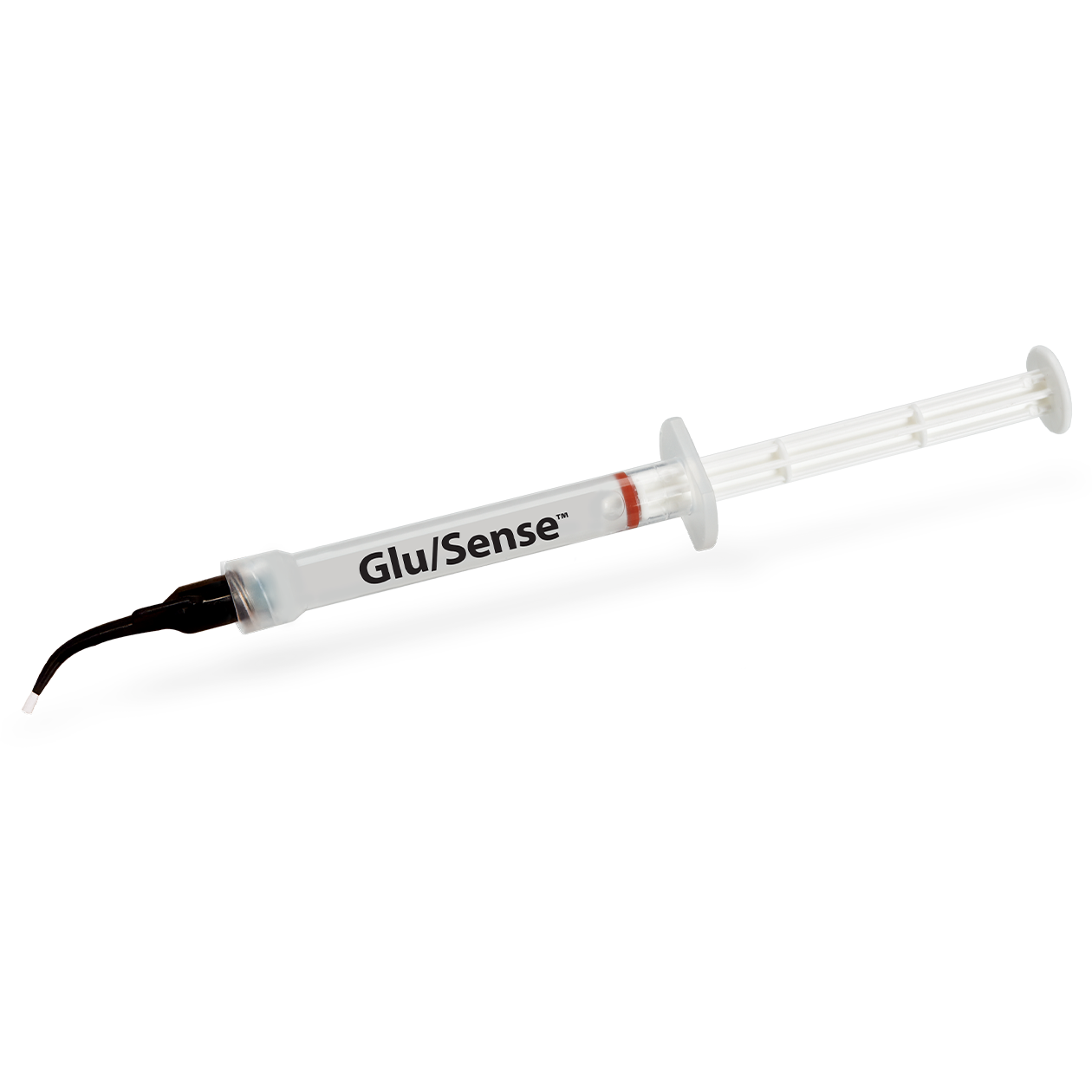
- SofNeedle foam-tip applicator that conforms to preparation geometry, enabling complete dentin coverage without the imprecision of microbrush application
- Rapid 30-second application with no light curing, rinsing, or smear layer removal required
- Permanent effect under restorations, providing lasting relief and reducing post-operative sensitivity callbacks
- Universal cement and bonding compatibility, including glass ionomer cements
- No pre-drying required, allowing application to moist dentin and avoiding sensitivity caused by desiccation
- Wetting agent function on etched enamel that helps prevent collagen fiber collapse and may improve bond quality
- Individual syringe packaging that supports infection control and ensures consistent dosing
Cons
- Glutaraldehyde remains a tissue irritant that can cause chemical burns on contact with gingiva or mucous membranes, requiring rubber dam use for additional protection
- HEMA sensitivity concerns for patients and staff with known allergies, plus the need for nitrile gloves since HEMA can permeate latex
- Reversibility of the HEMA component when used on exposed dentin without a subsequent sealed restoration, as the monomer gradually dissipates over time
- Higher per-application cost compared to bulk-dispensed liquid alternatives, with kit pricing typically ranging from $125 to $210 for six syringes
- Limited brand-specific clinical trials, with most supporting evidence extrapolated from research on the HEMA/glutaraldehyde ingredient class rather than the Glu/Sense product specifically
- Not suitable for HEMA-free or glutaraldehyde-free protocols, requiring an alternative product such as D/Sense Crystal for patients with known sensitivities
Post-operative tooth sensitivity continues to rank among the most frequent patient complaints following restorative dental procedures. From composite fillings to crown preparations, the risk of lingering discomfort can erode patient confidence, reduce treatment acceptance rates, and generate callbacks that cut into productive chairside time. For dental professionals looking to address this challenge head-on, Glu/Sense by Centrix has established itself as a purpose-built dentin desensitizer with a distinctive delivery system and a well-studied active ingredient profile.
This review evaluates the Glu/Sense desensitizer from a clinical perspective, covering its formulation, mechanism of action, application protocol, real-world practitioner feedback, competitive positioning, and key advantages and drawbacks. The analysis draws on manufacturer data, peer-reviewed research on HEMA/glutaraldehyde desensitizers, and published clinical commentary from leading dental educators. Whether the goal is reducing post-op callbacks, streamlining the restorative workflow, or making a more informed purchasing decision for the practice, this guide provides the evidence dental professionals need to evaluate Glu/Sense thoroughly.
What Is Glu/Sense? Product Overview and Specifications
Glu/Sense is a professional in-office dentin desensitizer manufactured by Centrix, Inc., a dental innovation company headquartered in Shelton, Connecticut. The product falls within the restorative and cosmetic category, specifically under cements, liners, and desensitizers. Its core value proposition is straightforward: eliminate or significantly reduce post-operative sensitivity through a controlled, precise application of a proven desensitizing formulation.
Specification | Details |
Product name | Glu/Sense Dentin Desensitizer |
Manufacturer | Centrix, Inc. (Shelton, CT, USA) |
Active ingredients | 35% HEMA + 5% Glutaraldehyde |
Formulation type | No-drip gel |
Delivery system | Syringe with SofNeedle foam-tip applicator |
Kit contents | 6 x 1.0 mL syringes + 60 SofNeedle tips |
Compatibility | Most cements and dentin bonding agents |
Application time | 30 seconds (gentle rubbing motion) |
Light curing required | No |
Effect under restorations | Permanent |
Each syringe is individually sealed and disposable, and the SofNeedle foam tips are single-use. This packaging configuration supports infection control protocols while ensuring consistent dosing across every application. The product is available through major dental distributors including Henry Schein and Net32.
How Glu/Sense Works: The Science Behind the Desensitization
The efficacy of any dentin desensitizer hinges on its ability to interrupt the hydrodynamic mechanism that causes sensitivity. When dentin is exposed, external stimuli such as cold, pressure, or osmotic changes trigger fluid movement within the dentinal tubules, which in turn activates mechanoreceptors near the pulp and produces pain. Glu/Sense addresses this through a dual-action formulation that targets tubule occlusion from two complementary angles.
Glutaraldehyde: Protein Coagulation Deep Within the Tubules
The 5% glutaraldehyde component acts as a biological fixative. On contact with exposed dentin, it reacts with serum albumin and other plasma proteins in the dentinal fluid, inducing coagulation and precipitation. This process creates physical plugs deep within the tubular network. According to research published in the Journal of Clinical and Experimental Dentistry, glutaraldehyde can penetrate up to 200 micrometers into the tubules, providing durable occlusion that directly blocks the fluid displacement responsible for sensitivity.
Glutaraldehyde also functions as a disinfectant. Research conducted by Dr. Rella Christensen at the Clinicians Report research division demonstrated that two one-minute applications of glutaraldehyde-containing solutions effectively eliminated microorganisms on the prepared tooth surface. This dual benefit of desensitization and disinfection is a meaningful clinical advantage.
HEMA: Hydrophilic Penetration and Resinous Sealing
The 35% HEMA (hydroxyethyl methacrylate) component complements glutaraldehyde through a different pathway. HEMA is a water-soluble monomer that penetrates deeply into dentin tubules due to its hydrophilic nature. Once inside, it forms resinous tags that further seal the tubular openings. When applied to etched enamel, HEMA also functions as a wetting agent that helps prevent collagen fiber collapse, preserving the structural integrity needed for reliable bonding.
A 2026 randomized controlled trial published in Clinical Oral Investigations confirmed that the mechanism of protein coagulation followed by monomer polymerization effectively seals the tubules and directly reduces the fluid displacement associated with pain. This aligns with decades of clinical evidence supporting glutaraldehyde-HEMA formulations as an ingredient class.
Why the Dual-Action Formula Matters
Neither glutaraldehyde nor HEMA achieves optimal results alone. Glutaraldehyde provides deep protein coagulation and biological fixation, while HEMA contributes hydrophilic penetration and resinous tubule sealing. Together, they reduce dentin permeability more effectively than single-agent desensitizers. In-vitro SEM studies consistently show near-complete tubule occlusion following application of this combination, which is why the 35% HEMA / 5% glutaraldehyde formula has remained a standard in the desensitizer category for over three decades.
The SofNeedle Delivery System: What Sets Glu/Sense Apart
Many competing desensitizers, such as Gluma Desensitizer by Kulzer and MicroPrime by Danville Materials, share the same active ingredient profile as Glu/Sense. The primary differentiator is the delivery system. While liquid desensitizers are applied with microbrushes and can run off the preparation site, Glu/Sense takes a fundamentally different approach with its no-drip gel formulation and proprietary SofNeedle foam-tip applicator.
No-drip gel consistency: the viscous gel stays exactly where it is placed, dramatically reducing the risk of glutaraldehyde contact with gingival tissue
Precise, targeted application: the SofNeedle foam tip conforms to the contours of the preparation, ensuring even coverage across the entire dentin surface including deep preparation margins
Reduced waste: pre-loaded 1.0 mL syringes eliminate the need for dispensing from bottles onto mixing pads, saving material and chairside time
Infection control: single-use SofNeedle tips prevent cross-contamination between patients, and the syringe can be disinfected and capped between uses within the same procedure
Clinical Applications and Indications
Glu/Sense is a versatile dentin desensitizer that integrates into a wide range of restorative workflows. Its compatibility with most cements and dentin bonding agents makes it a practical choice for virtually any dental treatment plan that includes restorative work.
Recommended Indications
The product is suitable for use across all of the most common restorative scenarios encountered in general and specialty practice.
Direct composite restorations with bonding systems
Indirect restorations including inlays and onlays
Crown and bridge preparations
Veneer preparations
Amalgam restorations
Combined desensitizing and bonding agent application on crown preps
Dentin pre-treatment before cementation to minimize microleakage
Step-by-Step Application Protocol
One of Glu/Sense’s most appealing features for busy clinical environments is its straightforward application technique. The entire process adds roughly 30 seconds to the restorative procedure.
Complete the tooth preparation as indicated for the planned restoration.
Attach a new SofNeedle foam tip to the Glu/Sense syringe.
Apply the gel to exposed dentin using a gentle rubbing motion for 30 seconds. The tooth may remain moist, as desiccation of exposed dentin can itself contribute to sensitivity and should be avoided.
Gently air-dry the treated surface.
Proceed with the restorative procedure. No light curing or rinsing is required.
Replace the cap, disinfect the syringe, and dispose of the used SofNeedle tip.
Notably, smear layer removal is not required prior to application. Glu/Sense is effective both with and without prior smear layer removal, giving clinicians full flexibility in their conditioning protocol. According to the manufacturer’s FAQ, the product also does not interfere with any currently available cements.
Safety Considerations and Precautions for Dental Professionals
All glutaraldehyde-based desensitizers require careful handling. While Glu/Sense’s gel formula significantly reduces the risk of uncontrolled material flow, dental teams should follow established safety protocols to protect both patients and staff.
Soft Tissue Protection
Glutaraldehyde is a potent fixative that can cause chemical irritation, redness, and burning on contact with soft tissues. The manufacturer recommends protecting mucous membranes with a rubber dam during application and ensuring that the gel contacts only the area to be treated. If accidental soft tissue contact occurs, the affected area should be flushed immediately with water and treated as a chemical burn.
HEMA Sensitivity and Glove Selection
Some patients and dental professionals may have allergies or sensitivities to HEMA. Research published in dermatological literature has shown that HEMA can permeate latex gloves, making nitrile gloves the recommended hand protection when handling Glu/Sense and similar products. Patients with known HEMA or glutaraldehyde allergies should not be treated with this product.
Eye Contact Protocol
In the event of eye contact, the affected eye should be flushed with water immediately and a physician should be consulted without delay. This is a standard precaution for all glutaraldehyde-containing dental products.
Glu/Sense vs. Competing Desensitizers: Head-to-Head Comparison
Understanding how Glu/Sense stacks up against the most commonly used alternatives helps dental professionals make procurement decisions that align with their clinical philosophy, workflow preferences, and budget.
Feature | Glu/Sense (Centrix) | Gluma (Kulzer) | D/Sense Crystal (Centrix) |
Active agents | 35% HEMA + 5% Glutaraldehyde | 35% HEMA + 5% Glutaraldehyde | Potassium binoxalate + Nitric acid |
Formulation | No-drip gel | Liquid | No-drip gel |
Delivery | Syringe + SofNeedle foam tip | Bottle + microbrush | Syringe + SofNeedle foam tip |
Mechanism | Protein coagulation + resin tags | Protein coagulation + resin tags | Calcium oxalate crystal occlusion |
Contains HEMA | Yes | Yes | No |
Soft tissue risk | Reduced (gel stays in place) | Higher (liquid may drip) | Low (gentle on soft tissues) |
Glass ionomer compatible | Yes | Yes | No |
Glu/Sense and Gluma share identical active ingredients and concentrations, so their desensitizing mechanisms are fundamentally the same. The key differentiator is delivery. Glu/Sense’s gel formula and SofNeedle applicator offer greater placement control and reduced soft-tissue risk compared to Gluma’s liquid format applied with a microbrush. For practitioners who prioritize accuracy and patient comfort, this represents a meaningful clinical upgrade.
D/Sense Crystal, also manufactured by Centrix, uses a completely different chemical mechanism based on calcium oxalate crystal formation. It is an excellent option for practices that need a HEMA-free, glutaraldehyde-free desensitizer, though it is not compatible with glass ionomer cements. Maintaining both products in inventory allows clinicians to select the most appropriate option for each clinical scenario.
Clinical Evidence Supporting HEMA/Glutaraldehyde Desensitizers
While product-specific clinical trials bearing the Glu/Sense brand name are limited, the active ingredient combination of 35% HEMA and 5% glutaraldehyde is one of the most thoroughly researched desensitizing formulations in dentistry. Glu/Sense shares its exact chemical composition with Gluma Desensitizer, a product that has been in continuous clinical use since 1991 and has accumulated a substantial body of supporting evidence.
In-vitro SEM studies have consistently demonstrated that glutaraldehyde-HEMA solutions effectively occlude dentinal tubules through protein coagulation. A 2023 study published in the Journal of Dental Research examined the influence of glutaraldehyde-based desensitizers on bonding performance and found that pre-treatment with these agents did not adversely affect bond strength. The study also showed improved hybrid layer stability compared to control groups, supporting the routine use of glutaraldehyde-HEMA desensitizers as a pre-treatment step without concerns about compromised adhesion.
A randomized, triple-blinded clinical study evaluating glutaraldehyde desensitizers after non-surgical periodontal therapy found significant reduction in dentin hypersensitivity at 24 hours post-application, with the effect maintained through the six-week study period. Similarly, a 2026 randomized controlled trial in Clinical Oral Investigations confirmed that the protein coagulation and monomer polymerization mechanism provides effective clinical control of dentin hypersensitivity.
Dr. Gordon Christensen, one of the most respected voices in evidence-based clinical dentistry, has discussed and recommended the use of glutaraldehyde-HEMA desensitizers, including Glu/Sense specifically, as part of a comprehensive protocol for preventing post-operative tooth sensitivity. His recommendations are based on research conducted by Dr. Rella Christensen demonstrating both desensitizing and antimicrobial benefits.
An additional consideration from the research is the question of bond durability. A concern sometimes raised about dentin pre-treatment agents is whether they interfere with the long-term stability of the adhesive interface. The available evidence is reassuring on this point. In-vitro zymography studies have shown reduced enzymatic activity at the hybrid layer in specimens treated with glutaraldehyde-based desensitizers, suggesting that these agents may actually inhibit matrix metalloproteinase (MMP) activity. MMPs are enzymes present in dentin that can degrade the collagen component of the hybrid layer over time, contributing to bond degradation. The ability of glutaraldehyde to cross-link collagen and inhibit MMP activity adds a third functional benefit alongside desensitization and disinfection, making the case for routine use even more compelling from a long-term restorative perspective.
Best Practices for Maximizing Glu/Sense Effectiveness
Drawing on published clinical guidance and practitioner feedback, the following tips can help dental teams get the most out of Glu/Sense in day-to-day practice.
Make it a standard protocol step: many experienced practitioners recommend incorporating Glu/Sense into every restorative case rather than reserving it only for patients who report pre-existing sensitivity. The minimal additional time investment of 30 seconds is far outweighed by the reduction in post-operative complaints.
Avoid desiccating dentin before application: the manufacturer’s guidance is clear that the tooth surface should remain moist during application. Over-drying exposed dentin before treatment can itself trigger sensitivity and should be avoided.
Combine desensitizing and bonding on crown preps: Glu/Sense can serve double duty on crown preparations, providing both desensitization and a dentin pre-treatment that improves the interface with the bonding agent.
Always use appropriate isolation: even though the gel formula dramatically reduces dripping, consistent use of rubber dam or careful retraction prevents any contact between glutaraldehyde and soft tissues.
Choose nitrile gloves: HEMA has been shown to permeate latex, making nitrile the recommended hand protection when handling Glu/Sense and similar products.
Store below 25°C (77°F): glutaraldehyde-HEMA products typically have a shelf life of approximately three years when stored under proper conditions. Check expiration dates regularly.
Who Should Consider Adding Glu/Sense to Their Practice?
Not every dental practice has the same desensitizer needs. The following profiles describe the clinical settings where Glu/Sense delivers the most value.
High-Volume Restorative Practices
Practices that perform a significant number of composite restorations, crown preparations, and indirect restoration placements on a daily basis stand to benefit the most from Glu/Sense. The 30-second application protocol adds minimal chairside time per procedure, yet the cumulative reduction in post-operative sensitivity callbacks can save hours of re-evaluation appointments over the course of a month. In high-volume settings, fewer callbacks translate directly to improved scheduling efficiency and higher revenue per operatory hour.
Practices Focused on Patient Experience
Patient satisfaction is increasingly tied to clinical reputation, online reviews, and referral rates. Post-operative sensitivity is one of the most common sources of patient dissatisfaction after restorative work, even when the restoration itself is technically excellent. Incorporating Glu/Sense as a standard pre-restorative step signals a proactive approach to comfort and can meaningfully reduce the volume of patient calls reporting cold sensitivity or bite discomfort in the days following a procedure. For practices that actively manage their dental equipment investments with a focus on patient outcomes, Glu/Sense fits naturally into that philosophy.
Multi-Provider and Group Practices
In group practice settings where multiple dentists and hygienists work under shared clinical protocols, the simplicity of the Glu/Sense application technique is a significant advantage. The product requires no specialized training, no light curing unit, and no complex multi-step protocol. New associates and dental assistants can be trained on its use within minutes, ensuring consistent application across all providers. The single-dose syringe format also simplifies inventory management and reduces the risk of contamination that can occur with shared multi-dose bottles.
Practices Transitioning Away From Liquid Desensitizers
For practices currently using liquid-based glutaraldehyde-HEMA desensitizers such as Gluma or G5, switching to Glu/Sense requires no change in clinical philosophy or treatment planning. The active ingredients and concentrations are identical. The transition is purely a delivery system upgrade, one that provides better placement control, reduced soft tissue risk, and a more predictable clinical experience, particularly for less experienced operators or procedures in difficult-to-access posterior areas.
Bottom Line
Glu/Sense represents a well-engineered, clinically sound solution to one of the most persistent challenges in restorative dentistry. Its formulation draws on a thoroughly validated combination of 35% HEMA and 5% glutaraldehyde, ingredients that have been used in dental desensitization for over three decades. Where Glu/Sense truly sets itself apart is in the execution of its delivery system, packaging proven chemistry in a more controllable, safer, and more precise format than liquid competitors.
For practices that prioritize patient comfort, operational efficiency, and evidence-based product selection, Glu/Sense warrants serious consideration as a standard component of the restorative protocol. While cost-per-unit is higher than bulk liquid alternatives, and practitioners should remain mindful of HEMA and glutaraldehyde safety precautions, the clinical advantages and patient satisfaction benefits position Glu/Sense as a leading choice in the in-office dentin desensitizer category. Explore more dental equipment reviews and dental industry insights to compare Glu/Sense against other products in the restorative workflow.
Verdict
<p>Glu/Sense by Centrix has earned a well-deserved place in the modern restorative armamentarium. Its 35% HEMA and 5% glutaraldehyde formulation leverages decades of clinical research supporting these agents in occluding dentin tubules and preventing post-operative sensitivity. What genuinely distinguishes Glu/Sense from competing glutaraldehyde-HEMA desensitizers is its innovative delivery system. The no-drip gel formula, paired with the SofNeedle foam-tip applicator, provides placement precision and soft-tissue safety that liquid alternatives cannot match. The 30-second application protocol requires no light curing, no special drying, and no smear layer removal, which translates to minimal additional chairside time. Its compatibility with virtually all dentin bonding agents and cements means it integrates seamlessly into existing workflows for crowns, composites, veneers, inlays, and onlays. The permanent desensitizing effect under restorations provides lasting patient comfort and fewer post-operative callbacks. For practices that perform a high volume of restorative work, Glu/Sense offers a dependable, efficient, and clinically sound solution for preventing the sensitivity that undermines patient trust and treatment acceptance.</p>
Frequently Asked Questions
What is Glu/Sense used for in dental practice?
Glu/Sense is a professional dentin desensitizer used to eliminate or significantly reduce post-operative tooth sensitivity following restorative procedures. Dentists apply it to prepared dentin before placing restorations such as crowns, composites, veneers, inlays, onlays, and amalgams. The product works by penetrating and sealing dentin tubules, blocking the fluid movement that causes sensitivity.
What are the active ingredients in Glu/Sense?
Glu/Sense contains 35% hydroxyethyl methacrylate (HEMA) and 5% glutaraldehyde in a gel formulation. Glutaraldehyde coagulates proteins within the dentin tubules to create physical occlusion, while HEMA penetrates the tubules and forms resinous tags that further seal the openings.
Is Glu/Sense compatible with dentin bonding agents and cements?
Yes. Glu/Sense is compatible with most commercially available dentin bonding agents and cements, including glass ionomer cements. It does not interfere with adhesion or material performance, making it suitable for virtually any restorative workflow. For practitioners evaluating adhesive options, the 3M Scotchbond Universal Plus review provides further context on bonding system compatibility.
Does the tooth need to be dried before applying Glu/Sense?
No. The tooth can remain moist during application. The manufacturer advises against over-drying exposed dentin before application, as desiccation can itself contribute to sensitivity. After Glu/Sense has been applied and the tubules are sealed, the tooth may be thoroughly dried for the subsequent restorative step.
Does Glu/Sense require light curing?
No. Glu/Sense does not require light curing. The product is simply applied with a gentle rubbing motion for 30 seconds and then air-dried. There are no additional curing or activation steps.
Is smear layer removal required before using Glu/Sense?
No. Glu/Sense is effective with or without prior smear layer removal, giving clinicians flexibility in their preparation and conditioning protocols.
How long does the desensitizing effect of Glu/Sense last?
When Glu/Sense is used under a sealed restoration, the desensitizing effect is permanent. The combination of glutaraldehyde’s protein coagulation and the restoration’s physical barrier creates a lasting seal. For exposed dentin without a subsequent restoration, the effect may diminish over time as the HEMA component gradually dissipates.
Can Glu/Sense be used on patients with HEMA allergies?
No. Glu/Sense should not be used on patients with known sensitivities or allergies to HEMA or glutaraldehyde. For these patients, a HEMA-free alternative such as D/Sense Crystal should be selected instead.
How does Glu/Sense compare to Gluma desensitizer?
Glu/Sense and Gluma contain the same active ingredients at the same concentrations (35% HEMA and 5% glutaraldehyde). The primary difference is the delivery system. Glu/Sense uses a no-drip gel delivered through a syringe with a SofNeedle foam-tip applicator, while Gluma is a liquid solution applied with a microbrush. The gel formulation provides greater control and reduces the risk of soft tissue contact.
What comes in a Glu/Sense kit?
A standard Glu/Sense complete kit contains six 1.0 mL pre-loaded syringes and 60 SofNeedle foam-tip applicators.
Can Glu/Sense be used under glass ionomer cements?
Yes. Unlike some competing desensitizers, Glu/Sense does not inhibit the adhesion of glass ionomer cements, making it a suitable choice for procedures involving glass ionomer materials.
What should be done if Glu/Sense contacts soft tissue or eyes?
If the gel contacts soft tissues, flush the area immediately and thoroughly with water. If eye contact occurs, flush the eye with water and consult a physician without delay.