Zyn Vs. Vape: A Dentist Compares Nicotine and Gum Risks
Zyn Vs. Vape: A Dentist Compares Nicotine and Gum RisksPeople comparing Zyn versus vape usually hope one option turns out safer. Truth is – neither one. Both products deliver an...
Written by Maren Solvik
Read time: 6 min read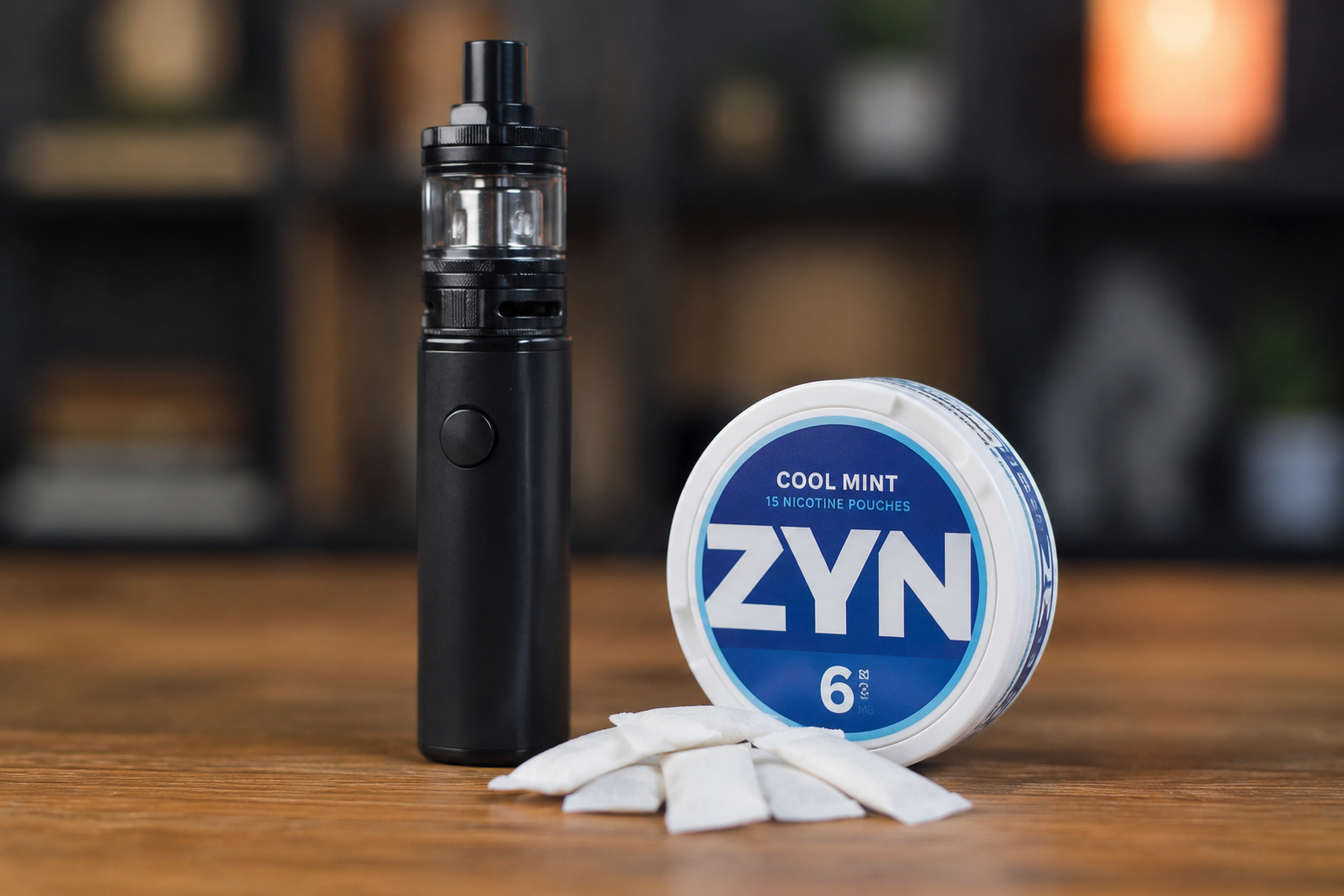
Zyn Vs. Vape: A Dentist Compares Nicotine and Gum Risks
People comparing Zyn versus vape usually hope one option turns out safer. Truth is – neither one. Both products deliver an addictive substance that raises blood pressure. Both damage the mouth in different, well-documented ways, and this guide breaks down exactly how.
TL;DR
Zyn pouches and vapes both deliver nicotine, an addictive substance that raises blood pressure and heart rate
Zyn concentrates its dental harm at one spot on the gum, vaping spreads dry mouth and enamel damage across the whole mouth
A 6mg Zyn pouch delivers roughly the same nicotine experience as 10 to 15 vape puffs
Neither product is a safe habit, quitting both remains the only option with no documented oral health risk
What Is Zyn?
Zyn is a brand of nicotine pouch. It contains no tobacco leaf. Instead, nicotine and a few other ingredients sit in a pouch placed between the upper lip and gum.
The usual ingredients of a Zyn pouch include:
Nicotine, the addictive ingredient that gives the product its effect
Flavorings and sweeteners
Plant-based fillers like microcrystalline cellulose
Nicotine absorbs slowly through the oral tissue over 20 to 45 minutes. Zyn is owned by Swedish Match, part of Philip Morris International. In January 2025, the FDA authorized 20 Zyn products for sale, the first nicotine pouches to receive that authorization.
As of mid-2026, Zyn remains the only pouch brand with full FDA authorization. Most competing pouch brands on store shelves are technically being sold without it. Legal purchase requires being 21 or older in the US.
What Is A Vape?
A vape, or e-cigarette, is a battery-powered device that heats a liquid into an inhalable aerosol. That liquid typically contains a mix of ingredients:
Nicotine, usually as a nicotine salt formulation
Flavorings
Propylene glycol
Vegetable glycerin
Most disposable vapes use nicotine salt formulations at 5% strength, equal to 50mg per milliliter. Nicotine here is absorbed through the lungs, a much faster route into the bloodstream than the oral absorption pouches use.
As of early 2026, only around 39 to 45 total e-cigarette products have received FDA marketing authorization, counting every device, flavor, and strength separately. Most disposable vapes sold at retail are not on that list. Legal purchase also requires being 21 or older in the US.
Youth use of both categories remains a real concern. Recent survey data shows nicotine pouch use among teens has grown quickly. Vaping remains the most common nicotine product used by US adolescents. That trend sits outside the scope of this comparison, which addresses adult decision-making, not youth prevention policy.
How Much Nicotine Is In A Zyn Pouch?
Zyn pouches list nicotine content per pouch. US strengths run 3mg, 6mg, and 9mg total nicotine in a single pouch. That number represents the total nicotine sealed inside, not the amount that ultimately reaches the bloodstream.
A Zyn pouch releases nicotine gradually, over 20 to 45 minutes, through the tissue lining the mouth. That slow, steady release differs from a sharp spike, which is part of why a 6mg pouch can feel milder than the number suggests.
How Much Nicotine Is In A Vape?
Vape e-liquid lists nicotine content per milliliter of liquid, not per pouch or per unit. That is commonly 50mg per milliliter for disposable vapes, though 20mg and 30mg options exist too.
Total nicotine exposure from a vape depends on how much liquid actually gets vaporized and inhaled. That varies by device, puff count, and inhale depth, so the label strength is only part of the picture.
Vaping sends nicotine through the lungs almost instantly. A commonly cited comparison holds that a 6mg Zyn pouch roughly matches 10 to 15 vape puffs, though this varies by individual vaping behavior. A bigger milligram number on a label does not automatically mean a bigger nicotine effect. The delivery route determines how much actually reaches the bloodstream and how fast.
What Does Using Zyn Actually Feel Like?
Zyn builds slowly. The sensation grows over the first 20 to 30 minutes, then tapers off by around an hour. There is no inhaling, no device, and no visible smoke or vapor involved. Users describe it as a steadier, more sustained feeling rather than a sharp hit.
What Does Vaping Actually Feel Like?
Vaping delivers a fast, sharp nicotine hit instead. Users commonly describe an immediate head rush or buzz, followed by a comedown as the effect fades over roughly 20 to 30 minutes. The hand-to-mouth motion also mimics the physical ritual of smoking, which some users specifically look for.
Neither feeling is safer. The difference is in intensity and timing, not health impact. Neither product is gentler on the body than the other.
Is Zyn Bad For You?
This is the single question most people land on this page to answer. The short answer is yes, and it holds for a few separate reasons.
Zyn delivers nicotine, which is addictive regardless of how it enters the body. Nicotine binds to nicotinic receptors in the brain and triggers a dopamine release, which is what creates the pull to use again. Dependence risk is not lower just because the product avoids smoke.
Independent lab testing of nicotine pouches, cited by the American Lung Association, found a cancer-causing compound in 26 of 44 tested products. Other chemicals found included:
Ammonia
Chromium
Formaldehyde
Nickel
That data reflects the pouch category broadly, not Zyn specifically. It remains relevant context for any pouch user.
Zyn also raises blood pressure and heart rate through that same nicotine mechanism, covered in full detail further down this guide. It concentrates its dental harm at the exact spot where the pouch sits against the gum, covered in the teeth and gum section below.
Put together, Zyn carries three separate risks at once. It is addictive by design. Independent testing has found carcinogens in a meaningful share of tested pouch products. It raises blood pressure and damages gum tissue at the placement site. None of that makes Zyn uniquely dangerous next to vaping, but it does make it a genuine health risk on its own, not a safe alternative to smoking.
Is Vaping Bad For You?
Vaping delivers the same addictive substance as Zyn, through a different route. Nicotine binds to the same brain receptors and creates the same pull to keep using. The delivery route does not change that.
Vape e-liquid also exposes users to propylene glycol, vegetable glycerin, and flavoring chemicals. Some of these have been linked to lung tissue inflammation and irritation with regular use. Long-term pulmonary effects remain under active study, since vaping as a mainstream product is still relatively young. The guide on smoking and vaping effects covers how these chemicals affect the rest of the mouth.
Does Zyn Raise Blood Pressure?
Nicotine activates the body's sympathetic nervous system, the fight-or-flight stress response, and Zyn is no exception. That triggers a few immediate effects.
A faster heart rate
Stronger heart contractions
Narrowed blood vessels
All three push blood pressure upward shortly after a pouch goes in. The American Heart Association's own policy statement in Circulation notes a smaller daily increase for oral products than an acute tobacco spike. Long-term cardiovascular data on pouches specifically remains limited, since the category is still fairly new.
Does Vaping Raise Blood Pressure?
Vaping raises blood pressure through the same core mechanism as Zyn. Nicotine activates the sympathetic nervous system either way. The acute effect is typically a rise of about 5 to 10 mmHg shortly after use, and it generally fades within about an hour.
A December 2025 statement in the European Heart Journal, covered by the European Society of Cardiology, found that all four product types tested raise blood pressure and damage blood vessels. The researchers concluded that no nicotine delivery product is safe for the heart. Anyone with an existing heart condition faces elevated risk from either product.
How Does Zyn Affect Your Teeth And Gums?
Zyn's dental risk concentrates in one specific spot, wherever the pouch sits against the gum. Prolonged, repeated contact in that same location causes localized irritation and tenderness, sometimes followed by a mild burning sensation.
Nicotine is a vasoconstrictor, meaning it narrows blood vessels. That reduces blood flow to the gum tissue in contact with the pouch. Reduced blood flow impairs healing and raises gum disease risk specifically at that placement site. Repeated placement in the same spot is also linked to gum recession over time, which brings its own set of problems:
Exposed tooth roots
Increased sensitivity
Higher decay risk right at the exposed area
Nicotine also reduces saliva production, contributing to broader dry mouth. It can mask the early bleeding-gum warning signs that would otherwise flag a problem sooner. Frequent sugary or acidic exposure from flavored pouches raises cavity risk too, alongside the gum-specific damage.
How Does Vaping Affect Your Teeth And Gums?
Vaping's dental risk spreads more broadly across the whole mouth rather than concentrating in one place. Dry mouth is a leading effect, driven largely by propylene glycol in the e-liquid, and it raises decay and gum disease risk throughout the mouth.
The American Heart Association reports that 43% of regular vapers show signs of gum disease, compared to 28% of people who neither smoke nor vape. Vaping also disrupts the natural balance of oral bacteria, which raises the risk of both gingivitis and more advanced periodontitis.
A mouthwash built for gingivitis can help slow that process alongside brushing and flossing. Flavored, sweetened, or acidic e-liquids also contribute directly to enamel erosion, an effect with no real equivalent on the Zyn side, since pouches do not repeatedly bathe every tooth surface in liquid or vapor. Nicotine also acts as a muscle stimulant in some users, and dental sources link vaping to worsened teeth grinding, which carries its own risk of enamel wear and jaw pain.
Which One Causes Worse Dental Damage, Zyn Or Vaping?
Here is the practical distinction for anyone weighing the two. Zyn's dental damage tends to stay contained to one recurring spot in the mouth. Vaping's dental damage tends to spread across saliva production, enamel, and the broader oral microbiome.
Both patterns raise real gum disease risk, just through different mechanisms. Both are worth mentioning to a dentist directly, rather than waiting for them to notice. A dentist who knows about either habit can build a dental treatment plan that accounts for it, with closer monitoring of the tissue at risk.
Which Should You Choose, Zyn Or A Disposable Vape?
This is the question most people want answered. The honest answer is that neither product is better in any absolute sense.
Both are addictive. Both raise blood pressure. Both carry real, well-documented oral health risks, just distributed differently across the mouth. Cost does not settle the question either.
A can of Zyn pouches typically runs $4 to $6, and daily use of 5 to 10 pouches lands around $40 to $80 a month
A disposable vape runs $8 to $15 and lasts one to three days, putting a regular vaper in a similar $100 to $150 range
Neither product wins on price by enough to matter next to the health risks involved. Someone weighing the two as a way off cigarettes should ask a different question. The more useful question is not which product is healthier long term. It is which one that person is more likely to stick with, and eventually quit for good.
A person with an existing heart condition has a particular reason for caution with either product. That conversation belongs with a doctor, not a comparison article. Anyone currently using either product should flag it at their next cleaning, since both habits affect healing time after routine procedures.
Zyn Vs. Vape At A Glance
The table below lines up the core differences from this article for a quick, side-by-side reference.
Factor | Zyn | Vape |
|---|---|---|
Nicotine measurement | Per pouch, 3mg, 6mg, or 9mg | Per milliliter, commonly 50mg per mL |
Absorption route | Oral tissue, over 20 to 45 minutes | Lungs, within seconds |
Feeling | Slow build, steady, tapers over an hour | Fast, sharp hit, fades in 20 to 30 minutes |
Blood pressure effect | Raises it, smaller daily increase reported | Raises it, acute 5 to 10 mmHg spike |
Dental risk pattern | Concentrated at one gum spot | Spread across the whole mouth |
Main dental concerns | Localized irritation, gum recession | Dry mouth, enamel erosion, gum disease |
FDA authorization | Fully authorized as of 2025 | Only 39 to 45 products authorized as of 2026 |
Typical monthly cost | $40 to $80 for daily use | $100 to $150 for daily use |
Minimum age to purchase | 21 | 21 |
Bottom Line
Is Zyn bad for you? Yes, on its own, regardless of how it compares to vaping. Zyn and vaping both deliver an addictive substance that raises blood pressure and heart rate. Both carry real, distinct oral health risks. Zyn concentrates its dental harm at one specific spot in the mouth. Vaping spreads dry mouth, enamel wear, and microbiome disruption more broadly. Neither pattern is safer than the other, they are simply different.
The only nicotine habit with a genuinely favorable safety profile is not having one. Anyone currently using either product should mention it at their next dental visit. Receding gums and other early signs are far easier to manage when caught early. Finding a dentist near you who knows these risks is a reasonable first step for regular users.
Frequently Asked Questions
What is Zyn?
Zyn is a brand of tobacco-free nicotine pouch. A pouch sits between the upper lip and gum. Nicotine is released gradually through the oral tissue over 20 to 45 minutes.
Zyn vs vape, which has more nicotine?
They're measured differently: per pouch for Zyn, per milliliter for vape liquid. Direct comparison is tricky. A 6mg Zyn pouch roughly matches 10 to 15 puffs on a 50mg disposable vape.
Are Zyns bad for you?
Yes. Zyn raises blood pressure and causes localized gum irritation and recession at the placement site. Some tested pouch products have contained trace carcinogenic compounds.
Does vaping or Zyn raise blood pressure more?
Both raise blood pressure through the same mechanism: nicotine activating the body's stress response. Research has not established that either one carries less long-term cardiovascular risk.
Can Zyn or vaping cause gum disease?
Yes, both can. Zyn causes localized gum irritation and recession at the pouch site. Vaping is linked to broader dry mouth and gum disease across the whole mouth.
Is Zyn safer than vaping?
No. Zyn avoids lung exposure but concentrates gum damage at one spot. It still raises blood pressure, so it isn't a safer overall choice.