ROE Dental Announces ArchBridge Digital Overdenture Workflow
ROE Dental Laboratory has formally announced ROE Dental ArchBridge for Overdenture, a digital workflow for implant overdentures. Six reusable titanium scan bodies record...
Written by Maren Solvik
Read time: 3 min read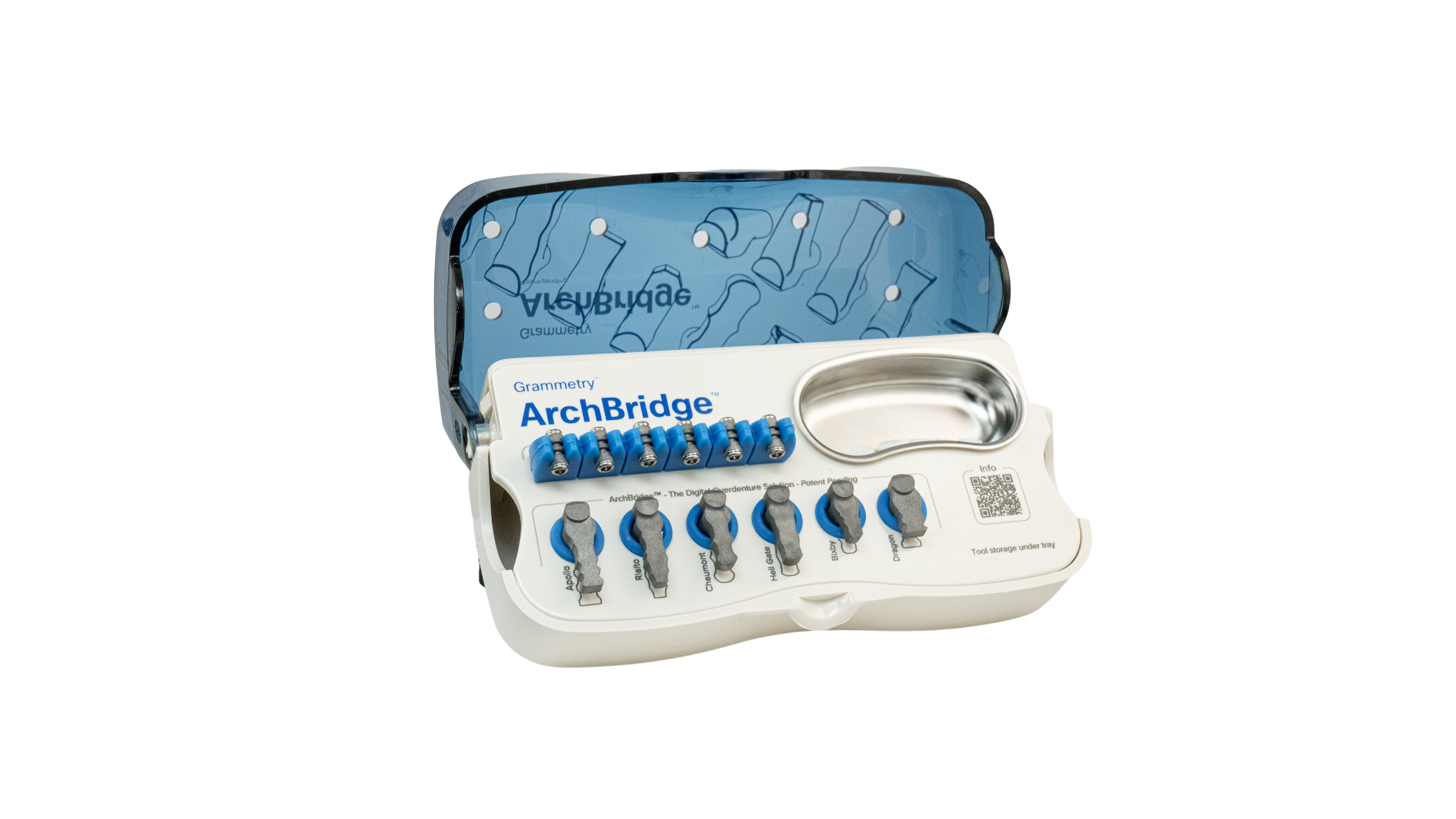
ROE Dental Laboratory has formally announced ROE Dental ArchBridge for Overdenture, a digital workflow for implant overdentures. Six reusable titanium scan bodies record attachment positions intraorally. ROE then places and cures the attachment housings in its laboratory, with no chairside pickup.
TL;DR
ROE Dental announced ArchBridge for Overdenture on October 21, 2026.
Six reusable titanium scan bodies record overdenture attachment positions.
ROE places and cures attachment housings in the laboratory.
The workflow supports removable overdentures and selected LOCATOR FIXED cases.
What ROE Dental Announced
ROE Dental Laboratory, based in Independence, Ohio, issued the announcement on October 21, 2026. The press release describes ArchBridge for Overdenture as a patent-pending scanning system for fixed and removable overdenture cases.
The release marks a formal announcement. ROE product pages, workflow guides, and a published technical report predate it.
ROE says kits are available now from its online shop. The company also states the system works with most major overdenture systems. The kit's purpose is narrow. It records attachment-level position data, so the lab can place housings without a poured model.
How the ArchBridge Digital Workflow Works
The clinician captures digital records, and the laboratory completes the housing work. ROE's scan protocol sets out the chairside sequence.
Seat a single-use insert in each scan body, then seat each scan body on its abutment.
Rotate each scan body toward the arch center, with a small space between neighbors.
Confirm full seating of every insert and scan body.
Scan continuously from the most posterior scan body to the opposite side.
Inspect the scan, focusing on each beveled round head, and rescan in the same visit if needed.
Upload the STL files and Rx to ROE through the scanner portal.
Tissue detail comes from a separate abutment and tissue scan. ROE's clinical workflows also call for a bite, opposing scan, and 360-degree scan of the existing or relined denture.
ROE then positions and cures the housings under laboratory conditions. The chairside team skips the blockout and intraoral acrylic pickup.
Six Titanium Scan Bodies Address Edentulous Scanning
An edentulous arch offers an intraoral scanner few stable landmarks for image stitching. Identical scan bodies can add to the problem, since the software may confuse repeated shapes.
ROE's product page names six distinct geometries: Apollo, Bixby, Chaumont, Dragon, Hellgate, and Rialto. Each shape gives the scanner a separate reference point. Different shapes and lengths also accommodate abutment spacing, ridge form, and limited space.
The scan bodies press-fit onto the abutments, and tactile seating signals readiness. A sandblasted titanium surface reduces reflection. The scan bodies are cleaned and steam-sterilized between patients.
The scan body inserts are the single-use part of the intraoral sequence. The kit holds six scan bodies, and each case uses one per abutment. The number in use depends on the implant plan.
Which Overdenture Cases Can Use ArchBridge?
ROE describes three documented pathways. Each one places a recognizable scan geometry at every attachment site.
Replacing an existing overdenture, or converting it to a fixed overdenture
Converting a healing denture to a fixed or removable overdenture
Capturing positions extraorally from an existing prosthesis or stone model with ScanAnalogs
The restoration type changes who removes it. A standard overdenture is patient-removable. A LOCATOR FIXED restoration is clinician-removable and stays in place between maintenance visits.
Compatibility needs a careful read. The press release cites most major overdenture systems. ROE's kit specifications list only the Zest LOCATOR and LOCATOR FIXED platforms as the documented interface. They require the Zest Processing Spacer, part number N2001657108. Clinicians using other attachment brands should confirm support with ROE before ordering.
The healing-denture and existing-overdenture pathways also include a medium-body PVS wash of the denture. The release headline mentions no PVS records. The wash records tissue detail inside the denture. Clinicians should plan materials and chair time for it.
What Clinicians Should Verify Before Adoption
The workflow depends on details that vary by practice. Confirm them with ROE before the first case.
Scanner export of open STL files and connection to ROE's portal
Abutment brand, platform, and processing spacer compatibility
Full-arch scan verification steps and rescan criteria
Training resources for the clinical and front-desk teams
Kit contents, laboratory fees, turnaround times, and remake policy
ROE lists the kit at $699. The Enhanced LOCATOR and LOCATOR FIXED Core Tool costs $199.99 and is sold separately. Replacement processing spacers cost $185.99 per 20-pack. Laboratory case fees and turnaround times were not published in the release.
Practices without a suitable scanner can compare intraoral scanner options before adoption. Clinicians should document attachment selection and prosthetic goals in the dental treatment plan before submitting the digital records.
The evidence base is still small. A published technical report describes the workflow in a clinical case. A single case report cannot establish comparative accuracy, chair-time savings, or long-term survival rates.
Bottom Line
ArchBridge for Overdenture moves housing placement from the operatory to ROE's laboratory. Six distinct titanium scan bodies record attachment positions for that step. The documented interface covers Zest LOCATOR and LOCATOR FIXED platforms. Current published evidence is a single technical case report. Comparative accuracy, chair-time effects, and long-term outcomes have not been measured.
Frequently Asked Questions
What is ArchBridge for Overdenture?
ArchBridge for Overdenture is a scan-body kit and laboratory workflow from ROE Dental Laboratory. Six titanium scan bodies seat on overdenture abutments during an intraoral scan. The scan gives ROE the attachment positions it needs to place housings. Our intraoral scanner primer explains the scanning step.
Does ArchBridge eliminate chairside pickup?
ROE says it positions and cures the housings in its laboratory. This replaces the chairside blockout and intraoral acrylic pickup in the documented workflows. Delivery adjustments and case-specific exceptions may still require chairside work.
Can ArchBridge work with LOCATOR FIXED restorations?
Yes, according to ROE. Its workflows include converting a removable overdenture or healing denture to a LOCATOR FIXED restoration. That restoration is clinician-removable. Case selection belongs in dental implant treatment planning before records are taken.
Does ArchBridge require a specific intraoral scanner?
ROE has not published a scanner list in the release. The workflow uses STL uploads through the scanner portal, so practices should confirm scanner and file compatibility with ROE. Our digital scanner comparison and Planmeca Onyx intraoral scanner review cover common options.