Evonik Introduces Two New PEEK Materials for Long-Term Dental Prosthetics
Evonik has launched VESTAKEEP DC4760 and DC4780, two stiffer Evonik VESTAKEEP PEEK grades for long-term fixed and removable dental prosthetics. The materials target metal-free...
Written by Marcus Hale
Read time: 3 min read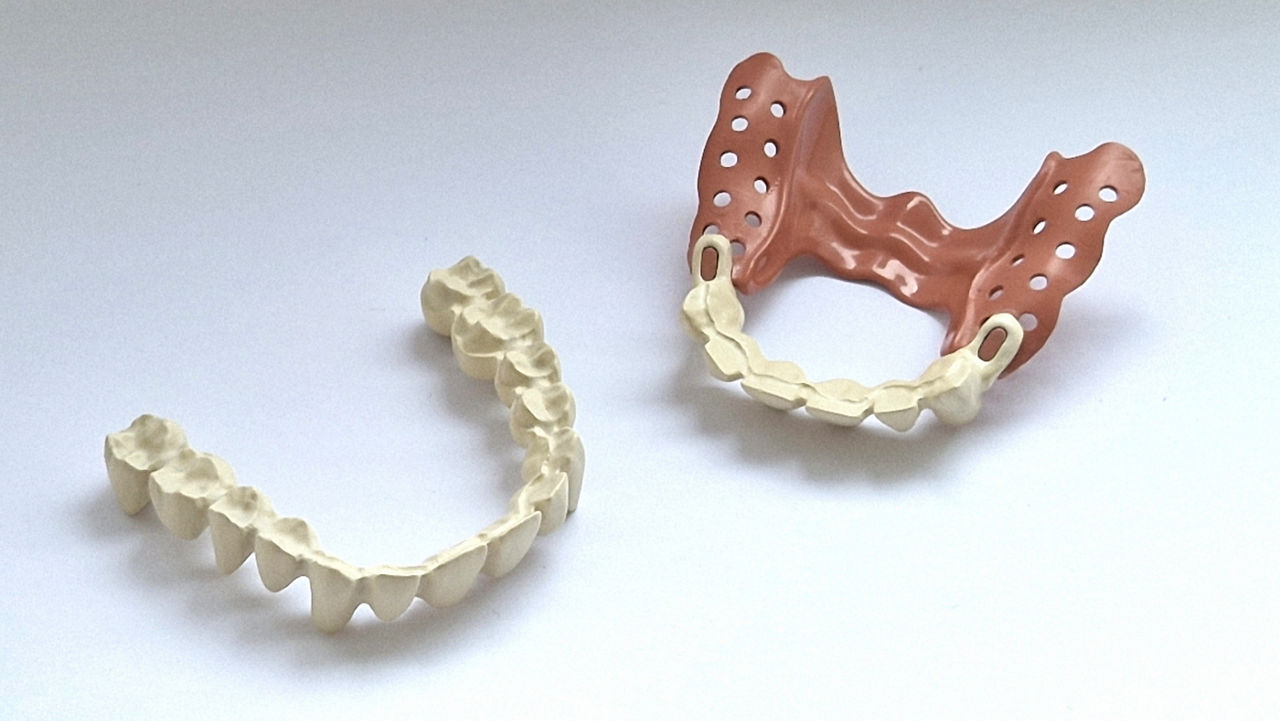
Evonik has launched VESTAKEEP DC4760 and DC4780, two stiffer Evonik VESTAKEEP PEEK grades for long-term fixed and removable dental prosthetics. The materials target metal-free frameworks and standard CAD/CAM milling. For dentists and dental laboratories, the main news is higher rigidity with flexural strength reportedly preserved.
TL;DR
Evonik announced two new dental PEEK grades on October 20, 2026.
Both grades are stiffer than earlier VESTAKEEP dental grades, according to Evonik.
They come as rods and CAD/CAM discs for fixed and removable prosthetic frameworks.
Evonik Introduces VESTAKEEP DC4760 and DC4780
Evonik announced the two grades from Darmstadt on October 20, 2026. They come from its High Performance Polymers business line and join an existing VESTAKEEP dental range.
In its press release, Evonik positions both grades for long-term fixed and removable prosthetic restorations. The company says a patented formulation gives them higher structural rigidity. Stiffness matters in framework design because a more rigid framework deflects less under occlusal load.
The only documented difference between the grades is color. DC4760 is dentin-colored, and DC4780 is gingiva-colored. Evonik does not assign separate clinical indications to each grade.
Feature | VESTAKEEP DC4760 | VESTAKEEP DC4780 |
|---|---|---|
Material | Polyether ether ketone (PEEK) | Polyether ether ketone (PEEK) |
Color | Dentin-colored | Gingiva-colored |
Main positioning | High-stiffness dental prosthetic frameworks | High-stiffness dental prosthetic frameworks |
Available formats | Rods and CAD/CAM discs | Rods and CAD/CAM discs |
Applications | Fixed and removable prosthetics | Fixed and removable prosthetics |
Evonik states that both grades are biocompatible for long-term mucosal contact. Its DC4780 G product page still lists that granule grade as a development product with biocompatibility testing underway. Laboratories should request current biocompatibility reports for the exact format they buy.
What Makes the New PEEK Materials Different?
Evonik's central claim is higher stiffness with flexural strength maintained. Unfilled PEEK is valued for its bone-like elasticity, but that flexibility can limit long-span or high-load frameworks.
Evonik's DC4760 G product page describes the material as high-modulus and designed for low deflection under load. A framework that deflects less may place less strain on veneers, attachments, and screw joints. Evonik also says the higher stiffness improves modulus matching between acrylic veneers and PEEK. That claim is plausible from a materials standpoint, but it has not been shown to extend denture service life in patients.
Other manufacturer-stated features include:
Metal-free composition, light weight, and no metallic taste
Good polishability with established laboratory equipment
Wear and plaque-accumulation resistance carried over from earlier dental grades
Compatibility with standard CAD/CAM workflows
The independent evidence comes from an in vitro study in Dental Materials by researchers at Charité Berlin. The paper, Mechanical and Biological Properties of Two New Commercial PEEK Framework Materials, compared two new compounds with unfilled and fiber-reinforced PEEK. It reported higher stiffness without lower flexural strength, better polishability and esthetics, and biocompatibility comparable to unfilled PEEK.
This is laboratory evidence. It supports mechanical suitability, not long-term clinical survival. Evonik's public product pages also list no numerical modulus or flexural strength values, so laboratories should request the technical data sheet before design decisions.
Potential Applications in Dental Prosthetics
Evonik's announced indications are long-term fixed and removable prosthetic restorations, including multi-unit frameworks and dental bridges. The press release also cites the Charité finding that the grades are stiff enough for implant-supported dentures and other high-load prosthetics.
The product pages list broader "typical applications" for the granule grades. These include partial dentures, denture bases, crowns and bridges, telescopic crowns, attachment restorations, abutments, and occlusal splints. These are manufacturer use examples, not regulatory clearances for finished devices.
The most relevant cases are likely implant-retained overdentures and removable partial dentures where a metal-free framework is wanted. Readers comparing these treatment options can see our guides to snap-in dentures cost and flexible partial dentures cost.
Material selection still depends on the case. Restoration design, available prosthetic space, connector dimensions, attachment systems, occlusal load, and parafunction all shape the choice. So do the regulatory indications of the finished device in each market.
What This Means for Dentists and Dental Laboratories
The new grades may widen the cases where a PEEK framework is a realistic alternative to cobalt-chromium or titanium. Adoption still depends on documentation that Evonik has not yet published in full.
Before adding the materials to a milling workflow, laboratories should verify:
Validated milling strategies and bur recommendations for their specific mill and CAM software
Minimum connector and framework dimensions for each indication
Bonding protocols for acrylic and composite veneers, including recommended primers
Finishing and polishing sequences for the higher-stiffness compound
Current biocompatibility reports and technical data sheets for the purchased format
Evonik says the grades work with established laboratory equipment and standard CAD/CAM workflows. Labs reviewing their equipment can compare options in our dental milling machine guide and our overview of CAD/CAM in dentistry.
Regulatory status needs careful reading. Evonik will support customers with their own EU MDR registration. That does not mean every finished restoration is approved, and US FDA status was not addressed in the release.
Pricing, distribution partners, and regional availability have not been announced. Evonik plans to present its medical solutions at COMPAMED in Düsseldorf from November 16 to 19, 2026.
Clinicians should wait for long-term clinical data before presenting the materials as a longer-lasting option. Material choices can be documented in a dental treatment plan once a lab confirms it can supply them.
Bottom Line
Evonik's VESTAKEEP DC4760 and DC4780 aim to make PEEK frameworks stiffer without losing flexural strength. An in vitro Charité study supports the mechanical claim. Claims about longer denture life and patient comfort remain manufacturer statements. Laboratories should request data sheets, milling protocols, and regulatory documentation before adoption. Clinicians should watch for long-term clinical results before changing framework selection.
Frequently Asked Questions
What are VESTAKEEP DC4760 and DC4780?
VESTAKEEP DC4760 and DC4780 are two new PEEK grades from Evonik for long-term dental prosthetics. DC4760 is dentin-colored, and DC4780 is gingiva-colored.
How are the new grades different from earlier VESTAKEEP dental PEEK?
Evonik says a patented formulation makes them stiffer while maintaining flexural strength. The company has not published numerical values on its public product pages.
Are the new PEEK grades clinically proven to last longer?
No long-term clinical data have been published yet. The supporting Charité study is an in vitro laboratory study.
Can dental labs mill the materials with existing equipment?
Evonik says both grades work with standard CAD/CAM workflows and established lab equipment. Labs should still confirm validated milling strategies for their own mill, as covered in our dental milling machine guide.