How Much Do Flexible Partial Dentures Cost in 2026?
Flexible partial dentures cost $700 to $3,000 per arch in 2026, with material choice and tooth count driving most of that spread. A single missing tooth costs less, usually $600...
Written by Mantas Petraitis
Read time: 7 min read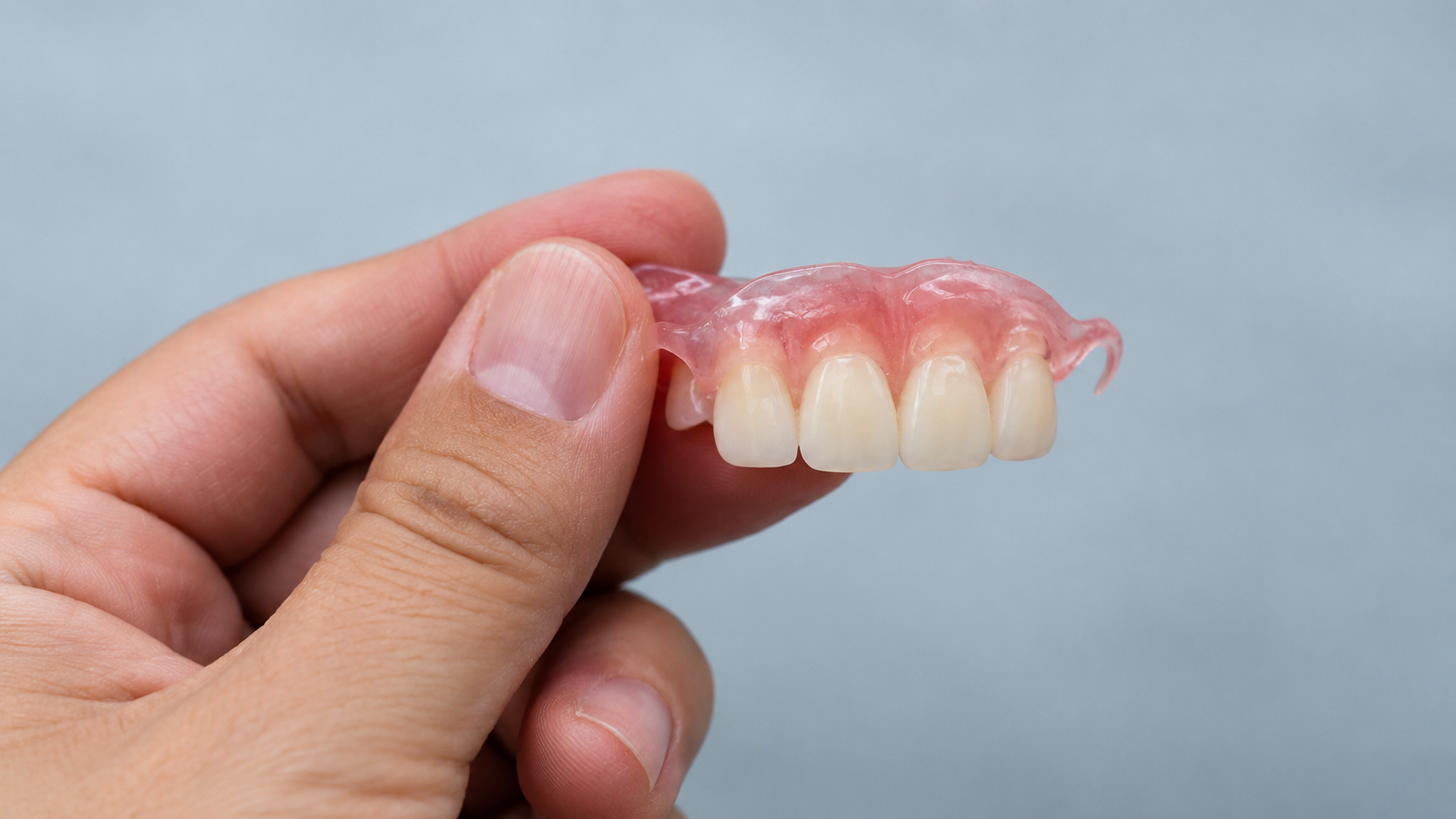
Flexible partial dentures cost $700 to $3,000 per arch in 2026, with material choice and tooth count driving most of that spread. A single missing tooth costs less, usually $600 to $1,000. Flexible dentures replace rigid acrylic or metal with a bendable resin base, a difference covered in our guide to flexible dentures. This page focuses on pricing by type, material, and state.
TL;DR
Flexible partial dentures cost $700 to $3,000 per arch.
A single tooth costs $600 to $1,000 on average.
Insurance covers about 50 percent after the deductible is met.
Full flexible dentures cost $2,500 to $4,500 per arch.
How Much Do Flexible Partial Dentures Cost In 2026?
Price depends mainly on how many teeth the partial needs to replace, since a single missing tooth costs far less than a multi-tooth case. The table below breaks down typical ranges by scope.
Scope | Low | Typical | High |
|---|---|---|---|
Single tooth | $600 | $800 | $1,000 |
2 to 3 teeth | $900 | $1,200 | $1,500 |
4 or more teeth | $1,200 | $1,800 | $3,451 |
The average flexible partial is $1,761 per arch, within a reported range of $1,360 to $3,451, and larger cases or premium materials tend to sit at the top of that range.
How Much Does A Flexible Denture Cost For One Tooth?
Single-tooth cases exist as their own pricing tier, and demand for this exact question is high, even though few sources answer it directly.
A single-tooth flexible partial typically costs $600 to $1,000, though many practices also set a case minimum fee that can apply even to a single tooth, which is why a small case sometimes costs more than expected.
How Much Do Full Flexible Dentures Cost?
Full arch flexible dentures replace every tooth in one jaw, and they cost more than partials since the entire appliance is a single flexible piece rather than a small patch of teeth.
A full flexible denture typically costs $2,500 to $4,500 per arch. Flexible resin is prescribed far less often for full arches than for partials, and that lower demand means less published pricing data exists for this option. Patients comparing full arch choices should also see our guide to same-day dentures.
How Much Does Each Flexible Denture Material Cost?
Material brand explains some of the price spread, since labs charge different licensing fees for each named product.
Material | Typical price band | Why it costs this |
|---|---|---|
Valplast | $800 to $1,500 | Nylon-based, the most widely stocked lab material |
TCS | $700 to $1,500 | Nylon-based, priced close to Valplast |
Duraflex | $700 to $1,600 | Similar band to Valplast, but easier to reline later |
Flexilytes | $1,319 to $1,819 | Aspen Dental's branded material, priced chain-wide |
Flexilytes pricing comes directly from Aspen Dental's own published range, while other brands vary more since independent labs set their own fees. It helps to ask which material a quote uses before comparing prices between offices.
Why Do Flexible Denture Quotes Vary So Much?
Two patients with similar cases can end up with very different quotes, and a handful of factors explain most of that gap.
Number of teeth being replaced
Outside lab work versus an in-house lab
Brand licensing fees for named materials
Local cost of living and office rent
Dentist or prosthodontist experience level
Add-on visits like relines and bite checks
While a single factor might not cost hundreds of dollars, together they can easily add $500 or more to the quote provided by a dentist.
How Much Do Flexible Dentures Cost By State?
Denture pricing shifts by region, much like other dental fees. The figures below use a regional cost pattern built on the national average.
State | Flexible partial cost (per arch) |
|---|---|
Alabama | $680 to $1,500 |
Alaska | $1,050 to $2,350 |
Arizona | $900 to $2,000 |
Arkansas | $680 to $1,500 |
California | $1,130 to $2,500 |
Colorado | $960 to $2,150 |
Connecticut | $1,130 to $2,500 |
Delaware | $960 to $2,150 |
District of Columbia | $1,130 to $2,500 |
Florida | $860 to $1,900 |
Georgia | $740 to $1,650 |
Hawaii | $1,180 to $2,600 |
Idaho | $860 to $1,900 |
Illinois | $900 to $2,000 |
Indiana | $810 to $1,800 |
Iowa | $810 to $1,800 |
Kansas | $810 to $1,800 |
Kentucky | $740 to $1,650 |
Louisiana | $740 to $1,650 |
Maine | $900 to $2,000 |
Maryland | $960 to $2,150 |
Massachusetts | $1,180 to $2,600 |
Michigan | $860 to $1,900 |
Minnesota | $900 to $2,000 |
Mississippi | $680 to $1,500 |
Missouri | $810 to $1,800 |
Montana | $860 to $1,900 |
Nebraska | $810 to $1,800 |
Nevada | $960 to $2,150 |
New Hampshire | $960 to $2,150 |
New Jersey | $1,130 to $2,500 |
New Mexico | $810 to $1,800 |
New York | $1,180 to $2,600 |
North Carolina | $810 to $1,800 |
North Dakota | $810 to $1,800 |
Ohio | $860 to $1,900 |
Oklahoma | $680 to $1,500 |
Oregon | $1,050 to $2,350 |
Pennsylvania | $960 to $2,150 |
Rhode Island | $1,050 to $2,350 |
South Carolina | $740 to $1,650 |
South Dakota | $740 to $1,650 |
Tennessee | $740 to $1,650 |
Texas | $860 to $1,900 |
Utah | $900 to $2,000 |
Vermont | $1,050 to $2,350 |
Virginia | $900 to $2,000 |
Washington | $1,050 to $2,350 |
West Virginia | $740 to $1,650 |
Wisconsin | $860 to $1,900 |
Wyoming | $860 to $1,900 |
Rural clinics and dental schools often price below every range shown, so checking one of those options first can lower the total further.
Does Dental Insurance Cover Flexible Dentures?
Insurance rarely pays the full price of a flexible partial, since most plans classify it as a major service instead of a basic one.
Major services are commonly covered at 50 percent after the deductible, and a waiting period of 6 to 12 months often applies on new plans, matching typical plan structures for major restorative work. Annual maximums also cap what a plan pays in a given year.
Many plans also apply an alternative benefit clause, which pays only the rate for a standard acrylic partial, leaving the patient to cover the difference between that allowance and the flexible material actually chosen.
Here is a typical example. A dentist quotes $1,500 for a flexible partial, but the plan's acrylic allowance is only $900 at 50 percent coverage, so the plan pays $450 toward that allowance and the patient owes the remaining $1,050 out of pocket.
A companion guide to dental insurance types explained breaks down major and basic service classification, and for carrier-specific coverage, our list of the best dental insurance companies in the US is a good next stop. Before treatment, ask the office for a written dental treatment plan that lists each procedure code and fee.
How Does Flexible Denture Cost Compare To Acrylic And Metal Partials?
Material choice affects more than the sticker price, since lifespan and repair cost both change the real cost over time.
Material | Upfront cost | Expected lifespan | Repair cost | Approx cost per year |
|---|---|---|---|---|
Acrylic | $300 to $900 | 3 to 5 years | $50 to $150 | About $150 |
Flexible (Valplast, TCS, Duraflex) | $700 to $3,000 | 5 to 8 years | Usually not repairable | About $260 |
Cast metal | $950 to $1,900 | 10 to 15 years | $100 to $300 | About $110 |
These per year figures come from dividing typical upfront cost by typical lifespan, so they are estimates rather than a published industry statistic. Even so, metal partials often end up costing less per year, even though the starting price is higher.
How Much Do Flexible Dentures Cost To Maintain?
Ownership cost does not stop at the initial fitting, since cleaning, adjustments, and eventual replacement all add up over time.
Most flexible materials cannot be relined the way acrylic can, so while a reline restores fit on an acrylic partial for $150 to $400, a flexible partial that no longer fits usually needs full replacement instead. Denture cleanser and soaking solution add a small ongoing cost as well, per ADA guidance on denture care.
Replacement typically happens every 5 to 8 years, as gum and bone shape change enough over that time to affect fit.
How Can You Lower The Cost Of Flexible Dentures?
A few practical steps can reduce the final bill without requiring any sacrifice in fit.
Ask a dental school clinic for reduced-rate treatment
Join a dental membership or savings plan
Set up an in-house payment plan with the dentist
Split treatment into phases if the case allows it
Request an itemized quote with procedure codes listed
An itemized quote makes it easier to compare offices fairly, and it also shows exactly what insurance will and will not cover.
Is A Flexible Denture Worth The Price?
A flexible partial suits patients who want comfort and a natural look, and it also works well for anyone with a metal allergy or sensitivity.
The spend makes less sense on a tight, long-term budget, since cast metal partials cost less per year over time, and patients who want a permanent, non-removable option are usually better served by looking at dental implants instead.
Bottom Line
Flexible partial dentures cost $700 to $3,000 per arch in most cases, with a single tooth running $600 to $1,000, since material, tooth count, and region all shift the final number. Insurance usually covers about half after the deductible, often at the acrylic rate rather than the flexible rate, which is why a written itemized quote remains the best way to compare offices fairly.
Full arch flexible dentures cost more, typically $2,500 to $4,500, and that option is prescribed less often than a partial. Anyone comparing materials should still ask for the brand name behind each quote, since that name usually explains most of the price difference.
Frequently Asked Questions
Are flexible dentures more expensive than regular dentures?
Yes, in most cases. Acrylic partials cost $300 to $900, while flexible partials run $700 to $3,000, and the higher price mostly reflects material costs and lab licensing fees.
Why did my dentist quote more than the online price ranges?
Online ranges rarely include the exam, impressions, and fitting visits, and a quote may also reflect a premium material, a more complex case, or simply a higher local cost of living.
Will insurance pay the full flexible denture price?
Rarely. Most plans cover about 50 percent after the deductible, and many pay only the rate for a standard acrylic partial rather than the flexible one.
Can I get flexible dentures on a payment plan?
Often, yes. Many dental offices offer in-house payment plans, and third-party financing is also common for larger cases.
How much does it cost to repair or reline a flexible denture?
Most flexible materials cannot be relined as acrylic can, so a crack or break usually means full replacement instead. Acrylic partials, by comparison, typically reline for $150 to $400.