Dry Socket: Symptoms, Treatment, and Prevention
Dry socket happens when the blood clot in a tooth socket comes loose too soon. The bone underneath is left exposed. It shows up two to four days after most extractions. Molar and...
Written by Maren Solvik
Read time: 4 min read
Dry socket happens when the blood clot in a tooth socket comes loose too soon. The bone underneath is left exposed. It shows up two to four days after most extractions. Molar and wisdom tooth extractions carry the highest risk. This guide covers the signs, the look, the timeline, and how to treat and prevent it.
TL;DR
Dry socket pain worsens after day 2 or 3, unlike normal healing pain.
A medicated dressing from a dentist relieves pain within a day or two.
Avoiding straws, smoking, and spitting lowers the risk of dry socket.
Untreated dry socket still heals, but pain lasts longer without care.
What Is Dry Socket?
Dry socket, known as alveolar osteitis, develops when the blood clot dissolves or falls out early. That clot normally protects the bone and nerve endings underneath while the socket heals. Without it, the exposed alveolar bone becomes painful and the wound stalls.
Dry socket occurs after roughly 1 to 5 percent of routine extractions. That rate climbs as high as 30 percent for surgically removed, impacted wisdom teeth. A peer-reviewed observational study confirms this range. Molar and impacted tooth extractions carry more risk, since the procedure is more involved.
The blood clot does more than plug a hole. It carries the growth factors and cells that rebuild bone and gum tissue underneath. Losing it early does not just cause pain. It also pauses that rebuilding process until a new barrier forms.
Dry Socket Signs And Symptoms
Dry socket has a distinct pattern that separates it from normal post-extraction soreness. The signs below usually appear together, not just one at a time.
Pain that gets worse instead of better after day 2 or 3
An empty or grayish-looking socket, missing the dark red clot
Visible bone at the bottom of the socket
A persistent bad taste or bad breath
Pain that spreads to the ear, eye, or neck on the same side
What Does Dry Socket Pain Feel Like?
Dry socket pain has a specific quality that helps separate it from ordinary healing discomfort. It typically starts as a dull ache, then turns sharp and throbbing within a day. Over-the-counter pain relievers rarely help much. The pain often radiates toward the ear or temple on the affected side. This pattern, worsening instead of easing, is the clearest single sign.
The bad taste and bad breath that come with dry socket trace back to food debris sitting in an open socket.
What Does Dry Socket Look Like In The Mouth?
A normal healing socket looks dark red or purple, filled with a visible clot. Dry socket looks different.
The socket looks empty or dull gray, without the dark clot
Bare, whitish bone is visible at the base of the socket
Surrounding gum tissue can look inflamed or swollen
A yellowish film sometimes coats the exposed bone
The surrounding gum tissue often looks inflamed too. Anyone unsure what they are seeing should send the dentist a photo.
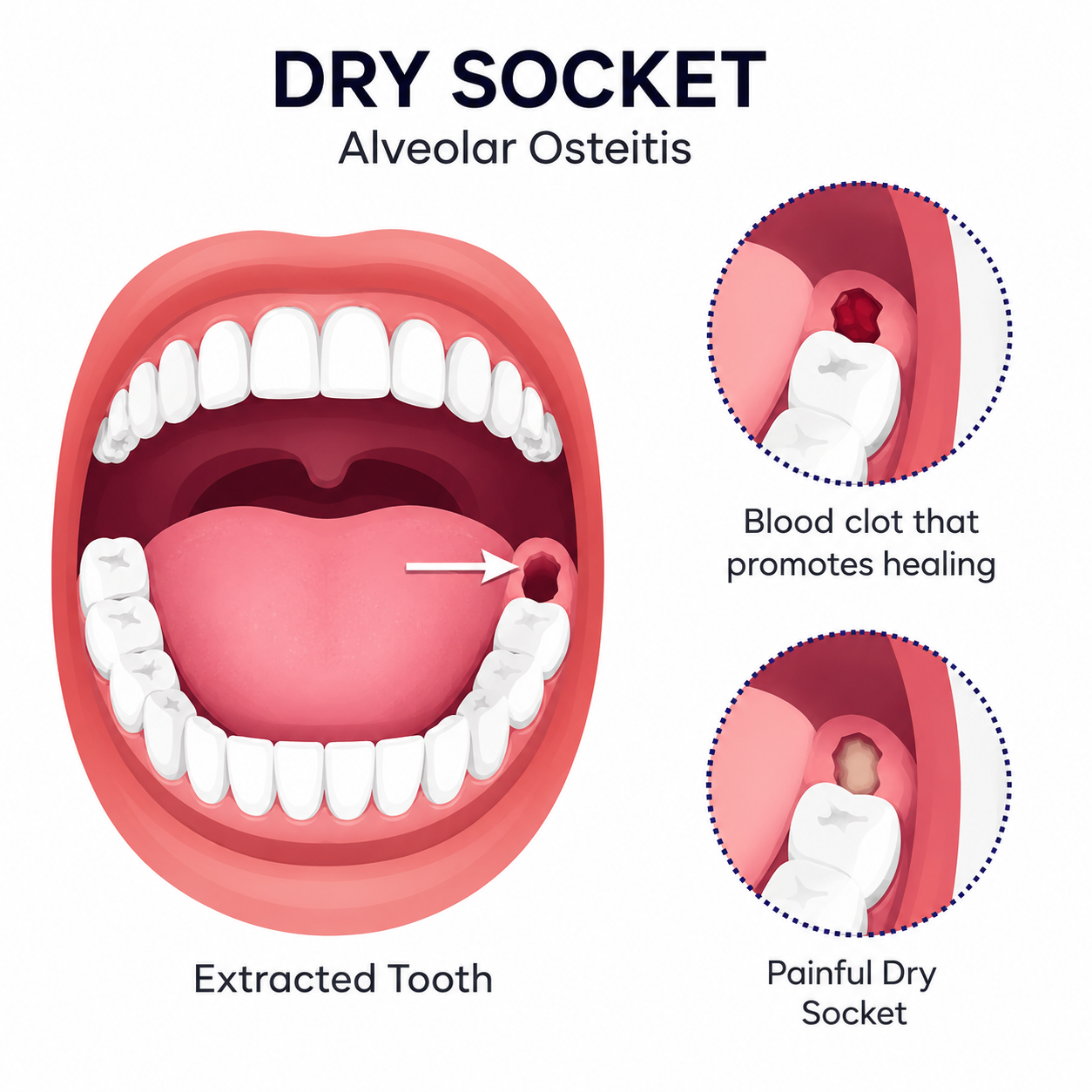
Dry Socket Vs. A Normal Healing Socket
Normal extraction pain and dry socket pain follow opposite trends. One improves daily, the other does not.
Normal healing: Pain peaks around day 3, then fades steadily
Dry socket: Pain keeps building past day 3 instead of easing
Normal healing: Mild odor at most, no strong bad taste
Dry socket: A persistent bad taste and noticeable bad breath
A clean exam confirms the difference when symptoms overlap. Any dentist can typically diagnose it from a quick visual exam alone. Imaging is rarely needed. The appearance and pain pattern together are usually enough to confirm it.
How Long Does Dry Socket Last?
Dry socket symptoms typically begin two to four days after extraction. Left untreated, the pain can last a week or longer before it fades.
Treatment changes that timeline significantly. A medicated dressing usually brings noticeable relief within one to two days. The socket itself still needs several more weeks to close over. Most people feel back to normal within a few days of starting treatment.
Dry Socket Treatment
Getting dry socket treated means a short visit to the dentist, not something to handle alone at home. The visit itself is quick, and most people feel noticeably better before they even leave the chair. The dry socket treatment at the dentist's office usually looks like this:
The socket gets gently rinsed to clear out food debris
A medicated dressing goes directly over the exposed bone
Pain relief typically starts working within minutes of the dressing
A follow-up visit gets scheduled if the dressing needs replacing
The visit becomes part of your dental treatment plan for any follow-up care
Dry Socket Medicated Dressing And Paste
The medicated dressing is the part that provides fast relief. Most formulas combine eugenol with a soothing base, packed directly into the socket. A clinical trial on medicated dry socket packing found this approach cut the alveolar osteitis rate significantly.
This dry socket paste covers the nerve endings and blocks pain almost immediately. A dentist typically replaces it every few days until the socket stops being sensitive. Some dentists use a gauze-based dressing instead of a paste. The goal stays the same either way. Both cover exposed bone and calm the nerve underneath.
What Products Are Used For Dry Socket Relief?
A few named products come up often in dry socket care. Each suits a different situation, from the professional paste placed by a dentist to store-bought options for the hours before that appointment.
Product | Type | Where it's used | Note |
Dry Socket Paste, guaiacol and eugenol | Professional medicated dressing | Placed by a dentist in-office | Not intended for unsupervised home use |
Clove oil, eugenol | OTC essential oil | Pharmacies and grocery stores | Temporary numbing, ask a dentist before using it in the socket |
Orajel, benzocaine gel | OTC topical gel | Pharmacies | General oral pain relief, not dry socket specific |
Orasoothe SOCKIT Gel | OTC hydrogel dressing | Online retailers | Drug-free, marketed for oral wound comfort |
The professional paste stays the most effective option. A dentist packs it directly against the exposed bone. Store-bought options ease discomfort for the hours before that appointment, not as a replacement for it.
Dry Socket At-Home Treatment
At-home care manages discomfort while waiting to see a dentist. It does not replace the medicated dressing that actually resolves dry socket.
Rinse gently with warm salt water several times a day
Hold a cold compress against the cheek for swelling
Take over-the-counter pain relief as directed on the label
Avoid chewing on the affected side
Skip straws, smoking, and vigorous spitting until healed
Brush gently near the socket instead of skipping oral hygiene entirely
Sleep with the head slightly elevated for the first couple of nights
Stay hydrated, since a dry mouth makes the discomfort feel worse
A soft-bristle or electric toothbrush works well for this. It cleans nearby teeth without disturbing the socket.
How Do You Gently Clean A Dry Socket At Home?
Food and debris tend to collect in an open socket, which adds to the discomfort. A dentist can provide a small irrigation syringe for this exact purpose.
Fill the syringe with warm salt water or the rinse a dentist recommends
Aim the tip gently at the socket opening, not directly into it
Flush lightly after meals to clear out trapped food
Stop and call the dentist if rinsing increases the pain
Call the dentist if pain has not improved within a day of starting these steps. Home care buys comfort, not a cure.
What To Eat And Avoid With Dry Socket
Food choices matter more than usual with an exposed socket. Soft, cool foods reduce irritation while the area heals.
Yogurt, mashed potatoes, and scrambled eggs are gentle, easy options
Smoothies work well, though sipping from a cup, not a straw
Lukewarm soups avoid the temperature swings that trigger pain
Skip spicy, acidic, or crunchy foods until the socket calms down
Avoid carbonated drinks, since the bubbles can irritate the area
Chew on the opposite side of the mouth whenever possible
How To Avoid Dry Socket
Prevention comes down to protecting the blood clot during the first few fragile days. Most dry socket cases trace back to one of a few avoidable habits.
Avoid straws for at least three to five days
Skip smoking and vaping, since suction dislodges the clot
Spit gently, or avoid spitting entirely, for the first day
Stick to soft foods and avoid the extraction site while chewing
Follow the dentist's rinse instructions exactly, starting on the recommended day
Timing matters as much as the habits themselves. The clot is most fragile during the first 24 to 72 hours. Extra care during that window prevents most cases.
Certain factors raise risk regardless of aftercare. Smoking, oral contraceptives, and a difficult extraction all play a role, along with the vasoconstrictor effect of some local anesthesia. A wisdom tooth or impacted molar removal carries more risk simply due to the procedure itself.
When Should You Call Your Dentist?
Most dry socket cases resolve quickly once treated, but a few signs call for prompt attention.
Pain that keeps worsening past day 3 or 4
Fever, chills, or swelling beyond the jaw
Pus or foul discharge from the socket
No improvement within a day of a medicated dressing
Any of these signs are worth a same-day call rather than waiting it out. Practices with same-day availability can usually place a dressing within the hour.
Bottom Line
Dry socket is painful, but it is not dangerous, and it responds quickly to treatment. Pain that worsens after day 2 or 3 is the clearest sign. An empty-looking socket and a bad taste often go with it. A medicated dressing from a dentist typically brings relief within a day or two. Protecting the clot for the first few days is the best way to avoid it.
This article is for informational purposes only and does not constitute medical advice. Always consult with qualified healthcare professionals for diagnosis and treatment recommendations specific to your situation.
Frequently Asked Questions
What does dry socket feel like?
It feels like a dull ache that turns into sharp, throbbing pain within a day or two. The pain often spreads toward the ear or temple on the same side.
How long does dry socket pain last without treatment?
Untreated pain can last a week or longer before it gradually fades. A medicated dressing from a dentist shortens that significantly, often within a day or two.
Is dry socket the same as an infection?
No, dry socket usually involves no infection at all. Fever and pus point toward infection instead, and that needs separate treatment.
Can dry socket heal on its own?
Yes, a dry socket eventually heals without treatment. Pain lasts longer, and daily comfort suffers more without a medicated dressing.
What does a dry socket paste do?
A dry socket paste, usually eugenol-based, covers exposed nerve endings inside the socket. It blocks pain quickly and is replaced every few days until healing catches up.