Childhood Adversity Linked To Higher Tooth Decay Odds
Some children come to every checkup and still get new cavities, and a new study of 44,489 U.S. children helps explain why. It looked at childhood adversity and tooth decay in kids...
Written by Mantas Petraitis
Read time: 5 min read
Some children come to every checkup and still get new cavities, and a new study of 44,489 U.S. children helps explain why. It looked at childhood adversity and tooth decay in kids aged 6 to 17. Those with four or more hard experiences had 60% higher odds of decay, and missed visits did not explain it.
TL;DR
Kids with four or more hard childhood experiences had 60% higher odds of tooth decay
These kids did not have fewer checkups once other family factors were counted
The study shows a link and cannot prove that hard times cause cavities
Dentists can ask simple questions about home routines to build prevention plans that work
What Counts As Childhood Adversity?
Researchers call these events adverse childhood experiences, or ACEs, a term that covers the hard things a child goes through before age 18.
The National Survey of Children's Health (NSCH) asks parents about these events, and a 2015 study using NSCH data listed examples like these:
Parents divorcing or separating
A parent or guardian in jail
Seeing violence at home
Violence in the neighborhood
Living with someone who misuses alcohol or drugs
Living with someone with serious mental illness
Trouble paying for basics
Newer versions of the survey also ask about a parent's death and about racial or ethnic discrimination. Because studies don't all count ACEs the same way, scores can differ from one paper to the next.
What Did The New Study Find?
The study came out on September 29, 2026, in the Journal of Public Health Dentistry. A team led by Elizabeth Crouch at the University of South Carolina ran the analysis.
The team used survey answers from 2022 and 2023 covering 44,489 children aged 6 to 17. Parents answered two key questions: did the child have tooth decay in the past year, and did the child have a checkup? The researchers then accounted for income, insurance, language, and other family details.
The main result is clear. Kids with four or more ACEs had 60% higher odds of tooth decay than kids with fewer. In study terms, that is an adjusted odds ratio of 1.60, with a 95% confidence interval of 1.33 to 1.94.
The second result stands out even more. Once family details were counted, these kids were not less likely to have a checkup, so missed appointments do not explain their extra cavities.
What Does "60% Higher Odds" Mean?
Odds and risk sound alike, yet they are different numbers, and the difference grows when a problem is common.
Here is an example with made-up numbers. Say 12 out of 100 kids with few ACEs have a cavity. Using the study's odds ratio, about 18 out of 100 kids with many ACEs would have one. That works out to about 50% more kids, a bit less than the headline number suggests.
So 60% higher odds does not mean that 60% more children had cavities, and the real difference is a little smaller.
Did These Children Miss Dental Visits?
It would be easy to assume they did, since the story seems simple. A hard home life leads to fewer checkups, and fewer checkups lead to more cavities. The new data don't show that pattern.
An earlier study, also led by Crouch, used 2016 survey answers. It found that kids with four or more ACEs were less likely to have a checkup. They also had about twice the odds of tooth decay, even after checkups were counted. Both studies tie hard childhoods to more decay, and they differ only on whether these kids miss the dentist.
Put simply, many of these children do sit in the dental chair twice a year, and the trouble builds in the roughly 180 days between visits.
Why Would A Hard Home Life Affect Teeth?
The study did not test the reasons, though a few everyday explanations make sense, and most of them come down to habits at home.
Diet And Snacking
Cavities form when teeth meet sugar again and again through the day. Busy or stressed homes often lean on cheap, quick foods and sweet drinks to get by.
A single can of soda has 39 grams of sugar, and when it is sipped slowly over an afternoon, teeth stay under acid attack for hours.
Brushing At Home
Brushing twice a day with fluoride toothpaste takes a steady routine, and young kids also need an adult to help them or check their work.
A parent working night shifts or coping with a crisis may not manage that every night. A kids' electric toothbrush with a timer can help keep brushing on track, though it can't replace an adult watching.
Stress And Dental Fear
Stress tends to show up in behavior, so kids under strain may snack more, sleep poorly, or grind their teeth at night.
Fear of the dentist may also play a part. A study of Norwegian teens found that dental fear explained part of the link between ACEs and cavities. A scared child may show up for the visit and still refuse treatment. No study has shown that stress hormones cause cavities directly.
Money And Where Families Live
Hard times often come with less money, unstable housing, and less healthy food, and these factors are hard to pull apart.
In a 2021 study of 2016 survey data, money trouble alone came with 1.85 times the odds of cavities. Fluoride in tap water, fresh food, and a ride to the dentist all depend partly on where a family lives.
What Can A Checkup Solve?
Two checkups a year are short visits, and between them a child eats more than 700 meals and snacks.
A child can get an exam, a cleaning, and fluoride every six months and still face:
Sugary snacks and drinks between meals
Brushing that happens some nights and not others
Little fluoride from water or toothpaste
Moving between homes or caregivers
Fillings that keep getting put off
Advice that is hard to follow at home
A checkup finds problems early and adds protection, though it can't change what happens at home for the rest of the year.
What Can Dentists Do Differently?
The study does not ask dentists to dig into a child's trauma. It does suggest that repeat cavities in a child who never misses a visit deserve a closer look at daily life.
Take Maya, a 9-year-old who shows up for every cleaning and still has a new cavity between her back teeth each time. The usual fix is more fluoride and another talk about brushing. A few gentle questions tell a different story. Maya now splits her week between two homes, and neither one has a set bedtime brushing routine. On top of that, juice comes in her lunch box every day.
Helpful topics to raise with parents include:
Snacks and drinks, including juice and sports drinks
Who helps with brushing, and how often
Fluoride toothpaste and the family's water source
What makes it hard to finish treatment, such as rides or time off work
Recent changes at home that affect routines
Tone makes the difference here. Questions about routines feel helpful, while questions that sound like blame push families away. Dentists should never quiz a child about trauma just because of cavities. Good patient communication starts with what the family is able to change.
The answers help build a realistic dental treatment plan. For Maya, that could mean more frequent checkups, sealants, and a high-fluoride toothpaste, with fillings booked around her parents' custody days. A well-timed pediatric cavity filling can also prevent an emergency visit later.
Does Childhood Adversity Cause Tooth Decay?
This study can't say, because it found a link in survey answers collected at a single point in time.
Since everything was measured at once, there's no way to tell which came first. Hard times and cavities also share causes, such as low income and too little healthy food. The researchers adjusted for many of these, though no adjustment catches everything. The authors call for studies that follow kids over several years. Until then, kids facing a lot of hardship are best seen as a higher-risk group.
What Are The Study's Limits?
Big surveys cover many children and collect less detail on each one, and four limits stand out here.
Parents Reported The Cavities
No dentist examined these children, so the decay data came from parents answering a survey question about the past year.
A parent may not know about an early cavity or may mix up old fillings with new decay. Kids who see the dentist less often may also have cavities that nobody has spotted yet.
Hard Times Rarely Come Alone
Low income, housing problems, and unsafe neighborhoods often go along with ACEs, and no statistical method can fully separate them.
A Checkup Says Little About The Care
The survey shows whether a checkup happened, without showing what happened during it or whether treatment was finished. The authors also note they had limited data on dental insurance and use of care.
Two kids can both report a checkup. One leaves with sealants and every filling done, while the other leaves with a referral that nobody books.
Some Hard Events Go Unreported
Parents may not know everything a child has been through, or may not want to say. The Norwegian researchers raised the same concern in their own work.
Have Other Studies Found The Same Thing?
Mostly, yes. The new study adds a large, recent U.S. sample to a pattern that researchers have seen before.
A 2015 analysis of survey data found odds of poor dental health 1.61 to 2.55 times higher in kids with several ACEs. Norwegian teens also had more cavities with each added hardship. In adults, a UK study linked four or more ACEs to more lost and filled teeth. A 2026 review found that adults with ACEs had about double the odds of gum disease or tooth loss.
Not every study agrees, though. A UK study of young children used real dental exams up to age 5 and found no clear link between very early ACEs and cavities.
Should Dentists Ask About Home Life?
Most cavity risk forms focus on the mouth, asking about past cavities, plaque, diet, fluoride, saliva, and health history.
Those questions still come first. What they skip is whether the child's home makes the advice possible. A brushing chart assumes a steady routine that some kids, like Maya, don't have yet.
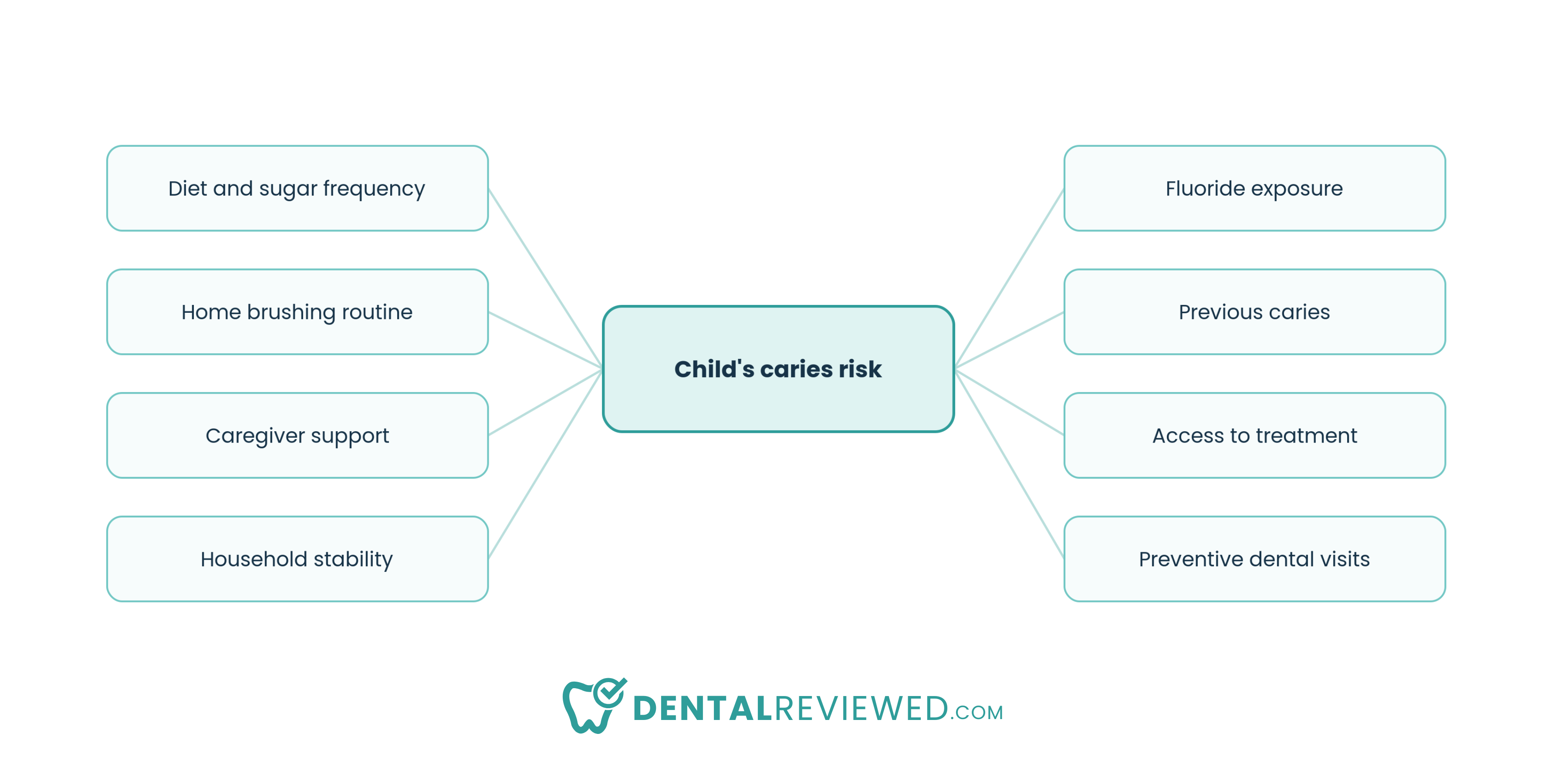
The left side of the picture shapes the right. A stable home makes good eating, brushing, and finished treatment more likely. The new study hints that the left side counts even when checkups happen on time.
What Could That Look Like?
Dentists don't need an ACE score in the chart, because a few everyday questions can still change the plan.
Ask who brushes the child's teeth, where meals happen, and what makes appointments hard to keep. The answers help set goals a family can reach, like one supervised brush at night. They also guide how often to see the child and which fluoride to use. Some families need more help than a dental office can give, so a short list of local support services makes referral easy.
Handing out more cavity prevention tips rarely works on its own. Tips that fit the family's real day have a much better chance of sticking.
Bottom Line
Maya's story fits the new data. Kids facing a lot of hardship had 60% higher odds of tooth decay, yet they were not less likely to get checkups. The study can't prove that hard times cause cavities. It does suggest that much of the risk builds at home, in the months between visits. The research on childhood adversity and tooth decay points dentists toward plans that fit a child's real life.
Frequently Asked Questions
Can childhood stress cause cavities?
No study has shown that stress directly causes cavities. Research links adversity with higher odds of decay. Diet, brushing, and money at home likely explain much of that link.
What are adverse childhood experiences?
They are stressful or traumatic events before age 18. Common examples include parental separation, violence at home, household substance misuse, and financial hardship.
Are children with more ACEs more likely to have tooth decay?
The 2026 study found 60% higher odds of reported decay with four or more ACEs. Odds are not the same as risk, so the absolute difference is smaller than 60%.
How can stress affect children's oral health?
Stress can disrupt meals, snacking habits, sleep, and brushing routines. It can also raise dental fear, which may delay treatment.
Can children get cavities even if they visit the dentist regularly?
Yes. Checkups find decay early and add fluoride or sealants. Sugar frequency, brushing, and fluoride at home still drive new lesions between visits.