Teeth Whitening Swabs Explained: Benefits, Safety & Costs
Teeth whitening swabs are single-use applicators that spread gel directly onto teeth, with no strips or trays. This guide covers how they work, realistic results, safety, and how...
Written by Rachel Thompson
Read time: 7 min read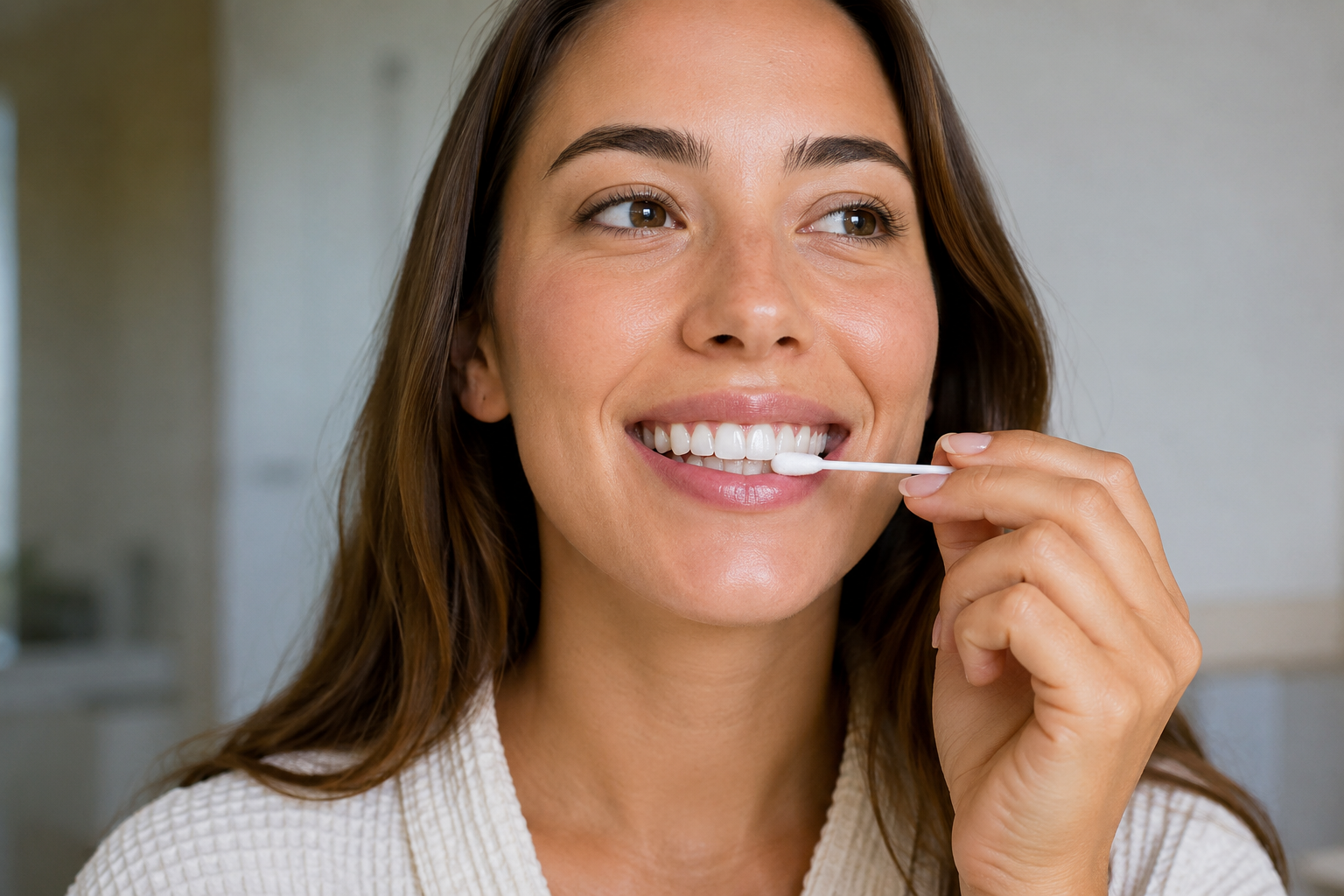
Teeth whitening swabs are single-use applicators that spread gel directly onto teeth, with no strips or trays. This guide covers how they work, realistic results, safety, and how popular brands compare.
TL;DR
Teeth whitening swabs use hydrogen or carbamide peroxide to lighten teeth by roughly one to two shades with consistent use
Independent Power Swabs reviews average 3.3 out of 5 stars, a useful check against brand marketing claims
A 7-day kit typically costs $20 to $65 depending on the brand and concentration
Peroxide-free PAP swabs are a newer, lower-sensitivity alternative worth comparing before buying
What Are Teeth Whitening Swabs?
Teeth whitening swabs are pre-loaded applicators. They deliver a thin layer of whitening gel to each tooth. They belong to the same at-home whitening category as strips, trays, and pens. They skip the wear time those formats require.
Most swabs snap or twist open to release gel into a foam or brush tip. The user rubs the gel across each tooth in a circular motion briefly. No rinsing, no tray-fitting, and no waiting around for a strip to finish its cycle. That speed is the main reason people choose swabs over other at-home formats.
The category includes dedicated two-step swab systems, most notably Power Swabs. It also includes single-step swab or pen-style applicators from brands like Smileactives, AuraGlow, and Crest. The mechanism is similar across brands. The format and marketing claims vary more.
How Do Teeth Whitening Swabs Work?
Understanding the chemistry behind whitening swabs helps set realistic expectations before buying any specific product.
The active ingredient in most swabs is hydrogen peroxide or carbamide peroxide. Hydrogen peroxide is an oxidizing agent. It penetrates the enamel and breaks apart chromophore molecules, the colored compounds behind staining. Carbamide peroxide works through a similar mechanism, though it breaks down more slowly. It first decomposes into hydrogen peroxide and urea before bleaching begins. Some newer formulations use phthalimidoperoxycaproic acid, known as PAP. This non-peroxide alternative targets stain molecules without producing free radicals.
PAP has become an active research subject over the past two years. A dedicated section below covers what current studies actually show.
Research in Frontiers in Dental Medicine confirms peroxide-based formulas oxidize extrinsic and some intrinsic stains. This happens when applied at sufficient concentration for adequate contact time (Frontiers in Dental Medicine, 2021).
The swab format offers an advantage in application precision. A whitening swab lets users coat individual teeth with a controlled amount of gel. This reaches areas between teeth that strips or trays may miss. Swab gel is typically thinner than traditional whitening gel. This lets it spread evenly without needing a physical barrier like a tray.
Over-the-counter swabs typically contain 3% to 10% hydrogen peroxide equivalent. This is considerably lower than the 25% to 40% used in professional in-office treatments. That is one reason at-home products need multiple applications rather than delivering instant results. The trade-off is a lower risk of sensitivity and enamel irritation.
The pH of the whitening solution also affects outcomes. A neutral or slightly alkaline pH tends to be gentler on enamel than an acidic one. Some swab products are formulated to stay pH neutral during application. This protects enamel while still letting peroxide oxidize stain molecules beneath the surface.
Step-by-Step Application Process
Using swabs generally follows a straightforward process, though exact steps vary slightly by brand. Most products instruct users to snap or twist the swab handle first. This releases the whitening solution into the applicator tip. Users then rub the solution across each tooth in a gentle circular motion. Application times range from one to five minutes depending on the product. Afterward, users should avoid eating, drinking, or rinsing for at least 30 minutes.
Two-step systems, like Power Swabs, add a stain-removal swab before the whitening swab. Single-step products, more common among pen-style applicators, use one gel and one application.
How Teeth Swabs Compare to Other Whitening Methods
Choosing the right method depends on budget, sensitivity concerns, time available, and desired results. The table below compares common at-home and professional approaches.
Factor | Whitening swabs | Whitening strips | Custom trays | In-office |
|---|---|---|---|---|
Ease of use | Very easy | Easy | Moderate | Done by dentist |
Avg. cost per treatment | $8–$9 | $1–$3 | $10–$30 | $300–$1,000+ |
Treatment time | 1–5 minutes | 20–60 minutes | 30–60 minutes | 60–90 minutes |
Portability | High | Moderate | Low | N/A |
Sensitivity risk | Low to moderate | Moderate | Moderate | Moderate to high |
Typical results | Gradual, mild | Moderate | Moderate to strong | Significant |
The American Dental Association notes that lower-concentration, over-the-counter products are generally safe when used as directed. Results are typically less dramatic than professional treatments.
A review in Frontiers in Dental Medicine found paint-on swabs and pens show clinical efficacy. The overall body of evidence remains smaller than for strips and trays.
What Results Can You Actually Expect?
Marketing claims for whitening swabs vary widely, from modest to dramatic. Independent research gives a more grounded picture of what most users actually see.
The evidence base for peroxide whitening is well established. A study in the Journal of Evidence-Based Dental Practice looked at peroxide whitening. Most products lighten teeth by one to two shades. Higher concentrations and longer treatment durations yield more noticeable results. Some brands claim considerably more than that over a short window, exceeding typical over-the-counter outcomes. Consumers should manage expectations against that gap regardless of which brand they choose.
Dental professionals generally agree that peroxide-based products can visibly improve tooth color. This applies particularly to extrinsic stains from coffee, tea, red wine, and tobacco. Most caution that over-the-counter formulas use lower concentrations than professional treatments. This limits the whitening achievable no matter which over-the-counter product is used.
The ADA confirms temporary sensitivity and gum inflammation are the most common whitening side effects. Only natural teeth respond to bleaching agents. Crowns and veneers will not change color, though surface stains on them may reduce.
Consistency matters more than any single application. Some users notice the biggest improvement near the end of a full cycle, not right away. This matches how peroxide-based whitening works chemically, since oxidation builds gradually with repeated exposure.
Users who pair swab whitening with good daily hygiene tend to see better results. This includes brushing with a whitening toothpaste and regular flossing. Removing surface plaque lets the whitening agent reach stained enamel directly.
Are Teeth Whitening Swabs Safe?
Safety is a top concern for anyone considering an at-home whitening product. Answering this requires looking at the general safety profile of peroxide whitening, which applies across brands.
Peroxide-based whitening, used as directed, is generally considered safe for most adults. A review in PMC found low-concentration peroxide bleaching has no significant effect on enamel. The review also found the treatment tolerable, with reversible side effects. The most common side effects are temporary sensitivity and mild gum irritation. Both typically resolve within a few days.
Who Should Avoid Whitening Products
Certain groups should exercise caution or avoid at-home whitening entirely. Understanding these considerations matters before starting any treatment, regardless of brand.
Pregnant or nursing women should avoid whitening treatments, as safety data for this population is limited
Children under 12 should not use peroxide-based whitening products without professional supervision
Individuals with untreated cavities, gum disease, or exposed root surfaces should consult a dentist before whitening
Anyone with known allergies to peroxide or related ingredients should avoid these products
Patients who have recently undergone dental procedures should wait until healing is complete before using whitening swabs
Understanding the difference between temporary sensitivity and lasting damage matters too. Temporary sensitivity happens when peroxide penetrates enamel and mildly irritates nerve endings in the dentin. This reversible effect typically subsides within one to three days. Lasting damage is associated with overuse, highly concentrated formulas, or an excessively acidic pH. Reputable over-the-counter products stay well within safe concentration limits.
Gum irritation is another commonly reported side effect. It usually happens when gel contacts soft tissue during application. The swab format can reduce this risk compared to strips or trays. It allows more precise application, directing gel onto tooth surfaces rather than the gum line. If irritation does occur, it is typically mild and resolves once treatment pauses.
The best whitening toothpaste for sensitive teeth guide has options for those prioritizing sensitivity over speed. These pair well with either a peroxide or PAP whitening cycle.
PAP Whitening: A Peroxide-Free Alternative Worth Comparing
Anyone with a history of sensitivity now has a genuine alternative to compare against peroxide swabs.
Phthalimidoperoxycaproic acid, or PAP, is one of the more researched non-peroxide whitening ingredients right now. Unlike hydrogen or carbamide peroxide, PAP does not generate free radicals as it breaks down stains. This appears to lower sensitivity risk.
A 2025 review in Dentistry Journal compared peroxide-free correctors, including PAP, to peroxide agents (PMC, 2025). Peroxide-free options produced measurable whitening, with a sensitivity rate below 3%. The review found no significant enamel erosion across the studies analyzed. Peroxide agents produced a larger color change overall, but with more enamel alteration in some samples.
A separate 2025 in vitro study compared PAP directly to hydrogen and carbamide peroxide (MDPI, 2025). PAP produced a smaller immediate shade change but less enamel disruption over repeated use. Some clinical data suggests PAP results fade faster than peroxide results. Color can revert closer to baseline within about three months without a touch-up.
For someone choosing between a peroxide swab and a PAP-based product, the trade-off is fairly direct. Peroxide swabs tend to produce a more noticeable shade change, with a slightly higher sensitivity risk. PAP swabs tend to produce a subtler change, with less enamel disruption and lower sensitivity. PAP may also need more frequent maintenance to hold the result. Neither ingredient whitens dental restorations. Both work best on mild to moderate surface staining rather than deep discoloration.
Teeth Whitening Swab Brands Compared
With the basics of how swabs work established, it helps to look at specific brands. Coverage ranges from dedicated two-step systems to single-step pen applicators using a similar swabbing motion.
Power Swabs
Power Swabs is the most recognized dedicated swab brand. It is also the only major one built around a two-step system. Dr. Martin Giniger, a dentist with over three decades in oral care, developed it in 2008. The kit pairs a Stain-Out Swab with a White Swab Ultra containing carbamide peroxide. Each step takes about two minutes. The brand markets it as effective on natural teeth and restorations like crowns and veneers.
Where to buy: Amazon, Walmart, or powerswabs.com
Price: Around $60 to $65 for a 7-day kit
Pros:
Two-step system targets both surface stains and whitening in one short session
Marketed as safe for use on crowns, veneers, and other restorations
No trays, strips, or LED devices required
Full process takes about five minutes per day
Cons:
Independent reviews average 3.3 out of 5 stars, below what marketing implies
Higher price per session than pen-style alternatives
Some users report swabs arriving dry or breaking during use
Six-shade marketing claim exceeds typical over-the-counter results
Search interest around Power Swabs often includes the word "scam," so the data deserves a look. Power Swabs holds an average rating of 3.3 out of 5 stars. That figure comes from roughly 336 reviews on Trustindex, a third-party review platform. One independent analysis found that about 60% of users reported some whitening result. Roughly 40% reported minimal or no visible change. Common negative themes include dry or broken swabs, plus gum irritation from the second step. None of this makes the product fraudulent in a legal sense. Carbamide peroxide is a real, well-studied whitening agent, and the mechanism is legitimate dental chemistry. The more accurate read is that results vary significantly by individual. The marketing language sets expectations many users do not experience. Anyone comparing this against a dental treatment plan should treat shade claims as a starting point.
Smileactives
Smileactives takes a different approach than Power Swabs. It uses a pen-style hydrogen peroxide applicator, not a two-step swab. The twist-action pen uses a soft-bristle brush tip. It claims up to six shades in seven days with two to four daily uses. The brand also sells a whitening gel added to toothpaste, plus an LED accelerator device.
Where to buy: Amazon, Walmart, or smileactives.com
Price: Around $18 to $22 for a single pen
Pros:
Simple single-step application, faster than a two-step swab routine
Lower price than Power Swabs for a comparable at-home routine
Formula free from sodium lauryl sulfate, parabens, and artificial colors
Compact pen design travels easily
Cons:
Single-step formula may produce more gradual results than a two-step system
Marketing claims of six shades in seven days exceed typical peroxide outcomes
Smaller product lineup than mainstream whitening brands
AuraGlow
AuraGlow sells a pen applicator built around 9% hydrogen peroxide, stronger than many competing pens. A twist mechanism dispenses gel onto a brush tip. Each pen holds 40 or more treatments.
Pros:
Higher peroxide concentration than many pen-style competitors
Over 40 treatments per pen, lowering the cost per use
Budget-friendly compared to two-step swab kits
Made in the USA
Cons:
Higher peroxide concentration may increase sensitivity risk for some users
Single-step format, less structured than a two-step routine
Best suited to maintenance and touch-ups rather than deep staining
Crest 3D White Whitening Pen
Crest's pen extends the brand's broader whitening line into a portable format. It uses the same whitening ingredient as Crest's strips, applied with a precision tip. Each pen is rated for up to 75 uses.
Where to buy: Amazon or Target
Price: Around $21 to $26 per pen
Pros:
Backed by Crest's established, ADA-recognized whitening line
Up to 75 uses per pen, among the highest use counts in the category
Widely available at major retailers
Enamel safe for daily use
Cons:
The pen itself does not carry the ADA Seal, unlike some other Crest products
Designed for surface stains rather than deeper discoloration
Slower, more gradual results than a two-step system
Choosing Between Brands
The right swab brand depends on priorities more than any single winner. Power Swabs' two-step system offers a more structured routine at a higher price point. Smileactives and pen-format competitors cost less and work well for maintenance, with a simpler application. Anyone especially sensitive to peroxide may prefer a PAP-based product, covered above, regardless of brand.
Teeth Whitening Swab Brands At A Glance
The table below summarizes the four brands side by side for a quick comparison.
Brand | Format | Active ingredient | Price | Best for |
|---|---|---|---|---|
Power Swabs | Two-step swab | Carbamide peroxide | $60–$65 (7-day kit) | Structured, higher-effort routine |
Smileactives | Single-step pen | Hydrogen peroxide | $18–$22 (single pen) | Simple daily maintenance |
AuraGlow | Single-step pen | 9% hydrogen peroxide | $15–$20 (single pen) | Budget-conscious touch-ups |
Crest 3D White Pen | Single-step pen | Hydrogen peroxide | $21–$26 (single pen) | Brand familiarity and availability |
What Teeth Whitening Swabs Cost
Cost varies across brands and formats. Seeing the full range helps before choosing a product.
Dedicated two-step kits like Power Swabs typically run $45 to $65 for a 7-day supply. That works out to roughly $8 to $9 per session. Pen-style applicators from Smileactives, AuraGlow, and Crest generally cost $15 to $36. They often last several weeks with twice-daily use, bringing per-use cost down. Across the category, expect to pay $20 to $65 for a full treatment cycle. Price generally tracks concentration and the number of applications included.
Whitening Cost Comparison
The following table compares estimated costs across common whitening methods. Prices are approximate and vary by retailer and current promotions.
Method | Estimated total cost | Cost per treatment | Treatments included |
|---|---|---|---|
Whitening swabs and pens (7-day to several-week supply) | $15–$65 | $1–$9 | Varies by brand |
Whitening strips (10 to 20 treatments) | $20–$60 | $1–$3 | 10–20 sessions |
Custom whitening trays (dentist-supplied) | $150–$600 | $10–$30 | Varies |
In-office professional whitening | $300–$1,000+ | $300–$1,000+ | 1–2 sessions |
For consumers comparing whitening swabs to other options, the format sits in the low-to-mid range. The cost suits users who value convenience and speed. Others may find whitening strips offer better value per session. The right choice depends on whether convenience or long-term cost efficiency matters more.
Maintenance costs are also worth factoring in. Whitening results from any at-home product fade over time, so most users need periodic touch-ups. Pen-style products tend to work well for this ongoing maintenance role, given their lower per-use cost.
The best toothpaste guide on Dental Reviewed covers more on maintaining results between treatments.
Whitening Swabs Reviews: What Real Users Are Saying
Consumer reviews offer real insight into product performance across the category. Comparing common themes across platforms and brands paints a fuller picture than any single testimonial.
Common Praise Points
Across verified review platforms, several strengths come up consistently for the swab and pen format generally.
Quick and easy application that takes less than five minutes per session
No messy trays, strips, or LED devices required for most products
A portable design that can be used while traveling
Minimal to no sensitivity reported by many users, especially with pen-style products
Noticeable improvement in surface-level stains after the first few uses
Common Criticism Points
Reviews also reveal consistent criticisms that potential buyers should weigh before purchasing, regardless of brand.
Results are often described as subtle rather than dramatic, especially for deep stains
Two-step systems carry a higher price point than comparable whitening strips or pens
Some users report that individual swabs arrived dry or broke during application
The taste and texture of the gel can be unappealing for some users
Results may not last as long as professional treatments without consistent maintenance
When evaluating reviews for any whitening product, look for verified purchase badges and before-and-after photos. Reviewers who describe the duration and consistency of their use tend to be more reliable.
The overall pattern suggests these products work best for mild to moderate surface staining. Users who want a quick, low-sensitivity alternative to strips and trays tend to be satisfied. Those with significant discoloration or high expectations for dramatic change may prefer professional whitening.
How to Get the Best Results From Teeth Whitening Swabs
Getting the most from any swab or pen product takes more than following the instructions. A few extra habits can meaningfully improve and extend results, whichever brand is used.
First, always start with clean teeth. Brushing and flossing beforehand removes plaque and debris that can block gel from reaching the enamel. This lets active ingredients make full contact, improving absorption and effectiveness.
Second, avoid staining foods and drinks for at least 30 minutes after application, longer if possible. Coffee, tea, red wine, berries, and tomato sauces are common culprits for re-staining. Enamel is slightly more porous right after whitening, making it more susceptible to new staining.
Third, stay consistent through the full treatment cycle. Most swab products are built for daily use. The cycle typically runs seven to fourteen days. Skipping sessions or using the product sporadically produces weaker results than the full regimen.
Fourth, consider a desensitizing toothpaste before and during treatment if sensitivity is a concern. Potassium nitrate in toothpaste can calm nerve endings and reduce discomfort during whitening.
Finally, schedule a dental check-up before starting any whitening treatment. A dentist can catch cavities, gum disease, or enamel erosion that needs addressing first. Whitening compromised teeth can cause unnecessary pain or worsen existing issues. The expert toothpaste recommendations guide on Dental Reviewed covers options built for sensitivity.
Hydration is another often-overlooked factor. Staying well hydrated supports saliva flow, which naturally buffers acids and helps enamel remineralize. Drinking water between meals and limiting alcohol-based mouthwash both support a healthier oral environment.
Timing treatment for the evening can also help with peroxide-based products. Applying the gel before bed avoids interference from food or drinks. Reduced saliva flow during sleep also keeps the gel on teeth longer.
Bottom Line
Teeth whitening swabs offer a genuinely convenient entry point into at-home whitening across several brands. The format is simple, fast, and accessible. It appeals to anyone who finds strips fiddly or trays uncomfortable.
Results across brands tend to be more gradual than strips, custom trays, or professional treatments. Power Swabs, the best-known two-step system, holds a real-world rating of 3.3 out of 5 stars. That is a useful counterweight to marketing claims of six-shade results. Pen-style alternatives from Smileactives, AuraGlow, and Crest cost less and suit maintenance use well. Whichever brand is chosen, cost sits in the low-to-mid range of at-home options. Consumers pay for convenience, not dramatic whitening power.
Safety-wise, reputable whitening swabs and pens use ingredients widely regarded as safe when used as directed. Temporary sensitivity and mild gum irritation are possible, but serious adverse effects are uncommon. Anyone especially concerned about sensitivity may want to compare results against a PAP-based alternative first. Consulting a dental professional before starting any cosmetic treatment remains the most responsible approach.
The best whitening method ultimately depends on individual needs, budget, and staining type. Teeth whitening swabs suit those seeking mild, maintenance-level whitening with maximum convenience. For more significant color change, professional options remain the most reliable path.
For a broader look at whitening options, see the over-the-counter whitening products guide on Dental Reviewed. The Philips Zoom clinical review covers the professional side.
This article is for informational purposes only and does not constitute medical advice. Always consult with qualified healthcare professionals for diagnosis and treatment recommendations specific to your situation.
Frequently Asked Questions
Do teeth whitening swabs actually work?
Most whitening swabs use hydrogen or carbamide peroxide, well-established whitening ingredients with documented efficacy. Most users see gradual improvement, particularly for extrinsic stains from food, drinks, and tobacco. Results vary by staining severity, product concentration, and consistency of use. Many users notice improvement on mild surface stains within the first few applications.
Is Power Swabs a scam or a legitimate product?
Power Swabs uses real, well-studied whitening chemistry. It is not a scam in a legal sense. Independent reviews average 3.3 out of 5 stars, meaning results are genuinely mixed. The gap tends to come from marketing claims of six-shade results that not all users experience.
Are teeth whitening swabs safe for teeth?
Reputable whitening swabs use peroxide concentrations accepted for over-the-counter whitening. The most common side effects are mild, temporary sensitivity and slight gum irritation. Individuals with untreated dental conditions should consult a dentist before use, regardless of brand.
How much do teeth whitening swabs cost?
Pen-style products from Smileactives, AuraGlow, and Crest typically run $15 to $36 and last several weeks. Two-step kits like Power Swabs cost more, usually $45 to $65 for a 7-day supply. The per-use cost is generally lower for pen-style products, given their higher number of applications.
Do whitening swabs work on crowns and veneers?
Some brands, including Power Swabs, claim their products work on restorations like crowns, veneers, and caps. Dental professionals note that bleaching agents cannot change the inherent color of restorations. They only remove surface deposits. Results on restorations are typically less dramatic than on natural teeth.
Are swabs better than strips for whitening?
Swabs and strips each have advantages. Swabs offer faster application, better portability, and the ability to target individual teeth. Strips provide longer contact time with the whitening agent. This can produce more noticeable results for some users. The best choice depends on convenience, cost, and desired results.
What is PAP whitening, and is it better than peroxide swabs?
PAP, or phthalimidoperoxycaproic acid, is a non-peroxide whitening ingredient. It avoids the free radicals responsible for most peroxide-related sensitivity. Research shows PAP causes less enamel disruption, with sensitivity rates below 3% in recent reviews. Peroxide swabs tend to produce a more noticeable shade change. The better option depends on your priority.
Can I use teeth whitening swabs every day?
Most whitening swab products are built for daily use. The cycle typically runs seven to fourteen days. Extended use beyond that period may increase the risk of sensitivity or gum irritation. Always follow the manufacturer's instructions, and consult a dentist for long-term or repeated treatment plans.