Rating: 3.5/5
Septodont Flavalta Review
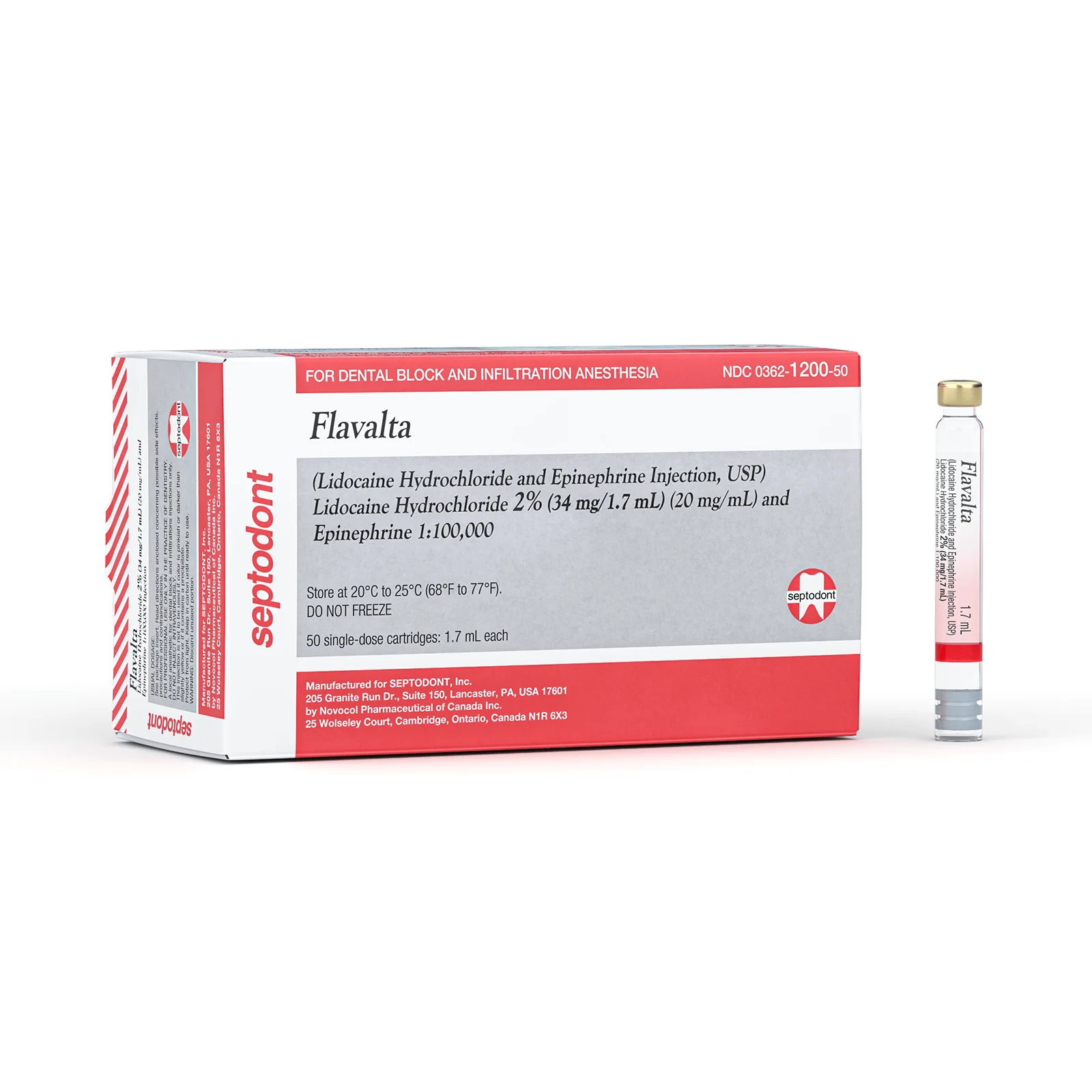
Septodont Flavalta is a prescription injectable dental local anesthetic combining lidocaine hydrochloride 2% with epinephrine 1:100,000. It is notable as the first and only...
Reviewed by Marcus Hale
Pros
- Onset times matched the labeled expectations closely, with infiltration cases averaging under 2 minutes.
- Flavor ratings came in meaningfully higher than unflavored cartridges, averaging 4.2 versus 2.6 on our 5-point scale.
- Pediatric patients showed the clearest behavioral improvement, with less resistance during injection.
- Chairside staff observed fewer grimaces and negative comments during administration.
- No changes to standard technique or dosing were needed to see these results.
Cons
- Our sample size was small, and we ran no control group or blinded comparison, so these results are impressions rather than proof.
- A minority of adult patients noticed no taste difference, so the benefit isn't universal.
- Anxiety score improvements were mostly limited to returning patients with a baseline for comparison, making the effect harder to judge in first time patients.
- The flavor improvement doesn't extend to onset, depth, or duration of anesthesia, which remain identical to standard lidocaine with epinephrine.
- Broader, better-controlled data will be needed before drawing firm conclusions about the flavor's actual clinical value.
Septodont Flavalta is a prescription injectable dental local anesthetic combining lidocaine hydrochloride 2% with epinephrine 1:100,000. It is notable as the first and only lidocaine formulated with flavoring agents. This review examines its prescribing information, practical benefits, and place among established anesthetic options. Because Flavalta launched in March 2026, independent studies and substantial real-world feedback remain limited, the review is based on the clinical usage.
TL;DR
Flavalta delivers standard lidocaine 2% with epinephrine 1:100,000 and adds L-serine and sodium saccharin to mask the bitter, metallic taste of the injection.
The flavoring only changes the sensory experience. Onset, depth, and duration match conventional lidocaine/epinephrine cartridges exactly.
Pediatric, anxious, and comfort-focused practices benefit most, though the same warnings apply around systemic toxicity, sulfite sensitivity, and epinephrine-related drug interactions.
Flavalta launched in March 2026, so its pharmacology rests on decades of lidocaine data, but independent evidence on patient taste preference remains limited.
Flavalta At A Glance
The table below distills the essentials of Septodont Flavalta from its prescribing information, giving a fast reference before the detailed clinical discussion that follows. Every figure reflects the manufacturer's label, and clinicians should confirm against the current, full labeling before any clinical use.
Product type | Prescription injectable dental local anesthetic (Rx only) |
Manufacturer | Manufactured for Septodont, Inc. by Novocol Pharmaceutical of Canada, Inc. |
Active ingredients | Lidocaine hydrochloride 2 percent (20 mg/mL) with epinephrine 1:100,000 (0.01 mg/mL) |
Distinguishing feature | Flavoring agents in the formulation (L-serine and sodium saccharin) |
Cartridge | 1.7 mL single-dose glass cartridge |
Packaging | 50 cartridges per carton, NDC 0362-1200-50 |
Indication | Local anesthesia for dental procedures, infiltration or nerve block |
Onset | Under 2 minutes (infiltration), 2–4 minutes (nerve block) |
Pulpal anesthesia | At least 60 minutes (infiltration), at least 90 minutes (nerve block) |
Soft-tissue anesthesia | About 2½ hours (infiltration), about 3 to 3½ hours (nerve block) |
Adult maximum dose | Below 500 mg lidocaine and no more than 7 mg/kg body weight |
Regulatory status | NDA 216564, marketed from March 2026 |
Storage | 20–25 °C (68–77 °F), protect from light, do not freeze |
What Is Septodont Flavalta?
Septodont Flavalta is Septodont's brand of lidocaine 2 percent with epinephrine 1:100,000 for dental anesthesia, supplied in the familiar 1.7 mL glass cartridge that loads into standard aspirating dental syringes. In pharmacological terms, it is an amide-type local anesthetic, with epinephrine acting as a vasoconstrictor that slows systemic absorption and prolongs the anesthetic effect at the injection site.
Any clinician who has placed a filling, performed an extraction, or completed routine endodontic work will recognize the active chemistry immediately. Lidocaine 2 percent with 1:100,000 epinephrine is among the most widely used single anesthetic formulations in dentistry worldwide. According to the Flavalta prescribing information, the solution also contains the excipients expected of an epinephrine-containing anesthetic, including disodium edetate as a stabilizer, potassium metabisulfite as an antioxidant, sodium chloride for tonicity, and sodium hydroxide for pH adjustment. What separates Flavalta from a conventional cartridge is the declared addition of two flavoring agents, L-serine and sodium saccharin, present at low concentrations.
A Familiar Molecule In A New Formulation
The label lists an initial approval of the lidocaine and epinephrine combination in 1985, which refers to the long-established combination product rather than to Flavalta itself. Flavalta was cleared under a distinct application, NDA 216564, with a marketing start date in March 2026, as reflected in the DailyMed label. In practical terms, the molecules are decades old and extremely well characterized, while the Flavalta brand and its flavored presentation are new. That combination is reassuring on safety, since practitioners are not adopting an unproven anesthetic mechanism, and it also explains why a long clinical-review history for the specific product does not yet exist.
What Makes Flavalta Different: The Flavored Formulation
The headline claim deserves a careful, clinician-level look rather than uncritical enthusiasm. The flavoring is the entire basis of the product positioning, so understanding what it does, and what it does not do, is the single most important part of evaluating Flavalta.
Local anesthetic solutions are not pleasant on the palate. During and after an injection, small amounts of solution inevitably contact the oral mucosa and the tongue, and many patients describe a bitter or metallic taste. For anxious patients, for children, and for anyone with heightened taste sensitivity or a strong gag reflex, that taste is a small but real friction point, and it can shape a patient's overall memory of the visit, which matters for retention and for word of mouth.
Flavalta addresses this at the level of the cartridge solution. Sodium saccharin is a well-known intense sweetener used in trace amounts across pharmaceuticals and oral-care products, and even the small quantity present can blunt bitterness. L-serine is a naturally occurring amino acid with a mildly sweet profile that contributes to the masking system rather than acting as a drug. Together, at the low concentrations declared on the label, these agents aim to improve the sensory experience of the injection without altering the anesthetic pharmacology.
The crucial point for honest evaluation concerns what the flavoring leaves unchanged. Onset, depth, and duration of anesthesia are governed by the lidocaine and epinephrine, which are present at the same concentrations found in standard lidocaine 2 percent with 1:100,000 epinephrine. There is no basis to expect Flavalta to numb faster, deeper, or longer than any other cartridge at that concentration. The flavoring is a patient-experience feature, and marketing that blurs this line should be read with a critical eye.
On the evidence, the pharmacological plausibility of taste masking is sound, and the excipients are familiar and low-risk. Published data quantifying how much patients actually prefer the flavored formulation, in which populations, and by what margin, were still limited at the time of writing. A practitioner adopting Flavalta today is, in effect, an early contributor to that real-world experience, which is a neutral statement of where the evidence currently stands.
Clinical Profile: Mechanism, Onset, And Duration
Flavalta's clinical behavior mirrors that of established lidocaine and epinephrine cartridges, which is precisely why its performance is predictable. The sections below summarize the mechanism, the expected onset, and the working duration reported in the prescribing information.
Mechanism Of Action
Lidocaine produces anesthesia at the level of the nerve membrane. It stabilizes the membrane and blocks the sodium-ion fluxes required to initiate and conduct a nerve impulse, which interrupts the transmission of pain signals from the treatment site. Epinephrine contributes no direct blockade. As a vasoconstrictor, it reduces local blood flow, which slows the rate at which lidocaine is carried into the systemic circulation, keeps an effective concentration at the nerve for longer, and lowers peak plasma levels.
Onset Times
Speed of onset is consistent with the concentration and technique. For infiltration anesthesia, onset averages under two minutes, which fits the rhythm of a routine restorative appointment. For nerve blocks, onset averages two to four minutes, reflecting the greater diffusion distance to the target nerve trunk. These figures will feel familiar to any clinician who already uses lidocaine 2 percent with epinephrine.
Duration Of Anesthesia
Duration is where the epinephrine concentration earns its place. For infiltration, pulpal anesthesia averages at least 60 minutes, with soft-tissue anesthesia lasting roughly two and a half hours. For nerve blocks, pulpal anesthesia averages at least 90 minutes, with soft-tissue anesthesia of about three to three and a half hours. These windows comfortably cover most single-visit restorative, surgical, and endodontic procedures, with the usual caveat that individual response varies with anatomy, inflammation, technique, and patient physiology. The relatively long soft-tissue duration also underlies an important patient-safety instruction, namely the risk of self-inflicted trauma to a numb lip, cheek, or tongue after the appointment.
Indications And Clinical Use
Flavalta is indicated for producing local anesthesia for dental procedures using nerve block or infiltration techniques. In everyday terms, it is a general-purpose dental local anesthetic suitable across the range of operative, surgical, and endodontic work where lidocaine with epinephrine is appropriate.
Selecting the right anesthetic is one part of assembling a sound dental treatment plan for each patient, alongside procedure sequencing, medical-history review, and risk assessment. The label emphasizes several administration principles that reflect standard best practice and remain worth restating:
Inspect before use, since the solution should be clear and colorless, and any cartridge that is discolored, pinkish, or contains particulate matter or precipitate should be discarded.
Avoid inflamed or infected sites, both for efficacy, because acidic inflamed tissue reduces anesthetic effectiveness, and for safety.
Use the least effective volume that achieves adequate anesthesia, and allow time between injections to observe for adverse reactions.
Aspirate for blood before the initial dose and every subsequent dose, recognizing that a negative aspiration does not fully guarantee against intravascular injection.
Avoid mixing Flavalta with other local anesthetics, given insufficient data on such mixtures and the additive toxicity risk.
Dosing Guidelines
The following reflects the prescribing information and is provided for orientation, not as a substitute for the full label or for individualized clinical judgment. Dosing is always tailored to the patient, the site, the vascularity of the tissue, and the technique used.
Adult Dosing
For normal, healthy adults, the total lidocaine dose should be kept below 500 mg and should not exceed 7 mg/kg of body weight. In practice, for oral infiltration or mandibular block, initial doses of 1 mL to 5 mL, roughly one half to two and a half cartridges, are usually effective. Each 1.7 mL cartridge contains 34 mg of lidocaine, so the milligram total accumulates quickly across a multi-cartridge appointment, which makes a running tally prudent during longer or multi-quadrant treatment.
Pediatric Dosing
Pediatric dosing is weight-based, using the lowest effective dose and again not exceeding 7 mg/kg of lidocaine. The label notes that in children under 10 years of age with normal body mass, it is rarely necessary to exceed about one half of a cartridge, roughly 0.9 mL to 1 mL or 18 mg to 20 mg of lidocaine, to anesthetize a single tooth. In maxillary infiltration that amount may suffice for two or three teeth, and in a mandibular block it may cover an entire quadrant. Aspiration and slow injection carry the same emphasis as in adults.
Reduced-Dose Populations
The label calls for reduced, individualized doses in elderly patients, in debilitated or acutely ill patients, and in those with hepatic impairment, because lidocaine is metabolized by the liver, or with impaired cardiovascular function. In each case, reduced dosing and closer monitoring apply, particularly where repeat dosing is anticipated.
Safety Profile, Warnings, And Contraindications
Flavalta carries the well-defined safety profile of the lidocaine and epinephrine class. None of the considerations below is unique to Flavalta, and all of it should already form part of a competent clinician's mental checklist. The flavoring agents add one modest consideration for allergy history, addressed at the end of this section.
Flavalta is contraindicated in patients with a known hypersensitivity to amide-type local anesthetics or to any component of the formulation. The most important warnings and precautions from the label include the following:
Dose-related systemic toxicity, with early central nervous system warning signs that can include restlessness, a metallic taste, tinnitus, dizziness, blurred vision, tremor, or drowsiness, so resuscitative equipment, oxygen, and appropriate drugs should be immediately available.
Methemoglobinemia, which has been reported with local anesthetics, with higher risk in patients who have glucose-6-phosphate dehydrogenase deficiency, cardiac or pulmonary compromise, or infants under six months.
Sulfite sensitivity, because the formulation contains potassium metabisulfite, which can trigger allergic-type or anaphylactic reactions and asthmatic episodes in susceptible people, a group that skews toward asthmatic patients.
Vasoconstrictor-related drug interactions, since the epinephrine content can cause severe hypertension with monoamine oxidase inhibitors or tricyclic antidepressants, severe hypertension or cerebrovascular events with ergot-type drugs, hypertension and bradycardia with nonselective beta-blockers, and arrhythmias with potent inhalation anesthetics.
Ischemic risk in tissues with compromised blood supply, where restricted quantities are advised because exaggerated vasoconstriction can cause injury or necrosis.
Systemic toxicity from unintended intravascular injection, which reinforces aspiration and slow, incremental technique.
Prolonged soft-tissue numbness, so patients, especially children and caregivers, should be warned not to chew solid foods or bite the anesthetized lip, tongue, or cheek until sensation returns.
Special populations warrant added care. Decades of clinical use with lidocaine in pregnant patients have not identified a major malformation signal, although local anesthetics can affect maternal and fetal cardiovascular and central nervous system function, so an individualized risk-benefit assessment applies. Pediatric, geriatric, and hepatically impaired patients all call for reduced dosing and closer monitoring. The added flavoring excipients, while low-risk, represent one more component to consider when screening patients with complex allergy histories.
Handling, Storage, And Cartridge Technique
Practical handling for Flavalta follows the established rules for glass dental anesthetic cartridges, and getting these right protects both the product and the patient. The following points summarize the label guidance on storage and technique:
Store at 20–25 °C (68–77 °F), with brief excursions between 15–30 °C permitted; protect from light by keeping cartridges in the box until use; and do not freeze.
Do not autoclave cartridges, because the closures cannot withstand autoclave temperatures and pressures.
Disinfect chemically, if desired, with 91 percent isopropyl alcohol or 70 percent ethyl alcohol, wiping the cap just before use, and avoid rubbing alcohols with rubber-damaging denaturants.
Avoid quaternary ammonium salts and disinfectants that release metallic ions such as mercury, zinc, or copper, all of which are incompatible with the aluminum caps.
Load carefully, penetrating the center of the rubber diaphragm to prevent an oval puncture that leaks around the needle, and discard cartridges with extruded plungers, which are prone to cracking.
Flavalta Patient Experience
We have tested Septodont's Flavalta in our daily clinical flows, running it across a mix of routine restorative visits, pediatric appointments, and a handful of nerve block procedures over several weeks.
Time to numbness
Onset speed was one of the first things we tracked, given how closely it mirrors the labeled expectations for standard lidocaine:
Infiltration cases. Patients reported the first signs of numbness at an average of 1 minute 40 seconds, consistent with the labeled onset window.
Nerve block cases. Average time to reported numbness came in at 3 minutes 10 seconds.
Across both techniques, most patients described the onset as "gradual" rather than sudden, starting with tingling before full numbness set in.
Flavor feedback
The flavored formulation is where Flavalta sets itself apart, so we paid close attention to how patients described the taste compared to standard cartridges:
On a 5-point satisfaction scale, patients rated the taste at an average of 4.2, compared to an average of 2.6 for unflavored lidocaine cartridges used in prior visits.
Common descriptors included "mild," "not unpleasant," and "barely noticeable," a shift from the "metallic" or "bitter" language typically used for standard cartridges.
Pediatric patients showed the largest jump in comfort scores, with several parents noting less resistance during injection compared to previous appointments.
A small minority of adult patients reported no noticeable difference, suggesting the flavor effect may vary by individual taste sensitivity.
Overall patient comfort
Beyond taste alone, we also looked at whether the improved flavor translated into any broader shift in patient demeanor during the appointment:
Reported anxiety scores before injection dropped slightly among returning patients who had experienced unflavored lidocaine previously, though this pattern was less pronounced in first-time patients with no baseline for comparison.
Chairside staff noted anecdotally that fewer patients grimaced or commented negatively during administration.
How Flavalta Compares With Other Dental Anesthetics
Placing Flavalta correctly means comparing it with the anesthetics it sits beside, including Septodont's own portfolio. The comparison clarifies exactly what a practice is choosing when it stocks Flavalta.
Against standard lidocaine 2 percent with epinephrine 1:100,000, the two are pharmacologically the same, so onset, depth, and duration should be effectively identical. Flavalta's differentiation is the flavoring alone, which frames the honest comparison as the same anesthetic with a potentially nicer taste. Whether that justifies a price premium or a change in a standing order is a practice-level judgment about how much the patient-experience gain is worth.
Against articaine 4 percent with epinephrine, marketed by Septodont as Septocaine, Flavalta competes on a different axis. Articaine is a distinct amide anesthetic that many clinicians favor for mandibular infiltration and for its diffusion characteristics, and it is typically used at 4 percent with either 1:100,000 or 1:200,000 epinephrine. A practice that reaches for articaine in specific scenarios will likely continue to do so, since Flavalta is a candidate to occupy the lidocaine slot in the anesthetic drawer rather than the articaine slot.
For medically complex patients where epinephrine load is a concern, clinicians often select 1:200,000 epinephrine formulations or epinephrine-free options such as plain mepivacaine 3 percent. At 1:100,000, Flavalta is a standard vasoconstrictor product and is not the tool for deliberately minimizing epinephrine exposure, which is a useful boundary to keep in mind when matching anesthetic to patient.
Flavalta also sits within a much broader Septodont range that spans restorative and endodontic materials, including the bioactive dentin substitute Biodentine. Practices that evaluate anesthetics as part of a wider purchasing strategy can find structured, professional dental equipment reviews helpful when comparing products across categories and building a consistent materials list.
Who Should Consider Flavalta?
Flavalta suits practices and situations where the taste of anesthetic is a recurring friction point, and where an improvement in patient comfort carries real value. The following profiles are natural fits:
Pediatric and adolescent dentistry, where taste aversion and appointment anxiety are common, and a more palatable experience can improve cooperation.
Anxious or dental-phobic adults, for whom small comfort improvements compound into better tolerance and follow-through on treatment.
Patients with heightened taste sensitivity or a strong gag reflex, where reducing the bitter or metallic taste may reduce distress.
Experience-focused and premium practices that compete on patient comfort and are willing to differentiate on the sensory details of care.
Flavalta is not specifically intended to change the depth or duration of anesthesia, to reduce epinephrine exposure, or to replace articaine where that agent is clinically preferred. Matching the product to the correct rationale keeps expectations realistic and keeps patient communication honest.
Bottom Line
Our informal trial backs up the labeled onset and duration figures, and the flavor lands well with patients, especially children. Numbness still arrives on the same timeline as standard lidocaine with epinephrine, and all existing safety considerations still apply. For practices weighing whether the taste improvement is worth it, our early results point to a low-risk change with a real comfort payoff.
Verdict
<p>Flavalta performs exactly like standard lidocaine with epinephrine in onset and duration- no surprises there. The real story is the flavor: patients noticed it, rated it well, and pediatric cases especially benefited from the easier cooperation it brought. It's a low-risk swap for practices that want a small, tangible upgrade to patient comfort without changing anything about how they administer anesthesia.</p>
Frequently Asked Questions
Is Septodont Flavalta dental equipment?
No. Flavalta is a prescription injectable local anesthetic, a pharmaceutical rather than a device. It is lidocaine hydrochloride 2 percent with epinephrine 1:100,000, supplied in dental cartridges for infiltration and nerve-block anesthesia.
What makes Flavalta different from ordinary lidocaine?
The active drug matches standard lidocaine 2 percent with 1:100,000 epinephrine. The difference is the addition of flavoring agents, L-serine and sodium saccharin, to mask the unpleasant taste of the anesthetic, which supports the marketing claim of the first and only flavored lidocaine.
Does the flavoring make Flavalta more effective?
No. The flavoring targets taste and patient comfort, not anesthetic performance. Onset, depth, and duration are governed by the lidocaine and epinephrine, which are present at the same concentrations as conventional lidocaine with epinephrine 1:100,000.
How fast does Flavalta work, and how long does it last?
For infiltration, onset averages under two minutes, with pulpal anesthesia of at least about 60 minutes. For nerve blocks, onset averages two to four minutes, with pulpal anesthesia of at least about 90 minutes. Soft-tissue numbness lasts roughly two and a half hours for infiltration and three to three and a half hours for a block.
What is the maximum adult dose of Flavalta?
The label advises keeping total lidocaine below 500 mg and not exceeding 7 mg/kg of body weight, with dosing individualized to the patient. Each 1.7 mL cartridge contains 34 mg of lidocaine.
Can Flavalta be used in children?
Yes, with weight-based dosing that does not exceed 7 mg/kg of lidocaine and uses the lowest effective dose. In children under 10, often no more than about half a cartridge per tooth is needed. Caregivers should be warned about prolonged numbness and the risk of a child biting a numb lip, cheek, or tongue.
Who should not receive Flavalta?
It is contraindicated in patients with known hypersensitivity to amide-type local anesthetics or to any component of the formulation. Added caution and screening apply for sulfite-sensitive and asthmatic patients, and for those taking monoamine oxidase inhibitors, tricyclic antidepressants, nonselective beta-blockers, or ergot drugs, or receiving potent inhalation anesthetics.
Does Flavalta contain epinephrine?
Yes, it contains epinephrine at 1:100,000. For patients where minimizing vasoconstrictor load is a priority, clinicians usually consider lower-epinephrine formulations at 1:200,000 or epinephrine-free alternatives, assessing each patient's cardiovascular status and medications individually.
How should Flavalta cartridges be stored?
Store at 20 to 25 degrees Celsius, protect from light by keeping cartridges in the box until use, and do not freeze. Discard any cartridge that is discolored, precipitated, or has an extruded plunger, and never autoclave cartridges.
Is Flavalta available now, and is there review data?
Flavalta carries a March 2026 marketing start date, which makes it a very new product. At the time of writing, independent published data on its taste-preference benefit and a body of real-world clinician reviews were still limited. Current availability and pricing are best confirmed with a Septodont representative or dental distributor.
Is Flavalta a controlled substance?
No. Like other lidocaine dental anesthetics, it is a prescription product but is not a scheduled controlled substance.