Septodont Launches Flavalta, The First Flavored Lidocaine Anesthetic
Septodont has announced Flavalta, a flavored lidocaine anesthetic built for routine dental procedures. The product pairs lidocaine hydrochloride 2% with epinephrine 1:100,000,...
Written by Rachel Thompson
Read time: 4 min read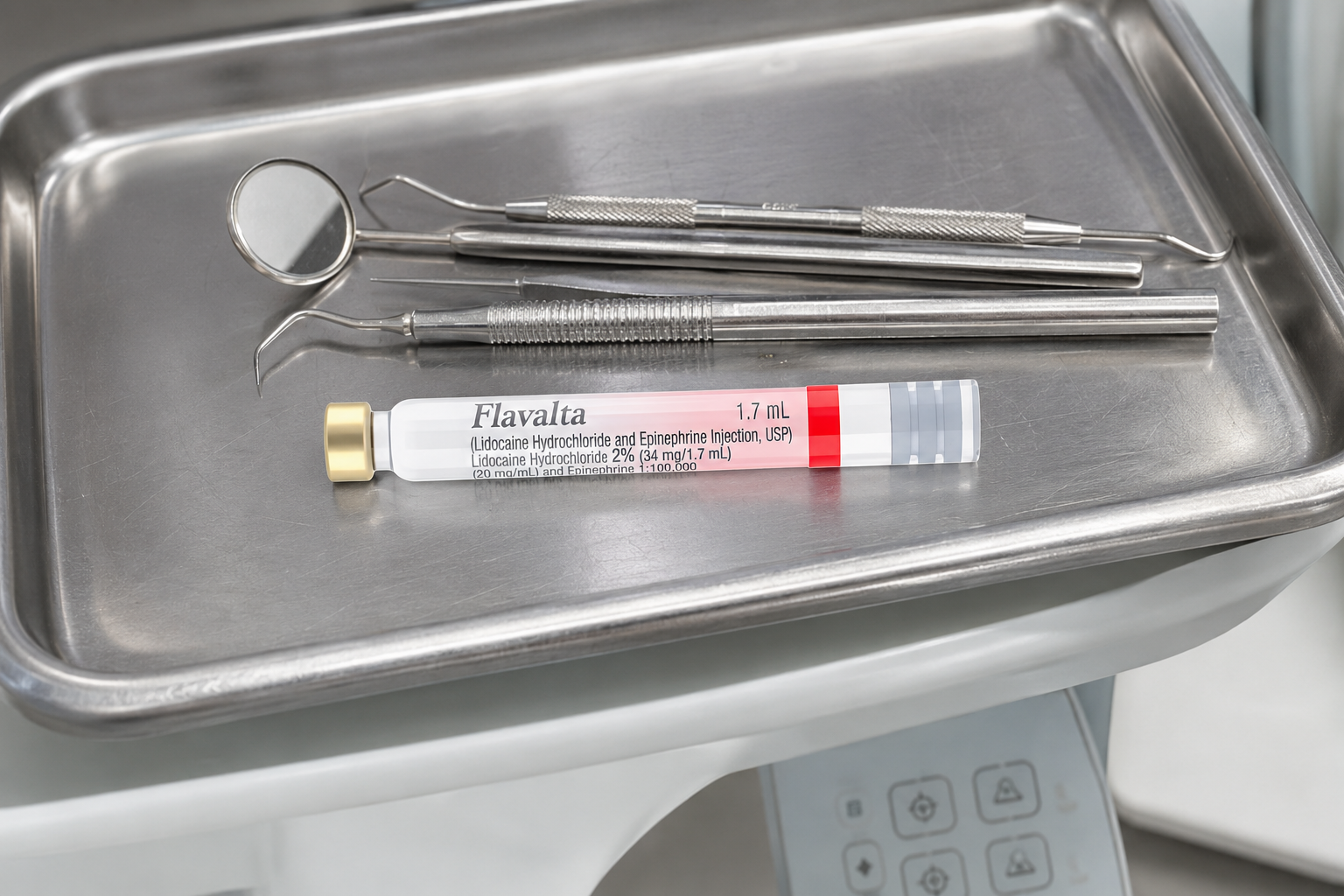
Septodont has announced Flavalta, a flavored lidocaine anesthetic built for routine dental procedures. The product pairs lidocaine hydrochloride 2% with epinephrine 1:100,000, plus sodium saccharin and L-serine as flavoring agents. Dental teams can now order it directly through Septodont's US catalog.
TL;DR
Septodont launches Flavalta, the first lidocaine anesthetic built with added flavoring agents
The formula skips methylparaben and natural rubber latex to cut allergy risk
Infiltration anesthesia starts in under two minutes and numbs the pulp for about 60 minutes
Clinics can order Flavalta now under item #99379 through Septodont's US catalog
What Is Flavalta?
Flavalta is a local dental anesthetic from Septodont, built for infiltration and nerve block procedures. It combines lidocaine hydrochloride 2% with epinephrine 1:100,000 inside a 1.7 mL glass cartridge.
Septodont calls it the first and only lidocaine anesthetic with added flavoring agents. The flavoring comes from sodium saccharin and L-serine.
Both ingredients aim to reduce the metallic taste patients often notice after injection. Septodont describes the product as “25 years in the making,” a phrase that points to a long formulation process behind the launch.
Indicated uses stay in line with standard lidocaine and epinephrine cartridges. That includes routine restorative work, extractions, and endodontic procedures such as root canal treatment and cases involving nerve pain relief.
The active ingredients and concentrations match cartridges dentists already use every day. The taste and packaging updates sit on top of that familiar base, so clinicians do not need new training on dosage or injection technique.
How Flavalta Compares To Other Septodont Anesthetics?
Septodont's catalog already includes several lidocaine and epinephrine cartridges built for the same procedures. Lignospan Standard and Septocaine with epinephrine 1:200,000 both deliver lidocaine hydrochloride 2% for infiltration and nerve block work.
Both products appear alongside Flavalta in Septodont's own product listings. The difference sits almost entirely in the flavoring agents and the cartridge packaging, not in the core anesthetic dose.
Onset and duration figures for Flavalta match what most dental teams already expect from a 2% lidocaine and epinephrine cartridge. That similarity means practices can add Flavalta to an existing supply order without changing dosage charts or consent language, aside from noting the new flavoring ingredients on any allergy screening form.
About Septodont
Septodont is a dental pharmaceutical company with more than 90 years of experience in local anesthesia and a US office in Lancaster, Pennsylvania. The company produces about 500 million local anesthetic cartridges every year and operates in more than 150 countries, according to its own corporate site.
Its wider catalog spans pain management, endodontics, restorative materials, and infection control, including Biodentine, a bioactive dentin substitute. Flavalta becomes the newest addition to that pain management line.
Septodont built its reputation on injectable anesthetics before expanding into endodontics and restorative materials. Its cartridges reach general dentists, oral surgeons, and endodontists across private practices, group practices, and dental schools.
Flavalta extends that same pain management catalog with a formulation change aimed at the patient chair-side experience rather than at clinical technique.
Release Date And Availability
Septodont teased Flavalta on its US website back in June. The page opened with a tagline promising “a new era in dental anesthesia” and asked visitors to stay tuned.
Septodont has since moved Flavalta into an active listing on its US product catalog. The listing includes ordering details and a buy now button.
The instructions for use document carries a June 2026 revision date. That timing lines up with the site's own release timeline.
Item #99379 ships as a box of five blister trays. Each tray holds ten 1.7 mL cartridges, for 50 cartridges per box.
Flavalta is manufactured for Septodont by Novocol Pharmaceutical of Canada. Storage stays simple, between 68°F and 77°F, with no freezing.
Clinics that want confirmed stock dates should check with their Septodont sales rep or regular supplier. Initial rollout volume can vary by region.
Septodont also publishes a safety data sheet and a twelve-page brochure alongside the Flavalta listing, so office managers can pull complete ordering and handling details before the first box arrives.
Practices that already order Septodont anesthetics through a distributor should see Flavalta appear as a standard catalog item rather than a special order.
Key Features And Benefits
Flavalta carries several formulation and packaging updates dentists will notice right away. The list below covers taste, onset speed, allergy-conscious formulation, and cartridge safety.
Flavoring agents. Sodium saccharin and L-serine mask the metallic taste patients often notice during injection.
Fast onset. Infiltration anesthesia starts in under two minutes and lasts about 60 minutes. Nerve blocks start in two to four minutes and last about 90 minutes.
Paraben-free formulation. No methylparaben lowers the chance of an allergic reaction in sensitive patients.
Latex-free components. No natural rubber latex reduces exposure risk for patients and staff with latex sensitivity.
Terminal sterilization. Every cartridge goes through sterilization after sealing, adding a safety layer beyond standard handling.
Mylar-covered cartridges. A protective mylar label limits injury risk if a glass cartridge cracks.
Blister packaging. Ten cartridges per blister tray prevent glass-to-glass contact and cut breakage during storage.
Practices already working through their own sterilization equipment routines and infection control protocols will recognize the same safety logic behind Flavalta's cartridge design.
Patient Comfort And The Taste Factor
Needle anxiety shows up in dental offices every day, across patients of every age. A flavored anesthetic addresses one specific detail inside a larger anxiety picture: the metallic taste some patients report during infiltration or block injections.
Dental Reviewed's own survey of 500 anxious patients across the United States, the United Kingdom, and Canada found that sensory details shape how patients rate each visit.
Taste sits alongside sound, smell, and touch as one of those sensory details. Practices working through broader anxiety reduction methods can add Flavalta as one more comfort detail alongside pacing, communication, and sedation options.
A recent national survey found that about seven in ten US adults report some level of dental fear, with roughly a quarter describing it as severe. Small chairside details, including taste, sit inside that larger picture even though they will not resolve severe phobia on their own.
Faster onset also shortens the wait between injection and the start of treatment. That extra time adds up across a full day of appointments, especially in practices focused on clinic efficiency.
Safety Information Dental Teams Should Know
Flavalta carries the same safety profile as other lidocaine and epinephrine combinations, with a few specific points dental teams should flag before use.
FLAVALTA is contraindicated in patients with a known hypersensitivity to lidocaine, other amide-type anesthetics, or any component of the formula. The product also contains potassium metabisulfite, a sulfite that can trigger allergic reactions, including anaphylaxis, in sensitive patients.
Dose-related toxicity remains a risk with any local anesthetic, and Flavalta is no exception. Early signs can include central nervous system and cardiovascular changes, so patients need monitoring after administration.
The most commonly reported adverse reactions include dizziness, nervousness, drowsiness, tremors, hypotension, and bradycardia, alongside rare allergic reactions such as rash, urticaria, or edema.
Certain drug combinations, including monoamine oxidase inhibitors, tricyclic antidepressants, and nonselective beta blockers, can raise the risk of severe cardiovascular effects. Patients with hepatic impairment or cardiovascular disease may need closer dosing and monitoring.
Methemoglobinemia has also been reported with local anesthetic use, and dental teams should watch for cyanosis, headache, fatigue, or shortness of breath. Resuscitative equipment and oxygen should stay on hand during any injection.
On the ingredient side, Septodont's own product FAQ states that Flavalta contains no evident source of alcohol, gluten, peanut, soy, or nut ingredients.
Practices treating patients with dietary or allergy restrictions can log that detail during standard anesthetic screening.
What This Means For Dental Practices
Flavalta gives practices another option inside standard lidocaine anesthesia, aimed at the taste patients notice most. For patients who mention a dislike of the usual anesthetic taste, a practice can note the preference inside each patient's dental treatment plan and offer Flavalta at the next visit.
Practices generating structured plans through dedicated treatment plan software can log anesthetic type alongside procedure codes and consent notes.
Clear patient communication around the switch helps patients understand why a familiar procedure now tastes different.
Ordering follows Septodont's standard catalog process, the same one used for topical numbing agents and other pain management products.
Dental Reviewed's brand directory and product reviews section cover additional Septodont products for comparison, alongside details on how long dental numbing lasts after treatment for patient-facing questions.
Front desk and chairside staff need a short briefing before the first Flavalta appointment. A one-line note works well, telling patients the numbing injection now carries a mild flavor instead of the usual metallic taste.
That framing avoids overselling the change while still giving anxious patients one more reason to feel at ease before treatment starts.
Bottom Line
Flavalta gives dental practices a lidocaine anesthetic with added flavoring, a paraben-free and latex-free formula, and packaging built to reduce cartridge breakage.
Onset and duration line up with standard lidocaine and epinephrine combinations already familiar to most dental teams. Practices can order it now under item #99379 through Septodont's US catalog, with the usual screening for lidocaine hypersensitivity and sulfite sensitivity still in place.
Frequently Asked Questions
What is Septodont Flavalta used for?
Septodont Flavalta provides local dental anesthesia for infiltration and nerve block procedures during routine dental work.
Does Flavalta contain latex or parabens?
No. Flavalta is formulated without natural rubber latex and without methylparaben.
How long does Flavalta last?
Infiltration anesthesia lasts about 60 minutes. Nerve blocks provide about 90 minutes of pulpal anesthesia.
Is Flavalta available for US dental practices now?
Yes. Septodont lists Flavalta as an active product with ordering information under item #99379.
Does Flavalta contain alcohol, gluten, or nut ingredients?
Septodont's own product FAQ states that none of Flavalta's ingredients are an evident source of alcohol, gluten, peanut, soy, or nut.