Rating: 4.3/5
Is NOMAD Pro 2 The Best X-Ray For Your Dental Practice?
Every dentist knows the frustration. A patient is mid-treatment in operatory three, you need a quick periapical to confirm a suspected fracture, and the wall-mounted X-ray unit is...
Reviewed by Mantas Petraitis
Pros
- True portability with no cords, no wall mounts, and no installation required
- Diagnostic-quality images comparable to wall-mounted systems
- Integrated backscatter shield with published safety data supporting operator protection
- Compatible with all major digital sensors and phosphor storage plates
- 100+ exposures per charge, sufficient for a full clinical day
- Measurable workflow efficiency gains in multi-operatory practices
- Strong manufacturer support, extensive training resources, and broad dealer network
- 15+ years of clinical track record and published research
Cons
- Weight (5.3 lbs) causes fatigue during extended full-mouth series
- Higher upfront cost ($5,000–$7,000) compared to basic wall-mounted units
- Battery degradation requires periodic replacement at additional cost
- Positioning learning curve for operators accustomed to wall-mounted systems
- Exposure settings may need manual adjustment for different sensor brands
- Heavier and more expensive than some newer competitors
Every dentist knows the frustration. A patient is mid-treatment in operatory three, you need a quick periapical to confirm a suspected fracture, and the wall-mounted X-ray unit is occupied in operatory one. The patient has to wait, the schedule slips, and the workflow bottleneck grows. Multiply that scenario across a busy day, and it becomes clear why portable radiography has gone from a novelty to a genuine practice-changer.
The Aribex NOMAD Pro 2 sits at the centre of that conversation. As one of the most widely adopted handheld X-ray devices in dentistry, the NOMAD Pro has built a reputation for combining true portability with diagnostic-quality imaging. But does it actually live up to the hype, and more importantly, is it worth the investment for your specific practice?
This article is a comprehensive, evidence-based professional review written for general dentists, specialists, practice owners, and office managers who are actively evaluating portable imaging equipment. We will walk through the specifications, real-world clinical performance, common problems (and how to solve them), radiation safety data, a fair comparison against competitors, and a final verdict to help you make an informed purchasing decision.
What Is The Aribex NOMAD Pro 2?
Before diving into the performance details, it is worth understanding what this device is and where it came from. The NOMAD Pro 2 is more than just a smaller version of a traditional X-ray unit, it represents a fundamentally different approach to dental radiography.
The NOMAD line was developed by Aribex, a Utah-based company that pioneered handheld dental X-ray technology in the early 2000s. The original NOMAD was the first FDA-cleared handheld intraoral X-ray device, and its introduction marked a turning point for portable dental imaging. The NOMAD Pro 2 is the refined second generation of that platform, incorporating improvements in battery life, ergonomics, exposure control, and radiation shielding based on years of clinical feedback.
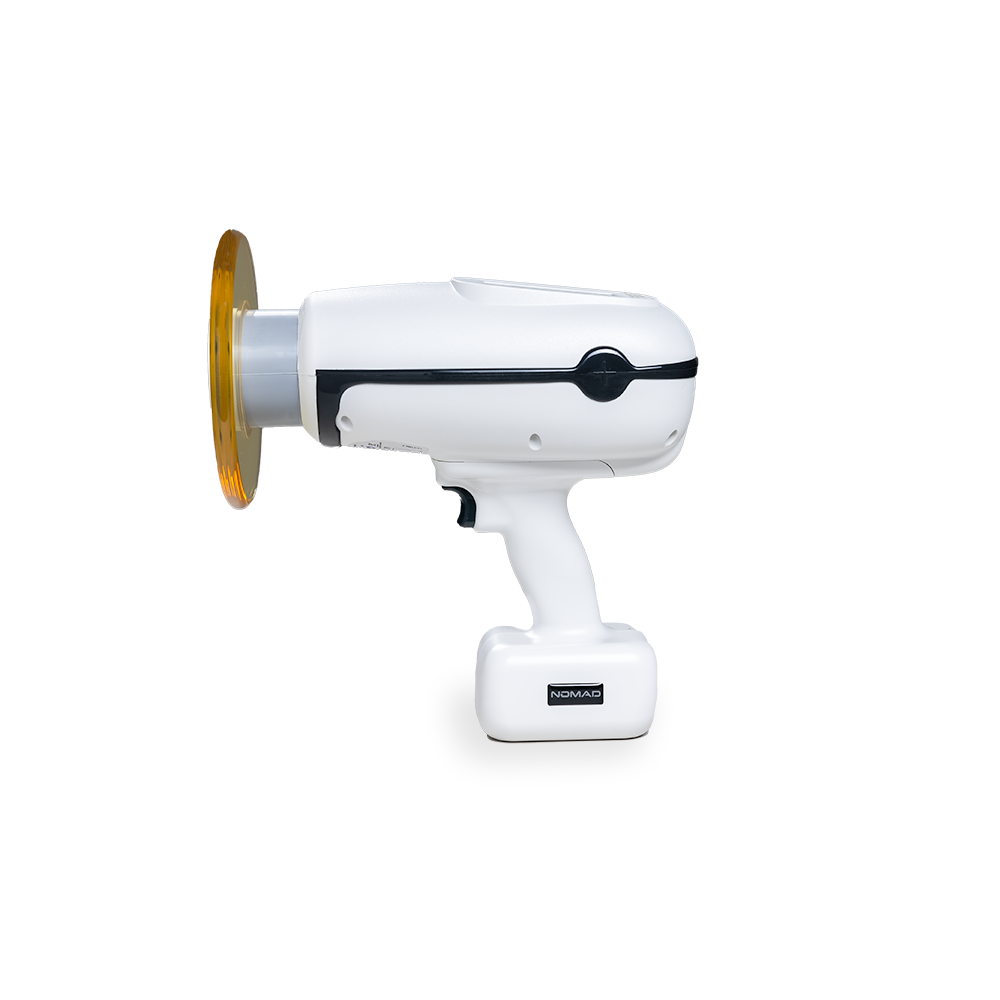
Unlike traditional wall-mounted or mobile cart-based systems, the NOMAD Pro 2 is a fully self-contained, battery-powered handheld X-ray unit that the operator holds at the patient’s chairside. There is no external power cord, no articulating arm, and no need for the patient to move to a dedicated X-ray room. The operator positions the device, presses the exposure button, and captures the image on any compatible digital sensor or phosphor plate.
The device received FDA 510(k) clearance (K061016) and is registered as a Class II medical device. It is cleared for use with all standard intraoral imaging receptors and has been adopted across general practices, specialty clinics, mobile dentistry operations, public health programmes, and military dental units worldwide.
Key Specifications And Technical Features
Understanding what is under the hood matters when you are comparing the nomad x ray machine against other options on the market. Here is a breakdown of the core technical specifications, followed by practical commentary on what each number means for daily clinical use.
Specification | NOMAD Pro 2 |
Weight | 5.3 lbs (2.4 kg) |
Dimensions | Approximately 18.7 x 6.0 x 7.3 inches |
Tube voltage (kVp) | 60 kVp (fixed) |
Tube current (mA) | 2.5 mA |
Exposure time range | 0.01 to 1.00 seconds (adjustable) |
Focal spot size | 0.4 mm |
Battery type | Rechargeable lithium-ion |
Exposures per charge | Approximately 100+ (at 0.20s per exposure) |
Radiation shielding | Integrated external backscatter shield |
Compatible sensors | All standard digital sensors and PSP plates |
Cone length | Standard and extended options available |
FDA status | 510(k) cleared, Class II medical device |
At 5.3 pounds, the NOMAD Pro 2 is light enough for single-handed operation during individual exposures, though extended full-mouth series can cause fatigue (more on that in the common problems section). The 60 kVp fixed tube voltage paired with 2.5 mA current delivers consistent output that produces diagnostic-quality images across all standard intraoral projections.
The battery performance is a standout feature. With over 100 exposures on a full charge, most practices can comfortably get through an entire clinical day without needing to recharge. The rechargeable lithium-ion battery eliminates the need for wall outlets during use, making the nomad x ray unit genuinely portable rather than just mobile.
The integrated backscatter shield deserves special attention. This is the component that allows the operator to safely hold the device during exposure without needing to leave the room or stand behind a barrier. According to Aribex, the shield reduces operator exposure to well below the levels encountered when standing behind a wall during conventional X-ray exposure. We will examine the radiation safety data in detail later in this review.
Real-World Clinical Performance
Specifications on paper only tell half the story. What matters is how the Aribex NOMAD Pro 2 performs day after day in a real dental operatory with real patients, real-time pressures, and real clinical demands. Here is a breakdown across the dimensions that matter most to practising dentists.
Image Quality
The NOMAD Pro 2 produces diagnostic-quality periapical, bitewing, and occlusal radiographs that are comparable to images from wall-mounted units. The 0.4 mm focal spot delivers sharp resolution, and the adjustable exposure timer allows fine-tuning for different patient sizes, tooth regions, and sensor types. Multiple clinical evaluations have confirmed that handheld X-ray devices produce images of equivalent diagnostic quality to conventional wall-mounted systems when proper technique is used. In daily clinical practice, you should expect clean, high-contrast images that are fully adequate for endodontic, periodontal, surgical, and restorative diagnostics.
Ease Of Use And Learning Curve
Most dental assistants can become proficient with the NOMAD Pro within a few days of hands-on training. The controls are straightforward, with a simple selector for exposure settings and a clearly positioned trigger button. The primary learning curve involves positioning, specifically learning to hold the device steady while aligning the cone with the sensor. This is different from the wall-mounted technique, where the tubehead remains stationary, and it requires some practice to achieve consistent angulation. Aribex provides training materials, and most practices report that new users are confident within one to two weeks of regular use.
Workflow Efficiency
This is where the handheld X-ray concept delivers its most tangible return on investment. With the NOMAD Pro 2, you eliminate the need to escort patients to a dedicated X-ray room, reposition them in a separate chair, and then walk them back. The entire imaging process happens at the chairside, within the normal treatment flow. For multi-operatory practices, this can save several minutes per patient, which compounds significantly across a full schedule. Practices that have adopted chairside imaging report shorter appointment times, improved patient throughput, and reduced scheduling bottlenecks, particularly during procedures that require multiple radiographic checks, such as endodontic treatments or implant placement verification.
Patient Experience
Patients generally respond positively to chairside imaging. There is less disruption to their appointment, no need to move to another room, and the compact form factor of the device is far less intimidating than a large wall-mounted tubehead on a swinging arm. The NOMAD Pro is particularly valuable for patients with limited mobility, paediatric patients who may become anxious with room changes, geriatric patients, and individuals with special needs who benefit from staying in a familiar, comfortable position throughout their visit.
Portability In Practice
The true portability of the nomad x ray machine opens clinical possibilities that wall-mounted units simply cannot match. Dentists who provide mobile services to nursing homes, schools, community health centres, or remote locations can carry the device in a protective case and set up imaging capability anywhere a patient can sit. Military dental teams, disaster response units, and dental mission organisations have also adopted the NOMAD Pro 2 for field operations where infrastructure is limited. Even within a single office, the ability to move the device between operatories without any installation or mounting provides exceptional flexibility.
Common Problems With The NOMAD Pro 2 And How To Solve Them
No piece of dental equipment is flawless, and the NOMAD Pro 2 is no exception. The following issues are the most commonly reported by dental professionals who use the nomad x ray unit daily. For each problem, we have included practical solutions based on manufacturer guidance, clinical experience, and peer feedback.
#1: Battery Degradation Over Time
Like all lithium-ion powered devices, the NOMAD Pro 2 battery will gradually lose capacity with repeated charge cycles. After one to two years of regular use, many users report that the number of exposures per charge drops noticeably, sometimes from 100+ down to 60 or fewer.
How to solve it: follow proper charging hygiene. Avoid leaving the device on the charger for extended periods after it reaches full charge, and do not let the battery drain completely before recharging. Aribex offers replacement batteries, and the swap process is straightforward. Budget approximately $200–$400 for a replacement battery every 18–24 months, depending on your usage volume. Keeping a second battery on hand ensures zero downtime.
#2: Ergonomic Fatigue During Extended Use
At 5.3 pounds, the NOMAD Pro 2 is manageable for individual exposures but can cause arm, wrist, and shoulder fatigue when used for a full-mouth series of 18+ images in a single session. This is the most common complaint among dental assistants.
How to solve it: train staff to support the device with both hands when possible, using the non-trigger hand to stabilise from underneath. Rotate X-ray duties among multiple staff members on high-volume days. Consider investing in a countertop support stand or a wall-mounted holster for the unit, which allows the operator to rest the device between exposures. Short stretching breaks between patients also help. Some practices schedule a full-mouth series in two sittings for this reason.
#3: Image Elongation And Cone-Cut Errors
New users frequently report image elongation, cone-cuts, or inconsistent angulation during the first few weeks. This stems from the learning curve of manually positioning a handheld device compared to the fixed geometry of a wall-mounted tubehead.
How to solve it: invest in proper training upfront. Aribex provides instructional videos and technique guides. Use positioning aids such as XCP-style holders with alignment rings, which help the operator visualise the correct cone angle. Conduct practice drills on a typodont (dental mannequin) before using the device on patients. Most positioning issues resolve within the first two weeks of consistent daily use.
#4: Sensor Compatibility And Exposure Setting Confusion
The NOMAD Pro 2 is compatible with all standard digital sensors and phosphor storage plates. However, different sensor brands have different speed ratings, and the factory default exposure settings may not produce optimal results with every sensor.
How to solve it: create a custom exposure chart for your specific sensor. Record the sensor brand and model you use (e.g., Dexis Platinum, Schick 33, Carestream 6200), then calibrate by taking a series of test exposures at different timer settings until you find the optimal combination for each projection type. Post this chart on the wall near the charging station or tape it to the device carrying case. Aribex’s customer support can also provide recommended starting settings for popular sensor brands.
#5: Error Codes And Calibration Issues
Occasionally, the NOMAD Pro 2 displays error codes on its LCD panel. Common codes include thermal warnings (the device has overheated), battery errors, and exposure faults. These can be alarming to operators who are unfamiliar with them.
How to solve it: keep the user manual accessible and familiarise all staff with the most common error codes. A thermal warning typically means the tube has been fired in rapid succession, let the device rest for a few minutes and it will reset. Battery error codes usually indicate the battery needs replacement or re-seating. For persistent error codes that do not resolve with a power cycle (turn off, wait 30 seconds, turn on), contact Aribex technical support. Most issues can be diagnosed remotely, and the company has a reputation for responsive service.
#6: Staff Anxiety About Radiation Safety
This is not a hardware problem, but it is one of the most significant barriers to adoption. Dental assistants and hygienists are often uncomfortable with the idea of holding an X-ray device during exposure, even when the data shows it is safe.
How to solve it: address this concern with data, not dismissal. Share the published radiation exposure studies (detailed in the next section) during a staff meeting. Show the team exactly how the backscatter shield works and explain the difference between scatter radiation and primary beam exposure. Provide personal dosimetry badges for staff members who want documented proof of their exposure levels over time. Transparency and education are the most effective tools for building confidence.
#7: Upfront Cost And Long-Term Ownership Expenses
The Aribex NOMAD Pro 2 typically retails in the range of $5,000 to $7,000, which is higher than some wall-mounted units. When you add replacement batteries, occasional repairs, and potential recalibration costs, the total cost of ownership over five years can be a concern for budget-conscious practices.
How to solve it: frame the investment in terms of return on investment rather than upfront cost alone. Calculate the time saved per patient (typically 3–5 minutes per radiographic episode), multiply that by your hourly production rate, and project the revenue recovery over 12 months. Many practices find that the workflow efficiency gains pay for the device within the first year. Aribex offers warranty packages and extended service plans that help cap long-term costs. Also, explore financing options through dental equipment distributors like Henry Schein, Patterson Dental, or Benco Dental.
Radiation Safety: What The Evidence Actually Shows
Radiation safety is the single most important concern that dental professionals raise when considering a handheld X-ray for their practice. The question is reasonable: if the operator is holding the device during exposure, are they absorbing harmful levels of scatter radiation? The short answer, based on available evidence, is no.
The NOMAD Pro 2 features an integrated external backscatter shield made of acrylic and lead-equivalent materials. This shield is positioned between the X-ray tube and the operator’s hand, intercepting the majority of scatter radiation that would otherwise reach the operator. Aribex states that the shield reduces backscatter to less than 0.1% of the primary beam exposure.
Independent testing has supported these claims. A study published in the journal Dentomaxillofacial Radiology found that operator exposure when using a handheld X-ray device with a backscatter shield was significantly below the occupational dose limits established by the National Council on Radiation Protection and Measurements (NCRP). The measured doses were comparable to, and in some configurations lower than, the scatter exposure received by an operator standing behind a standard wall barrier during conventional radiography.
The American Dental Association (ADA) has acknowledged the use of handheld X-ray devices and notes that when used according to manufacturer instructions and applicable state regulations, these devices can be operated safely. The FDA has cleared the NOMAD Pro 2 based on its compliance with radiation safety standards outlined in 21 CFR 1020.30.
State regulations vary. Some states require additional training or certification for handheld X-ray operation, while others treat it identically to conventional radiography. Before purchasing, verify your state dental board’s requirements. A current list of state-by-state regulations can typically be found on the Aribex website or by contacting your state radiation control programme.
For practices that want additional reassurance, providing personal dosimetry badges (such as those from Instadose or Luxel) allows you to track cumulative operator exposure over time. In practice, most operators wearing dosimetry badges accumulate negligible readings, well below any threshold of concern.
NOMAD Pro 2 Vs. Alternatives: How Does It Compare?
The Aribex NOMAD Pro 2 is the most established name in the handheld dental X-ray category, but it is not the only option. Several competitors have entered the market in recent years. Here is a side-by-side comparison of the key contenders.
Feature | NOMAD Pro 2 | Rextar X | PORT-X IV | MaxRay Handheld |
Weight | 5.3 lbs | ~3.5 lbs | ~4.4 lbs | ~5.0 lbs |
kVp | 60 (fixed) | 60 (fixed) | 60 (fixed) | 60 (fixed) |
Battery life | 100+ exposures | ~100 exposures | ~100 exposures | ~80 exposures |
Backscatter shield | Integrated | Integrated | Integrated | Integrated |
Approx. price | $5,000–$7,000 | $4,000–$5,500 | $3,500–$5,000 | $4,500–$6,000 |
Market track record | 15+ years | Newer entrant | Established | Moderate |
Sensor compatibility | Universal | Universal | Universal | Universal |
The Rextar X is notably lighter, which may appeal to practices concerned about ergonomic fatigue. The PORT-X IV comes in at a lower price point and has a solid reputation in the Asian and European markets. The MaxRay Handheld offers competitive features but has a shorter battery life.
Where the NOMAD Pro 2 distinguishes itself is in its long track record of clinical use, its extensive body of published safety data, its broad dealer and service network (particularly in North America), and the depth of its training and support ecosystem. For many practitioners, the peace of mind that comes with a well-established, extensively tested nomad x ray is worth the premium over newer alternatives.
Who Should (And Should Not) Buy The NOMAD Pro 2?
Not every practice needs a handheld X-ray, and being upfront about that builds trust. Here is an honest assessment of who will benefit most and who might not see enough return to justify the investment.
Best Suited For
Multi-operatory practices looking to eliminate X-ray room bottlenecks and improve patient throughput
Mobile dentistry practitioners who provide care at nursing homes, schools, or community health centres
Practices treating high volumes of paediatric, geriatric, or special-needs patients who benefit from minimal movement
Endodontic and surgical practices that need frequent, rapid radiographic checks mid-procedure
Dental offices expanding to new locations and wanting flexible, installation-free imaging
Public health programmes, military dental units, and humanitarian mission organisations
May Not Be Ideal For
Single-operatory practices with a conveniently positioned wall-mounted X-ray that is rarely bottlenecked
Practices on a very tight equipment budget, where a quality wall-mounted unit can be purchased for significantly less
Offices with extremely low radiographic volume, where the workflow time savings would be negligible
Bottom Line
The Aribex NOMAD Pro 2 has earned its position as the leading handheld X-ray in dentistry for good reason. It delivers diagnostic-quality images, genuine portability, universal sensor compatibility, and a radiation safety profile backed by published evidence. The common problems, including battery degradation, ergonomic fatigue, and the positioning learning curve, are real but manageable with proper training, maintenance routines, and realistic expectations.
Is it the best X-ray for your dental practice? If you run a multi-operatory office, provide mobile dental services, or regularly treat patients who benefit from chairside imaging, the NOMAD Pro 2 is a strong investment that will likely pay for itself through workflow efficiency gains within the first year. If you operate a single-chair practice with a perfectly functional wall-mounted unit and low radiographic volume, the investment may not be justified.
The NOMAD Pro 2 is not a replacement for wall-mounted X-ray systems in every scenario. It is, however, the most versatile, well-tested, and widely supported handheld dental X-ray on the market today.
Verdict
<p>The NOMAD Pro 2 delivers strong performance across every category that matters to a dental practice. Its premium pricing relative to some competitors is the most notable drawback, while the positioning learning curve and occasional need to fine-tune exposure settings for different sensors keep ease of use and image quality just short of flawless. Portability and radiation safety are where this device truly excels, leading the market in the two categories that matter most for a handheld unit. For the right practice, this is an excellent investment that will enhance clinical efficiency, improve the patient experience, and expand your imaging capabilities beyond the four walls of a traditional operatory.</p>
Frequently Asked Questions
How much does the NOMAD Pro 2 cost?
The Aribex NOMAD Pro 2 typically retails between $5,000 and $7,000 depending on the dealer, included accessories, and any bundled warranty packages. Prices vary by distributor, so it is worth comparing quotes from suppliers like Henry Schein, Patterson Dental, and Benco Dental.
Is the nomad x ray safe for the operator to hold?
Yes. The integrated backscatter shield reduces scatter radiation to the operator to less than 0.1% of the primary beam. Published studies in peer-reviewed journals have confirmed that operator exposure is well below NCRP occupational dose limits and is comparable to exposure levels when standing behind a wall during conventional radiography.
How long does the battery last on the nomad x ray machine?
A fully charged battery provides approximately 100 or more exposures at a standard 0.20-second setting. This is typically sufficient for a full day of clinical use. Battery capacity will gradually decrease over 18–24 months of regular use, at which point a replacement battery is recommended.
What sensors are compatible with the nomad x ray unit?
The NOMAD Pro 2 is compatible with all standard intraoral digital sensors and phosphor storage plates. This includes popular brands such as Dexis, Schick, Carestream, DEXIS Titanium, and Vatech. No special adapters are required.
Can I use the handheld x ray for paediatric patients?
Yes. The adjustable exposure settings allow you to reduce the dose for smaller patients. Many paediatric dentists prefer the handheld x ray because it allows chairside imaging without moving the child to a separate X-ray room, which can reduce anxiety and improve cooperation.
What is the warranty on the Aribex NOMAD Pro 2?
Aribex typically offers a standard two-year manufacturer warranty covering defects in materials and workmanship. Extended warranty and service plans are available through the manufacturer and through authorised dealers. Check with your distributor for current warranty terms and pricing.
How does the nomad pro compare to a wall-mounted dental X-ray?
The nomad pro offers comparable image quality to wall-mounted systems while adding portability and chairside convenience. Wall-mounted units still have the advantage of being weightless to operate (since they are mounted on arms) and having a lower initial purchase price. The choice depends on your practice workflow, patient volume, and whether portability is a clinical need.
Where can I buy the NOMAD Pro 2?
The NOMAD Pro 2 is available through major dental equipment distributors including Henry Schein, Patterson Dental, Benco Dental, and directly through Aribex. Purchasing through an authorised dealer ensures you receive manufacturer support, warranty coverage, and access to training resources.