Tetracycline Teeth: Causes, Staining Grades, and Treatment
If you have been prescribed tetracycline or have taken it in the past, you may have noticed something unsettling about your teeth. A yellowish, brownish, or grey tint that no...
Written by Mantas Petraitis
Read time: 8 min read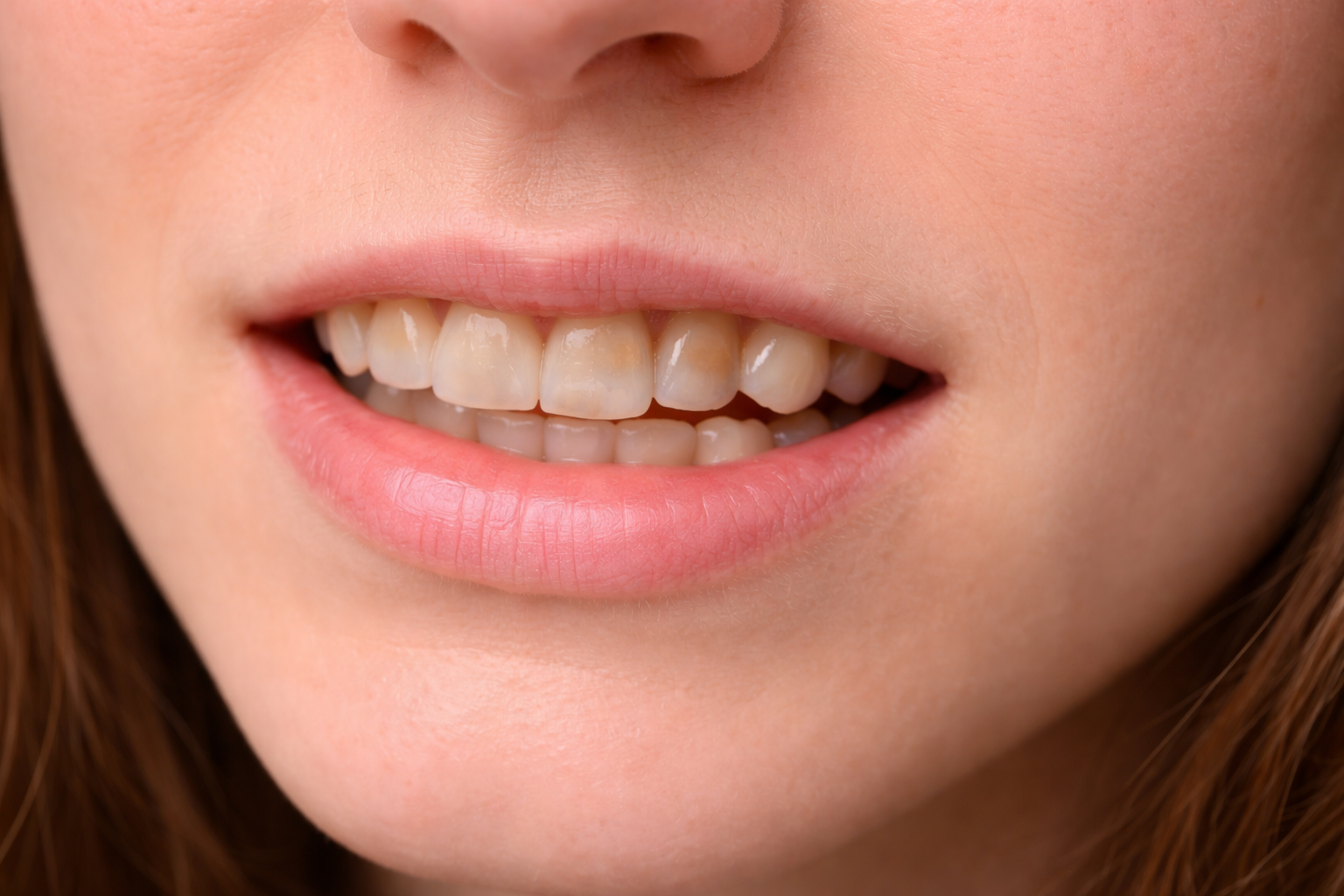
If you have been prescribed tetracycline or have taken it in the past, you may have noticed something unsettling about your teeth. A yellowish, brownish, or grey tint that no amount of brushing seems to fade. The concern is understandable, and you are far from alone in experiencing it.
Tetracycline is a broad-spectrum antibiotic that has been in clinical use since the late 1940s. It remains a widely prescribed treatment for conditions such as acne, respiratory infections, urinary tract infections, and certain sexually transmitted infections. However, one of the most well-documented side effects of this antibiotic that discolors teeth is its ability to cause lasting dental staining, a condition formally known as tetracycline tooth discoloration.
Tetracycline tooth discoloration is not a sign of poor oral hygiene, and it cannot be brushed away. It is a chemical consequence of the drug interacting with tooth structure during development. Many adults living with this condition were given the antibiotic as children, often before the dental risks were widely recognised. Others developed staining from long-term prescriptions taken in adulthood.
The good news is that the science behind tetracycline staining on teeth is well understood, and modern cosmetic dentistry offers multiple paths to restoration. This guide walks through the mechanism of staining, who is most at risk, how severe the discoloration can become, and the full range of treatment options available today. The aim is to provide clear, evidence-based information so that you can have a productive conversation with your dental professional about what will actually work for your specific situation.
How Does Tetracycline Stain Your Teeth?
Understanding the science behind tetracycline dental staining helps explain why these marks behave so differently from the surface stains left behind by coffee or red wine, and why they require a fundamentally different approach to treatment.
Tetracycline molecules have a strong affinity for calcium ions. During tooth development, the drug binds to calcium through a chemical process called chelation, becoming permanently incorporated into the hydroxyapatite matrix of the tooth structure. According to research published in the International Journal of Dermatology, this chelation process embeds the antibiotic into both enamel and dentin, producing discoloration that ranges from yellow and grey to brown depending on the dose and duration of exposure.
What makes tetracycline stain patterns distinctive is the role of light. After the teeth erupt and become exposed to sunlight, the tetracycline-calcium complex undergoes a photochemical reaction known as photo-oxidation. This process gradually shifts the initial fluorescent yellow colour toward a deeper, nonfluorescent brown or blue-grey hue over months to years. Front teeth, which receive the most light exposure, tend to darken more noticeably than molars.
This is what makes tetracycline staining fundamentally different from extrinsic discoloration. Extrinsic stains sit on the enamel surface and can be polished or bleached away relatively easily. Tetracycline produces intrinsic staining, meaning the pigment is embedded within the tooth itself. Surface-level treatments like whitening toothpastes cannot reach it, which is why so many patients feel frustrated after trying over-the-counter products without success.
The location of the staining within the tooth also matters. Dentin, the layer beneath the enamel, absorbs tetracycline more readily than enamel does. Because enamel is semi-translucent, the stained dentin shows through, giving the tooth its characteristic discoloured appearance. The depth at which the pigment sits helps explain why aggressive surface bleaching alone rarely achieves full correction in moderate to severe cases.
It is also worth noting that tetracycline is not the only member of its drug class that causes dental discoloration. Other tetracycline-class antibiotics, including doxycycline and minocycline, can produce similar effects, though the severity and colour profile vary. Minocycline, for example, tends to produce a blue-grey discoloration that can develop even in adults, as noted in research from the National Library of Medicine.
Who Is Most Affected by Tetracycline Tooth Discoloration?
Not everyone who takes tetracycline will develop dental staining. The risk depends heavily on timing, specifically how old you were at the time of exposure and how long the course of treatment lasted. Understanding the risk factors helps explain why antibiotics and teeth staining remain a concern in dental practice today.
Children Under Eight
Children are the most vulnerable group. Permanent teeth develop and mineralise during the first eight years of life, and this is the window during which tetracycline can become permanently bound into the tooth matrix. As a clinical overview in Today's RDH explains, the critical exposure window for primary teeth begins around the fourth month in utero and extends through the fifth month after birth. For permanent teeth, the vulnerability continues until around age eight.
Because of this well-documented risk, prescribing guidelines now strongly advise against using tetracycline-class antibiotics in children younger than eight unless no suitable alternative exists. This represents a significant shift from the mid-20th century, when tetracycline was routinely prescribed to children of all ages. The overall prevalence of tetracycline staining in the general population is estimated at 3% to 4%, a figure that reflects decades of prior prescribing practices before the risks were fully understood.
Pregnancy and Nursing
Tetracycline can cross the placental barrier, meaning a pregnant woman taking the drug may inadvertently expose her developing child's teeth to the antibiotic. The same applies during breastfeeding. For this reason, tetracycline is contraindicated during the second and third trimesters of pregnancy and while nursing.
Adults on Long-Term Courses
Adult teeth are already fully mineralised, so the classical chelation-based staining mechanism does not apply in the same way. However, long-term use of tetracycline-class antibiotics, particularly minocycline prescribed for chronic acne, can still result in visible tooth discoloration in adults. This type of antibiotic tooth discoloration tends to be less severe than childhood exposure but can still be cosmetically significant, especially after months or years of continuous use.
Adult-onset staining from minocycline often presents differently from classical tetracycline discoloration. Rather than the horizontal banding seen in childhood cases, minocycline tends to produce a more generalised blue-grey tint, sometimes concentrated in the middle third of the crown. This type of staining does not fluoresce under ultraviolet light the way tetracycline staining does, which can help dentists distinguish between the two.
What Does Tetracycline Staining Look Like? Grades and Severity
Tetracycline discoloration of teeth does not look the same in every patient. The colour, pattern, and intensity depend on the specific drug used, the dosage, the duration of exposure, and the stage of tooth development at the time. Dental professionals commonly use a grading system, often attributed to Jordan and Boksman, to classify the severity of tetracycline tooth staining.
First-Degree Staining
Teeth present with a light yellow, light brown, or faint grey discoloration distributed uniformly across the surface, with no visible banding. This is the mildest form and is the most responsive to whitening treatments. Many patients with mild tetracycline-stained teeth fall into this category and can achieve meaningful improvement through bleaching alone. In clinical practice, first-degree cases are the most common and the most straightforward to manage.
Second-Degree Staining
The discoloration becomes more pronounced, shifting to a deeper yellow or grey-brown. The colour is still relatively uniform, without prominent banding, but the overall tone is noticeably darker. Treatment outcomes are moderate, with bleaching offering some improvement but often requiring longer protocols or combined approaches. Patients with second-degree staining should expect a multi-month commitment if pursuing a whitening-first strategy.
Third-Degree Staining
This grade presents as strong blue-grey or dark grey discoloration with visible horizontal banding across the teeth. Gray teeth tetracycline of this severity are the most resistant to whitening and typically require restorative solutions such as veneers or crowns for satisfactory cosmetic improvement.
Fourth-Degree Staining
Some classification systems include a fourth grade for the most severe cases, featuring dark, deep staining with prominent banding patterns. These cases present the greatest cosmetic challenge and almost always require restorative intervention rather than bleaching alone.
It is also important to understand that tetracycline staining can evolve over time. As the EBM Consult mechanism review explains, the initial fluorescent yellow colour at eruption gradually darkens through oxidation as the teeth are exposed to light. This means the staining you see today may be noticeably different from how the teeth looked when they first came through.
Grade | Colour profile | Pattern | Treatment response |
First | Light yellow to faint grey | Uniform, no banding | Good response to bleaching |
Second | Deeper yellow or grey-brown | Uniform, minimal banding | Moderate response, extended bleaching protocols needed |
Third | Strong blue-grey or dark grey | Horizontal banding visible | Limited bleaching response, veneers or crowns recommended |
Fourth | Dark grey to brown-black | Prominent banding | Restorative treatment required |
Beyond Staining: Other Tetracycline Teeth Side Effects
While discoloration is the most widely recognised dental consequence, tetracycline teeth side effects can extend beyond colour changes. Awareness of these additional effects helps patients make fully informed decisions about their oral care.
Enamel hypoplasia is one potential complication. When tetracycline is administered during the critical stages of enamel formation, it can interfere with the mineralisation process itself. The result is thinner, underdeveloped enamel that may be more vulnerable to wear, erosion, and decay. According to a meta-analysis published in Frontiers in Pediatrics, severe cases of tetracycline exposure during development can lead to both staining and structural enamel defects simultaneously.
Teeth affected by enamel hypoplasia may also carry a greater susceptibility to cavities, because the protective enamel layer is compromised. Patients who know they were exposed to tetracycline during childhood should mention this to their dentist, as it may influence decisions about preventive care, sealants, and monitoring.
Temporary oral health effects are also worth noting. Some patients report increased tooth sensitivity during an active course of tetracycline, though this typically resolves after the medication is discontinued. The sensitivity is thought to relate to the antibiotic's interaction with tooth mineral content rather than any lasting structural change. If sensitivity persists beyond a few weeks after completing a course of tetracycline, a dental evaluation is advisable to rule out other causes.
Additionally, all antibiotic use can temporarily alter the oral microbiome, the community of bacteria in the mouth. Tetracycline's broad-spectrum action reduces both harmful and beneficial bacteria, which can shift the balance of microorganisms in the oral cavity. This temporary disruption may contribute to symptoms such as dry mouth, mild gum inflammation, or increased plaque accumulation during the treatment period. Maintaining thorough oral hygiene during and after a course of antibiotics helps mitigate these effects, and the microbiome typically returns to its baseline composition within a few weeks of completing the medication.
How to Remove Tetracycline Stains From Teeth
This is the question most patients want answered. The reality is that antibiotic teeth stain removal for tetracycline cases is possible, but the right approach depends entirely on the severity of the staining. There is no one-size-fits-all solution, and setting realistic expectations from the start is essential.
Professional Teeth Whitening
In-office bleaching using hydrogen peroxide or carbamide peroxide at clinical concentrations is the first-line treatment for mild to moderate tetracycline staining. The American Dental Association notes that professional whitening treatments use significantly higher concentrations of peroxide than over-the-counter products, which is critical for addressing intrinsic stains.
The key difference with tetracycline cases is time. While standard extrinsic staining may respond to bleaching in a few weeks, tetracycline tooth staining typically requires extended protocols. Long-term tray bleaching with 10% carbamide peroxide, used nightly for several months, has shown the most consistent results. Research cited in a ScienceDirect narrative review on whitening indicates that more than 55% of maximum lightening occurs within the first month, but optimal results for tetracycline cases can take six months or longer, with cervical areas sometimes requiring even more time.
First-degree staining typically responds well. Second-degree staining can see meaningful improvement, though rarely a complete colour correction. Third-degree and above usually show limited results with bleaching alone.
For guidance on professional whitening systems available in dental practice, see this Philips Zoom clinical review on Dental Reviewed.
Dental Veneers
Porcelain veneers are one of the most reliable cosmetic solutions for moderate to severe tetracycline staining. A veneer is a thin shell of porcelain that is custom-made and bonded to the front surface of each tooth, effectively covering the discoloration underneath.
Veneers are particularly useful when bleaching has reached its limits. For patients with second- or third-degree staining who want a predictable cosmetic outcome, porcelain veneers offer a natural-looking result that can last 10 to 15 years with proper care. The porcelain material resists staining, and modern fabrication techniques allow for excellent colour matching. As noted by the Cleveland Clinic's dental overview, veneers can address discoloration, chips, gaps, and minor alignment issues in a single treatment.
The trade-off is that veneers require the removal of a thin layer of enamel, making the procedure irreversible. Cost is another consideration, as veneers are classified as a cosmetic treatment and are rarely covered by dental insurance. Each veneer is individually crafted, typically requiring two appointments: one for preparation and impressions, and a second for bonding the final restorations. Patients should also understand that veneers have a finite lifespan and will eventually need replacement, adding to the long-term cost of this approach.
For patients considering veneers specifically for tetracycline staining, the choice of porcelain opacity matters. Highly translucent porcelain, which is prized for its natural appearance in standard cosmetic cases, may allow dark underlying staining to show through. Experienced cosmetic dentists often select slightly more opaque porcelain or use opaque luting cements to ensure adequate stain masking while still maintaining a lifelike appearance.
Dental Bonding
Composite bonding involves applying a tooth-coloured resin directly to the tooth surface, shaping it to cover the discoloration. This approach is less invasive than veneers, requires little to no enamel removal, and can often be completed in a single appointment.
Bonding works best for patients with mild tetracycline stained teeth or for isolated areas of discoloration. The composite material can be colour-matched to the surrounding teeth, providing a natural appearance. The limitation is durability. Composite resin is more susceptible to staining and chipping over time than porcelain, and bonded restorations typically last five to seven years before requiring replacement or touch-up. Patients who consume a lot of coffee, tea, or red wine may find that bonded surfaces discolour faster than porcelain alternatives.
Despite these limitations, bonding offers meaningful advantages in terms of cost and tooth preservation. It is substantially less expensive than veneers, does not require laboratory fabrication, and can be completed in a single visit. For patients who are hesitant about committing to an irreversible procedure, bonding provides a way to improve the appearance of stained teeth while keeping future options open.
Dental Crowns
Crowns are full-coverage restorations that encase the entire visible portion of the tooth. They are generally reserved for cases where tetracycline staining is accompanied by structural damage, significant enamel loss, or weakened tooth integrity.
A case report in Decisions in Dentistry describes a patient with severe tetracycline-induced discoloration who was treated with porcelain-fused-to-zirconia crowns. The case highlights that for deep staining, the restorative material must have strong masking capability, and in these situations, higher-opacity materials may be preferred over translucent ceramics.
Microabrasion
Enamel microabrasion is a conservative technique that removes a thin layer of surface enamel, typically 25 to 200 micrometres, using a mildly abrasive compound. It can reduce the visibility of superficial staining and is sometimes combined with bleaching for enhanced results.
For deep intrinsic tetracycline staining, microabrasion alone has limited effectiveness. Its greatest value is as part of a combined treatment plan, where it may improve the response of subsequent bleaching or prepare the tooth surface for bonding.
Whitening Tetracycline Teeth: Realistic Expectations and Best Approaches
The question of how to get rid of tetracycline stains on teeth comes up frequently, and it is important to separate what marketing claims from what clinical evidence actually supports. Many patients turn to over-the-counter whitening products first, and most are disappointed.
Over-the-Counter Whitening Products
Whitening toothpastes, strips, and rinses are designed primarily for extrinsic surface stains caused by food, drink, and tobacco. Because tetracycline discoloration of teeth is intrinsic, embedded within the tooth structure, these products rarely produce meaningful improvement. The peroxide concentrations in OTC products are too low and the contact time too short to penetrate the enamel and address the underlying pigment. Many patients spend months using whitening strips without seeing results, which can be discouraging and lead to the mistaken belief that nothing can help.
That said, OTC products can still play a supporting role. Using a quality whitening toothpaste can help manage surface-level staining from daily food and drink, preventing the teeth from looking even darker than the underlying tetracycline discoloration.
Prescription-Strength At-Home Trays
Custom-fitted bleaching trays with prescription-strength carbamide peroxide (typically 10–16%) represent the most evidence-based at-home approach for whitening tetracycline teeth. These trays are fabricated from dental impressions to fit precisely, ensuring even gel distribution and minimising gum irritation.
The protocol for tetracycline cases is significantly longer than for standard whitening. While non-stained teeth may reach desired results within three to six weeks, tetracycline-stained teeth often require two to twelve months of consistent nightly use. Patience is essential, and progress tends to be gradual rather than dramatic.
Combined Treatment Approaches
Many cosmetic dentists now recommend a phased strategy for teeth whitening for tetracycline stains. The approach typically begins with an extended course of tray bleaching to achieve the maximum possible lightening. After the bleaching plateau is reached, the dentist evaluates the remaining discoloration and determines whether the result is acceptable to the patient.
For teeth that have not responded adequately to bleaching, the next step may be composite bonding on individual teeth or porcelain veneers across the visible smile zone. This combined approach preserves as much natural tooth structure as possible while achieving a cosmetically satisfying outcome. The advantage of starting with bleaching, even when veneers are likely to be the final solution, is that lighter underlying tooth colour makes it easier to achieve a natural-looking result with thinner, more translucent veneers.
Some dental practices also use KTP laser-assisted whitening for tetracycline cases. Early evidence suggests that laser activation may improve the penetration of bleaching agents into stained dentin. However, this technology is not yet widely available, and the body of clinical research remains limited. Patients interested in laser-assisted whitening should ask their dentist about the specific evidence for its effectiveness on tetracycline staining, rather than relying on general marketing claims about laser whitening.
Maintaining Your Results
Regardless of the treatment chosen, long-term maintenance matters. Patients should:
Limit exposure to staining foods and beverages such as coffee, tea, red wine, and curry
Use a straw when drinking dark-coloured beverages to reduce direct contact with tooth surfaces
Maintain a consistent oral hygiene routine with twice-daily brushing and daily flossing
Attend regular dental cleanings, ideally every six months, to remove surface deposits
Consider periodic touch-up bleaching as recommended by their dentist. For more on product options, see this guide to over-the-counter whitening products on Dental Reviewed
What to Discuss With Your Dentist and Prescribing Doctor
A consultation with a dentist who has specific experience managing tetracycline staining is an important first step. General dentists can certainly help, but cosmetic dentistry specialists tend to have deeper familiarity with the grading system, the nuances of extended bleaching protocols, and the material selection for veneers and crowns in stain-masking situations.
Questions worth raising during the appointment include:
What grade of tetracycline staining do I have, and what does that mean for my treatment options?
How many bleaching sessions are likely to be needed, and what level of improvement can I realistically expect?
Would veneers or bonding produce a better outcome given the severity of my staining?
Are there risks or limitations I should know about before starting treatment?
If you are still actively taking tetracycline and are concerned about further discoloration, it is also worth discussing alternatives with the prescribing doctor. Depending on the condition being treated, equally effective antibiotics with a lower risk of dental side effects may be available. For acne treatment, for example, non-tetracycline options exist that carry no risk of tooth staining, and your doctor can evaluate whether a switch is medically appropriate.
It is also helpful to seek a consultation that includes photographic documentation. A cosmetic dentist will often take standardised photographs under controlled lighting, which serves two purposes: it creates a baseline for tracking treatment progress, and it helps both dentist and patient align on realistic expectations. When discussing antibiotics and yellow teeth or darker discoloration, having a shared visual reference makes the treatment planning process more productive.
One point to emphasise: aggressive whitening without professional guidance can damage enamel and increase sensitivity. Products marketed with dramatic claims about how to remove tetracycline stains from teeth overnight or in a single application should be treated with scepticism. Tetracycline staining is a challenging condition that benefits from a considered, professionally supervised approach.
Bottom Line
Tetracycline teeth staining is a well-documented side effect of a widely used class of antibiotics. The discoloration occurs because tetracycline molecules bind to calcium during tooth development, embedding themselves in the tooth structure and darkening over time through exposure to light.
The severity ranges from mild yellow tinting that responds reasonably well to professional bleaching, through to deep blue-grey banding that requires veneers or crowns for effective concealment. The approach that works best for you depends on your specific staining grade, your cosmetic goals, and your budget.
What matters most is knowing that treatment options exist and that they work. Whether the path forward involves extended bleaching, porcelain veneers, composite bonding, or a combination, modern cosmetic dentistry can meaningfully improve the appearance of tetracycline-stained teeth. The first step is a conversation with a qualified dental professional who can assess your situation and recommend a realistic treatment plan.
This article is for informational purposes only and does not constitute medical advice. Always consult with qualified healthcare professionals for diagnosis and treatment recommendations specific to your situation.
Frequently Asked Questions
Does tetracycline always stain teeth?
No. Staining depends on when the antibiotic was taken, the dosage, and the duration of the course. The highest risk is for children under eight, whose teeth are still developing and mineralising. Adults who take tetracycline typically do not experience the same degree of intrinsic staining, though long-term use of tetracycline-class drugs like minocycline can still cause visible discoloration.
Can tetracycline staining be reversed completely?
That depends on the severity. First-degree staining, the mildest form, often responds well to prolonged professional bleaching and can be lightened substantially. More severe grades, particularly those with prominent banding, are unlikely to be fully reversed through whitening alone. In those cases, veneers or crowns can cover the discoloration entirely, effectively restoring the appearance of white, uniform teeth.
How long does tetracycline staining take to appear?
The staining is present from the moment the affected teeth erupt, typically appearing as a fluorescent yellow. Over months to years, light exposure triggers oxidation that shifts the colour toward brown, grey, or blue-grey. This means the staining may appear to worsen over time, even though the tetracycline was taken years earlier.
Is doxycycline safer for teeth than tetracycline?
Doxycycline has a lower affinity for calcium than first-generation tetracyclines, which means the risk of tooth staining is reduced. Current prescribing guidelines still recommend avoiding doxycycline in children under eight when alternatives are available, but some recent research suggests the staining risk with doxycycline may be lower than previously thought. A meta-analysis published in Frontiers in Pediatrics found that the incidence of tooth discoloration with doxycycline was significantly lower than with older tetracyclines. This remains an area of ongoing clinical study, and prescribing decisions should be made in consultation with the treating physician.
Do tetracycline stains get worse with age?
The stains themselves do not grow or spread, but continued exposure to light can deepen the colour through ongoing oxidation. Front teeth, which receive the most sunlight, tend to darken more than back teeth over time. This is why some patients report that their staining appears worse now than it did in childhood.
Can I whiten tetracycline-stained teeth at home?
Over-the-counter whitening products have limited effectiveness on intrinsic tetracycline staining because the pigment sits within the tooth, not on the surface. Custom-fitted prescription trays with clinical-strength peroxide gel, provided and supervised by a dentist, offer the best at-home option for whiten tetracycline stained teeth. Results take longer than with standard whitening, often requiring several months of nightly use.
Are tetracycline stains harmful beyond cosmetics?
In most cases, tetracycline staining is a cosmetic issue and does not affect the structural integrity or health of the tooth. However, in severe cases where the antibiotic exposure also caused enamel hypoplasia, the affected teeth may be more prone to wear and decay. A dental examination can determine whether the staining in your case is purely cosmetic or accompanied by any structural concerns.