Philips Sonicare PerioRx: Prescription Rinse Treating Gingivitis
Philips Sonicare PerioRx is a prescription oral rinse dentists use to treat gingivitis. It contains 0.12% chlorhexidine gluconate, the same antibacterial ingredient found in...
Written by Mantas Petraitis
Read time: 4 min read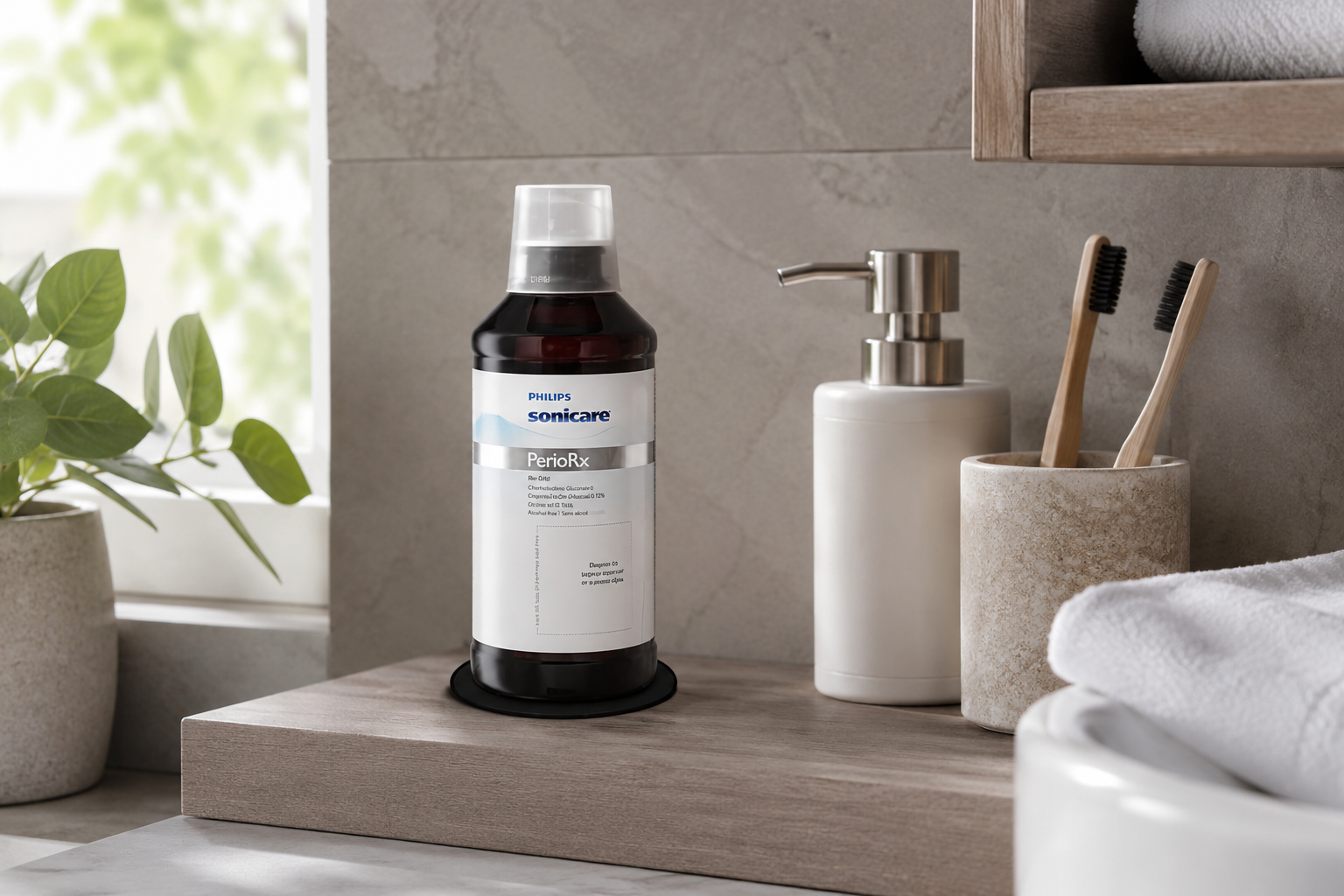
Philips Sonicare PerioRx is a prescription oral rinse dentists use to treat gingivitis. It contains 0.12% chlorhexidine gluconate, the same antibacterial ingredient found in Peridex. This guide covers how it works, correct use, side effects, and cost.
TL;DR
PerioRx is a prescription-only medicated mouthwash containing 0.12% chlorhexidine gluconate for treating gingivitis.
Correct use means rinsing twice daily for 30 seconds after brushing, then avoiding food, drink, or water for 30 minutes.
Tooth staining, tartar buildup, and taste changes are common side effects, but staining is removable at a professional cleaning.
Generic chlorhexidine gluconate 0.12% costs far less than brand-name PerioRx and works identically.
What Is Philips Sonicare PerioRx?
Philips Sonicare PerioRx is a prescription-strength medicated mouthwash for treating gingivitis.
Dentists dispense it directly from the practice or send the prescription to a pharmacy. It is not sold over the counter anywhere in the United States.
The active ingredient is chlorhexidine gluconate at a 0.12% concentration, suspended in an alcohol-based solution. This places PerioRx in the same drug class as Peridex, Periogard, and Paroex.
All four products share the identical active ingredient and concentration. The difference lies in the manufacturer, minor formulation details like flavoring, and which brand a specific dental practice or pharmacy chooses to stock.
Philips positions PerioRx as part of its broader Sonicare oral care system, which also includes electric toothbrushes and the AirFloss Pro flosser.
A dentist who already recommends Sonicare products for a patient's daily routine may lean toward PerioRx simply for brand continuity within that system, not because the rinse performs differently from other 0.12% chlorhexidine products.
How PerioRx Fits Into Gingivitis Treatment
PerioRx works as one part of a larger treatment plan, not a standalone fix. Dentists prescribe it to run alongside brushing, flossing, and professional cleanings, never as a replacement for any of them.
Gingivitis is inflammation of the gum tissue caused by plaque bacteria accumulating along the gumline. The gums respond with redness, swelling, and bleeding, particularly during brushing.
Left unaddressed, gingivitis can progress toward periodontitis, a more advanced form of gum disease that damages the bone and connective tissue supporting the teeth. Gingivitis itself is reversible with consistent care, which is exactly why dentists reach for a rinse like PerioRx to speed that reversal along.
A dentist typically prescribes PerioRx after finding active gingivitis during an exam, often paired with a professional cleaning. It also shows up frequently after scaling and root planing, when the mouth needs extra antibacterial coverage while healing.
What Does Chlorhexidine Gluconate Oral Rinse Do?
Chlorhexidine gluconate kills the bacteria responsible for gum inflammation. It binds to the negatively charged outer membrane of bacterial cells, breaks that membrane down, and kills the cell.
This mechanism works against both aerobic and anaerobic bacteria, including the specific strains most linked to gingivitis.
What separates chlorhexidine from a standard drugstore mouthwash is a property called substantivity. The compound binds to tooth surfaces, gum tissue, and plaque, then keeps releasing antibacterial activity for many hours after rinsing.
That extended release is why twice-daily dosing works, and why skipping the post-rinse waiting period undercuts the treatment.
Clinical data cited in chlorhexidine gluconate product labeling shows reductions in aerobic and anaerobic mouth bacteria ranging from 54% to 97% across six months of consistent use. That wide range reflects differences in starting plaque levels and how closely each patient follows the instructions.
One limitation worth knowing upfront: chlorhexidine does not cut through thick plaque or reach deep into gum pockets on its own. It works on surfaces that have already been cleaned.
This is why dentists start a PerioRx course after a professional cleaning rather than layering it onto a mouth full of built-up tartar.
PerioRx Oral Rinse 0.12% Chlorhexidine Gluconate, Explained
The number on the label, 0.12%, refers to the concentration of chlorhexidine gluconate in the solution.
Patients will see the full name printed on the prescription label as chlorhexidine gluconate oral rinse USP 0.12%, the standard pharmaceutical designation for this drug class regardless of which brand dispenses it.
PerioRx uses an alcohol base and a mint flavor, a formulation choice Philips has said supports daily compliance, since a rinse that tastes tolerable is one patients are more likely actually to finish using through the full prescribed course.
The alcohol content also plays a functional role in helping the active ingredient stay suspended in solution and bind effectively to oral surfaces.
How to Use Philips Sonicare PerioRx Correctly
Technique matters as much as the prescription itself. Using PerioRx incorrectly reduces its antibacterial effect and can make side effects like staining worse.
The standard protocol for 0.12% chlorhexidine gluconate rinses follows these steps.
Brush teeth thoroughly first, since PerioRx works on clean surfaces, not through plaque
Measure the prescribed dose, typically around 15 ml, using the cap or dosing cup provided
Swish the full amount for about 30 seconds without gargling or swallowing
Spit completely into the sink
Avoid water, food, drink, or any other mouthwash for at least 30 minutes afterward
That 30-minute window is the step most patients skip, and it is the one that matters most.
Rinsing with water immediately after spitting dilutes the chlorhexidine before it has a chance to bind to oral tissue, cutting into the extended antibacterial release that makes the rinse effective in the first place.
Duration of use is dentist-directed and varies by patient. Chlorhexidine gluconate courses commonly run a matter of weeks, though some patients continue for several months under active dental supervision.
There is no universal length that applies to every case. Always follow the specific duration printed on the prescription label rather than a general rule found online. A structured dental treatment plan can help map out how a rinse course like this fits alongside cleanings, follow-up visits, and the rest of a gingivitis treatment sequence.
Using PerioRx With a Sonicare Toothbrush or AirFloss Pro
PerioRx pairs naturally with other products in the Sonicare lineup.
Philips notes that using PerioRx together with the Sonicare AirFloss Pro can help deliver chlorhexidine more precisely into the spaces between teeth, since the AirFloss stream pushes fluid past the contact points a toothbrush alone cannot reach.
The correct order still applies regardless of which tools are involved. Brush first, floss or use the AirFloss Pro second, then rinse with PerioRx last.
Reversing that order, or rinsing before mechanical cleaning, reduces how well the chlorhexidine can bind to already-clean surfaces.
Patients using a Sonicare electric toothbrush as part of their daily routine are already positioned well for this sequence, since sonic vibration technology clears more surface plaque before the rinse step than manual brushing typically does.
Philips Sonicare PerioRx Oral Rinse Price: What to Expect
PerioRx does not carry one fixed retail price, since it is a prescription product. Cost depends on the dispensing pharmacy, dental or medical insurance coverage, and bottle size.
This differs from an over-the-counter mouthwash, where the shelf price is the same at every register.
Generic chlorhexidine gluconate 0.12%, the same active ingredient at the same concentration, is the more useful reference point for pricing. Without insurance, average retail pricing for a standard bottle lands in the range of $15 to $22.
Pharmacy discount coupon programs bring that figure down considerably, often to somewhere between $5 and $15 depending on the pharmacy and the specific coupon applied. Prices update frequently, so confirming the current rate directly with a pharmacy gives the most accurate number.
A few practical steps help patients manage cost.
Ask the pharmacist whether a generic substitution is available in place of brand-name PerioRx
Check dental or medical insurance coverage before filling the prescription, since generic chlorhexidine is commonly covered under standard pharmacy benefits
Compare pricing across two or three nearby pharmacies, since retail markup on prescription rinses varies more than most patients expect
Confirm FSA or HSA eligibility, since prescription oral rinses typically qualify
No confirmed, published retail price specific to brand-name PerioRx exists across major pharmacy pricing databases as of this writing.
Calling the dispensing pharmacy directly remains the most reliable way to get an exact figure for the brand-name product itself.
Philips Sonicare PerioRx vs. Peridex: What's the Difference?
PerioRx and Peridex both contain 0.12% chlorhexidine gluconate at the same concentration.
Both treat gingivitis through the same mechanism, and both carry the same general side effect profile.
The differences come down to brand and manufacturer rather than clinical performance. Peridex is a brand historically associated with 3M's dental division, now under the Solventum brand. PerioRx is a Philips product tied to the broader Sonicare oral care line.
Minor formulation details, such as exact flavoring or inactive ingredients, can vary slightly between the two, but the therapeutic effect on gingivitis does not.
Being prescribed PerioRx instead of Peridex is not a downgrade or an upgrade. It typically reflects which brand a specific dental practice or pharmacy carries, or a dentist's preference for keeping a patient within the Sonicare product ecosystem they already use.
Patients focused on cost can ask their pharmacist whether a generic chlorhexidine gluconate substitution applies to either brand, since generics are widely available and therapeutically equivalent to both.
PerioRx Alternatives Compared
The table below lines up PerioRx against its closest prescription equivalents and two well-regarded over-the-counter rinses, so cost and prescription status are easy to compare at a glance.
Product | Prescription needed | Active ingredient | Typical price | Best for |
|---|---|---|---|---|
PerioRx (Philips Sonicare) | Yes | 0.12% chlorhexidine gluconate | $15 to $25 with Rx | Patients already using the Sonicare oral care system |
Peridex | Yes | 0.12% chlorhexidine gluconate | $15 to $22 with Rx | Standard dentist-prescribed gingivitis course |
Periogard | Yes | 0.12% chlorhexidine gluconate | $15 to $20 with Rx | Patients whose pharmacy stocks Colgate products |
Paroex | Yes | 0.12% chlorhexidine gluconate | $15 to $20 with Rx | Generic-equivalent brand at some pharmacies |
Generic chlorhexidine gluconate 0.12% | Yes | 0.12% chlorhexidine gluconate | $5 to $15 with a discount coupon | Lowest-cost option with identical clinical effect |
Listerine Clinical Solutions Gum Health | No | Essential oils plus zinc chloride | $8 to $12 | Strongest OTC daily option, long-term maintenance |
Crest Pro-Health Gum Detoxify | No | 0.07% cetylpyridinium chloride (CPC) | $6 to $9 | Alcohol-free daily protection |
Prices are approximate cash prices and vary by pharmacy, region, and available discount programs. Generic chlorhexidine gluconate remains the most cost-effective prescription option, since it delivers the identical active ingredient at the identical concentration as every branded version.
Possible Side Effects of Chlorhexidine Mouthwash
Most patients tolerate chlorhexidine gluconate rinses without serious difficulty, though the side effect profile is well documented and worth understanding before starting a course.
The three most common side effects reported across chlorhexidine gluconate product labeling are the following.
Staining of teeth, restorations, and the tongue
Increased tartar, or calculus, buildup on tooth surfaces
Altered taste perception, often described as metallic or muted
Staining develops because chlorhexidine's positive charge binds to tooth enamel, plaque, and soft tissue, gradually creating brown or yellowish surface deposits.
Coffee, tea, red wine, and dark berries speed this process along, since their pigments bind to the same surfaces the chlorhexidine has already coated.
Professional cleanings generally remove this staining from natural enamel, though staining on composite fillings or ceramic crowns can prove more stubborn and occasionally requires replacing the restoration if the discoloration will not lift.
Rare but serious reactions include oral irritation and allergic-type symptoms such as hives, swelling of the face or throat, or difficulty breathing.
Anyone experiencing these symptoms should stop using PerioRx immediately and seek emergency medical care, since anaphylaxis has been reported in postmarketing surveillance of chlorhexidine-containing dental products.
Chlorhexidine gluconate rinses, including PerioRx, are not established as safe or effective for children under 18, pregnant patients, or nursing mothers. Anyone in these groups should consult a physician before starting the rinse, even after receiving a prescription at a dental visit.
Patients with side-effect concerns should reach out to their prescribing dentist rather than stopping the medication abruptly on their own. A dentist can distinguish between an expected, manageable effect like mild staining and something that warrants adjusting or discontinuing the course.
Tips to Minimize Staining While Using a Medicated Mouthwash
A few habits reduce how much visible staining builds up during a PerioRx course without interfering with the treatment itself.
Brush and floss thoroughly before every rinse to clear as much plaque as possible from all surfaces
Limit coffee, tea, red wine, and dark berries during the active treatment period where practical
Rinse with plain water after eating or drinking staining foods, but only once the 30-minute post-rinse window has passed
Keep up regular professional cleanings on schedule throughout the prescribed course
Clean the tongue gently with a soft brush or tongue scraper, since chlorhexidine staining affects the tongue as well as the teeth
Staining from chlorhexidine is a documented effect of this entire drug class, not something unique to PerioRx specifically. Patients managing stain concerns from multiple sources may also find it useful to review general guidance on preventing coffee and tea stains on teeth, since the surface-level habits that limit dietary staining apply here as well.
Bottom Line
PerioRx is a prescription-strength chlorhexidine gluconate rinse that treats gingivitis by killing the bacteria responsible for gum inflammation. It shares its active ingredient and concentration with Peridex, Periogard, and Paroex, differing mainly in brand and manufacturer rather than clinical effect.
Correct use drives the results. A 30-second rinse twice daily, following brushing, and a 30-minute window with no food, drink, or additional rinsing afterward, determines how much benefit the prescription actually delivers.
Staining, tartar buildup, and taste changes are common but manageable side effects, and professional cleanings address most staining that develops during a course.
Generic chlorhexidine gluconate 0.12% works identically to brand-name PerioRx at a lower cost in most cases. Patients focused on price should ask their pharmacist about generic substitution before filling the prescription as written.
PerioRx supports a gingivitis treatment plan. It does not replace daily brushing, flossing, and the professional cleanings that keep gum disease from returning once the prescribed course ends.
This article is for informational purposes only and does not constitute medical advice. Always consult with qualified healthcare professionals for diagnosis and treatment recommendations specific to your situation.
Frequently Asked Questions
Is Philips Sonicare PerioRx the same as Peridex?
Both contain 0.12% chlorhexidine gluconate at the same concentration and treat gingivitis through the same mechanism. The difference is brand and manufacturer, not clinical performance. A dentist choosing one over the other typically reflects pharmacy stock or product preference rather than a difference in effectiveness.
Do I need a prescription for PerioRx oral rinse?
Yes. PerioRx is available only through a dentist or pharmacy with a valid prescription. No 0.12% chlorhexidine gluconate product is sold over the counter in the United States.
How long do I need to use PerioRx?
Duration is set by the prescribing dentist and varies by patient. Courses commonly run several weeks, though some extend to a few months under active supervision. Always follow the specific duration on the prescription label rather than a general timeline.
Can I use PerioRx long term to prevent gingivitis?
No. PerioRx is intended for a short, dentist-directed course rather than indefinite daily use. Long-term prevention depends on consistent brushing, flossing, and regular professional cleanings, not ongoing chlorhexidine use.
Will PerioRx stain my teeth permanently?
Staining on natural tooth enamel is generally removable during a professional cleaning. Staining on composite fillings or ceramic crowns can be more difficult to remove and occasionally requires replacing the restoration.
Can I use mouthwash or water right after rinsing with PerioRx?
No. Water, food, drink, and other mouthwashes should be avoided for at least 30 minutes after using PerioRx. Rinsing too soon dilutes the chlorhexidine and reduces its effectiveness.
Is PerioRx safe to use with a Sonicare electric toothbrush?
Yes. PerioRx is designed to work alongside a full oral care routine, including a Sonicare toothbrush and the AirFloss Pro. Brush and floss first, then rinse last, for the best results.