Best Mouthwash for Sensitive Teeth: 7 Dentist-Reviewed Picks
Finding the best mouthwash for sensitive teeth gets easier once you know why the teeth hurt. Some rinses seal exposed dentin, others harden enamel with fluoride, and a few simply...
Written by Maren Solvik
Read time: 7 min read
Finding the best mouthwash for sensitive teeth gets easier once you know why the teeth hurt. Some rinses seal exposed dentin, others harden enamel with fluoride, and a few simply feel kind to a tender mouth. This guide walks through seven US rinses and the patients each one suits best.
TL;DR
Listerine Clinical Solutions Sensitive Teeth blocks exposed dentin with dipotassium oxalate.
Sensodyne Pronamel Intensive Enamel Repair Mouthwash protects acid-worn enamel with 0.05% sodium fluoride.
CloSYS Ultra Sensitive gives mouths that burn with mint an unflavored, alcohol-free option.
Fluoride rinses protect roots from decay, and only oxalate treats dentin hypersensitivity directly.
Quick Dentist-Recommended Mouthwash Picks
Best for Direct Sensitivity Relief
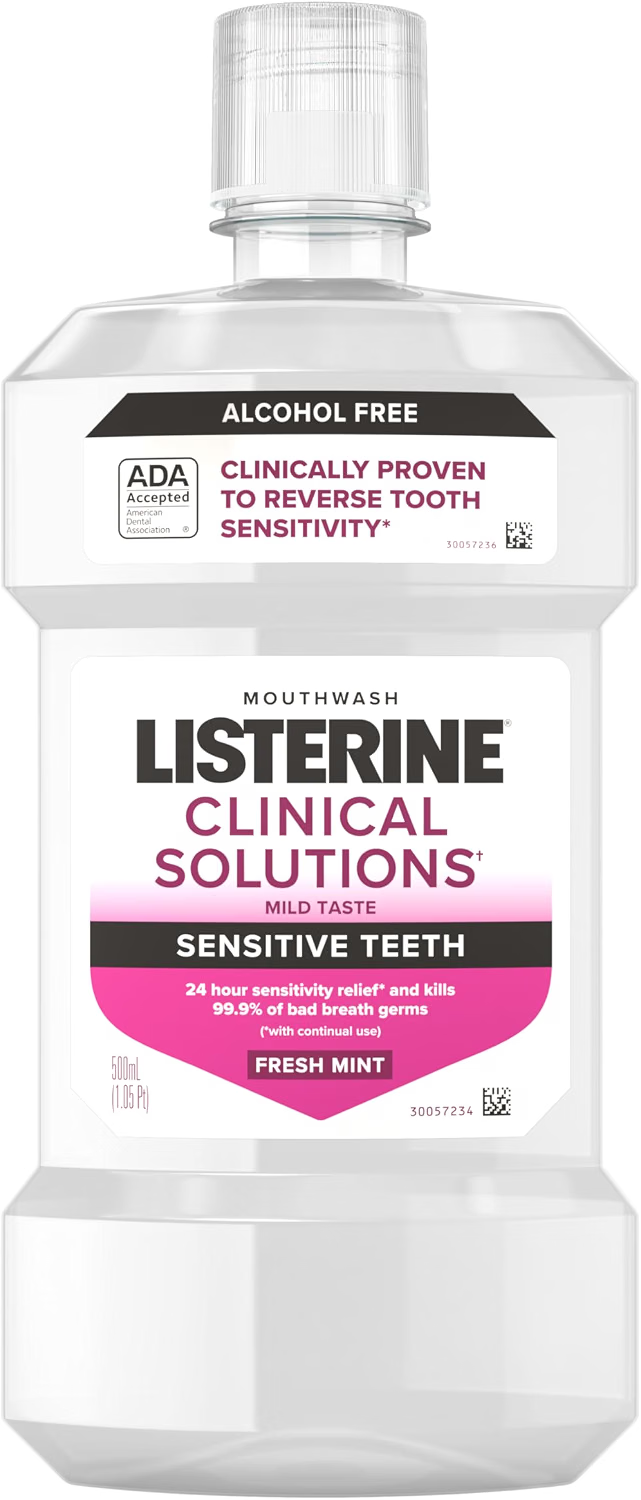
Listerine Clinical Solutions Sensitive Teeth Mouthwash
An alcohol-free oxalate rinse that plugs open dentin tubules, about $6.50 to $10 for 500 mL.
Best for Erosion-Related Sensitivity
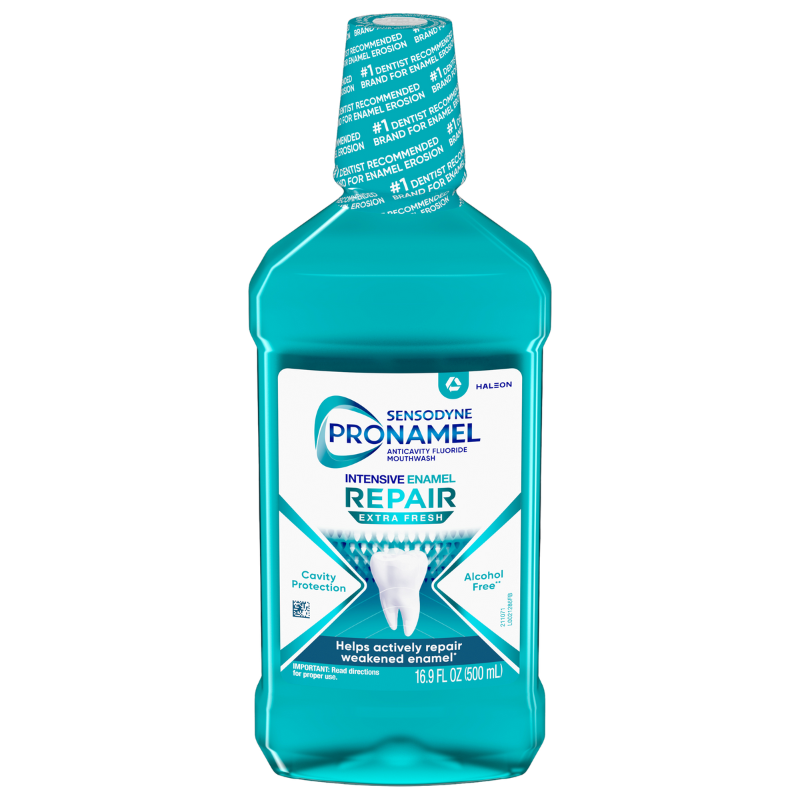
Sensodyne Pronamel Intensive Enamel Repair Mouthwash
An SLS-free, maximum-strength over-the-counter fluoride rinse for acid-softened enamel, about $7 for 16.9 oz.
Best No-Burn Rinse
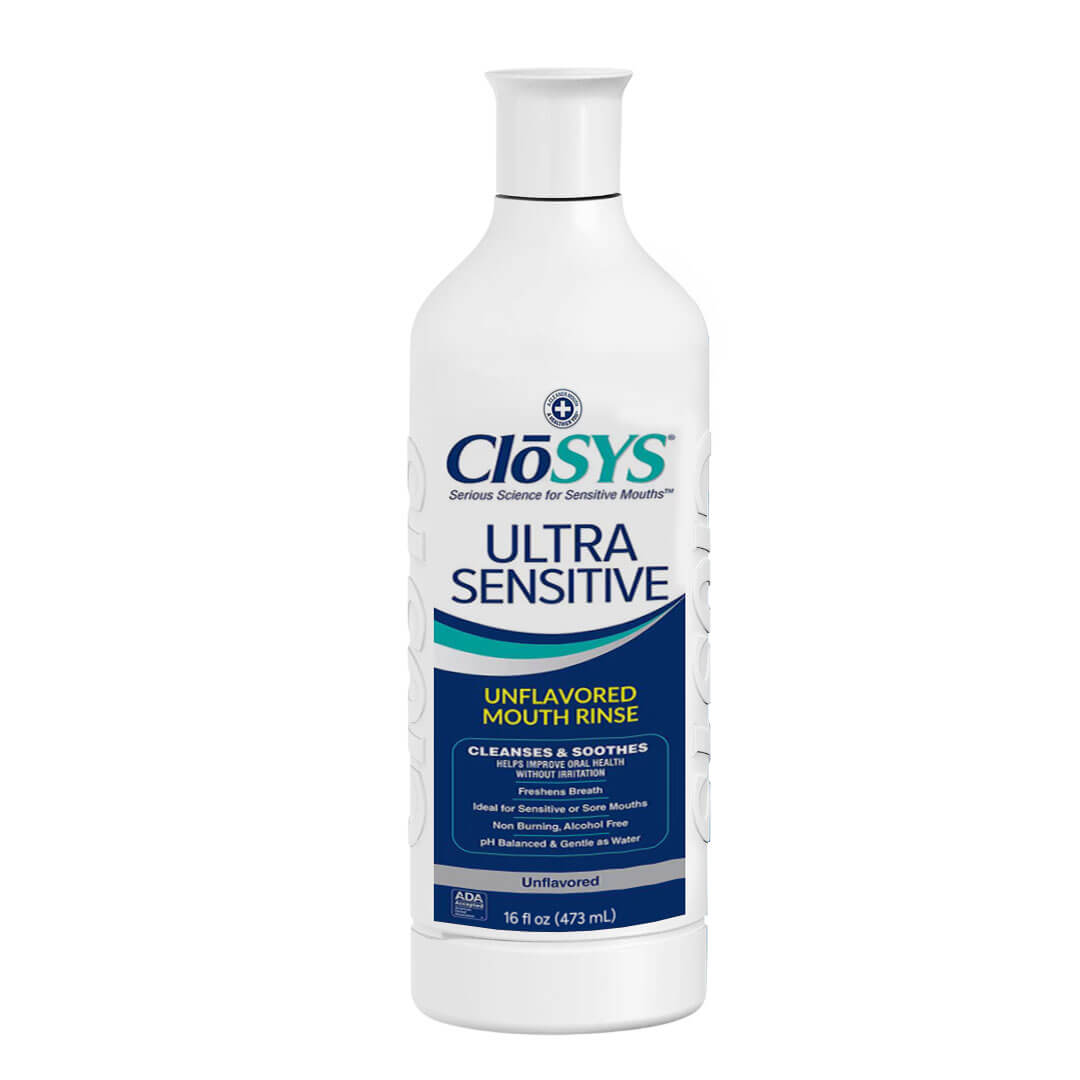
CloSYS Ultra Sensitive Mouthwash, Unflavored
An unflavored, alcohol-free chlorine dioxide rinse for mouths that sting easily, about $12 for 32 oz.
We may earn a commission on purchases made through these links.
Best Mouthwash for Sensitive Teeth: Quick Comparison
Before getting into individual products, it helps to see at a glance which rinses treat sensitivity, which add fluoride, and which come with health or restoration caveats.
Product | Direct desensitizing | Fluoride | Alcohol-free | Sensitivity indication | Age limit or caution |
|---|---|---|---|---|---|
Listerine Clinical Solutions Sensitive Teeth | Yes, dipotassium oxalate | No | Yes | Yes | Adults 18+, kidney and vitamin C cautions |
Sensodyne Pronamel Intensive Enamel Repair | No | Yes, NaF 0.05% | Yes | No, anticavity | Ages 6+ |
CloSYS Ultra Sensitive Unflavored | No | No | Yes | No, breath and comfort | Pair with a fluoride toothpaste |
ACT Anticavity Zero Alcohol | No | Yes, NaF 0.05% | Yes | No, anticavity | Ages 6+, contains Yellow 5 |
TheraBreath Anticavity | No | Yes, NaF 0.02% on current label | Yes | No, anticavity | Check the bottle label |
Colgate Phos-Flur Ortho Defense | No | Yes, acidulated NaF 0.04% | Yes | No, anticavity | Ages 6+, poor match for veneers |
Davids Hydroxi Mouthwash | Tubule-sealing claim, limited rinse data | No, nano-hydroxyapatite instead | Yes | Supports sensitive teeth (brand claim) | Fluoride-free, no ADA Seal |
Which Mouthwash Ingredients Help Sensitive Teeth?
Walk down any pharmacy aisle, and almost every rinse promises something for sensitive mouths, yet only three ingredient groups do meaningful work here. Each one tackles a different part of the problem, which is also how the ADA groups therapeutic rinses by active ingredient and intended benefit.
Dipotassium Oxalate for Exposed Dentin
Picture a familiar case. Someone in their forties who brushed hard for years and now winces every time iced coffee touches a lower canine. The culprit is usually a strip of exposed root, where open dentin tubules let cold push fluid toward the nerve. Oxalate interrupts that chain, reacting with calcium to form calcium oxalate crystals that settle into the tubules and slow the fluid down.
Dentists have used this chemistry chairside for years, and a lab study on oxalates notes that 2–3% potassium oxalate gels are widely used in US offices. The same work found the crystal plugs held up after an acid challenge, which is reassuring for anyone who drinks coffee or soda. A home rinse delivers a gentler, daily version of that in-office treatment.
The rinse evidence is encouraging, though it is not uniform. In a 2018 JADA trial of 375 adults, 69.3% of oxalate users reached the success threshold after four weeks, compared with 44.6% on placebo. A set of three randomized trials on 1.5–2.0% oxalate rinses produced inconsistent results at eight weeks, and those products differed in pH, strength, and fluoride content. An earlier systematic review of oxalates found only 12 studies with mixed designs, so results from one oxalate formula should not be assumed for another.
There is also a short medical checklist to run through first. Listerine's UK label rules out oxalate rinses for people with kidney disease, hyperoxaluria, kidney stones, or malabsorption syndrome, along with anyone taking 1,000 mg or more of vitamin C a day.
Potassium Nitrate for Desensitization
Potassium nitrate takes a different route, calming the nerve instead of sealing the tubule. Potassium ions build up around the nerve fibers inside dentin and are thought to quiet the pain signal they send.
Almost everything known about it comes from toothpaste. A review of potassium salts counted 16 double-blind toothpaste trials against only 2 mouthwash trials, and the rinse studies that do exist, such as a 30-patient comparison and a 5% potassium nitrate trial, were small. Few, if any, mainstream US rinses contain it today, so American patients get their potassium nitrate from toothpaste, which is also where the strongest data sit.
Fluoride for Enamel Protection
Fluoride is the ingredient most patients already trust, and with good reason. It helps rebuild minerals in enamel and root surfaces and makes both more resistant to acid.
The ADA notes that 0.05% sodium fluoride rinses are sold for daily use from age 6, while stronger 0.2% rinses for high-risk patients need a prescription. For adults, the ADA describes the evidence linking fluoride rinses to fewer root cavities as low level. It still earns a spot in many routines, because the roots that ache in winter are often the same surfaces that start to decay a few years later.
Fluoride can also leave calcium fluoride deposits on exposed dentin that may narrow tubules slightly, yet none of the over-the-counter fluoride rinses here carry a sensitivity claim. pH matters as well, since acidulated rinses favor fluoride uptake and neutral rinses are kinder to porcelain and composite restorations.
Alcohol-Free and Mild Formulations for Comfort
A rinse that burns rarely gets its full 60 seconds, and one that gets spat out after ten seconds does very little. Alcohol is the usual suspect because it can dry the mouth, and the ADA suggests alcohol-free rinses for people with dry mouth.
Alcohol is only part of the story, though. Sodium lauryl sulfate can set off canker sores in prone patients, menthol and methyl salicylate can sting thin or irritated tissue, and the ADA notes that cetylpyridinium chloride may cause brown staining. Researchers treat comfort as a measurable outcome too, and in a 2024 randomized trial, 53 adults rated six fluoride mouthwashes on burning, taste, and dryness.
Factor | Alcohol-based rinse | Alcohol-free rinse |
|---|---|---|
Burning or stinging | More likely | Less likely, though flavor oils and SLS can still sting |
Dry mouth | Can feel more drying | Preferred by the ADA for dry mouth |
Sensitive-teeth options | Few | All seven picks in this guide |
What Are the 7 Best Mouthwashes for Sensitive Teeth?
Each rinse was judged on how well the evidence supports its intended benefit (30%), its active ingredients (25%), comfort (20%), safety (15%), and US availability and value (10%). The ranking is editorial and draws on Drug Facts labels and published research, since Dental Reviewed did not lab-test these products. Prices reflect US retailers in November 2026 and tend to shift.
#1. Listerine Clinical Solutions Sensitive Teeth Mouthwash
Listerine Clinical Solutions Sensitive Teeth mouthwash is the rinse to reach for when ice water sends a jolt through an exposed root and a sensitivity toothpaste alone has not settled it. It relies on dipotassium oxalate monohydrate, the same tubule-blocking chemistry dentists paint on sensitive roots chairside, now in a bottle for home use. Listerine promises 24-hour relief with continued use, and the 2018 JADA trial gives that claim solid backing.
Two details on the label say who should use it. The US formula contains no fluoride, so it does nothing for root decay, and it includes sodium lauryl sulfate, which can trigger canker sores in people prone to them.
The routine is easy to fit into the morning and evening. After brushing, the label asks for a quick rinse with water and then a full minute of swishing with 10 mL. Because that water rinse clears away some toothpaste, the fluoride this product lacks is best covered by a fluoride rinse or toothpaste used at another point in the day. Listerine's Canadian label limits use to adults 18 and older, and anyone with a history of kidney disease, kidney stones, or hyperoxaluria should choose something else.
Price: About $6.50 to $10 for 500 mL
Where to buy: Major US pharmacies, grocery chains, and Amazon
Format: 500 mL and 95 mL bottles
Best for: Adults with cold-triggered sensitivity on exposed roots
Pros:
Brings in-office desensitizer chemistry into a daily home routine
Adds tubule blocking on top of a potassium nitrate toothpaste
Supported by trials of the rinse format itself
Cons:
No fluoride, so root caries risk needs separate coverage
Kidney stone and vitamin C history must be screened first
SLS content can trigger aphthous ulcers
#2. Sensodyne Pronamel Intensive Enamel Repair Mouthwash
Erosion tends to sneak up on people. Someone who sips sparkling water with lemon all day, enjoys a glass of wine most evenings, or lives with reflux often ends up with cupped, glassy enamel and a vague sensitivity that is hard to pin on one tooth. Sensodyne Pronamel Intensive Enamel Repair mouthwash fits that picture, with sodium fluoride 0.05% on its Drug Facts label, the highest strength sold over the counter.
The rinse is alcohol-free, SLS-free, and paraben-free, and it's for daily use from age 6. Its full ingredient list also includes cetylpyridinium chloride and blue dye, so the same staining caveat as ACT applies. One detail surprises many shoppers. The US mouthwash contains no potassium nitrate, unlike Pronamel toothpaste, so the rinse hardens acid-softened enamel while the toothpaste is what calms the nerve. Used together, they cover both halves of erosion-driven sensitivity.
Price: About $7 for 16.9 oz
Where to buy: Amazon, Target, Walmart, and other US chains
Format: 16.9 oz bottle and multipacks
Best for: Sensitivity linked to acid erosion or reflux
Pros:
Maximum over-the-counter fluoride in an SLS-free base
Fits erosion cases where acid resistance matters more than tubule blocking
Pairs with Pronamel toothpaste that patients already know
Cons:
No desensitizing active, even with the Sensodyne name
Brand recognition leads some patients to expect nerve relief
Erosion still needs diet and reflux control, which no rinse replaces
#3. CloSYS Silver Sensitive Mouth Rinse
Some patients cannot get through ten seconds of a mint rinse. Their teeth ache with cold, and their gums and cheeks sting too, often from dry mouth or tissue left raw after a deep cleaning. CloSYS Ultra Sensitive was made for that mouth. It is unflavored and tastes close to plain water, so it can stay in long enough to do its job.
Its ingredient list is short, with water, stabilized chlorine dioxide, trisodium phosphate, and citric acid. Chlorine dioxide neutralizes the sulfur compounds behind bad breath, and CloSYS points to its ADA Seal for that use. The formula is pH-balanced and free of alcohol, sulfates, dyes, and triclosan. A small peppermint dropper comes with the bottle for anyone who wants a hint of flavor, and the plain version is sold in most stores in 32 oz bottles.
The label lists no fluoride and no desensitizer, which defines its role. It handles comfort and fresh breath, while a potassium nitrate sensitive toothpaste calms the nerve and supplies fluoride. The directions call for a 30-second rinse after brushing, morning and evening. Readers whose main complaint is sore gums will find it covered in the guide to mouthwash for sensitive or inflamed gums.
Price: About $12 for 32 oz
Where to buy: Amazon, Target, Walmart, and CVS
Format: 32 oz bottle with an optional flavor dropper, plus 2- and 3-packs
Best for: Sensitive teeth paired with gums or cheeks that burn easily
Pros:
Patients who quit every mint rinse can usually finish this one
Four-ingredient formula is easy to clear for allergy-prone patients
Gentle enough for tissue that is sore after scaling or whitening
Cons:
No fluoride, so exposed roots need it from toothpaste
No desensitizing active for cold-triggered pain
Plain water taste leaves some patients unsure it worked
#4. ACT Anticavity Zero Alcohol Fluoride Mouthwash
ACT Anticavity Zero Alcohol Fluoride mouthwash is the dependable, inexpensive bottle for patients whose sensitive roots are also starting to show early decay. Root surfaces have no enamel covering, so they break down faster than crowns, and a daily 0.05% sodium fluoride rinse with the ADA Seal is an easy way to add protection.
The inactive ingredients deserve a closer look for sensitive mouths. The label lists menthol, methyl salicylate, cetylpyridinium chloride, Yellow 5, and Green 3, so the flavor can sting, CPC may stain over time, and anyone sensitive to tartrazine should skip it. It is used once a day from age 6, and a midday rinse spreads fluoride through the day without washing off bedtime toothpaste.
Price: About $4 to $6 for 18 oz
Where to buy: Amazon and nearly every US pharmacy and grocery store
Format: 18 oz bottle, with larger sizes available
Best for: Adults with root caries risk who tolerate mint
Pros:
The lowest-cost way to add daily fluoride for root caries risk
Stocked almost everywhere, so patients follow through
ADA Seal backs the anticavity claim
Cons:
Mint and methyl salicylate can sting tender tissue
Dyes and CPC raise allergy and staining questions
No effect on dentin hypersensitivity itself
#5. TheraBreath Anticavity Oral Rinse
For people who seem to get a new canker sore every few weeks, TheraBreath Anticavity is a sensible fluoride rinse because it leaves out sodium lauryl sulfate and dyes. The current label lists sodium fluoride 0.02% with twice-daily use, though some older bottles show 0.05%, so the Drug Facts panel is worth a glance before buying.
It also pairs neatly with TheraBreath Sensitive toothpaste, an SLS-free paste with potassium nitrate and fluoride. Together they make an SLS-free routine that calms the nerve and protects the roots without the usual irritant.
Price: About $9 for 16 oz
Where to buy: Amazon, Target, Walmart, and therabreath.com
Format: 16 oz and 1 L bottles
Best for: Canker-sore-prone patients who need fluoride
Pros:
SLS-free, which removes a common canker sore trigger
Completes an SLS-free routine with TheraBreath Sensitive toothpaste
Twice-daily dosing keeps fluoride on teeth through the day
Cons:
Fluoride strength differs between older and newer bottles
No desensitizing active
Costs more per ounce than ACT
#6. Colgate Phos-Flur Ortho Defense Anticavity Fluoride Rinse
Colage Phos-Flur is a familiar sight in orthodontic offices. Brackets and aligner attachments trap plaque, chalky white spots start forming around them, and those spots often feel sensitive to cold long before anyone notices them in the mirror. Colgate reports a 58% reduction in white spots with use.
The label lists sodium fluoride 0.04% in an acidulated phosphate solution, and the rinse carries the ADA Seal with once-daily use from age 6. It is alcohol-free and tinted with blue dye. The acidulated formula is the trade-off, since dentists usually steer patients with porcelain or composite veneers toward neutral fluoride. For a teenager in braces with sensitive white spots, it remains one of the most practical daily options.
Price: About $12.50 for 16.9 oz on Amazon
Where to buy: Amazon, US pharmacies, and orthodontic offices
Format: 16.9 oz (500 mL) bottle
Best for: Braces and aligner patients with white spot lesions
Pros:
Targets white spot lesions, a frequent sensitivity source during orthodontics
Acidulated formula favors fluoride uptake into enamel
Sold over the counter with the ADA Seal
Cons:
Acidic formula is a poor match for porcelain or composite veneers
Contains dye
No desensitizing active
#7. Davids Hydroxi Fresh Breath Mouthwash
Every practice has patients who simply will not use fluoride, whatever the evidence says. For them, a nano-hydroxyapatite rinse is a reasonable middle ground, and Davids Hydroxi is one of the better-known US options, an alcohol-free, fluoride-free rinse built around nano-hydroxyapatite and sold as a refillable kit in various stores, including Amazon.
Hydroxyapatite is the same mineral that makes up enamel, and in toothpaste form, the evidence is surprisingly solid. A 2023 meta-analysis of 44 trials found hydroxyapatite oral care products reduced dentin hypersensitivity by 39.5% compared with placebo, though most of those products were toothpastes. Rinse data are much thinner. A 2025 randomized trial found a high-density hydroxyapatite mouthwash performed about as well as a hydroxyapatite toothpaste, and a lab study found a nano-hydroxyapatite toothpaste sealed more tubules than the matching mouthwash.
That makes Davids a sensible choice for fluoride-avoidant patients with mild sensitivity and low decay risk, ideally paired with a nano-hydroxyapatite toothpaste. It does not carry the ADA Seal, its listing does not state the hydroxyapatite concentration, and it offers no fluoride protection for patients with active decay or exposed roots that keep breaking down.
Price: Check the current Amazon listing, since kit and refill prices vary
Where to buy: Amazon and the Davids website
Format: Refillable 16 oz bottle with 4 oz concentrate refills
Best for: Fluoride-avoidant adults with mild sensitivity and low cavity risk
Pros:
Gives fluoride-averse patients an evidence-informed alternative instead of no rinse at all
Hydroxyapatite seals tubules and matches the mineral in enamel
Alcohol-free and gentle enough for daily use
Cons:
No fluoride, so a poor fit for active decay or high root caries risk
Rinse-specific clinical data remain limited
No ADA Seal and no stated hydroxyapatite concentration
How Do the 7 Best Mouthwashes for Sensitive Teeth Compare?
Here is how the seven rinses line up side by side on active ingredient, price, and the main trade-off.
Product | Key ingredient | Price range | Main limitation | Best for |
|---|---|---|---|---|
Listerine Clinical Solutions Sensitive Teeth | Dipotassium oxalate | $6.50–$10 | Adults only, no fluoride | Direct sensitivity relief |
Sensodyne Pronamel Intensive Enamel Repair | NaF 0.05% | About $7 | No desensitizer | Erosion-related sensitivity |
CloSYS Ultra Sensitive Unflavored | Stabilized chlorine dioxide | About $12 | No fluoride or desensitizer | Mouths that burn with mints |
ACT Anticavity Zero Alcohol | NaF 0.05% | $4–$6 | Dyes and menthol | Root caries on a budget |
TheraBreath Anticavity | NaF 0.02% | About $9 | Strength varies by bottle | Canker-sore-prone patients |
Colgate Phos-Flur Ortho Defense | Acidulated NaF 0.04% | About $12.50 | Not for veneers | Braces and white spots |
Davids Hydroxi Mouthwash | Nano-hydroxyapatite | Check Amazon | No fluoride, thin rinse data | Fluoride-avoidant patients |
How to Choose a Mouthwash for Sensitive Teeth?
The right bottle depends far more on why the teeth hurt than on brand loyalty, so it pays to match the cause to the ingredient.
For cold or sweet sensitivity on exposed roots, choose an oxalate rinse.
For sensitivity with erosion or reflux, pair a 0.05% fluoride rinse with potassium nitrate toothpaste.
For braces, aligners, or white spots, consider an acidulated fluoride rinse.
For burning, dryness, or canker sores, choose an alcohol-free, SLS-free rinse.
For patients who avoid fluoride, consider a nano-hydroxyapatite rinse with a matching toothpaste.
For sharp pain in one tooth, book a dental exam before buying anything.
Sensitivity after a deep cleaning is a good example. Freshly cleaned roots can feel raw for a few weeks while they settle, and an oxalate rinse alongside a desensitizing toothpaste often makes that stretch easier. Sore or bleeding gums are a different problem with a different rinse, covered in this guide to mouthwash for sensitive or inflamed gums, and readers mainly chasing fresher breath can compare the best mouthwash for bad breath.
How Do You Use Mouthwash for Sensitive Teeth Correctly?
Small timing habits decide how much of the active ingredient stays on the teeth long enough to help.
Brush for two minutes with a fluoride or desensitizing toothpaste.
Spit without rinsing at night, so the toothpaste stays on the teeth.
Use the rinse at a separate time if the label asks for a water rinse first.
Measure the full dose and swish for the time on the label.
Wait 30 minutes before eating or drinking after a fluoride rinse.
The ADA notes that some toothpaste ingredients bind fluoride and weaken a rinse, which is why many dentists suggest rinsing in the morning or at midday and saving toothpaste for bedtime.
Can Mouthwash Replace Sensitive Toothpaste?
Mouthwash works best as a partner to a desensitizing toothpaste, and the reasons come down to contact time and evidence.
Toothpaste still carries most of the evidence for sensitivity relief, partly because a sensitive toothpaste with potassium nitrate sits on the teeth for two minutes while a rinse touches them for 30 to 60 seconds. An oxalate rinse earns its place by adding a second mechanism, blocking tubules while the toothpaste calms the nerve. The best toothpaste for sensitive teeth section compares those pastes in detail, and patients at higher risk can ask about prescription-strength fluoride toothpaste. Technique matters as well, and toothbrushes for sensitive teeth help limit further wear on exposed roots. No rinse replaces brushing or flossing.
When Mouthwash Will Not Help Tooth Sensitivity
True dentin hypersensitivity feels like a short, sharp zing that fades as soon as the cold or sweet trigger is gone. Other problems can feel similar at first and need treatment.
Cavities, cracked teeth, worn or leaking fillings, and gum recession can all pass for simple sensitivity. Pain that lingers after the trigger, wakes someone at night, or keeps returning to the same tooth deserves an exam, as does swelling or pain on biting, and a dentist can then map the fix in a written dental treatment plan. Short-term sensitivity after bleaching usually fades on its own, as covered in this guide on sensitivity after whitening strips.
Bottom Line
For direct relief, the best mouthwash for sensitive teeth is Listerine Clinical Solutions Sensitive Teeth, while Sensodyne Pronamel suits erosion and CloSYS Silver suits tender, older mouths. Whichever bottle fits, it works best alongside a desensitizing toothpaste, and sensitivity that keeps coming back is a reason to see a dentist.
We may earn a commission on purchases through affiliate links, though our recommendations remain independent.
Frequently Asked Questions
What is the best mouthwash for sensitive teeth?
Listerine Clinical Solutions Sensitive Teeth is the strongest over-the-counter choice in the US because it uses dipotassium oxalate to block exposed dentin tubules. A 2018 trial found it outperformed placebo after four weeks. Adults with kidney problems or high vitamin C intake should choose another rinse and lean on a desensitizing toothpaste instead.
Can fluoride mouthwash help sensitive teeth?
Fluoride rinses strengthen enamel and protect exposed roots from decay, which matters for sensitive teeth over the long run. None of the US over-the-counter fluoride rinses here carry a sensitivity claim, though, so direct relief usually comes from a desensitizing toothpaste or an oxalate rinse. The best fluoride toothpaste guide covers stronger daily options.
Is alcohol-free mouthwash better for sensitive teeth?
Alcohol-free rinses feel more comfortable for many people, especially those with dry mouth, and comfort makes it easier to rinse for the full minute. They do not treat sensitivity on their own, so the active ingredient on the label decides whether a rinse desensitizes, protects enamel, or simply feels gentle.
Does mouthwash help with sensitivity to cold?
An oxalate rinse can ease cold sensitivity from exposed dentin, with relief usually building over days to weeks of twice-daily use. Fluoride rinses are unlikely to change cold sensitivity much on their own. Cold pain that lingers long after the drink is gone points to something a rinse cannot fix and needs a dental exam.
Which mouthwash doesn't burn?
CloSYS Silver Sensitive and TheraBreath Anticavity are among the mildest fluoride rinses, and both are alcohol-free and sulfate-free. Rinses that list menthol, methyl salicylate, or sodium lauryl sulfate are more likely to sting tender tissue, so those ingredients are worth scanning for on the label before buying.
Can mouthwash make tooth sensitivity worse?
It can. Acidic rinses, alcohol, strong flavor oils, and whitening peroxide can all increase discomfort on exposed dentin. Any rinse that causes lasting pain or irritation should be stopped, and pain that persists after switching products is a good reason to book a dental exam.
Should I use sensitive toothpaste and mouthwash together?
Yes, and the two tend to work better together than either one alone. A sensitive toothpaste with potassium nitrate calms the nerve, an oxalate rinse blocks tubules, and a fluoride rinse protects the roots. Following each label on timing and rinse order keeps them from working against each other.