Rating: 4.2/5
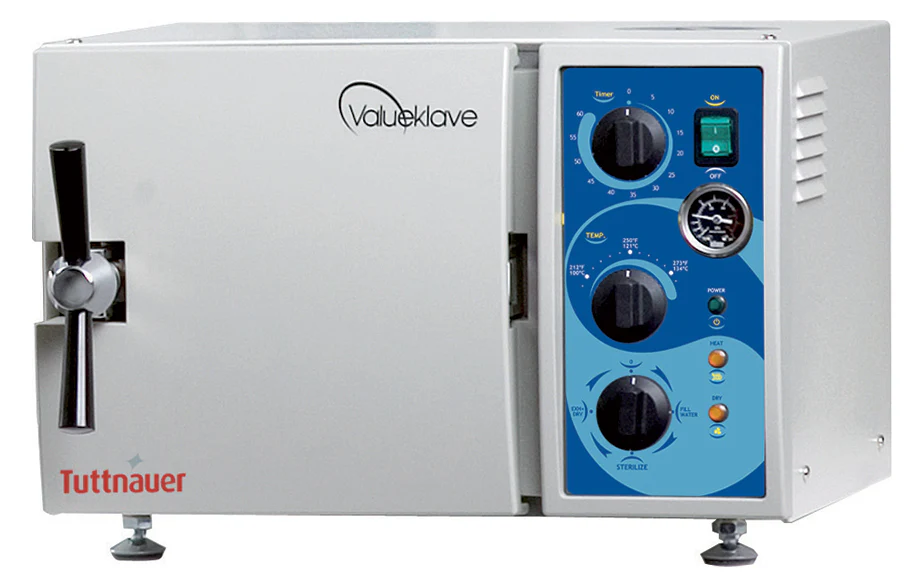
Tuttnauer 1730 Manual Valueklave Review For Dental Professionals
Reliable sterilization equipment forms the backbone of infection control in every dental practice. When instruments are not properly sterilized, patients face serious risks of...
Reviewed by Agnes Markovic
Pros
- Affordable purchase price compared to automatic models, making it accessible for startup practices and budget-conscious buyers
- Fast cycle times with 9 to 11 minute unwrapped cycles from a hot start, among the quickest in its class
- Compact footprint fits easily on countertops in space-constrained operatories without dominating the sterilization area
- Simple manual controls require minimal training and reduce the learning curve for new staff members
- Durable 316L stainless steel chamber with electro-polished finish resists corrosion and ensures long service life
- Lower maintenance costs due to fewer electronic components and simpler mechanical design
- Proven gravity displacement technology meets all CDC requirements for dental instrument sterilization
- Comprehensive safety features including double locking mechanism, dual thermostats, and ASME-approved safety valve
- Reliable brand reputation backed by Tuttnauer's 95+ years of sterilization industry experience
- Automatic shut-off at end of sterilization and drying cycles allows staff to multitask
- Front-mounted drain valve simplifies daily water changes and reservoir maintenance
- FDA-cleared for both wrapped and unwrapped instrument sterilization
- Quieter operation than many larger units, minimizing disruption to patient care areas
- Easy parts availability with widespread distributor network and aftermarket support
- 10-year chamber warranty on qualifying units provides long-term peace of mind
Cons
- Limited chamber capacity of only 2 half-sized cassettes may create bottlenecks in busier practices
- No cycle documentation or built-in printer requires manual record-keeping for compliance
- Manual operation demands operator attention to switch between cycle phases at the right time
- No programmable cycles limits flexibility compared to electronic automatic models
- Requires distilled water only which adds ongoing operational costs and logistical considerations
- Weekly air jet cleaning mandatory to prevent sterilization failures and spore test issues
- Door gasket replacement needed approximately every six months adds to maintenance schedule
- No digital display means relying on analog gauges for pressure and temperature monitoring
- Cannot process larger cassettes due to 7-inch chamber diameter limitation
- Gravity displacement only without pre-vacuum capability for more challenging loads
- Cold start cycles take longer at 16+ minutes compared to hot start performance
- Single sterilization temperature range without specialty cycle options for delicate items
Reliable sterilization equipment forms the backbone of infection control in every dental practice. When instruments are not properly sterilized, patients face serious risks of cross-contamination, and practices expose themselves to regulatory violations and potential litigation. For dental professionals seeking an economical yet dependable sterilization solution, the Tuttnauer 1730 Manual Valueklave has remained a trusted choice for decades.
Tuttnauer, an Israeli company with over 95 years of experience in sterilization technology, designed the 1730 Valueklave specifically for smaller clinical settings. The unit delivers professional-grade steam sterilization in a compact package that fits comfortably on countertops in space-constrained operatories. With its straightforward manual controls, fast cycle times, and durable construction, this autoclave serves as an excellent primary unit for solo practitioners or a reliable backup for busier practices.
This comprehensive review examines every aspect of the Tuttnauer 1730 Manual Valueklave that dental professionals need to know. We will cover the technical specifications, key features, common problems with detailed troubleshooting solutions, maintenance protocols, and regulatory compliance considerations. Whether you are considering purchasing this unit or already own one and want to maximize its performance, this guide provides the practical information you need.
Tuttnauer 1730 Manual Valueklave Technical Specifications
Understanding the technical capabilities of any autoclave helps dental professionals determine whether it meets their practice requirements. The Tuttnauer 1730 Manual Valueklave offers a specific set of specifications designed for lower-volume sterilization needs.
The chamber measures 7 inches in diameter and 13 inches in depth, providing a total volume of 2 gallons (7.5 liters). This capacity accommodates three standard trays or two half-sized instrument cassettes per cycle. The overall unit dimensions of 17.9 inches deep, 17.4 inches wide, and 12 inches high make it one of the most compact tabletop autoclaves available from Tuttnauer.
Complete Specifications Table
Specification | Details |
|---|---|
Chamber dimensions | 7" diameter × 13" depth (170mm × 340mm) |
Chamber volume | 2 gallons (7.5 liters) |
Overall dimensions | 17.9"D × 17.4"W × 12"H |
Number of trays included | 3 |
Tray dimensions | 11.6"L × 4.7"W × 0.8"H |
Temperature range | 250°F–274°F (121°C–134°C) |
Maximum pressure | 30 PSI |
Electrical requirements | 120V, 50/60 Hz, 1350W, 11–12 amps |
Cassette capacity | 2 half-sized cassettes |
Unwrapped cycle time (hot start) | 9–11 minutes |
Unwrapped cycle time (cold start) | 16 minutes |
Wrapped cycle time | 20–30 minutes (including drying) |
Chamber material | 316L electro-polished stainless steel |
Shipping weight | Approximately 50 lbs |
The unit operates as a gravity displacement sterilizer, meaning steam naturally rises and pushes air downward and out through the air jet. This proven sterilization method has been the standard in healthcare settings for decades and remains recommended by the CDC for processing dental instruments.
Key Features And Benefits For Dental Practices
The Tuttnauer 1730 Manual Valueklave incorporates several features that make it particularly well-suited for dental office environments. These design elements address the practical needs of daily clinical operations while maintaining the safety standards required for medical device sterilization.
Fast Cycle Times
Speed matters in busy dental practices where instrument turnover directly affects patient flow. The Tuttnauer 1730 delivers one of the fastest cycle times in its class, completing an unwrapped instrument cycle in just 9 minutes from a hot start. When beginning from a cold start, the standard unwrapped cycle takes approximately 16 minutes. Wrapped instrument cycles, which include a heated drying phase, typically complete in 20 to 30 minutes depending on load size and packaging materials.
The automatic shut-off feature at the end of both sterilization and drying cycles allows staff to attend to other duties without constantly monitoring the unit. An audible bell signals cycle completion, alerting personnel that instruments are ready for removal.
Comprehensive Safety Features
Patient and operator safety drove many design decisions in the Valueklave 1730. The double safety locking device physically prevents the door from opening while the chamber remains pressurized. A steam pressure-activated lock provides an additional layer of protection, ensuring operators cannot accidentally expose themselves to high-pressure steam.
The dual safety thermostat system protects against overheating, while a dedicated overheat cutoff prevents heating element burnout if water levels drop too low. The ASME-approved safety valve automatically releases pressure if it exceeds 40 PSI (2.7 bar), providing fail-safe protection against overpressurization.
Simple Operation
Manual controls offer advantages that many dental professionals appreciate. The straightforward timer dial and thermostat knob require minimal training to operate correctly. New staff members can learn the basic operating procedure within minutes, and the absence of complex electronic controls means fewer components that can malfunction.
Three indicator lights provide essential status information at a glance: power on, heating active, and drying in progress. The front-mounted drain valve simplifies daily water changes, and the multi-purpose valve allows operators to control cycle phases manually.
Compact Design
Space comes at a premium in most dental operatories. The Valueklave 1730's small footprint allows placement on standard countertops without dominating the sterilization area. The heat-insulated exterior maintains safe surface temperatures during operation, and quiet operation minimizes disruption to patient care in adjacent treatment rooms.
Is The Tuttnauer 1730 Right For Your Dental Practice?
Selecting the appropriate autoclave requires honest assessment of your practice's sterilization demands. The Tuttnauer 1730 excels in specific scenarios while presenting limitations for others.
This unit performs best in solo dental practices, small offices with one to two operatories, and startup practices operating under budget constraints. It also serves excellently as a secondary or backup sterilizer in larger practices, ensuring continuity when the primary unit requires maintenance. Specialty practices with lower instrument turnover, mobile dental services, and independent dental hygiene practices also find the 1730's capacity sufficient for their needs.
However, high-volume practices processing large quantities of instruments throughout the day may find the chamber capacity limiting. Offices requiring automated cycle documentation for compliance records should consider automatic models with built-in printers. Practices with multiple operatories and heavy instrument demands might benefit from larger Tuttnauer models like the 2340M or 2540M, which offer greater chamber capacity while maintaining manual operation.
Meeting CDC Sterilization Guidelines
Proper sterilization protocols protect both patients and dental healthcare personnel from infectious disease transmission. The Centers for Disease Control and Prevention provides comprehensive guidelines for infection control in dental settings, and the Tuttnauer 1730 can meet these requirements when operated correctly.
Instrument Classification And Processing Requirements
The CDC classifies dental instruments based on their risk of transmitting infection. Critical items that penetrate soft tissue or bone require heat sterilization before each use. Semi-critical items that contact mucous membranes or non-intact skin should also undergo heat sterilization whenever possible. The Tuttnauer 1730 is FDA-cleared for sterilizing both wrapped and unwrapped instruments in these categories.
Proper instrument processing follows a specific sequence: pre-cleaning to remove visible debris, thorough cleaning with ultrasonic or manual methods, rinsing and drying, packaging in appropriate sterilization pouches, sterilization, and proper storage until use. Skipping any step compromises the entire process.
Required Monitoring Protocols
The CDC recommends three types of sterilization monitoring, all of which apply to the Tuttnauer 1730:
Mechanical monitoring involves observing the pressure gauge, timer, and temperature settings during each cycle to verify pthat arameters are met
Chemical indicators, both external tape and internal strips, should be used with every load to confirm exposure to sterilization conditions
Biological indicators using highly resistant spores provide the definitive test of sterilization effectiveness
According to CDC guidelines, biological monitoring should occur at least weekly for all sterilizers. Many state dental boards mandate this frequency, and some require even more frequent testing. The American Dental Association supports these recommendations and encourages practices to maintain thorough documentation of all monitoring results.
Record Keeping Requirements
Maintaining accurate sterilization records demonstrates compliance and helps identify problems before they affect patient care. Documentation should include cycle parameters, chemical indicator results, biological indicator results, and the date and time of each load. State regulations vary regarding retention periods, typically ranging from 12 months to 3 years. Check your state dental board requirements for specific guidance.
Common Problems And Troubleshooting Solutions
Even well-maintained autoclaves occasionally experience issues. Understanding the most common problems and their solutions helps dental professionals minimize downtime and maintain consistent sterilization effectiveness. The following troubleshooting guide addresses the issues Tuttnauer 1730 owners most frequently encounter.
Autoclave Not Reaching Proper Pressure
When the pressure gauge fails to reach 30 PSI during the sterilization phase, several factors may be responsible. This problem often manifests as extended cycle times, chemical indicators not changing color properly, or failed biological indicator tests.
The most common cause is a clogged air jet. The air jet must remain clear to allow trapped air to escape the chamber during the heating phase. Air pockets prevent steam from contacting instrument surfaces, compromising sterilization. Clean the air jet weekly using a straightened paper clip or the clean-out wire that came with your unit. Insert it into the small orifice to dislodge any accumulated debris.
Door gasket deterioration ranks as the second most common cause. Inspect the gasket for visible cracks, hardening, flat spots, or debris accumulation. Clean the gasket with a soft cloth and mild liquid detergent, rinsing thoroughly. If damage is visible, replace the gasket immediately using OEM part number 02610020. Under normal use, gaskets require replacement approximately every six months.
Additional causes to investigate include:
Temperature setting too low, as lower temperature corresponds to lower pressure
Insufficient voltage supply, because the unit requires minimum 115 volts to function properly
Steam leaking at the door closing device, indicating the door needs tighter closure
Safety valve not sealing properly after opening
Defective heating elements, which require professional diagnosis
Wet Packs After Sterilization Cycles
Finding moisture on or inside sterilization pouches after a completed cycle indicates a problem requiring immediate attention. Wet packs are not considered sterile because moisture allows microorganisms to wick through packaging material, recontaminating instruments. According to Tuttnauer's guidance on wet packs, this problem has multiple potential causes.
Delayed transition to the exhaust and dry phase represents the most frequent operator error causing wet packs. When the sterilization timer rings, immediately turn the multi-purpose valve to the Exhaust/Dry position. Allowing the chamber to cool before exhausting permits moisture condensation on instrument packages. The pressure should still be above 10 PSI when you make this transition.
Chamber overloading prevents proper steam circulation and moisture evacuation. Reduce load sizes and ensure adequate spacing between packages. Using a pouch rack helps maintain proper separation. Position pouches with the plastic side facing down, and avoid contact between packages and chamber walls.
Door bellows malfunction can trap moisture inside the chamber. If the bellows fails to function properly, excess moisture cannot escape during the drying cycle. Inspect and replace the bellows as part of regular preventive maintenance.
Other causes include:
Interrupting the drying cycle before completion
Internal valve leaks allowing water to return from the reservoir
Inadequate drying time for heavily loaded chambers
Door Will Not Open Or Lock Properly
Door operation issues typically relate to the safety mechanisms designed to protect operators from pressurized steam exposure.
If the locking device will not unscrew after a cycle, first verify that the pressure gauge reads zero. The safety mechanism prevents the door from opening while any pressure remains in the chamber. Ensure the exhaust cycle is completed fully before attempting to open the door.
A stuck doorbellows pin can prevent the locking device from turning. Try tightening the locking device first, then loosening it. This action often releases a stuck pin. Regular cleaning of the door gasket prevents adhesion issues that can make opening difficult.
Never attempt to force the door open or bypass safety mechanisms. These features exist to prevent serious steam burns and must remain functional at all times.
Failed Biological Indicator Tests
A positive spore test result indicates the sterilization process failed to eliminate highly resistant bacterial spores. This outcome requires immediate action and investigation.
The clogged air jet causes more spore test failures than any other factor. When air cannot escape the chamber, steam fails to penetrate all areas, and sterilization conditions are not achieved. Clean the air jet and run a new spore test. You should hear a hissing sound as steam escapes through the air jet during the heating phase. Absence of this sound indicates a blockage.
Overloading the chamber prevents adequate steam penetration to all instrument surfaces. Review the maximum load sizes specified in your operator's manual and reduce loads accordingly. Proper spacing between items is essential.
Ensure timer and thermostat settings are correct and that the unit achieves full operating pressure. Using distilled water exclusively prevents mineral buildup that can block the air jet and other components.
When a spore test fails, follow this protocol recommended by the CDC:
Remove the sterilizer from service immediately
Review operating procedures and inspect the unit
Clean the air jet and check all components
Run a second spore test
If the second test is positive, contact a qualified service technician
Recall and reprocess all items processed since the last negative spore test
Timer Malfunctions
The mechanical timer on the Tuttnauer 1730 occasionally presents issues that are usually simple to resolve.
If the timer does not ring at cycle completion, the bell mechanism likely needs to be cocked. When setting the timer, first turn it past the 15-minute mark, then back to your desired time. This action engages the bell hammer mechanism. If this does not resolve the issue, the bell hammer may be broken, requiring timer replacement.
A timer that does not advance suggests a mechanical failure requiring professional repair or replacement.
Unit Does Not Power On
When the Tuttnauer 1730 shows no signs of power, work through this systematic checklist:
Verify the power cord is firmly connected to both the unit and the wall outlet
Confirm the outlet has power by testing with another device
Check that the circuit breaker on the unit is in the up position
Inspect and replace any blown fuses
Press the small red reset button on the unit
Ensure no other high-draw appliances are sharing the circuit
If the unit still does not power on after these checks, an internal electrical problem exists requiring professional service.
Water And Reservoir Issues
Proper water management directly affects sterilization performance and equipment longevity.
Fill the reservoir to the proper level, which is approximately 0.7 gallons (3 liters) or to the base of the safety valve holder. Using only distilled water is mandatory, not optional. Tap water contains minerals that accumulate inside the autoclave, clogging the air jet, coating heating elements, and blocking internal passages. This mineral buildup causes sterilization failures and significantly shortens equipment life.
Drain and replace the water daily for optimal results. If you hear unusual loud noises coming from the reservoir during operation, internal leaks may be allowing steam to escape back into the reservoir. This condition requires professional inspection.
Preventive Maintenance Schedule
Consistent preventive maintenance extends equipment life, prevents unexpected breakdowns, and ensures reliable sterilization performance. The following schedule reflects Tuttnauer's recommendations combined with industry best practices.
Daily Maintenance Tasks
Performing these tasks at the end of each operating day takes only a few minutes and prevents many common problems:
Drain the water reservoir completely
Refill with fresh distilled water
Wipe the chamber interior with a clean, soft cloth
Clean the door gasket with a damp cloth
Visually inspect the door gasket for wear or damage
Verify all indicator lights function when the unit powers on
Weekly Maintenance Tasks
Weekly maintenance focuses on components critical to sterilization effectiveness:
Clean the air jet using a straightened paper clip or the provided clean-out wire
Test the safety valve by pulling the ring during a cycle and verifying it releases steam and reseals
Clean trays and the tray rack with a non-abrasive cleaner
Verify pressure gauge accuracy against expected cycle parameters
Perform biological indicator (spore) testing
Review and document maintenance log entries
Monthly And Periodic Maintenance
Less frequent maintenance addresses longer-term wear and deeper cleaning needs:
Clean the chamber thoroughly using Chamber Brite cleaning solution
Use half a packet of Chamber Brite for the 1730 model
Perform the cleaning cycle with an empty chamber
Inspect all components more thoroughly
Review the biological indicator test history for trends
Every 20 cycles, perform a Chamber Brite cleaning to remove accumulated deposits. The cleaning protocol is straightforward:
Ensure the chamber is cold and remove all instruments, trays, and rack
Add half a packet of Chamber Brite to the reservoir
Fill the reservoir with water to the proper level
Run a complete sterilization cycle with the empty chamber
Drain the water after the exhaust stage completes
Wipe the chamber with a clean cloth
Semi-Annual Component Replacement
Certain components require regular replacement regardless of visible wear:
Door gasket (approximately every six months)
Door bellows (approximately every six months)
Air jet valve with red top (approximately every six months)
Chamber filters (as needed based on inspection)
Tuttnauer and aftermarket suppliers offer preventive maintenance kits that bundle these commonly replaced parts for convenience.
Essential Replacement Parts And Accessories
Keeping critical replacement parts on hand minimizes downtime when components require replacement. The following table lists the most commonly needed parts with their OEM reference numbers.
Part | OEM part number | Typical replacement interval |
|---|---|---|
Door gasket | 02610020 | Every 6 months |
Door bellows | Varies by serial number | Every 6 months |
Air jet valve (red top) | Contact distributor | Every 6 months |
Safety valve | 37 PSI or 40 PSI (match existing) | As needed |
Chamber filters | Various | As needed |
When replacing the safety valve, match the PSI rating of your existing valve. The cracking pressure is etched on the valve body for reference. Using the wrong pressure rating can compromise safety or cause operational issues.
Recommended accessories that improve workflow and results include:
Pouch rack for proper instrument package spacing
Additional trays for processing efficiency
In-office biological indicator incubator for rapid spore test results
Chemical indicator strips and autoclave tape
Distilled water system to ensure consistent water quality
Purchase replacement parts and accessories from authorized Tuttnauer distributors or reputable dental supply companies to ensure compatibility and quality.
Warranty Information And Technical Support
Understanding warranty coverage helps dental professionals plan for equipment costs and maintenance responsibilities.
The standard Tuttnauer warranty provides one year of parts and labor coverage for new units. Additionally, Tuttnauer offers a 10-year warranty on chambers for select models, a policy in effect since 1997. To activate warranty coverage, complete and return the registration card within 14 days of purchase or call customer service to register.
Warranty exclusions include improper installation or application, unauthorized modifications, failure to follow maintenance requirements, and normal wear items such as gaskets, bellows, and filters. Keep all maintenance documentation, as this may be required for warranty claims.
Tuttnauer provides multiple support resources for troubleshooting and service needs. Contact Tuttnauer USA at 1-800-624-5836 for technical assistance. The Tuttnauer also offers downloadable operator's manuals, maintenance guides, and instructional videos. Authorized service technicians are available throughout the country for repairs beyond user-serviceable items.
Some distributors offer extended warranty packages providing two-year or five-year coverage. These options provide additional peace of mind, particularly for practices that prefer predictable maintenance costs.
Bottom Line
The Tuttnauer 1730 Manual Valueklave has earned its reputation as a reliable, economical sterilization solution for dental practices with appropriate capacity needs. Its fast cycle times, comprehensive safety features, durable 316L stainless steel construction, and simple operation make it an excellent choice for solo practitioners, small offices, and practices needing a dependable backup unit.
Success with this autoclave depends on understanding proper operating procedures, following CDC-compliant sterilization protocols, and maintaining a consistent preventive maintenance schedule. The troubleshooting guidance in this review addresses the most common issues owners encounter, enabling quick resolution of problems when they arise.
For dental professionals whose sterilization needs align with the 1730's capabilities, this unit offers outstanding value backed by Tuttnauer's extensive experience and support infrastructure. Those with higher-volume requirements or preferences for automated documentation should explore Tuttnauer's larger or automatic models to find the best fit for their practice.
Consult with a dental equipment specialist to discuss your specific sterilization needs and determine whether the Tuttnauer 1730 Manual Valueklave is the right investment for your practice.
Verdict
<p>The Tuttnauer 1730 Manual Valueklave delivers dependable, no-frills steam sterilization at an accessible price point, but its manual operation and limited capacity require a clear-eyed assessment of a practice’s daily instrument demands.</p><p>In day-to-day use, the 1730 proves why Tuttnauer has built a reputation for reliability. Cycle times are fast enough to keep pace with typical solo-practitioner workflows, and the chamber comfortably handles routine loads for one to two operatories. The mechanical simplicity is a genuine advantage—staff training is quick, troubleshooting is straightforward, and there’s less that can fail compared to fully automatic units. For startup practices, the lower upfront cost frees capital for chairs, imaging, or handpieces without compromising infection control standards.</p><p>That simplicity, however, comes with trade-offs. The two-cassette capacity becomes a bottleneck in busier offices, especially those running three or more operatories simultaneously. Multiple cycles per day increase wear on components and require more hands-on staff involvement. Manual documentation also adds administrative friction, particularly for practices facing frequent compliance audits or processing implantable devices, where detailed cycle records are expected. In those environments, automatic models with built-in printers and enhanced monitoring are often the more practical choice.</p><p>The Tuttnauer 1730 is best viewed as a purpose-built solution rather than a universal one. It excels for practices that value durability, affordability, and straightforward operation, and it shines as a secondary or backup autoclave in larger offices where redundancy matters. When matched to the right workload, it’s a quiet workhorse that can deliver years of consistent performance with proper maintenance.</p><p><strong>Best for:</strong> solo practitioners, startup practices, dental hygiene offices, mobile dentistry, specialty practices with low instrument turnover, and larger offices needing a reliable backup sterilizer.</p><p><strong>Consider alternatives if:</strong> you process high instrument volumes, operate three or more operatories simultaneously, require automated cycle documentation, or routinely sterilize implantable devices.</p>
Frequently Asked Questions
What is the cycle time for the Tuttnauer 1730?
The Tuttnauer 1730 completes an unwrapped instrument cycle in approximately 9 to 11 minutes from a hot start and 16 minutes from a cold start. Wrapped instrument cycles including the drying phase typically take 20 to 30 minutes depending on load size.
How often should I replace the door gasket on a Tuttnauer 1730?
Replace the door gasket approximately every six months under normal use conditions. Replace it sooner if you notice visible cracking, hardening, deformation, or steam leaking around the door during operation.
Why is my Tuttnauer 1730 not reaching 30 PSI?
The most common cause is a clogged air jet that prevents proper air evacuation from the chamber. Other causes include a worn door gasket, low voltage supply, incorrect temperature setting, or a defective safety valve. Clean the air jet first, as this resolves the majority of pressure issues.
What type of water should I use in the Tuttnauer 1730?
Use only distilled water in the Tuttnauer 1730. Tap water contains minerals that accumulate inside the autoclave, clogging the air jet and internal components. This mineral buildup leads to sterilization failures and premature equipment wear.
How do I clean the air jet on my Tuttnauer 1730?
Clean the air jet weekly using a straightened paper clip or the clean-out wire provided with your unit. Insert it into the small orifice located in the water reservoir to dislodge any debris. A blocked air jet is the primary cause of failed spore tests and improper sterilization.
Is the Tuttnauer 1730 FDA approved for dental use?
Yes, the Tuttnauer 1730 Manual Valueklave is FDA-cleared for sterilizing both wrapped and unwrapped dental instruments, meeting all regulatory requirements for dental office use.
What is the chamber capacity of the Tuttnauer 1730?
The chamber measures 7 inches in diameter and 13 inches in depth, providing a volume of 2 gallons (7.5 liters). This capacity accommodates 3 trays or 2 half-sized instrument cassettes per sterilization cycle.
How often should I perform spore testing on my Tuttnauer 1730?
The CDC recommends weekly biological indicator testing for all sterilizers. Many state dental boards require this frequency as a minimum standard. Check your state dental board regulations, as some states may require monthly testing while others mandate weekly testing.
What should I do if a spore test fails?
Remove the sterilizer from service immediately. Clean the air jet, review operating procedures, and run a second spore test. If the second test also fails, contact a qualified service technician. Recall and reprocess all items sterilized since the last negative spore test result.
How long is the warranty on the Tuttnauer 1730?
New units include a one-year warranty covering parts and labor. Tuttnauer also provides a 10-year chamber warranty on select models. Extended warranty packages offering two-year or five-year coverage are available through some distributors.