Rating: 3.9/5
Solea All-Tissue Dental Laser Review
The dental laser market has matured considerably since the first soft-tissue-only devices received FDA clearance in the 1990s. Today, all-tissue laser systems can cut enamel,...
Reviewed by Marcus Hale
Pros
- Reliably anesthesia-free for the majority of procedures, with roughly 95% of hard and soft tissue treatments completed without local anesthetic
- True all-tissue versatility as the only CO2 laser FDA-cleared for enamel, dentin, soft tissue, and bone
- Blood-free and suture-free soft tissue surgery in most cases, producing clean surgical fields with minimal postoperative discomfort
- Enhanced practice efficiency through same-day multi-quadrant dentistry, reducing total visit count per patient
- Excellent patient experience that eliminates drills, needles, noise, and vibration
- Short learning curve supported by an intuitive touchscreen, variable-speed foot pedal, and computer-controlled beam delivery
- Revenue-expanding applications including Solea Sleep, Solea Protect, and Solea Perioguide
- Ideal for pediatric dentistry, with pain-free, needle-free, and quiet operation
- Reduced aerosol generation compared to high-speed handpieces, supporting infection control protocols
- Rapid patient healing with less postoperative sensitivity and fewer follow-up visits
- Comprehensive manufacturer support from onboarding through ongoing clinical education and a peer community
Cons
- High acquisition cost that places the Solea in the premium tier of dental equipment investments
- Not a universal replacement for all clinical instruments, as certain deep restorations, root canal treatment, and some specialized surgical procedures still require conventional tools
- Ongoing maintenance and consumable costs that add to the total cost of ownership over the device’s lifespan
- Physical footprint requiring dedicated operatory space, with additional units needed for multi-room deployment
- Adjustment period for some practitioners, especially with hard tissue preparations that demand precise depth control
- Solea Sleep results are not permanent, lasting approximately 12 to 15 months before retreatment is needed
- A small percentage of patients still require local anesthetic depending on individual pain sensitivity and procedure complexity
- Limited insurance coverage for specialty applications such as Solea Sleep, which may lack established reimbursement codes
The dental laser market has matured considerably since the first soft-tissue-only devices received FDA clearance in the 1990s. Today, all-tissue laser systems can cut enamel, dentin, gingiva, and bone from a single platform, fundamentally changing how procedures are delivered and how patients experience dental care. Among these systems, the Solea All-Tissue Dental Laser from Convergent Dental occupies a unique position as the only CO2 dental laser cleared by the U.S. Food and Drug Administration for all-tissue indications.
For dental professionals evaluating a significant capital investment, the central question is whether the Solea delivers enough clinical and financial value to justify its premium price. This review provides the technical detail, clinical context, practitioner feedback, and balanced assessment that informed decision-making requires. Practices building a comprehensive dental treatment plan around advanced technology will find this analysis particularly relevant.
Patient expectations have shifted dramatically. Adults and children increasingly seek practices that offer minimally invasive, low-pain experiences, and they are willing to switch providers to find them. According to evaluations published on Dental Product Shopper, 14 out of 15 clinical evaluators rated the Solea as excellent in overall satisfaction, and all 15 said they would purchase the device. That enthusiasm is noteworthy, but enthusiasm alone does not justify a purchasing decision. The sections that follow provide the evidence dental professionals need to make that determination for themselves.
What Is the Solea All-Tissue Dental Laser?
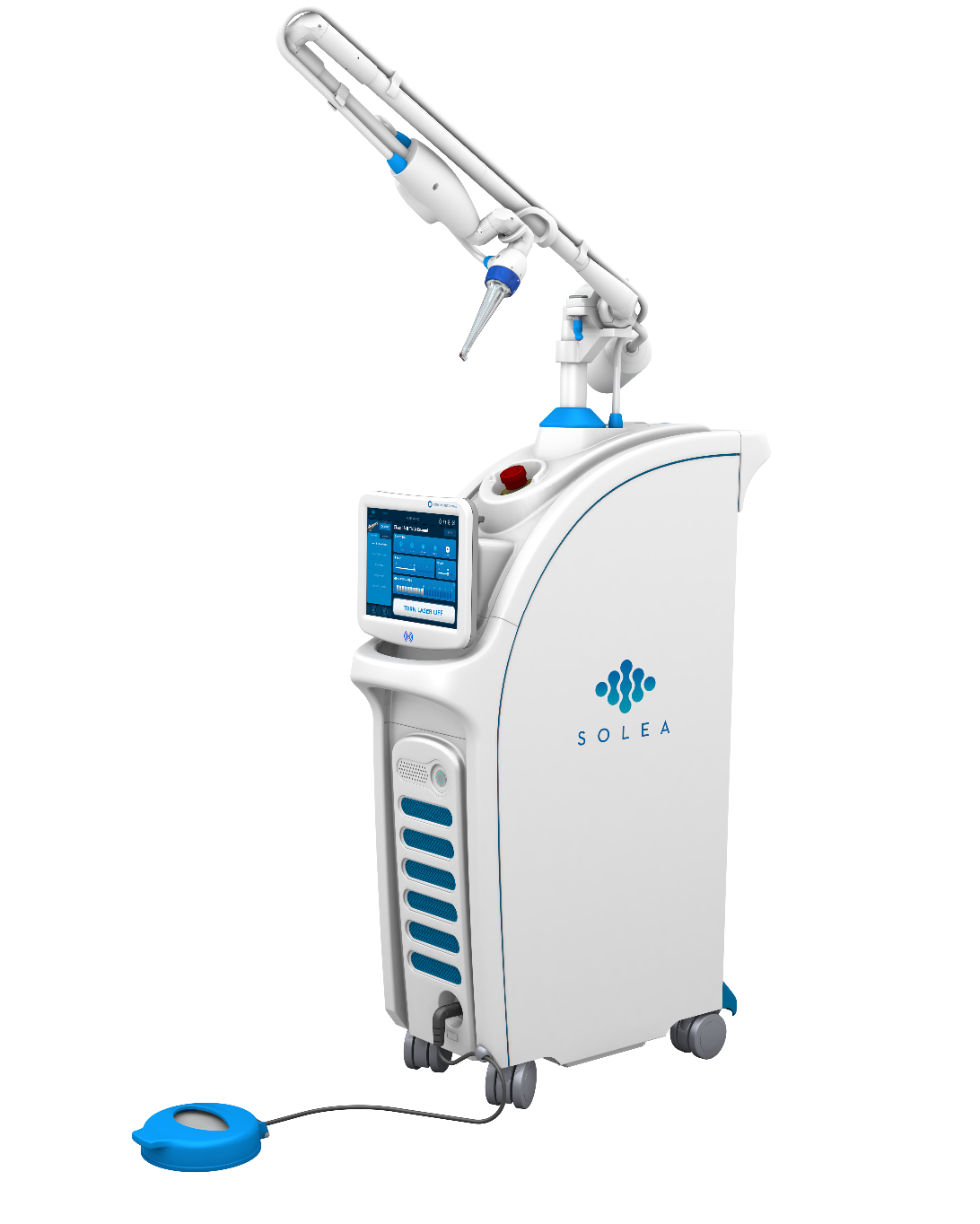
The Solea is a 9.3-micron CO2 laser system designed, manufactured, and supported by Convergent Dental, Inc., a privately held dental technology company headquartered in Natick, Massachusetts. The device first received FDA clearance for hard tissue ablation in 2013, making it the first CO2 laser ever cleared for cutting tooth structure. Additional clearances for soft tissue and osseous (bone) tissue followed in 2015. No other CO2 dental laser currently holds all three clearances.
Conventional CO2 medical lasers operate at 10.6 microns. The Solea instead emits at 9.3 microns, a wavelength specifically chosen because it closely matches the peak absorption of hydroxyapatite, the primary mineral component of tooth enamel. This near-peak absorption is what allows the Solea to vaporize enamel at speeds that erbium-based lasers cannot match, rather than slowly chipping it away. The same wavelength is also strongly absorbed by water, the dominant chromophore in soft tissue, which gives a single device the ability to transition seamlessly between hard and soft tissue work.
Convergent Dental classifies the Solea as the first Computer Aided Preparation (CAP) system in dentistry. The device relies on galvanometers, computer-controlled motors that direct mirrors inside the handpiece, to manipulate the laser beam up to 10,000 times per second. These mirrors generate scanning patterns automatically optimized for the tissue type selected on the touchscreen. This level of software-driven precision separates the Solea from earlier dental lasers that depended more heavily on manual technique and required frequent operator adjustments during procedures.
Technical Specifications
The following table summarizes the core specifications dental professionals should evaluate when comparing the Solea against alternative systems.
Specification | Details |
Laser type | CO2 (carbon dioxide) isotopic laser |
Wavelength | 9.3 µm (microns) |
Classification | Class 4 (IV) laser product |
Aiming beam | 520–535 nm diode, <5 mW |
Beam delivery | Galvo-directed articulated arm with ergonomic handpiece |
Spot size | Variable, computer-selectable per procedure |
Control system | Computer-controlled galvanometers, touchscreen interface |
Foot pedal | Variable-speed, pressure-proportional cutting |
Cooling | Integrated air and water spray |
Tissue indications | Enamel, dentin, gingiva, osseous tissue |
FDA clearances | Hard tissue (2013), soft tissue, osseous tissue (2015) |
Manufacturer | Convergent Dental, Inc., Natick, MA |
How the Solea Dental Laser Works
Understanding the engineering behind the Solea clarifies why the device performs differently from traditional handpieces and earlier-generation dental lasers. Three core innovations define the platform.
The 9.3-Micron Wavelength Advantage
Hydroxyapatite constitutes approximately 97% of enamel and 70% of dentin by weight. At 9.3 microns, the laser energy is absorbed by this mineral with exceptional efficiency, causing rapid vaporization of tooth structure. Research cited in Convergent Dental’s FDA clearance documentation suggests that the 9.3-micron wavelength delivers cutting speeds approximately six times faster than erbium lasers on hard tissue. The same wavelength also exhibits strong absorption in water, the primary energy-absorbing molecule in soft tissue. This dual absorption characteristic is the foundation of the Solea’s ability to work across all oral tissue types with a single device and without switching settings manually.
Galvanometer-Directed Beam Control
Inside the handpiece, computer-controlled galvanometers direct mirrors that redirect the laser beam thousands of times per second. The system generates scanning patterns automatically optimized for the tissue type displayed on the touchscreen. When the interface is set to enamel, the beam pattern differs from the pattern generated for soft tissue or bone. This automated optimization removes much of the technique sensitivity that made earlier dental lasers frustrating for practitioners who were accustomed to the predictable tactile feedback of a conventional bur.
Variable-Speed Foot Pedal
The Solea’s foot pedal operates on a pressure-proportional principle: the harder the operator presses, the faster the laser cuts. This design allows intuitive feathering into and out of preparations, and it enables seamless transitions between enamel, dentin, and soft tissue simply through changes in pedal pressure. Practitioners who have adopted the Solea consistently describe this feature as the element that makes the transition from drill to laser feel natural, reducing the adoption barrier significantly compared to competing systems.
Anesthesia-Free Performance
The Solea’s most clinically significant attribute is its ability to deliver reliably anesthesia-free procedures for the majority of patients. Convergent Dental attributes this to the gate control theory of pain, which proposes that non-painful sensory input can close neural gates to painful stimulation. The laser vaporizes tissue at up to 1,000 pulses per second, which is believed to overwhelm pain receptors before pain signals reach the brain. Convergent Dental’s 2022 annual survey of Solea users reports that approximately 95% of hard and soft tissue procedures are completed without local anesthetic and without patient discomfort. While individual results vary, this statistic has been consistent across multiple survey years and thousands of documented procedures.
Clinical Applications of the Solea All-Tissue Laser
The breadth of procedures the Solea supports is one of its strongest selling points. FDA clearance for hard, soft, and osseous tissue allows the device to serve as a primary clinical instrument across multiple disciplines. The following sections outline the major categories. For a broader look at how modern dental equipment fits into practice operations, Dental Reviewed’s equipment guide provides additional context.
Restorative Dentistry
Cavity preparation is the entry point for most Solea users. The laser removes carious tooth structure with precision, typically preserving more healthy enamel and dentin than a conventional bur. Because the majority of preparations can be completed without anesthesia, the practitioner can treat a cavity the same day it is discovered during a hygiene visit, eliminating the need to schedule a return appointment. This unlocks same-day, multi-quadrant dentistry, meaning cavities across several areas of the mouth can be addressed in a single sitting.
The efficiency implications are substantial. Instead of administering local anesthetic and waiting five to ten minutes for onset, the operator can begin preparation almost immediately after diagnosis. Across a full clinical day, this recaptured time can translate into one or more additional patients. For practices with high restorative case volume, this operational improvement alone contributes meaningfully to the device’s return on investment.
Soft Tissue Surgery
The Solea is FDA-cleared for incision, excision, vaporization, coagulation, and hemostasis of soft tissue in the oral cavity. Common procedures include gingivectomies, frenectomies (lingual and labial), fibroma removal, aphthous ulcer treatment, gingival recontouring, and operculectomies. The laser cauterizes tissue as it cuts, producing a blood-free, suture-free surgical field in most cases and significantly reducing both postoperative discomfort and healing time compared to scalpel-based techniques.
For general practitioners who previously referred soft tissue cases to periodontists or oral surgeons, the Solea opens a new category of in-house procedures. Crown lengthening, cosmetic tissue recontouring, and management of gingival overgrowth can all be performed chairside with minimal setup. The financial impact of retaining these procedures rather than referring them out can be substantial over the course of a year, particularly in areas where specialist wait times are long and patient follow-through on referrals is inconsistent.
Osseous (Bone) Tissue Procedures
Following its 2015 FDA clearance for osseous tissue, the Solea expanded into bone cutting, shaving, recontouring, and resection. Procedures such as flapless crown lengthening, bone recontouring around implant sites, and periodontal osseous surgery become accessible to general dentists who might otherwise refer these cases. Practitioners report less bleeding, faster healing, and reduced patient discomfort compared to conventional rotary instruments on bone.
Periodontal Therapy: Solea Perioguide
The Solea Perioguide application provides a guided, structured approach to laser-assisted periodontal treatment. The protocol enables suture-free periodontal therapy with minimal postoperative discomfort, giving general practitioners a defined pathway into a clinical area traditionally dominated by periodontists.
Snoring Treatment: Solea Sleep
Solea Sleep is a non-surgical application that uses ultra-low laser energy to tighten and stiffen collagen fibers in the soft palate. Tightening the tissue reduces the vibrations that cause palatal snoring, which accounts for approximately 80% of snoring cases. Each session takes five to fifteen minutes, requires no anesthesia or incisions, and allows the patient to return to normal activities immediately. Results typically last 12 to 15 months, after which an annual maintenance session is recommended. Solea Sleep is not a treatment for obstructive sleep apnea (OSA), though it may serve as a complement to other OSA therapies.
This application represents a meaningful revenue opportunity. Snoring affects roughly 67% of adults, and most dental practices do not currently offer any treatment for it. Practices that add Solea Sleep gain a new patient acquisition channel that reaches people who may not otherwise visit a dental office.
Caries Prevention: Solea Protect
Solea Protect leverages the 9.3-micron wavelength to inhibit mineral loss and strengthen enamel against acid attack. Studies referenced by Convergent Dental indicate that combining Solea Protect with fluoride reduces mineral loss up to six times more than fluoride alone. This preventive application can benefit nearly every patient, especially those identified as high-risk for caries development.
Pediatric Dentistry
The Solea is particularly well-suited for pediatric patients. Eliminating needles, drills, and the associated noise and vibration addresses the primary sources of dental anxiety in children. Dr. Jeffrey Rohde, whose Santa Barbara, California, practice was among the first to adopt the device, has reported not needing to administer local anesthetic to a child for a traditional filling in over ten years of Solea use. Several pediatric practices now use the Solea exclusively for routine restorative procedures.
The long-term benefit extends beyond a single comfortable visit. Children who experience pain-free, needle-free dental care from a young age develop a fundamentally different relationship with the dental office. Instead of associating treatment with fear and discomfort, they learn to view routine visits as quick and uneventful. For practices serving a significant pediatric population, this shift in perception becomes a powerful differentiator and a consistent source of parent referrals.
Additional Supported Procedures
The Solea is also used for implant-related soft and hard tissue management, cosmetic tissue recontouring, tethered oral tissue release (tongue-tie and lip-tie), and removal of amalgam and composite restorations. This breadth of application means the device can be deployed for nearly every patient across nearly every clinical day.
Solea vs. Competing Dental Laser Systems
Practitioners evaluating the Solea will inevitably compare it against other prominent dental laser systems. The following table highlights the key differences among leading all-tissue or multi-tissue platforms.
Feature | Solea (Convergent) | WaterLase (Biolase) | Fotona LightWalker |
Laser type | CO2 (9.3 µm) | Er,Cr:YSGG (2.78 µm) | Er:YAG + Nd:YAG |
Hard tissue | Yes (vaporizes enamel) | Yes (hydrophotonic) | Yes (Er:YAG) |
Soft tissue | Yes | Yes | Yes (Nd:YAG) |
Bone tissue | Yes (FDA-cleared) | Yes | Yes |
Anesthesia-free rate | ~95% reported | Variable | Variable |
Snoring treatment | Solea Sleep | Not available | NightLase |
Caries prevention | Solea Protect | Not available | Not available |
Learning curve | Short (single day) | Moderate | Moderate to steep |
The Solea’s primary competitive advantage lies in the combination of its 9.3-micron wavelength optimized for both hydroxyapatite and water, its computer-aided beam delivery, and its consistently reported anesthesia-free performance. While the WaterLase and Fotona LightWalker each offer distinct strengths, no other device currently matches the Solea’s all-in-one profile with the same reported level of anesthesia-free reliability on hard tissue.
Return on Investment: Does the Solea Pay for Itself?
Financial justification is a critical part of any major equipment purchase. The Solea commands a premium price, but the return-on-investment case rests on several measurable factors. For practices developing a dental practice business plan that includes laser integration, these numbers should inform the financial projections.
Recovered chair time: eliminating anesthesia for the majority of procedures saves five to ten minutes per appointment, potentially adding one or more patients to a full clinical day
Multi-quadrant efficiency: treating multiple quadrants in a single visit reduces total appointment count and lowers the risk of patient attrition across multi-visit plans
Retained soft tissue revenue: gingivectomies, frenectomies, and crown lengthenings performed chairside generate revenue that would otherwise leave the practice through specialist referrals
New revenue from Solea Sleep: with snoring affecting roughly 67% of adults, the addressable market is substantial and largely untapped in general dentistry
Patient experience and growth: pain-free, needle-free visits drive higher case acceptance, stronger retention, and more referrals, with multiple practitioners reporting annual practice growth exceeding 20% after full integration
Training and Manufacturer Support
Convergent Dental’s training program is a frequently praised aspect of the Solea experience. The company provides comprehensive onboarding that includes hands-on clinical instruction, typically conducted at the practice location, along with didactic sessions covering the science behind the device, workflow integration strategies, and patient communication techniques. Beyond initial training, Convergent Dental maintains an active support community of Solea practitioners, offers continuing education programs, and provides a certified Solea trainer designation for dentists who want to deepen their expertise. For practices evaluating the broader equipment landscape alongside the Solea, Dental Reviewed’s equipment reviews offer independent comparisons across multiple categories.
Bottom Line
The Solea All-Tissue Dental Laser holds a unique position in the dental laser landscape. As the only CO2 laser with FDA clearance for hard, soft, and osseous tissue, and with a 9.3-micron wavelength purpose-built for both hydroxyapatite and water absorption, it delivers a combination of speed, precision, and patient comfort that no competing system currently matches.
For practices that treat a high volume of restorative cases, serve a pediatric population, or want to expand into soft tissue, periodontal, and airway-related procedures without specialist referrals, the value proposition is strong. The addition of Solea Sleep and Solea Protect further differentiates the device from every alternative on the market. Practices evaluating how the Solea fits alongside other essential dental equipment decisions will find its clinical breadth difficult to match.
The primary factors that should give a practitioner pause are the significant upfront cost, the need for full workflow integration to realize the return on investment, and the reality that the laser, while extraordinarily versatile, does not replace every instrument in the operatory. Requesting a live demonstration, ideally on extracted teeth or at a live-patient event at a dental meeting, is strongly recommended before committing to the purchase.
For the right practice and the right level of commitment, the evidence from more than a decade of clinical use points overwhelmingly in one direction: the Solea changes how dentistry is practiced, and practitioners who adopt it rarely look back.
Verdict
<p>The Solea All-Tissue Dental Laser represents a genuine advancement in how routine and advanced dental procedures can be delivered. The device’s ability to perform reliably anesthesia-free hard tissue preparations is validated consistently across practitioner surveys, with Convergent Dental’s data showing approximately 95% of procedures completed without local anesthetic. For practices with significant restorative and pediatric volume, the efficiency gains from eliminating anesthesia wait times, enabling same-day multi-quadrant treatment, and reducing patient anxiety are both substantial and measurable.</p><p>Soft tissue capabilities are equally strong. Blood-free, suture-free gingivectomies, frenectomies, and crown lengthenings performed chairside expand the range of services a general practice can offer without referral. Solea Sleep and Solea Protect extend the value proposition into territory that no competing laser system currently addresses.</p><p>Realizing the full return on investment, however, requires a genuine commitment to workflow integration. The Solea needs to become a daily-use clinical instrument, not a device reserved for occasional cases. Practices that deploy it across every qualifying procedure will see the cumulative impact on efficiency, patient satisfaction, and revenue growth. For those willing to make that commitment, the consensus among long-term users is unambiguous: the Solea has changed how they practice, and they would not return to conventional-only workflows.</p>
Frequently Asked Questions
Is the Solea laser safe for patients of all ages?
The Solea is FDA-cleared and has an established safety profile for patients from infants through seniors. It is especially popular in pediatric practices because it eliminates needles, drills, and noise. The laser is broadly suitable across age groups and medical backgrounds, including patients with pacemakers or orthodontic appliances, though practitioners should evaluate each patient individually.
How many procedures can realistically be completed without anesthesia?
Convergent Dental’s practitioner surveys report that approximately 95% of hard and soft tissue procedures are completed without local anesthetic and without patient discomfort. The anesthesia-free rate varies with the depth and complexity of the preparation, the patient’s individual pain threshold, and the operator’s technique. Having local anesthetic available as a backup is always recommended.
What is the learning curve for the Solea?
The Solea is widely considered to have one of the shortest learning curves among dental lasers. Convergent Dental states the device can be mastered in a single day of training, thanks to its intuitive touchscreen, variable-speed foot pedal, and computer-controlled beam delivery. Most practitioners report feeling comfortable within the first few weeks of consistent use, though full confidence with complex preparations may take somewhat longer.
Does dental insurance cover procedures performed with the Solea?
Standard restorative and soft tissue procedures performed with the Solea are typically covered by dental insurance at the same rates as identical procedures performed with conventional instruments. The method of tissue removal does not generally change the billing code. Some newer applications such as Solea Sleep may not have established insurance reimbursement, and practices should verify coverage with individual payers before offering these services.
How does the Solea compare to diode lasers?
Diode lasers are soft-tissue-only devices that operate at lower power levels and cannot cut hard tissue. They are significantly less expensive than the Solea but have a correspondingly narrower range of clinical applications. Practices that only need soft tissue capabilities may find a diode laser sufficient. Those seeking a true all-tissue solution that also serves as the primary restorative instrument will find the Solea far more comprehensive.
Can the Solea be used for root canal treatment?
The Solea is not indicated for endodontic therapy. While the laser excels at caries removal, cavity preparation, and a broad range of soft and osseous tissue procedures, the narrow confines of root canal anatomy require specialized endodontic instruments. The Solea should be viewed as a complement to the endodontic armamentarium, not a replacement for it.
What does the Solea cost?
The exact price of a new Solea unit varies based on configuration, financing terms, and promotional offers. New units represent a premium capital investment. Pre-owned units are available through resale channels at lower price points. Practitioners interested in current pricing should request a direct quote from Convergent Dental or their Patterson Dental representative. For guidance on evaluating used dental equipment purchases, Dental Reviewed’s buying guide covers the due diligence process.
What is Solea Sleep, and is it a treatment for sleep apnea?
Solea Sleep is a non-surgical application that uses ultra-low laser energy to tighten collagen in the soft palate, reducing the vibrations that cause palatal snoring. Treatment is delivered in one or two sessions of five to fifteen minutes each. Solea Sleep is not a treatment for obstructive sleep apnea (OSA), a condition involving actual airway obstruction and reduced blood oxygenation. However, it may complement OSA therapies. Results typically last 12 to 15 months, and annual retreatment is recommended.
Does the Solea require special operatory modifications?
The Solea does not typically require significant modifications beyond adequate floor space and appropriate electrical supply. As a Class IV laser, the practice must follow standard laser safety protocols, including protective eyewear for the team and the patient, laser warning signage, and designation of a laser safety officer. For practices setting up a new clinical space, the new dental practice checklist from Dental Reviewed covers equipment planning comprehensively.
What happens if the laser needs service or repair?
Convergent Dental provides technical support and maintenance services for the Solea. Periodic calibration and potential component replacement are part of the total cost of ownership. The manufacturer’s support infrastructure is generally well-regarded by practitioners, though response times may vary by region. Practices should factor ongoing service costs into their overall purchasing analysis.