Rating: 4.3/5
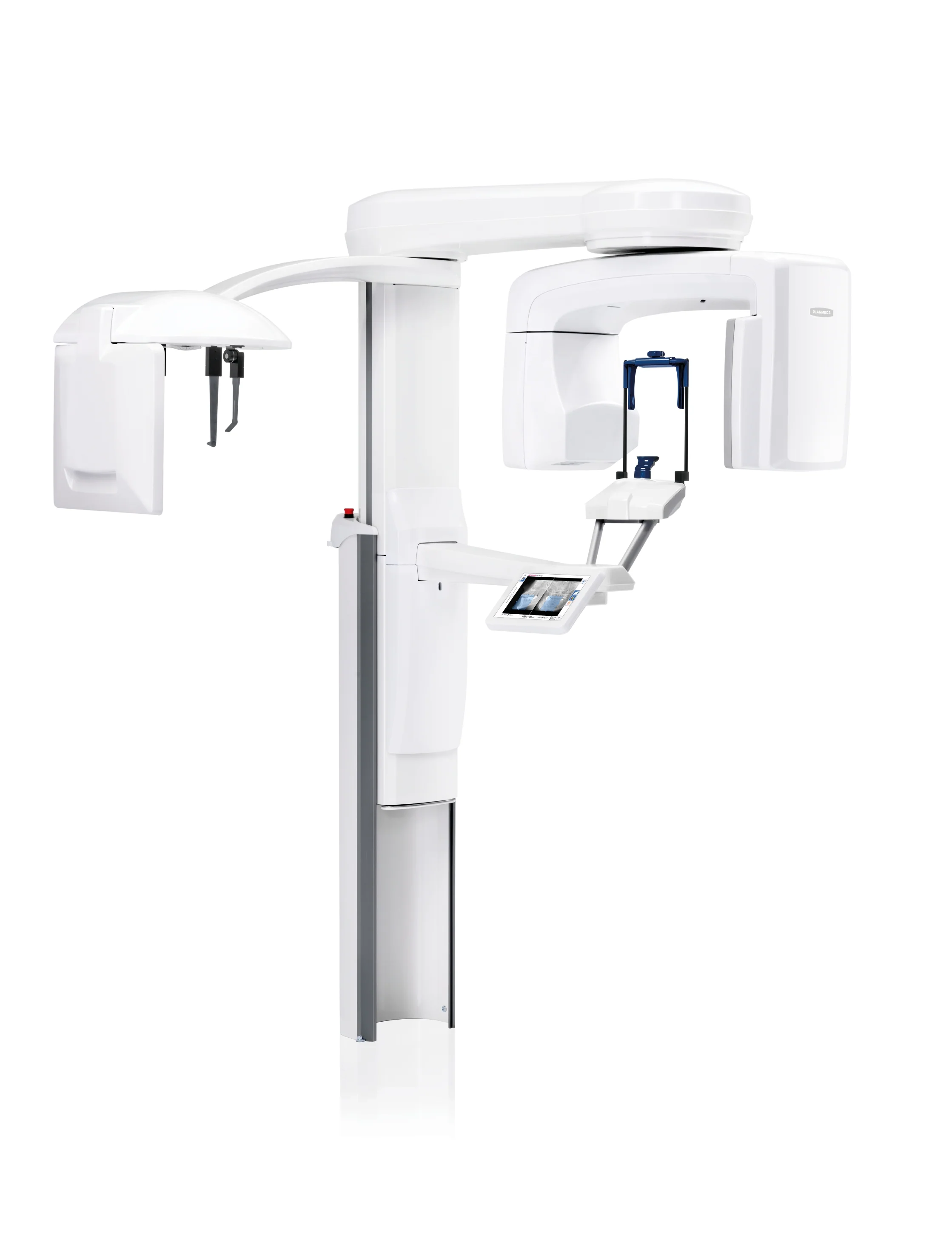
Planmeca Viso G7 Review: Ultimate Full-Face CBCT for Modern Dentistry
Why Viso G7 Matters in Digital DentistryThree-dimensional imaging has transformed how clinicians assess pathology, plan implants, analyze airways, and coordinate multidisciplinary...
Reviewed by Marcus Hale
Pros
- Massive 30 × 30 cm FOV – captures entire maxillofacial and full-face volumes in a single scan.
- Advanced motion-correction (CALM) – reduces retakes and motion artifacts.
- ProFace 3D surface imaging – adds soft-tissue context to CBCT data.
- Ultra-Low Dose options – balanced radiation protocols for different indications.
- Live multi-camera positioning – improves scan setup efficiency.
- Flexible workflows – supports implants, airway, TMJ, pathology, surgical planning.
- Integration and export – smooth DICOM and software compatibility.
Cons
- High upfront and operational cost – premium pricing and service contracts.
- Large physical footprint – requires dedicated imaging rooms and shielding.
- Training and governance needs – advanced imaging demands competency and oversight.
- Incidental findings risk – large datasets may reveal unrelated pathology requiring referral.
- Motion correction is not absolute – may not rescue very large or rapid patient movements.
Why Viso G7 Matters in Digital Dentistry
Three-dimensional imaging has transformed how clinicians assess pathology, plan implants, analyze airways, and coordinate multidisciplinary treatment. As CBCT technology advances, the emphasis has shifted from simply acquiring volumes to capturing true anatomical context with minimal radiation and maximum diagnostic utility.
Planmeca Viso G7 represents the apex of this evolution within the Planmeca family. It combines a large flat-panel sensor, robust motion-correction algorithms, and flexible imaging volumes – all engineered to deliver comprehensive maxillofacial coverage in a single scan. For practices ready to leverage sophisticated imaging to elevate clinical outcomes, the Viso G7 offers capabilities that extend far beyond conventional devices.
This review will guide clinicians and practice leaders through what the Viso G7 does, how it performs across workflows, and whether it justifies its investment for advanced diagnostic imaging.
What Planmeca Viso G7 Delivers
At the heart of the Viso G7 is a 25 × 30 cm flat-panel detector that supports volumetric captures from small localized regions to broad maxillofacial and full-face volumes. This is one of the largest CBCT detectors currently available in dental imaging. The practical benefits include:
Single-scan full face and jaw imaging
Elimination of stitching artifacts
Seamless integration with intraoral and facial surface scans
Consistent geometric fidelity across large volumes
The ability to capture a 30 × 30 cm volume in one rotation reduces acquisition time and minimizes the cumulative radiation burden compared to multiple smaller scans stitched together.
Live Patient Positioning with Multi-Camera Views
Planmeca integrates four live cameras into the CBCT gantry that feed real-time visual positioning to the operator. This live field-of-view preview improves scan setup precision and reduces guesswork – a major advantage for larger volumes where alignment is critical.
The rear head support enhances patient comfort, stabilizes posture, and keeps the facial soft tissue visible for 3D surface capture.
Advanced Image Processing and Motion Correction
The Viso G7’s software suite includes:
Planmeca CALM™ – a proprietary motion-correction algorithm that reduces motion artifacts
Planmeca AINO™ and ARA™ – noise reduction and aliasing artifacts minimization
Ultra Low Dose (ULD) imaging – decreases effective dose without compromising necessary diagnostic detail
This combination promotes sharper reconstructions, reduced retakes, and improved diagnostic confidence.
ProFace 3D Facial Surface Imaging
A distinctive element is ProFace – integrated 3D facial photography that can be registered with the CBCT volume. This multimodal capability enables:
Facial soft-tissue correlation to skeletal anatomy
Boosted communication with patients and specialists
A more complete “virtual patient” view
For aesthetic planning, orthognathic simulation, and surgical consultations, coupling facial surface data with bone anatomy adds clarity that 3D volume alone cannot deliver.
Image Quality and Diagnostic Capabilities
At its core, the value of a CBCT system lies in what it reveals clinically.
The Viso G7 provides high spatial resolution, which enhances the clinician’s ability to:
Visualize alveolar bone topography for implant planning
Detect fine osseous details
Assess cortical borders and trabecular architecture
Contrast across bone, soft tissue, and air spaces is clean, supporting diagnosis across a broad range of indications – from simple restorative imaging to advanced surgical mapping.
Motion Correction with CALM™
Patient movement is a significant source of distortion in 3D imaging, especially with larger fields or pediatric populations. The CALM algorithm identifies motion blurring in raw projection data and adjusts reconstruction to compensate.
This feature has practical utility in:
Reducing repeat scans
Reducing radiation exposure
Improving diagnostic yield on first capture
Importantly, the algorithm is most effective with subtle motion – very large, abrupt movements may still challenge any motion correction implementation.
Ultra-Low Dose Protocols
The concept of “as low as diagnostically acceptable” radiation is foundational to modern radiology. The Viso G7’s ULD settings balance patient safety and image utility:
Useful for screening applications
Effective for airway evaluation and initial screenings
Less so when micro-detail is required (e.g., fine root fractures)
Clinics should implement indication-specific protocols that match dose settings to diagnostic needs.
ProFace and Multi-Modal Imaging
Integrating facial surface data with 3D bone volumes is not merely aesthetic – it enhances diagnostic context. ProFace provides:
Soft-tissue envelope data
Support for consultative discussions
A bridge from radiographic imaging to patient understanding
When integrated with facial scans and intraoral scans, it can create a fully registered digital patient model for planning and education.
Clinical Workflows – Where Viso G7 Makes a Difference
The Planmeca Viso G7 is not simply a high-end CBCT unit defined by technical specifications; its true value emerges in daily clinical workflows where diagnostic accuracy, efficiency, and versatility directly influence treatment outcomes. Designed to support a wide spectrum of indications within a single imaging platform, the Viso G7 enables clinicians to move beyond fragmented referrals and limited imaging protocols. By offering large-volume CBCT, advanced motion correction, ultra-low-dose options, and seamless software integration, the system transforms complex diagnostic processes into streamlined, in-office workflows. From comprehensive airway assessment and full-arch implant planning to orthodontics, TMJ evaluation, and maxillofacial analysis, the Viso G7 supports a level of clinical decision-making that would otherwise require multiple imaging systems or external imaging centers.
Implant Planning and Guided Surgery
One of the highest-value applications of CBCT is precise implant planning. With the Viso G7:
Full-arch bone morphology can be assessed without stitching
Proximity to vital structures (nerves, sinuses) is visualized in 3D
Anatomical landmarks and soft-tissue contours inform prosthetic planning
When combined with surgical guide software, the large volume simplifies workflows for:
Full-arch guided implant surgery
Immediate placement planning
Complex ridge reconstructions
Airway Analysis and Sleep Medicine
Airway quantification from CBCT is increasingly used in screening and treatment planning for obstructive sleep apnea and other breathing disorders. The Viso G7’s expansive volume:
Captures nasal passages, oropharynx, and hypopharynx
Supports volumetric measurements and cross-sectional analysis
Permits retrospective review of airway morphology when indicated
Clinics offering airway evaluations may find this valuable for patient education and multidisciplinary referrals.
TMJ Assessment
Temporomandibular joint (TMJ) imaging benefits from broad volumetric views. The Viso G7 supports:
Condylar morphology evaluation
Joint spaces in 3D
Positional relationships relative to the cranial base
This can meaningfully improve diagnosis of degenerative or developmental TMJ conditions.
Facial Trauma and Pathology
For trauma cases or suspected pathology, the wide field minimizes the need for multiple capture zones. Full-face views:
Improve symmetry assessment
Capture complex fracture patterns
Support pre-operative planning in urgent scenarios
High-resolution datasets also assist in referral pathways to maxillofacial radiology or surgical teams.
Workflow Efficiency and Staff Adoption
Workflow efficiency and staff adoption are critical factors in determining the real-world value of any advanced imaging system, and the Planmeca Viso G7 is designed with both in mind. Beyond its imaging capabilities, the system streamlines day-to-day operations by simplifying patient positioning, minimizing retakes, and integrating seamlessly into existing clinical and digital workflows. Intuitive controls, guided field-of-view selection, and live camera-assisted positioning reduce chairside time and lower the learning curve for clinical staff. As a result, teams can adopt the technology quickly and confidently, ensuring consistent image quality while maintaining patient throughput. This balance between advanced functionality and practical usability allows the Viso G7 to enhance productivity without disrupting established practice routines.
Simplifying Setup with Live Positioning
Planmeca’s multi-camera alignment system decreases trial-and-error positioning. Technicians can:
View real-time previews
Adjust head position visually
Select target region confidently before scanning
This shortens chair time and reduces technician burden – particularly for larger volumes.
Integration with PACS and Planning Tools
Viso G7 exports standard DICOM, allowing seamless integration into:
PACS archives
Implant planning suites
CAD/CAM and surgical guide workflows
Consistent integration with external software suites streamlines referrals and advanced case planning.
Staff Training and Learning Curve
While the interface is modern and ergonomic, the broader capability set requires intentional staff training. Key competencies include:
Positioning for large field scans
Selecting the appropriate dose protocol
Interpreting 3D data reliably
Managing incidental findings
A structured onboarding plan helps prevent underutilization of the technology.
Implementation and Practice Considerations
Implementing a high-end CBCT system such as the Planmeca Viso G7 requires thoughtful planning beyond the initial purchase decision. Factors such as space requirements, network integration, staff training, radiation protocols, and long-term service support all play a role in how successfully the system is adopted into daily practice. The Viso G7 is designed to integrate smoothly into modern dental clinics, but its advanced capabilities also introduce new operational considerations that practices must address to fully realize its value. A well-planned implementation ensures not only optimal imaging performance, but also regulatory compliance, efficient workflows, and a strong return on investment over time.
Physical and Electrical Requirements
The Viso G7’s footprint and shielding requirements must be planned in advance. Key considerations include:
Dedicated imaging room with appropriate radiation shielding
Reliable power with surge protection
Wired or secure wireless networking
Space for patient and technician flow
Room layout, pathway access, and patient comfort should be evaluated before purchase.
IT and Data Management
Large 3D volumes require robust infrastructure:
High-capacity storage with backups
High-speed network access
Secure DICOM communication
Compliance with data retention and privacy regulations
Investments in IT ensure daily operations are smooth and secure.
Regulatory and Radiation Governance
CBCT imaging must comply with local radiation regulations. Clinics should establish:
Justification protocols for each scan
Dose optimization practices
Radiation safety policies
Staff radiation training and credentialing
Such governance ensures safe and defensible imaging practices.
Economic Impact and Return on Investment
Investing in a premium CBCT system like the Planmeca Viso G7 has financial implications that extend well beyond the initial equipment cost. The true economic impact is shaped by how effectively the system expands clinical services, reduces external referrals, improves diagnostic confidence, and enhances overall practice efficiency. When integrated strategically, the Viso G7 can become a revenue-generating asset rather than a cost center, supporting growth in implant dentistry, orthodontics, airway evaluation, and surgical planning. Evaluating return on investment therefore requires a broader view that considers increased case acceptance, improved treatment outcomes, workflow consolidation, and the long-term value of in-house advanced imaging.
Revenue Streams Enabled by Viso G7
Direct imaging revenue includes:
CBCT scanning fees
Surgical planning and guide fabrication
Airway evaluations
TMJ assessments
Trauma and pathology documentation
Indirect value arises from:
Higher case acceptance with clearer patient visualization
Shortened treatment timelines
Retaining referrals that would otherwise go out
Expense Categories
Implementation costs extend beyond purchase price:
Service contracts
Software modules
Staff training
Data storage
Shielding and room upgrades
A detailed cost-benefit analysis should consider these factors alongside projected clinical utilization.
Utilization Planning
The economic value of a high-end CBCT correlates strongly with utilization. Practices should forecast:
Monthly CBCT scans required to break even
Types of cases driving demand
Integration into daily workflows
Sensitivity analyses help set realistic expectations.
Governance and Clinical Responsibility
Introducing advanced CBCT technology such as the Planmeca Viso G7 also brings an increased level of professional responsibility. High-resolution, large–field-of-view imaging expands what can be visualized and diagnosed, which in turn elevates expectations around clinical interpretation, documentation, and patient communication. Proper governance is essential to ensure that imaging is used appropriately, findings are reviewed systematically, and incidental observations are managed according to accepted clinical standards. Establishing clear protocols for image acquisition, interpretation, reporting, and referral helps protect both patients and clinicians, while ensuring that the diagnostic power of the Viso G7 is applied ethically, consistently, and in line with regulatory and medico-legal requirements.
Interpreting Incidental Findings
Large CBCT volumes increase the likelihood of incidental pathology. Protocols should be in place for:
Referral to oral and maxillofacial radiologists
Documentation and follow-up
Communicating findings to patients
Documentation and Consent
Informed consent should cover:
Radiation dose discussion
Diagnostic alternatives
Risks and benefits
Standardized templates support compliance.
Continuing Education
Clinicians should pursue ongoing training in:
CBCT interpretation
Radiation safety
Advanced 3D workflows
This protects patients and enhances clinical outcomes.
Limitations and Practical Constraints
Size and Space Requirements
The Viso G7’s physical footprint is larger than compact small-volume units. Clinics with limited space may need careful planning or renovation.
Motion Correction is Helpful – Not Invincible
CALM reduces motion artifacts but does not eliminate all motion effects, especially abrupt or heavy movement.
Interpretation Skills Are Required
Large 3D volumes demand careful review. Clinics should have a reporting workflow and access to specialist reads when needed.
Dose Must Still Be Justified
Even with Ultra-Low-Dose modes, CBCT should only be used when the diagnostic question cannot be answered with lower-dose imaging.
Bottom Line
The Planmeca Viso G7 delivers one of the most comprehensive CBCT imaging solutions available for modern dental practices. Its expansive field of view, robust motion correction, integrated surface photography, and flexible imaging protocols make it a powerful platform for implant planning, airway analysis, TMJ assessment, trauma evaluation, and surgical diagnostics. When paired with appropriate practice planning, IT infrastructure, and governance, it elevates diagnostic capability and supports advanced workflow integration.
This is not a “basic CBCT.” It is a cornerstone investment for practices seeking to expand services, retain more referrals in-house, and deliver advanced, data-rich diagnostics that enhance both treatment planning and patient communication.
Verdict
For practices committed to advanced diagnostics and complex case workflows, the Planmeca Viso G7 is among the strongest CBCT platforms available. Its expansive field of view and deep data capture provide clinicians with a holistic anatomical perspective that 2D imaging or smaller CBCT volumes cannot match. The integrated motion compensation and ultra-low-dose options enhance practical utility without sacrificing safety or workflow speed. Clinics that consistently perform implant surgery, airway evaluations, orthognathic planning, or trauma work will find the clinical return significant. The economic case strengthens when CBCT imaging becomes central to case acceptance, patient communication, and interdisciplinary collaboration. This system is not simply a piece of equipment – it is a long-term diagnostic engine that, when properly implemented, elevates a practice’s capabilities, expands its service offerings, and deepens clinical insight. For general practices with limited CBCT needs, midsize field units may still be suitable. But for specialty, surgical, or multidisciplinary practices aiming to lead in advanced digital workflows, the Viso G7 stands out as an investment in precision, efficiency, and future-proof imaging.