Rating: 4.3/5
Is RelyX Resin Cement Worth It?
Choosing the right resin cement can feel like navigating a minefield. With dozens of products on the market, each promising superior bond strength and effortless cleanup, it is...
Reviewed by Mantas Petraitis
Pros
- True dual-mode versatility (self-adhesive and adhesive) in a single cement system
- Outstanding self-adhesive bond strength to zirconia without requiring a separate primer
- Novel initiator system delivers equivalent bond strength in both light-cure and self-cure modes
- 100% retention rate at 2-year clinical recall with zero debonds reported
- Virtually no post-operative sensitivity (99% of clinicians reported none in 3M's field evaluation)
- Self-sealing automix syringe with Micro Mixing Tips reduces cement waste by approximately 80%
- Gel-phase cleanup allows excess removal as a cohesive, peelable strip
- Colour-stable, fluorescent shades with dentin-like radiopacity for accurate radiographic assessment
- Scotchbond Universal Plus Adhesive serves as a single primer for all substrates
- Backed by 3M's extensive research infrastructure and over 20 years of RelyX product evolution
Cons
- Relatively short working time (~2:30 min) can challenge multi-unit bridge cementation
- Gel-phase cleanup requires practice to identify the optimal removal window
- Premium price point compared to simpler self-adhesive alternatives
- Limited to 4 shade options, which may be insufficient for demanding anterior veneer cases
- Excess cement becomes very difficult to remove once fully polymerized if the cleanup window is missed
- Requires careful temperature management, as warm environments significantly shorten working time
- Long-term clinical data (5+ years) for the Universal formulation is still accumulating
Choosing the right resin cement can feel like navigating a minefield. With dozens of products on the market, each promising superior bond strength and effortless cleanup, it is easy for clinicians to feel overwhelmed. The wrong choice often means debonded crowns, post-operative sensitivity complaints, and costly re-treatment that disrupts your schedule and your patient's trust.
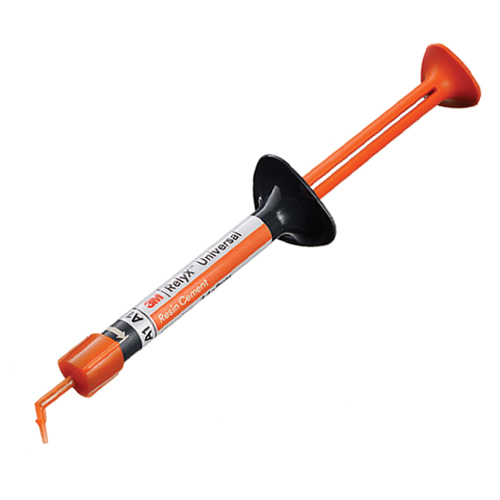
Among the many options available, RelyX cement from 3M has built a formidable reputation over more than two decades of clinical use. The latest generation, 3M RelyX Universal Resin Cement, launched as a dual-cure system designed to function as both a standalone self-adhesive cement and an adhesive cement when paired with 3M Scotchbond Universal Plus Adhesive. The manufacturer claims it covers virtually all cementation indications, from zirconia crowns to lithium disilicate veneers and fiber posts.
But does RelyX Universal cement actually deliver on those claims in everyday clinical practice? This article provides an honest, evidence-based evaluation of RelyX resin cement, including a detailed look at common problems clinicians encounter, how to solve them, step-by-step RelyX universal instructions, and how it stacks up against leading competitors. Whether you are considering switching to 3m RelyX or looking to optimize your current cementation protocol, this review will help you make an informed decision.
What Is 3M RelyX Universal Resin Cement?
Before diving into troubleshooting and clinical performance, it helps to understand what makes 3m RelyX Universal resin cement different from its predecessors and competing products on the market today.
Product Line Overview
The 3M RelyX product family has evolved significantly over the years. It began with RelyX Unicem, the pioneering self-adhesive resin cement introduced in 2002 that accumulated over 6,000 clinical restorations in its 10-year recall study. This was followed by RelyX Unicem 2 (an updated paste-paste formulation) and RelyX Ultimate (a dedicated adhesive resin cement). The current flagship, RelyX universal, represents the convergence of these product lines into a single system that handles both self-adhesive and adhesive cementation workflows.
Key Formulation and Chemistry
RelyX resin cement, in its universal formulation, features a dual-cure methacrylate-based chemistry with a novel initiator system. According to 3M's technical product profile, this initiator system ensures equivalent bond strength in both light-cure and self-cure modes, which is a significant advantage for deep preparations where light penetration is limited.
The cement contains methacrylate monomers with phosphoric acid functional groups that interact with tooth hydroxyapatite, enabling self-adhesive bonding to dentin and enamel without a separate primer. When higher bond strength is needed, pairing the cement with Scotchbond Universal Plus Adhesive adds MDP-based chemical adhesion to zirconia and metals, along with silane coupling for glass ceramics.
The system ships in a self-sealing automix syringe with Micro Mixing Tips, which 3M reports produces approximately 80% less cement waste per application compared to standard automix systems. Four fluorescent shade options (Translucent, A1, A3 Opaque, and B0.5) accommodate a range of clinical scenarios from thin veneers to opaque core masking.
Clinical Indications for RelyX Universal Cement
One of the primary selling points of RelyxX Universal cement is its broad range of approved indications. Understanding where this cement is designed to perform well and where it has limitations is essential for achieving predictable clinical outcomes.
Supported Restoration Types
RelyX resin cement is indicated for the permanent cementation of crowns (full-contour and layered), bridges, and fixed partial dentures, inlays and onlays, occlusal veneers and tabletops, traditional veneers (adhesive mode recommended), endodontic posts and screws, Maryland bridges, and inlay/onlay bridges.
Substrate Compatibility
The cement is compatible with virtually all modern restorative materials, including monolithic and layered zirconia, lithium disilicate (e.g., IPS e.max), feldspathic ceramics, porcelain-fused-to-metal (PFM) restorations, metal alloys (noble and base), resin-based composites and CAD/CAM polymers, and fiber-reinforced posts. According to 3M's pre-treatment recommendations, different substrates require different surface pre-treatment protocols, particularly when using the cement in adhesive mode with Scotchbond Universal Plus Adhesive.
However, the cement is not recommended for use with temporary or provisional restorations, as a direct filling material, or for cementation of orthodontic brackets. Clinicians should also exercise caution with extremely short or tapered preparations where mechanical retention is minimal, as self-adhesive bond strength alone may not provide sufficient retention in these cases.
RelyX Universal Instructions: Step-by-Step Cementation Protocol
Following the correct RelyX Universal instructions is critical for achieving predictable outcomes. Many of the common problems clinicians experience with this cement can be traced back to protocol deviations during these key steps. The following protocol is based on 3M's official step-by-step guide and supplemented with practical tips from clinical experience.
Step #1: Preparation and Isolation
Begin with a thorough cleanup of the prepared tooth. Remove all temporary cement residue using pumice or a cleaning paste on a rubber cup. Rinse thoroughly with water and lightly air dry. The tooth surface should appear slightly glossy, not desiccated. Avoid applying desensitizers, disinfectants, or astringents before cementation, as these residues can compromise the bonding mechanism and setting reaction.
Adequate moisture control is essential. Rubber dam isolation is ideal for anterior aesthetic cases. For posterior crowns, cotton roll isolation combined with high-volume evacuation is typically sufficient.
Step #2: Try-In and Shade Verification
Use 3M RelyX Try-In Pastes (available separately) to verify shade selection and restoration fit before cementation. The try-in pastes are color-matched to each cement shade. After try-in, clean the restoration intaglio surface thoroughly with phosphoric acid etch for 30 seconds, rinse, and dry to remove all try-in paste residue, saliva, and contaminants.
Step #3: Surface Treatment of the Restoration
Surface treatment varies depending on the restoration material. For zirconia restorations, sandblast the intaglio surface with 50 μm aluminum oxide at 1–2 bar pressure. If using adhesive mode, apply Scotchbond Universal Plus Adhesive as an MDP primer and air thin gently. For lithium disilicate and glass ceramics, etch with 5% hydrofluoric acid per the ceramic manufacturer's instructions (typically 20 seconds for lithium disilicate), rinse thoroughly, and apply Scotchbond Universal Plus Adhesive as a silane primer. For metal and PFM restorations, sandblast with 50 μm aluminum oxide. Apply Scotchbond Universal Plus Adhesive if using adhesive mode.
Step #4: Surface Treatment of the Tooth (Adhesive Mode)
If using RelyX Universal in adhesive mode for enhanced bond strength (recommended for veneers, short preparations, or minimal retention cases), apply Scotchbond Universal Plus Adhesive to the prepared tooth surface. The adhesive can be used in self-etch, selective-etch, or total-etch mode depending on clinical requirements. For most crown cementation, a self-etch or selective-enamel-etch approach is preferred to minimize post-operative sensitivity. Air thin the adhesive gently. Do not light cure the adhesive, as the dual-cure cement will initiate polymerization of the adhesive layer.
Step #5: Mixing and Application
Attach the Micro Mixing Tip to the 3m RelyX automix syringe. Discard the first small amount of cement to ensure a proper base-catalyst ratio. Apply cement directly to the intaglio surface of the restoration in a thin, even layer. For post cementation, use the elongation tip attachment for precise delivery into the root canal. Apply a moderate centric force to the syringe plunger without bending it.
Step #6: Seating and Excess Management
Seat the restoration with firm, steady finger pressure and maintain for approximately 10 seconds. Do not rock the restoration during seating. Tack cure the cement at each margin for 2 seconds to initiate the gel phase. This is the critical window for excess cleanup, as described in the RelyX Universal instructions. Use a scaler or explorer to peel away excess cement in its rubbery state. The gel-phase cleanup is one of the defining features of RelyX cement, as the excess forms a cohesive, peelable film rather than shattering into fragments.
Step #7: Final Light Curing and Finishing
After excess removal, light cure each surface for 20 seconds using an LED curing light with a minimum output of 1,000 mW/cm². For areas that cannot be reached with a curing light (deep subgingival margins, opaque restorations), the cement will complete polymerization through its self-cure mechanism within approximately 6 minutes from the start of mixing. Verify occlusion and adjust as needed. Floss interproximal contacts to remove any residual cement flash.
Common Problems With RelyX Cement and How to Solve Them
Even the best cementation system can produce frustrating results when technique variables are not controlled. The following are the most frequently reported problems with RelyX resin cement, along with their root causes and practical solutions that you can implement immediately.
Problem #1: Premature Setting and Short Working Time
Some clinicians report that RelyX universal begins to set before the restoration is fully seated, particularly during multi-unit bridge cementation. The dual-cure chemistry means the cement begins its self-cure reaction immediately upon mixing, and elevated ambient temperatures accelerate this process significantly.
Root cause is often the working time for RelyX Universal is approximately 2 minutes and 30 seconds from the start of mixing at room temperature (23°C). However, warm operatory environments, heated delivery syringes, or prolonged mixing can shorten this window dramatically. Each 10°C increase in temperature roughly halves the working time of methacrylate-based cements.
To fix this issue:
Store the syringe at room temperature (not in a warm cabinet or near the curing light)
Prepare all surfaces and have the restoration ready before dispensing cement
For multi-unit bridges, consider using a slightly cooled glass slab to extend working time
Work efficiently but deliberately, as seating should occur within 90 seconds of dispensing
Pro tip: If you frequently cement multi-unit cases, rehearse the seating path with a try-in paste first. This eliminates hesitation during actual cementation and helps you stay within the working time window.
Problem #2: Incomplete Curing in Deep or Opaque Preparations
Deep preparations with thick, opaque restorations can limit light transmission to the cement layer, raising concerns about incomplete polymerization and reduced bond strength.
This is often caused by light attenuation through restorative materials, which follows an exponential decay pattern. Dense zirconia copings, opaque porcelain layers, and thick walls can reduce light intensity at the cement interface to a fraction of the output at the tip. If insufficient light energy reaches the cement, full polymerization depends entirely on the self-cure component.
How to fix it:
Rely on the dual-cure mechanism for opaque and thick restorations, as RelyX Universal's novel initiator system provides equivalent bond strength in self-cure mode according to 3M's data
Extend light curing time to 40 seconds per surface for restorations thicker than 2 mm
Position the light guide as close as possible to the restoration surface, ensuring direct contact where feasible
Allow a full 6 minutes of self-cure time before any functional loading on opaque restorations
Pro tip: When cementing full-contour zirconia crowns, trust the self-cure chemistry. Light curing through dense zirconia is largely symbolic beyond the first 1–2 mm of material. The self-cure mechanism does the heavy lifting in these cases.
Problem #3: Difficulty Removing Excess Cement
Excess cement removal is one of the most discussed aspects of resin cementation. Some clinicians find the cleanup process with RelyX cement challenging, particularly when they miss the optimal cleanup window.
The root cause for this is that RelyX Universal is designed for gel-phase cleanup, meaning there is a specific window (approximately 2–3 minutes after tack curing) when the excess cement has a rubbery, peelable consistency. If you attempt cleanup too early (when the cement is still fluid), it will smear. If you wait too long (past complete polymerization), the hardened cement requires mechanical removal with rotary instruments, which risks damaging the restoration and surrounding tissues.
To fix this issue:
Tack cure each margin for exactly 2 seconds to initiate the gel phase
Wait 10–15 seconds after tack curing before attempting cleanup, as the cement needs a brief moment to reach its optimal rubbery state
Use a sharp explorer or scaler to engage the excess at the margin and peel it away in one continuous strip
Apply a glycerin-based oxygen barrier (such as Liquid Strip or DeOx) to subgingival margins before light curing to prevent an oxygen-inhibited layer that makes cleanup messier
Pro tip: Practise the gel-phase cleanup timing on an extracted tooth before your first clinical case. The tactile feedback of the cement transitioning from fluid to rubbery to hard is distinctive, and recognizing this transition makes cleanup significantly easier.
Problem #4: Post-Cementation Sensitivity
Although 3m Relyx universal resin cement is marketed as producing virtually no post-operative sensitivity, some clinicians and patients still report transient thermal sensitivity following cementation. Understanding the possible triggers helps prevent this issue.
This happens because post-cementation sensitivity with resin cements typically results from aggressive dentin etching (particularly with the total-etch technique on vital teeth), over-drying the preparation, polymerization shrinkage stress creating micro-gaps at the cement-dentin interface, or hydraulic pressure from forceful seating. A clinical study published in PMC found that self-adhesive resin cements generally produce less post-operative sensitivity than etch-and-rinse protocols.
How to fix it:
Use self-etch or selective-enamel-etch mode rather than total-etch when cementing on vital teeth
Avoid over-drying the preparation, as the dentin surface should retain a slightly moist, glossy appearance
Seat the restoration with steady pressure rather than abrupt, forceful seating
Consider a desensitizing treatment during provisionalization, but remove all residue before final cementation
Verify that the occlusion is correct, as premature contacts are a commonly overlooked cause of post-cementation sensitivity
Pro tip: In 3M's own field evaluation, 99% of dentists reported virtually no post-operative sensitivity with RelyX Universal. If you are consistently seeing sensitivity, examine your dentin preparation and etching technique before blaming the cement.
Problem #5: Debonding or Retention Failure
Retention failure is the most consequential complication associated with any resin cement. When a crown debonds, it creates a cascade of problems, including potential aspiration risk, patient dissatisfaction, and re-treatment costs. While Relyx Universal has demonstrated strong retention data, debonding can still occur when protocol deviations compromise the bonding interface.
The most common causes of retention failure with self-adhesive resin cements include contamination of the tooth surface (saliva, blood, temporary cement residue), inadequate surface treatment of the restoration intaglio (especially with zirconia), incompatible surface treatments or primers, and extremely short or overly tapered preparations where chemical bond strength alone is insufficient.
How to fix it:
Clean the preparation meticulously with pumice, as residual temporary cement is the most common contaminant
Sandblast zirconia restorations with 50 μm aluminum oxide before cementation to create micromechanical retention
Use Scotchbond Universal Plus Adhesive (adhesive mode) for short preparations, tapered preparations, or any case where you want maximum retention
Never use hydrogen peroxide-based disinfectants on the preparation immediately before cementation, as residual peroxide compromises the initiator system
Problem #6: Shade Mismatch or Discolouration Over Time
Aesthetic concerns become particularly relevant when cementing translucent ceramics such as thin veneers or lithium disilicate restorations, where the cement layer can influence the final shade.
Shade mismatch can result from selecting the wrong cement shade without proper try-in verification, failure to account for the cement's opacity when planning for translucent restorations, or age-related discolouration in amine-containing dual-cure formulations. RelyX Universal uses a novel initiator system designed to minimize yellowing, but no dual-cure cement is entirely immune to long-term colour shifts.
How to fix it:
Always use try-in pastes before committing to a shade, especially for anterior cases
Choose the Translucent shade for thin veneers and the A3 Opaque shade only when intentional core masking is needed
Communicate with your laboratory about the planned cement shade so they can account for it in the final layering
For maximum colour stability in the aesthetic zone, consider a light-cure-only veneer cement rather than a dual-cure formulation
Pro tip: The Dental Advisor's 2-year recall noted excellent colour stability with no shade shift or greying over time. For most clinical situations, the colour stability of RelyX Universal is reliable, but extremely demanding veneer cases may still benefit from a dedicated veneer cement.
Clinical Evidence: How Does RelyX Resin Cement Perform?
Marketing claims are only valuable when supported by independent clinical data. Here is what the evidence says about Relyx resin cement performance across key clinical metrics.
Bond Strength Data
A comprehensive in vitro study published in the Journal of Esthetic and Restorative Dentistry (Rohr et al., 2022) compared RelyX Universal (RUV) directly against Panavia V5 (PV5) across multiple substrates. When used with Scotchbond Universal Plus Adhesive as a primer, RelyX Universal achieved the highest shear bond strength to dentin at 18.2 ± 3.3 MPa, which was statistically comparable to Panavia V5 with its dedicated tooth primer (18.0 ± 4.2 MPa). RelyX Universal demonstrated superior bond strength to most restorative material substrates compared to Panavia V5.
In the self-adhesive mode, 3M's scientific facts document reports that RelyX Universal achieved zirconia bond strengths equivalent to adhesive resin cements using dedicated zirconia primers, without requiring any primer application. This simplified protocol reduces the risk of technique-related errors during cementation.
Long-Term Clinical Survival
The Dental Advisor's 2-year retrospective report (2024) evaluated 636 restorations cemented with RelyX Universal Resin Cement, with 452 restorations available for one- to two-year recall. The results were notably strong: 100% retention rate with zero debonds over two years, excellent colour stability with no shade shift or greying, and excellent resistance to marginal staining. The restorations included crowns, veneers, implant crowns, bridges, and fiber posts, with the majority being lithium disilicate and zirconia.
The predecessor product, RelyX Unicem, accumulated a 10-year clinical track record with a 98% clinical rating from The Dental Advisor, with post-operative sensitivity occurring in only 1.1% of over 6,000 cemented restorations. While the Universal formulation is newer and lacks equivalent long-term data, the predecessor's track record provides a strong foundation of confidence.
Comparative Study Findings
In the Rohr et al. study comparing RelyX Universal with Panavia V5, the self-adhesive universal cement performed comparably or superiorly to the dedicated adhesive cement system on most substrates. Panavia V5 showed a statistically significant advantage only on lithium disilicate (10.7 ± 3.3 MPa vs. lower values for RelyX Universal on this specific substrate), while RelyX Universal demonstrated stronger bonding to other restorative materials. A separate study by Małysa et al. (2020) found that for zirconia cemented to dentin, RelyX U200 (a predecessor) outperformed other self-adhesive cements and achieved the highest bond strength among self-adhesive options tested.
RelyX vs Competitors: How Does It Compare?
No cement exists in a vacuum. Understanding how Relyx universal cement compares to its main competitors helps you decide whether it is the right fit for your practice. Here is a practical comparison based on published data and clinical experience.
RelyX Universal vs Panavia V5 (Kuraray)
Panavia V5 is a dedicated adhesive resin cement that requires a separate tooth primer (Panavia V5 Tooth Primer) and ceramic primer (Clearfil Ceramic Primer Plus). It offers excellent bond strength to dentin in self-cure mode and strong colour stability due to its amine-free formulation. In published comparative data from The Dental Advisor, Panavia V5 produced higher bond strength to dentin than several competitors. However, Panavia V5 lacks a self-adhesive mode, meaning it always requires a separate primer application. RelyX Universal's ability to function in both self-adhesive and adhesive modes gives it greater workflow flexibility, particularly for routine crown cementation, where the simplified self-adhesive protocol saves time.
RelyX Universal vs Multilink Automix (Ivoclar Vivadent)
Multilink Automix is a well-established adhesive resin cement that requires its own primer system (Multilink Primer A/B). It offers reliable bond strength and has a solid clinical track record. The primer requires separate mixing and application, adding steps to the workflow. Multilink Automix does not offer a self-adhesive mode. RelyX Universal's key advantages over Multilink include the simplified protocol options (self-adhesive mode for routine cases), the Micro Mixing Tip system with reduced waste, and the single-primer solution through Scotchbond Universal Plus Adhesive when adhesive mode is needed.
RelyX Universal vs Variolink Esthetic (Ivoclar Vivadent)
Variolink Esthetic is primarily positioned as an aesthetic cement system for veneers and anterior restorations. It offers an extensive shade range and excellent colour stability. It requires Adhese Universal or Monobond Plus as a primer system. For purely aesthetic veneer cementation, Variolink Esthetic offers more shade options and a light-cure-only variant that provides unlimited working time. RelyX Universal is the more versatile option for a practice that wants a single cement system for all indication types, from anterior veneers to posterior zirconia crowns, rather than maintaining separate cement inventories.
Feature | RelyX Universal | Panavia V5 | Multilink Automix | Variolink Esthetic |
Self-adhesive mode | Yes | No | No | No |
Adhesive mode | Yes | Yes (required) | Yes (required) | Yes (required) |
Cure type | Dual-cure | Dual-cure | Dual-cure | Dual/Light-cure |
Primer system | Single (SBU+) | Two separate | Mixed A/B | Monobond Plus |
Working time | ~2:30 min | ~3:00 min | ~5:00 min | Unlimited (LC) |
Shade options | 4 shades | 5 shades | 3 shades | 5+ shades |
Gel-phase cleanup | Yes | Yes | Yes | Yes |
Bottom Line
After reviewing the clinical evidence, examining real-world troubleshooting challenges, and comparing Relyx universal cement against its primary competitors, the answer for most general practices is yes, with caveats.
3M RelyX Universal resin cement earns its place as a workhorse cementation system through its genuine dual-mode versatility, strong bond strength data across substrates, simplified workflow through the Scotchbond Universal Plus Adhesive pairing, and the practical engineering of its automix delivery system. The 100% retention rate in The Dental Advisor's 2-year retrospective study and the virtually zero post-operative sensitivity reported by clinicians provide real-world validation of the laboratory data.
However, RelyX cement is not perfect. The relatively short working time can be a limitation for complex multi-unit cases, the gel-phase cleanup requires a brief learning curve, and the premium price point may not be justified for straightforward retentive preparations where a simpler cement would suffice. Clinicians who primarily work with veneer cases may prefer a dedicated light-cure veneer cement with a wider shade range.
For the general practitioner looking to consolidate their cement inventory into a reliable, evidence-backed system that handles the vast majority of cementation scenarios, 3m RelyX Universal resin cement is a sound investment. The key to success lies in following the RelyX Universal instructions precisely, particularly regarding surface treatment, working time management, and gel-phase cleanup timing.
The best takeaway from this review? Continue to explore the options available in the market and learn how to assess the reliability of a device or a product.
Verdict
<p>RelyX Universal Resin Cement receives a strong recommendation for general dental practices. Its dual-mode flexibility eliminates the need for multiple cement systems, its self-adhesive bond strength to zirconia is among the best in its class, and its clinical track record through both the current formulation and its predecessors inspires confidence. Experienced clinicians who master the gel-phase cleanup and respect the working time constraints will find this cement reliable and efficient for daily use.</p><p>A top-tier cementation system that delivers on its core promises. It falls just short of perfection due to the working time limitation for complex cases and the learning curve associated with optimal excess cleanup technique.</p>
Frequently Asked Questions
Is relyx universal self-adhesive?
Yes, RelyX Universal can be used as a self-adhesive cement without any primer or adhesive application. It can also be used in adhesive mode with Scotchbond Universal Plus Adhesive for enhanced bond strength. This dual-mode capability is one of its defining features.
What is the working time for relyx universal cement?
The working time is approximately 2 minutes and 30 seconds from the start of mixing at room temperature (23°C). The total self-cure setting time is about 6 minutes. Elevated temperatures will shorten both the working time and setting time.
Can relyx cement be used on zirconia?
Yes, RelyX resin cement is indicated for zirconia cementation and demonstrates excellent self-adhesive bond strength to zirconia surfaces. For optimal results, sandblast the zirconia intaglio with 50 μm aluminum oxide before cementation. Bond strength can be further enhanced with Scotchbond Universal Plus Adhesive in adhesive mode.
Does relyx universal require a separate adhesive?
No, it does not require a separate adhesive for self-adhesive indications. However, pairing it with Scotchbond Universal Plus Adhesive (adhesive mode) enhances bond strength to all substrates and is recommended for veneers, short preparations, and cases requiring maximum retention.
How does 3m relyx compare to panavia v5?
Both are high-performing resin cements. RelyX Universal offers greater workflow flexibility through its self-adhesive mode, while Panavia V5 may provide slightly higher bond strength to certain glass ceramic substrates. The choice depends on your clinical priorities: if you value simplified protocols and a single system for all cases, 3m relyx universal resin cement has the edge. If you primarily work with glass ceramics and prioritize maximum adhesive bond strength, Panavia V5 is a strong alternative.
Is relyx universal suitable for veneer cementation?
Yes, relyx universal is indicated for veneer cementation in adhesive mode with Scotchbond Universal Plus Adhesive. The Translucent shade works well for most veneer cases. However, clinicians seeking an extended shade range or unlimited working time for multiple-veneer cases may prefer a dedicated light-cure veneer cement such as Variolink Esthetic or RelyX Veneer.
What shade options are available for relyx universal resin cement?
3M RelyX Universal Resin Cement is available in four shades: Translucent (TR), A1, A3 Opaque, and B0.5/White. Try-in pastes are available separately for shade verification before cementation.