Rating: 4.6/5
EverX Review
Composite fracture in large posterior restorations remains one of the most common and frustrating failure modes in restorative dentistry. Conventional particulate-filled...
Reviewed by Mantas Petraitis
Pros
- Fracture toughness equivalent to natural dentin, nearly double that of conventional composites
- Short glass fibers physically arrest and redirect crack propagation, addressing the primary failure mode of posterior composite restorations
- Reduced polymerization shrinkage due to fiber orientation, lowering risk of post-operative sensitivity and marginal gaps
- Bulk-fill efficiency with 4–5 mm cure depth (Posterior) and up to 5.5 mm (Flow Bulk shade), saving significant chair time
- Strong clinical evidence including peer-reviewed trials with a 97.2% survival rate at 2.5 years
- Broad compatibility with all major adhesive systems and surface composites from multiple manufacturers
- Biomimetic bilayered approach that replicates natural tooth architecture for more physiological stress distribution
- Cost-effective chairside alternative to laboratory-fabricated indirect restorations in qualifying cases
- Excellent adaptation to cavity walls (EverX Flow) thanks to thixotropic viscosity that flows without slumping
Cons
- Always requires a 1–2 mm capping layer of conventional composite, adding a step to every restoration
- Not suitable for anterior esthetic restorations where translucency and shade matching are critical
- EverX Posterior has a unique stringy handling consistency that requires a learning curve
- Limited shade options compared to conventional composite systems
- Risk of air bubble incorporation if the syringe tip is not kept submerged during injection (EverX Flow)
- Long-term clinical data beyond five years is still limited compared to established composite systems
- Functions only as part of a bilayered system, requiring clinicians to stock an additional surface composite
Composite fracture in large posterior restorations remains one of the most common and frustrating failure modes in restorative dentistry. Conventional particulate-filled composites perform well in small and medium cavities, but they struggle under the heavy occlusal loads that multi-surface posterior preparations demand. The EverX fiber-reinforced composite system from GC Corporation was developed specifically to address this problem, offering a dentin replacement material with fracture toughness that rivals natural tooth structure.
The EverX product line includes two variants, EverX Posterior (packable) and EverX Flow (injectable), both engineered around short glass fibers embedded in a Bis-GMA/TEGDMA resin matrix. These fibers act as internal reinforcement, stopping and redirecting crack propagation before it leads to catastrophic restoration failure. The concept is comparable to rebar in concrete, where a secondary material provides tensile strength the primary material lacks on its own.
This article examines the composition, clinical evidence, indications, handling properties, and practical considerations dental professionals should understand before incorporating EverX into daily practice. Every claim is grounded in peer-reviewed research and independent clinical evaluations, giving clinicians the evidence base they need to make a confident, informed decision about whether this material belongs in their restorative armamentarium.
What Is EverX and How Does It Work?
EverX is a short fiber-reinforced composite (SFRC) designed as a substructure material for direct restorations. Rather than functioning as a standalone filling material, EverX serves as the dentin replacement layer in a bilayered restoration, always covered with a conventional composite that acts as the enamel replacement on the surface.
GC Corporation developed EverX in collaboration with researchers at the University of Turku, Finland, where fiber-reinforced composites for dental applications have been studied for over two decades. The original product was initially introduced as Xenius base before being renamed EverX Posterior. GC later released EverX Flow, a flowable variant with proprietary fiber-coating technologies, expanding the system’s clinical versatility.
The core principle is biomimetic. Natural teeth have a layered structure where dentin absorbs and distributes stress while enamel provides wear resistance. EverX replicates this architecture, with the SFRC base absorbing occlusal forces and deflecting cracks, while the overlying composite handles surface wear, polishing, and esthetics. This approach produces restorations that distribute stress more evenly than monolithic composite fillings, reducing the risk of bulk fracture under functional loading.
Composition and Material Science Behind EverX
Understanding the material science of EverX helps clinicians appreciate why it performs differently from standard composites and other bulk-fill materials available today.
Short Glass Fiber Reinforcement
The defining feature of the EverX system is the inclusion of randomly oriented short E-glass fibers within the resin matrix. E-glass fibers are widely used in composite engineering because of their high tensile strength, chemical stability, and compatibility with resin systems. In EverX Posterior, these fibers measure approximately 800 microns in length and 17 microns in diameter, creating an aspect ratio optimized for effective crack bridging.
Random fiber orientation is significant because it provides isotropic reinforcement, meaning the material resists crack propagation in all directions rather than along a single plane. When the packable EverX Posterior is condensed into a cavity, packing forces many fibers perpendicular to the cavity walls, further enhancing resistance to the horizontal crack patterns that cause most composite failures under occlusal loading.
Resin Matrix and Filler System
The resin matrix combines Bis-GMA (bisphenol A-glycidyl methacrylate), TEGDMA (triethylene glycol dimethacrylate), and PMMA (polymethyl methacrylate). The addition of linear PMMA creates a semi-interpenetrating polymer network (semi-IPN) that enhances toughness and promotes strong bonding to overlying conventional composites without requiring a separate adhesive layer between them.
The filler system includes barium glass particles at roughly 66% by weight, silicon dioxide microfillers at 1–5%, and reinforcement fibers at 5–15%. Barium glass provides radiopacity for radiographic evaluation, while the combined filler and fiber loading achieves fracture toughness values of approximately 2.6 MPa·m½. That figure is comparable to natural dentin and nearly double the fracture toughness of conventional particulate-filled composites, according to laboratory testing conducted at the University of Turku.
FSC and OAR Technologies in EverX Flow
EverX Flow incorporates two proprietary technologies. Full-coverage Silane Coating (FSC) ensures complete silanization of every glass fiber, maximizing the interfacial bond between fibers and the polymer matrix. This matters because fiber reinforcement only works when stress can transfer effectively from the matrix to the fibers. Poor adhesion would cause fibers to pull out rather than bridge cracks.
Optimal Aspect Ratio (OAR) technology engineers the fiber dimensions to balance reinforcement with injectability. Since EverX Flow must pass through a syringe tip, its fibers are shorter than those in EverX Posterior, but GC’s research determined the ideal dimensional parameters to maintain dentin-equivalent fracture toughness in the flowable format, as documented in the GC World of Proof study compilation.
Clinical Evidence Supporting EverX
One of EverX’s strongest advantages is the substantial body of peer-reviewed research supporting its clinical use. Both laboratory studies and in vivo clinical trials have evaluated the material, giving dental professionals a reliable evidence base for decision-making.
Fracture Toughness and Mechanical Testing
Multiple independent studies have consistently shown that EverX Posterior and EverX Flow demonstrate significantly higher fracture toughness and flexural strength than conventional composites. A comparative study published in the World Journal of Dentistry found that premolar teeth restored with EverX Posterior exhibited fracture resistance comparable to intact, unprepared teeth, outperforming both SDR (Dentsply Sirona) and Filtek bulk-fill (3M) composites.
A separate in vitro study published in PMC compared EverX Posterior against Cention N (an alkasite material) in Class I preparations. Teeth restored with EverX Posterior showed no statistically significant difference in fracture resistance from intact natural teeth, while the Cention N group and unrestored cavities performed significantly worse.
Clinical Trial Results
A clinical study with a mean follow-up of 2.5 years, published in PMC, evaluated 36 EverX Posterior restorations placed in premolar and molar teeth of 33 patients. The overall survival rate was 97.2%, with a success rate (no maintenance needed) of 88.9%. Only one restoration failed during the follow-up period due to secondary caries rather than material fracture. Notably, 28 of the 36 teeth were non-vital, a population at inherently higher risk for restoration failure.
A randomized clinical trial published in Odontology (Springer) evaluated EverX Flow in Class II restorations over 18 months. Restorations reinforced with EverX Flow performed comparably to conventional composite-only restorations across all modified USPHS criteria, including marginal integrity, color match, surface texture, and post-operative sensitivity.
A double-blinded randomized study published in PMC compared EverX Posterior against EverX Flow in Class I post-endodontic restorations over one year. Statistical analysis showed no significant difference between the two variants across all evaluated criteria, confirming that both formulations deliver comparable clinical performance.
Clinical Indications for EverX
Both EverX Posterior and EverX Flow share a broad range of clinical indications centered on dentin replacement in stress-bearing direct restorations. Understanding the appropriate clinical scenarios helps clinicians maximize the material’s benefits and avoid using it in situations where it is not well suited.
Large posterior cavities with three or more surfaces to restore
Cavities with missing cusps requiring structural reinforcement
Deep Class I and Class II preparations where bulk-fill efficiency saves chair time
Endodontically treated teeth that are more brittle due to loss of pulp tissue and structural dentin
Post-amalgam removal cavities, where existing cracks and stress lines benefit from the fiber’s crack-stopping properties
Cavities where onlays and inlays would typically be indicated, offering a direct chairside alternative
Core build-ups with or without a post (EverX Flow)
When developing a comprehensive dental treatment plan for patients presenting with large failing restorations or structurally compromised posterior teeth, EverX provides a conservative option that avoids the cost and chair time associated with laboratory-fabricated indirect restorations.
EverX is not intended for visible anterior restorations where translucency and shade matching are primary concerns. The material must always be covered with a conventional composite and should never serve as the final surface layer.
EverX Posterior vs. EverX Flow: Which One to Use
Dental professionals frequently ask which EverX variant is best suited for their cases. The answer depends on the clinical scenario, the clinician’s workflow preference, and the specific requirements of the restoration being placed.
Feature | EverX Posterior | EverX Flow |
Consistency | Packable, condensable | Flowable, injectable |
Fiber length | ~800 μm | Shorter (OAR-optimized) |
Depth of cure | 4–5 mm per increment | Bulk: 5.5 mm, Dentin: 2 mm |
Shade options | Universal shade | Bulk shade + Dentin shade |
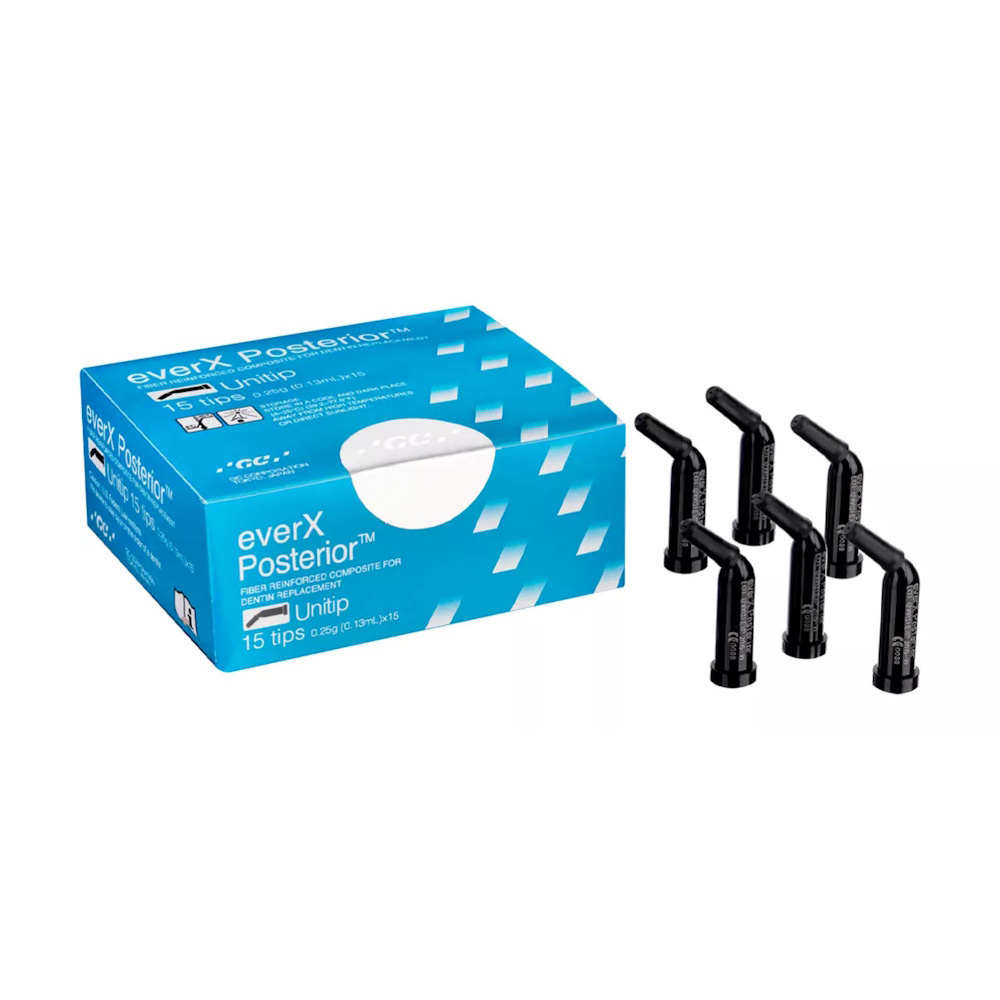
Delivery | Syringe or Unitips (0.25 g) | Syringe |
Best for | Large MOD, cusp replacement, deep Class I/II | Core build-ups, cracked teeth, faster placement |
Key technologies | Semi-IPN matrix, random fiber orientation | FSC + OAR technologies |
Capping required | Yes, 1–2 mm conventional composite | Yes, 1–2 mm on occlusal surface |
In practice, many clinicians stock both variants. EverX Posterior excels in large, deep cavities where its packable nature allows precise placement and firm condensation. EverX Flow is preferred when speed, cavity adaptation, or core build-up is the priority. Clinical trial data confirms both variants produce comparable outcomes, so the choice often comes down to technique preference and the demands of the specific case.
Handling Characteristics and Placement Tips
Mechanical properties matter, but handling characteristics determine whether a material integrates smoothly into daily clinical workflows. Both EverX variants have distinct placement experiences that clinicians should understand before the first use.
Working With EverX Posterior
EverX Posterior has a slightly stringy, cohesive consistency that differs from conventional packable composites. The fiber content means it does not sculpt or carve the same way a standard composite would. The key is firm condensation into the cavity using a composite instrument, which adapts the material to the cavity walls and orients the fibers for maximum reinforcement. Each increment can be up to 4–5 mm thick and should be light-cured for 10–20 seconds depending on the curing unit’s intensity.
Clinicians should ensure the SFRC layer stays within the cavity walls, leaving 1–2 mm of clearance on all surfaces for the capping composite. This is critical because EverX is not designed for direct oral exposure and lacks the wear resistance and polishability of surface composites.
Working With EverX Flow
EverX Flow was designed to simplify SFRC placement. Its thixotropic viscosity means it flows readily when injected but resists slumping once placed, even in maxillary preparations. A product review from Dental Advisor gave EverX Flow a 91% clinical rating based on 355 clinical uses across 29 evaluators, with consultants praising its easy delivery and good adaptation.
A separate Catapult Education evaluation found that 70% of the 17 participating clinicians said they would purchase the product, and over 50% indicated they would use it multiple times daily. Practical tips from the evaluators include keeping the syringe tip submerged in the material during injection to prevent air bubbles, and using the Bulk shade for deep cavities to take advantage of the 5.5 mm depth of cure.
Compatibility With Adhesive Systems and Surface Composites
One of the practical advantages of the EverX system is its broad compatibility with existing restorative materials, allowing clinicians to integrate it without switching adhesive or composite brands.
The semi-IPN matrix creates a reliable chemical bond to overlying conventional composites without requiring a separate bonding agent between the SFRC and surface layers. Uncured monomers in the EverX layer interlock with the overlying composite during polymerization, producing a strong, cohesive interface.
Clinical studies have used EverX successfully with total-etch systems (Scotchbond Multipurpose), two-step self-etch systems (Clearfil SE Bond), single-step self-etch systems (Vivapen), and universal bonding agents (G-aenial Bond). Surface composites tested alongside EverX include G-aenial Posterior, Essentia, Estelite (Tokuyama), Clearfil Majesty Posterior (Kuraray), Z250, Z100, and Synergy (Coltène/Whaledent). This flexibility means EverX fits into most existing practice workflows without disruption. For a broader overview of dental equipment and material considerations in a modern operatory, the category is worth exploring.
Step-by-Step Placement Protocol
Achieving optimal clinical outcomes with EverX requires a systematic approach. The following protocol applies to most posterior direct restorations using either variant.
1. Cavity preparation. Remove all caries and unsupported enamel following standard conservative principles. For post-amalgam cases, evaluate and preserve existing tooth structure while removing the old restoration and any fractured material.
2. Adhesive application. Apply the preferred bonding system according to the manufacturer’s instructions. EverX is compatible with all standard adhesive protocols.
3. EverX placement. For EverX Posterior, dispense and pack firmly in 4–5 mm increments, light-curing each for 10–20 seconds. For EverX Flow, inject directly into the cavity while keeping the syringe tip submerged to minimize air entrapment.
4. Margin clearance. Confirm the SFRC layer does not extend to the outer cavity margins. Leave 1–2 mm on all surfaces for the capping composite.
5. Capping layer. Apply 1–2 mm of conventional composite resin over the EverX base, sculpt the anatomy, and light-cure.
6. Finishing and polishing. Use fine diamond burs, rubber points, and polishing paste. Verify centric and eccentric occlusal contacts with articulating paper and adjust as needed.
Common Clinical Scenarios Where EverX Excels
While EverX can be applied across a range of restorative situations, certain clinical scenarios highlight its advantages most clearly. Understanding where the material delivers the greatest benefit helps clinicians make targeted, efficient use of it.
Restoring Endodontically Treated Molars
Endodontically treated teeth present a unique restorative challenge. The loss of pulp tissue and the removal of structural dentin during access preparation leaves these teeth significantly more brittle than vital counterparts. Traditional approaches often involve post-and-core systems followed by full-coverage crowns, adding cost, chair time, and complexity.
EverX provides a conservative alternative for endodontically treated molars that retain sufficient coronal tooth structure for a direct adhesive approach. The clinical trial data is particularly relevant here: 28 of the 36 restorations in the 2.5-year study were placed in non-vital teeth, and the 97.2% survival rate demonstrates that the fiber-reinforced substructure performs reliably in this population. The SFRC base fills the pulpal cavity in a single increment (thanks to its 4–5 mm cure depth), compensating for the lost dentin while allowing the overlying composite to restore occlusal anatomy and contact points.
Amalgam Replacement Restorations
Replacing old amalgam restorations has become one of the most common procedures in general practice. Patients increasingly request tooth-colored alternatives for esthetic reasons, and many aging amalgam restorations develop marginal breakdown or secondary caries that necessitate replacement regardless of patient preference.
The challenge with amalgam replacement is that the tooth has often been weakened over years of service. Amalgam does not bond to tooth structure, and the wedging forces from its placement frequently initiate crack lines in the surrounding dentin and enamel. When the amalgam is removed, these cracks become exposed, leaving a cavity that is structurally compromised before the new restoration is even placed.
This is precisely the scenario EverX was designed for. The short glass fibers arrest existing crack propagation, preventing the small cracks left behind after amalgam removal from growing into catastrophic fractures under occlusal loading. The bilayered restoration redistributes stress more evenly across the weakened tooth, producing a more predictable long-term outcome than a monolithic composite restoration in the same cavity would achieve.
Large MOD Restorations as an Alternative to Indirect Restorations
Three-surface and four-surface posterior restorations have traditionally been considered borderline cases for direct composite, with many clinicians recommending laboratory-fabricated onlays or crowns for cavities of this size. The concern is well-founded: conventional composites in large MOD preparations are vulnerable to bulk fracture, cusp deflection during polymerization, and marginal failure over time.
EverX shifts this calculus. The combination of dentin-equivalent fracture toughness, reduced polymerization shrinkage, and isotropic fiber reinforcement makes large direct restorations significantly more predictable. For patients who cannot afford indirect restorations or who prefer a single-visit solution, EverX provides a direct chairside option that delivers mechanical performance closer to what was previously only achievable with laboratory-fabricated materials. This is particularly valuable in practices that emphasize conservative, minimally invasive approaches to restorative care.
What Makes EverX Different From Other Bulk-Fill Composites
The dental market offers numerous bulk-fill composite options, and clinicians may wonder how EverX fits into a category that already includes products like SDR (Dentsply Sirona), Filtek One Bulk Fill (3M), Tetric PowerFill (Ivoclar), and SonicFill (Kerr). The distinction is fundamental rather than incremental.
Conventional bulk-fill composites are particulate-filled materials designed to simplify placement through deeper cure depths and reduced layering steps. They address the inconvenience of incremental layering but do not fundamentally change the mechanical behavior of the restoration. Under occlusal loading, they still crack and fracture through the same mechanisms as standard composites, just with larger initial increment sizes.
EverX approaches the problem differently. Rather than simply enabling larger increments, it introduces a new reinforcement mechanism through short glass fibers. These fibers physically bridge microcracks, absorb energy, and redirect crack propagation paths, preventing the small, inevitable microfractures that occur in any loaded composite from growing into clinically significant failures. This is a qualitative difference in how the material responds to stress, not just a quantitative improvement in depth of cure or handling convenience.
The trade-off is that EverX cannot function as a standalone filling material. It requires a capping layer, which adds a step compared to monolithic bulk-fills. For clinicians whose primary concern is speed and simplicity, a conventional bulk-fill may be the right choice for smaller cavities where fracture risk is lower. For larger restorations where long-term fracture resistance is the priority, EverX offers a measurably stronger solution. Knowing which materials and tools to incorporate into practice is part of building a strong dental equipment foundation.
Economic Considerations for Dental Practices
Material cost is a legitimate consideration for any practice evaluating a new product. EverX is positioned at a premium compared to conventional composites, which raises the question of whether the investment makes economic sense.
The most relevant comparison is not EverX versus a standard composite, but EverX versus the indirect restoration it can replace. A direct EverX restoration completed in a single visit eliminates laboratory fees, provisional restoration costs, a second appointment, and the associated chair time. For cases where the alternative would have been an onlay or crown, the direct approach often costs the practice less in total, even accounting for the higher material price.
There is also the re-treatment cost to consider. Composite restorations that fracture require replacement, consuming chair time, materials, and patient goodwill. If EverX’s fiber reinforcement reduces the fracture rate in large restorations even modestly, the cost per year of service drops, and the practice avoids the revenue loss and scheduling disruption that come with unplanned re-treatments. For practices that use a dental treatment plan tool to present comprehensive care options, the financial case for incorporating EverX into high-risk restorations becomes straightforward.
Bottom Line
EverX represents a meaningful shift in how dental professionals can approach large, high-stress direct restorations. The short fiber-reinforced composite concept has moved from a novel idea to a clinically validated material category with a growing body of independent research supporting its use. For practices looking to reduce restoration fractures, extend the service life of direct posterior restorations, and offer patients an alternative to crowns and onlays where appropriate, EverX provides a scientifically grounded option backed by real-world clinical results.
The material fills a specific, well-documented gap in the restorative toolkit. Conventional composites handle small and medium cavities effectively, and indirect restorations serve the most severely compromised teeth. The in-between cases, large direct restorations in stress-bearing posterior teeth, have historically been the most unpredictable. EverX gives clinicians a tool purpose-built for that challenging middle ground, with fracture toughness data and clinical survival rates that support its use with confidence.
As with any restorative material, outcomes depend on proper case selection, technique, and protocol adherence. The material works best in the hands of clinicians who understand its biomimetic design philosophy and commit to the bilayered approach it requires. For more dental product reviews and evidence-based equipment guides, explore the full library at Dental Reviewed.
Verdict
<p>The EverX fiber-reinforced composite system addresses a genuine clinical need that conventional composites have struggled with for decades: predictable, long-lasting direct restorations in large, stress-bearing posterior cavities.</p><p>The fracture toughness data alone makes a compelling case. Multiple independent studies confirm that teeth restored with EverX exhibit fracture resistance values comparable to intact natural teeth, a benchmark that no conventional composite has consistently achieved. The 97.2% survival rate at 2.5 years in a clinical trial predominantly involving non-vital molars, combined with a 91% clinical rating from Dental Advisor evaluators across 355 uses, provides solid real-world validation of the laboratory findings.</p><p>The material has practical limitations. It requires a capping layer in every case, the learning curve for the packable variant can be frustrating initially, shade options are limited, and long-term data beyond five years is still accumulating. It also cannot serve as a standalone surface material or be used in esthetic anterior zones.</p><p>However, for the posterior restorations that account for the majority of daily restorative procedures, EverX offers a scientifically validated path to fewer fractured fillings, longer restoration lifespans, and a cost-effective alternative to indirect restorations. Seventy percent of Catapult Education reviewers said they would purchase the product, and more than half indicated daily use. That level of clinical endorsement carries weight.</p><p>For any practice where fracture of large direct composite restorations is a recurring problem, and for most practices it is, EverX deserves serious consideration.</p>
Frequently Asked Questions
Can EverX be used as the final surface layer in a restoration?
No. Both EverX Posterior and EverX Flow must always be covered with a layer of light-cured conventional composite resin on the occlusal surface, and ideally on all surfaces exposed to the oral environment. The fiber content of EverX gives it exceptional fracture toughness, but it lacks the wear resistance, polishability, and esthetic properties required for a material in direct contact with opposing teeth and the oral cavity. GC recommends a 1–2 mm capping layer of a conventional composite such as G-aenial Posterior, Essentia, or any compatible surface composite to provide the necessary wear resistance and a clinically acceptable surface finish.
What is the difference between EverX Posterior and EverX Flow?
EverX Posterior is a packable, condensable material containing longer glass fibers (approximately 800 μm) designed for firm placement and condensation in large cavity preparations. EverX Flow is a flowable, injectable variant with shorter fibers optimized through GC’s proprietary OAR (Optimal Aspect Ratio) technology, combined with FSC (Full-coverage Silane Coating) for improved fiber-matrix adhesion. EverX Flow has a thixotropic viscosity that allows it to adapt to cavity walls without slumping. Both products serve as dentin replacement materials in a bilayered restoration system, and both require a conventional composite capping layer. The choice between them typically comes down to clinical scenario and clinician preference: Posterior excels in large MOD preparations where condensation is beneficial, while Flow is preferred for core build-ups, complex cavity morphologies, and situations where injectable delivery speeds up placement.
Is EverX compatible with all bonding systems?
Yes. Clinical studies have confirmed successful use of EverX with a wide range of adhesive protocols. These include three-step total-etch systems (Scotchbond Multipurpose, 3M), two-step self-etch systems (Clearfil SE Bond, Kuraray), single-step self-etch systems (Vivapen, Ivoclar Vivadent), and universal bonding agents (G-aenial Bond, GC). The semi-IPN (semi-interpenetrating polymer network) matrix of EverX also bonds reliably to overlying conventional composites during co-polymerization, meaning no separate adhesive layer is needed between the SFRC base and the capping composite.
How deep can EverX be cured in a single increment?
EverX Posterior allows light-curing in increments up to 4–5 mm, which significantly reduces the number of layers required in deep cavity preparations. EverX Flow offers two shade options with different cure depths: the Bulk shade has a depth of cure of 5.5 mm, making it ideal for deep cavities and faster procedures, while the Dentin shade has a depth of cure of 2 mm due to its higher opacity, which provides better esthetic results closer to the surface. GC recommends curing each increment for 10–20 seconds depending on the light-curing unit’s intensity.
Can EverX be used in anterior teeth?
EverX is not recommended for visible anterior restorations where translucency, shade matching, and surface esthetics are primary concerns. The fiber content and inherent opacity of the material make it unsuitable as a surface layer in esthetically demanding areas. However, EverX Flow can serve as a substructure or core build-up material in anterior teeth when the restoration will be fully covered by a conventional composite veneer or a crown. In these cases, the fiber reinforcement adds structural strength to the core without compromising the final esthetic result.
What clinical evidence supports the use of EverX?
EverX is supported by a substantial body of peer-reviewed research. Key findings include: a 2.5-year clinical trial published in PMC showing a 97.2% survival rate across 36 restorations (predominantly in non-vital teeth), an 18-month randomized clinical trial published in Odontology (Springer) confirming comparable performance to conventional composites in Class II restorations, a double-blinded randomized study comparing EverX Posterior and EverX Flow in post-endodontic restorations with no significant difference between groups, a 91% clinical rating from the Dental Advisor based on 355 clinical uses across 29 evaluators, and multiple in vitro studies from the University of Turku and other institutions demonstrating fracture toughness equivalent to natural dentin and nearly double that of conventional composites.
Is EverX suitable for restoring endodontically treated teeth?
Yes, and endodontically treated teeth represent one of the strongest clinical indications for EverX. Non-vital teeth are inherently more prone to fracture because of the loss of pulp tissue, the removal of structural dentin during access preparation, and the reduced moisture content of the remaining tooth structure. Multiple studies have specifically evaluated EverX in endodontically treated molars and confirmed that the fiber-reinforced substructure helps compensate for the weakened tooth, restoring fracture resistance to levels comparable to intact natural teeth. The 2.5-year clinical trial included 28 non-vital teeth out of 36 total restorations, and the high survival rate in that population provides direct clinical validation.
Do dentists need to use GC-branded composites for the capping layer?
While GC recommends its own surface composites such as G-aenial Posterior, Essentia, and G-aenial Universal Injectable, clinical studies have successfully used EverX with surface composites from multiple manufacturers. These include Estelite (Tokuyama), Clearfil Majesty Posterior (Kuraray), Z250 and Z100 (3M), Synergy (Coltène/Whaledent), and solareX. The semi-IPN matrix of EverX ensures reliable chemical bonding to any conventional methacrylate-based composite during co-polymerization, so clinicians are not locked into a single-brand workflow.
How does EverX compare to traditional bulk-fill composites like SDR or Filtek?
EverX differs from conventional bulk-fill composites at a fundamental level. Products like SDR (Dentsply Sirona), Filtek One Bulk Fill (3M), and similar materials are particulate-filled composites designed to allow deeper increments and faster placement. They simplify the layering process but do not change the way the material responds to stress. EverX introduces short glass fibers that physically bridge microcracks, absorb energy, and redirect crack propagation, a reinforcement mechanism that particulate-filled composites do not provide. In fracture resistance testing, EverX Posterior has outperformed SDR and Filtek bulk-fill composites. The trade-off is that EverX always requires a capping layer, while some conventional bulk-fills can serve as the final restoration surface.
What shades are available for EverX products?
EverX Posterior is available in a single universal shade designed to blend beneath the capping composite layer. EverX Flow is available in two shades: Bulk (a more translucent shade with a 5.5 mm depth of cure, ideal for deep cavities) and Dentin (a higher-opacity shade with a 2 mm depth of cure, better suited for situations closer to the surface where esthetics matter more). Since EverX is always fully covered by a surface composite, shade selection has less clinical impact than it does with materials used on visible surfaces.