Zing Toothpaste Review: Does The Hype Hold Up?
This Zing toothpaste review looks at the UK brand behind the pastel tubes turning up across British bathroom shelves and social media feeds. Zing pairs fluoride with...
Written by Mantas Petraitis
Read time: 4 min read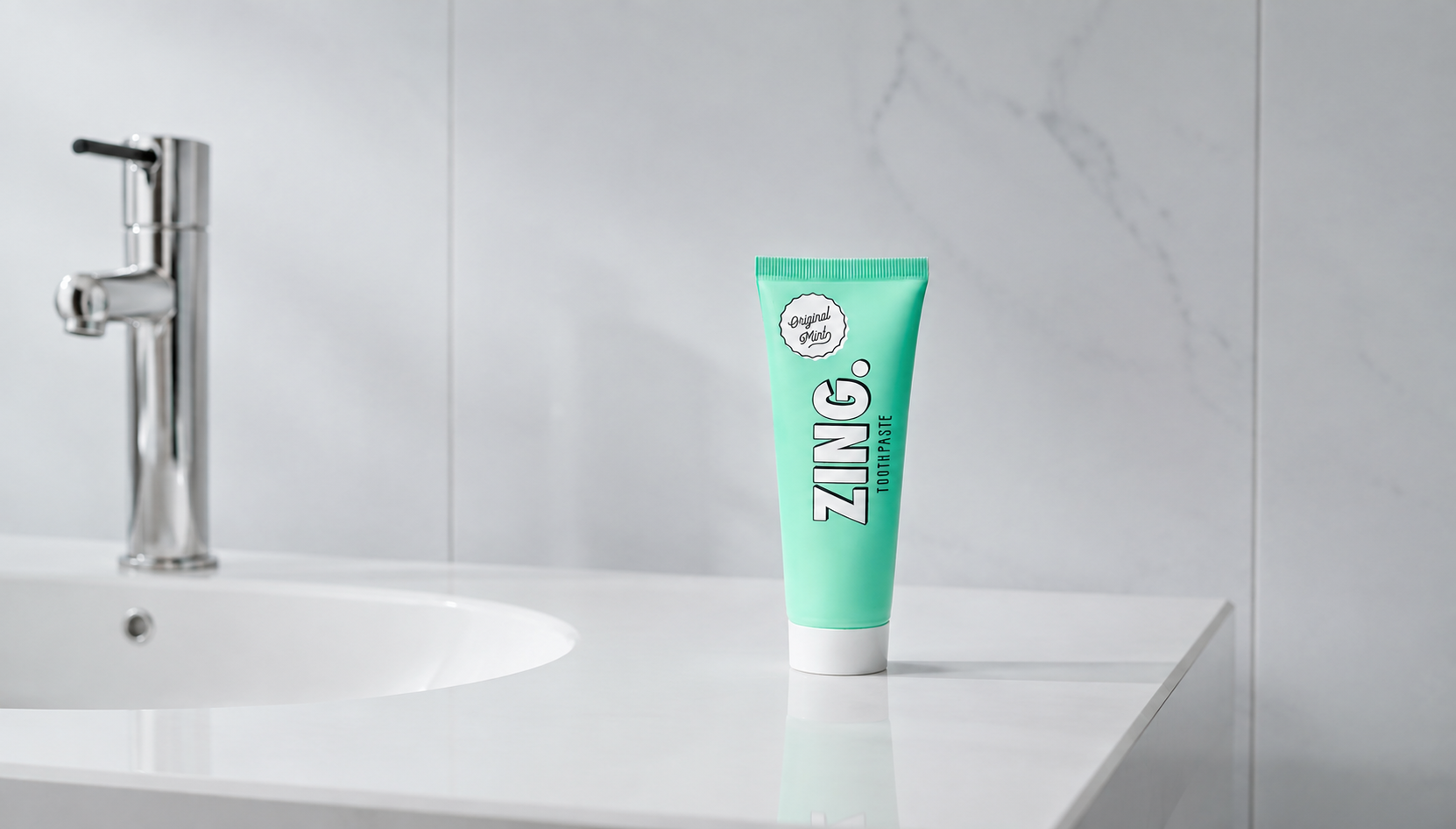
This Zing toothpaste review looks at the UK brand behind the pastel tubes turning up across British bathroom shelves and social media feeds. Zing pairs fluoride with hydroxyapatite in one formula, but one ingredient claim needs closer checking before it earns a spot in the routine.
TL;DR
Zing combines 1450ppm fluoride with hydroxyapatite in an SLS-free, UK-made formula.
Zing's own labeling doesn't confirm nano-sized hydroxyapatite across every tube.
Buying from outside the UK means factoring in international shipping and customs.
Zing suits UK households wanting flavor variety, not buyers chasing confirmed nano particles.
Zing Toothpaste At A Glance
Here's the short version, pulled from Zing's own product listings and cross-checked flavor by flavor.
Attribute | Detail |
Active ingredients | Sodium fluoride (1450ppm) and hydroxyapatite, particle size unconfirmed on most listings |
Format | SLS-free gel, clear rather than opaque white |
Flavours | Original Mint, Soft Lemon, Soft Peach, Apple, and Kiwi |
Fluoride | 1450ppm in standard tubes, a fluoride-free version is sold separately |
Best for | UK buyers who want flavor variety alongside standard fluoride protection |
Price | £12.99 ($17.50) for a 75ml tube |
Where to buy | Zing's own site, Amazon, other international stock is limited |
Made in | Yorkshire, England |
What Is Zing Toothpaste?
Zing is a UK oral care brand manufactured in Yorkshire. The tubes come in soft pastel colors, a deliberate step away from the clinical white-and-blue look most supermarket toothpaste sticks to. The brand has built a following of over 160,000 UK customers, largely through word of mouth and social media.
Four flavors make up the range. Original Mint covers the familiar base most people expect from toothpaste. Soft Lemon, Soft Peach, and Apple and Kiwi drop mint entirely. The peach flavor stands out in a category still dominated by mint, and it has become one of the brand's most requested options among UK reviewers.
Zing positions itself against supermarket own-brand toothpaste and the usual high street names, not against clinical or dentist-dispensed products. It sits closer in spirit to Marvis, another import-style, flavor-led brand reviewed on this site, than to a standard drugstore tube.
The Science: What's Actually In Zing Toothpaste
The formula leans on a handful of active ingredients doing most of the work, alongside a few that raise real questions.
The Core Formula
Glycerin and hydrated silica form the base of most Zing pastes, with cellulose gum holding everything together. Cocamidopropyl betaine replaces the foaming agent found in most mainstream toothpaste. Papain, a plant-derived enzyme, does the stain-lifting work, and stevioside sweetens the paste without added sugar.
Fluoride And Hydroxyapatite Together
Standard Zing tubes carry 1450ppm sodium fluoride, the concentration most UK dentists recommend for adults and children over three. That figure sits at the upper end of what the best fluoride toothpaste guide covers for everyday use. Zing pairs that fluoride with hydroxyapatite in the same tube, a combination still uncommon on UK shelves.
Does Zing Use Nano Hydroxyapatite?
This is where the label gets murky. Zing's fluoride-free Original Mint listing states its hydroxyapatite is micro, not nano. The standard fluoride-containing tubes simply list hydroxyapatite with no particle size given at all.
A customer review on Zing's own product page asks the brand directly whether the ingredient is nano-sized. No clear public answer follows in that thread. Particle size matters here.
Nano hydroxyapatite sits in the 20 to 80 nanometre range and can bind more readily to enamel. Micro particles are larger and work mainly by sitting on the surface or blocking exposed dentin tubules.
Anyone specifically shopping for confirmed nano hydroxyapatite should check the label on the exact tube before assuming Zing delivers it. The best nano hydroxyapatite toothpaste roundup lists formulas where particle size is stated outright.
SLS-Free And Titanium Dioxide-Free
Cocamidopropyl betaine stands in for sodium lauryl sulfate across the range, keeping the paste gentler on sensitive mouths. The SLS-free toothpaste guide covers why that swap matters for people prone to irritation or canker sores.
Zing also skips titanium dioxide, the whitening pigment many brands add purely for color. That's why the paste comes out as a clear gel rather than an opaque white.
Zing Vs. Alternatives
Two products come up often when UK buyers compare Zing against something else on the market.
Feature | Zing | Colgate Total | Confirmed nano hydroxyapatite pick |
Positioning | Flavor-led UK brand | Mainstream fluoride toothpaste | Clinical remineralizing formula |
Fluoride | 1450ppm | 1450ppm | Often fluoride-free |
Hydroxyapatite | Present, particle size unconfirmed | None | Nano, stated on label |
SLS | No | Yes, most formulas | Usually no |
Price | £12.99 ($17.50) per tube | £2 to £4 ($2.70 to $5.40) per tube | $15 to $20 per tube |
Best for | Flavor variety, users in the UK | Everyday cavity prevention | Confirmed nano remineralization |
Colgate wins on price and on being available everywhere. A confirmed nano hydroxyapatite pick wins on certainty for anyone chasing that specific ingredient. Zing's edge is flavor and formulation variety within a single UK brand.
Zing Ingredients: A Full Breakdown
The standard Original Mint formula lists glycerin, aqua, hydrated silica, pentasodium triphosphate, and cellulose gum. It also contains cocamidopropyl betaine, mentha arvensis leaf oil, papain, stevioside, sodium fluoride, menthol, hydroxyapatite, sodium chloride, mentha piperita oil, tocopheryl acetate, and limonene.
Nothing on that list is SLS or titanium dioxide. The whole range is vegan and cruelty-free, and the tubes are recyclable. The fluoride-free Original Mint variant carries a near-identical list. It drops sodium fluoride and specifies its hydroxyapatite as micro, rather than leaving the particle size unstated.
What To Expect: Cleaning Performance And Does It Whiten
Zing produces far less foam than a typical mint toothpaste, a direct result of dropping SLS. That takes some adjustment for anyone used to a heavy lather, but it doesn't reduce cleaning performance on its own.
The whitening claim rests on papain, an enzyme that breaks down surface protein staining from tea, coffee, and wine. That's a real mechanism, but it isn't the same as a peroxide-based whitener. Expect gradual polishing of surface stains rather than a dramatic shade change. Deeper, set-in discoloration still needs a professional clean or in-chair whitening.
Readers focused specifically on whitening with sensitive teeth may want to compare Zing against the best whitening toothpaste for sensitive teeth picks, which are built around that exact goal rather than flavor first.
Zing Toothpaste Pros And Cons
Weighed against the price and the label gaps, here's what actually holds up.
Pros:
Genuine flavor variety, including a non-mint option most brands don't offer
SLS-free and titanium dioxide-free formula
Combines fluoride with hydroxyapatite in one tube
Vegan, cruelty-free, and fully recyclable packaging
Made in the UK with clear ingredient labeling on most points
Cons:
Hydroxyapatite particle size isn't confirmed as nano across the range
Priced well above supermarket fluoride toothpaste
Limited confirmed availability outside the UK
No ADA Seal of Acceptance
Whitening results are gradual, not a substitute for a professional clean
Who Should Use Zing Toothpaste
Matching the product to the right buyer clears up most of the hesitation around this brand.
Good candidates | Better served elsewhere |
UK buyers who want flavor variety with standard fluoride | Anyone needing confirmed nano hydroxyapatite |
Adults tired of mint and looking for a genuine alternative | Budget-focused buyers |
People with mild SLS sensitivity | Buyers outside the UK needing fast, predictable shipping |
Households wanting one tube that covers fluoride and hydroxyapatite | Young children, given the whitening positioning |
Zing markets its toothpaste as suitable from age seven. Whitening-specific products carry more caution than that in wider pediatric dental guidance. The American Academy of Pediatric Dentistry generally advises against whitening products until permanent teeth have fully erupted. That's usually cited between ages 12 and 15, given the abrasive load on developing enamel. Parents considering Zing for a younger child should weigh that guidance against the brand's own recommendation.
Where To Buy Zing Toothpaste And What It Costs
Zing sells primarily through its own UK site and Amazon.co.uk. Stock on Amazon's US site is inconsistent. The brand's own shipping policy directs international questions to customer support rather than publishing clear rates or delivery windows for buyers outside the UK.
A standard 75ml tube runs £12.99 ($17.50). Bundles bring the per-tube price down slightly. A four-pack of Original Mint costs more in total but works out cheaper per tube than buying single tubes repeatedly.
Anyone ordering from outside the UK should check current shipping costs and expect possible customs handling on top of the listed price.
Bottom Line
Zing is a well-formulated UK toothpaste with a genuinely different flavor range and a sensible SLS-free base. The fluoride content is solid and matches UK dental guidance. The hydroxyapatite claim needs a more skeptical read. The brand hasn't confirmed nanoparticle size across its full range, and at least one listing specifies micro instead.
A toothpaste switch only addresses one part of a wider routine. Ongoing sensitivity, visible staining that doesn't respond to a papain-based paste, or ongoing decay still call for a proper look from a dentist. A documented dental treatment plan keeps that conversation on track rather than leaving it to whichever tube is on the shelf.
This article is for informational purposes only and does not constitute medical advice. Always consult with qualified healthcare professionals for diagnosis and treatment recommendations specific to your situation.
Frequently Asked Questions
Is Zing toothpaste effective?
Yes, for daily cleaning and cavity protection. The 1450ppm fluoride content matches standard UK dental guidance, and the SLS-free formula suits sensitive mouths without sacrificing cleaning performance.
Is Zing toothpaste good for whitening teeth?
It helps with surface staining from tea, coffee, and wine through the enzyme papain. It won't produce the dramatic results of a peroxide-based whitener, so deeper staining still needs a professional cleaning.
Does Zing toothpaste contain nano hydroxyapatite?
It's unclear. One fluoride-free listing specifies micro hydroxyapatite, while standard tubes list hydroxyapatite without stating the particle size. Check the label on the specific tube rather than assuming nano.
Where can I buy Zing toothpaste?
Zing's own site and Amazon carry the full range. Confirmed stock outside the UK is limited, so international buyers should check shipping costs and delivery times before ordering.
How much does Zing toothpaste cost?
A standard 75ml tube costs £12.99 (roughly $17.50). Bundle packs lower the price per tube for anyone buying multiple flavors or a few months' supply at once.
Is Zing toothpaste safe for children?
Zing recommends its toothpaste from age seven. Because it markets itself as a whitening formula, that's worth weighing against general pediatric dental guidance, which usually advises against whitening products until permanent teeth have fully erupted.