Rating: 4.1/5
TempOff: Temporary Crown Remover Review
Temporary crown removal is one of the most routine steps in restorative dentistry, and also one of the most quietly frustrating. A provisional that held firm for two weeks now has...
Reviewed by Rachel Thompson
Pros
- purpose-built for temporary crown removal, unlike a repurposed hemostat.
- four-point, non-slip grip that resists sliding on smooth acrylic and bis-acryl temps.
- removal force redirected into the temporary rather than the prepared tooth.
- improved patient comfort, with anesthesia usually unnecessary at delivery.
- fast in typical cases, roughly 2 to 5 seconds once engaged.
- preserves the provisional for reuse, leaving only a small indentation.
- versatile within its niche, covering acrylic and bis-acryl temps, single crowns, and bridges.
- durable, low-maintenance build in 420 surgical stainless steel, fully autoclavable.
- low purchase risk thanks to a free trial, free shipping, and free returns.
- dentist-designed, with product questions answered by clinical staff.
Cons
- single-purpose instrument, whereas a hemostat serves many roles across the practice.
- price premium, several times the cost of a basic hemostat or rubber-tipped plier.
- evidence is largely manufacturer- and testimonial-based rather than peer-reviewed.
- diminishing returns for very low-volume restorative practices.
- very retentive preparations or strong cements still take extra effort.
- not intended for scenarios that genuinely require margin-level manipulation.
Temporary crown removal is one of the most routine steps in restorative dentistry, and also one of the most quietly frustrating. A provisional that held firm for two weeks now has to come off cleanly, quickly, and comfortably, often on a patient who is not anesthetized at the delivery visit. TempOff by ArtCraft Dental is a purpose-built temporary crown remover designed to replace the improvised toolkit of hemostats and rubber-tipped pliers that most operatories still reach for. This review, part of the wider library of dental equipment reviews that clinicians use to guide purchasing, breaks down how the instrument works, where it fits in a restorative workflow, how it compares with the alternatives, what it costs, and whether it earns a place in the practice. A full pros and cons list, a dentist's verdict, and an FAQ round out the assessment.
What Is TempOff by ArtCraft Dental?
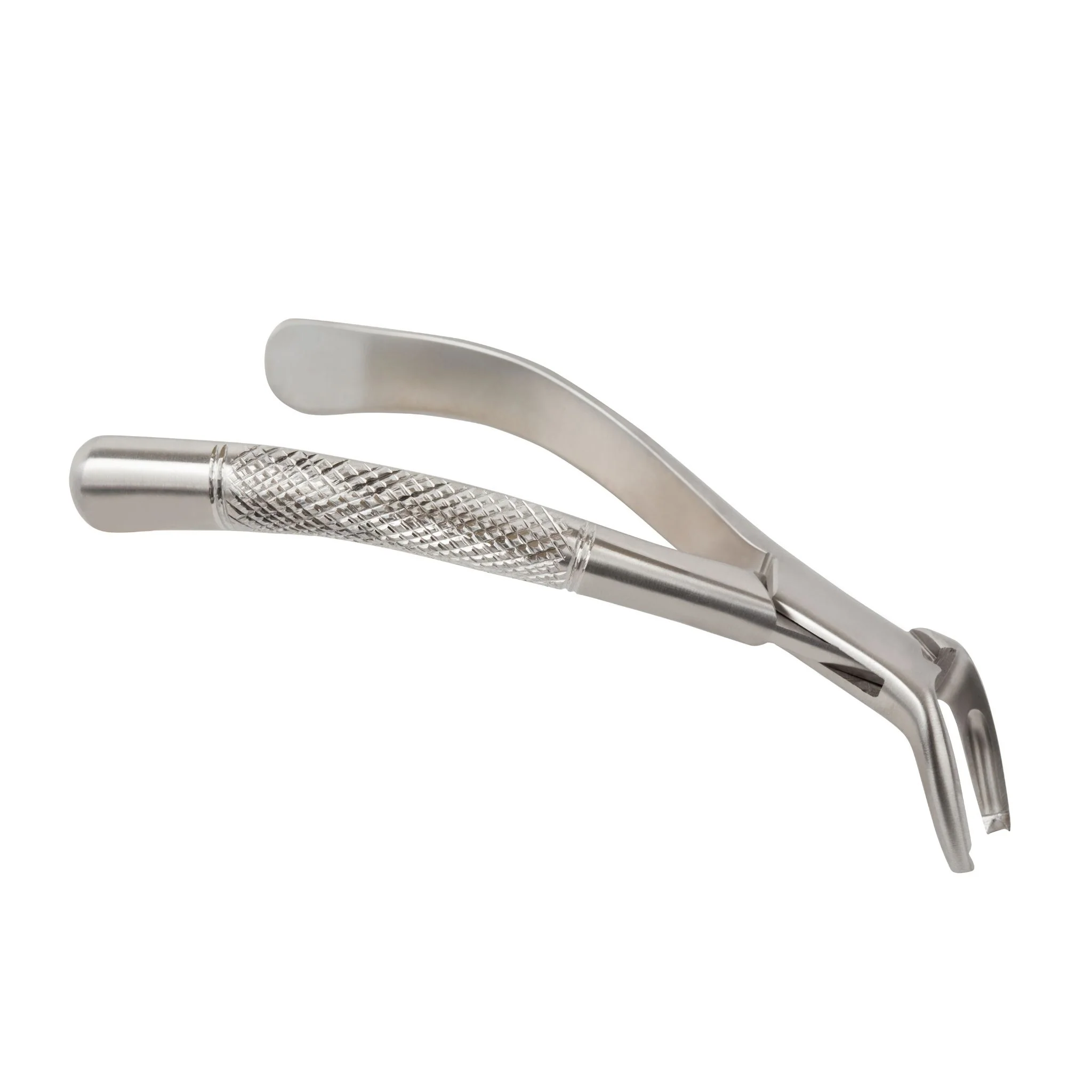
TempOff is a dedicated temporary crown removal tool, a forceps-style hand instrument engineered specifically to grip and lift provisional crowns and bridges off a prepared tooth. It is manufactured and sold by ArtCraft Dental, Inc., a dentist-owned instrument company based in Dallas, Texas, and was invented by Dr. David Fyffe, DDS, a clinician with more than 30 years of restorative experience. The central design idea is straightforward, the instrument engages the upper third of the provisional rather than pinching near the cement margin, which changes both how securely it grips and where the removal force travels.
At a glance:
Category, dedicated temporary crown remover and provisional remover, a hand instrument.
Manufacturer, ArtCraft Dental, Inc., Dallas, Texas.
Inventor, Dr. David Fyffe, DDS, a practicing dentist.
Material, 420 surgical-grade French or German stainless steel.
Sterilization, fully autoclave-safe.
List price, 169.95 US dollars for a single instrument.
Removal time per manufacturer, roughly 2 to 5 seconds once engaged.
Compatibility, acrylic and bis-acryl provisionals, single crowns and multi-unit bridges.
The Clinical Problem With Temporary Crown Removal
Understanding why a purpose-built instrument exists for this job requires looking at why temporary removal so often goes wrong. Provisional restorations carry a paradoxical brief, they must stay firmly seated through mastication and daily hygiene, yet release atraumatically when the definitive restoration is ready. The peer-reviewed literature underscores how much rides on getting provisionals right. A widely cited British Dental Journal review notes that time invested in good provisional work is more than repaid at later appointments through fewer adjustments and remakes, which makes a clean, predictable removal genuinely valuable rather than trivial.
The material science compounds the challenge. Polymethyl methacrylate, the most common provisional resin, offers easy handling and good esthetics, though it is relatively weak and prone to fracture, as summarized in the Journal of Oral Research and Review. That fragility matters most at the margin, the thinnest and most fracture-prone portion of the temporary. The conventional tools all struggle with the same weakness. Hemostats were designed as surgical forceps, not for smooth convex acrylic, so they tend to slip and tempt the clinician to squeeze harder near the margin. Rubber-tipped instruments improve grip yet still engage low, near the gingival third, which loads the prepared tooth and prompts the familiar patient flinch. Sectioning the temporary with a bur is reliable but destructive, time-consuming, and it rules out reusing the provisional for a try-in or remake.
The recurring theme across every failure mode is where the force goes. Grip low, and the load transmits into the tooth. Grip a polished surface with two-point geometry, and the instrument slides off. TempOff's design premise is to correct both variables at once.
How TempOff Works: The Four-Point Contact Design
The defining feature of TempOff is a four-point contact beak that the company describes as one of a kind. Rather than two opposing serrated surfaces, as on a hemostat, the working end presents four distinct points that stabilize the provisional from multiple angles at once. Two practical consequences follow from that geometry, and each addresses a specific weakness of the traditional tools.
A Non-Slip Grip Across Four Points
The first consequence is stability. Because the instrument contacts the temporary at four points instead of relying on friction across two flat beaks, it resists the rotation and slippage that make hemostats unpredictable on smooth acrylic. The manufacturer's language about the instrument locking onto the crown is marketing, though the mechanical logic holds, multi-point engagement is inherently more stable than two-point pinching. Clinician reviews echo the same observation repeatedly, reporting that the instrument holds without sliding off the provisional even when very little force is applied.
Higher Incisal Positioning Directs Force to the Temp
The second consequence is where the instrument grips. A secure hold lets the clinician engage the incisal or occlusal third of the provisional rather than creeping down to the margin for purchase. According to ArtCraft Dental, with the upper third engaged, removal force is directed into the temporary itself, so the lower two-thirds is free to flex outward and break its own cement seal progressively. The downstream benefit is the one clinicians care about most, less force reaching the tooth means less patient discomfort, which in turn means anesthesia is usually unnecessary at the delivery visit. A skeptical read is fair, the magnitude of that comfort improvement will vary with preparation taper, cement choice, and technique, though the underlying mechanism is coherent rather than hand-waving.
Build Quality, Materials, and Specifications
For an instrument squeezed, torqued, and autoclaved hundreds of times a year, materials and durability are not a footnote. TempOff is manufactured from 420 surgical-grade stainless steel, sourced according to the company from French or German mills. The 420 grade is a hardenable martensitic stainless commonly chosen for surgical and dental instruments because it can be heat-treated to hold a sharp, wear-resistant edge while resisting corrosion through repeated sterilization. That is an appropriate, reassuringly unremarkable choice for a gripping instrument whose points need to stay crisp over years of service.
Specification highlights:
Instrument type, single-piece, forceps-style hand instrument with a fixed, non-locking working end.
Working tip, proprietary four-point contact beak.
Steel, 420 surgical stainless, French or German source.
Sterilization, fully autoclave-safe, withstands repeated cycles without loss of tip integrity per the manufacturer.
Maintenance, tips can be re-sharpened over the years if preferred, though the company frames sharpening as optional rather than routine.
Longevity, clinician reviews include reports of instruments still in service after six years.
Because the instrument has no electronics, consumables, or single-use components, the total cost of ownership after purchase is effectively limited to normal sterilization and the occasional optional sharpening. For a practice with regular crown-and-bridge volume, that up-front price amortizes across a very large number of removals.
Using TempOff in Clinical Practice
One of the instrument's strengths is how easily it slots into an existing restorative appointment. The intended sequence assumes the delivery visit is already proceeding according to the agreed dental treatment plan, with the definitive restoration ready to seat. The removal itself follows a short, repeatable routine that assistants can adopt quickly.
Position the beak on the upper third, seat the four-point tip on the incisal or occlusal third of the provisional, deliberately away from the margin.
Engage and lock, close the beak so all four points contact the temporary, which the design holds without sliding toward the margin or rotating off.
Apply light, controlled force, a small movement lets the lower two-thirds flex and break the cement seal, and the manufacturer emphasizes that very little force is required.
Lift off, most single-unit temporaries reportedly release in roughly 2 to 5 seconds once engaged.
Walk longer bridges off, engage a pontic or retainer, then alternate side to side to loosen the cement seal progressively before lifting.
Because the assistant can often handle removal, and because anesthesia is usually skipped, the step shrinks from a fiddly, sometimes multi-attempt struggle to a few seconds of chair time. A realistic caveat applies, the effortless experience assumes a reasonably typical preparation and provisional. Very retentive cases, such as over-parallel preparations or unusually strong temporary cements, will take more effort. One reviewer who described habitually over-parallel preps, temporaries that previously had to be sectioned, reported that the instrument removed roughly 95 percent of them in seconds, an encouraging anecdote that remains an anecdote.
Versatility Across Crowns, Bridges, and Materials
A single-purpose instrument earns its operatory space only if it is versatile within that purpose, and TempOff covers the common range well. The variety of provisional materials and configurations in daily practice, documented across sources such as Inside Dentistry, means any dedicated remover has to handle more than one scenario.
Provisional materials. The instrument is designed to grip the acrylic and bis-acryl provisionals that dominate everyday restorative dentistry, and the company states it works even on tougher temporary cements. The four-point bite engages mechanically rather than relying on surface friction, so a highly polished surface poses less of a problem than it would for a rubber tip.
Single units and bridges. Beyond single crowns, the tip locks onto a pontic or retainer on temporary bridges, using the alternating technique for longer spans. Multi-unit provisionals are exactly the cases where hemostats slip most and where sectioning is most wasteful, so bridge capability is a meaningful part of the value.
A useful bonus during try-in. Multiple clinicians report using TempOff to lift stubborn permanent crowns that seat tightly during try-in and resist coming back off. This falls outside the headline purpose, so clinical judgment applies to a definitive restoration, though the added utility comes up often enough in real-world reviews to be worth noting. Practices running a digital workflow, seating restorations designed from an intraoral scanner such as the 3Shape TRIOS, may find that secure, high-third grip handy during tight try-ins.
Does it damage the temp? The four sharp points raise a fair concern. The manufacturer's answer is that provisionals remain reusable after removal, with only a small indentation left on the upper third rather than a crumbled margin. Since the reusable-temp scenario, covering remakes, adjustments, and try-in mishaps, is precisely when sectioning would be regretted, minimal marring is a genuine advantage over the bur.
TempOff Versus Hemostats and Rubber-Tipped Instruments
Most buyers want the head-to-head comparison, so the table below synthesizes the manufacturer's positioning with the well-understood mechanics of each tool. The honest summary is stated after the table, hemostats and rubber-tipped pliers remain cheaper and more broadly useful across the practice, while TempOff is the specialist that corrects the geometry for this one task.
Factor | TempOff | Hemostats | Rubber-tipped |
|---|---|---|---|
Designed for temp removal? | Yes, purpose-built | No, surgical forceps | Partially, general grip |
Grip mechanism | 4-point contact | 2 serrated beaks | 2 soft tips |
Where it engages | Upper, incisal third | Often near margin | Typically at margin |
Where force goes | Into the temp | Into the tooth | Into the tooth |
Slippage risk | Low | High on acrylic | Moderate |
Patient comfort | High, often no anesthesia | Lower, margin loading | Lower, margin loading |
Temp reuse after removal | Yes, minor indentation | Variable, can crack | Usually yes |
Speed once engaged | About 2 to 5 seconds | Variable, repeats common | Variable |
Up-front cost | About 169.95 dollars | Low, 10 to 30 dollars | Low to moderate |
The shared weakness of the conventional tools is margin engagement, which loads the tooth and invites both slippage and discomfort. TempOff's whole value proposition rests on fixing that geometry, engaging high, gripping securely, and redirecting force into the provisional. Whether the fix justifies the price premium depends on restorative volume and on how much the current friction genuinely costs in chair time and patient experience.
Patient Comfort and Experience
Temp removal is easy to frame as a purely mechanical problem, which overlooks the person in the chair. For patients, the delivery appointment is supposed to be the satisfying one, they are receiving their final restoration. A sharp, unexpected jolt while a temporary is wrestled off can sour that moment and erode trust right before the definitive crown is seated.
The comfort argument flows directly from the mechanics already described. Keeping force in the upper third of the provisional, and off the prepared tooth, aims to make removal a non-event, no anesthesia and no flinch. Clinician feedback captures the practical upshot, temporaries come off without producing the raised-eyebrow surprise reaction, and removal stays clean even when the patient is not numb. For patient-experience-focused practices, and for reducing the small but real risk of an uncomfortable moment undermining an otherwise successful case, this soft benefit is arguably the instrument's strongest selling point, even though it resists precise measurement.
Sterilization and Maintenance
Infection-control compatibility is non-negotiable, and TempOff fits standard protocols without special handling. The instrument is made from surgical-grade stainless steel and is fully autoclave-safe, rated by the manufacturer to withstand repeated sterilization cycles without degrading the tip geometry that makes it work. Standard in-office cleaning, bagging, and steam sterilization apply, the same as any other hinged hand instrument.
Maintenance stays minimal. With no moving electronic parts, o-rings, or consumables, upkeep amounts to normal cleaning and sterilization. Over years of use the four contact points can be re-sharpened to restore bite if a clinician prefers, and the company publishes instructions for doing so, though it frames sharpening as optional. The presence of multi-year longevity reports in customer feedback, including a six-year user, suggests the instrument holds up to the repetitive stress of clinical service. From a total-cost-of-ownership standpoint, that is the reassuring part of the pitch, a one-time purchase with negligible ongoing cost and a realistic service life measured in years.
Pricing, Trial, and Purchasing
The commercial terms are as important to a purchasing decision as the clinical performance, and ArtCraft Dental structures them to lower the risk of trying an unfamiliar instrument. The key details are summarized below, though pricing and promotions change, so clinicians should confirm current terms directly with the seller before ordering.
Price, the instrument lists at 169.95 US dollars for a single unit on the ArtCraft Dental product page, with seasonal discount codes appearing periodically.
Free trial, the company advertises a ship-now, bill-later arrangement, allowing the office to evaluate the instrument in real cases before committing, which materially de-risks the purchase.
Shipping and returns, fast, free shipping within the United States, free shipping to the United Kingdom, Canada, Australia, and Mexico on qualifying orders, plus free returns.
Support, because the company is dentist-owned, product and technique questions are answered by clinical staff rather than a generic call center.
For clinicians who want independent efficacy data before adopting any instrument, the free trial is the pragmatic answer, real cases in the operatory tend to settle the question faster than any spec sheet. Practices weighing this purchase alongside a broader equipment refresh, from the operatory chair to endodontic and restorative hand instruments, can fold the trial into a normal evaluation cycle without financial exposure.
Who Should Consider TempOff
The instrument is not equally valuable to every practice, and matching it to the right clinical profile prevents both wasted spend and missed opportunity. The following breakdown separates the strongest candidates from the practices that can reasonably pass.
Strong Fit
Certain practice profiles stand to gain the most from a dedicated remover, chiefly those with volume and a patient-experience focus.
High-volume crown-and-bridge practices, where small per-case time savings compound quickly across the week.
Clinicians frustrated by hemostat slippage, or tired of sectioning stubborn temporaries.
Patient-experience-focused offices, that want to eliminate the delivery-visit flinch and avoid re-anesthetizing for removal.
Practices that reuse provisionals, for try-ins or remakes and cannot afford to destroy them on removal.
Teams where assistants remove temps, given the low learning curve and assistant-friendly handling.
Might Skip It
Other practices will find the value proposition thinner, usually because of low volume or a preference for hard evidence over testimonials.
Very low restorative volume, where an owned hemostat may be economically good enough despite being a worse tool.
Budget-first buyers, who cannot justify a single-purpose instrument at this price and are satisfied with current outcomes.
Clinicians who want peer-reviewed efficacy data, since the evidence base here is manufacturer claims plus consistent testimonials rather than controlled trials, though the free trial answers that gap in practice.
Bottom Line
Temporary crown removal is a small, repetitive step that quietly taxes a busy restorative practice, a few extra seconds here, a flinching patient there, an occasional ruined provisional. TempOff by ArtCraft Dental is a focused answer to that friction, and its central idea, grip high, spare the tooth, and redirect force into the temporary, is well reasoned rather than promotional filler. For high-volume crown-and-bridge clinicians, the case is strong, faster removals, more comfortable patients, reusable provisionals, and a durable, autoclavable instrument that should last years. The trade-offs are equally clear, a single-purpose tool at a premium price with testimonial-based evidence. Fortunately, the free trial resolves that uncertainty cleanly, so the most reliable recommendation is to test it on real cases before spending a dollar and let the operatory make the call.
Verdict
<p>TempOff earns a place in most restorative operatories, and the free trial makes finding out nearly risk-free. The daily aggravation of temporary removal is easy to underestimate until an instrument fixes it, and this one fixes the right thing. Its core insight, engaging the upper third of the provisional so removal force enters the temporary rather than the prepared tooth, reflects genuine engineering rather than marketing gloss, and it addresses the two failures every clinician knows from hemostats, slipping on smooth acrylic and loading the tooth at the margin.</p><p>In practice, the payoff shows up as fewer flinching patients, less need to re-anesthetize at delivery, provisionals that survive for reuse, and a step that shrinks from a multi-attempt struggle to a few seconds. Assistants adopt it quickly, which matters in a busy schedule, and the surgical-stainless build is exactly what a hand instrument should be. The honest caveats remain, a single-purpose tool at a premium price, supporting evidence drawn from vendor claims and testimonials rather than controlled studies, and very retentive cases that still demand some effort. Given the ship-now, bill-later trial, the sensible move is simple, place it on real cases for a couple of weeks and let the clinical results decide. For most crown-and-bridge dentists, the instrument is a keeper.</p>
Frequently Asked Questions
What is TempOff used for?
TempOff is a dedicated temporary crown remover, a forceps-style hand instrument that grips and lifts provisional crowns and bridges off a prepared tooth quickly and atraumatically. Many dentists also use it to help remove stubborn permanent crowns during try-in.
How fast is TempOff compared to hemostats or rubber-tipped instruments?
Once properly engaged, most single-unit temporaries reportedly release in about 2 to 5 seconds. Because the four-point tip locks on immediately instead of slipping, it typically avoids the repeated attempts that hemostats and rubber-tipped instruments often require, which reduces chair time.
Does using TempOff require anesthesia?
In most cases, no. Since the instrument engages the upper third of the provisional and directs force into the temporary rather than the tooth, patients typically feel minimal to no discomfort, so the delivery visit usually does not call for re-anesthetizing the patient.
Will TempOff damage or destroy my temporaries?
No. Despite the sharp-looking contact points, provisionals stay reusable after removal. The instrument generally leaves only a small indentation on the upper third rather than crumbling the margin, which is a clear advantage over sectioning the temporary with a bur.
Does TempOff work on all types of temporary crowns and materials?
It is designed to grip the full range of common provisionals, including acrylic and bis-acryl restorations, and the manufacturer states it works even on tougher temporary cements. The mechanical four-point grip does not depend on surface friction the way a rubber tip does.
Can TempOff remove temporary bridges as well as single crowns?
Yes. The four-point tip can engage a pontic or retainer unit on a temporary bridge. For longer spans, the recommended technique works from one end to the other, alternating sides to loosen the cement seal progressively before lifting the bridge free.
What is TempOff made of, and is it autoclave-safe?
It is manufactured from 420 surgical-grade French or German stainless steel and is fully autoclave-safe. The instrument is rated to withstand repeated sterilization cycles without compromising the tip geometry, so it fits standard in-office infection-control protocols.
Does TempOff need sharpening or special maintenance?
Routine sharpening is not necessary. Maintenance is limited to normal cleaning and sterilization. Over years of use the contact points may optionally be re-sharpened, and the manufacturer publishes instructions for that purpose.
How much does TempOff cost, and is there a trial?
It lists at 169.95 US dollars for a single instrument, with promotional discounts appearing periodically. ArtCraft Dental also advertises a free ship-now, bill-later trial along with free shipping and free returns, so clinicians can evaluate it in real cases before committing.
How does TempOff actually make removal more comfortable?
Traditional instruments engage the temporary near its margin, the weakest part of the provisional and the most sensitive area of the tooth, which sends force into the prep. TempOff instead grips the upper third, letting the lower two-thirds flex and break its own cement bond, so far less force reaches the tooth.